

 My Starred Hymns
 My FlexScores
 My Hymnals
 My Purchased Files
Planning worship?
Check out our sister site, ZeteoSearch.org,
for 20+ additional resources related to your search.
- |
User Links
Person Results
Alcuin
735 - 804 Author of "Eternal Light, Shine in My Heart" Alcuin [Alcuinus] Albinus Flaccus, was born in Yorkshire (and probably at York), c. 735. He received his early education under Egbert, Archbishop of York, to whom he was librarian for some time. Subsequently, in 782, at the request of Charlemagne, he went to France and attained there a position of considerable importance. He died at Tours in 804. His connection with hymnology is slight. His Opera were edited by Du Chesne, and published in Paris in 1617. See "Luminis fons, lux et origo lucis," p. 1667, i.
--John Julian, Dictionary of Hymnology, New Supplement (1907)
Alcuin
Charles Price Jones
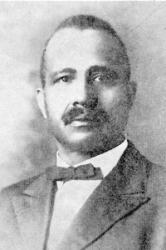
1865 - 1949 Person Name: C.P. Jones Topics: Ordinary Time Week 28 Adapter of "Where Shall I Be?" in Hymns and Devotions for Daily Worship Charles Price Jones born December 9, 1865, near Rome, Georgia. He grew up in Kingston, Georgia, and attended the Baptist church. He was converted in 1884 while living in Cat Island, Arkansas. In 1885 he was called to the ministry and began preaching. In 1888 he attended Arkansas Baptist College and taught school in Grant County, Arkansas. He preached and pastored several Baptist churches. After asking God for a deeper experience of grace and fasting and praying for three days, Jones experienced a closeness with God, and in 1895, along with other Baptist holiness adherents, who taught that a second work of grace can cleanse the Christian of original sin. They started a holiness movement in the Baptist church, and he began teaching holiness in his congregation, Mount Helm Baptist Church in Jackson, Mississippi. He faced much opposition from some members of his congregation and other Baptist churches. Eventually the church voted to remove "Baptist" and change it to "Church of Christ." For several years, Jones led a non-denominational holiness movement. In 1899 he began to write songs for his church. Most of his hymns were inspired by a scripture passage. The congregation built the Christ Temple campus which included a 1000 seat sanctuary, a printing press, a school building, and a girl's dormitory. In 1917, Jones organized Christ Temple Church in Los Angeles and moved the printing press there. He died January 19, 1949 in Los Angeles
Dianne Shapiro, from Church of Christ (Holiness) U.S.A. website and "Charles Price Jones (1865-1949) Religious Leader" by David Daniels, Mississippi Encyclopedia website (both accessed 10/9/2020)
Charles Price Jones
Ludwig van Beethoven
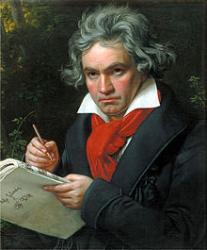
1770 - 1827 Topics: Ordinary Time Week 29 Composer of "HYMN TO JOY" in Hymns and Devotions for Daily Worship A giant in the history of music, Ludwig van Beethoven (b. Bonn, Germany, 1770; d. Vienna, Austria, 1827) progressed from early musical promise to worldwide, lasting fame. By the age of fourteen he was an accomplished viola and organ player, but he became famous primarily because of his compositions, including nine symphonies, eleven overtures, thirty piano sonatas, sixteen string quartets, the Mass in C, and the Missa Solemnis. He wrote no music for congregational use, but various arrangers adapted some of his musical themes as hymn tunes; the most famous of these is ODE TO JOY from the Ninth Symphony. Although it would appear that the great calamity of Beethoven's life was his loss of hearing, which turned to total deafness during the last decade of his life, he composed his greatest works during this period.
Bert Polman
Ludwig van Beethoven
Pope John XXII
1249 - 1334 Person Name: Pope John XXII, 1249-1334 Topics: Seasonal Music Ordinary Time Author (attributed to, vs. 1-2) of "Soul of My Savior" in Breaking Bread (Vol. 39)
Pope John XXII
John Bacchus Dykes
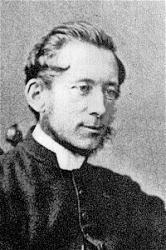
1823 - 1876 Person Name: John B. Dykes, 1823-1876 Topics: Year A, Ordinary Time after Pentecost, October 9-15; Year B, Ordinary Time after Pentecost, June 17-23 Composer of "DOMINUS REGIT ME" in Psalms for All Seasons As a young child John Bacchus Dykes (b. Kingston-upon-Hull' England, 1823; d. Ticehurst, Sussex, England, 1876) took violin and piano lessons. At the age of ten he became the organist of St. John's in Hull, where his grandfather was vicar. After receiving a classics degree from St. Catherine College, Cambridge, England, he was ordained in the Church of England in 1847. In 1849 he became the precentor and choir director at Durham Cathedral, where he introduced reforms in the choir by insisting on consistent attendance, increasing rehearsals, and initiating music festivals. He served the parish of St. Oswald in Durham from 1862 until the year of his death. To the chagrin of his bishop, Dykes favored the high church practices associated with the Oxford Movement (choir robes, incense, and the like). A number of his three hundred hymn tunes are still respected as durable examples of Victorian hymnody. Most of his tunes were first published in Chope's Congregational Hymn and Tune Book (1857) and in early editions of the famous British hymnal, Hymns Ancient and Modern.
Bert Polman
John Bacchus Dykes
Edward Caswall
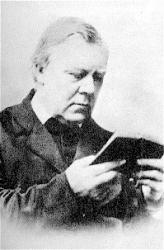
1814 - 1878 Topics: Ordinary Time Week 14 Translator of "When Morning Gilds the Skies" in Hymns and Devotions for Daily Worship Edward Caswall was born in 1814, at Yately, in Hampshire, where his father was a clergyman. In 1832, he went to Brasenose College, Oxford, and in 1836, took a second-class in classics. His humorous work, "The Art of Pluck," was published in 1835; it is still selling at Oxford, having passed through many editions. In 1838, he was ordained Deacon, and in 1839, Priest. He became perpetural Curate of Stratford-sub-Castle in 1840. In 1841, he resigned his incumbency and visited Ireland. In 1847, he joined the Church of Rome. In 1850, he was admitted into the Congregation of the Oratory at Birmingham, where he has since remained. He has published several works in prose and poetry.
--Annotations of the Hymnal, Charles Hutchins, M.A. 1872
=====================
Caswall, Edward, M.A., son of the Rev. R. C. Caswall, sometime Vicar of Yately, Hampshire, born at Yately, July 15, 1814, and educated at Brasenose College, Oxford, graduating in honours in 1836. Taking Holy Orders in 1838, he became in 1840 Incumbent of Stratford-sub-Castle, near Salisbury, and resigned the same in 1847. In 1850 (Mrs. Caswall having died in 1849) he was received into the Roman Catholic communion, and joined Dr. Newman at the Oratory, Edgbaston. His life thenceforth, although void of stirring incidents, was marked by earnest devotion to his clerical duties and a loving interest in the poor, the sick, and in little children. His original poems and hymns were mostly written at the Oratory. He died at Edgbaston, Jan. 2, 1878, and was buried on Jan. 7 at Redwall, near Bromsgrove, by his leader and friend Cardinal Newman. Caswall's translations of Latin hymns from the Roman Breviary and other sources have a wider circulation in modern hymnals than those of any other translator, Dr. Neale alone excepted. This is owing to his general faithfulness to the originals, and the purity of his rhythm, the latter feature specially adapting his hymns to music, and for congregational purposes. His original compositions, although marked by considerable poetical ability, are not extensive in their use, their doctrinal teaching being against their general adoption outside the Roman communion. His hymns appeared in:—
(1) Lyra Catholica, which contained 197 translations from the Roman Breviary, Missal, and other sources. First ed. London, James Burns, 1849. This was reprinted in New York in 1851, with several hymns from other sources added thereto. This edition is quoted in the indices to some American hymn-books as Lyra Cath., as in Beecher's Plymouth Collection, 1855, and others.
(2) Masque of Mary, and Other Poems, having in addition to the opening poem and a few miscellaneous pieces, 53 translations, and 51 hymns. 1st ed. Lon., Burns and Lambert, 1858.
(3) A May Pageant and Other Poems, including 10 original hymns. Lon., Burns and Lambert, 1865.
(4) Hymns and Poems, being the three preceding volumes embodied in one, with many of the hymns rewritten or revised, together with elaborate indices. 1st ed. Lon., Burns, Oates & Co., 1873. Of his original hymns about 20 are given in the Roman Catholic Crown of Jesus Hymn Book, N.D; there are also several in the Hymns for the Year, N.D., and other Roman Catholic collections.
--John Julian, Dictionary of Hymnology (1907)
======================
Caswall, E. , p. 214, ii. Additional original hymns by Caswall are in the Arundel Hymns, 1902, and other collections. The following are from the Masque of Mary, &c, 1858:—
1. Christian soul, dost thou desire. After Holy Communion.
2. Come, let me for a moment cast. Holy Communion.
3. O Jesu Christ [Lord], remember. Holy Communion.
4. Oft, my soul, thyself remind. Man's Chief End.
5. Sleep, Holy Babe. Christmas. Appeared in the Rambler, June 1850, p. 528. Sometimes given as "Sleep, Jesus, sleep."
6. The glory of summer. Autumn.
7. This is the image of the queen. B. V. M.
His "See! amid the winter's snow,” p. 1037, i., was published in Easy Hymn Tunes, 1851, p. 36. In addition the following, mainly altered texts or centos of his translations are also in common use:—
1. A regal throne, for Christ's dear sake. From "Riches and regal throne," p. 870, ii.
2. Come, Holy Ghost, Thy grace inspire. From "Spirit of grace and union," p. 945, i.
3. Hail! ocean star, p. 99, ii,, as 1873. In the Birmingham Oratory Hymn Book, 1850, p. 158.
4. Lovely flow'rs of martyrs, hail. This is the 1849 text. His 1873 text is "Flowers of martyrdom," p. 947, i.
5. None of all the noble cities. From "Bethlehem! of noblest cities," p. 946, ii.
6. O Jesu, Saviour of the World. From “Jesu, Redeemer of the world," p. 228, ii.
7. 0 Lady, high in glory raised. From "O Lady, high in glory, Whose," p. 945, i.
The Parochial Hymn Book, 1880, has also the following original hymns by Caswall. As their use is confined to this collection, we give the numbers only:—
IS os. 1, 2, 3, 159 (Poems, 1873, p. 453), 209 (1873, p. 288), 299, 324 (1873, p. 323), 357, 402, 554, 555, 558, 569 (1873, p. 334). These are from his Masque of Mary 1858. Nos. 156, 207 (1873, p. 296), 208 (1873, p. 297), 518. These are from his May Pageant, 1865.
As several of these hymns do not begin with the original first lines, the original texts are indicated as found in his Poems, 1873. [Rev. James Mearns, M.A.]
--John Julian, Dictionary of Hymnology, New Supplement (1907)
Edward Caswall
Charles Wesley
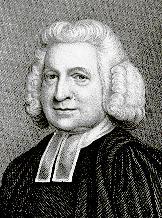
1707 - 1788 Topics: Ordinary Time Week 15 Author of "See How Great a Flame Aspires" in Hymns and Devotions for Daily Worship Charles Wesley, M.A. was the great hymn-writer of the Wesley family, perhaps, taking quantity and quality into consideration, the great hymn-writer of all ages. Charles Wesley was the youngest son and 18th child of Samuel and Susanna Wesley, and was born at Epworth Rectory, Dec. 18, 1707. In 1716 he went to Westminster School, being provided with a home and board by his elder brother Samuel, then usher at the school, until 1721, when he was elected King's Scholar, and as such received his board and education free. In 1726 Charles Wesley was elected to a Westminster studentship at Christ Church, Oxford, where he took his degree in 1729, and became a college tutor. In the early part of the same year his religious impressions were much deepened, and he became one of the first band of "Oxford Methodists."
In 1735 he went with his brother John to Georgia, as secretary to General Oglethorpe, having before he set out received Deacon's and Priest's Orders on two successive Sundays. His stay in Georgia was very short; he returned to England in 1736, and in 1737 came under the influence of Count Zinzendorf and the Moravians, especially of that remarkable man who had so large a share in moulding John Wesley's career, Peter Bonier, and also of a Mr. Bray, a brazier in Little Britain. On Whitsunday, 1737, [sic. 1738] he "found rest to his soul," and in 1738 he became curate to his friend, Mr. Stonehouse, Vicar of Islington, but the opposition of the churchwardens was so great that the Vicar consented that he "should preach in his church no more." Henceforth his work was identified with that of his brother John, and he became an indefatigable itinerant and field preacher. On April 8, 1749, he married Miss Sarah Gwynne. His marriage, unlike that of his brother John, was a most happy one; his wife was accustomed to accompany him on his evangelistic journeys, which were as frequent as ever until the year 1756," when he ceased to itinerate, and mainly devoted himself to the care of the Societies in London and Bristol. Bristol was his headquarters until 1771, when he removed with his family to London, and, besides attending to the Societies, devoted himself much, as he had done in his youth, to the spiritual care of prisoners in Newgate. He had long been troubled about the relations of Methodism to the Church of England, and strongly disapproved of his brother John's "ordinations." Wesley-like, he expressed his disapproval in the most outspoken fashion, but, as in the case of Samuel at an earlier period, the differences between the brothers never led to a breach of friendship. He died in London, March 29, 1788, and was buried in Marylebone churchyard. His brother John was deeply grieved because he would not consent to be interred in the burial-ground of the City Road Chapel, where he had prepared a grave for himself, but Charles said, "I have lived, and I die, in the Communion of the Church of England, and I will be buried in the yard of my parish church." Eight clergymen of the Church of England bore his pall. He had a large family, four of whom survived him; three sons, who all became distinguished in the musical world, and one daughter, who inherited some of her father's poetical genius. The widow and orphans were treated with the greatest kindness and generosity by John Wesley.
As a hymn-writer Charles Wesley was unique. He is said to have written no less than 6500 hymns, and though, of course, in so vast a number some are of unequal merit, it is perfectly marvellous how many there are which rise to the highest degree of excellence. His feelings on every occasion of importance, whether private or public, found their best expression in a hymn. His own conversion, his own marriage, the earthquake panic, the rumours of an invasion from France, the defeat of Prince Charles Edward at Culloden, the Gordon riots, every Festival of the Christian Church, every doctrine of the Christian Faith, striking scenes in Scripture history, striking scenes which came within his own view, the deaths of friends as they passed away, one by one, before him, all furnished occasions for the exercise of his divine gift. Nor must we forget his hymns for little children, a branch of sacred poetry in which the mantle of Dr. Watts seems to have fallen upon him. It would be simply impossible within our space to enumerate even those of the hymns which have become really classical. The saying that a really good hymn is as rare an appearance as that of a comet is falsified by the work of Charles Wesley; for hymns, which are really good in every respect, flowed from his pen in quick succession, and death alone stopped the course of the perennial stream.
It has been the common practice, however for a hundred years or more to ascribe all translations from the German to John Wesley, as he only of the two brothers knew that language; and to assign to Charles Wesley all the original hymns except such as are traceable to John Wesley through his Journals and other works.
The list of 482 original hymns by John and Charles Wesley listed in this Dictionary of Hymnology have formed an important part of Methodist hymnody and show the enormous influence of the Wesleys on the English hymnody of the nineteenth century.
-- Excerpts from John Julian, Dictionary of Hymnology (1907)
==================
Charles Wesley, the son of Samuel Wesley, was born at Epworth, Dec. 18, 1707. He was educated at Westminster School and afterwards at Christ Church, Oxford, where he graduated M.A. In 1735, he took Orders and immediately proceeded with his brother John to Georgia, both being employed as missionaries of the S.P.G. He returned to England in 1736. For many years he engaged with his brother in preaching the Gospel. He died March 29, 1788. To Charles Wesley has been justly assigned the appellation of the "Bard of Methodism." His prominence in hymn writing may be judged from the fact that in the "Wesleyan Hymn Book," 623 of the 770 hymns were written by him; and he published more than thirty poetical works, written either by himself alone, or in conjunction with his brother. The number of his separate hymns is at least five thousand.
--Annotations of the Hymnal, Charles Hutchins, M.A., 1872.
Charles Wesley
Robert Robinson
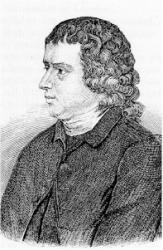
1735 - 1790 Topics: Ordinary Time Week 17 Author of "Come, Thou Fount of Every Blessing" in Hymns and Devotions for Daily Worship Robert Robinson was born at Swaffham, Norfolk, in 1735. In 1749, he was apprenticed to a hairdresser, in Crutched Friars, London. Hearing a discourse preached by Whitefield on "The Wrath to Come," in 1752, he was deeply impressed, and after a period of much disquietude, he gave himself to a religious life. His own peculiar account of this change of life is as follows:--"Robertus Michaelis Marineque Robinson filius. Natus Swaffhami, comitatu Norfolciae, Saturni die Sept. 27, 1735. Renatus Sabbati die, Maii 24, 1752, per predicationem potentem Georgii Whitefield. Et gustatis doloribus renovationis duos annos mensesque septem, absolutionem plenam gratuitamque, per sanguinem pretiosum i secula seculorum. Amen." He soon after began to preach, and ministered for some time in connection with the Calvinistic Methodists. He subsequently joined the Independents, but after a short period preferred the Baptist connection. In 1761, he became pastor of a Baptist congregation at Cambridge. About the year 1780, he began to incline towards Unitarianism, and at length his people deemed it essential to procure his resignation. While arrangements for this purpose were in progress he died suddenly at Bingham, in June 1790. He wrote and published a good many works of ability.
--Annotations of the Hymnal, Charles Hutchins, M.A. 1872.
=============================
Robinson, Robert, the author of "Come, Thou fount of every blessing," and "Mighty God, while angels bless Thee," was born at Swaffham, in Norfolk, on Sept. 27, 1735 (usually misgiven, spite of his own authority, as Jan. 8), of lowly parentage. Whilst in his eighth year the family migrated to Scarning, in the same county. He lost his father a few years after this removal. His widowed mother was left in sore straits. The universal testimony is that she was a godly woman, and far above her circumstances. Her ambition was to see her son a clergyman of the Church of England, but poverty forbade, and the boy (in his 15th year) was indentured in 1749 to a barber and hairdresser in London. It was an uncongenial position for a bookish and thoughtful lad. His master found him more given to reading than to his profession. Still he appears to have nearly completed his apprenticeship when he was released from his indentures. In 1752 came an epoch-marking event. Out on a frolic one Sunday with like-minded companions, he joined with them in sportively rendering a fortune-telling old woman drunk and incapable, that they might hear and laugh at her predictions concerning them. The poor creature told Robinson that he would live to see his children and grandchildren. This set him a-thinking, and he resolved more than ever to "give himself to reading”. Coincidently he went to hear George Whitefield. The text was St. Matthew iii. 7, and the great evangelist's searching sermon on "the wrath to come" haunted him blessedly. He wrote to the preacher six years later penitently and pathetically. For well nigh three years he walked in darkness and fear, but in his 20th year found "peace by believing." Hidden away on a blank leaf of one of his books is the following record of his spiritual experience, the Latin doubtless having been used to hold it modestly private:—
"Robertus, Michaelis Mariseque Robinson filius. Natus Swaffhami, comitatu Norfolciae, Saturni die Sept. 27, 1735. Renatus Sabbati die, Maii 24,1752, per predicationem potentem Georgii Whitefield. Et gustatis doloribus renovationis duos annosque septem absolutionem plenam gratuitamque, per sanguinem pretiosum Jesu Christi, inveni (Tuesday, December 10, 1755) cui sit honor et gloria in secula seculorum. Amen."
Robinson remained in London until 1758, attending assiduously on the ministry of Gill, Wesley, and other evangelical preachers. Early in this year he was invited as a Calvinistic Methodist to the oversight of a chapel at Mildenhall, Norfolk. Thence he removed within the year to Norwich, where he was settled over an Independent congregation. In 1759, having been invited by a Baptist Church at Cambridge (afterwards made historically famous by Robert Hall, John Foster, and others) he accepted the call, and preached his first sermon there on Jan. 8, 1759, having been previously baptized by immersion. The "call" was simply "to supply the pulpit," but he soon won such regard and popularity that the congregation again and again requested him to accept the full pastoral charge. This he acceded to in 1761, alter persuading the people to "open communion." In 1770 he commenced his abundant authorship by publishing a translation from Saurin's sermons, afterwards completed. In 1774 appeared his masculine and unanswerable Arcana, or the Principles of the Late Petitioners to Parliament for Relief in the matter of Subscription. In 1776 was published A Plea for the Divinity of our Lord Jesus Christ in a Pastoral Letter to a Congregation of Protestant Dissenters at Cambridge. Dignitaries and divines of the Church of England united with Nonconformists in lauding this exceptionally able, scholarly, and pungently written book. In 1777 followed his History and Mystery of Good Friday. The former work brought him urgent invitations to enter the ministry of the Church of England, but he never faltered in his Nonconformity. In 1781 he was asked by the Baptists of London to prepare a history of their branch of the Christian Church. This resulted, in 1790, in his History of Baptism and Baptists, and in 1792, in his Ecclesiastical Researches. Other theological works are included in the several collective editions of his writings. He was prematurely worn out. He retired in 1790 to Birmingham, where he was somehow brought into contact with Dr. Priestley, and Unitarians have made much of this, on exceedingly slender grounds. He died June 9, 1790.
His Life has been fully written by Dyer and by William Robinson respectively, both with a bias against orthodoxy. His three changes of ecclesiastical relationship show that he was somewhat unstable and impulsive. His hymns are terse yet melodious, evangelical but not sentimental, and on the whole well wrought. His prose has all…that vehement and enthusiastic glow of passion that belongs to the orator. (Cf. Dyer and Robinson as above, and Gadsby's Memoirs of Hymn-Writers(3rd ed., 1861); Belcher's Historical Sketches of Hymns; Millers Singers and Songs of the Church; Flower's Robinson's Miscellaneous Works; Annual Review, 1805, p. 464; Eclectic Review, Sept. 1861. [Rev. A. B. Grosart, D.D., LL.D.]
--John Julian, Dictionary of Hymnology (1907)
Robert Robinson
Thoro Harris
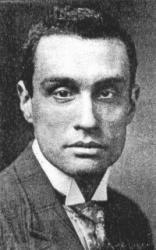
1874 - 1955 Topics: Ordinary Time Week 12 Author of "All That Thrills My Soul" in Hymns and Devotions for Daily Worship (African American Edition) Born: March 31, 1874, Washington, DC.
Died: March 27, 1955, Eureka Springs, Arkansas.
Buried: International Order of Odd Fellows Cemetery, Eureka Springs, Arkansas.
After attending college in Battle Creek, Michigan, Harris produced his first hymnal in Boston, Massachusetts, in 1902. He then moved to Chicago, Illinois at the invitation of Peter Bilhorn, and in 1932, to Eureka Springs, Arkansas. He composed and compiled a number of works, and was well known locally as he walked around with a canvas bag full of handbooks for sale. His works include:
Light and Life Songs, with William Olmstead & William Kirkpatrick (Chicago, Illinois: S. K. J. Chesbro, 1904)
Little Branches, with George J. Meyer & Howard E. Smith (Chicago, Illinois: Meyer & Brother, 1906)
Best Temperance Songs (Chicago, Illinois: The Glad Tidings Publishing Company, 1913) (music editor)
Hymns of Hope (Chicago, Illinois: Thoro Harris, undated, circa 1922)
--www.hymntime.com/tch
Thoro Harris
Delbert Asay
Topics: Year A, Ordinary Time after Pentecost, October 9-15; Year B, Ordinary Time after Pentecost, June 17-23 Harmonizer of "PASTOR" in Psalms for All Seasons Delbert Asay (20th c.), served the United Methodist Church for many years as a music missionary in Uruguay and Mexico. Asay's songs and arrangements have appeared in several Hispanic songbooks, including Nuevas Canciones Cristianas, published in Uruguay (1975).
Bert Polman
Delbert Asay
Pages




