You help make Hymnary.org possible. More than 10 million people from 200+ countries found hymns, liturgical resources and encouragement on Hymnary.org in 2025, including you. Every visit affirms the global impact of this ministry.

If Hymnary has been meaningful to you this year, would you take a moment today to help sustain it? A gift of any size—paired with a note of encouragement if you wish—directly supports the server costs, research work and curation that keep this resource freely available to the world.

Give securely online today, or mail a check to:
Hymnary.org
Calvin University
3201 Burton Street SE
Grand Rapids, MI 49546

Thank you for your partnership, and may the hope of Advent fill your heart.

Person Results

Topics:advent+of+christ+
In:people

Planning worship? Check out our sister site, ZeteoSearch.org, for 20+ additional resources related to your search.
Showing 321 - 330 of 666Results Per Page: 102050

Vern Rossman

Topics: Praise and Adoration Jesus Christ; Jesus Christ Advent, Christmas, Incarnation; Jesus Christ Victory of Christ; The Christian Life Salvation Translator of "Behold the Man" in Hymns from the Four Winds

A. Williams

1731 - 1776 Person Name: Aaron Williams, 1731-1776 Topics: Advent; Community of Christ; Freedom; Justice, Society; Peace Composer of "ST. THOMAS" in This Far By Faith Aaron Williams (b. London, England, 1731; d. London, 1776) was a singing teacher, music engraver, and clerk at the Scottish Church, London Wall. He published various church music collections, some intended for rural church choirs. Representative of his compilations are The Universal Psalmodist (1763)— published in the United States as The American Harmony (1769)—The Royal Harmony (1766), The New Universal Psalmodist (1770), and Psalmody in Miniature (1778). His Harmonia Coelestis (1775) included anthems by noted composers. Bert Polman

Michael Baughen

b. 1930 Person Name: Michael Baughen, born 1930) Topics: God's Church Praise and Adoration; Cantate Domino; Advent 1 The Advent Hope; Epiphany 3, Revelation Signs of Glory; Easter The Resurrection of Christ; The Ascension of Christ Adapter of "Sing to God new songs of worship" in Hymns for Today's Church (2nd ed.)

Thomas T. Lynch

1818 - 1871 Topics: Christ Advent Second; Kingdom of Christ Progress of; Missions Success of; Social Progress Author of "Lift up your heads, rejoice" in The Hymnal Lynch, Thomas Toke, was born at Dunmow, Essex, July 5, 1818, and educated at a school at Islington, in which he was afterwards an usher. For a few months he was a student at the Highbury Independent College; but withdrew, partly on account of failing health, and partly because his spirit was too free to submit to the routine of College life. From 1847 to 1849 he was Minister of a small charge at Highgate, and from 1849 to 1852 of a congregation in Mortimer Street, which subsequently migrated to Grafton Street, Fitzroy Square. From 1856 to 1859 he was laid aside by illness. In 1860 he resumed his ministry with his old congregation, in a room in Gower Street, where he remained until the opening of his new place of worship, in 1862, (Mornington Church), in Hampstead Road, London. He ministered there till his death, on the 9th of May, 1871. The influence of Lynch's ministry was great, and reached far beyond his own congregation (which was never large), since it included many students from the Theological Colleges of London, and thoughtful men from other churches, who were attracted to him by the freshness and spirituality of his preaching. His prose works were numerous, beginning with Thoughts on a Day, 1844, and concluding with The Mornington Lecture, 1870. Several of his works were published after his death. His Memoir, by W. White, was published in 1874. Lynch's hymns were published in:— The Rivulet: a Contribution to Sacred Song, London., Longman, 1855, 2nd ed., 1856. This was enlarged by an addition of 67 hymns in 1868. From the first edition of The Rivulet, 1855, the following hymns have come into common use:— 1. All faded is the glowing light. Second Advent. 2. Be Thy word with power fraught. Before Sermon. 3. Christ in His word draws near. Holy Scripture. 4. Dismiss me not Thy service, Lord. Work for Christ. 5. Gracious Spirit, dwell with me. Holy Spirit's presence desired. 6. How calmly the evening once more is descending. Evening. Sometimes "How calmly once more the night is descending." 7. I give myself to prayer. Prayer in Trouble. 8. Lord, on Thy returning day. Public Worship. 9. Lord, when in silent hours I muse. Resignation. 10. Love me, O Lord, forgivingly. Resignation. 11. Mountains by the darkness hidden. Resignation. 12. Now have we met that we may ask. Public Worship. 13. O, break my heart; but break it as a field. Penitence desired. 14. O Lord, Thou art not fickle. Sympathy. 15. O where is He that trod the sea. Christ Walking on the Sea. 16. Oft when of God we ask. Trust in Trial. 17. Rise, He calleth thee, arise. Blind Bartimaeus. 18. Say not, my soul, from whence. Resignation. 19. Where is thy God, my soul? Resignation and Hope. There are also from the 1856 and 1868 eds. the following:— 20. A thousand years have come and gone. Christmas. 21. Lift up your heads, rejoice; (1856.) Advent. 22. Praying by the river side. Holy Baptism. 23. The Lord is rich and merciful. Have Faith in God. 24. There is purpose in this waste. Easter. Lynch's hymns are marked by intense individuality, gracefulness and felicity of diction, picturesqueness, spiritual freshness, and the sadness of a powerful soul struggling with a weak and emaciated body. Although The Rivulet was published for use by his own congregation as a supplement to Watts, more than one half of the hymns were designed for private use only, but were not so distinguished in the work. Its publication caused one of the most bitter hymnological controversies known in the annals of modern Congregationalism. Time, however, and a criticism, broader and more just, have declared emphatically in favour of his hymns as valuable contributions to cultured sacred song. [Rev. W. Garrett Horder] --John Julian, Dictionary of Hymnology (1907) ================== Lynch, T. T., p. 705, ii. Other hymns by him in recent books are:— 1. My faith it is an oaken staff. Faith in Christ. In the Rivulet, 1855, p. 78. 2. Together for our country now we pray. National, In the Rivulet, 1868, p. 170. [Rev. James Mearns, M.A.] --John Julian, Dictionary of Hymnology, New Supplement (1907)

George P. Simmonds

1890 - 1991 Person Name: G. P. Simmonds Topics: Advenimiento; Advent; Cristo Su Vida y Minesterio; Christ His Life and Ministry; Himnos Vespertinos; Evening hymns; Pasión y Muerte de Cristo; Passion and Death of Christ; Resurrección de Cristo; Resurrection of Christ Translator of "Dime la historia de Cristo" in Celebremos Su Gloria Used pseudonyms G Paul S., J. Paul Simon, and J. Pablo Símon

David Gambrell

Topics: Christ's Return and Judgment; Jesus Christ Advent; Justice; Trusting in the Promises of God Author of "The Days Are Surely Coming" in Glory to God Rev. David Gambrell is associate for worship in the PC(USA) Office of Theology and Worship and editor of Call to Worship, and an ex officio advisor to the hymnal committee. Education: Ph.D., liturgical studies Garrett-Evangelical Theological Seminary Austin Presbyterian Theological Seminary --www.presbyterianmission.org/ministries

SaeJin Lee

Topics: Jesus Christ Advent of Illustrator of "Tree of Life" in Voices Together

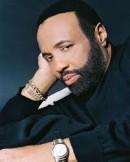
Andraé Crouch

1942 - 2015 Person Name: Andraé Crouch, b. 1942 Topics: Christ the King/Reign of Christ; Christian Hope; Heaven, Eternal Life; Last Times; Advent Author of "Soon and Very Soon" in With One Voice Born in San Francisco on July 1, 1942, and raised in Los Angeles, Andraé Edward Crouch was the son of bivocational-pastor parents Benjamin and Catherine Crouch. He has recounted that he received the gift of music as a child, when his father was called as a guest preacher and pastoral candidate to a small rural church that had no musicians. He began playing for them at the age of 11. He wrote his first gospel song at 14, and formed his first band, the COGICS, in 1960. In 1965 he formed The Disciples, which lasted until 1979, and as a protegé of Audrey Mieir, Ralph Carmichael, and other leading Contemporary Christian Music artists of the time, went on to win a total of nine Grammies, and numerous other awards. He wrote his first well-known song, "The Blood Will Never Lose Its Power", at the age of 15, but most of his songs that have gained congregational currency flowed from the years when he was active with The Disciples. After The Disciples were disbanded, Crouch continued his recording and performing career, and also became more active in church ministries. After his parents died (1993-94), with his twin sister Sandra he took over the pastorate at the church his parents had led, New Christ Memorial Church of God in Christ in Pacoima, California. In December, 2014, Crouch was hospitalized for treatment of pneumonia and congestive heart failure, and on January 3, 2015, he was readmitted to the hospital following a heart attack. He died there five days later, at the age of 72. His twin sister and co-pastor Sandra Crouch issued the following statement: "Today my twin brother, womb-mate and best friend went home to be with the Lord. Please keep me, my family and our church family in your prayers. I tried to keep him here but God loved him best."

Willard F. Jabusch

1930 - 2018 Topics: Biblical Names & Places Galilee/Galilean; Epiphany & Ministry of Christ; King, God/Christ as; Songs for Children Hymns; Advent; Biblical Names & Places Galilee/Galilean; Epiphany & Ministry of Christ; King, God/Christ as; Palm Sunday; Salvation Author of "The King of Glory Comes" in Psalter Hymnal (Gray) Willard F. Jabusch (b. 1930) received degrees from St. Mary of the Lake Seminary, Mundelein, Illinois, and Loyola University, Chicago. He also earned a doctorate at Northwestern University, Evanston, Illinois (1986), and studied music at the Chicago Conservatory and the University of London. A parish priest at St. James Roman Catholic Church in Chicago from 1956 to 1961, he taught at Niles College of Loyola University from 1963 to 1966 and at the Mundelein Seminary from 1968 to 1990. Since 1990 Jabusch has been director of Calvert House, the Roman Catholic student center at the University of Chicago. His theological publications include The Person in the Pulpit (1980), Walk Where Jesus Walked (1986), and The Spoken Christ (1990). He has written some forty tunes and one hundred hymn texts, often pairing them with eastern European and Israeli folk tunes. Bert Polman

Yūki Kō

1896 - 1985 Person Name: Kō Yūki Topics: Praise and Adoration Jesus Christ; Jesus Christ Advent, Christmas, Incarnation; Jesus Christ Victory of Christ; The Christian Life Salvation Author of "Behold the Man" in Hymns from the Four Winds (Precise birth and death dates: 1896.4.16-1985.1.27) Born in 1896 in Tottori Prefecture, he was educated at Kwansei Gakuin University in Nishinomiya. In 1921, he was installed as the pastor of Tokyo Futaba Independent Church, the predecessor of the Kyodan’s Higashi Nakano Church.He also was a lecturer at Aoyama Gakuin University and a member of the Board of the Christian School of Music. He passed away in 1985. -https://uccj-e.org/knl/1154.html (19 April 2021)

Pages


Export as CSV
It looks like you are using an ad-blocker. Ad revenue helps keep us running. Please consider white-listing Hymnary.org or getting Hymnary Pro to eliminate ads entirely and help support Hymnary.org.