You help make Hymnary.org possible. More than 10 million people from 200+ countries found hymns, liturgical resources and encouragement on Hymnary.org in 2025, including you. Every visit affirms the global impact of this ministry.

If Hymnary has been meaningful to you this year, would you take a moment today to help sustain it? A gift of any size—paired with a note of encouragement if you wish—directly supports the server costs, research work and curation that keep this resource freely available to the world.

Give securely online today, or mail a check to:
Hymnary.org
Calvin University
3201 Burton Street SE
Grand Rapids, MI 49546

Thank you for your partnership, and may the hope of Advent fill your heart.

Person Results

Topics:advent+of+christ+
In:people

Planning worship? Check out our sister site, ZeteoSearch.org, for 20+ additional resources related to your search.
Showing 331 - 340 of 666Results Per Page: 102050

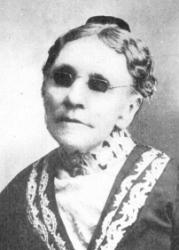
Fanny Crosby

1820 - 1915 Person Name: Fanny J. Crosby Topics: Advenimiento; Advent; Cristo Su Vida y Minesterio; Christ His Life and Ministry; Himnos Vespertinos; Evening hymns; Pasión y Muerte de Cristo; Passion and Death of Christ; Resurrección de Cristo; Resurrection of Christ Author of "Dime la historia de Cristo" in Celebremos Su Gloria Pseudonymns: A.V., Mrs. A. E. Andrews, Mrs. E. A. Andrews, Mrs. E. L. Andrews, James L. Black, Henrietta E. Blair, Charles Bruce, Robert Bruce, Leah Carlton, Eleanor Craddock, Lyman G. Cuyler, D.H.W., Ella Dare, Ellen Dare, Mrs. Ellen Douglass, Lizzie Edwards. Miss Grace Elliot, Grace J. Frances, Victoria Frances, Jennie Garnett, Frank Gould, H. D. K., Frances Hope, Annie L. James, Martha J. Lankton [Langton], Grace Lindsey, Maud Marion, Sallie Martin, Wilson Meade, Alice Monteith, Martha C. Oliver, Mrs. N. D. Plume, Kate Smiley, Sallie Smith, J. L. Sterling, John Sterling, Julia Sterling, Anna C. Storey, Victoria Stuart, Ida Scott Taylor, Mary R. Tilden, Mrs. J. B. Thresher, Hope Tryaway, Grace Tureman, Carrie M. Wilson, W.H.D. Frances Jane Crosby, the daughter of John and Mercy Crosby, was born in Southeast, Putnam County, N. Y., March 24, 1820. She became blind at the age of six weeks from maltreatment of her eyes during a spell of sickness. When she was eight years old she moved with her parents to Ridgefield, Conn., the family remaining there four years. At the age of fifteen she entered the New York Institution for the Blind, where she received a good education. She became a teacher in the institution in 1847, and continued her work until March 1, 1858. She taught English grammar, rhetoric and American history. This was the great developing period in her life. During the vacations of 1852 and 1853, spent at North Reading, Mass., she wrote the words to many songs for Dr. Geo. F. Root, then the teacher of music at the blind institution. Among them were, "Hazel Dell,", "The Honeysuckle Glen," "Rosalie, the Prairie Flower," "Music in the Air," "Proud World, Good-bye, I'm Going Home," "All Together", "Never Forget the Dear Ones," and others. Subsequently she wrote the words for the cantatas of The Flower Queen and The Pilgrim Fathers, all of which were very popular in their day, though it was not generally known at the time that she was the author. While teaching at the institution she met Presidents Van Buren and Tyler, Hon. Henry Clay, Governor Wm. H. Seward, General Winfield Scott, and other distinguished characters of American history. Concerning Mr. Clay, she gives the following: "When Mr. Clay came to the institution during his last visit to New York, I was selected to welcome him with a poem. Six months before he had lost a son at the battle of Monterey, and I had sent him some verses. In my address I carefully avoided any allusion to them, in order not to wound him. When I had finished he drew my arm in his, and, addressing the audience, said through his tears: 'This is not the first poem for which I am indebted to this lady. Six months ago she sent me some lines on the death of my dear son.' Both of us were overcome for a few moments. Soon, by a splendid effort, Mr. Clay recovered himself, but I could not control my tears." In connection with her meeting these notable men, we might add that Miss Fanny Crosby had the honor of being the first woman whose voice was heard publicly in the Senate Chamber at Washington. She read a poem there on one occasion. In addition to the thousands of hymns that she has written (about eight thousand poems in all), many of which have not been set to music, she has published four volumes of verses. The first was issued in 1844 and was entitled The Blind Girl, and Other Poems, a second volume, Monterey, and Other Poems, followed in 1849, and the third, A Wreath of Columbia's Flowers, in 1858. The fourth, Bells at Evening and Other Verses, with a biographical sketch by Rev. Robert Lowry, and a fine half-tone portrait, in 1897, the sales of which have reached a fourth edition. The book is published by The Biglow & Main Co., New York. Though these show the poetical bent of her mind, they have little to do with her world-wide fame. It is as a writer of Sunday-school songs and gospel hymns that she is known wherever the English language is spoken, and, in fact, wherever any other language is heard. Fanny was married March 5, 1858, to Alex. Van Alstyne, who was also a scholar in the same institution in which she was educated. She began to write Sunday-school hymns for Wm. B. Bradbury in 1864. Her first hymn, "We are going, we are going To a home beyond the skies", was written at the Ponton Hotel on Franklin Street, New York City, on February 5th of that year. This hymn was sung at Mr. Bradbury's funeral in January, 1868. Since 1864 she supported herself by writing hymns. She resided in New York City nearly all her life, where, she says, she is "a member of the Old John Street M. E. Church in good standing." She spent regular hours on certain days at the office of The Biglow & Main Co., the firm for which she did most of her writing, and for whom she has composed over four thousand hymns. Her hymns have been in great demand and have been used by many of our most popular composers, among whom may be mentioned Wm. B. Bradbury, Geo. F. Root, W. H. Doane, Rev. Robert Lowry, Ira D. Sankey, J. R. Sweney, W. J. Kirkpatrick, H. P. Main, H. P. Danks, Philip Phillips, B. G. Unseld, and others. She could compose at any time and did not need to wait for any special inspiration, and her best hymns have come on the spur of the moment. She always composed with an open book in her hand, generally a copy of Golden Hymns, held closely over her eyes, bottom side up. She learned to play on the guitar and piano while at the institution, and has a clear soprano voice. She also received a technical training in music, and for this reason she could, and did, compose airs for some of her hymns. One of these is, "Jesus, dear, I come to Thee, Thou hast said I may," both words and music of which are wonderfully sweet. "Safe in the arms of Jesus", probably one of her best known hymns, was her own favorite. Fanny loved her work, and was happy in it. She was always ready either to sympathize or join in a mirthful conversation, as the case may be. The secret of this contentment dates from her first composition at the age of eight years. "It has been the motto of my life," she says. It is: "O what a happy soul am I! Although I cannot see, I am resolved that in this world Contented I will be;" This has continued to be her philosophy. She says that had it not been for her affliction she might not have so good an education, nor so great an influence, and certainly not so fine a memory. She knows a great many portions of the Bible by heart, and had committed to memory the first four books of the Old Testament, and also the four Gospels before she was ten years of age. Her scope of subjects is wide, embracing everything from a contemplation of heaven, as in "The Bright Forever" and "The Blessed Homeland", to an appeal to the work of this world, as in "To the Work" and "Rescue the Perishing." The most of Fanny's published hymns have appeared under the name of Fanny J. Crosby or Mrs. Yan Alstyne, but quite a large number have appeared under the nom de plumes of Grace J. Frances, Mrs. C. M. Wilson, Lizzie Edwards, Ella Dale, Henrietta E. Blair, Rose Atherton, Maud Marion, Leah Carlton, nearly two hundred different names. -Biographies of Gospel Song and Hymn Writers (excerpts) ======================= Van Alstyne, Frances Jane, née Crosby, a member of the Methodist Episcopal Church, was born at South East, Putnam County, New York, March 24, 1823. When six weeks old she lost her sight. About 1835 she entered the New York City Institution for the Blind. On completing her training she became a teacher therein from 1847 to 1858. In 1858 she was married to Alexander Van Alstyne, a musician, who was also blind. Her first poem was published in 1831; and her first volumes of verse as A Blind Girl, and Other Poems, 1844; Monteresy, and Other Poems, 1849; and A Wreath of Columbia's Flowers, 1858. Her first hymn was "We are going, we are going" (Death and Burial), which was written for Mr. Bradbury and published in the Golden Censer, 1864. From 1853 to 1858 she wrote 20 songs, which were set to music by G. F. Root. Her songs and hymns number some 2,000 or more, and have been published mainly in several of the popular American Sunday school collections, and often under a nom de plume. About 60 have come into common use in Great Britain. The majority of these are taken from the following American collections:— i. From The Shining Star, 1864. 1. Softly on the breath of evening. Evening. ii. From Fresh Laurels, 1867. 2. Beautiful Mansions, home of the blest. Heaven. 3. Jesus the Water of Life has given. The Water of Life. 4. Light and Comfort of my soul. In Affliction. 5. There's a cry from Macedonia. Missions. 6. We are marching on with shield and banner bright. Sunday School Anniversary. iii. From Musical Leaves, 1868. 7. 0 what are you going to do, brother? Youth for God. iv. From Sabbath Carols, 1868. 8. Dark is the night, and cold the wind is blowing. Affliction anticipated. 9. Lord, at Thy mercy seat, Humbly I fall. Lent. v. From Silver Spray, 1868. 10. If I come to Jesus, He will make me glad. Peace in Jesus. 11. 'Twill not be long—our journey here. Heaven anticipated. vi. From Notes of Joy, 1869. 12. Little beams of rosy light. The Divine Father. 13. Press on! press on! a glorious throng. Pressing towards the Prize. vii. From Bright Jewels, 1869. 14. Christ the Lord is risen today, He is risen indeed. Easter. 15. Holy, holy, holy is the Lord! Sing 0 ye people, &c. Holiness of God. 16. Jesus, keep me near the Cross. Near the Cross of Christ. 17. Saviour, bless a little child. A Child's Prayer. Written Feb. 6, 1869. viii. From Songs of Devotion, 1870. 18. Pass me not, 0 gentle Saviour. Lent. Written in 1868. 19. Rescue the perishing, care for the dying. Home Missions. ix. From Pure Gold, 1871. 20. Great is Jehovah. King of kings. Greatness of God. 21. I would be Thy little lamb. The Good Shepherd. 22. Lead me to Jesus, lead me to Jesus. Desiring Jesus. 23. To the work, to the work, we are servants of God. Home Missions. 24. Why labour for treasures that rust and decay? The Fadeless Crown. x. From the Royal Diadem, 1873. 25. I am Jesus' little friend. For Infant Schools. 26. Jesus I love Thee. Loving Jesus. 27. Mourner, wheresoe'er thou art. To the Sorrowing and Penitent. Written Oct. 3, 1871. 28. Never be faint or weary. Joy in Jesus. 29. Only a step to Jesus. Invitation. xi. From Winnowed Hymns, 1873-4. 30. Loving Saviour, hear my cry. Lent. xii. From Echoes of Zion, 1874. 31. Say, where is thy refuge, my brother? Home Missions. xiii. From Songs of Grace and Glory, 1874. 32. Thou my everlasting Portion. Christ the Portion of His People. xiv. From Brightest and Best, 1875. 33. All the way my Saviour leads me. Jesus the Guide. 34. I am Thine, O Lord: I have heard Thy voice. Holiness desired. 35. O come to the Saviour, believe in His name. Invitation. Written, Sep. 7, 1874. 36. O how sweet when we mingle. Communion of Saints. Written in 1866. 37. O my Saviour, hear me. Prayer to Jesus for blessing and love. 38. Only Jesus feels and knows. Jesus the Divine Friend. 39. Revive Thy work, O Lord. Home Missions. 40. Saviour, more than life to me. Jesus All and in All. 41. To God be the glory, great things He hath done. Praise for Redemption. xv. From Calvary Songs, 1875. 42. Come, O come with thy broken heart. Invitation. xvi. From Gospel Music, 1876. 43. Here from the world we turn. Divine Worship. 44. When Jesus comes to reward His servants. Watching, xvii. From Welcome Tidings, 1877. 45. O hear my cry, be gracious now to me. For Pardon and Peace. xviii. From The Fountain of Song, 1877. 46. Lord, my trust I repose on Thee. Trusting in Jesus. xix. From Good as Gold, 1880. 47. In Thy cleft, O Rock of Ages. Safety in Jesus. 48. Sound the alarm ! let the watchman cry. Home Missions. 49. Tenderly He leads us. Christ the Leader. 50. 'Tis the blessed hour of prayer. The Hour of Prayer. In addition to these hymns, all of which are in common use in Great Britain (mainly through I. D. Sankey's Sacred Songs and Solos, the Methodist Sunday School Hymn Book, the Silver Street Sunday Scholars Companion, and other collections for Sunday schools), there are also "A blessing for you, will you take it?" (Pardon through Jesus); "My song shall be of Jesus" (Praise of Jesus); “Now, just a word for Jesus"(Home Missions); "Onward, upward, Christian soldier" (Pressing Heavenward); 44 Sinner, how thy heart is troubled" (Invitation); "'Tis a goodly, pleasant land" (Heaven anticipated); and "When the dewy light was fading" (Death anticipated). All of these are in I. D. Sankey's Sacred Songs & Solos. Mrs. Van Alstyne's most popular composition is "Safe in the arms of Jesus" (Safety in Jesus). This was written in 1868, at the request of Mr. W. H. Doane, to his well-known melody with which it is inseparably associated, and published in Bright Jewels, 1869. Mrs. Van Alstyne's hymns have sometimes been published anonymously; but the greater part are signed by a bewildering number of initials. The combined sales of the volumes of songs and hymns named above have amounted in English-speaking countries to millions of copies. Notwithstanding the immense circulation thus given to Mrs. Van Alstyne's hymns, they are, with few exceptions, very weak and poor, their simplicity and earnestness being their redeeming features. Their popularity is largely due to the melodies to which they are wedded. Since the above was in type we have found that the following are also in common use in Great Britain:— 51. Suppose the little cowslip. Value of Little Things. 52. Sweet hour of prayer. The Hour of Prayer. These are in Bradbury's Golden Chain, 1861. 53. Never lose the golden rule. Love to our Neighbours. In Bradbury's Golden Censer, 1864. 54. I will not be afraid at night. Trust in God. In Bradbury's Fresh Laurels, 1867. 55. Praise Him, praise Him, Jesus our, &c. Praise of Jesus. In Biglow & Main's Bright Jewels, 1869. 56. More like Jesus would I be. More like Jesus. In Perkins & Taylor's Songs of Salvation, 1870. 57. Behold me standing at the door. Christ at the Door. In Biglow & Main's Christian Songs, 1872. 58. If I come to Jesus. Jesus the Children's Guide. 59. Jesus, Lord, I come to Thee. Trust in Jesus. 60. Let me learn of Jesus. Jesus the Children's Friend. 61. Singing for Jesus, O singing for Jesus. Singing for Jesus. 62. There is a Name divinely sweet Holy Name of Jesus. Of these hymns Nos. 58-62 we have not been able to trace. --Excerpts from John Julian, Dictionary of Hymnology (1907 ================ Van Alstyne, Frances J., p. 1203, ii. From the American collections of recent date we find that Mrs. Van Alstyne is still actively engaged in hymn-writing. In the Funk and Wagnalls Company Gloria Deo, 1903, there are about 30 of her hymns, most of which are new. They are all signed, and some are dated, but we have not space to quote the first lines and subjects, as this hymnal is not an official collection of any denomination. Another name, "Mrs. S. K. Bourne" is credited in the same hymnal with about 40 new hymns. If this signature is not another pen-name of Mrs. Van Alstyne's (and these pen-names and initials of hers are very numerous), we can only say that she has a very successful understudy in "Mrs. S. K. Bourne." --John Julian, Dictionary of Hymnology, New Supplement (1907)

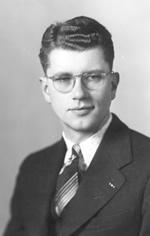
Steve Chen

b. 1941 Topics: The Church Holy Communion; God Presence of God; Jesus Christ Advent, Christmas, Incarnation; The Holy Spirit and The Church Holy Communion; Useful Musical Types Solos Author of "Do You Know Me?" in Hymns from the Four Winds

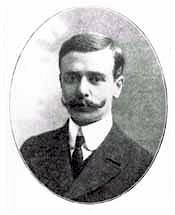
Christian Friedrich Witt

1660 - 1717 Person Name: Christian F. Witt, 1600-1716 Topics: Advent; Jesus Christ Advent; Jesus Christ Return of; Year C Advent 4 Composer (attributed to) of "STUTTGART" in The New Century Hymnal Christian F. Witt (b. Altenburg, Germany, d. 1660; d. Altenburg, 1716) was an editor and compiler of Psalmodia Sacra (1715); about 100 (of the 774) tunes in that collection are considered to be composed by him, including STUTTGART, which was set to the text "Sollt' es gleich." Witt was chamber organist and later Kapellmeister at the Gotha court. He composed vocal and instrumental music, including some sixty-five cantatas. Bert Polman

Ira David Sankey

1840 - 1908 Person Name: Ira D. Sankey Topics: Advenimiento; Advent; Cristo Su Amor; Christ His love; Cristo Su Vida y Minesterio; Christ His Life and Ministry; Segunda Venida de Cristo; Second Coming of Christ; Sufrimientos y Muerte de Cristo; Suffering and Death of Christ Composer of "ROOM FOR THEE" in Celebremos Su Gloria Sankey, Ira David, was born in Edinburgh, Pennsylvania, in 1840, of Methodist parents. About 1856 he removed with his parents to New Castle, Pennsylvania, where he became a member of the Methodist Episcopal Church. Four years afterwards he became the Superintendent of a large Sunday School in which he commenced his career of singing sacred songs and solos. Mr. Moody met with him and heard him sing at the International Convention of the Young Men's Christian Association, at Indianapolis, and through Mr. Moody's persuasion he joined him in his work at Chicago. After some two or three years' work in Chicago, they sailed for England on June 7, 1872, and held their first meeting at York a short time afterwards, only eight persons being present. Their subsequent work in Great Britain and America is well known. Mr. Sankey's special duty was the singing of sacred songs and solos at religious gatherings, a practice which was in use in America for some time before he adopted it. His volume of Sacred Songs and Solos is a compilation from various sources, mainly American and mostly in use before. Although known as Sankey and Moody’s Songs, only one song, "Home at last, thy labour done" is by Mr. Sankey, and not one is by Mr. Moody. Mr. Sankey supplied several of the melodies. The English edition of the Sacred Songs & Solos has had an enormous sale; and the work as a whole is very popular for Home Mission services. The Songs have been translated into several languages. --John Julian, Dictionary of Hymnology (1907) Pseudonymns: Harry S. Low­er Rian A. Dykes ==================== Sankey, I. D., p. 994, i. During the past fifteen years Mr. Sankey's Sacred Songs and Solos have had a very large sale, which has justified him in increasing the number of songs and hymns, including " New Hymns and Solos," to 1200. In 1906 he published My Life and Sacred Songs (London : Morgan & Scott). In addition to the "Story of his Own Life," the work contains an account of the most popular of his solos, with interesting reminiscences of the spiritual awakening of many who were influenced through his singing of them in public. In this respect it corresponds in some measure with G. J. Stevenson's Methodist Hymn Book, &c, 1883 (p. 1094, i.). It is an addition to the Sacred Songs and Solos, which will be held in esteem by many. In addition to his hymn, noted on p. 994, ii., Mr. Sankey gives details of the following:— 1. Out of the shadow-land into the sunshine. [Heaven Anticipated.] Mr. Sankey's account of this hymn is:— "I wrote this hymn specially for the memorial service held for Mr. Moody in Carnegie Hall, where 1 also sang it as a solo. It is the last sacred song of which I wrote both the words and music. The idea was suggested by Mr. Moody's last words, 'Earth recedes; heaven opens before me . . . God is calling me, and I must go.' On account of its peculiar association with my fellow-labourer in the Gospel for so many years, the words are here given in full." The hymn follows on p. 185, in 3 stanzas of 4 lines and a chorus. 2. Rejoice! Rejoice! our King is coming, [Advent.] Mr. Sankey writes concerning this hymn:— "During one of my trips to Great Britain on the SS. City of Rome a storm raged on the sea. The wind was howling through the rigging, and waves like mountains of foam were breaking over the bow of the vessel. A great fear had fallen upon the passengers. When the storm was at its worst, we all thought we might soon go to the bottom of the sea. The conviction came to me that the Lord would be with us iu the trying hour, and sitting down in the reading room, I composed this hymn. Before reaching England the tune had formed itself in my mind, and on arriving in London I wrote it out, and had it published in Sacred Songs and Solos, where it is No. 524 in the edition. of 1888. From Mr. Sankey's autobiographical sketch we gather that he was born at Edinburgh, in Western Pennsylvania, Aug. 28, 1840, joined Mr. Moody in 1871, and visited England for the first time in 1873. The original of the Sacred Songs, &c, of 23 pieces only, was offered as a gift to the London publishers of P. Phillips's Hallowed Song, and declined by them. It was subsequently accepted by Mr. K. O. Morgan, of Morgan & Scott, and is now a volume of 1200 hymns. From a return kindly sent us by Messrs. Morgan & Scott, we find that the various issues of the Sacred Songs and Solos were:— In 1873, 24 pp.; 1874, 72 pp. ; 1876, 153 hymns; 1877, 271 hymns; 1881, 441 hymns; 1888, 750 hymns; 1903, 1200 hymns. In addition, The Christian Choir, which is generally associated with the Sacred Songs and Solos, was issued in 1884 with 75 hymns, and in 1896 with 281. The New Hymns & Solos, by the same firm, were published in 1888. --John Julian, Dictionary of Hymnology, New Supplement (1907)

Georgia Elma Harkness

1891 - 1974 Topics: The Christian Year Reign of Christ; Church Ecumenism; Compassion; Courage; Discipleship and Service; Empowerment; Gift(s); Guidance; Healing; Hope; Hunger; Jesus Christ Cross; Jesus Christ Example; Jesus Christ Guide and Leader; Jesus Christ Images of; Jesus Christ Kingship, Conqueror; Jesus Christ Life In; Jesus Christ Reign; Light; Manna, Bread of Life; Mercy; Ministry; Mission and Outreach; Opening Hymns; Peace (World); Providence; Service Music Offering; Sin; Social Concerns; Struggle and Conflict; Temptation; Trust; Unity; Walking with God/Jesus Christ; World; Advent 2 Year A; Epiphany 5 Year A; Epiphany 6 Year A; Ascension Year A; Proper 6 Year A; Proper 12 Year A; Proper 17 Year A; Proper 23 Year A; Proper 28 Year A; Epiphany 4 Year B; Easter 7 Year B; Proper 10 Year B; Proper 11 Year B; Proper 13 Year B; Proper 22 Year B; Proper 23 Year B; Advent 4 Year C; Epiphany 6 Year C; Lent 5 Year C; All Saints Year C; Proper 28 Year C; Ash Wednesday Year ABC Author of "Hope of the World" in Voices United

T. Tertius Noble

1867 - 1953 Person Name: Thomas Tertius Noble Topics: Anniversaries; Biblical Names and Places David; Biblical Names and Places Ephrathah; Biblical Names and Places Jaar; Biblical Names and Places Jacob; Biblical Names and Places Zion; Church Year Advent; Church Year Advent; Covenant; Disciples / Calling; Doubt; Elements of Worship Praise and Adoration; Endurance; Faith; God Light from; God Trust in; God Trust in; God's Justice; God's People (flock, sheep); Jesus Christ Incarnation; Joy; Occasional Services Dedication / Consecration / Anniversary; Occasional Services Ordination and/or Installation; Royal Psalms; The Incarnation; Unity and Fellowship; Year B, Reign of Christ, November 20-26 Composer of "ST. THEODULPH (VALET WILL ICH DIR GEBBEN) (fragment)" in Psalms for All Seasons Thomas Tertius Nobel (1867-1953) was born in Bath, England, educated at the Royal College of Music, and was a noted composer and organist. He served as a church or­gan­ist in Cam­bridge and Col­ches­ter. He moved to Ely Ca­thed­ral in 1892 as or­gan­ist and choir­mas­ter, and in 1898 to York Min­ster, where he found­ed the York Sym­pho­ny Or­ches­tra, di­rect­ed the York Mu­sic­al So­ci­e­ty, con­duct­ed the York Pa­geant, and re­vived the York Mu­sic­al Fes­tiv­al af­ter a lapse of 75 years. He be­came an hon­or­a­ry fel­low of the Roy­al Coll­ege of Or­gan­ists in 1905. In 1913, he moved to New York Ci­ty, where he was or­gan­ist at St. Tho­mas’ Epis­co­pal Church, and es­tab­lished its choir school and a boys’ choir. In ad­di­tion to com­pos­ing, he wrote about mu­sic ed­u­ca­tion, and helped ed­it the 1916 Pro­test­ant Epis­co­pal hym­nal, and served on the mu­sic com­mit­tee that pre­pared its 1940 suc­ces­sor. He wrote a wide range of mu­sic, but on­ly his serv­ices, an­thems and hymn tunes are still per­formed reg­u­lar­ly. Died: May 4, 1953, Rock­port, Mass­a­chu­setts. http://www.hymntime.com/tch/

Henry A. Bruinsma

1916 - 1991 Topics: Advent Of Christ Adapter of "THIRSTING" in Psalter Hymnal (Blue) It was in Bruinsma's musical compositions that his brilliance was most displayed. “Henry’s personality was … embodied in his music: colorful, radiating charisma, magnetic in a nonverbal way,” niece Jane DeGroot said. Bruinsma displayed musical potential even before he was considered old enough to take music lessons, said his wife, Grace Hekman Bruinsma. The preschooler would eavesdrop on his older brother’s piano lessons. After the teacher left, Bruinsma would climb onto the piano bench to practice his brother’s lesson assignment. Later on, he chose to attend Ottawa Hills High School in Grand Rapids, Mich., for its music program. Following high school graduation in 1933, Bruinsma attended the University of Michigan for a degree in music. He stayed on to complete a Ph.D. in musicology, becoming the first musicologist to graduate from the University of Michigan. It was during his graduate work that Bruinsma wrote Scherzo on a Dutch Nursery Song. “He never lost his love for Dutch history or Dutch Reformed music,” Grace Bruinsma said. It was also during his time at U of M that Bruinsma began taking Grace to music concerts, and in 1939 they were married. Bruinsma began his time as a professor of music at Calvin College (1946-55). In addition to his teaching duties at the college, Bruinsma taught the first music and theology course at Calvin Seminary. He also chaired the first Conference on Liturgy of Music. However, not long after his time at Calvin, Bruinsma decided he was being called to move from teaching to education administration. Of note is his time at Ohio State University (1959-64), where he served as the director of the School of Music. He also held the position of executive committee member of the College of Education. Next, Bruinsma moved to what is now Arizona State University (1964-79), another notable mark in his education administration career. During that time, he served first as chair of the School of Music, then as founding dean of the College of Fine Arts. He is also known to have started the first religious studies program at Arizona State as part of the university’s interdisciplinary studies program. Due to the amount of time he spent in education administration, much of Bruinsma’s musical compositions were never published. After his death, Grace Bruinsma contacted Gerry Bouma of Morningside College in Sioux City, Iowa. Bouma and Henry Bruinsma had met in 1969 at a Grand Rapids Christian High School concert in Chicago. “For whatever reason, Henry and Grace treated us like we were their kids,” Bouma said. Grace asked Bouma to catalog and publish the 10,000 pages of Henry’s material. Taking a semester sabbatical, Bouma began his work. Bouma’s catalog of Bruinsma’s work can be found in the Heritage Hall Archives at the Hekman Library, Calvin College. The Archives also hosts additional works from Bruinsma’s time at Calvin. --Excerpted from Calvin Spark, Spring 2006 issue

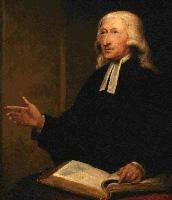
John Wesley

1703 - 1791 Topics: Advent; Christ; Jesus Christ; Judgment; Kingdom; Prophecy; Second Coming; Son of God; The Lord Jesus Christ Second Coming; Watchfulness Alterer of "Lo! He Comes With Clouds Descending" in Great Songs of the Church (Revised) John Wesley, the son of Samuel, and brother of Charles Wesley, was born at Epworth, June 17, 1703. He was educated at the Charterhouse, London, and at Christ Church, Oxford. He became a Fellow of Lincoln College, Oxford, and graduated M.A. in 1726. At Oxford, he was one of the small band consisting of George Whitefield, Hames Hervey, Charles Wesley, and a few others, who were even then known for their piety; they were deridingly called "Methodists." After his ordination he went, in 1735, on a mission to Georgia. The mission was not successful, and he returned to England in 1738. From that time, his life was one of great labour, preaching the Gospel, and publishing his commentaries and other theological works. He died in London, in 1791, in his eighty-eighth year. His prose works are very numerous, but he did not write many useful hymns. It is to him, however, and not to his brother Charles, that we are indebted for the translations from the German. --Annotations of the Hymnal, Charles Hutchins, M.A., 1872 ====================== John Wesley, M.A., was born at Epworth Rectory in 1703, and, like the rest of the family, received his early education from his mother. He narrowly escaped perishing in the fire which destroyed the rectory house in 1709, and his deliverance made a life-long impression upon him. In 1714 he was nominated on the foundation of Charterhouse by his father's patron, the Duke of Buckingham, and remained at that school until 1720, when he went up, with a scholarship, from Charterhouse to Christ Church, Oxford. Having taken his degree, he received Holy Orders from the Bishop of Oxford (Dr. Potter) in 1725. In 1726 he was elected Fellow of Lincoln College, and remained at Oxford until 1727, when he returned into Lincolnshire to assist his father as curate at Epworth and Wroot. In 1729 he was summoned back to Oxford by his firm friend, Dr. Morley, Rector of Lincoln, to assist in the College tuition. There he found already established the little band of "Oxford Methodists" who immediately placed themselves under his direction. In 1735 he went, as a Missionary of the Society for the Propagation of the Gospel, to Georgia, where a new colony had been founded under the governorship of General Oglethorpe. On his voyage out he was deeply impressed with the piety and Christian courage of some German fellow travellers, Moravians. During his short ministry in Georgia he met with many discouragements, and returned home saddened and dissatisfied both with himself and his work; but in London he again fell in with the Moravians, especially with Peter Bohler; and one memorable night (May 24, 1738) he went to a meeting in Aldersgate Street, where some one was reading Luther's preface to the Epistle to the Romans. There, "About a quarter before nine, while he was describing the change which God works in the heart through faith in Christ, I felt my heart strangely warmed. I felt I did trust in Christ, Christ alone, for salvation; and an assurance was given me, that He had taken away my sins, even mine, and saved me from the law of sin and death." From that moment his future course was sealed; and for more than half a century he laboured, through evil report and good report, to spread what he believed to be the everlasting Gospel, travelling more miles, preaching more sermons, publishing more books of a practical sort, and making more converts than any man of his day, or perhaps of any day, and dying at last, March 2, 1791, in harness, at the patriarchal age of 88. The popular conception of the division of labour between the two brothers in the Revival, is that John was the preacher, and Charles the hymnwriter. But this is not strictly accurate. On the one hand Charles was also a great preacher, second only to his brother and George Whitefield in the effects which he produced. On the other hand, John by no means relegated to Charles the exclusive task of supplying the people with their hymns. John Wesley was not the sort of man to depute any part of his work entirely to another: and this part was, in his opinion, one of vital importance. With that wonderful instinct for gauging the popular mind, which was one element in his success, he saw at once that hymns might be utilized, not only for raising the devotion, but also for instructing, and establishing the faith of his disciples. He intended the hymns to be not merely a constituent part of public worship, but also a kind of creed in verse. They were to be "a body of experimental and practical divinity." "In what other publication," he asks in his Preface to the Wesleyan Hymn Book, 1780 (Preface, Oct. 20,1779), "have you so distinct and full an account of Scriptural Christianity; such a declaration of the heights and depths of religion, speculative and practical; so strong cautions against the most plausible errors, particularly those now most prevalent; and so clear directions for making your calling and election sure; for perfecting holiness in the fear of God?" The part which he actually took in writing the hymns, it is not easy to ascertain; but it is certain that more than thirty translations from the German, French and Spanish (chiefly from the German) were exclusively his; and there are some original hymns, admittedly his composition, which are not unworthy to stand by the side of his brother's. His translations from the German especially have had a wide circulation. Although somewhat free as translations they embody the fire and energy of the originals. It has been the common practice, however for a hundred years or more to ascribe all translations from the German to John Wesley, as he only of the two brothers knew that language; and to assign to Charles Wesley all the original hymns except such as are traceable to John Wesley through his Journals and other works. The list of 482 original hymns by John and Charles Wesley listed in this Dictionary of Hymnology have formed an important part of Methodist hymnody and show the enormous influence of the Wesleys on the English hymnody of the nineteenth century. -- Excerpts from John Julian, Dictionary of Hymnology (1907) =================== See also in: Hymn Writers of the Church

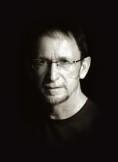
Graham Kendrick

b. 1950 Person Name: Graham Kendrick (b. 1950) Topics: Christingle; The Presentation of Christ in the Temple; Transfiguration; Children and All-Age Worship; God in glory; God in grace and mercy; Jesus Names and images for; Light; Nation and Society; Other Saints and Festivals The Presentation of Christ in the Temple (Candlemas); Other Saints and Festivals The Transfiguration; The Sunday next before Lent Years A, B & C; The Third Sunday of Advent Year B Author of "Shine, Jesus, shine" in Ancient and Modern Graham Kendrick (b. England, August 2, 1950), the son of a Baptist minister in Northamptonshire, is one of the most prolific Christian singer-songwriters in the United Kingdom. He’s written music for over thirty years, and to date has released thirty-eight albums. He is best known for his songs “Shine, Jesus, Shine,” “Knowing You,” and “The Servant King.” Kendrick has received honorary doctorates in divinity from Brunel University and Wycliffe College. In 1987 he helped co-found the March for Jesus, which today is a global phenomenon in which Christians take their faith to the streets in a celebration of Christ. In 1995 Kendrick received a Dove Award for his international work, and he remains an active advocate for Compassion International, which is a Christian child sponsorship organization dedicated to the long-term development of children living in poverty around the world, and also is a contributor to CompassionArt, an organization with the aim of generating income from works of art to assist in the relief of suffering around the planet. Laura de Jong

Miriam Therese Winter

b. 1938 Topics: Canticles, Metrical Paraphrase of; Christ's Gracious Life Promised Coming; Adoration and Praise; Canticles, Metrical Paraphrase of; Christian Year Advent; Evening Prayer; Freedom and Liberation; Jesus Christ; Justice Author of "My Soul Gives Glory to My God" in The United Methodist Hymnal

Pages


Export as CSV
It looks like you are using an ad-blocker. Ad revenue helps keep us running. Please consider white-listing Hymnary.org or getting Hymnary Pro to eliminate ads entirely and help support Hymnary.org.