You help make Hymnary.org possible. More than 10 million people from 200+ countries found hymns, liturgical resources and encouragement on Hymnary.org in 2025, including you. Every visit affirms the global impact of this ministry.

If Hymnary has been meaningful to you this year, would you take a moment today to help sustain it? A gift of any size—paired with a note of encouragement if you wish—directly supports the server costs, research work and curation that keep this resource freely available to the world.

Give securely online today, or mail a check to:
Hymnary.org
Calvin University
3201 Burton Street SE
Grand Rapids, MI 49546

Thank you for your partnership, and may the hope of Advent fill your heart.

Browse People

Topics:scripture
In:people

Planning worship? Check out our sister site, ZeteoSearch.org, for 20+ additional resources related to your search.
Showing 341 - 350 of 953Results Per Page: 102050

John T. Grape

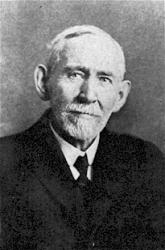
1835 - 1915 Topics: Holy Scripture Composer of "ALL TO CHRIST" in Mil Voces para Celebrar John Thomas Grape USA 1835-1915. Born at Baltimore, MD, he became a successful coal merchant. He married Sophia F MacCubbin, and they had one daughter, Agnes. He was a member of Monument St. Methodist Church in Baltimore, where he played the organ, directed the choir, and was active in the Sunday school. Later, he directed the choir at the Hartford Avenue Methodist Church. The hymn noted below was composed by Grape in 1868, with lyrics composed by Envina Mable Hall of the same church in 1865 while sitting in the choir loft during a sermon. Both words and music had been given to the pastor, Rev George W Schreck, at different times, and one day he remembered he had been given both. Grape's tune had a refrain, so Ms Hall, hearing it, then added words to her poem for that, and the hymn was complete. At Schreck's urging they sent the hymn to Professor Theodore Perkins, publisher of “Sabbath Carols” periodical, and it became popular. Grape died in Baltimore. John Perry

F. A. Graves

1856 - 1927 Person Name: F A Graves Topics: The Holy Scriptures Author of "Hungry, Lord, for Thy Word of Truth" in Redemption Hymnal Rv Frederick Arthur Graves USA 1856-1927. Born at Williamstown, MA, he was raised in a Christian family, but was orphaned at age 9 after the death of his father, a taylor, then three years later his mother (tuberculosis), he lived on a farm with a family names Hollis that worked him hard and treated him poorly. He was diagnosed with epilepsy when 14. At 21 he moved to Nobles County, MN, and it seemed that his seizures had stopped. Grateful for that, he served the American Sunday School Union as an organizer and evangelist. He was musical, and after age 35 wrote 43 songs. He, with wife Vina, raised three children, Arthur, Irene, and Carl. He studied Bible and music in Chicago, IL and Northfield, MA. Returning to Minneapolis and hearing evangelist John A Dowie, he experienced permanent healing, which provided a backdrop for his gospel songs. He was ordained an Assemblies of God minister in 1916. Later, he moved to Zion Hill,IL, where he lived the rest of his life. He died at Zion City, IL. Nearly 1000 people attended his funeral there. John Perry

Alan Gray

1855 - 1935 Person Name: Alan Gray, 1855-1935 Topics: Canticles and Scripture Paraphrases Composer (descant) of "HANOVER" in The Book of Praise Born: December 23, 1855, York, England. Died: September 27, 1935, Cambridge, England. Buried: Trinity College, Cambridge, England. Alan Gray (23 December 1855, York – 27 September 1935, Cambridge) was a British organist and composer. Born in York, he attended St Peter's School in York and Trinity College, Cambridge. From 1883 until 1893 he was Director of Music at Wellington College. In 1893 he returned to Cambridge to be organist at Trinity College, and remained organist there until 1930. Among his compositions are liturgical music for Morning and Evening Prayer and the Office of Holy Communion for use in the Church of England according to the Book of Common Prayer, including an Evening Service in f minor, a setting of Holy Communion in G, several anthems, including 'What are these that glow from afar?', and a collection of descants to various hymn tunes, several of which are still in use today (Common Praise (2000) includes four). He also composed a number of items for organ, for violin solo, and for voice and orchestra to religious and secular texts. --en.wikipedia.org/wiki/

H. W. Greatorex

1813 - 1858 Person Name: Henry W. Greatorex Topics: Responses, Musical to Scripture; Musical Responses to Scripture Composer of "GREATOREX" in The Worshiping Church Henry Wellington Greatorex United Kingdom 1813-1858. Born at Burton upon Trent, England, he received a thorough musical education from his father, Thomas Greatorex, who was for many years organist of Westminster Abbey, and conductor of the London concerts of ancient music. Henry became a composer, author, compiler, editor, and arranger of music. He emigrated to the U.S. In 1839. In 1849 he married artist Eliza Pratt, and they had four children: Elizabeth, Kathleen, Thomas, and Francis Henry. Prior to settling in New York City as a music teacher and organist at Calvary Church, he played at churches in Hartford, CT, including Center Church and St Johns Episcopal Church in West Hartford, CT. He frequently sang in oratorios and concerts. For some years he was also organist and conductor of the choir at St. Paul's Chapel. In 1853 he was an organist at St. Philip's Episcopal Church in Charleston, SC. He did much to advance the standard of sacred music in the U.S. In days when country singing school teachers imposed more rudimentary melodies on hymn books. He published a collection of “Psalm & hymn tunes, chants, anthems & sentences” (Boston 1851). He died of yellow fever in Charleston, SC. John Perry

Walter Greatorex

1877 - 1949 Topics: Scripture Songs Composer of "[Tell out, my soul, the greatness of the Lord!]" in Sing Joyfully Walter Greatorex (b. Mansfield, Nottinghamshire, England, 1877; d. Bournemouth, Hampshire, England, 1949) was director of music at Gresham's School, Holt, Norfolk, where from 1911-1936. Before that he served as assistant music master at Uppingham School in Rutland (1900-1910). Greatorex's musical education began as a chorister at King's College, Cambridge, England, and he received his university music training at St. John's College, Cambridge. Bert Polman

Fred Pratt Green

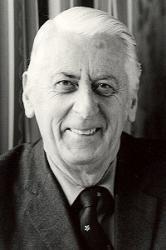
1903 - 2000 Person Name: Fred Pratt Green, 1903- Topics: Canticles and Scripture Paraphrases Paraphraser of "Let every Christian Pray" in The Book of Praise The name of the Rev. F. Pratt Green is one of the best-known of the contemporary school of hymnwriters in the British Isles. His name and writings appear in practically every new hymnal and "hymn supplement" wherever English is spoken and sung. And now they are appearing in American hymnals, poetry magazines, and anthologies. Mr. Green was born in Liverpool, England, in 1903. Ordained in the British Methodist ministry, he has been pastor and district superintendent in Brighton and York, and now served in Norwich. There he continued to write new hymns "that fill the gap between the hymns of the first part of this century and the 'far-out' compositions that have crowded into some churches in the last decade or more." --Seven New Hymns of Hope , 1971. Used by permission.

Harold Green

1871 - 1930 Person Name: H. Green (1871-1930) Topics: God, Spirit Word of Truth, the Scriptures Composer of "QUIETUDE" in Hymns for Today's Church (2nd ed.) Born: October 23, 1871, Helme, York, England. Died: December 20, 1930, Malenge Farm, Umzimkalu, Cape Province, South Africa. Englishman Harold Green was a pastor’s son. He served with the South Africa General Mission in Pondoland, a region on the eastern coast of South Africa. In 1920, when another missionary, Emily May Grimes Crawford wrote a hymn called "The Quiet Hour," Green provided the tune for it. --wordwisehymns.com/2010/12/20/

Christian Gregor

1723 - 1801 Topics: The Scriptures; Scriptures Author of "Holy Lord, Holy Lord" in Moravian Book of Worship Gregor, Christian, son of Georg Gregor, a peasant living in the Silesian village of Dirsdorf, near Peilau, was born at Dirsdorf, Jan. 1, 1723. In 1742 he went to Herrnhut, where he was at first employed in tuition. He became leader of the music in the [Moravian] Brethren's congregation at Herrnhaag, in 1748, and in 1749 at Zeist; but in 1753 he returned to Herrnhut as cashier of the Brethren's Board of Direction. He was, in 1756, ordained diaconus, in 1767 presbyter, and in 1789 bishop of the Brethren's Church. On Nov. 6,1801, he attended a meeting, held at Herrnhut, of the Board of Direction of which he had been a member from 1764. Just as he entered his house at Berthelsdorf, near Herrnhut, he was struck with paralysis, and died that same day. (Koch, vi. 436; Allgemeine Deutsche Biographie, ix. 630.) He was a man greatly beloved and respected, simple of heart, loving, earnest and hardworking; and was entrusted with many important missions and visitations. His hymns are characterised by childlike fervour of devotion to his crucified Lord. A number appeared in Des kleinen Brüder-Gesangbuchs dritter Theil, Barby, 1767; but they were mostly contributed to the Gesang-buch zum Gebrauch der evangelischen Brüder Gemeinen, Barby, 1778, of which he was the principal editor. He was also an excellent organist, and edited, in 1784, a collection of accompanying tunes for the hymnbook of 1778, contributing thereto various melodies by himself. A little volume entitled Historische Nachrteht vom Brüder-Gesangbuche des Jahres 1778, und von dessen Lieder-Verfassern, Gnadau, 1835 (2nd ed., 1851), occasionally referred to in these pages, is based on materials collected by Gregor. His hymns in English common use are:— i. Bis dereinst mein Stündlein schlägt. [Love to Christ.] 1778, No. 640, in 5 st. of 4 1. Translated as:— Till permitted hence to go, of st. i., ii., iv., as No. 563 in the Moravian Hymn Book, 1801 (1886, No. 1228). In 1826 an original st.anza by T. Bird was added, beginning, " Till the day when I shall tread." Repeated thus in 1886, No. 1228, and in J. A. Latrobe's Collection, 1841, No. 484. ii. Die Gottes Cherubim. [The Angels.] Appeared as No. 1877 in Appendix xii. c, 1746, to the Herrnhut Gesang-Buch of 1735, thus :— "Die Gottes Cherubim Erheben ihre Stimm, (Funkelnd von Blitz und Strahl,) Ihr Lied ist, wenn ichs sagen darf, Dazu spielt mehr als eine Harf: Ehre dem Seitenmaal!" In 1778 it is included as No. 1600, beginning, "Die Gottes Seraphim," and expanded to three stanzas; i. of the Angels; ii. of the Redeemed; iii. of the Church on Earth. Here the song, "Ehre dem Seitenmaal," is given to the Church on Earth, and a paraphrase of Is. vi. 3, to the Angels. The only translation in common use is :— The Seraphim of God, in full from the 1778, by J. Miller and F. W. Foster, as No. 792 in the Moravian Hymn Book, 1789 (1886, No. 1220), repeated in J. A. Latrobe's Collection, 1841, No. 424. Another translation is The Cherubims of God," from the original form, as No. 93 in pt. iii. of the Moravian Hymn Book, 1748. iii. Heiliger, heiliger, heiliger, Herr Zebaoth. [Public Worship.] The introductory hymn in 1778, in 4 st. of 81, as on "The Word of God." The only translation is:— Holy Lord, Holy lord, Holy and Almighty Lord, by F. W. Foster, C. G. Clemens, and J. Swertner, as No. 1 in the Moravian Hymn Book, 1789 (1886, No. 1). Included from the text of 1801, as No. 217 in Dr. Pagenstecher's Collection, 1864. iv. Nach tausendfachen Plagen. [Passiontide.] 1778, No. 128, in 8 1. It is translated as :— Behold, my soul, Thy Saviour, by P. H. Molther, as No. 352 in the Moravian Hymn Book, 1789. See No. vi. v. 0 angenehme Augenblicke. [Eternal Life.] Written in 1766. In 1778, No. 1749, in 2 st. of 8 1. The translations are :— 1. What heavenly joy and consolation, by P. H, Molther, of st. i., as No. 886 in the Moravian Hymn Book, 1789 (1886, No. 1314, st. iii.). Included as st. iii. of No. 403 in the Irish Church Hymnal, 1873. 2. 0 what joy, 0 what joy awaiteth me. No. 988 in the Moravian Hymn Book, 1801. In the 1886 edition it is marked as a translation of No. v. as above. It bears more resemblance, however, to "O wie wallt mein Herz," which is No. 268 in the 1806 Appendix to the Brüder Gesang-Buchof 1778. vi. 0 süsse Seelenweide. [Passiontide.] 1778, No. 167, in 11 st. of 8 1. St. i., ii. are ascribed to Gregor; iii., iv., xi. to Johann Prätorius ; and v.-x. to C. B. von Zinzendorf (taken from Nos. 40 and 41 of the collected edition of his hymns, 1754). The translation is:— How is my soul delighted, a translation of st. i., ii., iv., v., vii., x. by F. W. Foster, and J. Miller, as No. 360 in the Moravian Hymn Book, 1789. In the 1801 and later editions (1886, No. 407), Molther's translation of No. iv. was prefixed as st. i., new trranslations of st. viii., x. given, and the rest altered. In the Book of Common Praise, ed. 1872, No. 86, is st. i., ii., 11. 5-8, and iii., by Gregor; and iv., 11. 5-8, by Prätorius, beginning, "Behold, my soul, thy Saviour." vii. 0 Tage wahrer Seligkeit. [Joy of Forgiveness.] 1778, No. 398, in 6 st. of 8 1., included in the Berlin Geistliche Lieder S. , ed. 1863. Translated as:— O days of solid happiness in full as No. 340 in the Moravian Hymn Book, 1801 (1886, No. 386). Two centos from the text of 1849 are in common use :— 1. "What days of solid happiness," st. i.-iv., as No. 433 in the edition of 1857 of Mercer's The Church Psalter & Hymnbook. 2. "Whene'er we contemplate the grace," st. iv.-vi. as No. 396 in the Irish Church Hymnal, 1873. viii. Wenn schlägt die angenehme Stunde. [Ascension.] Written for Aug. 17, 1765, and included as No. 113 in 1767, as above, in 8 1. Translated as :— When, O when shall I have the favour, by P. H. Molther, c. 1774, included as No. 839 in the Moravian Hymnbook, 1789, repeated as st. ii. of No, 403, in the Irish Church Hymnal, 1873. In the 1886 ed. of the Moravian Hymnbook, No. 1314, it begins, "O when shall I have that great favour." ix. Wie wifd mir einst dooh sein. [Eternal Life.] 1778, No. 1743, in 10 st. of 6 1. In the Historische Nachricht thereto, st. i.-iii. are marked as by Gregor, and st. iv.-x. as by N. L. von Zinzendorf. St. iv.-x. are recast from a hymn beginning, "Die Bäume blühen ab," writ¬ten in the autumn of 1721, and included as No. 1245 in the 3rd edition, 1731, of his Sammlung geistund lieblicher Lieder, in 46 st. of 4 1., the stanza of the original used being in order 39, 42, 34, 18, 22, 29, 45. The only translation in common use is:— What shall I feel, when I, in full from the 1778, by J. A. Latrobe, as No. 885 in the Moravian Hymnbook, 1789 (1886, No. 1301). Two centos are in use:- 1. "How shall the joy be told"; st. i.-iv., vi., viii. altered in J. A. Latrobe's Collection, 1841, No. 498. 2. "I hear the enraptured song"; st. 2, 6, 9, 10, as No. 582 in the App. of 1873 to Mercer's The ChurchPsalter & Hymnbook. Hymns not in English common use:— x. Ach mein Heir Jesu! dein Nahesein. Communion with Christ. 1767, as above, No. 432, in 10 st. In the Berlin Geistliche Lieder S.,, ed. 1863, No. 925. Justly characterised by Dr. Schaff in his Christ in Song, 1869, p. 496, as "One of the sweetest hymns from the holy of holies of the believer's personal communion with his Saviour, and very characteristic of Moravian piety in its best form." The trsanslations are (1) "What peace divine, what perfect happiness," by P. H. Molther, as No. 278 in the Moravian Hymn Book, 1789 (1849, No. 362). In the 1886 ed. of the Moravian Hymn Book, No. 359, it begins with the translation of st. v., "Gracious Redeemer, grant to us while here." (2) "Jesus, our Lord, when Thou art near," by Dr. H. Mills, 1845 (1856, p. 122). (3) "Ah dearest Lord! to feel that Thou art near," by Miss Winkworth, 1858, p. 168. (4) "Ah, Jesus, Lord, Thou art near to me," in the British Herald, Dec, 1866, p. 372, and as No. 304 in Reid's Praise Book, 1872. (5) "Jesus, my Lord, Thy nearness does impart," by E. Reynolds for Schaff’s Christ in Song, 1869, p. 496. xi. Hallelujah! der Heiland lebt. Easter. 1778, No. 203, in 17 st. (st. xiv. being by Matthaus Stach, and first published as st. ii. of No. 109, in 1767). Translated as "Sing Hallelujah, Christ doth live," as No. 131 in the Moravian Hymn Book, 1801 (1886, No. 142), repeated in Bishop Ryle's Collection, 1860, No. 131. Beginning with the translation of st. ix., “The God of Peace, to guilty man," 6 st. were included as No. 90 in Reid's Praise Book, 1872. [Rev. James Mearns, M.A.] -- John Julian, Dictionary of Hymnology (1907)

Edvard Grieg

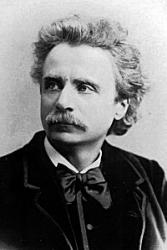
1843 - 1907 Topics: Scripture Songs Harmonizer of "[Behold a host arrayed in white]" in Sing Joyfully Edvard Hagerup Grieg Born at Bergen, Norway, of Scottish descent, son of a merchant and vice-consul in Bergen, his mother was a music teacher. He became a pianist and composer, with his standard classical repertoire known worldwide. He developed Norwegian folk music into his own compositions, helping to develop a national musical identity. As a child his mother taught him piano from age six. He attended several schools. His uncle, a Norwegian violinist, recognized his nephew’s talents at age 15 and urged his parents to send him to the Leigzig Conservatory in Germany. He enrolled there and concentrated on piano. He enjoyed the many concerts and recitals given in Leipzig. He disliked the discipline of the conservatory course of study, but he loved the organ, mandatory for piano students. In 1860 he survived a life-threatening lung disease, pleurisy and tuberculosis. Throughout life, his health was impaired by a destroyed left lung and disformity of his thoracic spine. He suffered numerous respiratory infections, and ultimately developed combined heart and lung failure. He was admitted many times for various spas and sanatoria in both Norway and abroad. Several of his doctors became close friends. In 1861 he made his debut as a concert pianist at Karlshamm, Sweden. He finished Leipzig studies in 1862 and held a concert in his hometown, playing Beethoven’s ‘Pathetique’ sonata. In 1863 he went to Copenhagen, Denmark, remaining there three years. There he met Danish composers and a fellow Norwegian composer, Rikard Nordraak, who wrote the Norwegian National Anthem. When Nordraak died in 1866, Grieg composed a funeral march in his honor. In 1867 Grieg married his first cousin, Nina Hagerup. Their only child, Alexandra, was born the following year. She died from meningitis at age two. In 1868 he wrote his Piano Concerto in A-minor. It was performed by Edmund Nuepert in Copenhagen because Grieg was in Norway at the time, fulfilling other commitments. In 1868 Franz Liszt, not yet having met Grieg, wrote a testimonial of him, resulting in Grieg’s obtaining a travel grant. The two met in Rome in 1870. Each was impressed with the other’s musical accomplishments. Grieg had close ties with the Bergen Philharmonic Orchestra and became its leader 1880-1882. In 1888 Grieg met Tchaikovsky in Leipzig. He was struck by Tchaikovsky’s sadness. Tchaikovsky praised Grieg’s music. The Norwegian government awarded Grieg a pension. In 1903 he made gramophone recordings of his piano music in Paris, France. He also made live piano music rolls for the Hupfeld Phonola piano-player system and Weldt-Mignon reproducing system. He also worked with the Aeolian Company for its ‘Autograph Metro-style’ piano roll series, wherein he indicated the tempo mapping of many of his pieces. In 1906 he met pianist and composer, Percy Grainger, in London. Grainger was an admire of Grieg’s music, and they developed a strong empathy for each other. Grieg wrote of Grainger: “I have written Norwegian dances that no one in my country can play, and here comes this Australian who plays them as they ought to be played. He is a genius that we Scandinavians cannot do other than love.” Grieg and his wife considered themselves Unitarians, and attended that church denomination. When Grieg died after a long illness, at age 64, his funeral drew more than 30,000 people in his hometown, who came out to honor him. His own funeral march, in honor of Nordraak, was played, along with a 2nd march, by his friend, Johan Halvorsen, who married Grieg’s niece. Grieg was cremated, with ashes entombed in a mountain crypt. Later, his wife’s were placed with his. John Perry

Thomas Grigg

Topics: Holy Scriptures Composer of "TIVERTON" in Book of Worship with Hymns and Tunes

Pages


Export as CSV
It looks like you are using an ad-blocker. Ad revenue helps keep us running. Please consider white-listing Hymnary.org or getting Hymnary Pro to eliminate ads entirely and help support Hymnary.org.