You help make Hymnary.org possible. More than 10 million people from 200+ countries found hymns, liturgical resources and encouragement on Hymnary.org in 2025, including you. Every visit affirms the global impact of this ministry.

If Hymnary has been meaningful to you this year, would you take a moment today to help sustain it? A gift of any size—paired with a note of encouragement if you wish—directly supports the server costs, research work and curation that keep this resource freely available to the world.

Give securely online today, or mail a check to:
Hymnary.org
Calvin University
3201 Burton Street SE
Grand Rapids, MI 49546

Thank you for your partnership, and may the hope of Advent fill your heart.

Person Results

Topics:advent+of+christ+
In:people

Planning worship? Check out our sister site, ZeteoSearch.org, for 20+ additional resources related to your search.
Showing 351 - 360 of 666Results Per Page: 102050

Timothy Dudley-Smith

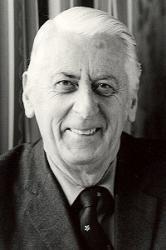
1926 - 2024 Topics: Canticles, Metrical Paraphrase of; The Glory of the Triune God Providence; Christ's Gracious Life Promised Coming; Particular Times of Worship Evening; Adoration and Praise; Canticles, Metrical Paraphrase of; Christian Year Advent; Evening Prayer; Freedom and Liberation; Jesus Christ; Joy Author of "Tell Out, My Soul" in The United Methodist Hymnal Timothy Dudley-Smith (b. 1926) Educated at Pembroke College and Ridley Hall, Cambridge, Dudley-Smith has served the Church of England since his ordination in 1950. He has occupied a number of church posi­tions, including parish priest in the diocese of Southwark (1953-1962), archdeacon of Norwich (1973-1981), and bishop of Thetford, Norfolk, from 1981 until his retirement in 1992. He also edited a Christian magazine, Crusade, which was founded after Billy Graham's 1955 London crusade. Dudley-Smith began writing comic verse while a student at Cambridge; he did not begin to write hymns until the 1960s. Many of his several hundred hymn texts have been collected in Lift Every Heart: Collected Hymns 1961-1983 (1984), Songs of Deliverance: Thirty-six New Hymns (1988), and A Voice of Singing (1993). The writer of Christian Literature and the Church (1963), Someone Who Beckons (1978), and Praying with the English Hymn Writers (1989), Dudley-Smith has also served on various editorial committees, including the committee that published Psalm Praise (1973). Bert Polman

Benjamin Webb

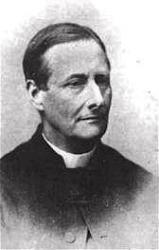
1819 - 1885 Topics: Jesus Christ Life and Teaching; Adoration and Praise; Jesus Christ Baptism; Jesus Christ Cross; Jesus Christ Incarnation; Jesus Christ Life and Ministry; Jesus Christ Life of; Jesus Christ Love of; Jesus Christ Saviour; Jesus Christ Son of God/Man (David); Jesus Christ Teacher/Teachings; Love; Obedience; Sacrifice; Service Music Doxologies; Trinity; Christmas 1 Year A; Baptism of Jesus Year A; Epiphany 2 Year A; Epiphany 7 Year A; Lent 1 Year A; Proper 17 Year A; Proper 21 Year A; Proper 21 Year A; Reign of Christ Year A; Advent 2 Year B; Baptism of Jesus Year B; Lent 1 Year B; Lent 5 Year B; Palm/Passion Sunday Year B; Easter 5 Year B; Proper 12 Year B; Proper 26 Year B; Proper 27 Year B; Proper 28 Year B; Reign of Christ Year B; Epiphany 6 Year C; Epiphany Last/Transfig. Year C; Lent 1 Year C; Lent 2 Year C; Lent 4 Year C; Holy Thursday Year C; Easter 4 Year C; Easter 7 Year C; Tuesday in Holy Week Year ABC; Holy thursday Year ABC Translator of "O Love, How Deep" in Voices United Benjamin Webb (b. London, England, 1819; d. Marylebone, London, 1885) originally translated the text in eight stanzas, although six only appear in Lift Up Your Hearts. It was published in The Hymnal Noted (1852), produced by his friend John Mason Neale. Webb received his education at Trinity College, Cambridge, England, and became a priest in the Church of England in 1843. Among the parishes he served was St. Andrews, Wells Street, London, where he worked from 1862 to 1881. Webb's years there coincided with the service of the talented choir director and organist Joseph Barnby, and the church became known for its excellent music program. Webb edited The Ecclesiologist, a periodi­cal of the Cambridge Ecclesiological Society (1842-1868). A composer of anthems, Webb also wrote hymns and hymn translations and served as one of the editors of The Hymnary (1872). Bert Polman ================== Webb, Benjamin, M.A., was born in London in 1820, and was educated in St. Paul's School; whence he passed to Trinity College, Cambridge, in 1838, B.A. 1842, M.A. 1845. Ordained by the Bishop [Monk] of Gloucester and Bristol he was Assistant Curate of Kemeston in Gloucestershire, 1843-44; of Christ Church, St. Pancras, 1847-49; and of Brasted, Kent, 1849-51; at which date he was presented to the P. C. of Sheen in Staffordshire, which he held until 1862, when he became Vicar of St. Andrews, Wells Street, London. In 1881 the Bishop [Jackson] of London collated him to the Prebend of Portpool in St. Paul's Cathedral. Mr. Webb was one of the Founders of the Cambridge Camden, afterwards the Ecclesiological Society; and the Editor of the Ecclesiologist from 1842 to 1868, as well as the General Editor of the Society's publications. His first appearance in print was as joint editor of Bishop Montague's Articles of Inquiry in 184; in 1843 he was joined with Mr. J. M. Neale in An Essay on Symbolism, and A Translation of Durandus; in 1847 he put forth his valuable work on Continental Ecclesiology; in 1848 he was joint editor with Dr. Mill of Frank’s Sermons, for the Anglo-Catholic Library, and with the Rev. J. Fuller-Russell of Hierurgia Anglicana. After the decease of his father-in-law (Dr. Mill), he edited Dr. Mill's Catechetical Lectures, 1856; a second edition of Dr. Mill's Christian Advocates Publications on the Mythical Interpretation of the Gospels, 1861; and of Dr. Mill's Sermons on our Lord's Temptation, 1873. He was also one of the editors of the Burntisland reprint of the Sarum Missal. One of his most valuable works is Instructions and Prayers for Candidates for Confirmation, of which the third edition was published in 1882. Mr. Webb was one of the original editors of the Hymnal Noted, and of the sub-Committee of the Ecclesiological Society, appointed to arrange the words and the music of that book; and was also the translator of some of the hymns. In conjunction with the Rev. Canon W. Cooke he was editor of the Hymnary, 1872, for which office his habitual reconstruction and composition of the words of the anthems used at St. Andrew's, Wells Street, as well as his connection with the Hymnal Noted, eminently qualified him. His original hymns contributed to the Hymnary, 1871 and 1872, were:-- 1. Assessor to thy King. St. Bartholomew. In the Hymnary, 1872. 2. Behold He comes, thy King most holy. Advent. Originally written to be sung in St. Andrew's Church, Wells Street, as an anthem to the music of Schumann's Advent-lied, and afterwards published in the Hymnary, 1872. 3. Praise God, the Holy Trinity. Hymn of Faith. Originally written for use in St. Andrew's, Wells Street, and subsequently in the Hymnary, 1872. 4. Praise the Rock of our salvation. Dedication of a Church. Published in the Hymnary, 1872. Mr. Webb's authorised text is in the Westminster Abbey Hymn Book, 1883. 5. Ye angel hosts above. Universal Praise to God. In the Hymnary, 1872. He died in London, Nov. 27, 1885. [Rev. William Cooke, M.A.] -- John Julian, Dictionary of Hymnology (1907)

Gregg DeMey

Topics: Affliction; Biblical Names and Places Jordan; Biblical Names and Places Mizar; Biblical Names and Places Mount Hermon; Broken-hearted; Church Year Advent; Church Year Lent; Comfort and Encouragement; Desiring God; Elements of Worship Baptism; Elements of Worship Confession (Individual); Elements of Worship Gathering; Elements of Worship Lord's Supper; Elements of Worship Praise and Adoration; Emmaus Road; Enemies; Fear; God Trust in; God as Rock; God's Love; Hope; Jesus Christ Good Shepherd; Lament Individual; Loneliness; Longing for God; Mercy; Mocking; Occasional Services Funerals; Processions; Questioning; Remnant of Isarel; Seeking God; Sorrow; Temple; Temptation And Trial; Year A, B, C, Easter, Easter vigil; Year C, Ordinary Time after Pentecost, June 19-25 (if after Trinity Sunday) Author of "Psalm 42/43 (A Responsorial Setting)" in Psalms for All Seasons Gregg DeMey (b. 1972) was born in Grand Rapids, MI, studied at Calvin College (BA Music Theory and Composition), and graduated from Calvin Theological Seminary in 1998 (MTS) and 2006 (M.Div). He served as worship pastor at Granite Springs in Sacramento, CA; as a church planter at Lakeside Church in Ludington, MI; and is currently the Teaching Pastor at Elmhurst Christian Reformed Church in Elmhurst, IL. Gregg DeMey

Ronald F. Krisman

Topics: Assurance; Biblical Names and Places Jacob; Church Year Advent; Church Year Baptism of the Lord; Daily Prayer Evening Prayer; Earth; Fear; Freedom from Fear; God as Refuge; God as Shield; God as Creator; God's Wonders; God's Armor; God's Deeds; God's Nearness; God's Presence; God's Protection; God's Strength; Hymns of Praise; Mission; Occasional Services New Year; Peace; People of God / Church Renewal; People of God / Church Witnessing; Prayer; Songs of Zion; Suffering; Victory; War and Revolution; Witness; Year A, B, C, Easter, Easter vigil; Year A, Ordinary Time after Pentecost, May 29-June 4 (if after Trinity Sunday); Year C, Reign of Christ, November 20-26; Texts in Languages Other than English Spanish Harmonizer of "AMPARO" in Psalms for All Seasons

S. Baring-Gould

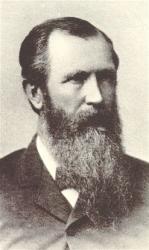
1834 - 1924 Person Name: Sabine Baring-Gould, 1834-1924 Topics: Advent; Jesus Christ Incarnation; Saints Days and Holy Days Anunciation of the Blessed Virgin; Saints Days and Holy Days Mary, the Mother of th Lord; Saints Days and Holy Days St Matthias; Virgin Mary Paraphraser of "The angel Gabriel from heaven came" in Together in Song Baring-Gould, Sabine, M.A., eldest son of Mr. Edward Baring-Gould, of Lew Trenchard, Devon, b. at Exeter, Jan. 28, 1834, and educated at Clare College, Cambridge, B.A. 1857, M.A. 1860. Taking Holy Orders in 1864, he held the curacy of Horbury, near Wakefield, until 1867, when he was preferred to the incumbency of Dalton, Yorks. In 1871 he became rector of East Mersea, Essex, and in 1881 rector of Lew Trenchard, Devon. His works are numerous, the most important of which are, Lives of the Saints, 15 vols., 1872-77; Curious Myths of the Middle Ages, 2 series, 1866-68; The Origin and Development of Religious Belief, 2 vols., 1869-1870; and various volumes of sermons. His hymns, original and translated, appeared in the Church Times; Hymns Ancient & Modern, 1868 and 1875; The People's Hymnal, 1867, and other collections, the most popular being "Onward, Christian soldiers," "Daily, daily sing the praises," the translation "Through the night of doubt and sorrow," and the exquisite Easter hymn, "On the Resurrection Morning." His latest effort in hymnology is the publication of original Church Songs, 1884, of which two series have been already issued. In the Sacristy for Nov. 1871, he also contributed nine carols to an article on "The Noels and Carols of French Flanders.” These have been partially transferred to Chope's and Staniforth's Carol Books, and also to his Church Songs. --John Julian, Dictionary of Hymnology (1907) ================== Baring-Gould, S., p. 114, i. Other hymns in common use are:— 1. Forward! said the Prophet. Processional. Appeared in the New Mitre Hymnal, 1874. 2. My Lord, in glory reigning. Christ in Glory. In Mrs. Brock's Children's Hymn Book, 1881. 3. Now severed is Jordan. Processional. Appeared in the S. Mary, Aberdeen, Hymnal, 1866, the People's Hymnal, 1867, &c. --John Julian, Dictionary of Hymnology, Appendix, Part II (1907)

R. M. McIntosh

1836 - 1889 Person Name: Rigdon McCoy McIntosh, 1836-1899 Topics: Año Cristiano Adviento; Christian Year Advent; Cielo Nuevo y Tierra Nueva; New Heaven and New Earth; Eternal Life; Vida Eterna; Jesucristo Reinado de; Jesus Christ Reign of Adapter of "PROMISED LAND" in Santo, Santo, Santo Used Pseudonym: Robert M. McIntosh ========== Rigdon (Robert) McCoy McIntosh USA 1836-1899 Born at Maury County, TN, into a farming family, he attended Jackson College in Columbia, TN, graduating in 1854. He studied music under Asa Everett in Richmond, VA, and became a traveling singing school teacher. He also served briefly in the Civil War. He wrote several hymns during this period of his life. In 1860 he married Sarah McGlasson, and they had a daughter, Loulie Everett. In 1875 he was appointed head of the Vanderbilt University Music Department in Nashville, TN. In 1877 he joined the faculty of Emory College, Oxford, GA. In 1895 he left Emory College to devote his time to the R M McIntosh Publishing Company. He also served as music editor of the Methodist Episcopal Church South Publishing House for over 30 years. His song book publications include: “Good news” (1876), “Light & life” (1881), “Prayer & praise” (1883), “New life” (1879), “New life #2” (1886), and “Songs of service” (1896). He died in Atlanta, GA. John Perry

Craig Sellar Lang

1891 - 1971 Person Name: Craig S. Lang, 1891-1971 Topics: Doxologies; Biblical Names & Places Satan; Deliverance; Return of Christ; Advent; Advent; Biblical Names & Places Satan; Deliverance; Doxologies; Freedom; Mercy; Return of Christ Composer (desc.) of "RICHMOND" in Psalter Hymnal (Gray) Craig S. Lang (b. Hastings, New Zealand, 1891; d. London, England, 1971), was educated at Clifton College, Bristol, England, and earned his D.Mus. at the Royal College of Music in London. Throughout his life he was an organist and a music educator as well as a composer of organ, piano, and choral works. Lang was also music editor of The Public School Hymn Book (1949). He named many of his hymn tunes after Cornish villages. Bert Polman

Fred Pratt Green

1903 - 2000 Person Name: F. Pratt Green, 1903-2000 Topics: Baptism of Jesus; Advent II Year A; Advent II Year B; Baptism of Christ Year A; Baptism of Christ Year B; Baptism of Christ Year C Author of "When Jesus came to Jordan" in Common Praise The name of the Rev. F. Pratt Green is one of the best-known of the contemporary school of hymnwriters in the British Isles. His name and writings appear in practically every new hymnal and "hymn supplement" wherever English is spoken and sung. And now they are appearing in American hymnals, poetry magazines, and anthologies. Mr. Green was born in Liverpool, England, in 1903. Ordained in the British Methodist ministry, he has been pastor and district superintendent in Brighton and York, and now served in Norwich. There he continued to write new hymns "that fill the gap between the hymns of the first part of this century and the 'far-out' compositions that have crowded into some churches in the last decade or more." --Seven New Hymns of Hope , 1971. Used by permission.

Edward Henry Bickersteth

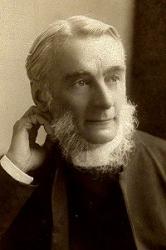
1825 - 1906 Person Name: Bp. E. H. Bickersteth, 1825-1906 Topics: Advent Second Coming of Christ Author of "O Holy Father, who in tender love" in Methodist Hymn and Tune Book Bickersteth, Edward Henry, D.D., son of Edward Bickersteth, Sr. born at Islington, Jan. 1825, and educated at Trinity College, Cambridge (B.A. with honours, 1847; M.A., 1850). On taking Holy Orders in 1848, he became curate of Banningham, Norfolk, and then of Christ Church, Tunbridge Wells. His preferment to the Rectory of Hinton-Martell, in 1852, was followed by that of the Vicarage of Christ Church, Hampstead, 1855. In 1885 he became Dean of Gloucester, and the same year Bishop of Exeter. Bishop Bickersteth's works, chiefly poetical, are:— (l) Poems, 1849; (2) Water from the Well-spring, 1852; (3) The Rock of Ages, 1858 ; (4) Commentary on the New Testament, 1864; (5) Yesterday, To-day, and For Ever, 1867; (6) The Spirit of Life, 1868; (7) The Two Brothers and other Poems, 1871; (8) The Master's Home Call, 1872 ; (9) The Shadowed Home and the Light Beyond, 1874; (10) The Beef and other Parables, 1873; (11) Songs in the House of Pilgrimage, N.D.; (12) From Year to Year, 1883. As an editor of hymnals, Bp. Bickersteth has also been most successful. His collections are:— (1) Psalms & Hymns, 1858, based on his father's Christian Psalmody, which passed through several editions; (2) The Hymnal Companion, 1870; (3) The Hymnal Companion revised and enlarged, 1876. Nos. 2 and 3, which are two editions of the same collection, have attained to an extensive circulation.   [Ch. of England Hymnody.] About 30 of Bp. Bickersteths hymns are in common use. Of these the best and most widely known are:—" Almighty Father, hear our cry"; "Come ye yourselves apart and rest awhile"; "Father of heaven above"; "My God, my Father, dost Thou call"; "O Jesu, Saviour of the lost"; "Peace, perfect peace"; "Rest in the Lord"; "Stand, Soldier of the Cross"; " Thine, Thine, for ever"; and "Till He come.” As a poet Bp. Bickersteth is well known. His reputation as a hymn-writer has also extended far and wide. Joined with a strong grasp of his subject, true poetic feeling, a pure rhythm, there is a soothing plaintiveness and individuality in his hymns which give them a distinct character of their own. His thoughts are usually with the individual, and not with the mass: with the single soul and his God, and not with a vast multitude bowed in adoration before the Almighty. Hence, although many of his hymns are eminently suited to congregational purposes, and have attained to a wide popularity, yet his finest productions are those which are best suited for private use. -John Julian, Dictionary of Hymnology (1907) ================= Bickersteth, Edward Henry, p. 141, ii. Bishop Bickersteth's 1890 edition of his Hymnal Companion is noted on p. 1312, i., and several of his own hymns and translations, which appear therein for the first time, are annotated in this Appendix. One of these, "All-merciful, Almighty Lord," for the Conv. of St. Paul, was written for the 1890 edition of Hymnal Companion. --John Julian, Dictionary of Hymnology, Appendix, Part II (1907) ================== Bickersteth, B. H., p. 141, ii. Bp. Bickersteth died in London, May 16, 1906. --John Julian, Dictionary of Hymnology, New Supplement (1907)

Alan Gray

1855 - 1935 Person Name: A. Gray (1855-1935) Topics: God, Saviour Praised and Worshipped; Advent 4 The Annunciation; Christmas 1 The Incarnation; The Ascension of Christ; Pentecost 3 The Church's Confidence in Christ Composer (descant) of "ORIEL" in Hymns for Today's Church (2nd ed.) Born: December 23, 1855, York, England. Died: September 27, 1935, Cambridge, England. Buried: Trinity College, Cambridge, England. Alan Gray (23 December 1855, York – 27 September 1935, Cambridge) was a British organist and composer. Born in York, he attended St Peter's School in York and Trinity College, Cambridge. From 1883 until 1893 he was Director of Music at Wellington College. In 1893 he returned to Cambridge to be organist at Trinity College, and remained organist there until 1930. Among his compositions are liturgical music for Morning and Evening Prayer and the Office of Holy Communion for use in the Church of England according to the Book of Common Prayer, including an Evening Service in f minor, a setting of Holy Communion in G, several anthems, including 'What are these that glow from afar?', and a collection of descants to various hymn tunes, several of which are still in use today (Common Praise (2000) includes four). He also composed a number of items for organ, for violin solo, and for voice and orchestra to religious and secular texts. --en.wikipedia.org/wiki/

Pages


Export as CSV
It looks like you are using an ad-blocker. Ad revenue helps keep us running. Please consider white-listing Hymnary.org or getting Hymnary Pro to eliminate ads entirely and help support Hymnary.org.