

 My Starred Hymns
 My FlexScores
 My Hymnals
 My Purchased Files
Planning worship?
Check out our sister site, ZeteoSearch.org,
for 20+ additional resources related to your search.
- |
User Links
Person Results
Edward F. Rimbault
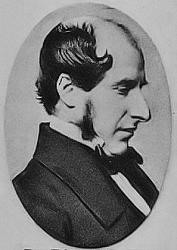
1816 - 1876 Topics: Year C, Ordinary Time after Pentecost, June 12-18 (if after Trinity Sunday); Year C, Ordinary Time after Pentecost, October 30-November 5 Arranger of "RUTHERFORD" in Psalms for All Seasons Edward Francis Rimbault PhD LLD United Kingdom 1816-1876. Born in Soho, London, England, son of an organist and composer of French descent, he was taught music by his father., Samuel Wesley, and Wiliam Crotch. At age 16 he became organist of the Swiss Church in Soho. He later became organist at various churches, including St Peter’s, Vere Street, and St John’s Wood Presbyterian Church. He edited many collections of music, journals, and publications of music, and arranged music compositions. In addition to editing or arranging contemporary operas, he had a strong interest in editing or arranging earlier English music. He studied the musical treatises in the library of Archbishop Tenison, one of the oldest public libraries in London. In 1838, At age 22 he began lecturing about the history of English music, and was in much demand due to the interest aroused. He did editorial work for the Percy Society, the Camden Society, the Motet Society, and the Handel Society. For the latter he edited the “Messiah”, “Saul”, and “Samson” He was elected a Fellow of the Society of Antiquaries, and was granted membership in the Academy of Music in Stockholm, Sweden. Gottingen University also conferred upon him a PhD. His reputation was such that he was offered a teaching position at Harvard University in the U.S., which he turned down. In 1848 he was given an honorary degree by the University of Oxford. In 1849 he published a collection of English nursery rhymes and the tunes to which they were sung. Rimbault authored 76 books, a few named here include : “Bibliotheca madrigaliana” (1847); “The pianoforte” (1860); “Early English organ builders and their works” (1865). In 1855 he co-authored “The organ- its history and construction” with John Hopkins. He did a small amount of composing as well. He wrote an operetta in 1838, and a musical drama. He also composed a large number of pianoforte scores for operas by others. He was an admirable harmonium player. Traveling to various auctions for years, he accumulated a rare collection of books. After his death his extensive collection was auctioned off in 1877, with many items going to the British Library. About 300 items were sold to an individual, and upon his death in 1888, the ‘Drexel collection’ was bequeathed to the Lenox Library (precursor of the New York Public Library). Today, the collection is part of the Music Division of the NY Public Library for the Performing Arts. He was an author, editor, arranger, composer, lithographer, translator, scribe, adapter, and bookseller. He died at London, England. No information found regarding a family.
John Perry
Edward F. Rimbault
Richard Mant
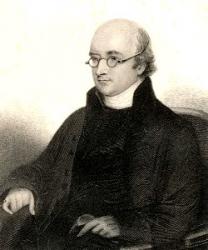
1776 - 1848 Topics: Ordinary Time Week 7 Paraphraser of "Psalm 86" in Hymns and Devotions for Daily Worship Mant, Richard D.D., son of the Rev. Richard Mant, Master of the Grammar School, Southampton, was born at Southampton, Feb. 12, 1776. He was educated at Winchester and Trinity, Oxford (B.A. 1797, M.A., 1799). At Oxford he won the Chancellor's prize for an English essay: was a Fellow of Oriel, and for some time College Tutor. On taking Holy Orders he was successively curate to his father, then of one or two other places, Vicar of Coggeshall, Essex, 1810; Domestic Chaplain to the Archbishop of Canterbury, 1813, Rector of St. Botolph, Bishopsgate, London. 1816, and East Horsley, 1818, Bishop of Killaloe, 1820, of Down and Connor, 1823, and of Dromore, 1842. He was also Bampton Lecturer in 1811. He died Nov. 2, 1848. His prose works were numerous, and although now somewhat obsolete, they were useful and popular in their day. His poetical works, and other works which contain poetical pieces, are:—
(1) The Country Curate, 1804; (2) Poems in three Parts, 1806; (3) The Slave, 1807; (4) The Book of Psalms in an English Metrical Version, &c, 1824; (5) The Holydays of the Church; or Scripture Narratives of Our Blessed Lord's Life and Ministry, and Biographical Notices of the Apostles, Evangelists, and Other Saints, with Reflections, Collects, and Metrical Sketches, vol. i., 1828; vol. ii., 1831; (6) The Gospel Miracles in a series of Poetical Sketches, &c., 1832; (7) The British Months, 2 vols., 1836; (8) Ancient Hymns from the Roman Breviary, for Domestick Use. . . .To which are added Original Hymns, principally of Commemoration and Thanksgiving for Christ's Holy Ordinances, 1837: new ed., 1871. (9) The Happiness of the Blessed Dead, 1847.
Bishop Mant is known chiefly through his translations from the Latin. He was one of the earliest of the later translators, I. Williams and J. Chandler being his contemporaries. Concerning his translations, Mr. Ellerton, in his Notes on Church Hymns, 1881, p. xlviii. (folio ed.), says justly that:—
"Mant had little knowledge of hymns, and merely took those of the existing Roman Breviary as he found them: consequently he had to omit many, and so to alter others that they have in fact become different hymns: nor was he always happy in his manipulation of them. But his book has much good taste and devout feeling, and has fallen into undeserved neglect."
His metrical version of the Psalms has yielded very few pieces to the hymnals, the larger portion of his original compositions being from his work of 1837. The most popular of these is "Come Holy Ghost, my soul inspire, Spirit of," &c, and its altered forms; "Bright the vision that delighted," and its altered form of "Round the Lord in glory seated;" and "For all Thy saints, O Lord." His hymns in common use which are not annotated under their respective first lines are:—
i. From his Metrical Version of the Psalms, 1824.
1. God, my King, Thy might confessing. Ps. cxlv.
2. Lord, to Thee I make my vows. Ps. xxvii.
3. Blessed be the Lord most High. Ps. xxviii. Pt. ii.
4. My trust is in the highest Name. Ps. xi.
5. Reign, Jehovah, King supreme. Ps. xcix.
6. Thy listening ear, O Lord, incline. Ps. Ixxxvi.
7. To God my earnest voice I raise. Ps. cxlii.
8. To Jehovah hymn the lay. Ps. cxviii. Two centos in Spurgeon's Our Own Hymn Book, 1866. (1) st. i., ii., v.; and (2) "Thee, Jehovah, will I bless" from st. vii.-x.
ii. From his Holydays of the Church, &c, 1828-31.
9. Lo, the day the Lord hath made. Easter.
10. There is a dwelling place above. All Saints.
iii. From his Ancient Hymns, &c, 1837.
11. Before Thy mercy's throne. Lent.
12. Father of all, from Whom we trace. Unity.
13. For these who first proclaimed Thy word. Apostles.
14. No! when He bids me seek His face. Holy Communion.
15. Oft as in God's own house we sit. Divine Worship.
16. Put off thy shoes, 'tis holy ground. The House of God .
17. Saviour of men, our Hope [Life] and Rest. The Greater Festivals.
18. Thy House each day of hallowed rest. Holy Communion.
19. We bless Thee for Thy Church, 0 Lord. Thanksgiving for the Church.
26. We deem and own it, Lord, a proof. Divine Grace.
When all Bishop Mant's translations of original hymns, and versions of the Psalms in common use are taken into account, it is found that he is somewhat strongly represented in modern hymnody.
-- John Julian, Dictionary of Hymnology (1907)
====================
http://en.wikipedia.org/wiki/Richard_Mant
Richard Mant
William Moore
1790 - 1850 Person Name: William Moore, fl. 1830 Topics: Ordinary Time, Twentieth Sunday B Composer of "HOLY MANNA" in Worship (4th ed.) William B Moore USA 1790-1850. He was born, possibly in TN. He was a composer, having contributed tunes to” Wyeth’s Repository” (1810) and known for his tunebook “Columbian Harmony” (1825) in TN. He also composed and arranged several tunes in William Walker’s “Southern Harmony” (1835).
John Perry
William Moore
Karen Lafferty
b. 1948 Person Name: Karen Lafferty, b. 1948 Topics: 23rd Sunday in Ordinary Time Year A; 8th Sunday in Ordinary Time Year A Adapter (st. 1) of "Seek Ye First the Kingdom of God" in RitualSong
Karen Lafferty
Emma F. R. Campbell
1830 - 1919 Person Name: Emma F.R. Campbell Topics: Ordinary Time Week 25 Author of "Jesus of Nazareth Passes By" in Hymns and Devotions for Daily Worship Campbell, Emma F. R. (1830-1919). Her first name is sometimes given as "Etta." She was a school teacher in Morristown, New Jersey. She published a few novels and an anthology, The Hymn "Jesus of Nazareth passeth by" and Its History, and Other Verses (New York: M. E. Munson, 1909).
Leonard Ellinwood, DNAH Archives
==========================
Campbell, Etta, sometime a teacher in Morristown, New Jersey, is the author of:— 1. Come, ye children, sweetly sing. Jesus the Children's Friend. Appeared in E. P. Hammond's Praises of Jesus, 1864; his New Praises of Jesus, 1869; and in other collections, including several in Great Britain. 2. What means this eager, anxious throng. Jesus passes by. Written during a religious revival in Newark, U.S., 1863, and published in Song Victories. It is found in several collections, and was rendered exceedingly popular in Great Britain by Mr. Sankey in his Evangelical tour with Mr. Moody, 1874-6. --John Julian, Dictionary of Hymnology (1907)
Emma F. R. Campbell
Allen William Chatfield
1808 - 1896 Person Name: Allen Chatfield Topics: Ordinary Time Week 24 Translator of "Lord Jesus, Think on Me" in Hymns and Devotions for Daily Worship Chatfield, Allen William, M.A., born at Chatteris, Oct. 2nd, 1808, and educated at Charterhouse School and Trinity College, Cambridge, where he was Bell's Univ. Scholar and Members' Prizeman. He graduated in 1831, taking a first class in classical honours. Taking Holy Orders in 1832, he was from 1833 to 1847 Vicar of Stotfold, Bedfordshire; and since 1847 Vicar of Much-Marcle, Herefordshire. Mr. Chatfield has published various Sermons from time to time. His Litany, &c. [Prayer Book] in Greek verse is admirable, and has been commended by many eminent scholars. His Songs and Hymns of Earliest Greek Christian Poets, Bishops, and others, translated into English Verse, 1876, has not received the attention of hymnal compilers which it merits. One hymn therefrom, "Lord Jesu, think on me," is a specimen of others of equal merit, which might be adopted with advantage. He died Jan. 10, 1896.
-- John Julian, Dictionary of Hymnology (1907)
Allen William Chatfield
Omer Westendorf
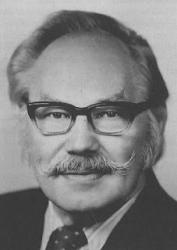
1916 - 1997 Topics: Year B, Ordinary Time after Epiphany, 9th Sunday; Year B, Ordinary Time after Pentecost, May 29-June 4 (if after Trinity Sunday); Year C, Ordinary Time after Pentecost, August 28-September 3 Author of "Psalm 81 (A Responsorial Setting)" in Psalms for All Seasons Omer Westendorf, one of the earliest lyricists for Roman Catholic liturgical music in English, died on October 22, 1997, at the age of eighty-one.
Born on February 24, 1916, Omer got his start in music publishing after World War II, when he brought home for his parish choir in Cincinnati some of the Mass settings he had discovered in Holland. Interest in the new music being published in Europe led to his creation of the World Library of Sacred Music, initially a music-importing firm that brought much of this new European repertoire to U.S. parishes. Operating out of a garage in those early years, Omer often joked about the surprised expressions of visitors who stopped by and found a wide range of sheet music in various states of “storage” (read disarray). Later, as World Library Publications, the company began publishing some of its own music, including new works with English texts by some of those same Dutch composers, for example, Jan Vermulst. In 1955 World Library published the first edition of The Peoples Hymnal, which would become the People's Mass Book in 1964, one of the first hymnals to reflect the liturgical reforms proposed by Vatican II. Omer also introduced the music of Lucien Deiss to Catholic parishes through the two volumes of Biblical Hymns and Psalms.
Using his own name and several pen names, Omer composed numerous compositions for liturgical use, though his best-known works may be the texts for the hymns “Where Charity and Love Prevail,” “Sent Forth by God’s Blessing,” and especially “Gift of Finest Wheat.” As he lay dying, his family and friends gathered around his bed to sing his text “Shepherd of Souls, in Love, Come, Feed Us.” NPM honored Omer as its Pastoral Musician of the Year in 1985.
--liturgicalleaders.blogspot.com/2008
===========================
Pseudonyms:
Paul Francis
Mark Evans
J. Clifford Evers
--Letter from Tom Smith, Executive Director of The Hymn Society, to Leonard Ellinwood, 6 February 1980. DNAH Archives.
Omer Westendorf
Stephen P. Starke
b. 1955 Topics: Year B, Ordinary Time after Pentecost, August 21-27; Year C, Ordinary Time after Pentecost, October 23-29 Author of "Almighty Lord, How Lovely Is That Place" in Psalms for All Seasons Rev. Stephen P. Starke has always had a heart for hymns. At a young age, Starke played hymns out of The Lutheran Hymnal and read through the hymnal to pass the time before Sunday services.
Pastor Starke graduated from Concordia University Chicago with a BA. While completing his MDiv from Concordia Theological Seminary, Fort Wayne, Indiana, he attempted his first hymn text and was encouraged to write more. Since that time, he has written more than 175 hymns inspired by music and the Scriptures. He has been commissioned to write hymns for special occasions, including the 125th anniversary of Concordia University Wisconsin, as well as his daughter’s wedding.
Because of his extensive work as a hymnwriter, Pastor Starke received an honorary doctor of letters degree from Concordia University, Irvine, California, and an honorary doctor of divinity degree from Concordia University Wisconsin in Mequon.
It is through the medium of hymns that Pastor Starke desires to preserve and pass on the truths of the Gospel for generations to come.
Stephen P. Starke
Charles Steggall
1826 - 1905 Topics: Ordinary Time Week 16 Composer of "CHRISTCHURCH" in Hymns and Devotions for Daily Worship
Charles Steggall
Michael Perry
1942 - 1996 Topics: Year C, Ordinary Time after Epiphany, 7th Sunday; Year C, Ordinary Time after Pentecost, October 2-8 Author of "Commit Your Way to God the Lord" in Psalms for All Seasons Initially studying mathematics and physics at Dulwich College, Michael A. Perry (b. Beckenham, Kent, England, 1942; d. England, 1996) was headed for a career in the sciences. However, after one year of study in physics at the University of London, he transferred to Oak Hill College to study theology. He also studied at Ridley Hall, Cambridge, and received a M.Phil. from the University of Southhampton in 1973. Ordained a priest in the Church of England in 1966, Perry served the parish of St. Helen's in Liverpool as a youth worker and evangelist. From 1972 to 1981 he was the vicar of Bitterne in Southhampton and from 1981 to 1989, rector of Eversley in Hampshire and chaplain at the Police Staff College. He then became vicar of Tonbridge in Kent, where he remained until his death from a brain tumor in 1996. Perry published widely in the areas of Bible study and worship. He edited Jubilate publications such as Hymns far Today's Church (1982), Carols for Today (1986), Come Rejoice! (1989), and Psalms for Today (1990). Composer of the musical drama Coming Home (1987), he also wrote more than two hundred hymns and Bible versifications.
Bert Polman
Michael Perry
Pages




