You help make Hymnary.org possible. More than 10 million people from 200+ countries found hymns, liturgical resources and encouragement on Hymnary.org in 2025, including you. Every visit affirms the global impact of this ministry.

If Hymnary has been meaningful to you this year, would you take a moment today to help sustain it? A gift of any size—paired with a note of encouragement if you wish—directly supports the server costs, research work and curation that keep this resource freely available to the world.

Give securely online today, or mail a check to:
Hymnary.org
Calvin University
3201 Burton Street SE
Grand Rapids, MI 49546

Thank you for your partnership, and may the hope of Advent fill your heart.

Browse People

Topics:scripture
In:people

Planning worship? Check out our sister site, ZeteoSearch.org, for 20+ additional resources related to your search.
Showing 391 - 400 of 953Results Per Page: 102050

Ludwig Helmbold

1532 - 1598 Person Name: Ludwig Helmbold, 1532-98 Topics: Scriptures Author of "Lord, Help Us Ever to Retain" in Lutheran Worship Helmbold, Ludwig, son of Stephan Helmbold, woollen manufacturer at Muhlhausen, in Thuringia, was born at Mühlhausen, Jan. 13, 1532, and educated at Leipzig and Erfurt (B.A. in 1550). After two years' headmastership of the St. Mary's School at Mühlhausen, he returned to Erfurt, and remained in the University (M.A. 1554) as lecturer till his appointment in 1561 as conrector of the St. Augustine Gymnasium at Erfurt. When the University was reconstituted in 1565, after the dreadful pestilence in 1563-64, he was appointed dean of the Philosophical Faculty, and in 1566 had the honour of being crowned as a poet by the Emperor Maximilian II., but on account of his determined Protestantism he had to resign in 1570. Returning to Mühlhausen, he was appointed, in 1571, diaconus of the St. Mary's Church, and 1586, pastor of St. Blasius's Church and Superintendent of Mühlhausen. He died at Mühlhausen, April 8, 1598. (Koch, ii. 234-248; Allgemeine Deutsche Biographie xi. 701-702; Bode, pp. 87-88, &c.) Helmbold wrote many Latin hymns and odes, and numerous German hymns for school use, including a complete metrical version of the Augsburg Confession. His Hymns for church use are mostly clear and concise paraphrases of Scripture histories and doctrines, simple and earnest in style. Lists of the works in which his hymns appeared (to the number of some 400) are given by Koch and Bode. His hymns translated into English are:— i. Herr Gott, erhalt uns für und für. Children. On the value of catechetical instruction as conveyed in Luther's Catechism for Children. First published in Helmbold's Dreyssig geistliche Lieder auff die Fest durchs Jahr. Mühlhausen, 1594 (preface to tenor, March 21, 1585), and thence in Wackernagel, iv. p. 677, and Mützell, No. 314, in 4 stanzas of 4 lines in Porst's Gesang-Buch, ed. 1855, No. 977. The only translation in common use is:— O God, may we e'er pure retain, in full, by Dr. M. Loy, in the Ohio Lutheran Hymnal 1880. ii. Nun lasst uns Gott dem Herren. Grace after Meat. Included in his Geistliche Lieder, 1575, in 8 stanzas of 4 lines, and thence in Wackernagel, iv. p. 647, and the Unverfälschter Liedersegen, 1851, No. 500. The translations are: (1) To God the Lord be rendered," as No. 326 in pt. i. of the Moravian Hymn Book, 1754. (2) "Now let us praise with fervour," in the Supplement to German Psalmody, ed. 1765, p. 75. (3) "To God the Lord be praises," as No. 778 in the Moravian Hymn Book 1789 (1849, No. 1153). iii. Von Gott will ich nicht lassen. Trust in God. Lauxmann in Koch, viii. 365-370, thus relates the origin of this the best known hymn by Helmbold:— In 1563, while Helmbold was conrector of the Gymnasium at Erfurt, a pestilence broke out, during which about 4000 of the inhabitants died. As all who could fled from the place, Dr. Pancratius Helbich, Rector of the University (with whom Helmbold bad formed a special friendship, and whose wife was godmother of his eldest daughter), was about to do so, leaving behind him Helmbold and his family. Gloomy forebodings filled the hearts of the parting mothers. To console them and nerve them for parting Helmbold composed this hymn on Psalm lxxiii. v. 23. The hymn seems to have been first printed as a broadsheet in 1563-64, and dedicated to Regine, wife of Dr. Helbich, and then in the Hundert Christenliche Haussgesang, Nürnberg, 1569, in 9 stanzas of 8 lines Wackernagel, iv. pp. 630-33, gives both these forms and a third in 7 stanzas from a MS.[manuscript] at Dresden. Included in most subsequent hymnbooks, e.g. as No. 640 in the Unverfälschter Liedersegen, 1851. The translations in common use are:— 1. From God the Lord my Saviour, by J. C. Jacobi, in his Psalmodia Germanica, 1722, p. 139, omitting st. vii. (1732, p. 134), repeated slightly altered (and with st. vi., lines 1-4 from vii., lines 1-4 of the German) as No. 320 in pt. i. of the Moravian Hymn Book, 1754. Stanzas i.-iii., v., rewritten and beginning "From God, my Lord and Saviour," were included in the American Lutheran General Synod's Collection, 1850-52, No. 341. 2. Ne'er be my God forsaken. A good translation of stanzas i., ii., iv., by A. T. Russell in his Psalms & Hymns, 1851, No. 229. 3. From God shall nought divide me. A good translation, omitting st. ii., vii. by Miss Winkworth in her Chorale Book for England, 1863, No. 140. Partly rewritten in her Christian Singers, 1869, p. 154. Other translations are: (l)"God to my soul benighted," by Dr. H. Mills, 1845 (1856, p. 179). (2) "From God I will not sever," by Dr. N. L. Frothingham, 1870, p. 202. [Rev. James Mearns, M.A.] --John Julian, Dictionary of Hymnology (1907)

Thomas Helmore

1811 - 1890 Person Name: Thomas Helmore, 1811-1890 Topics: The Holy Scriptures Adapter of "O QUANTA QUALIA (REGNATOR ORBIS)" in Singing the Faith A graduate of Magdalen College, Oxford, England, Thomas Helmore (b. Kidderminster, Worcestershire, England, 1811; d. Westminster, London, England, 1890) was ordained a priest in the Church of England, but his main contribution to the church was in music. He was precentor at St. Mark's College, Chelsea (1842-1877), and master of the choristers in the Chapel Royal for many years. He promoted unaccompanied choral services and played an important part in the revival of plainchant in the Anglican Church. Helmore was involved in various publications of hymns, chants, and carols, including A Manual of Plainsong (1850) and The Hymnal Noted (with John Mason Neale). Bert Polman

Henri F. Hemy

1818 - 1888 Topics: Holy Scriptures; Inspiration of Scriptures; Scriptures, The Holy Composer of "SABBATA" in The Hymnal Henri F. Hemy, born in the United Kingdom. Hemy spent time at sea as a young man, emigrating to Australia in 1850 with his family. Unable to make a decent living in Melbourne, he returned to Newcastle England. He was organist at St. Andrews Roman Catholic Church in Newcastle, later teaching professor of music at Tynemouth and at St. Cuthbert's College in Durham. He was pianist to Lord Ravensworth, Music Director of Ushaw College, and his orchestra played at fashionable venues in the region. He sang baritone as well. He composed waltzes, polkas, quadrilles, and galops. 3 music works: Easy Hymn Tunes for Catholic Schools; Royal Modern Tutor for Pianoforte; Crown of Jesus. He was active in local politics and published a manifesto in the daily newspaper. He lost a ward election. He also painted artwork. He set most of Longfellow's works to music. John Perry

Edward Henry

Person Name: E. B. H. Topics: Liturgical Psalms and Scriptural Texts Arranger of "[By the rivers of Babylon]" in Sing a New Song

Luise Hensel

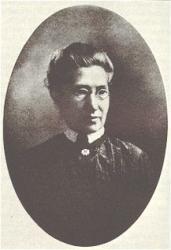
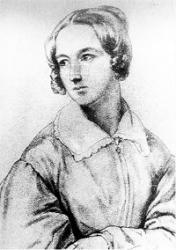
1798 - 1876 Person Name: Miss Luise Hensel (1798-1876) Topics: The Holy Scriptures Author of "Ever would I fain be reading" in Carmina for the Sunday School and Social Worship Text of "Müde bin ich geh zur Ruh" is printed in Lutheran Service Book, 2006 #887 ============= Hensel, Luise, daughter of J. J. L. Hensel, Lutheran pastor at Linum, near Fehrbellin, Brandenburg, was born at Linum, March 30, 1798, Though confirmed as a Lutheran in her fifteenth year, she gradually approximated to Roman Catholicism, and was formally received into that Communion, Dec. 7, 1818. During the remaining years of her life, she devoted herself mainly to the education of the young and the care of the sick. In 1874 she entered the Union of Daughters of Christian Love at Paderborn, and died at Paderborn, Dec. 18, 1876. (O. Kraus, 1879, pp. 204-211; Allgemeine Deutsche Biographie, xii. 1-3, &c.) Her best hymns were written before she was 23, and in proportion as she became an Ultramontane the poetical value of her productions declined. Her finest productions are distinguished by childlike simplicity, humility, resignation, and deep Christian love. They have won wide acceptance in Germany. The first two of those noted may be regarded as nursery classics. A number of her hymns came into Clemens Brentano's hands as early as 1819, and were by mistake included as his in his posthumous works. A few were printed in F. Förster's Sängerfahrt, 1818, and a good many more in M. Diepenbrock's Geistlicher Blumenstrauss, Sulzbach, 1829. A complete edition of her hymns was published by Professor C. Schlüter of Münster as her Lieder at Paderborn, 1870 (4th ed., 1879). i. Hymns in English common use: i. Immer muss ich wieder lesen. [Holy Scripture.] This beautiful children's hymn on the Life of Christ as narrated in the Gospels, appeared in Diepenbrock, 1829, p. 265, in 7 stanzas of 4 lines (entitled "On the reading of Holy Scripture "); and in her Lieder, 1870, is dated Berlin, 1815. It is repeated in Knapp's Evangelischer Lieder-Schlatz, &, 1837, the Württemberg Gesang-Buch, 1842, &c. Translated as:— Ever would I fain be reading. A good and full translation by Miss Winkworth in her Lyra Germanica, 2nd Ser., 1858, p. 24. It has been included in full in Psalms & Hymns, Bedford, 1859; Kennedy, 1863; Book of Praise for Children, 1881; and in America in Hatfield's Church Hymn Book, 1872, and others. In some collections it is abridged; and in the Unitarian South Place Collection, 1873, it begins, "Ever find I joy in reading." Other translations are:— (1) “O how sweet the wondrous story," by Mrs. Bevan, 1859, p. 142. (2) "In that book so old and holy," in Dr. H. W. Dulcken's Golden Harp, 1864, p. 25. (3) "Still I read, and weary never," by “A. M. A," in the British Herald, Feb. 1868, p. 211. ii. Müde bin ich, geh' zur Ruh. [Evening.] This beautiful child's evening prayer, the most popular of all her hymns, appeared in Diepenbrock, 1829, p. 270, in 4 stanzas of 4 lines. In her Lieder, 1870, p. 54, dated Berlin, Autumn, 1816. Included in the Unverfälscher Liedersegen, 1851, No. 528. Translated as:— 1. Now that o'er each weary head. A free translation of stanzas i.-iii. as No. 22 in C. H. Bateman's Children's Hymns, 1872. 2. Weary now I go to rest. A good translation of stanzas i.-iii. by E. Cronenwett as No. 324 in the Ohio Lutheran Hymnal 1880. Other translations are:— (1) "Now I close my tired eyes," by Mrs. Bevan, 1859, p. 147. (2) "I am tir'd, and so I seek," by Miss Manington, 1863, p. 126. (3) "Weary now I go to bed," in Dr. H. W. Dulcken's Golden Harp, 1864, p. 40. (4) “Now with weariness opprest," a second translation by Dr. Dulcken, p. 72. (5) “Wearied now I seek repose," by J. Kelly, 1885, p. 111. ii. Hymns not in English common use: iii. Ich liebe einen Königs Sohn. [Love to Christ.] In Diepenbrock, 1829, p. 304, in 9 stanzas, and in her Lieder, 1870, p. 67, dated Berlin, 1817. Translated as "I love a royal only Son," by E. Massie, 1867, p. 174. jv. 0 Sonne, wenn von deinem Licht. [Love to Christ.] In Diepenbrock, 1829, p. 257, in 6 stanzas, and in her Lieder, 1870, p. 128, dated Söndermühlen, 1823. Translated as "O Sun, if from thy light a ray," in J. D. Burns's Memoir and Remains, 1869, p. 270. v. 0 Sorge, die mien niederdrückt. [Encouragement.] In Diepenbrock, 1829, p. 271, in 6 stanzas, and in her Lieder, 1870, p. 13, dated Berlin, 1815. The translations are:—(1l) "O anxious care that weighs me down," by Miss Burlingham, in the British Herald, Sept. 1865, p. 144. (2) "Begone, O load of care, begone," by J. Kelly, 1885, p. 80. vi. Was verlangst du, warumbangst du. [Cross and Consolation.] In Diepenbrock, 1829, p. 261, in 6 stanzas entitled "Suraum corda." In her Lieder, 1870, p. 43, it is dated Berlin, 1816. Translated as "What seekest thou! Why fearest thou," by C. T. Astley, 1860, p. 28. vii. Zu dir, zu dir, hinweg von mir. [Consecration to Christ.] In Diepenbrock, 1829, p. 267, in 5 stanzas In her Lieder, 1870, p. 31, dated Berlin, 1816. Translated as "To Thee, to Thee, away from self," by J. Kelly, 1885, p. 72. [Rev. James Mearns, M.A.] -- John Julian, Dictionary of Hymnology ===================== Hensel, Luise, p. 510, ii., No. v. "O Sorge," &c, appeared in Förster's Sängerfahrt, 1818, p. 266. --John Julian, Dictionary of Hymnology, Appendix, Part II (1907)

Petrus Herbert

1530 - 1571 Topics: The Scriptures; Scriptures; Scriptures Author of "The Word of God, Which Ne'er Shall Cease" in Moravian Book of Worship Herbert, Petrus, seems to have been a native of or resident at Fulnek in Moravia. He was ordained priest of the Brethren's Unity in 1562, became a member of the Select Council in 1567, and was latterly Consenior of the Unity. By the Unity he was entrusted with many important missions. He was sent as a deputy to confer with Calvin: and again in 1562 to arrange with Duke Christoph of Württemberg for the education at Tübingen of young men from the Bohemian Brethren. He was also one of the deputies sent to Vienna to present the revised form of the Brethren's Confession of Faith to the Emperor Maximilian II. in 1564, and in 1566 to present their new German Hymn Book. He died at Eibenschütz in 1571 (Koch, ii. 414, Allgemeine Deutsche Biographie, xiii. 263-264, &c.). Herbert was one of the principal compilers of the enlarged edition of the Brethren's German Hymn Book published in 1566 as their Kirchengeseng, and contributed to it some 90 hymns. In the ed. of 1639 there are 104 hymns marked as his. His hymns are distinguished by simplicity and beauty of style. A number are translations from the Bohemian. His hymns translated into English include:— i. Die Nacht ist kommen drin wir ruhen sollen. [Evening] Written probably under the pressure of persecution and oppression. In the G. 2?., 1566, as above, in 5 stanzas of 7 lines (the last stanza being a versification of the Lord's Prayer), and thence in Wackernagel, iv. p. 442, and the Unverfälschter Liedersegen, 1851, No. 515. In J. H. Schein's Cantiona, 1627, it appears as No. 99, with an additional stanza not by Herbert, which reads— Denn wir kein besser Zuflucht konnen haben, ,Als zu dir, 0 Herr, in dem Himmel droben, Du veriest keinen, gibst Acht auff die deinen. Die dich recht meyuen," This stanza is included as stanza v. in the version in Bunsen's Versuch, 1833, No. 43. Translated as:— 1. The night is come, wherein at last we rest, in full from Bunsen by Miss Winkworth in her Lyra Germanica, 2nd Ser., 1858, p. 77, repeated as No. 105 in R. Minton Taylor's Collection, 1872. 2. Now God be with us, for the night is closing, a good translation from Bunsen, in the original metre, by Miss Winkworth, as No. 170 in her Chorale Book for England, 1863, and repeated in her Christian Singers of Germany, 1869, p. 139. This version has been included in various recent collections, though generally abridged or altered, as in the Hymnary, 1872; Thring's Collection, 1882; and in America in the Evangelical Hymnal, N. Y., 1880, &c. In Laudes Domini, N.Y., 1884, it is in two parts (Nos. 209-210), the second beginning, "Father, Thy name be praised, Thy kingdom given." This is stanza vi. with an added doxology, as in the Hymnary, 1872. Other translations are:— (1) "The night comes apace," as No. 293 in pt. i. of the Moravian Hymn Book, 1754. (2) “Lo! evening's shades to sleep invite," by H. J. Buckoll, 1842, p. 64. ii. 0 Christenmensch, merk wie sichs halt. [Faith] 1566, as above, in 18 stanzas of 4 lines, repeated in Wackernagel, iv. p. 433. In Bunsen's Versuch , 1833, No. 390 Allgemeine Gesang-Buch, 1846, No. 130), the hymn begins with stanza iii. altered to "Der Glaub’ ist ein lebend'ge Kraft," and consists of stanzas iii., viii., xi., xii., xvi., xviii. Bunsen calls it "a noble confession of the true Christian faith." Translated as:— Faith is a living power from heaven. A good translation from Bunsen by Miss Winkworth in her Lyra Germanica, 2nd ser., 1858, p. 160, and thence in her Chorale Book for England, 1863. It is repeated, more or less altered and abridged, in Kennedy, 1863; and in America in the Presbyterian Hymnal, 1874, Baptist Service of Song, 1871, &c. ii. Hymns not in English common use:— iii. Des Herren Wort bleibt in Ewigkeit. [Holy Scripture.] 1566, as above, in 25 stanzas, and in Wackernagel, iv. p. 432. Translated as "God's holy Word, which ne’er shall cease," by J. Swertner, as No. 3 in the Moravian Hymn Book1789 (1849, No. 2). iv. Fürchtet Gott, 0 lieben Leut. [Martyrs.] 1566, as above, in 13 stanzas, and in Wackernagel, iv. p. 429. The translations are, (i.) "O love God, ye people dear," as No. 267 in pt. i. of the Moravian Hymn Book, 1754. (2) "O exalt and praise the Lord" (from the version in the Brüder Gesang-Buch1778, beginning "Liebet Gott"), as No. 871 in the Moravian Hymn Book, 1789 (1886, No. 1306). v. Lasst uns mit Lust und Freud aus Olauben singen. [Eternal Life.] A fine hymn on the Joys of Heaven. 1566, as above, in 12 stanzas, and in Wackernagel, iv. p. 447. Translated as "In faith we sing this song of thank-fulness," by Mrs. Bevan, 1858, p. 34. vi. 0 höchster Trost, heiliger Geist [Whitsuntide.] 1566, as above, in 13 stanzas, and Wackernagel, iv. p. 407. The translations are, (1) "O highest comfort, Holy Ghost," as No. 262 in pt. i. of the Moravian Hymn Book, 1754. (2) "O Comforter, God Holy Ghost," as No. 203 in the Moravian Hymn Book, 1789 (1849, No. 265). Besides the above a number of hymns by Herbert (all of which appeared in the Kirchengeseng, 1566, and are included in Wackernagel’s vol. iv.) were translated in pt. i. of the Moravian Hymn Book, 1754. The numbers in the 1754 are 166, 259, 263, 264, 265, 266, 274, 277, 281, 287, and 294. [Rev. James Mearns, M.A.] -- John Julian, Dictionary of Hymnology

Ana Hernández

b. 1957 Topics: Scripture Proclamation Author of "Open My Heart / Abre mi corazón" in Voices Together Not the same person as Ana Cristina Hernández.

Esdras Hernández

b. 1981 Person Name: Esdras Hernández, 1918- Topics: Scripture Translator (Spanish) of "We Thank You, O God, for Our Prophets" in Community of Christ Sings

Lee Herrington

b. 1941 Topics: Scripture Songs Arranger of "[Behold, what manner of love]" in Sing Joyfully

E. E. Hewitt

1851 - 1920 Topics: Scripture and Praise Author of "For God so Loved the World" in Magnificat Pseudonym: Li­die H. Ed­munds. Eliza Edmunds Hewitt was born in Philadelphia 28 June 1851. She was educated in the public schools and after graduation from high school became a teacher. However, she developed a spinal malady which cut short her career and made her a shut-in for many years. During her convalescence, she studied English literature. She felt a need to be useful to her church and began writing poems for the primary department. she went on to teach Sunday school, take an active part in the Philadelphia Elementary Union and become Superintendent of the primary department of Calvin Presbyterian Church. Dianne Shapiro, from "The Singers and Their Songs: sketches of living gospel hymn writers" by Charles Hutchinson Gabriel (Chicago: The Rodeheaver Company, 1916)

Pages


Export as CSV
It looks like you are using an ad-blocker. Ad revenue helps keep us running. Please consider white-listing Hymnary.org or getting Hymnary Pro to eliminate ads entirely and help support Hymnary.org.