You help make Hymnary.org possible. More than 10 million people from 200+ countries found hymns, liturgical resources and encouragement on Hymnary.org in 2025, including you. Every visit affirms the global impact of this ministry.

If Hymnary has been meaningful to you this year, would you take a moment today to help sustain it? A gift of any size—paired with a note of encouragement if you wish—directly supports the server costs, research work and curation that keep this resource freely available to the world.

Give securely online today, or mail a check to:
Hymnary.org
Calvin University
3201 Burton Street SE
Grand Rapids, MI 49546

Thank you for your partnership, and may the hope of Advent fill your heart.

Person Results

Text Identifier:"^guide_me_o_thou_great_jehovah$"
In:people

Planning worship? Check out our sister site, ZeteoSearch.org, for 20+ additional resources related to your search.
Showing 41 - 50 of 112Results Per Page: 102050

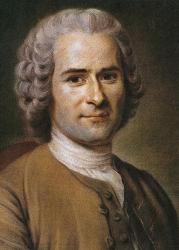
Jean-Jacques Rousseau

1712 - 1778 Person Name: J. J. Rousseau Composer of "ROUSSEAU" in The Presbyterian Book of Praise Jean Jacques Rousseau; b. 1712, Geneva; d. 1778, Paris. Born in the city-state of Geneva in the Swiss Confederacy, his mother died whenhe was 9 days old. Rousseau's father was a watchmaker, but got into trouble with local officials and left the town, leaving his son with an uncle who had Rousseau and his own son board with a Calvinist minister for 2 years. He was later apprenticed to a notary and then to an engraver, who beat him. He ran away from Geneva at 16. In nearby Savoy, he sheltered with a Roman Catholic priest. He was sent to Italy to convert to Catholicism. He supported himself as a servant, secretary, and tutor. His life was filled with personal and political upheaval, and his writings infuriated many, to the point he had to leave several habitations. He had many friends and enemies due to his philosophies on life, religion, and God. He was concerned with decay of society (having experienced the French Revolution) and became a philosopher, writer, botanist, and composer, he influenced the Enlightenment period through his political philosophy, both in France and across Europe, including aspects of the French Revolution and overall development of modern political and educational thought. A member of the Jacobin Club, he was the most popular of philosophers. He believed that self-preservation was the highest virtue and that we should study to understand how society operates and where pitfalls lie. His personal family life was very chaotic as a result of his outspoken opinions and writings. He returned to his Calvinistic beliefs in later life, but digressed from them on several issues important to that church. John Perry

F.-H. Barthélémon

1741 - 1808 Person Name: F. H. Barthelemon Composer of "AUTUMN" in The Church Hymnal French violinist, composer, teacher, he became active in England, playing in an Italian comedy orchestra and led a band. He wrote opera, ballet, theatre music and ballads, popular songs, masques, concertos and 6 symphonies. John Perry

Friedrich Filitz

1804 - 1876 Person Name: J. Filitz, 1804—1876 Composer of "[Guide me, O Thou great Jehovah]" in The Lutheran Hymnary Friedrich Filitz PhD Germany 1804-1876. Born at Arnstadt. Thuringia, he was a German composer and musicologist. He collected church music. He also studied philosophy. In 1833 he worked in Berlin as a music critic and at other employment. He was also a music historian. With Ludwig Erck, he published a collection of 15th & 17th Century chorales in 1845. He moved to Munich and published a chorale book in 1847. His legacy of vauable church music was donated to the Bavarian State Library, where it has made many forgotten works available once again. He died in Bonn, Germany. John Perry

Charles Lockhart

1745 - 1815 Person Name: Lockhart Composer of "TAMWORTH" in The American Vocalist Born: 1745, London, England. Died: February 9, 1815, London, England. Lockhart was first organist of the Lock Hospital, and was for some years associated with Martin Madan in the musical arrangements there. Though blind from infancy, Lockhart had a distinct musical gift, and was especially known for training children’s choirs. His earliest tunes were printed on separate sheets. He published a set of hymn tunes about 1810. Sources: Frost, p. 680 Lightwood, p. 155 Nutter, p. 460 Music: CARLISLE TAMWORTH http://www.hymntime.com/tch/bio/l/o/c/lockhart_c.htm ================ http://en.wikipedia.org/wiki/Charles_Lockhart_%28musician%29

Walter Bond Gilbert

1829 - 1910 Person Name: Walter B. Gilbert Composer of "GILBERTS" in Praise Songs Walter Bond Gilbert DMus United Kingdom 1829-1910. Born at Exeter, Devon, England, he studied music under Alfred Angel, Samuel Wesley and Henry Bishop. He attended New College, Oxford and the University of Toronto, Canada. He was organist in Devon at Topsham in 1847, Bideford in 1849, Kent at Tonbridge in 1854, Old Colliegiate Church, Maidstone in 1859, Lee in 1866, Boston, Lincolnshirein 1868, and Trinity Chapel in New York City in 1869-1897. He taught music at Tonbridge School, helped found the College of Organists, edited the America Episcopal Hymnal, and wrote a number of monographs, including “Antiquities of Maidstone”. He continued to write church music, producing services, oratorios (including “The Restoration of Israel and St. John, 1857), organ works, and anthems. He died at Headington, Oxford, England. John Perry

George C. Martin

1844 - 1916 Person Name: George Clement Martin Composer of "ST. HELEN'S" in Christian Praise

Sylvanus Billings Pond

1792 - 1871 Person Name: S. B. Pond, 1792-1871 Composer of "SIBERIA" in The Hymnal

E. Edwin Young

1895 - 1995 Arranger of "[Guide me, O Thou great Jehovah]" in Wonderful Jesus and Other Songs

Thomas Clark

1775 - 1859 Person Name: T. Clark Composer of "CALCUTTA" in The Song Companion to the Scriptures Baptized: Feb­ru­a­ry 5, 1775, Can­ter­bu­ry, Kent, Eng­land. Died: May 30, 1859, at his home in St. George’s Street, Can­ter­bu­ry, Kent, Eng­land. A cob­bler and choir train­er, Clark led the sing­ing of the Psalms at the Wes­ley­an Cha­pel, Can­ter­bu­ry, and lat­er at the Uni­tar­i­an Church in Can­ter­bu­ry. It has been claimed he nev­er ac­tu­al­ly joined the Un­i­tar­i­ans, though he sym­pa­thized with them, and he re­signed from the Meth­od­ists. Clark wrote a num­ber of an­thems, in­clud­ing "Awake Up, My Glo­ry", "Daugh­ter of Zi­on" and "Since I Have Placed My Trust." His other works in­clude: First Sett of Psalm and Hymn Tunes, 1805 Second Sett of Psalm and Hymn Tunes, cir­ca 1810 Congregational Har­mon­ist, 4 vol­umes (1828 to cir­ca 1835) The Sac­red Glean­er, 1830 The Un­ion Tune-Book, 1837 (co-ed­it­or) Union Har­mo­nist, 1841 Harmonized the se­cond edi­tion of the Un­ion Tune Book for the Sun­day School Un­ion, 1842 The Ju­ve­nile Har­mo­nist, 1842 David’s Harp—A Ser­ies of Orig­in­al Tunes Com­posed Exp­ress­ly to the Psalt­er, 1843 The Ser­a­phim or Sac­red Har­mo­nist, 1843 British Psalm­o­dy, with Al­ex­an­der Hume (Ed­in­burgh, Scot­land: 1844) --www.hymntime.com/tch/

Shelly Hamilton

b. 1954 Arranger (Last st.) of "CWM RHONDDA" in Rejoice Hymns

Pages


Export as CSV
It looks like you are using an ad-blocker. Ad revenue helps keep us running. Please consider white-listing Hymnary.org or getting Hymnary Pro to eliminate ads entirely and help support Hymnary.org.