You help make Hymnary.org possible. More than 10 million people from 200+ countries found hymns, liturgical resources and encouragement on Hymnary.org in 2025, including you. Every visit affirms the global impact of this ministry.

If Hymnary has been meaningful to you this year, would you take a moment today to help sustain it? A gift of any size—paired with a note of encouragement if you wish—directly supports the server costs, research work and curation that keep this resource freely available to the world.

Give securely online today, or mail a check to:
Hymnary.org
Calvin University
3201 Burton Street SE
Grand Rapids, MI 49546

Thank you for your partnership, and may the hope of Advent fill your heart.

Person Results

Topics:lent+and+holy+week
In:people

Planning worship? Check out our sister site, ZeteoSearch.org, for 20+ additional resources related to your search.
Showing 41 - 50 of 185Results Per Page: 102050

Kurt Kaiser

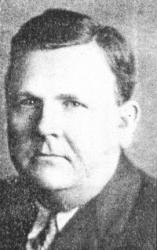
1934 - 2018 Person Name: Kurt Kaiser (b. 1934) Topics: Lent and Holy Week Author of "O How He Loves You and Me" in Lift Every Voice and Sing II Kurt Kaiser was born December 17, 1934, in Chicago. He attended American Conservatory of Music and Northwestern University. He moved to Waco, Texas in 1959 in order to join Word Music, where he later worked as vice president and director of music. He arranged and produced several albums. He composed more than 300 songs, and with Ralph Carmichael developed Christian youth musicals. He was a longtime member of the Seventh & James Baptist Church in Waco, Texas. He later helped start Dayspring Baptist Church in Waco. He was an acclaimed pianist who accompanied George Beverly Shea at Billy Graham crusades. He received the Lifetime Achievement Award from the American Society of Composers, Authors and Publishers and was elected to the Gospel Music Hall of Fame. He died November 12, 2018, in Waco. Dianne Shapiro, from obituary in "Baptist Standard" (https://www.baptiststandard.com/news/obituaries/obituary-kurt-kaiser/) and "Gospel Music Hall of Fame" (http://gospelmusichalloffame.org/kurt-kaiser/) accessed 2-8-2019

Leonard Blake

1907 - 1989 Person Name: Leonard Blake, 1907-1989 Topics: Year A Advent 2; Year B Lent 5; Year C Proper 12; Years A, B, and C Tuesday of Holy Week; Human Rights; International relations Composer of "WINCHCOMBE" in Complete Anglican Hymns Old and New

Sydney H. Nicholson

1875 - 1947 Person Name: S. H. Nicholson, 1875-1947 Topics: Lent IV Year B; Lent V Year B; Passiontide and Holy Week Composer of "CRUCIFER" in Common Praise Sydney H. Nicholson, (b. St. Marylebone, London, England, 1875; d. Ashford, Kent, England, 1947) was an organist and church music educator who greatly influenced English hymnody. Educated at Oxford's New College, the Royal College of Music in London, and in Frankfurt, Germany, he became organist at several famous cathedrals, including Westminster Abbey (1919-1928). Nicholson founded and administered the School of English Church Music at Chislehurst in 1927; this important institution, with branches throughout the English-speaking world, was renamed the Royal School of Church Music in 1945. Located in Canterbury after World War II, its headquarters were moved to Addington Palace, Croydon, in 1954. Nicholson was music adviser for the 1916 Supplement of Hymns Ancient and Modern and prepared the way for its 1950 edition. He wrote Church Music: a Practical Handbook (1920) and Quires and Places Where They Sing (1932) and composed operettas, anthems, and hymn tunes. In 1938 he was knighted for his contributions to church music. Bert Polman

David Hurd

b. 1950 Person Name: David Hurd (b. 1950) Topics: Lent and Holy Week Composer of "[O sacred head, sore wounded]" in Lift Every Voice and Sing II David Hurd (b. Brooklyn, New York, 1950) was a boy soprano at St. Gabriel's Church in Hollis, Long Island, New York. Educated at Oberlin College and the University of North Carolina, he has been professor of church music and organist at General Theological Seminary in New York since 1976. In 1985 he also became director of music for All Saints Episcopal Church, New York. Hurd is an outstanding recitalist and improvisor and a composer of organ, choral, and instrumental music. In 1987 David Hurd was awarded the degree of Doctor of Music, honoris causa, by the Berkeley Divinity School at Yale. The following year he received honorary doctorates from the Church Divinity School of the Pacific, Berkeley, California, and from Seabury-Western Theological Seminary, Evanston, Illinois. His I Sing As I Arise Today, the collected hymn tunes of David Hurd, was published in 2010. Bert Polman and Emily Brink

E. M. Bartlett

1885 - 1941 Person Name: E. M. Bartlett (1885-1941) Topics: Lent and Holy Week Author of "He Will Remember Me" in Lift Every Voice and Sing II E. M. Bartlett was born December 24, 1883 in Waynesville, Missouri. His family later moved to Sebastian County, Arkansas. Bartlett received training as a music teacher and was a leader in developing Southern gospel music. He was employed by Central Music Company, a publisher of shape note singing books based in Hartford, which was owned by David Moore and Will H. Ramsey. Bartlett persuaded Moore and John A. McClung to partner with him to form Hartford Music Company. In 1921, Bartlett established the Hartford Music Institute, a shape note school. He provided opportunities for many songwriters and musicians in gospel music, including Albert E. Brumley. In 1939 he suffered a stroke and afterwards wrote "Victory in Jesus." Dianne Shapiro, from "The Encyclopedia of Arkansas History & Culture" http://www.encyclopediaofarkansas.net/encyclopedia/entry-detail.aspx?entryID=2660 and "Gospel Music Hall of Fame" website: http://www.gmahalloffame.org/speaker-lineup/e-m-bartlett-sr/ (accessed 1-24-2018)

Johann Hermann Schein

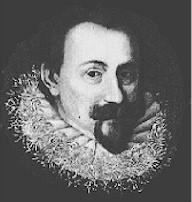
1586 - 1630 Person Name: J. H. Schein, 1586-1630 Topics: Passiontide and Holy Week; Lent V Year C Composer of "EISENACH" in Common Praise Schein, Johann Hermann, son of Hieronymus Schein, pastor at Griinhain, near Annaberg, in Saxony, was born at Grünhain, Jan. 20,1586. He matriculated at the University of Leipzig in 1607, and studied there for four years. Thereafter he acted for some time as a private tutor, including two years with a family at Weissenfels. On May 21, 1615, he was appointed Capellmeister, at the court of Duke Johann Ernst, of Sachse-Weimar; and in 1616 he became cantor of I3t. Thomas's Church, and music director at Leipzig, in succession to Seth Calvisius (d. Nov. 24, 1615). This post he held till his death, at Leipzig, Nov. 19, 1630. Schein was one of the most distinguished musicians of his time, both as an original composer, and as a harmoniser of the works of others. As a hymnwriter he was not so prolific, or so noteworthy. Most of his hymns were written on the deaths of his children or friends, e.g. on seven of his children, and on his first wife. They appeared mostly in broadsheet form, and were included, along with his original melodies, in his Cantional oder Gesang-Buch Augspurgischer Confession, Leipzig, 1627; 2nd ed., 1645. [Both in Wernigerode Library.] Those of Schein's hymns which have passed into English are:— i. Machs mit mir, Gott, nach deiner Güt. For the Dying. First published, as a broadsheet, at Leipzig, 1628, as a Trost-Liedlein á 5 (i.e. for 5 voices), &c. [Berlin Library.] The words, the melody, and the five-part setting, are all by Schein. It was written for, and first used at, the funeral, on Dec. 15, 1628, of Margarita, wife of Caspar Werner, a builder and town councillor at Leipzig, and a churchwarden of St. Thomas's. It is in 6 stanzas of 6 lines; the initial letters of 11. 1, 3, in st. i.-iv., forming the name Margarita; and the W of st. v. 1. 1 standing for Werner. In Schein's Cantional, 1645, No. 303 (marked as Trost-Liedlein, Joh. Herm. Scheins, á 5), and later hymn-books, as e.g. the Unverfäschter Liedersegen, 1851, No. 830, st. vi. was omitted. It is Schein's finest production, and one of the best German hymns for the sick and dying. Translated as:— Deal with me, God, in mercy now. This is a good and full translation by Miss Winkworth, in her Chorale Book for England, 1863, No. 191, set to Schein's melody of 1628. ii. Mein Gott und Herr, ach sei nicht fern. For the Dying. First published, with his name, in his Cantional, 1627, No. 262, in 9 stanzas of 6 lines. The initial letters of the stanzas give the name Margarita, probably one of the daughters who predeceased him. It is included, in 5 st., in the 164-8, and later eds., of Crüger's Praxis. The translation in common use is:— My Lord and God, go not away. A good tr. of st. i., ii., iv., v., vii., by A. T. Russell, as No. 254, in his Psalms & Hymns, 1851. [Rev. James Mearns, M.A.] --Excerpts from John Julian, Dictionary of Hymnology (1907)

Thomas á Kempis

1380 - 1471 Person Name: Thomas à Kempis, c. 1379-1471 Topics: Passiontide and Holy Week; Lent V Year C Author (attributed to) of "O love, how deep, how broad, how high!" in Common Praise Thomas of Kempen, commonly known as Thomas à Kempis, was born at Kempen, about fifteen miles northwest of Düsseldorf, in 1379 or 1380. His family name was Hammerken. His father was a peasant, whilst his mother kept a dame's school for the younger children of Kempen. When about twelve years old he became an inmate of the poor-scholars' house which was connected with a "Brother-House" of the Brethren of the Common Life at Deventer, where he was known as Thomas from Kempen, and hence his well-known name. There he remained for six years, and then, in 1398, he was received into the Brotherhood. A year later he entered the new religious house at Mount St. Agnes, near Zwolle. After due preparation he took the vows in 1407, was priested in 1413, became Subprior in 1425, and died according to some authorities on July 26. and others on Aug. 8, 1471. Much of his time was occupied in copying Missals, Breviaries, and other devotional and religious works. His original writings included a chronicle of the monastery of St. Agnes, several biographies, tracts and hymns, and, but not without some doubt as to his authorship the immortal Imitatio Christi, which has been translated into more languages than any other book, the Bible alone excepted. His collected works have been repeatedly published, the best editions being Nürnberg, 1494, Antwerp in 1607 (Thomae Malleoli à Kempis . . . Opera omnia), and Paris in 1649. An exhaustive work on St. Thomas is Thomas à Kempis and the Brothers of the Common Life, by S. W. Kettlewell, in 2 vols., Lond., 1882. In this work the following of his hymns are translated by the Rev. S. J. Stone:— i. From his Vita Boni Monachi, ii.:— 1. Vitam Jesu Christi. Imitation of Christ. Be the life of Christ thy Saviour. 2. Apprehende anna. Christian Armour. Take thy weapons, take thy shield. 3. Sustine dolores. Resignation. Bear thy sorrows with Laurentius. ii. From his Cantica Spiritualia:— 4. 0 dulcissime Jesu. Jesus the most Dear. 0 [Child] Christ Jesu, closest, dearest. 5. 0 Vera summa Trinitas. Holy Trinity. Most true, most High, 0 Trinity. 6. Ad versa mundi tolera. Resignation. Bear the troubles of thy life. 7. 0 qualis quantaque laetitia. Eternal Life. 0 joy the purest, noblest. Of these translations Mr. Stone has repeated Nos. 5, 6, and 7 in his Hymns, 1886, and No. 4 in a rewritten form as "Jesus, to my heart most precious," in the same. Pastor O. A. Spitzen has recently published from a manuscript circa 1480, ten additional hymns by Thomas, in his “Nalezing op mijn Thomas à Kempis," Utrecht, 1881. Six of these had previously been printed anonymously by Mone. The best known are "Jerusalem gloriosa", and "Nec quisquam oculis vidit". We may add that Thomas's hymnwriting is not regarded as being of the highest standard, and that the modern use of his hymns in any form is very limited. -- John Julian, Dictionary of Hymnology (1907)

John Stainer

1840 - 1901 Person Name: John Stainer, 1840-1901 Topics: Lent III Year A; Passiontide and Holy Week Composer of "ST FRANCIS XAVIER" in Common Praise

A. L. Peace

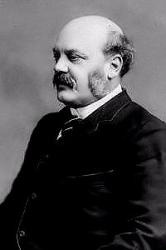
1844 - 1912 Person Name: Albert Lister Peace, 1844 - 1912 Topics: The Church Year Lent; The Church Year Holy Week; The Life In Christ Consecration; The Life In Christ Comfort and Rest; The Life in Christ Aspiration Composer of "ST. MARGARET" in Service Book and Hymnal of the Lutheran Church in America Albert Lister Peace DMus United Kingdom 1844-1912. Born at Huddersfield, Yorkshire, England, son of a warehouseman and woolstapler, he was extremely gifted as a musician, largely self-taught, playing the organ at Holmfirth Parish Church near Huddersfield at age nine. He married Margaret Martin Steel Gilchrist, and they had three children: Lister, Archibald, and Margaret. In 1865 he was appointed organist of Trinity Congregational Church in Glasgow, Scotland. He obtained his doctorate degree from the University of Oxford in 1875. He became organist at Glasgow Cathedral in 1879. In 1897 he succeeded William Best as organist at St George’s Hall, Liverpool. In later years he was in much demand to play the organ in recitals. He did so at Canterbury Cathedral (1886), Victoria Hall, Hanley, Stoke-on-Trent (1888), and Newcastle Cathedral (1891). He composed orchestrations, sonatas, cantatas, and concert and church service anthems. He was an arranger, author, and editor. He died at Blundelsands, Liverpool, England. John Perry

Richard Redhead

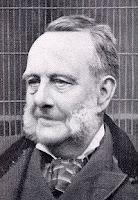
1820 - 1901 Topics: The Christian Year Holy Week; Christian Year Holy Week; Conflict and Struggle; Discipleship and Service; Jesus Christ Atonement; Jesus Christ Cross; Jesus Christ Example; Jesus Christ Faithfulness; Jesus Christ Love of; Judgment; Obedience; Redemption; Sacrifice; Temptation; Trust; Lent 5 Year B; Holy Thursday Year B; Good Friday Year B; Palm/Passion Sunday Year C; Holy Thursday Year C; Good Friday Year C; Good Friday Year ABC Composer of "REDHEAD No. 76" in Voices United Richard Redhead (b. Harrow, Middlesex, England, 1820; d. Hellingley, Sussex, England, 1901) was a chorister at Magdalen College, Oxford. At age nineteen he was invited to become organist at Margaret Chapel (later All Saints Church), London. Greatly influencing the musical tradition of the church, he remained in that position for twenty-five years as organist and an excellent trainer of the boys' choirs. Redhead and the church's rector, Frederick Oakeley, were strongly committed to the Oxford Movement, which favored the introduction of Roman elements into Anglican worship. Together they produced the first Anglican plainsong psalter, Laudes Diurnae (1843). Redhead spent the latter part of his career as organist at St. Mary Magdalene Church in Paddington (1864-1894). Bert Polman

Pages


Export as CSV
It looks like you are using an ad-blocker. Ad revenue helps keep us running. Please consider white-listing Hymnary.org or getting Hymnary Pro to eliminate ads entirely and help support Hymnary.org.