You help make Hymnary.org possible. More than 10 million people from 200+ countries found hymns, liturgical resources and encouragement on Hymnary.org in 2025, including you. Every visit affirms the global impact of this ministry.

If Hymnary has been meaningful to you this year, would you take a moment today to help sustain it? A gift of any size—paired with a note of encouragement if you wish—directly supports the server costs, research work and curation that keep this resource freely available to the world.

Give securely online today, or mail a check to:
Hymnary.org
Calvin University
3201 Burton Street SE
Grand Rapids, MI 49546

Thank you for your partnership, and may the hope of Advent fill your heart.

Person Results

Topics:unity+and+fellowship
In:people

Planning worship? Check out our sister site, ZeteoSearch.org, for 20+ additional resources related to your search.
Showing 41 - 50 of 328Results Per Page: 102050

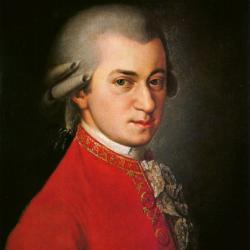
Wolfgang Amadeus Mozart

1756 - 1791 Person Name: W. A. Mozart, 1756-1791 Topics: Unity and Fellowship Composer of "MOZART ALLELUIA" in Psalms for All Seasons Wolfgang Amadeus Mozart Austria 1756-1791. Born at Salzburg, Austria, the son of Leopold Mozart, a minor composer and violinist, and youngest of seven children, he showed amazing ability on violin and keyboard from earliest childhood, even starting to compose music at age four when his father would play a piece and Mozart would play it exactly as did his father. At five, he composed some of his own music, which he played to his father, who wrote it down. When Mozart was eight, he wrote his first symphony, probably transcribed by his father. In his early years his father was his only teacher, teaching his children languages and academic subjects, as well as fundamentals of their strict Catholic faith. Some of his early compositions came as a surprise to his father, who eventually gave up composing himself when he realized how talented his son was. His family made several European journeys and he and his sister, Nanneri, performed as child prodigies, at the court of Prince-elector Maximillian II of Bavaria in Munich, and at the Imperial Courts in Vienna and Prague. A long concert tour followed, for 3.5 years, taking the family to courts in Munich, Mannheim, Paris, London, Dover, The Hague, Amsterdam, Utrecht, Mechelen, and again to Paris, and back home via Zurich, Donaueschingen, and Munich. During these trips Mozart met many musicians, acquainting himself with the works of other composers. He met Johann Christian Bach in London in 1764. Family trips were challenging, and travel conditions were primitive. They had to wait for invitations and reimbursements from nobility, and they endured long, near-fatal illnesses far from home. First Leopold (1764) got sick, then both children (1765). They traveled again to Vienna in 1767 and stayed there over a year. After a year back in Salzburg, Leopold and Wolfgang went to Italy (1769-1771), Leopold wished to display his son’s abilities as a performer and maturing composer. In Bologna, Italy, Wolfgang was accepted as a member of the famous Academia Filamonica. In Rome he heard Gregorio Allegri’s Miserere twice in performance. Back in the Sistine Chapel, Mozart wrote the whole performance out from memory, thus producing the first unauthorized copy of this closely guarded property of the Vatican. In the next few years Mozart wrote several operas performed with success in Italy, but his father’s hopes of securing a professional appointment for his son were not realized. At age 17 he was engaged as a musician at the Salzburg court, but grew restless and traveled in search of a better position. After returning to Salzburg, Mozart was employed as a court musician by the ruler of Salzburg, Prince Archbishop Hieronymus Colloredo. This gave Mozart ample opportunity to develop relationships with other musicians and his admirers, resulting in his development of new symphonies, sonatas, string quartets, masses, serenades, and some minor operas. In 1775 he wrote his only violin concertos, five in all. Again, he was discontent with work in Salzburg and traveled to find more opportunity to write operas. He and his father again visited Munich and Vienna, but neither visit was successful with the exception of his opera ‘La finta giardiniera’ in Munich. In 1777 he resigned his Salzburg position and went to Augsburg, Mannheim, Paris, and Munich again. In Mannheim he met and fell in love with Aloysia Weber, one of four daughters of a musical family. He could find no real employment there and left for Paris in 1778. He might have had a position as organist at Versailles, but he was not interested in that. He fell into debt and started pawning valuables. During these events his mother died. Meanwhile his father was still trying to find him a position in Salzburg. After checking out several other European cities and Munich, he again encountered Aloysia, but she was no longer interested in him, so he returned to Salzburg, having written another symphony, concerto, and piano sonata, and took the new appointment his father had found. However, he was still in discontent. Visiting Vienna in 1781, he was dismissed from his Salzburg position. He wrote another opera, ‘Idomeneo’, in 1781, that was successful in Munich. Two months later he was summoned to Vienna, where his employer, Archbishop Colloredo, wanted him around due to his notoriety. Mozart wished to meet the emperor and perform for him, and finally got that opportunity. It resulted in a part-time position and substantial commissions. Colloredo became a nemesis to Mozart’s career, finally releasing Mozart from his employ with a literal kick in the pants, much against his father’s wishes. However, he was now independent. Mozart then decided to settle in Vienna as a free lance performer and composer. He lived with the Fridolin Weber family, who had moved from Mannheim to Vienna. Fridolin, the father, had died, and they were taking in lodgers to make ends meet. His career there went well, and he performed as a pianist before the Emperor, establishing himself as the finest keyboard player in Vienna. He wrote another opera in 1782, again achieving success. Mozart had now become a prolific and influential composer of the Classical period and was known throughout Europe. Aloysia was now married to actor, Joseph Lange, and Mozart’s interest shifted to her sister, Constanze. In 1782 he married Constanze Weber Mozart Nissen. The marriage started out with a brief separation, and there was a problem getting Mozart’s father’s permission, which finally came. They had six children, but only two survived infancy: Carl and Franz. He lived in Vienna and achieved some notoriety, composing many of his best-known symphonies, concertos, and operas. In 1782-83 he became intimately acquainted with Johann Sebastian Bach and George Friederic Handel, as his friend, Gottfried van Swieten, owned many manuscripts of the Baroque masters, which Mozart studied intently. He altered his style of composition as a result. That year Mozart and his wife visited his father and sister, and he composed a liturgical piece, a Mass, with a singing part for his wife. He also met Joseph Hadyn in Vienna in 1784 and they became friends. They even played together in a string quartet from time to time. Mozart wrote six quartets dedicated to Hadyn. In 1785 Hadyn told Leopold Mozart, “Your son is the greatest composer known to me by person and repute, he has taste, and what is more, the greatest skill in composition”. Over the next several years Mozart booked several piano concertos in various places as a sole performer to delighted audiences, making substantial remuneration for his work. He and his wife then adopted a more luxurious lifestyle. They moved to an expensive apartment and he bought a fine fortepiano and billiard table. They sent their son, Karl, to an expensive boarding school and also kept servants. In 1784 Mozart became a Freemason and even composed Masonic music. Over the next several years he did little operatic writing and focused on his career as a piano soloist and writer of concertos. He again began operatic collaboration in 1785, creating ‘The marriage of Figaro’, then ‘Don Giovanni’ in 1787. That year his father died. Also that year he obtained a steady post under Emperor Joseph II as his chamber composer. This was part-time employment that was important when hard times arrived. However, Joseph aimed at keeping Mozart from leaving Vienna for better work. The Austrio-Turkish War made life difficult for musicians, and his aristocracy support had declined. He moved to save on expenses, but that did not help much, and he was reduced to borrowing funds from his friends, and pleading for loans. During this period he produced his last three symphonies. In 1789 he then set up on a journey to Leipzig, Dresden, and Berlin hoping to improve his fortunes. In 1790 he was highly productive, producing concertos, an opera, ‘The magic flute’, a series of string quintets, a motet, and an (unfinished) Requiem. Finances began to improve and he begin paying back his debts. Public reaction to his works also brought him great satisfaction. In 1791, while in Prague for the premiere of his opera, ‘La clemenza di Tito’, he fell ill. He continued professional functions for a short time, but had to go home and be nursed by his wife over the next couple of months. He died at Vienna, Austria, at the age of 35, a small thin man with undistinguishing characteristics. He was buried in a modest grave, having had a small funeral. Beethoven composed his early works in the shadow of Mozart, and Joseph Hadyn wrote “posterity will not see such a talent (as Mozart) again in 100 years”. 600+ works. Side note: Mozart enjoyed billiards, dancing, and had a pet canary, a starling, a dog, and a horse for recreational riding. He liked off-color humor. He wore elegant clothing when performing and had a modest tenor voice. John Perry

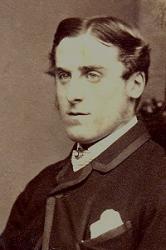
Clement Cotterill Scholefield

1839 - 1904 Person Name: C. C. Scholefield (1839-1904) Topics: Pentecost 2 The Church's Unity and Fellowship Composer of "ST. CLEMENT" in Hymns for Today's Church (2nd ed.) Rev. Clement C. Scholefield (b. Edgbaston, near Birmingham, Warwickshire, England, 1839; d. Goldalming, Surrey, England, 1904) Educated at St. John's College, Cambridge, he was ordained in the Church of England in 1867. He served at Hove, Brighton, St. Peter's in Kensington (1869-1879), and briefly at St. Luke's in Chelsea. From 1880 to 1890 he was chaplain at Eton College and from 1890 to 1895 vicar of Holy Trinity in Knightsbridge. Mainly self-taught as a musician, Scholefield became an accomplished pianist and composed some songs and hymn tunes. Bert Polman

Mutya Lopez Solis

b. 1930 Topics: The Holy Spirit and The Church Unity and Fellowship Composer of "KAPAYAPAAN" in Hymns from the Four Winds

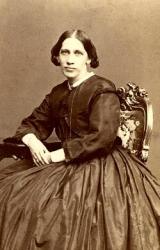
Carolina Sandell

1823 - 1903 Person Name: Carolina Sandell Berg Topics: Unity and Fellowship Author of "Day by Day" in Lift Up Your Hearts Caroline W. Sandell Berg (b. Froderyd, Sweden, 1832; d. Stockholm, Sweden, 1903), is better known as Lina Sandell, the "Fanny Crosby of Sweden." "Lina" Wilhelmina Sandell Berg was the daughter of a Lutheran pastor to whom she was very close; she wrote hymns partly to cope with the fact that she witnessed his tragic death by drowning. Many of her 650 hymns were used in the revival services of Carl O. Rosenius, and a number of them gained popularity particularly because of the musical settings written by gospel singer Oskar Ahnfelt. Jenny Lind, the famous Swedish soprano, underwrote the cost of publishing a collection of Ahnfelt's music, Andeliga Sänger (1850), which consisted mainly of Berg's hymn texts. Bert Polman

Ignaz Franz

1719 - 1790 Topics: Unity and Fellowship Versifier of "Psalm 149 (A Responsorial Setting)" in Psalms for All Seasons Ignaz Franz Poland 1719-1790. Born at Protzau, Silesia, he studied in Glaz andf Breslau. In 1742 he became a Roman Catholic priest. He served as chaplain at Gross-Glogau and vicar of Glogau in Silesia. In 1753 he was appointed archpriest at Schlawa, and assessor to the apostolic vicar's office in Breslau in 1766. He also functioned as the Assessor for Theological Affairs at the Apostolic Vicariate. He wrote hymn lyrics and compiled religious music. His works include “Katholisches Gesangbuch” (1744). He died at Breslau. John Perry

Christopher M. Idle

b. 1938 Person Name: Christopher Idle Topics: Unity and Fellowship Author of "Come with All Joy to Sing to God" in Psalms for All Seasons Christopher Martin Idle (b. Bromley, Kent, England, 1938) was educated at Elthan College, St. Peter's College, Oxford, and Clifton Theological College in Bristol, and was ordained in the Church of England. He served churches in Barrow-in-­Furness, Cumbria; London; and Oakley, Suffolk; and recently returned to London, where he is involved in various hymnal projects. A prolific author of articles on the Christian's public responsibilities, Idle has also published The Lion Book of Favorite Hymns (1980) and at least one hundred of his own hymns and biblical paraphrases. Some of his texts first appeared in hymnals published by the Jubilate Group, with which he is associated. He was also editor of Anglican Praise (1987). In 1998 Hope Publishing released Light Upon the River, a collection of 279 of his psalm and hymn texts, along with suggested tunes, scripture references, and commentary. Bert Polman

Robert Lowry

1826 - 1899 Topics: Church Fellowship and Unity; Church Fellowship and Unity; Church Fellowship and Unity; Church Fellowship and Unity; Church Fellowship and Unity; Church Fellowship and Unity; Church Fellowship and Unity Composer of "AND SHE ROCK THE BABY" Robert Lowry was born in Philadelphia, March 12, 1826. His fondness for music was exhibited in his earliest years. As a child he amused himself with the various musical instruments that came into his hands. At the age of seventeen he joined the First Baptist Church of Philadelphia, and soon became an active worker in the Sunday-school as teacher and chorister. At the age of twenty-two he gave himself to the work of the ministry, and entered upon a course of study at the University of Lewisburg, Pa. At the age of twenty-eight he was graduated with the highest honors of his class. In the same year of his graduation, he entered upon the work of the ministry. He served as pastor at West Chester, Pa., 1851-1858; in New York City, 1859-1861; in Brooklyn, 1861-1869; in Lewisburg, Pa., 1869-1875. While pastor at Lewisburg, he was also professor of belles lettres in the University, and received the honorary degree of D. D. in 1875. He then went to Plainfield, N. J., where he became pastor of Park Avenue Church. In each of these fields his work was crowned with marked success. Dr. Lowry was a man of rare administrative ability, a most excellent preacher, a thorough Bible student, and whether in the pulpit or upon the platform, always a brilliant and interesting speaker. He was of a genial and pleasing disposition, and a high sense of humor was one of his most striking characteristics. Very few men had greater ability in painting pictures from the imagination. He could thrill an audience with his vivid descriptions, inspiring others with the same thoughts that inspired him. His melodies are sung in every civilized land, and many of his hymns have been translated into foreign tongues. While preaching the Gospel, in which he found great joy, was his life-work, music and hymnology were favorite studies, but were always a side issue, a recreation. In the year 1880, he took a rest of four years, visiting Europe. In 1885 he felt that he needed more rest, and resigned his pastorate at Plainfield, and visited in the South and West, also spending some time in Mexico. He returned, much improved in health, and again took up his work in Plainfield. On the death of Wm. B. Bradbury, Messrs. Biglow & Main, successors to Mr. Bradbury in the publishing business, selected Dr. Lowry for editor of their Sunday-school book, Bright Jewels, which was a great success. Subsequently Dr. W. Doane was associated with him in the issue of the Sunday-school song book, Pure Gold, the sales of which exceeded a million copies. Then came Royal Diadem, Welcome Tidings, Brightest and Best, Glad Refrain, Good as Gold, Joyful Lays, Fountain of Song, Bright Array, Temple Anthems, and numerous other volumes. The good quality of their books did much to stimulate the cause of sacred song in this country. When he saw that the obligations of musical editorship were laid upon him, he began the study of music in earnest, and sought the best musical text-books and works on the highest forms of musical composition. He possessed one of the finest musical libraries in the country. It abounded in works on the philosophy and science of musical sounds. He also had some musical works in his possession that were over one hundred and fifty years old. One of his labors of love some years ago was an attempt to reduce music to a mathematical basis. On the established fact that Middle C has two hundred and fifty-six vibrations per second, he prepared a scale and went to work on the rule of three. After infinite calculation and repeated experiments, he carried it far enough to discover that it would not work. A reporter once asked him what was his method of composition — "Do you write the words to fit the music, or the music to fit the words?" His reply was, "I have no method. Sometimes the music comes and the words follow, fitted insensibly to the melody. I watch my moods, and when anything good strikes me, whether words or music, and no matter where I am, at home or on the street, I jot it down. Often the margin of a newspaper or the back of an envelope serves as a notebook. My brain is a sort of spinning machine, I think, for there is music running through it all the time. I do not pick out my music on the keys of an instrument. The tunes of nearly all the hymns I have written have been completed on paper before I tried them on the organ. Frequently the words of the hymn and the music have been written at the same time." The Doctor frequently said that he regarded "Weeping Will Not Save Me" as the best and most evangelistic hymn he ever wrote. The following are some of his most popular and sweetest gospel melodies: "Shall We Gather at the River?," "One More Day's Work for Jesus," "Where is My Wandering Boy To-night?," "I Need Thee Every Hour," "The Mistakes of My Life," "How Can I Keep from Singing?," "All the Way My Saviour Leads Me," "Saviour, Thy Dying Love," "We're Marching to Zion," etc. "Shall We Gather at the River?" is perhaps, without question, the most widely popular of all his songs. Of this Mr. Lowry said: "It is brass band music, has a march movement, and for that reason has become popular, though for myself I do not think much of it." Yet he tells us how, on several occasions, he had been deeply moved by the singing of that hymn, "Going from Harrisburg to Lewisburg once I got into a car filled with half-drunken lumbermen. Suddenly one of them struck up, "Shall We Gather at the River?" and they sang it over and over again, repeating the chorus in a wild, boisterous way. I did not think so much of the music then as I listened to those singers, but I did think that perhaps the spirit of the hymn, the words so flippantly uttered, might somehow survive and be carried forward into the lives of those careless men, and ultimately lift them upward to the realization of the hope expressed in my hymn." "A different appreciation of it was evinced during the Robert Raikes' Centennial. I was in London, and had gone to meeting in the Old Bailey to see some of the most famous Sunday-school workers in the world. They were present from Europe, Asia, and America. I sat in a rear seat alone. After there had been a number of addresses delivered in various languages, I was preparing to leave, when the chairman of the meeting announced that the author of "Shall We Gather at the River?" was present, and I was requested by name to come forward. Men applauded and women waved their handkerchiefs as I went to the platform. It was a tribute to the hymn; but I felt, when it was over, that, after all, I had perhaps done some little good in the world, and I felt more than ever content to die when God called." On Children's Day in Brooklyn, in 1865, this song was sung by over forty thousand voices. While Dr. Lowry said, "I would rather preach a gospel sermon to an appreciative, receptive congregation than write a hymn," yet in spite of his preferences, his hymns have gone on and on, translated into many languages, preaching and comforting thousands upon thousands of souls, furnishing them expression for their deepest feelings of praise and gratitude to God for His goodness to the children of men. What he had thought in his inmost soul has become a part of the emotions of the whole Christian world. We are all his debtors. Rev. Robert Lowry, D. D., died at his residence in Plainfield, K J., November 25, 1899. Dead, yet he lives and his sermons in gospel song are still heard and are doing good. Dr. Lowry was a great and good man, and his life, well spent, is highly worthy of a place among the world's greatest gospel song and hymn writers. -- Biography of Gospel Song and Hymn Writers ------- Lowry, Robert, D.D., son of Crozier Lowry, was born at Philadelphia, Pennsylvania, March 12, 1826, and educated at Lewisburg University. Having received ordination as a Baptist Minister, his first charge was at West Chester, Pennsylvania. From thence he passed to New York City, and then to Brooklyn, N. Y. In 1876 he was appointed Professor of Rhetoric in his University. On resigning his Professorship he undertook the charge of the 2nd Baptist Church, New Jersey. Dr. Lowry has been associated with some of the most popular Sunday School hymn-books published in the States, including Happy Voices, 1865; Chapel Melodies, 1868; Bright Jewels, 1869; Pure Gold, 1871; Royal Diadem, 1873; Tidal Wave, 1874; Fountain of Song1877; Welcome Tidings, 1877, &c. Of Dr. Lowry's hymns those which have attained the widest circulation are:— 1. Jerusalem, for ever bright. Heaven. Appeared in the American Tract Society's Happy Voices, 1865, with music by the author. 2. Low in the grave He lay. Resurrection of Christ. Written in 1874 and published in Brightest and Best, 1875. 3. Marching on, marching on. Sunday School Battle Song. Appeared, with music by the author, in Happy Voices, 1865. 4. My home is in heaven, my rest is not here. In Happy Voices, 1865, with music by the author. 5. My life flows on in endless song. Joy in God. In Bright Jewels, 1869; the Royal Diadem, 1873, and others in America and Great Britain, with music by the author. 6. One more day's work for Jesus. Work for Christ. Published, with music by the author, in Bright Jewels, 1869. 7. Shall we gather at the river? Mutual recognition in the Hereafter. The origin of this hymn is thus set forth in E. W. Long's Illustrated History of Hymns and their Authors, Philadelphia, 1876, p. 64:— ”On a very hot summer day, in 1864, a pastor was seated in his parlour in Brooklyn, N. Y. It was a time when an epidemic was sweeping through the city, and draping many persons and dwellings in mourning. All around friends and acquaintances were passing away to the spirit land in large numbers. The question began to arise in the heart, with unusual emphasis, ‘Shall we meet again? We are parting at the river of death, shall we meet at the river of life?' ‘Seating myself at the organ,’ says he, ‘simply to give vent to the pent up emotions of the heart, the words and music of the hymn began to flow out, as if by inspiration:— ‘Shall we gather at the river, Where bright angel feet have trod?’" In 1865 the hymn and music were given in Happy Voices, No. 220, in 5 stanzas of 4 lines and a chorus. The hymn has since passed into a great number of hymnals in Great Britain and America. 8. Take the wings of the morning; speed quickly thy flight. Exhortation to Repentance. Written for, and published with music by the author in, the Royal Diadem, 1873. 9. Weeping will not save me. Salvation through Faith. Published in the Chapel Melodies, 1868. 10. What can wash away my stain? Precious Blood of Jesus. Given in the Welcome Tidings, 1877, with music by the author. 11. Where is my wandering boy tonight! The absent Child. In the Fountain of Song, 1877, together with music by the author. Most of these hymns are given in Mr. I. D. Sankey's Sacred Songs & Solos, Pts. i., ii. --John Julian, Dictionary of Hymnology (1907)

Benjamin Beddome

1717 - 1795 Topics: Church Fellowship and Unity; Church Fellowship and Unity; Church Fellowship and Unity; Church Fellowship and Unity; Church Fellowship and Unity; Church Fellowship and Unity; Church Fellowship and Unity of "The Final Sentence" Benjamin Beddome was born at Henley-in Arden, Warwickshire, January 23, 1717. His father was a Baptist minister. He studied at various places, and began preaching in 1740. He was pastor of a Baptist society at Bourton-on-the-Water, Gloucestershire, until his death in 1795. In 1770, he received the degree of M.A. from the Baptist College in Providence, Rhode Island. He published several discourses and hymns. "His hymns, to the number of 830, were published in 1818, with a recommendation from Robert Hall." Montgomery speaks of him as a "writer worthy of honour both for the quantity and the quality of his hymns." --Annotations of the Hymnal, Charles Hutchins, M.A. 1872. ========================= Beddome, Benjamin , M.A. This prolific hymnwriter was born at Henley-in-Arden, Warwickshire, Jan. 23, 1717, where his father, the Rev. John Beddome, was atthat time Baptist Minister. He was apprenticed to a surgeon in Bristol, but removing to London, he joined, in 1739, the Baptist church in Prescott St. At the call of this church he devoted himself to the work of the Christian ministry, and in 1740 began to preach at Bourton-on-the-Water, in Gloucestershire. Declining invitations to remove to London or elsewhere, he continued pastor at Bourton until his death, on Sep. 3, 1795, at the age of 78. Mr. Beddome was for many years one of the most respected Baptist ministers in the West of England. He was a man of some literary culture. In 1770 he received the degree of M.A. from Providence College, Rhode Island. He was the author of an Exposition of the Baptist Catechism, 1752, in great repute at the time, and reprinted by Dr. C. Evans in 1772. It was his practice to prepare a hymn every week to be sung after his Sunday morning sermon. Though not originally intended for publication, he allowed thirteen of these to appear in the Bristol Baptist Collection of Ash & Evans (1769), and thirty-six in Dr. Rippon's Baptist Selection (1787), whence a number of them found their way into the General Baptist Hymn Book of 1793 and other collections. In 1817, a posthumous collection of his hymns was published, containing 830 pieces, with an introduction by the Rev. Robert Hall, and entitled "Hymns adapted to Public Worship or Family Devotion, now first published from the Manuscripts of the late Rev. B. Beddome, M.A." Preface dated "Leicester, Nov. 10, 1817." Some of the early copies bear the same date on the title page. Copies bearing both the 1817 and 1818 dates are in the British Museum. The date usually given is 1818. Some hymns are also appended to his Sermons, seven volumes of which were published l805—1819; and over twenty are given in the Baptist Register of various dates. Beddome's hymns were commended by Montgomery as embodying one central idea, "always important, often striking, and sometimes ingeniously brought out." Robert Hall's opinion is just, when in his "Recommendatory Preface" to the Hymns, &c, he says, p. vii.:— "The man of taste will be gratified with the beauty and original turns of thought which many of them ex¬hibit, while the experimental Christian will often perceive the most secret movements of his soul strikingly delineated, and sentiments pourtrayed which will find their echo in every heart." With the exception of a few composed for Baptisms and other special occasions, their present use in Great Britain is limited, but in America somewhat extensive. One of the best is the Ordination Hymn, "Father of Mercies, bow Thine ear." Another favourite is “ My times of sorrow and of joy," composed, by a singular coincidence, to be sung on Sunday, Jan. 14, 1778, the day on which his son died, most unexpectedly, in Edinburgh. "Let party names no more," is very popular both in Great Brit, and America. "Faith, His a precious gift," "Witness, ye men and angels, now," and the hymn for Holy Baptism, "Buried beneath the yielding wave," are also found in many collections. Beddome's popularity is, however, now mainly in America. [Rev. W. R. Stevenson, M.A.] Beddome is thus seen to be in common use to the extent of about 100 hymns. In this respect he exceeds every other Baptist hymnwriter; Miss Steele ranking second. The authorities for Beddome's hymns are: (1) A Collection of Hymns adapted to Public Worship, Bristol, W. Pine, 1769, the Collection of Ash & Evans; (2) Dr. Rippon's Selections 1787, and later editions; (3) Sermons printed from the Manuscripts of the late Rev. Benjamin Beddome, M.A.,... with brief Memoir of the Author, Dunstable & Lond., 1805-1819; (4) Dr. Rippon's Baptist Register, 1795, &c.; (5) The Beddome Manuscripts, in the Baptist College, Bristol; (6) and Hymns adapted to Public Worship, or Family Devotion now first published, from Manuscripts of the late Rev. B. Beddome, A.M. With a Recommendatory Preface by the Rev. R. Hall, A.M. Lond., 1817. In his Preface, Mr. Hall gives this account of the Beddome Manuscript:— "The present Editor was entrusted several years ago with the MSS, both in prose and verse, with permission from the late Messrs. S. & B. Beddome, sons of the Author, to publish such parts of them as he might deem proper. He is also indebted to a descendant of the Rev. W. Christian, formerly pastor of the Baptist Church at Sheepshead, Leicestershire, for some of the Author's valuable hymns, which had been carefully preserved in the family. From both these sources, as well as others of less consequence, the present interesting volume has been derived." -- Excerpts from John Julian, Dictionary of Hymnology (1907) ======================= Beddome, Benjamin, pp. 121-124. Other hymns in common use:— 1. Great God, before Thy mercy-seat. (1817). Lent. 2. Great God, oppressed with grief and fear. (1787.) Reading H. Scripture. 3. How glorious is Thy word, 0 God. Holy Scripture. From "When Israel, &c," p. 124, i. 4. In God I ever will rejoice. Morning. From his Hymns, &c, 1817. 5. Jesus, my Lord, divinely fair. (1817.) Jesus the King of Saints. Begins with stanza ii. of “Listen, ye mortals, while I sing." 6. Rejoice, for Christ the Saviour reigns. Missions. Altered form of "Shout, for the blessed, &c," p. 123, ii. 7. Satan, the world, and sin. (1817.) In Temptation. 8. Thou, Lord of all above. (1817.) Lent. 9. Unto Thine altar, Lord. (1787.) Lent. 10. Ye saints of every rank, with joy. (1800.) Public Worship. The dates given above are, 1787 and 1800, Rippon's Selection; and 1817 Beddome's Hymns. --John Julian, Dictionary of Hymnology, Appendix, Part II

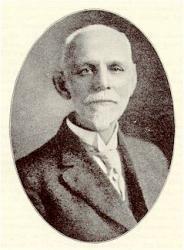
J. H. Fillmore

1849 - 1936 Person Name: James H. Fillmore, 1849-1936 Topics: Unity and Fellowship Author (st. 1) of "I Will Sing of the Mercies of the LORD" in Psalms for All Seasons James Henry Fillmore USA 1849-1936. Born at Cincinnati, OH, he helped support his family by running his father's singing school. He married Annie Eliza McKrell in 1880, and they had five children. After his father's death he and his brothers, Charles and Frederick, founded the Fillmore Brothers Music House in Cincinnati, specializing in publishing religious music. He was also an author, composer, and editor of music, composing hymn tunes, anthems, and cantatas, as well as publishing 20+ Christian songbooks and hymnals. He issued a monthly periodical “The music messsenger”, typically putting in his own hymns before publishing them in hymnbooks. Jessie Brown Pounds, also a hymnist, contributed song lyrics to the Fillmore Music House for 30 years, and many tunes were composed for her lyrics. He was instrumental in the prohibition and temperance efforts of the day. His wife died in 1913, and he took a world tour trip with single daughter, Fred (a church singer), in the early 1920s. He died in Cincinnati. His son, Henry, became a bandmaster/composer. John Perry

Bernhard Severin Ingemann

1789 - 1862 Person Name: B. S. Ingemann (1789-1862) Topics: Pentecost 2 The Church's Unity and Fellowship Author of "Through the night of doubt and sorrow" in Hymns for Today's Church (2nd ed.) Ingemann, Bernhardt Severin, was born at Thor Kildstrup, Island of Falster, May 28, 1789. From 1822 to his death in 1862, he was Professor of the Danish Language and Literature at the Academy of Sorö, Zealand, Denmark. He was a poet of some eminence. His collected works were pub, in 1851, in 34 volumes. Seven of his hymns translated into English are given in Gilbert Tait's Hymns of Denmark, 1868. The only hymn by him in English common use is:— Igjennem Nat og Traengael. Unity and Progress. It is dated 1825, and is given in the Nyt Tillaeg til Evangelisk-christelig. Psalmebog, Copenhagen, 1859, No. 502. In its translated form as "Through the night of doubt and sorrow," by the Rev. S. Baring-Gould, it has become widely known in most English-speaking countries. The translation was published in the People's Hymnal, 1861. It was greatly improved in Hymns Ancient & Modern, 1875, and has been specially set to music by several composers. --John Julian, Dictionary of Hymnology (1907)

Pages


Export as CSV
It looks like you are using an ad-blocker. Ad revenue helps keep us running. Please consider white-listing Hymnary.org or getting Hymnary Pro to eliminate ads entirely and help support Hymnary.org.