You help make Hymnary.org possible. More than 10 million people from 200+ countries found hymns, liturgical resources and encouragement on Hymnary.org in 2025, including you. Every visit affirms the global impact of this ministry.

If Hymnary has been meaningful to you this year, would you take a moment today to help sustain it? A gift of any size—paired with a note of encouragement if you wish—directly supports the server costs, research work and curation that keep this resource freely available to the world.

Give securely online today, or mail a check to:
Hymnary.org
Calvin University
3201 Burton Street SE
Grand Rapids, MI 49546

Thank you for your partnership, and may the hope of Advent fill your heart.

Person Results

Topics:advent+season
In:person

Planning worship? Check out our sister site, ZeteoSearch.org, for 20+ additional resources related to your search.
Showing 41 - 50 of 352Results Per Page: 102050

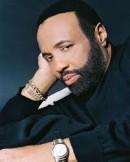
Andraé Crouch

1942 - 2015 Topics: Seasons and Feasts Advent Author of "Soon and Very Soon" in Gather Comprehensive Born in San Francisco on July 1, 1942, and raised in Los Angeles, Andraé Edward Crouch was the son of bivocational-pastor parents Benjamin and Catherine Crouch. He has recounted that he received the gift of music as a child, when his father was called as a guest preacher and pastoral candidate to a small rural church that had no musicians. He began playing for them at the age of 11. He wrote his first gospel song at 14, and formed his first band, the COGICS, in 1960. In 1965 he formed The Disciples, which lasted until 1979, and as a protegé of Audrey Mieir, Ralph Carmichael, and other leading Contemporary Christian Music artists of the time, went on to win a total of nine Grammies, and numerous other awards. He wrote his first well-known song, "The Blood Will Never Lose Its Power", at the age of 15, but most of his songs that have gained congregational currency flowed from the years when he was active with The Disciples. After The Disciples were disbanded, Crouch continued his recording and performing career, and also became more active in church ministries. After his parents died (1993-94), with his twin sister Sandra he took over the pastorate at the church his parents had led, New Christ Memorial Church of God in Christ in Pacoima, California. In December, 2014, Crouch was hospitalized for treatment of pneumonia and congestive heart failure, and on January 3, 2015, he was readmitted to the hospital following a heart attack. He died there five days later, at the age of 72. His twin sister and co-pastor Sandra Crouch issued the following statement: "Today my twin brother, womb-mate and best friend went home to be with the Lord. Please keep me, my family and our church family in your prayers. I tried to keep him here but God loved him best."

Michael Perry

1942 - 1996 Topics: Advent Season; Advent Season Paraphraser of "Blest Be the God of Israel" in The Worshiping Church Initially studying mathematics and physics at Dulwich College, Michael A. Perry (b. Beckenham, Kent, England, 1942; d. England, 1996) was headed for a career in the sciences. However, after one year of study in physics at the University of London, he transferred to Oak Hill College to study theology. He also studied at Ridley Hall, Cambridge, and received a M.Phil. from the University of Southhampton in 1973. Ordained a priest in the Church of England in 1966, Perry served the parish of St. Helen's in Liverpool as a youth worker and evangelist. From 1972 to 1981 he was the vicar of Bitterne in Southhampton and from 1981 to 1989, rector of Eversley in Hampshire and chaplain at the Police Staff College. He then became vicar of Tonbridge in Kent, where he remained until his death from a brain tumor in 1996. Perry published widely in the areas of Bible study and worship. He edited Jubilate publications such as Hymns far Today's Church (1982), Carols for Today (1986), Come Rejoice! (1989), and Psalms for Today (1990). Composer of the musical drama Coming Home (1987), he also wrote more than two hundred hymns and Bible versifications. Bert Polman

John Bacchus Dykes

1823 - 1876 Topics: Adoration and Praise Jesus Our Savior; Special Times and Seasons God and Country; Christ Advent; Christ Birth Composer of "MELITA" in The Celebration Hymnal As a young child John Bacchus Dykes (b. Kingston-upon-Hull' England, 1823; d. Ticehurst, Sussex, England, 1876) took violin and piano lessons. At the age of ten he became the organist of St. John's in Hull, where his grandfather was vicar. After receiving a classics degree from St. Catherine College, Cambridge, England, he was ordained in the Church of England in 1847. In 1849 he became the precentor and choir director at Durham Cathedral, where he introduced reforms in the choir by insisting on consistent attendance, increasing rehearsals, and initiating music festivals. He served the parish of St. Oswald in Durham from 1862 until the year of his death. To the chagrin of his bishop, Dykes favored the high church practices associated with the Oxford Movement (choir robes, incense, and the like). A number of his three hundred hymn tunes are still respected as durable examples of Victorian hymnody. Most of his tunes were first published in Chope's Congregational Hymn and Tune Book (1857) and in early editions of the famous British hymnal, Hymns Ancient and Modern. Bert Polman

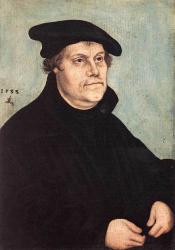
Martin Luther

1483 - 1546 Person Name: Martin Luther, 1483-1546 Topics: Advent Season Translator (into German) of "Savior of the Nations, Come" in Gather (3rd ed.) Luther, Martin, born at Eisleben, Nov. 10, 1483; entered the University of Erfurt, 1501 (B.A. 1502, M.A.. 1503); became an Augustinian monk, 1505; ordained priest, 1507; appointed Professor at the University of Wittenberg, 1508, and in 1512 D.D.; published his 95 Theses, 1517; and burnt the Papal Bull which had condemned them, 1520; attended the Diet of Worms, 1521; translated the Bible into German, 1521-34; and died at Eisleben, Feb. 18, 1546. The details of his life and of his work as a reformer are accessible to English readers in a great variety of forms. Luther had a huge influence on German hymnody. i. Hymn Books. 1. Ellich cristlich lider Lobgesang un Psalm. Wittenberg, 1524. [Hamburg Library.] This contains 8 German hymns, of which 4 are by Luther. 2. Eyn Enchiridion oder Handbuchlein. Erfurt, 1524 [Goslar Library], with 25 German hymns, of which 18 are by Luther. 3. Geystliche Gesangk Buchleyn. Wittenberg, 1524 [Munich Library], with 32 German hymns, of which 24 are by Luther. 4. Geistliche Lieder auffs new gebessert. Wittenberg. J. Klug, 1529. No copy of this book is now known, but there was one in 1788 in the possession of G. E. Waldau, pastor at Nürnberg, and from his description it is evident that the first part of the Rostock Gesang-Buch, 1531, is a reprint of it. The Rostock Gesang-Buch, 1531, was reprinted by C. M. Wiechmann-Kadow at Schwerin in 1858. The 1529 evidently contained 50 German hymns, of which 29 (including the Litany) were by Luther. 5. Geistliche Lieder auffs new gebessert. Erfurt. A. Rauscher, 1531 [Helmstädt, now Wolfenbüttel Library], a reprint of No. 4. 6. Geistliche Lieder. Wittenberg. J. Klug, 1535 [Munich Library. Titlepage lost], with 52 German hymns, of which 29 are by Luther. 7. Geistliche Lieder auffs new gebessert. Leipzig. V. Schumann, 1539 [Wernigerode Library], with 68 German hymns, of which 29 are by Luther. 8. Geistliche Lieder. Wittenberg. J. Klug, 1543 [Hamburg Library], with 61 German hymns, of which 35 are by Luther. 9. Geystliche Lieder. Leipzig. V. Babst, 1545 [Gottingen Library]. This contains Luther's finally revised text, but adds no new hymns by himself. In pt. i. are 61 German hymns, in pt. ii. 40, of which 35 in all are by Luther. For these books Luther wrote three prefaces, first published respectively in Nos. 3, 4, 9. A fourth is found in his Christliche Geseng, Lateinisch und Deudsch, zum Begrebnis, Wittenberg, J. Klug, 1542. These four prefaces are reprinted in Wackernagel’s Bibliographie, 1855, pp. 543-583, and in the various editions of Luther's Hymns. Among modern editions of Luther's Geistliche Lieder may be mentioned the following:— Carl von Winterfeld, 1840; Dr. C. E. P. Wackernagel, 1848; Q. C. H. Stip, 1854; Wilhelm Schircks, 1854; Dr. Danneil, 1883; Dr. Karl Gerok, 1883; Dr. A. F. W. Fischer, 1883; A. Frommel, 1883; Karl Goedeke, 1883, &c. In The Hymns of Martin Luther. Set to their original melodies. With an English version. New York, 1883, ed. by Dr. Leonard Woolsey Bacon and Nathan H. Allen, there are the four prefaces, and English versions of all Luther's hymns, principally taken more or less altered, from the versions by A. T. Russell, R. Massie and Miss Winkworth [repub. in London, 1884]. Complete translations of Luther's hymns have been published by Dr. John Anderson, 1846 (2nd ed. 1847), Dr. John Hunt, 1853, Richard Massie, 1854, and Dr. G. Macdonald in the Sunday Magazine, 1867, and his Exotics, 1876. The other versions are given in detail in the notes on the individual hymns. ii. Classified List of Luther's Hymns. Of Luther's hymns no classification can be quite perfect, e.g. No. 3 (see below) takes hardly anything from the Latin, and No. 18 hardly anything from the Psalm. No. 29 is partly based on earlier hymns (see p. 225, i.). No. 30 is partly based on St. Mark i. 9-11, and xvi., 15, 16 (see p. 226, ii.). No. 35 is partly based on St. Luke ii. 10-16. The following arrangement, however, will answer all practical purposes. A. Translations from the Latin. i. From Latin Hymns: 1. Christum wir sollen loben schon. A solis ortus cardine 2. Der du bist drei in Einigkeit. O Lux beata Trinitas. 3. Jesus Christus unser Heiland, Der von. Jesus Christus nostra salus 4. Komm Gott Schopfer, heiliger Geist. Veni Creator Spiritus, Mentes. 5. Nun komm der Beidenheiland. Veni Redemptor gentium 6. Was flirchst du Feind Herodes sehr. A solis ortus cardine ii. From Latin Antiphons, &c.: 7. Herr Gott dich loben wir. Te Deum laudamus. 8. Verleih uns Frieden gnädiglich. Dapacem, Domine 9. Wir glauben all an einen Gott. iii. Partly from the Latin, the translated stanzas being adopted from Pre-Reformation Versions: 10. Komm, heiliger Geist, Herre Gott. 11. Mitten wir im Leben sind. Media vita in morte sumus. B. Hymns revised and enlarged from Pre-Reformation popular hymns. 12. Gelobet seist du Jesus Christ. 13. Gott der Vater wohn uns bei. 14. Gott sei gelobet und gebenedeiet. 15. Nun bitten wir den heiligen Geist. C. Psalm versions. 16. Ach Gott vom Himmel, sieh darein. 17. Aus tiefer Noth schrei ich zu dir. 18. Ein' feste Burg ist unser Gott. 19. Es spricht der Unweisen Mund wohl. 20. Es wollt uns Gott genädig sein. 21. War Gott nicht mit uns diese Zeit. 22. Wohl dem, der in Gotten Furcht steht. D. Paraphrases of other portions of Holy Scripture. 23. Diess sind die heilgen zehn Gebot. 24. Jesaia dem Propheten das geschah. 25. Mensch willt du leben seliglich. 26. Mit Fried und Freud ich fahr dahin. 27. Sie ist mir lieb die werthe Magd. 28. Vater unser im Himmelreich. E. Hymns mainly Original. 29. Christ lag in Todesbanden. 30. Christ unser Herr zum Jordan kam. 31. Ein neues Lied wir heben an. 32. Erhalt uns Herr bei deinem Wort. 33. Jesus Christus unser Heiland, Der den, 34. Nun freut euch lieben Christengemein. 35. Vom Himmel hoch da komm ich her. 36. Vom Himmel kam der Engel Schaar. In addition to these — 37. Fur alien Freuden auf Erden. 38. Kyrie eleison. In the Blätter fur Hymnologie, 1883, Dr. Daniel arranges Luther's hymns according to what he thinks their adaptation to modern German common use as follows:— i. Hymns which ought to be included in every good Evangelical hymn-book: Nos. 7-18, 20, 22, 28, 29, 30, 32, 34, 35, 36, 38. ii. Hymns the reception of which into a hymn-book might be contested: Nos. 2, 3, 4, 19, 21, 22, 23, 24, 25, 33. iii. Hymns not suited for a hymn-book: Nos. 1, 5, 6, 27, 31, 37. [Rev. James Mearns, M.A.] --John Julian, Dictionary of Hymnology (1907)

John H. Hopkins

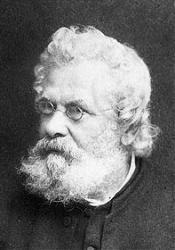
1820 - 1891 Person Name: John H Hopkins, 1820-91 Topics: Seasons of the Christian Year Advent and Christmas Author of "We three kings of Orient are" in Complete Mission Praise John Henry Hopkins, Jr MA USA 1820-1891. Born in Pittsburgh, PA, having 12 siblings, the son of pioneer parents (his father from Dublin, his mother from Hamburg) he became an ecclesiologist. His father had been an ironmaster, school teacher, lawyer, priest and second Episcopal Bishop of Vermont, (becoming presiding bishop in 1865). When his father founded the Vermont Episcopal Institute, he needed an assistant to help run it, so he picked his son to become a tutor and disciplinarian. The younger Hopkins played the flute and bugle in the school orchestra and also taught Sunday school. John Henry reflected the artistic talents of both parents in music, poetry, and art. After graduating from the University of Vermont in 1839, he returned to help his father with the school, but a financial crisis hit that year and the school had to close. He worked as a reported in New York City while studying law. He developed a throat ailment and went south to be in a warmer climate. From 1842-1844 he tutored the children of Episcopal Bishop Elliott of Savannah, GA, returning to take his M.A. from Vermont in 1845. He graduated from General Theological Seminary in 1850 and was ordained a deacon, serving as first instructor in church music at the Seminary. He founded and edited the “Church Journal” from 1853 to 1868. Interested in New York’s Ecclesiological Society, his artistic talents were apparent in designing stained-glass windows, episcopal seals, and a variety of other church ornaments. At the same time, his musical talents led to the writing and composing of a number of fine hymns and tunes, as well as anthems and services. He was ordained a priest in 1872, and was Rector of Trinity Church, Plattsburg, NY, from 1872-1876, then of Christ Episcopal Church in Williamsport, PA, from 1876-1887. He helped get the building debt paid off by 1879 with(in 10 years of its construction). During his time there a Sunday school building was also erected, having steam heat and a tiled floor. He designed some of the church furniture and bishop periphernalia as well as wrought iron tombs in Wildwood Cemetery. He also helped design two other church buildings in the area. A man of many talents, he was much beloved as a scholar, writer, preacher, controvertialist, musician, poet, and artist, excelling in all that he did. Totally devoted to his parish people, he especially loved children and was kind to anyone in need. He was considered very down-to-earth. He delivered the eulogy at the funeral of President Usysses S Grant in 1885. He was considered a great developer of hymnody in the Episcopal Church in the mid-19th century. His “Carols, hymns, and songs,”, published in 1863, had a 4th edition in 1883. In 1887 he edited “Great hymns of the church”. He wrote a biography of his father (the life of John Henry Hopkins, S.T.D.) He never married. He died at Hudson, NY. John Perry ======================= Hopkins, John Henry, D.D., Jun., son of J. H. Hopkins, sometime Bishop of Vermont, was born at Pittsburg, Pa., Oct. 28, 1820, educated at the University of Vermont, ordained in 1850, Rector of Christ's Church, Williamsport, Pa., 1876, and died at Troy, New York, Aug. 13, 1891. He published Poems by the Wayside written during more than Forty Years, N.Y., James Pott, 1883; and Carols, Hymns, and Songs, 1862; 3rd ed. 1882. Of his hymns the following are in common use: 1. Blow on, thou [ye] mighty Wind. Missions. 2. Come with us, O blessed Jesus. Holy Communion. 3. Glory to God the Father be. (Dated 1867.) Holy Trinity. 4. God hath made the moon whose beam. (Dated 1840.) Duty. 5. Lord, now round Thy Church behold. (Dated 1867.) For the Reunion of Christendom. These hymns are in his Poems by the Wayside, 1883. In the same volume there are translations of the O Antiphons. --John Julian, Dictionary of Hymnology, Appendix, Part II (1907) ============== Hopkins, J. H., p. 1571, ii. The following additional hymns by him are in the American Hymnal, revised and enlarged .... Protestant Episcopal Church. . . U.S.A., 1892:— 1. God of our fathers, bless this our land. National Hymn. 2. When from the east the wise men came. Epiphany. --John Julian, Dictionary of Hymnology, New Supplement (1907)

William Whiting

1825 - 1878 Topics: Adoration and Praise Jesus Our Savior; Special Times and Seasons God and Country; Christ Advent; Christ Birth Author (stanzas 1,4) of "Eternal Father, Strong to Save" in The Celebration Hymnal William Whiting was born in Kensington, November 1, 1825, and was educated at Clapham and Winchester Colleges. He was later master of Winchester College Choristers' School, where he wrote Rural Thoughts and Other Poems, 1851. He died at Winchester. --The Hymnal 1940 Companion =============== Whiting, William, was born in Kensington, London, Nov. 1, 1825, and educated at Clapham. He was for several years Master of the Winchester College Choristers' School. His Rural Thoughts and other poems were published in 1851; but contained no hymns. His reputation as a hymnwriter is almost exclusively confined to his “Eternal Father, strong to save". Other hymns by him were contributed to the following collections:— i. To the 1869 Appendix to the Society for Promoting Christian Knowledge Psalms & Hymns 1. O Lord the heaven Thy power displays. Evening. 2. Onward through life Thy children stray. Changing Scenes of Life. ii. To an Appendix to Hymns Ancient & Modern issued by the Clergy of St. Philip's, Clerkenwell, 1868. 3. Jesus, Lord, our childhood's Pattern. Jesus the Example to the Young. 4. Lord God Almighty, Everlasting Father. Holy Trinity. 5. Now the harvest toil is over. Harvest. 6. 0 Father of abounding grace. Consecration of a Church. 7. We thank Thee, Lord, for all. All Saints Day. iii. To The Hymnary, 1872. 8. Amen, the deed in faith is done. Holy Baptism. 9. Jesus Christ our Saviour. For the Young. 10. Now the billows, strong and dark. For Use at Sea. 11. 0 Father, Who the traveller's way. For Travellers by Land. 12. When Jesus Christ was crucified. Holy Baptism. Mr. Whiting's hymns, with the exception of his “Eternal Father," &c, have not a wide acceptance. He died in 1878. -- John Julian, Dictionary of Hymnology (1907)

Johann Crüger

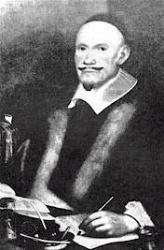
1598 - 1662 Person Name: Johann Crüger, 1598-1662 Topics: Seasons of the Christian Year Advent and Christmas Composer of "CRÜGER" in Complete Mission Praise Johann Crüger (b. Grossbriesen, near Guben, Prussia, Germany, 1598; d. Berlin, Germany, 1662) Crüger attended the Jesuit College at Olmutz and the Poets' School in Regensburg, and later studied theology at the University of Wittenberg. He moved to Berlin in 1615, where he published music for the rest of his life. In 1622 he became the Lutheran cantor at the St. Nicholas Church and a teacher for the Gray Cloister. He wrote music instruction manuals, the best known of which is Synopsis musica (1630), and tirelessly promoted congregational singing. With his tunes he often included elaborate accom­paniment for various instruments. Crüger's hymn collection, Neues vollkomliches Gesangbuch (1640), was one of the first hymnals to include figured bass accompaniment (musical shorthand) with the chorale melody rather than full harmonization written out. It included eighteen of Crüger's tunes. His next publication, Praxis Pietatis Melica (1644), is considered one of the most important collections of German hymnody in the seventeenth century. It was reprinted forty-four times in the following hundred years. Another of his publications, Geistliche Kirchen Melodien (1649), is a collection arranged for four voices, two descanting instruments, and keyboard and bass accompaniment. Crüger also published a complete psalter, Psalmodia sacra (1657), which included the Lobwasser translation set to all the Genevan tunes. Bert Polman =============================== Crüger, Johann, was born April 9, 1598, at Gross-Breese, near Guben, Brandenburg. After passing through the schools at Guben, Sorau and Breslau, the Jesuit College at Olmütz, and the Poets' school at Regensburg, he made a tour in Austria, and, in 1615, settled at Berlin. There, save for a short residence at the University of Wittenberg, in 1620, he employed himself as a private tutor till 1622. In 1622 he was appointed Cantor of St. Nicholas's Church at Berlin, and also one of the masters of the Greyfriars Gymnasium. He died at Berlin Feb. 23, 1662. Crüger wrote no hymns, although in some American hymnals he appears as "Johann Krüger, 1610,” as the author of the supposed original of C. Wesley's "Hearts of stone relent, relent" (q.v.). He was one of the most distinguished musicians of his time. Of his hymn tunes, which are generally noble and simple in style, some 20 are still in use, the best known probably being that to "Nun danket alle Gott" (q.v.), which is set to No. 379 in Hymns Ancient & Modern, ed. 1875. His claim to notice in this work is as editor and contributor to several of the most important German hymnological works of the 16th century, and these are most conveniently treated of under his name. (The principal authorities on his works are Dr. J. F. Bachmann's Zur Geschichte der Berliner Gesangbücher 1857; his Vortrag on P. Gerhard, 1863; and his edition of Gerhardt's Geistliche Lieder, 1866. Besides these there are the notices in Bode, and in R. Eitner's Monatshefte für Musik-Geschichte, 1873 and 1880). These works are:— 1. Newes vollkömmliches Gesangbuch, Augspur-gischer Confession, &c, Berlin, 1640 [Library of St. Nicholas's Church, Berlin], with 248 hymns, very few being published for the first time. 2. Praxis pietatis melica. Das ist: Ubung der Gottseligkeit in Christlichen und trostreichen Gesängen. The history of this, the most important work of the century, is still obscure. The 1st edition has been variously dated 1640 and 1644, while Crüger, in the preface to No. 3, says that the 3rd edition appeared in 1648. A considerable correspondence with German collectors and librarians has failed to bring to light any of the editions which Koch, iv. 102, 103, quotes as 1644, 1647, 1649, 1650, 1651, 1652, 1653. The imperfect edition noted below as probably that of 1648 is the earliest Berlin edition we have been able to find. The imperfect edition, probably ix. of 1659, formerly in the hands of Dr. Schneider of Schleswig [see Mützell, 1858, No. 264] was inaccessible. The earliest perfect Berlin edition we have found is 1653. The edition printed at Frankfurt in 1656 by Caspar Röteln was probably a reprint of a Berlin edition, c. 1656. The editions printed at Frankfurt-am-Main by B. C. Wust (of which the 1666 is in the preface described as the 3rd) are in considerable measure independent works. In the forty-five Berlin and over a dozen Frankfurt editions of this work many of the hymns of P. Gerhardt, J. Franck, P. J. Spener, and others, appear for the first time, and therein also appear many of the best melodies of the period. 3. Geistliche Kirchen-Melodien, &c, Leipzig, 1649 [Library of St. Katherine's Church, Brandenburg]. This contains the first stanzas only of 161 hymns, with music in four vocal and two instrumental parts. It is the earliest source of the first stanzas of various hymns by Gerhardt, Franck, &c. 4. D. M. Luther's und anderer vornehmen geisU reichen und gelehrten Manner Geistliche Lieder und Psalmen, &c, Berlin, 1653 [Hamburg Town Library], with 375 hymns. This was edited by C. Runge, the publisher, and to it Crüger contributed some 37 melodies. It was prepared at the request of Luise Henriette (q.v.), as a book for the joint use of the Lutherans and the Re¬formed, and is the earliest source of the hymns ascribed to her, and of the complete versions of many hymns by Gerhardt and Franck. 5. Psalmodia Sacra, &c, Berlin, 1658 [Royal Library, Berlin]. The first section of this work is in an ed. of A. Lobwasser's German Psalter; the second, with a similar title to No. 4, and the date 1657, is practically a recast of No. 4,146 of those in 1653 being omitted, and the rest of the 319 hymns principally taken from the Praxis of 1656 and the hymn-books of the Bohemian Brethren. New eds. appeared in 1676, 1700, 1704, 1711, and 1736. [Rev. James Mearns, M.A.] -- Excerpt from John Julian, Dictionary of Hymnology (1907) ======================= Crüger, Johann, p. 271, ii. Dr. J. Zahn, now of Neuendettelsau, in Bavaria, has recently acquired a copy of the 5th ed., Berlin, 1653, of the Praxis. --John Julian, Dictionary of Hymnology, Appendix, Part II (1907)

Edward Caswall

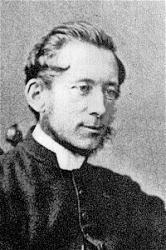
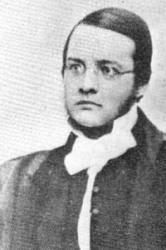
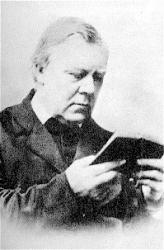
1814 - 1878 Person Name: Edward Caswall, 1814-78 Topics: Seasons of the Christian Year Advent and Christmas Author of "See, amid the winter's snow" in Complete Mission Praise Edward Caswall was born in 1814, at Yately, in Hampshire, where his father was a clergyman. In 1832, he went to Brasenose College, Oxford, and in 1836, took a second-class in classics. His humorous work, "The Art of Pluck," was published in 1835; it is still selling at Oxford, having passed through many editions. In 1838, he was ordained Deacon, and in 1839, Priest. He became perpetural Curate of Stratford-sub-Castle in 1840. In 1841, he resigned his incumbency and visited Ireland. In 1847, he joined the Church of Rome. In 1850, he was admitted into the Congregation of the Oratory at Birmingham, where he has since remained. He has published several works in prose and poetry. --Annotations of the Hymnal, Charles Hutchins, M.A. 1872 ===================== Caswall, Edward, M.A., son of the Rev. R. C. Caswall, sometime Vicar of Yately, Hampshire, born at Yately, July 15, 1814, and educated at Brasenose College, Oxford, graduating in honours in 1836. Taking Holy Orders in 1838, he became in 1840 Incumbent of Stratford-sub-Castle, near Salisbury, and resigned the same in 1847. In 1850 (Mrs. Caswall having died in 1849) he was received into the Roman Catholic communion, and joined Dr. Newman at the Oratory, Edgbaston. His life thenceforth, although void of stirring incidents, was marked by earnest devotion to his clerical duties and a loving interest in the poor, the sick, and in little children. His original poems and hymns were mostly written at the Oratory. He died at Edgbaston, Jan. 2, 1878, and was buried on Jan. 7 at Redwall, near Bromsgrove, by his leader and friend Cardinal Newman. Caswall's translations of Latin hymns from the Roman Breviary and other sources have a wider circulation in modern hymnals than those of any other translator, Dr. Neale alone excepted. This is owing to his general faithfulness to the originals, and the purity of his rhythm, the latter feature specially adapting his hymns to music, and for congregational purposes. His original compositions, although marked by considerable poetical ability, are not extensive in their use, their doctrinal teaching being against their general adoption outside the Roman communion. His hymns appeared in:— (1) Lyra Catholica, which contained 197 translations from the Roman Breviary, Missal, and other sources. First ed. London, James Burns, 1849. This was reprinted in New York in 1851, with several hymns from other sources added thereto. This edition is quoted in the indices to some American hymn-books as Lyra Cath., as in Beecher's Plymouth Collection, 1855, and others. (2) Masque of Mary, and Other Poems, having in addition to the opening poem and a few miscellaneous pieces, 53 translations, and 51 hymns. 1st ed. Lon., Burns and Lambert, 1858. (3) A May Pageant and Other Poems, including 10 original hymns. Lon., Burns and Lambert, 1865. (4) Hymns and Poems, being the three preceding volumes embodied in one, with many of the hymns rewritten or revised, together with elaborate indices. 1st ed. Lon., Burns, Oates & Co., 1873. Of his original hymns about 20 are given in the Roman Catholic Crown of Jesus Hymn Book, N.D; there are also several in the Hymns for the Year, N.D., and other Roman Catholic collections. --John Julian, Dictionary of Hymnology (1907) ====================== Caswall, E. , p. 214, ii. Additional original hymns by Caswall are in the Arundel Hymns, 1902, and other collections. The following are from the Masque of Mary, &c, 1858:— 1. Christian soul, dost thou desire. After Holy Communion. 2. Come, let me for a moment cast. Holy Communion. 3. O Jesu Christ [Lord], remember. Holy Communion. 4. Oft, my soul, thyself remind. Man's Chief End. 5. Sleep, Holy Babe. Christmas. Appeared in the Rambler, June 1850, p. 528. Sometimes given as "Sleep, Jesus, sleep." 6. The glory of summer. Autumn. 7. This is the image of the queen. B. V. M. His "See! amid the winter's snow,” p. 1037, i., was published in Easy Hymn Tunes, 1851, p. 36. In addition the following, mainly altered texts or centos of his translations are also in common use:— 1. A regal throne, for Christ's dear sake. From "Riches and regal throne," p. 870, ii. 2. Come, Holy Ghost, Thy grace inspire. From "Spirit of grace and union," p. 945, i. 3. Hail! ocean star, p. 99, ii,, as 1873. In the Birmingham Oratory Hymn Book, 1850, p. 158. 4. Lovely flow'rs of martyrs, hail. This is the 1849 text. His 1873 text is "Flowers of martyrdom," p. 947, i. 5. None of all the noble cities. From "Bethlehem! of noblest cities," p. 946, ii. 6. O Jesu, Saviour of the World. From “Jesu, Redeemer of the world," p. 228, ii. 7. 0 Lady, high in glory raised. From "O Lady, high in glory, Whose," p. 945, i. The Parochial Hymn Book, 1880, has also the following original hymns by Caswall. As their use is confined to this collection, we give the numbers only:— IS os. 1, 2, 3, 159 (Poems, 1873, p. 453), 209 (1873, p. 288), 299, 324 (1873, p. 323), 357, 402, 554, 555, 558, 569 (1873, p. 334). These are from his Masque of Mary 1858. Nos. 156, 207 (1873, p. 296), 208 (1873, p. 297), 518. These are from his May Pageant, 1865. As several of these hymns do not begin with the original first lines, the original texts are indicated as found in his Poems, 1873. [Rev. James Mearns, M.A.] --John Julian, Dictionary of Hymnology, New Supplement (1907)

Venantius Honorius Clementianus Fortunatus

540 - 600 Person Name: Venantius Fortunatus, c. 530-609 Topics: Mary Mother of God; Advent; Christmas Season; Mary, Mother of God; The Annunciation of the Lord (March 25); Incarnation Author of "The God Whom Earth and Sea and Sky" in Worship (3rd ed.) Venantius Honorius Clematianus Fortunatus (b. Cenada, near Treviso, Italy, c. 530; d. Poitiers, France, 609) was educated at Ravenna and Milan and was converted to the Christian faith at an early age. Legend has it that while a student at Ravenna he contracted a disease of the eye and became nearly blind. But he was miraculously healed after anointing his eyes with oil from a lamp burning before the altar of St. Martin of Tours. In gratitude Fortunatus made a pilgrimage to that saint's shrine in Tours and spent the rest of his life in Gaul (France), at first traveling and composing love songs. He developed a platonic affection for Queen Rhadegonda, joined her Abbey of St. Croix in Poitiers, and became its bishop in 599. His Hymns far all the Festivals of the Christian Year is lost, but some of his best hymns on his favorite topic, the cross of Jesus, are still respected today, in part because of their erotic mysticism. Bert Polman ================== Fortunatus, Venantius Honorius Clementianus, was born at Ceneda, near Treviso, about 530. At an early age he was converted to Christianity at Aquileia. Whilst a student at Ravenna he became almost blind, and recovered his sight, as he believed miraculously, by anointing his eyes with some oil taken from a lamp that burned before the altar of St. Martin of Tours, in a church in that town. His recovery induced him to make a pilgrimage to the shrine of St. Martin, at Tours, in 565, and that pilgrimage resulted in his spending the rest of his life in Gaul. At Poitiers he formed a romantic, though purely platonic, attachment for Queen Rhadegunda, the daughter of Bertharius, king of the Thuringians, and the wife, though separated from him, of Lothair I., or Clotaire, king of Neustria. The reader is referred for further particulars of this part of the life of Fortunatus to Smith and Wace's Dictionary of Christian Biography, vol. ii. p. 552. It is sufficient to say here that under the influence of Rhadegunda, who at that time lived at Poitiers, where she had founded the convent of St. Croix, Fortunatus was ordained, and ultimately, after the death of Rhadegunda in 597, became bishop of Poitiers shortly before his own death in 609. The writings, chiefly poetical, of Fortunatus, which are still extant, are very numerous and various in kind; including the liveliest Vers de Societé and the grandest hymns; while much that he is known to have written, including a volume of Hymns for all the Festivals of the Christian Year, is lost. Of what remains may be mentioned, The Life of St. Martin of Tours, his Patron Saint, in four books, containing 2245 hexameter lines. A complete list of his works will be found in the article mentioned above. His contributions to hymnology must have been very considerable, as the name of his lost volume implies, but what remains to us of that character, as being certainly his work, does not comprise at most more than nine or ten compositions, and of some of these even his authorship is more than doubtful. His best known hymn is the famous "Vexilla Regis prodeunt," so familiar to us in our Church Hymnals in some English form or other, especially, perhaps, in Dr. Neale's translation, "The Royal Banners forward go." The next most important composition claimed for him is "Pange, lingua, gloriosi praelium certaminis," but there would seem to be little doubt according to Sirmond (Notis ad Epist. Sidon. Apollin. Lib. iii., Ep. 4), that it was more probably written by Claudianus Mamertus. Besides these, which are on the Passion, there are four hymns by Fortunatus for Christmas, one of which is given by Daniel, "Agnoscat omne saeculum," one for Lent, and one for Easter. Of "Lustra sex qui jam peregit," of which an imitation in English by Bishop. Mant, "See the destined day arise," is well-known, the authorship is by some attributed to Fortunatus, and by some to St. Ambrose. The general character of the poetry of Venantius Fortunatus is by no means high, being distinguished neither for its classical, nor, with very rare exceptions, for its moral correctness. He represents the "last expiring effort of the Latin muse in Gaul," to retain something of the "old classical culture amid the advancing tide of barbarism." Whether we look at his style, or even his grammar and quantities, we find but too much that is open to criticism, whilst he often offends against good taste in the sentiments he enunciates. Occasionally, as we see in the "Vexilla Regis," he rises to a rugged grandeur in which he has few rivals, and some of his poems are by no means devoid of simplicity and pathos. But these are the exceptions and not the rule in his writings, and we know not how far he may have owed even these to the womanly instincts and gentler, purer influence of Rhadegunda. Thierry, in his Récits des Temps Mérovingiens, Récit 5, gives a lively sketch of Fortunatus, as in Archbishop Trench's words (Sacred Latin Poetry, 1874,p. 132), "A clever, frivolous, self-indulgent and vain character," an exaggerated character, probably, because one can hardly identify the author of "Vexilla Regis," in such a mere man of the world, or look at the writer of "Crux benedicta nitet, Dominus qua carne pependit" q.v., as being wholly devoid of the highest aspirations after things divine. A quarto edition of his Works was published in Rome in 1786. [Rev. Digby S. Wrangham, M.A.] - John Julian, Dictionary of Hymnology (1907) ==================== Fortunatus, V. H. C., p. 384, i. The best edition of his poems is F. Leo's edition of his Opera Poetica, Berlin, 1881 (Monumenta Germaniae, vol. iv.). --John Julian, Dictionary of Hymnology, Appendix, Part II (1907)

Arthur Sullivan

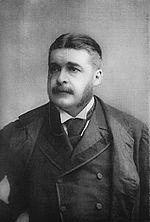
1842 - 1900 Person Name: Arthur Seymour Sullivan, 1842-1900 Topics: Seasons of the Christian Year Advent and Christmas Arranger of "NOEL" in Complete Mission Praise Arthur Seymour Sullivan (b Lambeth, London. England. 1842; d. Westminster, London, 1900) was born of an Italian mother and an Irish father who was an army band­master and a professor of music. Sullivan entered the Chapel Royal as a chorister in 1854. He was elected as the first Mendelssohn scholar in 1856, when he began his studies at the Royal Academy of Music in London. He also studied at the Leipzig Conservatory (1858-1861) and in 1866 was appointed professor of composition at the Royal Academy of Music. Early in his career Sullivan composed oratorios and music for some Shakespeare plays. However, he is best known for writing the music for lyrics by William S. Gilbert, which produced popular operettas such as H.M.S. Pinafore (1878), The Pirates of Penzance (1879), The Mikado (1884), and Yeomen of the Guard (1888). These operettas satirized the court and everyday life in Victorian times. Although he com­posed some anthems, in the area of church music Sullivan is best remembered for his hymn tunes, written between 1867 and 1874 and published in The Hymnary (1872) and Church Hymns (1874), both of which he edited. He contributed hymns to A Hymnal Chiefly from The Book of Praise (1867) and to the Presbyterian collection Psalms and Hymns for Divine Worship (1867). A complete collection of his hymns and arrangements was published posthumously as Hymn Tunes by Arthur Sullivan (1902). Sullivan steadfastly refused to grant permission to those who wished to make hymn tunes from the popular melodies in his operettas. Bert Polman

Pages


Export as CSV
It looks like you are using an ad-blocker. Ad revenue helps keep us running. Please consider white-listing Hymnary.org or getting Hymnary Pro to eliminate ads entirely and help support Hymnary.org.