You help make Hymnary.org possible. More than 10 million people from 200+ countries found hymns, liturgical resources and encouragement on Hymnary.org in 2025, including you. Every visit affirms the global impact of this ministry.

If Hymnary has been meaningful to you this year, would you take a moment today to help sustain it? A gift of any size—paired with a note of encouragement if you wish—directly supports the server costs, research work and curation that keep this resource freely available to the world.

Give securely online today, or mail a check to:
Hymnary.org
Calvin University
3201 Burton Street SE
Grand Rapids, MI 49546

Thank you for your partnership, and may the hope of Advent fill your heart.

Person Results

Topics:alternative+harmonizations
In:people

Planning worship? Check out our sister site, ZeteoSearch.org, for 20+ additional resources related to your search.
Showing 41 - 49 of 49Results Per Page: 102050

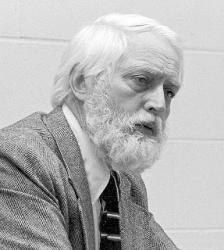
Stanley M. Wiersma

1930 - 1986 Person Name: Stanley Wiersma Topics: Alternative Harmonizations Versifier of "With All My Heart I Thank You, LORD" in Psalter Hymnal (Gray) Pseudonym: Sietze Buning ********** Stanley Marvin Wiersma (b. Orange City, IA, 1930; d. Amsterdam, the Netherlands, 1986) was a poet and professor of English at Calvin College, Grand Rapids, Michigan, from 1959 until his sudden death in 1986. He attended Calvin as an under­graduate and received a Ph.D. from the University of Wisconsin in 1959. His love for the Genevan psalms is reflected in the two books of poetry for which he is most widely known: Purpaleanie and Other Permutations (1978) and Style and Class (1982), both written under the pseudonym Sietze Buning. He also wrote More Than the Ear Discovers: God in the Plays of Christopher Fry and translated many Dutch poems and hymn texts into English, including the children's hymns published in All Will Be New (1982). Bert Polman

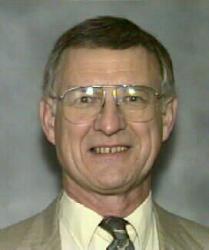
Howard Slenk

b. 1931 Topics: Alternative Harmonizations Harmonizer of "GENEVAN 68" in Psalter Hymnal (Gray) Howard J. Slenk (b. Holland, MI, 1931) received his undergraduate education from Calvin College and his Ph.D. from Ohio State University in Columbus; his dissertation was entitled The Huguenot Psalter in the Low Countries. He taught at Trinity Christian College in Palos Heights, Illinois, and at Calvin College from 1967 until retiring in 1995. From 1970 to 1993 Slenk served as organist and director of music at Woodlawn Christian Reformed Church in Grand Rapids. His published works include A Well-Appointed Church Music (1960) and various articles on Genevan psalmody. Bert Polman

John Frederick Wolle

1863 - 1933 Person Name: J. Frederick Wolle Topics: Alternative Harmonizations Composer of "PALMARUM" in Psalter Hymnal (Gray) Born Bethlehem, Pennsylvania, April 4, 1863. Graduated from the Moravian Parochial School in 1879, and began teaching in Bethlehem. Organist of Trinity Church, Philadelphia (1881-84) and a student there under David D. Wood. Studied with Rheinberger in Munich, 1884-85, and after returning to America was organist of the Packer Memorial Church at Lehigh University (1887-1905). Organized the first choral societies in Bethlehem and Easton. With the Bethlehem society, presented the first complete performance of Bach's St. John Passion in 1888, the St. Matthew Passion in 1892, and the B-minor Mass in 1900. In 1905, moved to California, where he taught at the University of California (1905-11) and was organist of the First Congregational Church, Berkeley (1907-9). Returned to Bethlehem in 1911, resumed administration of the Bach Choir, and was organist at the Salem Lutheran Church. He died in Bethlehem, Pennsylvania, on his seventieth birthday, April 4, 1933. His name was frequently given as J. Frederick Wolle or even J. Fred Wolle. (source: AGO Founders Hymnal, p. 114.)

Ada Roeper-Boulogne

b. 1931 Topics: Alternative Harmonizations Versifier of "How I Love You, LORD, My God" in Psalter Hymnal (Gray) Ada Roeper-Boulogne (b. Haarlem, the Netherlands, 1931) received her elementary education at the Dutch-Chinese Christian School in Central Java, Indonesia (then the Dutch East Indies), where her father, an organist and rebuilder of organs, served as a missionary and teacher. After Japan conquered Indonesia during World War II (1942), Roeper-Boulogne's family was placed in a concentration camp and remained there until 1945. Because a teacher organized a children's choir in the camp, even there Roeper-Boulogne was not totally devoid of music. In 1946 the family returned to the Netherlands and in 1951 immigrated to St. Catharines, Ontario, Canada. Roeper-Boulogne has translated several Dutch songs and is the author of "Little Children Be Happy," which was published in Bible Steps (1983). Bert Polman

Clarence Walhout

b. 1934 Person Name: Clarence P. Walhout Topics: Alternative Harmonizations Versifier of "LORD, Chasten Not in Anger" in Psalter Hymnal (Gray) Clarence P. Walhout (b. Muskegon, Michigan, 1934) studied at Calvin College, Grand Rapids, MI, the University of Michigan in Ann Arbor and Northwestern University in Evanston, Illinois; he taught many years at his alma mater, Calvin College, and was a member of the Poet’s Workshop, a group of several writers who prepared psalm versifications for the 1987 Psalter Hymnal; he was also editor of the journal Christianity and Literature and co-author of The Responsibility of Hermeneutics (1985). Bert Polman

William Hayman Cummings

1831 - 1915 Person Name: William H. Cummings Topics: Alternative Harmonizations Adapter of "MENDELSSOHN" in Psalter Hymnal (Gray) William H. Cummings (b. Sidbury, Devonshire, England, 1831; d. Dulwich, London, England, 1915) had a lifelong love of Felix Mendelssohn, sparked when he sang at age sixteen in the first London performance of Elijah, which was directed by Mendelssohn himself. As a young boy, Cummings had been a chorister at St. Paul's Cathedral and later sang in the choirs of the Temple Church, Westminster Abbey, and the Chapel Royal. Cummings became a famous tenor–he sang in oratorios and was especially known for his evangelist role in the Bach passions. He taught voice at the Royal Academy of Music and the Royal Normal College and School for the Blind in London and was also an accomplished organist. Cummings wrote books and articles on music history, wrote a biography of Henry Purcell and edited his music, and composed many choral pieces. Bert Polman

John Dowland

1563 - 1626 Topics: Alternative Harmonizations Harmonizer (alt. harm.) of "GENEVAN 134 (OLD HUNDREDTH)" in Psalter Hymnal (Gray) John Dowland, (born 1562/63, Westminster, London, England—died January 21, 1626, London), English composer, virtuoso lutenist, and skilled singer, one of the most famous musicians of his time. Nothing is known of Dowland’s childhood, but in 1580 he went to Paris as a “servant” to Sir Henry Cobham, the ambassador to the French court. In 1588 he received a bachelor of music degree from the University of Oxford. His conversion to Roman Catholicism, he believed, caused his rejection for a post as a court lutenist in 1594, and after that disappointment he left England to travel on the Continent. He visited the duke of Brunswick at Wolfenbüttel and the landgrave of Hesse at Kassel and was received with esteem at both courts. His travels also took him to Nürnberg, Genoa, Florence, and Venice, and by 1597 he had returned to England. In 1598 Dowland became lutenist to Christian IV of Denmark, but he was dismissed for unsatisfactory conduct in 1606. Between 1609 and 1612 he entered the service of Theophilus, Lord Howard de Walden, and in 1612 he was appointed one of the “musicians for the lutes” to James I. Although a respecter of tradition, Dowland worked during a time of musical transition and absorbed many of the new ideas he had encountered on the Continent. His 88 lute songs (printed 1597–1612) particularly reflect those influences. The early songs are presented with an alternative version for four voices. Possessing enchanting melodies, they show simple strophic settings, often in dance forms, with an almost complete absence of chromaticism. Later, in such through-composed songs as "In Darkness Let Me Dwell" (1610), "From Silent Night" (1612), and "Lasso vita mia" (1612), he introduced the Italian declamatory style, chromaticism, and dissonance; no alternative four-voice versions are given. Dowland composed about 90 works for solo lute; many are dance forms, often with highly elaborate divisions to the repeats. His famous Lachrimae, or Seaven Teares Figured in Seaven Passionate Pavans (1604), became one of the most widely known compositions of the time. In his chromatic fantasies, the finest of which are "Forlorne Hope Fancye" and "Farewell," he developed this form to a height of intensity unequaled by any other writer for the Renaissance lute. His compositions also include several psalm harmonizations and sacred songs printed in contemporary music books. --www.britannica.com/

Donald Busarow

1934 - 2011 Topics: Alternative Harmonizations Arranger (alt. arr.) of "ABERYSTWYTH" in Psalter Hymnal (Gray) Donald Arthur Busarow, was born April 10, 1934 in Racine, WI. He received a Bachelor's degree from Concordia University, River Forest, IL, a Master's degree from the Cleveland Institute of Music and a Ph.D. from Michigan State University. He served churches in Detroit, Cleveland and Milwaukee. He was a professor at Concordia College - Milwaukee, WI, before coming to Wittenberg University in 1975. At Wittenberg, he served as professor of music, teaching courses in music theory, composition, church music and organ. He served as University organist and directed the Wittenberg Choir for 28 years. He traveled the country giving organ recitals, hymn festivals, and choral and organ workshops. Don was a member of St. Matthew Evangelical Lutheran Church in Huber Heights, OH, and served as organist and choir director there for 24 years. He was also the organist at the First Presbyterian Church of South Charleston, OH, for the past 10 years. During his career, Don received many honors for his compositions. His published works are included in the catalogs of seven publishing houses. He was involved in organ consultation and design in many cities including Detroit, Chicago, and most recently in Columbus, where he designed the organ at Trinity Lutheran Seminary. In 1996, Don received an honorary Doctor of Letters from his alma mater, Concordia University, IL, for his achievements in music composition and choral conducting. From his obituary published in Dayton Daily News on Nov. 2, 2011

Mary J. Hammond

1878 - 1964 Topics: Alternative Harmonizations Composer of "SPIRITUS VITAE" in Psalter Hymnal (Gray) Born: 1878, England. Died: January 23, 1964, Hilligdon Nursing Home, St. Albans, Hertfordshire, England. Near the end of her life, Hammond lived in Harpenden, Hertfordshire. --www.hymntime.com/tch/

Pages


Export as CSV
It looks like you are using an ad-blocker. Ad revenue helps keep us running. Please consider white-listing Hymnary.org or getting Hymnary Pro to eliminate ads entirely and help support Hymnary.org.