

 My Starred Hymns
 My FlexScores
 My Hymnals
 My Purchased Files
Planning worship?
Check out our sister site, ZeteoSearch.org,
for 20+ additional resources related to your search.
- |
User Links
Person Results
Benjamin H. Kennedy
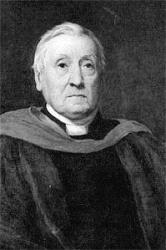
1804 - 1889 Topics: Cast Out Fear Translator of "Who Trusts in God, a Strong Abode" in Trinity Hymnal (Rev. ed.) Kennedy, Benjamin Hall, D.D., son of the Rev. Raun Kennedy, sometime Incumbent of St. Paul's, Birmingham, and editor of A Church of England Psalm-Book, &c, 1821 (12th ed. 1848), was born at Summer Hill, near Birmingham, Nov. 6, 1804, and educated at King Edward's School, Birmingham; Shrewsbury School; and St. John's College, Cambridge. He graduated B.A. in 1827 (First Class Classical Tripos and First Chancellor's Medallist). He was Fellow of his College 1828-36; Head Master of Shrewsbury School, 1836-66; and Regius Professor of Greek in the University of Cambridge and Canon of Ely , 1867. Dr. Kennedy took Holy Orders in 1829, and was for some time Prebendaiy in Lichfield Cathedral and Rector of West Felton, Salop. He was elected Hon. Fellow of St. John's College, Cambridge, in 1880. Besides his Public School Latin Grammar, Palaestra Latina, Palaestra Stili Latini, &c, his editions of some of the Classics, and University Sermons, Dr. Kennedy published the following:—
(1) The Psalter, or the Psalms of David, in English Verse. By a Member of the University of Cambridge, 1860; (2) Hymnologia Christiana, or Psalms & Hymns Selected and Arranged in the Order of the Christian Seasons (quoted in this Dictionary as Kennedy), 1863.
i. From these two works many psalms and hymns have passed into other collections. The following versions of the Psalms first appeared in The Psalter, 1860, and again in the Hymnologia Christiana 1863. In many instances they have undergone considerable alteration in the latter work, and those of great length are broken into parts:—
1. All ye people, come and clap, &c. Ps. xlvii.
2. Arise, 0 Lord, with healing rod. Ps. x.
3. As pants the hind for cooling streams. Ps. xlii.
4. As Thy mercy lasts for ever. Ps. cix.
5. Be merciful to me, 0 God. Ps. lvii.
6. Be Thou my Judge, and I will strive. Ps. xvii.
7. Bless ye the Lord, His solemn praise record. Ps. cxxxiv.
8. Bow down Thine ear, and hear my cry. Ps. lxxxvi.
9. Come, ye children, list to me. Ps. xxxiv.
10. Ever, O my God and King. Ps. cxlv.
11. Ever will I bless the Lord. Ps. xxxiv.
12. Every king shall bow before Him. Ps. lxxii.
13. Full oft my chafing thoughts, &c. Ps. lxxiii.
14. God, avert the deadly blow. Ps. lix.
15. God, in Judah's homes is known. Ps. lxxvi.
16. God of my righteousness. Ps. iv.
17. Hear Thou my prayer, O Lord. Ps. cxliii.
18. Help us, O Lord, the good decay. Ps. xii.
19. How blest are they who flee, &c. Ps. cxix.
20. How blest the man, who fears to stray. Ps. i.
21. How blest the man whose errors, &c. Ps. xxxii.
22. How good it is to praise the Lord. Ps. xcii.
23. How long art silent, Lord? how long. Ps. xxxv.
24. How long forgotten, Lord, by Thee. Ps. xiii.
25. How long wilt Thou conceal Thy face. Ps. lxxxix.
26. I lift mine eyes unto the hills. Ps. cxxi.
27. I love the Lord, for He is nigh. Ps. cxvi.
28. I muse upon Thine ancient praise. Ps. lxxvii.
29. I praise Thee, Lord, who o'er my foes. Ps. xxx.
30. I trod the path of life, my strength. Ps. cii.
31. In trouble to the Lord I prayed. Ps. cxx.
32. Jehovah reigns, arrayed in light. Ps. xciii.
33. Judge me, O God; maintain my cause. Ps. xliii.
34. Lord, hear my prayer, and let my cry. Ps. cii.
35. Lord, I am not lofty-minded. Ps. cxxxi.
36. Lord, I lift my soul to Thee. Ps. xxv.
37. Lord, my Rock. I cry to Thee. Ps. xxviii.
38. Lord, save me from the foeman's wrath. Ps. cxl.
39. Lord, Thou wilt guard with faithful love. Ps. xxxvii.
40. Lord, Thy love and truth I praise. Ps. ci.
41. My God, my God, to Thee I cry, Ah! why hast Thou, &c. Ps. xxii.
42. My heart is fain, O God, my heart. Ps. cviii.
43. My portion is the living Lord. Ps. cxix.
44. My Saviour is the living Lord. Ps. xi.
45. My Shepherd is the Lord, no care. Ps. xxiii.
46. My trust is in Thy holy Name. Ps. lxxi.
47. My voice to God ascends on high. Ps. lxxvii.
48. Not in envy, not in anger. Ps. xxxvii.
49. Not in Thy fury, Lord, reprove. Ps. xxxviii.
50. O grant us, God of love. Ps. lxvii.
51. O God, be merciful to me. Ps. li.
52. 0 God of hosts, a vine. Ps. lxxx.
53. 0 God, subdue the power of sin. Ps. vii.
54. O Lord, in Thine accepted day. Ps. lxix.
55. 0 Lord our King, how bright Thy fame. Ps. viii.
56. O Lord, the God of my salvation. Ps. lxxxviii.
57. 0 praise ye the Lord, Praise Him in His shrine. Ps. cl.
58. O rejoice, ye righteous, in the Lord. Ps. xxxiii.
59. Oft, as to scatter kings. Ps. lxviii.
60. Out of the depths to Thee I cry. Ps. cxxx.
61. Praise, O my soul, the Lord and all. Ps. ciii.
62. Praise, 0 my soul, the Lord; how great. Ps. civ.
63. Praise the Lord, for good is He. Ps. cxxxvi.
64. Praise the Lord, for it is wise. Ps. cxlvii.
65. Praise the Lord from heaven on high. Ps. cxlviii.
66. Praise the Lord, His people; raise. Ps. cxlvi.
67. Praise ye the Lord, all nations. Ps. cxvii.
68. Praise ye the Lord, for good is He. Ps. cxviii.
69. Praise ye the Lord, for very good. Ps. cvii.
70. Praised be the Lord, my Rock of might. Ps. cxliv.
71. Save me, O God, the dangerous, &c. Ps. lxix.
72. Save me through Thy name, 0 God. Ps. liv.
73. Seek we Jehovah's house, they said. Ps. cxxii.
74. Sing a new song unto the Lord. Ps. xcvi.
75. Sing the Lord, ye sons of heaven. Ps. xxix.
76. Sing unto the Lord with mirth. Ps. c.
77. Take note, O Lord, of all my fears. Ps. lvi.
78. The heavens declare Thy wondrous fame. Ps. lxxxix.
79. The heavens, O God, Thy glory tell. Ps. xxx.
80. The king, 0 Lord, with hymns of praise. Ps. xxi.
81. The life of man is like the grass. Ps. ciii.
82. The Lord in thy distressful day. Ps. xx.
83. The Lord is King; glad earth, and ye. Ps. xcvii.
84. There is no God, so saith the fool. Ps. xiv.
85. Thou searchest all my secret ways. Ps. cxxxix.
86. To Thee I call. O Lord, be swift. Ps. cxli.
87. 'Twas dream-like, when the Lord's decree. Ps. cxxvi.
88. Unless the Lord with us had wrought. Ps. cxxiv.
89. Unto my feet a lantern shines Thy word. Ps. cxix.
90. Unto the Lord I make my moan. Ps. cxlii.
91. We sat and wept by Babel's stream. Ps. cxxxvii.
92. When Israel came from Egypt's strand. Ps. cxiv.
93. When through the dismal waste. Ps. lxviii.
94. Who rules his life by God's behest. Ps. cxxviii.
95. Whoe'er his secret home has made. Ps. xci.
96. With weary care brought low. Ps. lxix.
97. With my whole heart I will praise Thee. Ps. cxxxviii.
98. Within Thy tabernacle, Lord. Ps. xv.
99. Ye Judges of the earth, be still. Ps. lxxxii.
ii. The following also appeared in The Psalter, 1860, and again in Hymnologia Christiana 1863, mostly altered, and based upon the corresponding Psalms by George Sandys (q.v.), published in his Paraphrase upon the Psalms of David, 1636:—
100. Blest he whose timely mercies heed. Ps. xli.
101. Hide not, 0 Lord, Thy cheering face. Ps. xl.
102. I waited for a gentle word. Ps. xl.
103. Israel of God, be Christ your Guide. Ps. cxv.
104. Who in the Lord securely lay. Ps. cxxv.
iii. To the Rev. A. T. Russell's Psalms & Hymns, 1851, Dr. Kennedy was indebted to a limited extent in preparing his Psalter, 1860. In his Preface he says, p. viii.," Mr. Russell's metres, and occasionally his words, have been adopted in the following Psalms: 2, 24, 39, 45, 46, 50, 84, 85, 90, 110, 111, 113." Of these the following, sometimes with alterations of the 1860 text, were given in the
Benjamin H. Kennedy
Edward Patrick Crawford
1846 - 1912 Person Name: Edward Patrick Crawford, 1846-1912 Topics: Cast Out Fear Composer of "JEHOVAH NISSI" in Trinity Hymnal (Rev. ed.)
Edward Patrick Crawford
Catherine Winkworth
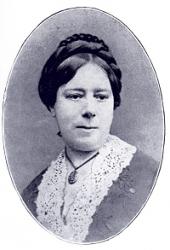
1827 - 1878 Topics: Cast Out Fear Translator of "Fear Not, O Little Flock" in Trinity Hymnal (Rev. ed.) Catherine Winkworth (b. Holborn, London, England, 1827; d. Monnetier, Savoy, France, 1878) is well known for her English translations of German hymns; her translations were polished and yet remained close to the original. Educated initially by her mother, she lived with relatives in Dresden, Germany, in 1845, where she acquired her knowledge of German and interest in German hymnody. After residing near Manchester until 1862, she moved to Clifton, near Bristol. A pioneer in promoting women's rights, Winkworth put much of her energy into the encouragement of higher education for women. She translated a large number of German hymn texts from hymnals owned by a friend, Baron Bunsen. Though often altered, these translations continue to be used in many modern hymnals. Her work was published in two series of Lyra Germanica (1855, 1858) and in The Chorale Book for England (1863), which included the appropriate German tune with each text as provided by Sterndale Bennett and Otto Goldschmidt. Winkworth also translated biographies of German Christians who promoted ministries to the poor and sick and compiled a handbook of biographies of German hymn authors, Christian Singers of Germany (1869).
Bert Polman
========================
Winkworth, Catherine, daughter of Henry Winkworth, of Alderley Edge, Cheshire, was born in London, Sep. 13, 1829. Most of her early life was spent in the neighbourhood of Manchester. Subsequently she removed with the family to Clifton, near Bristol. She died suddenly of heart disease, at Monnetier, in Savoy, in July, 1878. Miss Winkworth published:—
Translations from the German of the Life of Pastor Fliedner, the Founder of the Sisterhood of Protestant Deaconesses at Kaiserworth, 1861; and of the Life of Amelia Sieveking, 1863.
Her sympathy with practical efforts for the benefit of women, and with a pure devotional life, as seen in these translations, received from her the most practical illustration possible in the deep and active interest which she took in educational work in connection with the Clifton Association for the Higher Education of Women, and kindred societies there and elsewhere. Our interest, however, is mainly centred in her hymnological work as embodied in her:—
(1) Lyra Germanica, 1st Ser., 1855. (2) Lyra Germanica, 2nd Ser., 1858. (3) The Chorale Book for England (containing translations from the German, together with music), 1863; and (4) her charming biographical work, the Christian Singers of Germany, 1869.
In a sympathetic article on Miss Winkworth in the Inquirer of July 20, 1878, Dr. Martineau says:—
"The translations contained in these volumes are invariably faithful, and for the most part both terse and delicate; and an admirable art is applied to the management of complex and difficult versification. They have not quite the fire of John Wesley's versions of Moravian hymns, or the wonderful fusion and reproduction of thought which may be found in Coleridge. But if less flowing they are more conscientious than either, and attain a result as poetical as severe exactitude admits, being only a little short of ‘native music'"
Dr. Percival, then Principal of Clifton College, also wrote concerning her (in the Bristol Times and Mirror), in July, 1878:—
"She was a person of remarkable intellectual and social gifts, and very unusual attainments; but what specially distinguished her was her combination of rare ability and great knowledge with a certain tender and sympathetic refinement which constitutes the special charm of the true womanly character."
Dr. Martineau (as above) says her religious life afforded "a happy example of the piety which the Church of England discipline may implant.....The fast hold she retained of her discipleship of Christ was no example of ‘feminine simplicity,' carrying on the childish mind into maturer years, but the clear allegiance of a firm mind, familiar with the pretensions of non-Christian schools, well able to test them, and undiverted by them from her first love."
Miss Winkworth, although not the earliest of modern translators from the German into English, is certainly the foremost in rank and popularity. Her translations are the most widely used of any from that language, and have had more to do with the modern revival of the English use of German hymns than the versions of any other writer.
-- John Julian, Dictionary of Hymnology (1907)
============================
See also in:
Hymn Writers of the Church
Catherine Winkworth
Michael Altenburg
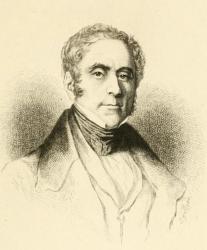
1584 - 1640 Person Name: Johann M. Altenburg Topics: Cast Out Fear Author (attr.) of "Fear Not, O Little Flock" in Trinity Hymnal (Rev. ed.) Altenburg, Johann Michael, b. at Alach, near Erfurt, on Trinity Sunday, 1584. After completing his studies he was for some time teacher and precentor in Erfurt. In 1608 he was appointed pastor of Ilversgehofen and Marbach near Erfurt; in 1611, of Troch-telborn; and in 1621 of Gross-Sommern or Som-merda near Erfurt. In the troublous war times he was forced, in 1631, to flee to Erfurt, and there, on the news of the victory of Leipzig, Sept. 17, 1631, he composed his best known hymn. He remained in Erfurt without a charge till, in 1637, he was appointed diaconus of the Augustino Church, and, in 1638, pastor of St. Andrew's Church. He d. at Erfurt February 12, 1640 (Koch, iii. 115-117 ; Allg. Deutsche Biog., i. p. 363, and x. p. 766—the latter saying he did not go to Erfurt till 1637). He was a good musician, and seems to have been the composer of the melodies rather than of the words of some of the hymns ascribed to him. Two of his hymns have been tr. into English, viz. :—1. Aus Jakob's Staxnm ein Stern sehr klar. [Christmas.] Included as No. 3 of his Christ-liche liebliche und anddchtige newe Kirchen- und Hauss-Gestinge, pt. i., Erfurt, 1G20, in 3 st. of 5 1. According to Wetzel's A. H., vol. i., pt. v. p. 41, it was first pub. in J. Forster's Jlohen Festtags-Schreinlein, 1611. In the Unv. L. S., 1851, No. 24. It has been tr. as " From Jacob's root, a star so clear," by Miss Manington, 1864, p. 13.2. Verzage nicht du Hauflein klein. [In Trouble.] Concerning the authorship of this hymn there are three main theories—i. that it is by Gustavus Adolphus; ii. that the ideas are his and the diction that of his chaplain, Dr. Jacob Fabricius; and iii. that it is by Altenburg. In tracing out the hymn we find that:—The oldest accessible form is in two pamphlets published shortly after the death of Gustavus Adolphus, viz., the Epicedion, Leipzig, n.d. but probably in the end of 1632 [Royal Library, Berlin]: and Arnold Mengering's Blutige Siegs-Crone, Leipzig, 1633 [Town Library, Hamburg]. In the Epicedion the hymn is entitled, " Konig-licher Schwanengesang So ihre Majest. vor dem Ltltzen-schen Treffen inniglichen zu Gott gesungen "; and in the Siegs-Crone, p. 13, "Der S. Kon. Mayt. zu Schweden Lied, welches Sie vor der Schlacht gesungen." In both cases there are 3 sts. :—i. Verzage nicht, du Hiiuffiein klein. ii. Triistedich dess, dass deine Sach. iii. So wahr Gott Gott ist, und sein Wort.The next form is that in J. Clauder's Psalmodiae Novae Pars Tertia, Leipzig, 1636, No. 17, in 5 st. of 6 lines, st. i.-iii. as above, and—iv. Ach Gott gieb in des deine Gnad v. Hilff dass wir auch nach deinem Wort. No author's name is given. In the Bayreuth G. B., 1668, p. 266, st. iv., v., are marked as an addition by Dr. Samuel Zehner; and by J. C. Olearius in his Lieder-Schatz, 1705, p. 141, as written in 1638 (1633 ?), when the Croats had partially burnt Schleusiugen, where Zehner was then superintendent.The third form of importance is that given in Jcremias Weber's Leipzig G. B., 1638, p. 651, where it is entitled " A soul-rejoicing hymn of Consolation upon the watchword—God with us—used by the Evangelical army in the battle of Leipzig, 7th Sept., 1631, composed by M. Johann Altenburg, pastor at Gross Soinmern in Dtiringen," [i.e. Sommerda in Thuringia]. It is in 5 sts., of which sts. i.-iii. are the same as the 1633, and are marked as by Altenburg. St. iv., v., beginning— iv. Drilmb sey getrost du kleines Heer v. Amen, das hilff Ilerr Jesu Christ, are marked as " Additamentum Ignoti." This is the form in C. U. as in the Berlin G. L. S., ed. 1863, No. 1242.In favour of Altenburg there is the explicit declaration of the Leipzig G. B., 1638, followed by most subsequent writers. The idea that the hymn was by Gustavus Adolphus seems to have no other foundation than that in many of the old hymn-books it was called Gustavus Adolphus's Battle Hymn. The theory that the ideas were communicated by the King to his chaplain, Dr. Fabricius, after the battle of Leipzig, and by Fabricius versified, is maintained by Mohnike in his Hymnologische Forschungen, 1832, pt. ii. pp. 55-98, but rests on very slender evidence. In Koch, viii. 138-141, there is the following striking word-picture:—If, then, we must deny to the hymn Albert Knapp's characterisation of it as " a little feather from the eagle wing of Gustavus Adolphus," so much the more its original title as his "Swan Song" remains true. It was on the morning of the 6 Nov., 1632, that the Catholic army under Wallenstein and the Evangelical under Gustavus Adolphus stood over against each other at Lutzen ready to strike. As the morning dawned Gustavus Adolphus summoned his Court preacher Fabricius, and commanded him, as also the army chaplains of all the other regiments, to hold a service of prayer. During this service the whole host sung the pious king's battle hymn—" Verzage nicht, du Hauflein klein."He himself was on his knees and prayed fervently. Meantime a thick mist had descended, which hid the fatal field so that nothing could be distinguished. When the host had now been set in battle array he gave them as watchword for the fight the saying, "God with us," mounted his horse, drew his sword, and rode along the lines of the army to encourage the soldiers for the battle. First, however, he commanded the tunes Ein feste Burg and Es wollt tins Gott genadig sein to be played by the kettledrums and trumpets, and the soldiers joined as with one voice. The mist now began to disappear, and the sun shone through. Then, after a short prayer, he cried out: " Now will we set to, please God," and immediately after, very loud, " Jesu, Jesu, Jesu, help me today to fight for the honour of Thy Holy Name." Then he attacked the enemy at full speed, defended only by a leathern gorget. " God is my harness," he had said to the servant who wished to put on his armour. The conflict was hot and bloody. About 11 o'clock in the forenoon the fatal bullet struck him, and he sank, dying, from his horse, with the words, “My God, my God!" Till twilight came on the fight raged, and was doubtful. But at length the Evangelical host obtained the victory, as it had prophetically sung at dawn."This hymn has ever been a favourite in Germany, was sung in the house of P. J. Spener every Sunday afternoon, and of late years has been greatly used at meetings of the Gustavus Adolphus Union—an association for the help of Protestant Churches in Roman Catholic countries. In translations it has passed into many English and American collections.
Translations in C. U.:—
Fear not, 0 little flock, the foe. A good tr. from the text of 1638, omitting st. iv., by Miss Winkworth, in her Lyra Ger., 1855, p. 17. Included, in England in Kennedy, 1863, Snepp's S. of G. and G., 1871, Free Church H. Bk., 1882, and others; and in America in the Sabbath H. Book., 1858, Pennsylvania Luth. Ch. Bk., 1868, Hys. of the Church, 1869, Bapt. H. Bk., 1871, H. and Songs of Praise, 1874, and many others.
Be not dismay'd, thou little flock. A good tr. of st. i.-iii. of the 1638 text in Mrs. Charles's V. of Christian Life in Song, 1858, p. 248. She tr. from the Swedish, which, in the Swensha Psalm Boken, Carlstadt, N.D. (1866), is given as No. 378, "Forfaras ej, du lilla hop !" and marked Gustaf II. Adolf. Her version is No. 204 in Wilson's Service of Praise, 1865.
Thou little flock, be not afraid. A tr. of st. i.-iii. from the 1638 text, by M. Loy, in the Ohio Luth. Hymnal, 1880, No. 197.
Other trs. are all from the text of 1638.(1.) " Be not dishearten'd, little flock," by Dr. II. Mills, 1856, p. 121. (2.) " Despond not, little band, although," by Dr. G. Walker, 1860, p. 41. (3.) "Be not dismay'd, thou little flock, Nor," by E. Massie, 1866, p. 143. (4.) " 0 little flock, be not afraid," in J. D. Burns's Memoir and Remains, 1869. p. 226.
–John Julian, Dictionary of Hymnology (1907)
Michael Altenburg
Frank S. Spinney
1850 - 1888 Person Name: Frank S. Spinney, 1850-1888 Topics: Fear Cast Out Composer of "ST. DENYS" in The Hymnal
Frank S. Spinney
U. C. Burnap
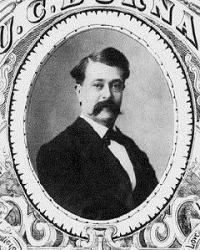
1834 - 1900 Person Name: Uzziah C. Burnap Topics: Cast Out Fear Composer of "HOLY GUIDE" in Trinity Hymnal (Rev. ed.) Burnap ran a dry goods business in Brooklyn, though he graduated from the University of Paris with a music degree, and for 37 years played the organ at the Reformed Church in Brooklyn Heights. He was a prolific composer, and helped edit the following:
Hymns of the Church, 1869
Hymns of Prayer and Praise, 1871
Hymns and Songs of Praise, 1874
--The Cyber Hymnal™
There is uncertainty about his middle name. Reynolds and the Library of Congress say it was Christopher. A contemporary obituary relied on by "The Cyber Hymnal™" says it was Cicero. It appears that there was another Uzziah C[icero] Burnap who lived (per LOC) 1794-1854.
U. C. Burnap
Pages




