You help make Hymnary.org possible. More than 10 million people from 200+ countries found hymns, liturgical resources and encouragement on Hymnary.org in 2025, including you. Every visit affirms the global impact of this ministry.

If Hymnary has been meaningful to you this year, would you take a moment today to help sustain it? A gift of any size—paired with a note of encouragement if you wish—directly supports the server costs, research work and curation that keep this resource freely available to the world.

Give securely online today, or mail a check to:
Hymnary.org
Calvin University
3201 Burton Street SE
Grand Rapids, MI 49546

Thank you for your partnership, and may the hope of Advent fill your heart.

Person Results

Topics:consecration+and+dedication
In:people

Planning worship? Check out our sister site, ZeteoSearch.org, for 20+ additional resources related to your search.
Showing 41 - 50 of 261Results Per Page: 102050

W. H. Havergal

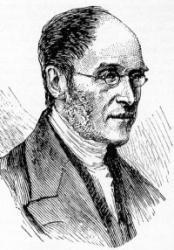
1793 - 1870 Person Name: W. H. Havergal, 1793-1870 Topics: Consecration Of Powers; Consecration Of Self; Consecration Of Goods; Consecration Entire; The Church and the Kingdom of God Evangelism; Giving Our best to Christ; Will, consecrated to God; Self-Dedication ; Life Consecrated; Love Consecrated; Love To Christ; Voice, of Jesus Consecrated Composer of "CONSECRATION" in Methodist Hymn and Tune Book Havergal, William Henry, M.A, son of William Havergal, was born at High Wycombe, Buckinghamshire, 1793, and was educated at St. Edmund's Hall, Oxford (B.A. 1815, M.A. 1819). On taking Holy Orders he became in 1829 Rector of Astley, Worcestershire; in 1842, Rector of St. Nicholas, Worcester; and in 1860, Rector of Shareshill, near Wolverhampton. He was also Hon. Canon in Worcester Cathedral from 1845. He died April 18, 1870. His hymns, about 100 in all, were in many instances written for special services in his own church, and printed as leaflets. Several were included in W. Carus Wilson's Book of General Psalmody, 1840 (2nd ed., 1842); and in Metrical Psalms & Hymns for Singing in Churches, Worcester, Deighton, 1849, commonly known as the Worcester Diocesan Hymn Book, and of which he was the Editor. In Life Echoes, 1883, his hymns are given with those of Miss Havergal. Of those in common use the greater part are in Mercer, and Snepp's Songs of Grace & Glory. Although his hymns are all good, and two or three are excellent, it is not as a hymnwriter but as a musician that Canon Havergal is best known. His musical works and compositions included, in addition to numerous individual hymn tunes and chants, the Gresham Prize Service, 1836; the Gresham Prize Anthem, 1845; Old Church Psalmody, 1849; History of the Old 100th Psalm tune, 1854, &c. He also reprinted Ravenscroft’s Psalter of 1611. His hymns in common use include:— 1. Blessed Jesus, lord and Brother. School Festivals, 1833. Published in Life Echoes, 1883. 2. Brighter than meridian splendour. Christ the glory of His Church. 1830. Published in W. C. Wilson's Book of General Psalms, 1840; the Worcester Psalms & Hymns, 1849, &c. 3. Christians, awake to joy and praise. Christmas Carol, c. 1860. Printed on broadsheet, with music by the author, and sold on behalf of the Lancashire Cotton Distress Fund. 4. Come, Shepherds, come, 'tis just a year. Christmas Carol. 1860. Published in Snepp's Songs of Grace & Glory, 5. For ever and for ever, Lord. Missions, 1866, for the Church Mission Society. Published in Snepp's Songs of Grace & Glory, 1872, and the Life Echoes, 1883. 6. Hallelujah, Lord, our voices. Sunday. 1828. Published in W. C. Wilson's Book of General Psalms, 1840; the Worcester Psalms & Hymns, 1849; Life Echoes, 1883, &c. 7. Heralds of the Lord of glory. Missions. First sung in Astley Church, Sep. 23, 1827. Published in Miss Havergal's Starlight through the Shadows, 1880; Snepp's Songs of Grace & Glory, 1872, &c. 8. Hosanna, raise the pealing hymn. Praise to Christ, 1833, and first sung in Astley Church, June 9, 1833. Published in W. C. Wilson's Book of General Psalmody, 1840; the Worcester Psalms & Hymns, 1849; Life Echoes 1883, &c. 9. How vast the field of souls. Missions. 1858. Printed for Shareshill Church Miss. Anniversary, 1863, and published in Snepp's Songs of Grace & Glory, 1872, and the Life Echoes, 1883. 10. In doubt and dread dismay. Missions. Written in 1837, and published in W. C. Wilson's Book of General Psalmody, 1840; the Worcester Psalms & Hymns, 1849, &c. 11. Jerusalem the golden, The home of saints shall be. Heaven. Published in Life Echoes, 1883. 12. My times are in Thy hand, Their best, &c. 1860. Published in Snepp's Songs of Grace & Glory, 1872, the Records of the author's life and work, and Life Echoes, 1883. The editor of the Records says (p. 159) "this hymn has been much appreciated, and well illustrates the devotional and cheerful spirit of the writer." 13. No dawn of holy light. Sunday. 1825. Printed in 1831 on a leaflet, and published in W. C. Wilson's Book of General Psalmody, 1840; the Worcester Psalms & Hymns, 1849; Life Echoes, 1883, &c. 14. Our faithful God hath sent us. Harvest. Written at Shareshill in 1863, for a Harvest Festival. Published in Snepp's Songs of Grace & Glory 1872, and Life Echoes, 1883. 15. Shout, 0 earth! from silence waking. Praise to Jesus for Redemption. 1841. Published in the Worcester Psalms & Hymns, 1849; Snepp's Songs of Grace & Glory, 1872, &c. 16. So happy all the day. Christmas Carol, c. 1834. Published in Snepp's Songs of Grace & Glory, 1872. 17. Soon the trumpet of salvation. Missions. 1826. Published in Snepp's Songs of Grace & Glory, 1872. 18. To praise our Shepherd's [Saviour's] care. The Good Shepherd. Written after witnessing the death of Elizabeth Edwards, aged 12, of St. Nicholas, Worcester, and printed as a leaflet. Published in W. C. Wilson's Book of General Psalmody, 1840; the Worcester Psalms & Hymns, 1849; Life Echoes, &c, 1883. The author also published a Memoir of the child. 19. Widely 'midst the slumbering nations. Missions. 1828. Published in the Worcester Psalms & Hymns, 1849; Snepp's Songs of Grace & Glory, 1872, &c. In addition to these hymns, his carols, "How grand, and how bright," "Our festal morn is come," and others are annotated under their respective first lines. Most of these carols and hymns were reprinted in Christmas Carols & Sacred Songs, Chiefly by the Rev. W. H. Havergal, London, Nisbet, 1869. --John Julian, Dictionary of Hymnology (1907) ===================== Havergal, W. H., p. 498, i. Other hymns are: — 1. Lord, if judgments now are waking. Second Advent. Published in W. Carus Wilson's Book of General Psalmody, 1840; in Kennedy, 1863, &c. 2. Remember, Lord, Thy word of old displayed. Missions. "Composed for a special prayer-meeting for missionary labourers, held in the author's schoolroom, in the parish of St. Nicholas's, Worcester." (W. F. Stevenson's Hymns for Church and Home, 1873, where the original text is also given.) It must be noted that No. 17, at p. 498, ii., "Soon the trumpet of salvation," was first published in A Collection of Original Airs adapted to Hymns, &c, 1826. --John Julian, Dictionary of Hymnology, Appendix, Part II (1907)

Thomas T. Lynch

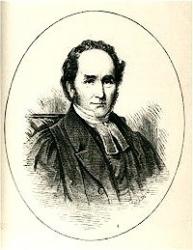
1818 - 1871 Person Name: Rev. Thomas Toke Lynch Topics: The Holy Spirit; Consecration; Dedication of Life; Holy Spirit, The; School and College; Truth Author of "Gracious Spirit, dwell with me" in The Hymnal Lynch, Thomas Toke, was born at Dunmow, Essex, July 5, 1818, and educated at a school at Islington, in which he was afterwards an usher. For a few months he was a student at the Highbury Independent College; but withdrew, partly on account of failing health, and partly because his spirit was too free to submit to the routine of College life. From 1847 to 1849 he was Minister of a small charge at Highgate, and from 1849 to 1852 of a congregation in Mortimer Street, which subsequently migrated to Grafton Street, Fitzroy Square. From 1856 to 1859 he was laid aside by illness. In 1860 he resumed his ministry with his old congregation, in a room in Gower Street, where he remained until the opening of his new place of worship, in 1862, (Mornington Church), in Hampstead Road, London. He ministered there till his death, on the 9th of May, 1871. The influence of Lynch's ministry was great, and reached far beyond his own congregation (which was never large), since it included many students from the Theological Colleges of London, and thoughtful men from other churches, who were attracted to him by the freshness and spirituality of his preaching. His prose works were numerous, beginning with Thoughts on a Day, 1844, and concluding with The Mornington Lecture, 1870. Several of his works were published after his death. His Memoir, by W. White, was published in 1874. Lynch's hymns were published in:— The Rivulet: a Contribution to Sacred Song, London., Longman, 1855, 2nd ed., 1856. This was enlarged by an addition of 67 hymns in 1868. From the first edition of The Rivulet, 1855, the following hymns have come into common use:— 1. All faded is the glowing light. Second Advent. 2. Be Thy word with power fraught. Before Sermon. 3. Christ in His word draws near. Holy Scripture. 4. Dismiss me not Thy service, Lord. Work for Christ. 5. Gracious Spirit, dwell with me. Holy Spirit's presence desired. 6. How calmly the evening once more is descending. Evening. Sometimes "How calmly once more the night is descending." 7. I give myself to prayer. Prayer in Trouble. 8. Lord, on Thy returning day. Public Worship. 9. Lord, when in silent hours I muse. Resignation. 10. Love me, O Lord, forgivingly. Resignation. 11. Mountains by the darkness hidden. Resignation. 12. Now have we met that we may ask. Public Worship. 13. O, break my heart; but break it as a field. Penitence desired. 14. O Lord, Thou art not fickle. Sympathy. 15. O where is He that trod the sea. Christ Walking on the Sea. 16. Oft when of God we ask. Trust in Trial. 17. Rise, He calleth thee, arise. Blind Bartimaeus. 18. Say not, my soul, from whence. Resignation. 19. Where is thy God, my soul? Resignation and Hope. There are also from the 1856 and 1868 eds. the following:— 20. A thousand years have come and gone. Christmas. 21. Lift up your heads, rejoice; (1856.) Advent. 22. Praying by the river side. Holy Baptism. 23. The Lord is rich and merciful. Have Faith in God. 24. There is purpose in this waste. Easter. Lynch's hymns are marked by intense individuality, gracefulness and felicity of diction, picturesqueness, spiritual freshness, and the sadness of a powerful soul struggling with a weak and emaciated body. Although The Rivulet was published for use by his own congregation as a supplement to Watts, more than one half of the hymns were designed for private use only, but were not so distinguished in the work. Its publication caused one of the most bitter hymnological controversies known in the annals of modern Congregationalism. Time, however, and a criticism, broader and more just, have declared emphatically in favour of his hymns as valuable contributions to cultured sacred song. [Rev. W. Garrett Horder] --John Julian, Dictionary of Hymnology (1907) ================== Lynch, T. T., p. 705, ii. Other hymns by him in recent books are:— 1. My faith it is an oaken staff. Faith in Christ. In the Rivulet, 1855, p. 78. 2. Together for our country now we pray. National, In the Rivulet, 1868, p. 170. [Rev. James Mearns, M.A.] --John Julian, Dictionary of Hymnology, New Supplement (1907)

George Matheson

1842 - 1906 Topics: Life in Christ Dedication and Consecration Author of "Make Me a Captive, Lord" in The Hymnbook Matheson, George, D.D., was born at Glasgow, March 27, 1842, and although deprived of his eyesight in youth he passed a brilliant course at the University of Edinburgh, where he graduated M.A. in 1862. In 1868 he became the parish minister at Innellan; and subsequently of St. Bernard's, Edinburgh. He was the Baird Lecturer in 1881, and St. Giles Lecturer in 1882. He has published several important prose works. His poetical pieces were collected and published in 1890 as Sacred Songs, Edinburgh: W. Blackwood. In addition to his hymn "O Love that wilt not let me go" (q. v.), four others from his Sacred Songs are in Dr. A. C. Murphey's Book of Common Song, Belfast, 1890. --John Julian, Dictionary of Hymnology, Appendix, Part II (1907) ======================= Matheson, G., p. 1579, i. In addition to Dr. Matheson's hymn, "O Love, that wilt not let me go," p. 1583, i,, the following from his Sacred Songs, 1890, have come into common use since 1892:— 1. Come, let us raise a common song. Brotherhood. 2. Father divine, I come to Thee. Strength for Life. This, in Horder's Worship Song, 1905, is altered to”Saviour divine, I come to Thee." 3. Gather us in, Thou Love that fillest all. One in Christ. 4. Jesus, Fountain of my days. Christian's Polestar. 5. Lend me, O Lord, Thy softening cloud. The Fire and the Cloud. In the Sunday Magazine, 1875. 6. Lord, Thou hast all my frailty made. Strength for the Day. 7. Make me a captive, Lord. Christian Freedom. 8. There are coming changes great. The Glad New Time. 9. Three doors there are in the temple. Prayer. Dr. Matheson informed us that these hymns, together with the rest of his Sacred Songs, 1890, were written at Bow, Dumbartonshire, in 1890. The 3rd ed. of the Sacred Songs was published in 1904. He died suddenly at Avenelle, North Berwick, Aug. 28, 1906. --John Julian, Dictionary of Hymnology, New Supplement (1907)

Mrs. C. H. Morris

1862 - 1929 Person Name: Lelia N. Morris, 1862-1929 Topics: The Christian Life Dedication and Consecration Author of "Of Jesus' Love That Sought Me (Sweeter as the Years Go By)" in African Methodist Episcopal Church Hymnal Lelia (Mrs. C.H.) Morris (1862-1929) was born in Pennsville, Morgan County, Ohio. When her family moved to Malta on the Muskingum River she and her sister and mother had a millinery shop in McConnelsville. She and her husband Charles H. Morris were active in the Methodist Episcopal Church and at the camp meetings in Sebring and Mt. Vernon. She wrote hymns as she did her housework. Although she became blind at age 52 she continued to write hymns on a 28-foot long blackboard that her family had built for her. She is said to have written 1000 texts and many tunes including "Sweeter as the years go by." Mary Louise VanDyke

Alexander Robert Reinagle

1799 - 1877 Person Name: Alexander R. Reinagle Topics: Life in Christ Dedication and Consecration Composer of "ST. PETER" in The Hymnbook Alexander Robert Reinagle United Kingdom 1799-1877. Born at Brighton, Sussex, England, gf Austrian descent, he came from a family of musicians, studying music with his father (a cellist), then with Raynor Taylor in Edinburgh, Scotland. Reinagle became a well-known organ teacher. He became organist at St Peter’s Church, Oxford (1823-1853). He was also a theatre musician. He wrote Teaching manuals for stringed instruments as well. He also compiled books of hymn tunes, one in 1830: “Psalm tunes for the voice and the pianoforte”, the other in 1840: “A collection of Psalm and hymn tunes”. He also composed waltzes. In 1846 he married Caroline Orger, a pianist, composer, and writer in her own right. No information found regarding children. In the 1860s he was active in Oxford music-making and worked with organist, John Stainer, then organist at Magdalen College. Reinagle also composed a piano sonata and some church music. At retirement he moved to Kidlington, Oxfordshire, England. He died at Kidlington. John Perry

John Wesley

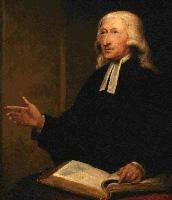
1703 - 1791 Person Name: J. Wesley, 1703-1791 Topics: God Omnipresence; God Omnipresence; Adoration Of God; God Adoration of; Angels Adoring God; Consecration Of Life; The Godhead Adoration and Praise; Evening Hymns; Worship Reverent; Self-Dedication ; Praise To God; Omnipresence; Life Consecrated; Religion Family Translator of "Lo! God is here! let us adore" in Methodist Hymn and Tune Book John Wesley, the son of Samuel, and brother of Charles Wesley, was born at Epworth, June 17, 1703. He was educated at the Charterhouse, London, and at Christ Church, Oxford. He became a Fellow of Lincoln College, Oxford, and graduated M.A. in 1726. At Oxford, he was one of the small band consisting of George Whitefield, Hames Hervey, Charles Wesley, and a few others, who were even then known for their piety; they were deridingly called "Methodists." After his ordination he went, in 1735, on a mission to Georgia. The mission was not successful, and he returned to England in 1738. From that time, his life was one of great labour, preaching the Gospel, and publishing his commentaries and other theological works. He died in London, in 1791, in his eighty-eighth year. His prose works are very numerous, but he did not write many useful hymns. It is to him, however, and not to his brother Charles, that we are indebted for the translations from the German. --Annotations of the Hymnal, Charles Hutchins, M.A., 1872 ====================== John Wesley, M.A., was born at Epworth Rectory in 1703, and, like the rest of the family, received his early education from his mother. He narrowly escaped perishing in the fire which destroyed the rectory house in 1709, and his deliverance made a life-long impression upon him. In 1714 he was nominated on the foundation of Charterhouse by his father's patron, the Duke of Buckingham, and remained at that school until 1720, when he went up, with a scholarship, from Charterhouse to Christ Church, Oxford. Having taken his degree, he received Holy Orders from the Bishop of Oxford (Dr. Potter) in 1725. In 1726 he was elected Fellow of Lincoln College, and remained at Oxford until 1727, when he returned into Lincolnshire to assist his father as curate at Epworth and Wroot. In 1729 he was summoned back to Oxford by his firm friend, Dr. Morley, Rector of Lincoln, to assist in the College tuition. There he found already established the little band of "Oxford Methodists" who immediately placed themselves under his direction. In 1735 he went, as a Missionary of the Society for the Propagation of the Gospel, to Georgia, where a new colony had been founded under the governorship of General Oglethorpe. On his voyage out he was deeply impressed with the piety and Christian courage of some German fellow travellers, Moravians. During his short ministry in Georgia he met with many discouragements, and returned home saddened and dissatisfied both with himself and his work; but in London he again fell in with the Moravians, especially with Peter Bohler; and one memorable night (May 24, 1738) he went to a meeting in Aldersgate Street, where some one was reading Luther's preface to the Epistle to the Romans. There, "About a quarter before nine, while he was describing the change which God works in the heart through faith in Christ, I felt my heart strangely warmed. I felt I did trust in Christ, Christ alone, for salvation; and an assurance was given me, that He had taken away my sins, even mine, and saved me from the law of sin and death." From that moment his future course was sealed; and for more than half a century he laboured, through evil report and good report, to spread what he believed to be the everlasting Gospel, travelling more miles, preaching more sermons, publishing more books of a practical sort, and making more converts than any man of his day, or perhaps of any day, and dying at last, March 2, 1791, in harness, at the patriarchal age of 88. The popular conception of the division of labour between the two brothers in the Revival, is that John was the preacher, and Charles the hymnwriter. But this is not strictly accurate. On the one hand Charles was also a great preacher, second only to his brother and George Whitefield in the effects which he produced. On the other hand, John by no means relegated to Charles the exclusive task of supplying the people with their hymns. John Wesley was not the sort of man to depute any part of his work entirely to another: and this part was, in his opinion, one of vital importance. With that wonderful instinct for gauging the popular mind, which was one element in his success, he saw at once that hymns might be utilized, not only for raising the devotion, but also for instructing, and establishing the faith of his disciples. He intended the hymns to be not merely a constituent part of public worship, but also a kind of creed in verse. They were to be "a body of experimental and practical divinity." "In what other publication," he asks in his Preface to the Wesleyan Hymn Book, 1780 (Preface, Oct. 20,1779), "have you so distinct and full an account of Scriptural Christianity; such a declaration of the heights and depths of religion, speculative and practical; so strong cautions against the most plausible errors, particularly those now most prevalent; and so clear directions for making your calling and election sure; for perfecting holiness in the fear of God?" The part which he actually took in writing the hymns, it is not easy to ascertain; but it is certain that more than thirty translations from the German, French and Spanish (chiefly from the German) were exclusively his; and there are some original hymns, admittedly his composition, which are not unworthy to stand by the side of his brother's. His translations from the German especially have had a wide circulation. Although somewhat free as translations they embody the fire and energy of the originals. It has been the common practice, however for a hundred years or more to ascribe all translations from the German to John Wesley, as he only of the two brothers knew that language; and to assign to Charles Wesley all the original hymns except such as are traceable to John Wesley through his Journals and other works. The list of 482 original hymns by John and Charles Wesley listed in this Dictionary of Hymnology have formed an important part of Methodist hymnody and show the enormous influence of the Wesleys on the English hymnody of the nineteenth century. -- Excerpts from John Julian, Dictionary of Hymnology (1907) =================== See also in: Hymn Writers of the Church

Charles Wesley

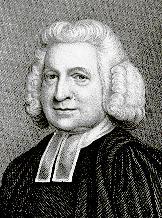
1707 - 1788 Person Name: Charles Wesley, 1707-1788 Topics: Occasional Services Dedication / Consecration / Anniversary Author of "Psalm 150 (A Responsorial Setting)" in Psalms for All Seasons Charles Wesley, M.A. was the great hymn-writer of the Wesley family, perhaps, taking quantity and quality into consideration, the great hymn-writer of all ages. Charles Wesley was the youngest son and 18th child of Samuel and Susanna Wesley, and was born at Epworth Rectory, Dec. 18, 1707. In 1716 he went to Westminster School, being provided with a home and board by his elder brother Samuel, then usher at the school, until 1721, when he was elected King's Scholar, and as such received his board and education free. In 1726 Charles Wesley was elected to a Westminster studentship at Christ Church, Oxford, where he took his degree in 1729, and became a college tutor. In the early part of the same year his religious impressions were much deepened, and he became one of the first band of "Oxford Methodists." In 1735 he went with his brother John to Georgia, as secretary to General Oglethorpe, having before he set out received Deacon's and Priest's Orders on two successive Sundays. His stay in Georgia was very short; he returned to England in 1736, and in 1737 came under the influence of Count Zinzendorf and the Moravians, especially of that remarkable man who had so large a share in moulding John Wesley's career, Peter Bonier, and also of a Mr. Bray, a brazier in Little Britain. On Whitsunday, 1737, [sic. 1738] he "found rest to his soul," and in 1738 he became curate to his friend, Mr. Stonehouse, Vicar of Islington, but the opposition of the churchwardens was so great that the Vicar consented that he "should preach in his church no more." Henceforth his work was identified with that of his brother John, and he became an indefatigable itinerant and field preacher. On April 8, 1749, he married Miss Sarah Gwynne. His marriage, unlike that of his brother John, was a most happy one; his wife was accustomed to accompany him on his evangelistic journeys, which were as frequent as ever until the year 1756," when he ceased to itinerate, and mainly devoted himself to the care of the Societies in London and Bristol. Bristol was his headquarters until 1771, when he removed with his family to London, and, besides attending to the Societies, devoted himself much, as he had done in his youth, to the spiritual care of prisoners in Newgate. He had long been troubled about the relations of Methodism to the Church of England, and strongly disapproved of his brother John's "ordinations." Wesley-like, he expressed his disapproval in the most outspoken fashion, but, as in the case of Samuel at an earlier period, the differences between the brothers never led to a breach of friendship. He died in London, March 29, 1788, and was buried in Marylebone churchyard. His brother John was deeply grieved because he would not consent to be interred in the burial-ground of the City Road Chapel, where he had prepared a grave for himself, but Charles said, "I have lived, and I die, in the Communion of the Church of England, and I will be buried in the yard of my parish church." Eight clergymen of the Church of England bore his pall. He had a large family, four of whom survived him; three sons, who all became distinguished in the musical world, and one daughter, who inherited some of her father's poetical genius. The widow and orphans were treated with the greatest kindness and generosity by John Wesley. As a hymn-writer Charles Wesley was unique. He is said to have written no less than 6500 hymns, and though, of course, in so vast a number some are of unequal merit, it is perfectly marvellous how many there are which rise to the highest degree of excellence. His feelings on every occasion of importance, whether private or public, found their best expression in a hymn. His own conversion, his own marriage, the earthquake panic, the rumours of an invasion from France, the defeat of Prince Charles Edward at Culloden, the Gordon riots, every Festival of the Christian Church, every doctrine of the Christian Faith, striking scenes in Scripture history, striking scenes which came within his own view, the deaths of friends as they passed away, one by one, before him, all furnished occasions for the exercise of his divine gift. Nor must we forget his hymns for little children, a branch of sacred poetry in which the mantle of Dr. Watts seems to have fallen upon him. It would be simply impossible within our space to enumerate even those of the hymns which have become really classical. The saying that a really good hymn is as rare an appearance as that of a comet is falsified by the work of Charles Wesley; for hymns, which are really good in every respect, flowed from his pen in quick succession, and death alone stopped the course of the perennial stream. It has been the common practice, however for a hundred years or more to ascribe all translations from the German to John Wesley, as he only of the two brothers knew that language; and to assign to Charles Wesley all the original hymns except such as are traceable to John Wesley through his Journals and other works. The list of 482 original hymns by John and Charles Wesley listed in this Dictionary of Hymnology have formed an important part of Methodist hymnody and show the enormous influence of the Wesleys on the English hymnody of the nineteenth century. -- Excerpts from John Julian, Dictionary of Hymnology (1907) ================== Charles Wesley, the son of Samuel Wesley, was born at Epworth, Dec. 18, 1707. He was educated at Westminster School and afterwards at Christ Church, Oxford, where he graduated M.A. In 1735, he took Orders and immediately proceeded with his brother John to Georgia, both being employed as missionaries of the S.P.G. He returned to England in 1736. For many years he engaged with his brother in preaching the Gospel. He died March 29, 1788. To Charles Wesley has been justly assigned the appellation of the "Bard of Methodism." His prominence in hymn writing may be judged from the fact that in the "Wesleyan Hymn Book," 623 of the 770 hymns were written by him; and he published more than thirty poetical works, written either by himself alone, or in conjunction with his brother. The number of his separate hymns is at least five thousand. --Annotations of the Hymnal, Charles Hutchins, M.A., 1872.

Henry Francis Lyte

1793 - 1847 Person Name: Henry F. Lyte, 1793-1847 Topics: The Christian Life Dedication and Consecration Author of "Jesus, I My Cross Have Taken" in African Methodist Episcopal Church Hymnal Lyte, Henry Francis, M.A., son of Captain Thomas Lyte, was born at Ednam, near Kelso, June 1, 1793, and educated at Portora (the Royal School of Enniskillen), and at Trinity College, Dublin, of which he was a Scholar, and where he graduated in 1814. During his University course he distinguished himself by gaining the English prize poem on three occasions. At one time he had intended studying Medicine; but this he abandoned for Theology, and took Holy Orders in 1815, his first curacy being in the neighbourhood of Wexford. In 1817, he removed to Marazion, in Cornwall. There, in 1818, he underwent a great spiritual change, which shaped and influenced the whole of his after life, the immediate cause being the illness and death of a brother clergyman. Lyte says of him:— "He died happy under the belief that though he had deeply erred, there was One whose death and sufferings would atone for his delinquencies, and be accepted for all that he had incurred;" and concerning himself he adds:— "I was greatly affected by the whole matter, and brought to look at life and its issue with a different eye than before; and I began to study my Bible, and preach in another manner than I had previously done." From Marazion he removed, in 1819, to Lymington, where he composed his Tales on the Lord's Prayer in verse (pub. in 1826); and in 1823 he was appointed Perpetual Curate of Lower Brixham, Devon. That appointment he held until his death, on Nov. 20, 1847. His Poems of Henry Vaughan, with a Memoir, were published in 1846. His own Poetical works were:— (1) Poems chiefly Religious 1833; 2nd ed. enlarged, 1845. (2) The Spirit of the Psalms, 1834, written in the first instance for use in his own Church at Lower Brixham, and enlarged in 1836; (3) Miscellaneous Poems (posthumously) in 1868. This last is a reprint of the 1845 ed. of his Poems, with "Abide with me" added. (4) Remains, 1850. Lyte's Poems have been somewhat freely drawn upon by hymnal compilers; but by far the larger portion of his hymns found in modern collections are from his Spirit of the Psalms. In America his hymns are very popular. In many instances, however, through mistaking Miss Auber's (q. v.) Spirit of the Psalms, 1829, for his, he is credited with more than is his due. The Andover Sabbath Hymn Book, 1858, is specially at fault in this respect. The best known and most widely used of his compositions are "Abide with me, fast falls the eventide;” “Far from my heavenly home;" "God of mercy, God of grace;" "Pleasant are Thy courts above;" "Praise, my soul, the King of heaven;" and "There is a safe and secret place." These and several others are annotated under their respective first lines: the rest in common use are:— i. From his Poems chiefly Religious, 1833 and 1845. 1. Above me hangs the silent sky. For Use at Sea. 2. Again, 0 Lord, I ope mine eyes. Morning. 3. Hail to another Year. New Year. 4. How good, how faithful, Lord, art Thou. Divine care of Men. 5. In tears and trials we must sow (1845). Sorrow followed by Joy. 6. My [our] rest is in heaven, my [our] rest is not here. Heaven our Home. 7. 0 Lord, how infinite Thy love. The Love of God in Christ. 8. Omniscient God, Thine eye divine. The Holy Ghost Omniscient. 9. The leaves around me falling. Autumn. 10. The Lord hath builded for Himself. The Universe the Temple of God. 11. Vain were all our toil and labour. Success is of God. 12. When at Thy footstool, Lord, I bend. Lent. 13. When earthly joys glide swift away. Ps. cii. 14. Wilt Thou return to me, O Lord. Lent. 15. With joy we hail the sacred day. Sunday. ii. From his Spirit of the Psalms, 1834. 16. Be merciful to us, O God. Ps. lvii. 17. Blest is the man who knows the Lord. Ps. cxii. 18. Blest is the man whose spirit shares. Ps. xli. 19. From depths of woe to God I cry. Ps. cxxxx. 20. Gently, gently lay Thy rod. Ps. vi. 21. Glorious Shepherd of the sheep. Ps. xxiii. 22. Glory and praise to Jehovah on high. Ps. xxix. 23. God in His Church is known. Ps. lxxvi. 24. God is our Refuge, tried and proved. Ps. xlvi. 25. Great Source of my being. Ps. lxxiii. 26. Hear, O Lord, our supplication. Ps. lxiv. 27. How blest the man who fears the Lord. Ps.cxxviii. 28. Humble, Lord, my haughty spirit. Ps. cxxxi. 29. In this wide, weary world of care. Ps. cxxxii. 30. In vain the powers of darkness try. Ps.lii. 31. Jehovah speaks, let man be awed. Ps. xlix. 32. Judge me, O Lord, and try my heart. Ps. xxvi. 33. Judge me, O Lord, to Thee I fly. Ps. xliii. 34. Lord, I have sinned, but O forgive. Ps. xli. 35. Lord, my God, in Thee I trust. Ps. vii. 36. Lord of the realms above, Our Prophet, &c. Ps.xlv. 37. Lone amidst the dead and dying. Ps. lxii. 38. Lord God of my salvation. Ps. lxxxviii. 39. Lord, I look to Thee for all. Ps. xxxi. 40. Lord, I would stand with thoughtful eye. Ps. lxix. 41. Lord, my God, in Thee I trust. Ps. vii. 42. My God, my King, Thy praise I sing. Ps. cviii. 43. My God, what monuments I see. Ps. xxxvi. 44. My spirit on [to] Thy care. Ps. xxxi. 45. My trust is in the Lord. Ps. xi. 46. Not unto us, Almighty Lord [God]. Ps. cxv. 47. O God of glory, God of grace. Ps. xc. 48. O God of love, how blest are they. Ps. xxxvii. 49. O God of love, my God Thou art. Ps. lxiii. 50. O God of truth and grace. Ps. xviii. 51. O had I, my Saviour, the wings of a dove. Ps. lv. 52. O how blest the congregation. Ps. lxxxix. 53. O how safe and [how] happy he. Ps. xci. 54. O plead my cause, my Saviour plead. Ps. xxxv. 55. O praise the Lord, 'tis sweet to raise. Ps. cxlvii. 56. O praise the Lord; ye nations, pour. Ps. cxvii. 57. O praise ye the Lord With heart, &c. Ps. cxlix. 58. O that the Lord's salvation. Ps. xiv. 59. O Thou Whom thoughtless men condemn. Ps. xxxvi. 60. Of every earthly stay bereft. Ps. lxxiv. 61. Our hearts shall praise Thee, God of love. Ps. cxxxviii. 62. Pilgrims here on earth and strangers. Ps. xvi. 63. Praise for Thee, Lord, in Zion waits. Ps. lxv. 64. Praise to God on high be given. Ps. cxxxiv. 65. Praise ye the Lord, His servants, raise. Ps. cxiii. 66. Redeem'd from guilt, redeem'd from fears. Ps. cxvi. 67. Save me by Thy glorious name. Ps. liv. 68. Shout, ye people, clap your hands. Ps. xlvii. 69. Sing to the Lord our might. Ps. lxxxi. 70. Strangers and pilgrims here below. Ps. cix. 71. Sweet is the solemn voice that calls. Ps. cxxii. 72. The Church of God below. Ps. lxxxvii. 73. The Lord is King, let earth be glad. Ps. xcvii. 74. The Lord is on His throne. Ps. xciii. 75. The Lord is our Refuge, the Lord is our Guide. Ps. xlvii. 76. The mercies of my God and King. Ps. lxxxix. 77. The Lord Who died on earth for men. Ps. xxi. 78. Tis a pleasant thing to fee. Ps. cxxxiii. 79. Thy promise, Lord, is perfect peace. Ps. iii. 80. Unto Thee I lift mine [my] eyes. Ps. cxxiii. 81. Whom shall [should] we love like Thee? Ps. xviii. Lyte's versions of the Psalms are criticised where their sadness, tenderness and beauty are set forth. His hymns in the Poems are characterized by the same features, and rarely swell out into joy and gladness. --John Julian, Dictionary of Hymnology (1907) ================== Lyte, Henry Francis, p. 706, i. Additional versions of Psalms are in common use:-- 1. Lord, a thousand foes surround us. Psalms lix. 2. Praise, Lord, for Thee in Zion waits. Psalms lxv. 3. The Christian like his Lord of old. Psalms cxl. 4. The Lord of all my Shepherd is. Psalms xxiii. 5. The Lord of heaven to earth is come. Psalms xcviii. 6. Thy mercy, Lord, the sinner's hope. Psalms xxxvi. 7. To Thee, O Lord, in deep distress. Psalms cxlii. Sometimes given as "To God I turned in wild distress." 8. Uphold me, Lord, too prone to stray. Psalms i. 9. When Jesus to our [my] rescue came. Psalms cxxvi. These versions appeared in the 1st edition of Lyte's Spirit of the Psalms, 1834. It must be noted that the texts of the 1834, the 1836, and the 3rd ed., 1858, vary considerably, but Lyte was not responsible for the alterations and omissions in the last, which was edited by another hand for use at St. Mark's, Torquay. Lyte's version of Psalms xxix., "Glory and praise to Jehovah on high" (p. 706, ii., 22), first appeared in his Poems, 1st ed., 1833, p. 25. Read also No. 39 as "Lord, I look for all to Thee." --John Julian, Dictionary of Hymnology, Appendix, Part II (1907)

David Evans

1874 - 1948 Topics: Life in Christ Dedication and Consecration Harmonizer of "SLANE" in The Hymnbook David Evans (b. Resolven, Glamorganshire, Wales, 1874; d. Rosllannerchrugog, Denbighshire, Wales, 1948) was an important leader in Welsh church music. Educated at Arnold College, Swansea, and at University College, Cardiff, he received a doctorate in music from Oxford University. His longest professional post was as professor of music at University College in Cardiff (1903-1939), where he organized a large music department. He was also a well-known and respected judge at Welsh hymn-singing festivals and a composer of many orchestral and choral works, anthems, service music, and hymn tunes. Bert Polman

Christopher Walker

b. 1947 Person Name: Christopher Walker Topics: Occasional Services Dedication / Consecration / Anniversary Composer of "[Alleluia, alleluia]" in Psalms for All Seasons

Pages


Export as CSV
It looks like you are using an ad-blocker. Ad revenue helps keep us running. Please consider white-listing Hymnary.org or getting Hymnary Pro to eliminate ads entirely and help support Hymnary.org.