You help make Hymnary.org possible. More than 10 million people from 200+ countries found hymns, liturgical resources and encouragement on Hymnary.org in 2025, including you. Every visit affirms the global impact of this ministry.

If Hymnary has been meaningful to you this year, would you take a moment today to help sustain it? A gift of any size—paired with a note of encouragement if you wish—directly supports the server costs, research work and curation that keep this resource freely available to the world.

Give securely online today, or mail a check to:
Hymnary.org
Calvin University
3201 Burton Street SE
Grand Rapids, MI 49546

Thank you for your partnership, and may the hope of Advent fill your heart.

Person Results

Topics:god+as+creator
In:people

Planning worship? Check out our sister site, ZeteoSearch.org, for 20+ additional resources related to your search.
Showing 41 - 50 of 254Results Per Page: 102050

Edward Osler

1798 - 1863 Topics: God as Creator Author (st. 3) of "Praise the Lord! Ye Heavens, Adore Him" in The Sing! Hymnal Osler, Edward, was born at Falmouth in January, 1798, and was educated for the medical profession, first by Dr. Carvosso, at Falmouth, and then at Guy's Hospital, London. From 1819 to 1836 he was house surgeon at the Swansea Infirmary. He then removed to London, and devoted himself to literary pursuits. For some time he was associated with the Society for Promoting Christian Knowledge, both in London and at Bath. In 1841 he became the Editor of the Royal Cornwall Gazette, and took up his residence at Truro. He retained that appointment till his death, at Truro, March 7, 1863. For the Linnaean Society he wrote Burrowing and Boring Marine Animals. He also published Church and Bible; The Voyage: a Poem written at Sea, and in the West Indies, and Illustrated by papers on Natural History, 1830; The Life of Lord Exmouth, 1837, &c. His hymnological work is mainly connected with the Mitre Hymn Book. During 1835-36 he was associated with Prebendary W. J. Hall, the editor, in producing that collection, which was published in 1836 as Psalms and Hymns adapted to The Services of the Church of England. He resided in Mr. Hall's house during the time. From the "hall manuscript" we gather that he contributed 15 versions of the Psalms (5 being rewritten from others), and 50 hymns (a few rewritten). Most of these hymns and Psalm versions, together with others not in the Mitre Hymn Book, were afterwards given in the monthly numbers of his Church and King, from Nov. 1836 to Aug. 1837. The best known of these hymns are, “O God, unseen, yet ever near," and “Worship, honour, glory, blessing." Several of his hymns in common use are:— 1. Father, Whose love and truth fulfil. Holy Baptism. 2. Glory to God! with joyful adoration. Praise to the Father. 3. Great God, o'er earth and heaven supreme. Men the Stewards of God's Bounties. 4. Great God of hosts, our ears have heard. Ps. xliv. Based on the N. Version. 5. Great God, Whose awful mystery. Holy Trinity. 6. I hold the sacred book of God. Martyrs. 7. Jehovah hath spoken, the nations shall hear. Second Advent. 8. Lord, may the inward grace abound. Holy Baptism. 9. May we Thy precepts, Lord, fulfil. Love. 10. Mighty Saviour, gracious King. Advent. 11. 0 God, the help of all Thy Saints. Ps. x. 12. O Thou, the Lord and Life of those. Christ the Life of Men. 13. O Saviour, Who didst come. Easter. 14. Saviour, Whose love could stoop to death. Easter. 15. See, Lord, before Thy mercy seat. For Schools. 16. Set in a high and favoured place. Advent. 17. Wake frem the dead, new life begin. Lent. 18. With trembling awe we come. Lent. Several of these hymns are not in Osier's Church and King. We have ascribed them and others to him on the authority of the "hall MSS." It must be noted also that the text in the Church and King often differs from that in the Mitre. --John Julian, Dictionary of Hymnology (1907) Though not mentioned by Julian, perhaps his most enduring contribution to hymnody is the third stanza of "Praise the Lord! Ye Heavens, Adore Him", whose first two stanzas are of anonymous authorship. --Leland Bryant Ross (2019)

Federico J. Pagura

1923 - 2016 Topics: God as Creator Translator (into Spanish) of "All People That on Earth Do Dwell" in Psalms for All Seasons Federico José Pagura was an Argentine Methodist bishop and author and translator of hymns. Leland Bryant Ross

Communauté de Taizé

Person Name: The Community of Taizé Topics: God as Creator Adapter of "O Lord, Hear My Prayer" in Psalms for All Seasons

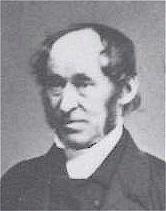
William Henry Monk

1823 - 1889 Person Name: William H. Monk Topics: Creation God as Creator Harmonizer of "ELLACOMBE" in Voices Together William H. Monk (b. Brompton, London, England, 1823; d. London, 1889) is best known for his music editing of Hymns Ancient and Modern (1861, 1868; 1875, and 1889 editions). He also adapted music from plainsong and added accompaniments for Introits for Use Throughout the Year, a book issued with that famous hymnal. Beginning in his teenage years, Monk held a number of musical positions. He became choirmaster at King's College in London in 1847 and was organist and choirmaster at St. Matthias, Stoke Newington, from 1852 to 1889, where he was influenced by the Oxford Movement. At St. Matthias, Monk also began daily choral services with the choir leading the congregation in music chosen according to the church year, including psalms chanted to plainsong. He composed over fifty hymn tunes and edited The Scottish Hymnal (1872 edition) and Wordsworth's Hymns for the Holy Year (1862) as well as the periodical Parish Choir (1840-1851). Bert Polman

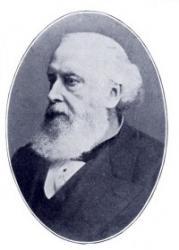
Samuel Sebastian Wesley

1810 - 1876 Person Name: Samuel S. Wesley Topics: God as Creator Composer of "AURELIA" in Lift Up Your Hearts Samuel Sebastian Wesley (b. London, England, 1810; d. Gloucester, England, 1876) was an English organist and composer. The grandson of Charles Wesley, he was born in London, and sang in the choir of the Chapel Royal as a boy. He learned composition and organ from his father, Samuel, completed a doctorate in music at Oxford, and composed for piano, organ, and choir. He was organist at Hereford Cathedral (1832-1835), Exeter Cathedral (1835-1842), Leeds Parish Church (1842­-1849), Winchester Cathedral (1849-1865), and Gloucester Cathedral (1865-1876). Wesley strove to improve the standards of church music and the status of church musicians; his observations and plans for reform were published as A Few Words on Cathedral Music and the Music System of the Church (1849). He was the musical editor of Charles Kemble's A Selection of Psalms and Hymns (1864) and of the Wellburn Appendix of Original Hymns and Tunes (1875) but is best known as the compiler of The European Psalmist (1872), in which some 130 of the 733 hymn tunes were written by him. Bert Polman

Alfred V. Fedak

b. 1953 Topics: God as Creator Arranger of "KINGSFOLD" in Lift Up Your Hearts Alfred Fedak (b. 1953), is a well-known organist, composer, and Minister of Music at Westminster Presbyterian Church on Capitol Hill in Albany, New York. He graduated from Hope College in 1975 with degrees in organ performance and music history. He obtained a Master’s degree in organ performance from Montclair State University, and has also studied at Westminster Choir College, Eastman School of Music, the Institute for European Studies in Vienna, and at the first Cambridge Choral Studies Seminar at Clare College, Cambridge. As a composer, he has over 200 choral and organ works in print, and has three published anthologies of his work (Selah Publishing). In 1995, he was named a Visiting Fellow in Church Music at Episcopal Seminary of the Soutwest in Austin, Texas. He is also a Fellow of the American Guild of Organists, and was awarded the AGO’s prestigious S. Lewis Elmer Award. Fedak is a Life Member of the Hymn Society, and writes for The American Organist, The Hymn, Reformed Worship, and Music and Worship. He was a member of the Presbyterian Committee on Congregational Song that prepared Glory to God, the 2013 hymnal of the Presbyterian Church (U.S.A.) Laura de Jong

C. Hubert H. Parry

1848 - 1918 Person Name: C. Hubert H. Parry, 1848-1918 Topics: God as Creator Composer of "LAUDATE DOMINUM" in Psalms for All Seasons Charles Hubert Hastings Parry KnBch/Brnt BMus United Kingdom 1848-1918. Born at Richmond Hill, Bournemouth, England, son of a wealthy director of the East India Company (also a painter, piano and horn musician, and art collector). His mother died of consumption shortly after his birth. His father remarried when he was three, and his stepmother favored her own children over her stepchildren, so he and two siblings were sometimes left out. He attended a preparatory school in Malvern, then at Twyford in Hampshire. He studied music from 1856-58 and became a pianist and composer. His musical interest was encouraged by the headmaster and by two organists. He gained an enduring love for Bach’s music from S S Wesley and took piano and harmony lessons from Edward Brind, who also took him to the ‘Three Choirs Festival in Hereford in 1861, where Mendelssohn, Mozart, Handel, and Beethoven works were performed. That left a great impression on Hubert. It also sparked the beginning of a lifelong association with the festival. That year, his brother was disgraced at Oxford for drug and alcohol use, and his sister, Lucy, died of consumption as well. Both events saddened Hubert. However, he began study at Eton College and distinguished himself at both sport and music. He also began having heart trouble, that would plague him the rest of his life. Eton was not known for its music program, and although some others had interest in music, there were no teachers there that could help Hubert much. He turned to George Elvey, organist of St George’s Chapel, Windsor Castle, and started studying with him in 1863. Hubert eventually wrote some anthems for the choir of St George’s Chapel, and eventually earned his music degree. While still at Eton, Hubert sat for the Oxford Bachelor of Music exam, the youngest person ever to have done so. His exam exercise, a cantata: “O Lord, Thou hast cast us out” astonished the Heather Professor of Music, Sir Frederick Ouseley, and was triumphantly performed and published in 1867. In 1867 he left Eton and went to Exeter College, Oxford. He did not study music there, his music concerns taking second place, but read law and modern history. However, he did go to Stuttgart, Germany, at the urging of Henry Hugh Pierson, to learn re-orchestration, leaving him much more critical of Mendelssohn’s works. When he left Exeter College, at his father’s behest, he felt obliged to try insurance work, as his father considered music only a pastime (too uncertain as a profession). He became an underwriter at Lloyd’s of London, 1870-77, but he found the work unappealing to his interests and inclinations. In 1872 he married Elizabeth Maude Herbert, and they had two daughters: Dorothea and Gwendolen. His in-laws agreed with his father that a conventional career was best, but it did not suit him. He began studying advanced piano with W S Bennett, but found it insufficient. He then took lessons with Edward Dannreuther, a wise and sympathetic teacher, who taught him of Wagner’s music. At the same time as Hubert’s compositions were coming to public notice (1875), he became a scholar of George Grove and soon an assistant editor for his new “Dictionary of Music and Musicians”. He contributed 123 articles to it. His own first work appeared in 1880. In 1883 he became professor of composition and musical history at the Royal College of Music (of which Grove was the head). In 1895 Parry succeeded Grove as head of the college, remaining in the post the remainder of his life. He also succeeded John Stainer as Heather Professor of Music at the University of Oxford (1900-1908). His academic duties were considerable and likely prevented him from composing as much as he might have. However, he was rated a very fine composer, nontheless, of orchestrations, overtures, symphonies, and other music. He only attempted one opera, deemed unsuccessful. Edward Elgar learned much of his craft from Parry’s articles in Grove’s Dictionary, and from those who studied under Parry at the Royal College, including Ralph Vaughn Williams, Gustav Holst, Frank Bridge, and John Ireland. Parry had the ability when teaching music to ascertain a student’s potential for creativity and direct it positively. In 1902 he was created a Baronet of Highnam Court in Gloucester. Parry was also an avid sailor and owned several yachts, becoming a member of the Royal Yacht Squadron in 1908, the only composer so honored. He was a Darwinian and a humanist. His daughter reiterated his liberal, non-conventional thinking. On medical advice he resigned his Oxford appointment in 1908 and produced some of his best known works. He and his wife were taken up with the ‘Suffrage Movement’ in 1916. He hated to see the WW1 ravage young potential musical talent from England and Germany. In 1918 he contracted Spanish flu during the global pandemic and died at Knightsscroft, Rustington, West Sussex. In 2015 they found 70 unpublished works of Parry’s hidden away in a family archive. It is thought some may never have been performed in public. The documents were sold at auction for a large sum. Other works he wrote include: “Studies of great composers” (1886), “The art of music” (1893), “The evolution of the art of music” (1896), “The music of the 17th century” (1902). His best known work is probably his 1909 study of “Johann Sebastian Bach”. John Perry

Franklin L. Sheppard

1852 - 1930 Person Name: Franklin L. Sheppard, 1852-1930 Topics: God as Creator Adapter of "TERRA BEATA" in Lift Up Your Hearts Franklin L. Sheppard (b. Philadelphia, PA, 1852; d. Germantown, PA, 1930) arranged the tune for Babcock's text and published it in the Presbyterian church school hymnal Alleluia (1915), edited by Sheppard (Babcock and Sheppard were friends). After graduating from the University of Pennsylvania, Philadelphia, Sheppard entered the family foundry business in Baltimore, Maryland, in 1875. He was organist at Zion Episcopal Church and later was an elder and music director of the Second Presbyterian Church in Baltimore. President of the Presbyterian Board of Publications, Sheppard also served on the committee that prepared the Presbyterian Hymnal of 1911. In the history of hymnody he is remembered primarily for arranging the tune TERRA BEATA for “This Is My Father's World.” Bert Polman

Herbert Brokering

1926 - 2009 Person Name: Herbert Brokering, 1926-2009 Topics: God as Creator Author of "Earth and All Stars" in Lift Up Your Hearts Herbert F. Brokering (b. Beatrice, Nebraska, May 21, 1926; d. Bloomington, Minnesota, November 7, 2009) was a Lutheran pastor with German roots, an author of more than forty books, and a poet and hymn writer known especially for two hymn texts, “Earth and All Stars” and “Alleluia! Christ Is Risen,” both set to the same tune. He was born in Nebraska, the son of a German Lutheran pastor; earned degrees from Wartburg College in Iowa, University of Iowa, and Trinity Lutheran Seminary in Columbus, OH, and pursued graduate study in Germany at the University of Kiel and the University of Erlangen. He served as a pastor of three Lutheran congregations, in Pennsylvania, New York, and Texas; taught at the Navy Chaplain’s Career School in Newport, Rhode Island, Luther Seminary and Trinity Seminary, and was also active in the Lutheran World Federation services and the World Council of Churches. Emily Brink

John H. Stockton

1813 - 1877 Topics: God as Creator Composer of "MINERVA" in Psalms for All Seasons Stockton, John Hart, a Methodist minister, was born in 1813, and died in 1877. He was a member of the New Jersey Annual Conference of the Methodist Episcopal Church, and the successive pastoral charges that he filled as a member of that Conference are found in the Conference Journal. He was not only a preacher, but a musician and composer of tunes, as well as hymn writer. He published two gospel song books: Salvation Melodies, 1874, and Precious Songs, 1875. Hymn Writers of the Church by Charles Nutter, 1911 =============== Stockton, John Hart, b. April 19, 1813, and d. March 25, 1877, was the author of "Come, every soul by sin oppressed" (Invitation), in I.D. Sankey's Sacred Songs and Solos, 1878, and of "The Cross, the Cross, the blood¬stained Cross" (Good Friday) in the same collection. --John Julian, Dictionary of Hymnology, Appendix, Part II (1907) =============== Stockton, John Hart. (New Hope, Pennsylvania, April 19, 1813--March 25, 1877). Born of Presbyterian parents, he was converted at a Methodist camp meeting in 1838, being received into full membership in the New Jersey Conference in 1857. Because of ill health he twice took the "supernumerary relations." He withdrew from actual pastoral work in 1874 and engaged in compiling and publishing gospel hymn books, issuing Salvation Melodies that year and Precious Songs in 1875, writing both words and music for a number of the songs. He died suddenly after attending a Sunday morning service at Arch Street Church, Philadelphia. Our Hymnody, McCutchan, has, perhaps, the fullest account of him readily available. --Robert G. McCutchan, DNAH Archives

Pages


Export as CSV
It looks like you are using an ad-blocker. Ad revenue helps keep us running. Please consider white-listing Hymnary.org or getting Hymnary Pro to eliminate ads entirely and help support Hymnary.org.