You help make Hymnary.org possible. More than 10 million people from 200+ countries found hymns, liturgical resources and encouragement on Hymnary.org in 2025, including you. Every visit affirms the global impact of this ministry.

If Hymnary has been meaningful to you this year, would you take a moment today to help sustain it? A gift of any size—paired with a note of encouragement if you wish—directly supports the server costs, research work and curation that keep this resource freely available to the world.

Give securely online today, or mail a check to:
Hymnary.org
Calvin University
3201 Burton Street SE
Grand Rapids, MI 49546

Thank you for your partnership, and may the hope of Advent fill your heart.

Person Results

Topics:judgment
In:people

Planning worship? Check out our sister site, ZeteoSearch.org, for 20+ additional resources related to your search.
Showing 41 - 50 of 761Results Per Page: 102050

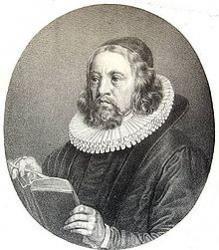
Nikolaus Herman

1500 - 1561 Topics: Judgment Composer of "LOBT GOTT, IHR CHRISTEN" in Psalter Hymnal (Gray) Herman, Nicolaus, is always associated with Joachimsthal in Bohemia, just over the mountains from Saxony. The town was not of importance till the mines began to be extensively worked about 1516. Whether Herman was a native of this place is not known, but he was apparently there in 1518, and was certainly in office there in 1524. For many years he held the post of Master in the Latin School, and Cantor or Organist and Choirmaster in the church. Towards the end of his life he suffered greatly from gout, and had to resign even his post as Cantor a number of years before his death. He died at Joachimsthal, May 3, 1561. (Koch, i. 390-398; Allgemeine Deutsche Biographie, xii. 186-188, &c.) He was a great friend and helper of J. Mathesius (q.v.) (who in 1532 became rector of the school, but in 1541 diaconus and in 1545 pastor of the church), and it was said that whenever Mathesius preached a specially good sermon Herman straightway embodied its leading ideas in a hymn. His hymns, however, were not primarily written for use in church, but were intended for the boys and girls in the schools, to supplant profane songs in the mouths of the young men and women, or for the daily life of the “housefathers and housemothers" in Joachimsthal, at home, and in their work in the mines. He is a poet of the people, homely, earnest, and picturesque in style; by his naiveté reminding us of Hans Sachs. He was an ardent lover of music and a very good organist. The chorales which he published with his hymns are apparently all of his own composition, and are among the best of the Reformation period. Many of Herman's hymns soon passed into Church use in Germany, and a number are found in almost all books in present use. About 190 in all, they appeared principally in:— (1) Die Sontags Evangelia uber des gantze Jar, in Gesenge verfasset, für die Kinder und christlichen Haussvetter, &c, Wittenberg, 1560 (dedication by Herman dated Trinity Sunday, 1559), with 101 hymns and 17 melodies. The best are those interspersed specially meant for children and not directly founded on the Gospel for the day. (2) Die Historien von der Sindfludt, Joseph, Mose, Helia, Elisa und der Susanna, sampt etlichen Historien aus den Evangelisten, &c., Wittenberg, 1562 (preface by Herman dated St. Bartholomew's Day, 1560), with 73 hymns and 20 melodies. In this case also the general hymns are the best. A selection of 60 (really 61) of his hymns, with a memoir by K. F. Ledderhose, was published at Halle, 1855. One of Herman's hymns is noted under “Wenn mein Stündlein vorhanden ist." The others which have passed into English are:— i. Bescher uns, Herr, das täglioh Brod. Grace before Meat. 1562, as above, and thence in Wackernagel, iii. p. 1228, in 6 stanzas of 4 lines; in Ledderhose, p. 70; and in the Berlin Geistliche Lieder, ed. 1863, No. 1133. Translated as:— 1. Thou art our Father and our God. This, by P. H. Molther, a translation of stanza vi., as No. 180 in the Moravian Hymn Book, 1789 (1849, No. 220, st. v.). 2. As children we are owned by Thee, a translation of stanza vi., as st. iii. of No. 191 in the Moravian Hymn Book, 1801 (1849, No. 220, stanza iii.). ii. Die helle Sonn leucht jetzt herfür. Morning. 1560, as above, and thence in Wackernagel, iii. p. 1184, in 4 stanzas of 4 lines, in Ledderhose, p. 87; and in the Unverfälschter Liedersegen, 1851, No. 450. Translated as:— The morning beam revives our eyes, a good and full translation by. A. T. Russell, as No. 71 in the Dalston Hospital Hymn Book 1848. iii. Erschienen ist der herrliche Tag. Easter. 1560, as above, in 14 stanzas of 4 lines, entitled, "A new Spiritual Song of the Joyful Resurrection of our Saviour Jesus Christ; for the maidens of the girls' school in Joachimsthal”; and thence in Wackernagel, iii. p. 1175; in Ledderhose p. 23, and Unverfälschter Liedersegen, 1851, No. 134. It has reminiscences of the "Erstanden ist der heil'ge Christ". Translated as:— The day hath dawn'd—-the day of days, a good translation by A. T. Russell of stanzas i., ii., xiii., xiv., as No. 113 in his Psalms & Hymns, 1851. Another tr. is, "At length appears the glorious day," by Dr. G. Walker, 1860, p. 28. iv. Hinunter ist der Sonnen Schein. Evening. 1560, as above, and thence in Wackernagel, iii. p. 1184, in 4 stanzas of 4 lines; in Ledderhose, p. 88; and in the Unverfälschter Liedersegen1851, No. 523. Some of the phrases may have been suggested by the "Christe qui lux es et dies" (q. v.). Translated as:— 1. Sunk is the sun's last beam of light, a full and good translation by Miss Cox in her Sacred Hymns from the German, 1841, p. 57. Included in Alford's Psalms & Hymns, 1844, and Tear of Praise, 1867; in Dale's English Hymn Book, 1875; in the Pennsylvania Lutheran Church Book, 1868, and others. It is also given considerably altered and beginning, "Sunk is the Sun! the daylight gone," in W. J. Blew's Church Hymn and Tune Book, 1851-55. 2. The happy sunshine all is gone, in full, by Miss Winkworth in her Lyra Germanica, 1st Ser., 1855, p. 225; repeated in her Chorale Book for England, 1863, and the Ohio Lutheran Hymnal, 1880. Other translations are: (1) "Did I perhaps Thee somewhat grieve," a translation of stanza iii. in the Moravian Hymn Book, 1789, No. 756. In the 1801 and later eds. (1886, No. 1181, st. iii.), it begins, "Where'er I Thee this day did grieve." (2) "The sun’s fair sheen is past and gone," by H. J. Buckoll, 1842, p. 68. (3) "The sun hath run his daily race," by Lady E. Fortescue, 1843, p. 14. v. Lobt Gott, ihr Christen alle gleich. Christmas. Written c. 1554, but first published 1560 as above, as the first of "Three Spiritual Christmas Songs of the new-born child Jesus, for the children in Joachimsthal." Thence in Wackernagel iii. p. 1169, in 8 stanzas of 4 lines; in Ledderhose, p. 1; and in the Unverfälschter Liedersegen, 1851, No. 47. It is one of the most popular German Christmas hymns. The melody set to it in 1560 is also by Herman; in 1554 to his "Kommt her ihr liebsten Schwesterlein" [in the Hymnal Companioncalled "St. George's (old)"]. Translated as :— 1. Let all together praise our God, a good translation of stanzas i., iii., vi., viii., by A. T. Russell, as No. 52 in his Psalms & Hymns, 1851. Repeated in Kennedy, 1863, adding a translation of st. ii., and beginning, "Let all creation praise our God." 2. Praise ye the Lord, ye Christians I yea, in full, by E. Cronenwett, as No. 31 in the Ohio Lutheran Hymnal 1880. Other translations are: (1) "A wondrous change He with us makes," a tr. of stanza viii., ix. as No. 438 in pt. i. of the Moravian Hymn Book, 1754, repeated 1789-1826. (2) "Come, brethren, lets the song arise," by Dr. G. Walker, 1860, p. 26. (3) "Praise God, now Christians, all alike," by Miss Manington, 1864, p. 9. (4) "Praise God, upon His throne on high," in the Sunday Magazine, 1874, p. 384, signed "P. J." The hymn “Shepherds rejoice, lift up your eyes," given by J. C. Jacobi in his Psalmodia Germanica, 1722, p. 8, to Herman's melody (which was first published 1554) is, as stated in his Preface, taken from Bk. i. of Isaac Watts's Horse Lyricae vi. So wahr ich leb, spricht Gott der Herr. Absolution. 1560, as above, in 11 stanzas of 4 lines, entitled "A hymn on the power of the keys and the virtue of holy absolution; for the children in Joachimsthal." Thence in Wackernagel, iii. p. 1183; in Ledderhose, p. 47; and the Unverfälschter Liedersegen, 1851, No. 429. It probably suggested the better known hymn, "So wahr ich lebe," q. v., by Johann Heermann. Translated as:— Yea, as I live, Jehovah saith, I do not wish the sinner's death, in full, by Dr. M. Loy, as No. 245, in the Ohio Lutheran Hymnal, 1880. [Rev. James Mearns, M.A.] --John Julian, Dictionary of Hymnology (1907)

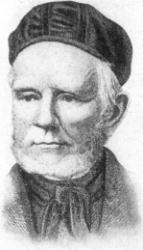
William B. Bradbury

1816 - 1868 Person Name: William Batchelder Bradbury Topics: Christian Life and Hope The Consummation: Judgment Composer of "OLIVE'S BROW" in Evangelical Lutheran hymnal William Batchelder Bradbury USA 1816-1868. Born at York, ME, he was raised on his father's farm, with rainy days spent in a shoe-shop, the custom in those days. He loved music and spent spare hours practicing any music he could find. In 1830 the family moved to Boston, where he first saw and heard an organ and piano, and other instruments. He became an organist at 15. He attended Dr. Lowell Mason's singing classes, and later sang in the Bowdoin Street church choir. Dr. Mason became a good friend. He made $100/yr playing the organ, and was still in Dr. Mason's choir. Dr. Mason gave him a chance to teach singing in Machias, ME, which he accepted. He returned to Boston the following year to marry Adra Esther Fessenden in 1838, then relocated to Saint John, New Brunswick. Where his efforts were not much appreciated, so he returned to Boston. He was offered charge of music and organ at the First Baptist Church of Brooklyn. That led to similar work at the Baptist Tabernacle, New York City, where he also started a singing class. That started singing schools in various parts of the city, and eventually resulted in music festivals, held at the Broadway Tabernacle, a prominent city event. He conducted a 1000 children choir there, which resulted in music being taught as regular study in public schools of the city. He began writing music and publishing it. In 1847 he went with his wife to Europe to study with some of the music masters in London and also Germany. He attended Mendelssohn funeral while there. He went to Switzerland before returning to the states, and upon returning, commenced teaching, conducting conventions, composing, and editing music books. In 1851, with his brother, Edward, he began manufacturring Bradbury pianos, which became popular. Also, he had a small office in one of his warehouses in New York and often went there to spend time in private devotions. As a professor, he edited 59 books of sacred and secular music, much of which he wrote. He attended the Presbyterian church in Bloomfield, NJ, for many years later in life. He contracted tuberculosis the last two years of his life. John Perry

Sydney H. Nicholson

1875 - 1947 Person Name: Sidney Hugo Nicholson Topics: Judgment Composer (descant) of "DARWALL" in Voices United Sydney H. Nicholson, (b. St. Marylebone, London, England, 1875; d. Ashford, Kent, England, 1947) was an organist and church music educator who greatly influenced English hymnody. Educated at Oxford's New College, the Royal College of Music in London, and in Frankfurt, Germany, he became organist at several famous cathedrals, including Westminster Abbey (1919-1928). Nicholson founded and administered the School of English Church Music at Chislehurst in 1927; this important institution, with branches throughout the English-speaking world, was renamed the Royal School of Church Music in 1945. Located in Canterbury after World War II, its headquarters were moved to Addington Palace, Croydon, in 1954. Nicholson was music adviser for the 1916 Supplement of Hymns Ancient and Modern and prepared the way for its 1950 edition. He wrote Church Music: a Practical Handbook (1920) and Quires and Places Where They Sing (1932) and composed operettas, anthems, and hymn tunes. In 1938 he was knighted for his contributions to church music. Bert Polman

Bernard, of Cluny

1100 - 1199 Person Name: Bernard of Morlas Topics: The Last Things Judgment Author of "The World Is Very Evil" in The Lutheran Hymnal Bernard of Morlaix, or of Cluny, for he is equally well known by both titles, was an Englishman by extraction, both his parents being natives of this country. He was b., however, in France very early in the 12th cent, at Morlaix, Bretagne. Little or nothing is known of his life, beyond the fact that he entered the Abbey of Cluny, of which at that time Peter the Venerable, who filled the post from 1122 to 1156, was the head. There, so far as we know, he spent his whole after-life, and there he probably died, though the exact date of his death, as well as of his birth is unrecorded. The Abbey of Cluny was at that period at the zenith of its wealth and fame. Its buildings, especially its church (which was unequalled by any in France); the services therein, renowned for the elaborate order of their ritual; and its community, the most numerous of any like institution, gave it a position and an influence, such as no other monastery, perhaps, ever reached. Everything about it was splendid, almost luxurious. It was amid such surroundings that Bernard of Cluny spent his leisure hours in composing that wondrous satire against the vices and follies of his age, which has supplied—and it is the only satire that ever did so—some of the most widely known and admired hymns to the Church of today. His poem De Contemptu Mundi remains as an imperishable monument of an author of whom we know little besides except his name, and that a name overshadowed in his own day and in ours by his more illustrious contemporary and namesake, the saintly Abbot of Clairvaux. The poem itself consists of about 3000 lines in a meter which is technically known as Leonini Cristati Trilices Dactylici, or more familiarly—to use Dr. Neale's description in his Mediaeval Hymns, p. 69—" it is a dactylic hexameter, divided into three parts, between which a caesura is inadmissible. The hexameter has a tailed rhyme, and feminine leonine rhyme between the two first clauses, thus :— " Tune nova gloria, pectora sobria, clarificabit: Solvit enigmata, veraque sabbata, continuabit, Patria luminis, inscia turbinis, inscia litis, Cive replebitur, amplificabitur Israelitis." The difficulty of writing at all, much more of writing a poem of such length in a metre of this description, will be as apparent to all readers of it, as it was to the writer himself, who attributes his successful accomplishment of his task entirely to the direct inspiration of the Spirit of God. "Non ego arroganter," he says in his preface, "sed omnino humiliter, et ob id audenter affirmaverim, quia nisi spiritus sapicntiae et intellectus mihi affuisset et afftuxisset, tarn difficili metro tarn longum opus con-texere non sustinuissem." As to the character of the metre, on the other hand, opinions have widely differed, for while Dr. Neale, in his Mediaeval Hymns, speaks of its "majestic sweetness," and in his preface to the Rhythm of Bernard de Morlaix on the Celestial Country, says that it seems to him "one of the loveliest of mediaeval measures;" Archbishop Trench in his Sac. Lat. Poetry, 1873. p. 311, says "it must be confessed that" these dactylic hexameters "present as unattractive a garb for poetry to wear as can well be imagined;" and, a few lines further on, notes "the awkwardness and repulsiveness of the metre." The truth perhaps lies between these two very opposite criticisms. Without seeking to claim for the metre all that Dr. Neale is willing to attribute to it, it may be fairly said to be admirably adapted for the purpose to which it has been applied by Bernard, whose awe-stricken self-abasement as he contemplates in the spirit of the publican, “who would not so much as lift up his eyes unto heaven," the joys and the glory of the celestial country, or sorrowfully reviews the vices of his age, or solemnly denounces God's judgments on the reprobate, it eloquently pourtrays. So much is this the case, that the prevailing sentiment of the poem, that, viz., of an awful apprehension of the joys of heaven, the enormity of sin, and the terrors of hell, seems almost wholly lost in such translations as that of Dr. Neale. Beautiful as they are as hymns, "Brief life is here our portion," "Jerusalem the Golden," and their companion extracts from this great work, are far too jubilant to give any idea of the prevailing tone of the original. (See Hora Novissima.) In the original poem of Bernard it should be noted that the same fault has been remarked by Archbishop Trench, Dean Stanley, and Dr. Neale, which may be given in the Archbishop's words as excusing at the same time both the want, which still exists, of a very close translation of any part, and of a complete and continuous rendering of the whole poem. "The poet," observes Archbishop Trench, "instead of advancing, eddies round and round his object, recurring again and again to that which he seemed thoroughly to have discussed and dismissed." Sac. Lat. Poetry, 1873, p. 311. On other grounds also, more especially the character of the vices which the author lashes, it is alike impossible to expect, and undesirable to obtain, a literal translation of the whole. We may well be content with what we already owe to it as additions to our stores of church-hymns. -John Julian, Dictionary of Hymnology (1907) ================== Bernard of Cluny, p. 137, i., is best described thus: his place of origin is quite uncertain. See the Catalogue of the Additional MSS. of the B. M. under No. 35091, where it is said that he was perhaps of Morlas in the Basses-Pyrenees, or of Morval in the Jura, but that there is nothing to connect him with Morlaix in Brittany. [Rev. James Mearns, M.A.] --John Julian, Dictionary of Hymnology, New Supplement (1907)

Iteke Prins

b. 1937 Topics: Judgment Composer of "SING" in Psalms for All Seasons

Thomas Kingo

1634 - 1703 Person Name: Kingo Topics: Judgment Author of "Min Sjæl, vær lystig, glad og fro" in Salmebog for Lutherske Kristne i Amerika

Lowell Mason

1792 - 1872 Topics: Judgment Day; Royalty of Christ Judgment the Prerogative of Composer of "BOYLSTON" in The Psalter Dr. Lowell Mason (the degree was conferred by the University of New York) is justly called the father of American church music; and by his labors were founded the germinating principles of national musical intelligence and knowledge, which afforded a soil upon which all higher musical culture has been founded. To him we owe some of our best ideas in religious church music, elementary musical education, music in the schools, the popularization of classical chorus singing, and the art of teaching music upon the Inductive or Pestalozzian plan. More than that, we owe him no small share of the respect which the profession of music enjoys at the present time as contrasted with the contempt in which it was held a century or more ago. In fact, the entire art of music, as now understood and practiced in America, has derived advantage from the work of this great man. Lowell Mason was born in Medfield, Mass., January 8, 1792. From childhood he had manifested an intense love for music, and had devoted all his spare time and effort to improving himself according to such opportunities as were available to him. At the age of twenty he found himself filling a clerkship in a banking house in Savannah, Ga. Here he lost no opportunity of gratifying his passion for musical advancement, and was fortunate to meet for the first time a thoroughly qualified instructor, in the person of F. L. Abel. Applying his spare hours assiduously to the cultivation of the pursuit to which his passion inclined him, he soon acquired a proficiency that enabled him to enter the field of original composition, and his first work of this kind was embodied in the compilation of a collection of church music, which contained many of his own compositions. The manuscript was offered unavailingly to publishers in Philadelphia and in Boston. Fortunately for our musical advancement it finally secured the attention of the Boston Handel and Haydn Society, and by its committee was submitted to Dr. G. K. Jackson, the severest critic in Boston. Dr. Jackson approved most heartily of the work, and added a few of his own compositions to it. Thus enlarged, it was finally published in 1822 as The Handel and Haydn Society Collection of Church Music. Mason's name was omitted from the publication at his own request, which he thus explains, "I was then a bank officer in Savannah, and did not wish to be known as a musical man, as I had not the least thought of ever making music a profession." President Winchester, of the Handel and Haydn Society, sold the copyright for the young man. Mr. Mason went back to Savannah with probably $500 in his pocket as the preliminary result of his Boston visit. The book soon sprang into universal popularity, being at once adopted by the singing schools of New England, and through this means entering into the church choirs, to whom it opened up a higher field of harmonic beauty. Its career of success ran through some seventeen editions. On realizing this success, Mason determined to accept an invitation to come to Boston and enter upon a musical career. This was in 1826. He was made an honorary member of the Handel and Haydn Society, but declined to accept this, and entered the ranks as an active member. He had been invited to come to Boston by President Winchester and other musical friends and was guaranteed an income of $2,000 a year. He was also appointed, by the influence of these friends, director of music at the Hanover, Green, and Park Street churches, to alternate six months with each congregation. Finally he made a permanent arrangement with the Bowdoin Street Church, and gave up the guarantee, but again friendly influence stepped in and procured for him the position of teller at the American Bank. In 1827 Lowell Mason became president and conductor of the Handel and Haydn Society. It was the beginning of a career that was to win for him as has been already stated the title of "The Father of American Church Music." Although this may seem rather a bold claim it is not too much under the circumstances. Mr. Mason might have been in the average ranks of musicianship had he lived in Europe; in America he was well in advance of his surroundings. It was not too high praise (in spite of Mason's very simple style) when Dr. Jackson wrote of his song collection: "It is much the best book I have seen published in this country, and I do not hesitate to give it my most decided approbation," or that the great contrapuntist, Hauptmann, should say the harmonies of the tunes were dignified and churchlike and that the counterpoint was good, plain, singable and melodious. Charles C. Perkins gives a few of the reasons why Lowell Mason was the very man to lead American music as it then existed. He says, "First and foremost, he was not so very much superior to the members as to be unreasonably impatient at their shortcomings. Second, he was a born teacher, who, by hard work, had fitted himself to give instruction in singing. Third, he was one of themselves, a plain, self-made man, who could understand them and be understood of them." The personality of Dr. Mason was of great use to the art and appreciation of music in this country. He was of strong mind, dignified manners, sensitive, yet sweet and engaging. Prof. Horace Mann, one of the great educators of that day, said he would walk fifty miles to see and hear Mr. Mason teach if he could not otherwise have that advantage. Dr. Mason visited a number of the music schools in Europe, studied their methods, and incorporated the best things in his own work. He founded the Boston Academy of Music. The aim of this institution was to reach the masses and introduce music into the public schools. Dr. Mason resided in Boston from 1826 to 1851, when he removed to New York. Not only Boston benefited directly by this enthusiastic teacher's instruction, but he was constantly traveling to other societies in distant cities and helping their work. He had a notable class at North Reading, Mass., and he went in his later years as far as Rochester, where he trained a chorus of five hundred voices, many of them teachers, and some of them coming long distances to study under him. Before 1810 he had developed his idea of "Teachers' Conventions," and, as in these he had representatives from different states, he made musical missionaries for almost the entire country. He left behind him no less than fifty volumes of musical collections, instruction books, and manuals. As a composer of solid, enduring church music. Dr. Mason was one of the most successful this country has introduced. He was a deeply pious man, and was a communicant of the Presbyterian Church. Dr. Mason in 1817 married Miss Abigail Gregory, of Leesborough, Mass. The family consisted of four sons, Daniel Gregory, Lowell, William and Henry. The two former founded the publishing house of Mason Bros., dissolved by the death of the former in 1869. Lowell and Henry were the founders of the great organ manufacturer of Mason & Hamlin. Dr. William Mason was one of the most eminent musicians that America has yet produced. Dr. Lowell Mason died at "Silverspring," a beautiful residence on the side of Orange Mountain, New Jersey, August 11, 1872, bequeathing his great musical library, much of which had been collected abroad, to Yale College. --Hall, J. H. (c1914). Biography of Gospel Song and Hymn Writers. New York: Fleming H. Revell Company.

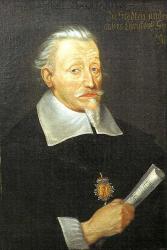
Heinrich Schütz

1585 - 1672 Topics: Judgment Composer of "WOHL DENEN, DIE DA WANDELN" in Glory to God Heinrich Schütz (baptized Oct. 9, 1585-1672) was the greatest German composer of the seventeenth century and the first to reach international prominence. His influence was felt for more than two centuries after his death. In 1598, after hearing the young Henrich sing, the Landgrave Moritz of Hessen-Kassel began a campaign to have the boy study at Kassel. In 1599, Christoph Schütz took his son to the landgrave’s seat, where he served as a choirboy and pursued his education showing particular facility in Greek, Latin, and Frence. After he lost his treble voice, he set out for the University of Marburg, where he studied law. But under the sponsorship of the landgrave, Heinrich went to Venice (1609) and studied with Giovanni Gabrieli until Gabrieli’s death in 1612. In 1613 he returned to Germany, once again studying law while serving as organist to the landgrave. He was lent to Johann Georg I of Saxony (1614) and subsequently became director of the chapel, a position he held the rest of his life. The untimely death of his wife after six years of marriage (1625) led him to devote himself to the composition of church music. After several petitions Schütz was granted leave to study with Claudio Monteverdi and once again set out for Venice. For much of his life the Thirty Years’ War obstructed his work, and he spent time moving from court to court in Europe, finally settling in Dresden in 1641, where he died. --The Presbyterian Hymnal Companion, 1993

F. E. Belden

1858 - 1945 Topics: Invitation and Repentance The Judgment Arranger of "[At the feast of Belshazzar and a thousand of his lords]" in Christ in Song Belden was born in Battle Creek, Michigan in 1858. He began writing music in his late teenage years after moving to California with his family. For health reasons he later moved to Colorado. He returned to Battle Creek with his wife in the early 1880s, and there he became involved in Adventist Church publishing. F. E. Belden wrote many hymn tunes, gospel songs, and related texts in the early years of the Seventh-day Adventist Church. Belden was able to rapidly write both music and poetry together which enabled him to write a song to fit a sermon while it was still being delivered. He also wrote songs for evang­el­ist Bil­ly Sun­day. Though Belden’s later years were marred by misunderstandings with the church leadership over his royalties, he did donate his papers and manuscripts to the church’s seminary at his death. He died on December 2, 1945 in Battle Creek, Michigan. N.N., Hymnary. Source: http://www.hymntime.com/tch/bio/b/e/l/belden_fe.htm

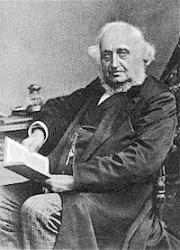
George J. Elvey

1816 - 1893 Topics: Jesus Christ His Second Coming and Judgment Composer of "DIADEMATA" in Trinity Hymnal (Rev. ed.) George Job Elvey (b. Canterbury, England, 1816; d. Windlesham, Surrey, England, 1893) As a young boy, Elvey was a chorister in Canterbury Cathedral. Living and studying with his brother Stephen, he was educated at Oxford and at the Royal Academy of Music. At age nineteen Elvey became organist and master of the boys' choir at St. George Chapel, Windsor, where he remained until his retirement in 1882. He was frequently called upon to provide music for royal ceremonies such as Princess Louise's wedding in 1871 (after which he was knighted). Elvey also composed hymn tunes, anthems, oratorios, and service music. Bert Polman

Pages


Export as CSV
It looks like you are using an ad-blocker. Ad revenue helps keep us running. Please consider white-listing Hymnary.org or getting Hymnary Pro to eliminate ads entirely and help support Hymnary.org.