You help make Hymnary.org possible. More than 10 million people from 200+ countries found hymns, liturgical resources and encouragement on Hymnary.org in 2025, including you. Every visit affirms the global impact of this ministry.

If Hymnary has been meaningful to you this year, would you take a moment today to help sustain it? A gift of any size—paired with a note of encouragement if you wish—directly supports the server costs, research work and curation that keep this resource freely available to the world.

Give securely online today, or mail a check to:
Hymnary.org
Calvin University
3201 Burton Street SE
Grand Rapids, MI 49546

Thank you for your partnership, and may the hope of Advent fill your heart.

Person Results

Topics:pastor
In:person

Planning worship? Check out our sister site, ZeteoSearch.org, for 20+ additional resources related to your search.
Showing 41 - 50 of 365Results Per Page: 102050

Anonymous

Person Name: Anon. Topics: Rites of the Church Pastoral Care of the Sick; Pastor Translator of "My Shepherd, you Supply My Need (Señor, Tú Eres Mi Pastor)" in Oramos Cantando = We Pray In Song In some hymnals, the editors noted that a hymn's author is unknown to them, and so this artificial "person" entry is used to reflect that fact. Obviously, the hymns attributed to "Author Unknown" "Unknown" or "Anonymous" could have been written by many people over a span of many centuries.

Daniel March

1816 - 1909 Person Name: Rev. Daniel March, 1816- Topics: Pastor Helping your Author of "Hark! the voice of Jesus calling" in The Sunday School Hymnal March, Daniel, D.D., an American Congregational minister, b. July 21, 1816, has published Night Scenes in the Bible, and other works. His hymn "Hark, the voice of Jesus crying [calling]. Who will go," &c. (Missions), is given in the American Methodist Episcopal Hymnal, 1878, in 2 stanzas; in Sankey's Sacred Songs & Solos, 1878, in 6 stanzas; and in the Scottish Hymnal 1884, in 5 stanzas; in each case of 8 lines. It was written in 1863. (See Nutter's Hymn Studies, 1884, p. 236.) --John Julian, Dictionary of Hymnology, Appendix, Part II (1907) =============== March, D., p. 1578, ii. The following details concerning Dr. March's hymn, "Hark ! the voice of Jesus crying," have been furnished us by himself:— "It was written at the impulse of the moment to follow a sermon I was to preach in Clinton St. Church to the Philadelphia Christian Association on the text Is. vi. 8. That was some time in 1868." The original text in full is in The Hymnal, (Presb.), Phila., 1895, No. 361. Dr. March declines to accept the interpolations which have been made in this hymn. We must note also that the incident given in Brownlie's Hymns and Hymnwriters of the Church Hymnary (Scottish), p. 303, relative to this hymn and President Lincoln, is incorrect. It relates to Mrs. E. Gates's " If you cannot on the ocean," p. 1565, i. 5. [Rev. L. F. Benson, D.D.] --John Julian, Dictionary of Hymnology, New Supplement (1907)

St. Bernard of Clairvaux

1090 - 1153 Person Name: St. Bernard of Clairvaux, 1091-1153 Topics: Pastor Author (attributed to) of "O Sacred Head, Surrounded (Oh Rostro Ensangrentado)" in Oramos Cantando = We Pray In Song Bernard of Clairvaux, saint, abbot, and doctor, fills one of the most conspicuous positions in the history of the middle ages. His father, Tecelin, or Tesselin, a knight of great bravery, was the friend and vassal of the Duke of Burgundy. Bernard was born at his father's castle on the eminence of Les Fontaines, near Dijon, in Burgundy, in 1091. He was educated at Chatillon, where he was distinguished for his studious and meditative habits. The world, it would be thought, would have had overpowering attractions for a youth who, like Bernard, had all the advantages that high birth, great personal beauty, graceful manners, and irresistible influence could give, but, strengthened in the resolve by night visions of his mother (who had died in 1105), he chose a life of asceticism, and became a monk. In company with an uncle and two of his brothers, who had been won over by his entreaties, he entered the monastery of Citeaux, the first Cistercian foundation, in 1113. Two years later he was sent forth, at the head of twelve monks, from the rapidly increasing and overcrowded abbey, to found a daughter institution, which in spite of difficulties and privations which would have daunted less determined men, they succeeded in doing, in the Valley of Wormwood, about four miles from the Abbey of La Ferté—itself an earlier swarm from the same parent hive—on the Aube. On the death of Pope Honorius II., in 1130, the Sacred College was rent by factions, one of which elected Gregory of St. Angelo, who took the title of Innocent II., while another elected Peter Leonis, under that of Anacletua II. Innocent fled to France, and the question as to whom the allegiance of the King, Louie VI., and the French bishops was due was left by them for Bernard to decide. At a council held at Etampes, Bernard gave judgment in favour of Innocent. Throwing himself into the question with all the ardour of a vehement partisan, he won over both Henry I., the English king, and Lothair, the German emperor, to support the same cause, and then, in 1133, accompanied Innocent II., who was supported by Lothair and his army, to Italy and to Rome. When Lothair withdrew, Innocent retired to Pisa, and Bernard for awhile to his abbey of Clairvaux. It was not until after the death of Anacletus, the antipope, in January, 1138, and the resignation of his successor, the cardinal-priest Gregory, Victor II., that Innocent II., who had returned to Rome with Bernard, was universally acknowledged Pope, a result to which no one had so greatly contributed as the Abbot of Clairvaux. The influence of the latter now became paramount in the Church, as was proved at the Lateran Council of 1139, the largest council ever collected together, where the decrees in every line displayed the work of his master-hand. After having devoted four years to the service of the Pope, Bernard, early in 1135, returned to Clairvaux. In 1137 he was again at Rome, impetuous and determined as ever, denouncing the election of a Cluniac instead of a Clairvaux monk to the see of Langres in France, and in high controversy in consequence with Peter, the gentle Abbot of Cluny, and the Archbishop of Lyons. The question was settled by the deposition by the Pope of the Cluniac and the elevation of a Clairvaux monk (Godfrey, a kinsman of St. Bernard) into his place. In 1143, Bernard raised an almost similar question as to the election of St. William to the see of York, which was settled much after the same fashion, the deposition, after a time, if only for a time, of William, and the intrusion of another Clairvaux monk, Henry Murdac, or Murduch, into the archiepiccopal see. Meantime between these two dates—in 1140—the condemnation of Peter Abilaid and his tenets, in which matter Bernard appeared personally as prosecutor, took place at a council held at Sens. Abelard, condemned at Sens, appealed to Rome, and, resting awhile on his way thither, at Cluny, where Peter still presided as Abbot, died there in 1142. St. Bernard was next called upon to exercise his unrivalled powers of persuasion in a very different cause. Controversy over, he preached a crusade. The summer of 1146 was spent by him in traversing France to rouse the people to engage in the second crusade; the autumn with a like object in Germany. In both countries the effect of his appearance and eloquence was marvellous, almost miraculous. The population seemed to rise en masse, and take up the cross. In 1147 the expedition started, a vast horde, of which probably not a tenth ever reached Palestine. It proved a complete failure, and a miserable remnant shared the flight of their leaders, the Emperor Conrad, and Louis, King of France, and returned home, defeated and disgraced. The blame was thrown upon Bernard, and his apology for his part in the matter is extant. He was not, however, for long to bear up against reproach; he died in the 63rd year of his age, in 1153, weary of the world and glad to be at rest. With the works of St. Bernard, the best ed. of which was pub. by Mabillon at Paris in the early part of the 18th cent. (1719), we are not concerned here, except as regards his contributions, few and far between as they are, to the stores of Latin hymnology. There has been so much doubt thrown upon the authorship of the hymns which usually go by his name,—notably by his editor, Mabillon himself,—that it is impossible to claim any of them as having been certainly written by him; but Archbishop Trench, than whom we have no greater modern authority on such a point, is satisfied that the attribution of them all, except the "Cur mundus militat," to St. Bernard is correct. "If he did not write," the Archbishop says, "it is not easy to guess who could have written them; and indeed they bear profoundly the stamp of his mind, being only inferior in beauty to his prose." The hymns by which St. Bernard is best known as a writer of sacred poetry are: (1.) "Jesu duicis memoria," a long poem on the " Name of Jesus"—known as the "Jubilus of St. Bernard," and among mediaeval writers as the " Rosy Hymn." It is, perhaps, the best specimen of what Neale describes as the "subjective loveliness " of its author's compositions. (2.) "Salve mundi Salutore," an address to the various limbs of Christ on the cross. It consists of 350 lines, 50 lines being addressed to each. (3.) "Laetabundus, exultet fidelis chorus: Alleluia." This sequence was in use all over Europe. (4.) "Cum sit omnis homo foenum." (5.) " Ut jucundas cervus undas." A poem of 68 lines, and well known, is claimed for St. Bernard by Hommey in his Supplementum Patrum, Paris, 1686, p. 165, but on what Archbishop Trench, who quotes it at length, (Sac. Lat. Poetry, p. 242,) deems " grounds entirely insufficient." (6.) " Eheu, Eheu, mundi vita," or " Heu, Heu, mala mundi vita." A poem of nearly 400 lines, is sometimes claimed for St. Bernard, but according to Trench, “on no authority whatever." (7.) “O miranda vanitas." This is included in Mabillon's ed. of St. Bernard's Works. It is also attributed to him by Rambach, vol. i. p. 279. Many other hymns and sequences are attributed to St. Bernard. Trench speaks of a " general ascription to him of any poems of merit belonging to that period whereof the authorship was uncertain." Hymns, translated from, or founded on, St. Bernard's, will be found in almost every hymnal of the day, details of which, together with many others not in common use, will be found under the foregoing Latin first lines. -John Julian, Dictionary of Hymnology (1907) See also in: Hymn Writers of the Church

William Kethe

? - 1594 Person Name: William Kethe, d. c. 1592 Topics: Pastor Author of "All People That on Earth Do Dwell (Oh Pueblos Todos Alabad)" in Oramos Cantando = We Pray In Song William Kethe (b. Scotland [?], d. Dorset England, c. 1594). Although both the time and place of Kethe's birth and death are unknown, scholars think he was a Scotsman. A Protestant, he fled to the continent during Queen Mary's persecution in the late 1550s. He lived in Geneva for some time but traveled to Basel and Strasbourg to maintain contact with other English refugees. Kethe is thought to be one of the scholars who translated and published the English-language Geneva Bible (1560), a version favored over the King James Bible by the Pilgrim fathers. The twenty-five psalm versifications Kethe prepared for the Anglo-Genevan Psalter of 1561 were also adopted into the Scottish Psalter of 1565. His versification of Psalm 100 (All People that on Earth do Dwell) is the only one that found its way into modern psalmody. Bert Polman ======================== Kethe, William, is said by Thomas Warton in his History of English Poetry, and by John Strype in his Annals of the Reformation, to have been a Scotsman. Where he was born, or whether he held any preferment in England in the time of Edward VI., we have been unable to discover. In the Brieff discours off the troubles begonne at Franckford, 1575, he is mentioned as in exile at Frankfurt in 1555, at Geneva in 1557; as being sent on a mission to the exiles in Basel, Strassburg, &c, in 1558; and as returning with their answers to Geneva in 1559. Whether he was one of those left behind in 1559 to "finishe the bible, and the psalmes bothe in meeter and prose," does not appear. The Discours further mentions him as being with the Earl of Warwick and the Queen's forces at Newhaven [Havre] in 1563, and in the north in 1569. John Hutchins in his County history of Dorset, 1774, vol. ii. p. 316, says that he was instituted in 1561 as Rector of Childe Okeford, near Blandford. But as there were two Rectors and only one church, leave of absence might easily be extended. His connection with Okeford seems to have ceased by death or otherwise about 1593. The Rev. Sir Talbot H. B. Baker, Bart., of Ranston, Blandford, who very kindly made researches on the spot, has informed me that the Registers at Childe Okeford begin with 1652-53, that the copies kept in Blandford date only from 1732 (the earlier having probably perished in the great fire there in 1731), that no will can be found in the district Probate Court, and that no monument or tablet is now to be found at Childe Okeford. By a communication to me from the Diocesan Registrar of Bristol, it appears that in a book professing to contain a list of Presentations deposited in the Consistory Court, Kethe is said to have been presented in 1565 by Henry Capel, the Patron of Childe Okeford Inferior. In the 1813 edition of Hutchins, vol. iii. pp. 355-6, William Watkinson is said to have been presented to this moiety by Arthur Capel in 1593. Twenty-five Psalm versions by Kethe are included in the Anglo-Genevan Psalter of 1561, viz. Ps. 27, 36, 47, 54, 58, 62, 70, 85, 88, 90, 91, 94, 100, 101, 104, 107, 111, 112, 113, 122, 125, 126, 134, 138, 142,—the whole of which were adopted in the Scottish Psalter of 1564-65. Only nine, viz. Ps. 104, 107, 111, 112, 113, 122, 125, 126, 134, were included in the English Psalter of 1562; Ps. 100 being however added in 1565. Being mostly in peculiar metres, only one, Ps. 100, was transferred to the Scottish Psalter of 1650. The version of Ps. 104, "My soul, praise the Lord," is found, in a greatly altered form, in some modern hymnals. Warton calls him ”a Scotch divine, no unready rhymer," says he had seen a moralisation of some of Ovid by him, and also mentions verses by him prefixed to a pamphlet by Christopher Goodman, printed at Geneva in 1558; a version of Ps. 93 added to Knox's Appellation to the Scottish Bishops, also printed at Geneva in 1558; and an anti-papal ballad, "Tye the mare Tom-boy." A sermon he preached before the Sessions at Blandford on Jan. 17, 1571, was printed by John Daye in 1571 (preface dated Childe Okeford, Jan. 29,157?), and dedicated to Ambrose Earl of Warwick. [Rev James Mearns, M.A]. -- John Julian, Dictionary of Hymnology (1907) ==================== Kethe, William, p. 624, i., line 30. The version which Warton describes as of Psalm 93 is really of Psalm 94, and is that noted under Scottish Hymnody, p. 1022, ii., as the version of Psalms 94 by W. Kethe. --John Julian, Dictionary of Hymnology, Appendix, Part II (1907)

Thomas Ken

1637 - 1711 Person Name: Thomas Ken, 1637-1711 Topics: Pastor Author (Doxology) of "All People That on Earth Do Dwell (Oh Pueblos Todos Alabad)" in Oramos Cantando = We Pray In Song Thomas Ken (b. Berkampstead, Hertfordshire, England, 1637; d. Longleat, Wiltshire, England, 1711) studied at Winchester College, Hart Hall, and New College, Oxford, England. Ordained in the Church of England in 1662, he served variously as pastor, chaplain at Winchester College (1669-1679), chaplain to Princess (later Queen) Mary in The Hague, and bishop of Bath and Wells (1685-1691). He was a man of conscience and independent mind who did not shirk from confrontations with royalty. When King Charles II came to visit Winchester, he took along his mistress, the famous actress Nell Gwynne. Ken was asked to provide lodging for her. The story is told that Ken quickly declared his house under repair and had a builder take off the roof! He later was dismissed from the court at The Hague when he protested a case of immorality. Then, later in 1688, Bishop Ken refused to read King James II's Declaration of Indulgence in the churches, which granted greater religious freedom in England, and he was briefly imprisoned in the Tower of London. A few years later he refused to swear allegiance to King William, and he lost his bishopric. Ken wrote many hymns, which were published posthumously in 1721 and repub­lished in 1868 as Bishop Ken's Christian Year, or Hymns and Poems for the Holy Days and Festivals of the Church. But he is best known for his morning, evening, and midnight hymns, each of which have as their final stanza the famous doxology “Praise God, from Whom All Blessings Flow.” Bert Polman =============== Ken, Thomas, D.D. The bare details of Bishop Ken's life, when summarised, produce these results:—-Born at Berkhampstead, July, 1637; Scholar of Winchester, 1651; Fellow of New College, Oxford, 1657; B.A., 1661; Rector of Little Easton, 1663; Fellow of Winchester, 1666; Rector of Brighstone, 1667; Rector of Woodhay and Prebendary of Winchester, 1669; Chaplain to the Princess Mary at the Hague, 1679; returns to Winchester, 1680; Bishop of Bath and Wells, 1685; imprisoned in the Tower, 1688; deprived, 1691; died at Longleat, March 19, 1711. The parents of Ken both died during his childhood, and he grew up under the guardianship of Izaak Walton, who had married Ken's elder sister, Ann. The dominant Presbyterianism of Winchester and Oxford did not shake the firm attachment to the English Church, which such a home had instilled. His life until the renewal of his connection with Winchester, through his fellowship, his chaplaincy to Morley (Walton's staunch friend, then bishop of Winchester), and his prebend in the Cathedral, calls for no special remark here. But this second association with Winchester, there seems little doubt, originated his three well-known hymns. In 1674 he published A Manual of Prayers for the Use of the Scholars of Winchester College, and reference is made in this book to three hymns, for "Morning," "Midnight," and "Evening," the scholars being recommended to use them. It can scarcely be questioned that the Morning, Evening, and Midnight hymns, published in the 1695 edition of The Manual, are the ones referred to. He used to sing these hymns to the viol or spinet, but the tunes he used are unknown. He left Winchester for a short time to be chaplain to the Princess Mary at the Hague, but was dismissed for his faithful remonstrance against a case of immorality at the Court, and returned to Winchester. A similar act of faithfulness at Winchester singularly enough won him his bishopric. He stoutly refused Nell Gwynne the use of his house, when Charles II. came to Winchester, and the easy king, either from humour or respect for his honesty, gave him not long afterwards the bishopric of Bath and Wells. Among the many acts of piety and munificence that characterised his tenure of the see, his ministration to the prisoners and sufferers after the battle of Sedgmoor and the Bloody Assize are conspicuous. He interceded for them with the king, and retrenched his own state to assist them. He attended Monmouth on the scaffold. James II. pronounced him the most eloquent preacher among the Protestants of his time; the judgment of Charles II. appears from his pithy saying that he would go and hear Ken "tell him of his faults." Among the faithful words of the bishops at Charles's death-bed, none were so noble in their faithfulness as his. He was one of the Seven Bishops who refused to read the Declaration of Indulgence, and were imprisoned in the Tower by James for their refusal, but triumphantly acquitted on their trial. At the accession of William III, he refused, after some doubt on the subject, to take the oaths, and was at length (1691) deprived of his see. His charities had left him at this time only seven hundred pounds, and his library, as a means of subsistence; but he received hospitality for his remaining years with his friend Lord Weymouth, at Longleat. The see of Bath and Wells was again offered him, but in vain, at the death of his successor, Bishop Kidder. He survived all the deprived prelates. His attitude as a nonjuror was remarkable for its conciliatory spirit. The saintliness of Ken's character, its combination of boldness, gentleness, modesty and love, has been universally recognised. The verdict of Macaulay is that it approached "as near as human infirmity permits to the ideal perfection of Christian virtue." The principal work of Ken's that remains is that on the Catechism, entitled The Practice of Divine Love. His poetical works were published after his death, in four volumes. Among the contents are, the Hymns for the Festivals, which are said to have suggested to Keble the idea of The Christian Year; the Anodynes against the acute physical sufferings of his closing years; and the Preparatives for Death. Although many passages in them are full of tender devotion, they cannot rank either in style or strength with the three great hymns written at Winchester. The best biographies of Ken are he Life of Ken by a Layman, and, specially, his Life, by the Very Rev. E. H. Plumptre, Dean of Wells, 1888. [Rev. H. Leigh Bennett, M.A.] Bishop Ken is known to hymnody as the author of the Morning, Evening, and Midnight Hymns, the first and second of which at least have found a place in almost every English collection for the last 150 years. The general history of these hymns, as we now know it, is as follows:— 1. In 1674 Ken published his Manual of Prayers for Winchester Scholars as A Manual of Prayers For the Use of the Scholars of Winchester College [here arms of William of Wykeham within a border]. London, Printed for John Martyn, 1674, 12 mo, pp. 69. From a passage in this work it may fairly be inferred that the author had already composed hymns for the use of the scholars. He says:— “Be sure to sing the Morning and Evening Hymn in your chamber devoutly, remembering that the Psalmist, upon happy experience, assures you that it is a good thing to tell of the loving kindness of the Lord early in the morning and of his truth in the night season." Two hymns only seem to be here referred to, but the expression "night season" may include both the Evening and Midnight hymns, and the latter would be only used occasionally. The hymns are not given in the Manual of 1674, or succeeding editions, until that of 1695, when the three hymns are added as an Appendix. The title of this edition is:— A Manual of Prayers For the Use of the Scholars of Winchester College. And all other Devout Christians. To which is added three Hymns for Morning, Evening, and Midnight; not in former Editions: By the Same Author. Newly Revised. London, Printed for Ctarles Brome at the Ovn, at the West end of St. Paul's Church, 1695. 2. In 1704 Richard Smith, a London publisher, issued a book similar in appearance to the Manual, and entitled Conference between the Soul and Body concerning the Present and Future State. This edition contained a strong recommendation by Dodwell, an intimate friend of Ken, but no hymns. To the 2nd edition, however (1705), were added two (Morning and Evening) hymns, with Ken's name appended, but containing two additional verses to the Evening hymn, and differing in several other respects from the text of the Manual. Thereupon Charles Brome, to whom the copyright of the latter belonged, issued a new edition with an Advertisement stating that Ken "absolutely disowned" the hymns appended to the Conference, "as being very false and uncorrect," and that the genuine text was that given in the Manual only. Brome's Advertisementreads:— "Advertisement—-Whereas at the end of a Book lately Publish'd call'd, 'A Conference between the Soul and Body,' there are some Hymns said to be writ by Bishop Ken, who absolutely disowns them, as being very false and uncorrect; but the Genuine ones are to be had only of Charles Brome, Bookseller, whose just Propriety the Original copy is." 3. In 1709, however, the spurious hymns were again published as Ken's in a book entitled A New Year's Gift: in Two Parts: to which is added A Morning and Evening Hymn. By Thomas, late L. B. of Bath and Wells. The Third Edition with additions. London Printed by W. Olney. 1709. Brome met this, as before, with a new edition of the Manual, in which the Advertisement of 1705 as above was repeated, but the text of the hymns considerably revised. This revised text was followed in all subsequent editions of the Manual, but as, until lately, it was thought to have appeared first in the edition of 1712, published soon after Ken's death, its genuineness was suspected by many. The question as it then stood was fully discussed in an able letter by Sir Roundell Palmer (Lord Selborne), prefixed to the reprint of Ken's Hymns, published by D. Sedgwick in 1864. Since that time the discovery in the Bodleian Library of a copy of the Manual of 1709 shows that the revision was made in that year, and confirms the conclusion at which Lord Selborne had previously arrived, that it was Ken's genuine revised text. The title of this edition is:— A Manual of Prayers For the Use of the Scholars of Winchester College, And all other Devout Christians, To which is added three Hymns for Morning, Evening, and Midnight; By the same Author. Newly Revised. London: Printed for Charles Brome at the Gun, the West end of St. Paul's Church, 1709. The Advertisement before referred to is at p. 130. The alterations of 1709 may therefore be accepted as being made by Ken himself, and it seems not improbable that the revision was suggested by the recent republication of the spurious text in spite of Brome's disclaimer in 1705, and possibly by adverse criticism of the original text. Lord Selborne pointed out in his Letter that Ken altered a passage in his Practice of Divine Love (1st ed., 1685) because "some Roman Catholic writer professed to discover the doctrine of Transubstantiation" therein. This alteration was made in the 2nd ed., 1686, and explained in the Preface to have been made "to prevent all misunderstanding for the future." A passage also in the Manual—-"Help me, then, ye blessed Hosts of Heaven, to celebrate that unknown sorrow, &c." — was claimed in a Roman Catholic pamphlet as a passage which taught the scholars of Winchester to invocate the whole Court of Heaven." This passage Ken altered "to prevent all future misinterpretations," and prefixed an Advertisement to the 1687 edition of the Manual explaining why he had done so. In looking through the texts of the three hymns for 1695, and 1709, and especially at the doxologies, and at st. x. and xi. in the Evening Hymn, "You my Blest Guardian, whilst I sleep," &c. (1695); and "O may my Guardian while I sleep," &c. (1709), do we not see a good and sufficient reason to account for the revision of the hymns? 4. With regard to the text given in the Conference, Lord Selborne observes that it is not improbable that alterations and various readings, originating with Ken himself, might have obtained private circulation among his friends, long before he had made up his own mind to give them to the public; a suggestion which may possibly help to explain the fact, that a writer, patronised by Dodwell, was misled into believing (for such a writer ought not lightly to be accused of a wilful fraud) that the text, published in the Conference in Ken's name was really from his hand. That Ken occasionally altered passages in his writings when for any reason he considered it necessary, is certain ; and there can be little doubt that the text of the three Winchester hymns was more or less unsettled before 1695. At any rate, before their first appearance in that year in the Manual the Evening hymn had found its way into print. It was published in ”Harmonia Sacra; or Divine Hymns and Dialogues .. . Composed by the Best Masters . . . The Words by several Learned and Pious Persons. The Second Book," London, Henry Playford, 1693. The first volume, of this work appeared in 1688, and was dedicated to Ken. It is not improbable therefore that Playford, when collecting materials for his second volume, obtained the words of the Evening Hymn directly from the author. The hymn was set by Clarke as a Cantata for a solo voice, with the Doxology as a chorus in four parts. 5. The various Morning Hymns by Ken which have appeared in the Appendix to Tate and Brady's Version of the Psalms, and in most hymnals published during the past 150 years are compilations from this hymn, with, in many instances, slight alterations of the text either of 1695 or of that of 1709. In some modern hymnals the difficulty of the length of the hymn is overcome by dividing it into two or more parts. A reference to the text given in Harmonia Sacra shows that the change from "Glory" to "All praise" in line 1. is only a restoration of the original reading; and without being aware of this fact, Lord Selborne points out that the expression "All praise" is remarkably consistent with Ken's frequent use of it in other writings. The same alteration was made in 1709 in the Morning Hymn, stanza 9, and in the Midnight Hymn, st. 7; while at the same time "Glory" in the Morning Hymn, st. v. 1. 4, is changed to "High Praise." As in the case of "Awake my soul," this hymn has been divided, subdivided, and rearranged in a great many ways during the last 150 years. In one form or another it will be found in most hymnals published during that period. Like the Morning and Evening Hymns, this hymn has been divided and rearranged in various ways, and is found in one form or another in most hymnals published during the last 150 years. 6. The various centos from these hymns which are in common use in English-speaking countries are:— i. From the Morning Hymn. 1. All praise to Thee Who safe hast kept. 2. Awake, my soul, and with the sun. 3. Glory to Thee Who safe hast kept. 4. I wake, I wake, ye heavenly choirs. 5. I would not wake nor rise again. 6. Wake, and lift up thyself, my heart. ii. From the Evening Hymn. 1. All praise to Thee, my God, this night. 2. Glory to Thee, my God, this night. iii. From the Midnight Hymn. 1. All praise to Thee in light array'd. 2. Glory to Thee in light array'd. 3. Lord, now my sleep doth me forsake. 4. My God, now [when] I from sleep awake. 7. Bishop Ken has not escaped the not unusual charge of plagiarism, in connection with his celebrated hymns. Charges of this kind have been made from time to time, the nature and value of which we will endeavour to summarize. These are: (1) he borrowed from Sir Thomas Browne; (2) he did the same from Thomas Flatman; (3) he did neither, but Paraphrased from the Latin. 8. The title of Bishop Ken's hymns on the Festivals of the Church, published posthumously in 1721, is: Hymns for all the Festivals of the Year. They were republished by Pickering as: Bishop Ken's Christian Year or Hymns and Poems for the Holy Days and Festivals of the Church, Lond., 1868. From this work the following centos have come into common use:— 1. All human succours now are flown. Visitation of the Sick. 2. I had one only thing to do. A New Creature. 3. O purify my soul from stain. 10th Sunday after Trinity, or A Prayer for Purity. 4. 0 Lord, when near the appointed hour. Holy Communion. 5. Unction the Christian name implies. Confirmation. [George Arthur Crawford, M.A.] -- John Julian, Dictionary of Hymnology (1907) ======================== Ken, T. , p. 422, i. Since this article was electrotyped the following details concerning Bishop Ken's three hymns have come to light:—In a Catalogue of the Society for Promoting Christian Knowledge, published in 1707, there appears an entry of a tract entitled, Three Hymns for Morning, Evening; and Midnight, by the Author of the Manual of Prayers for Winchester Scholars. A copy of this hitherto unknown tract has lately come into the hands of Mr. W. T. Brooke, and by him has been passed on to the British Museum Library. It is bound up in a volume with two other pamphlets, of which the respective titles are: (1) An Exposition on the Church Catechism, or the Practice of Divine Love. Revised. Composed for the Diocese of Bath and Wells. Printed for Charles Brome, at the Gun of the West end of St. Paul's Churchyard, 1703; (2) Directions for Prayer for the Dioceses of Bath and Wells. Price 2d. pp. 16; (3) A Morning, Evening, and Midnight Hymn by the Author of the Manual of Prayers for Winchester Scholars. Nos. 2 and 3 have no title, but on the last page of No. 3 is "London, Printed at the Gun, at the West End of St. Paul's Church." The text of this tract of the "Three Hymns" agrees absolutely with that of 1709, except that in the 10th stanza of the Morning Hymns it reads "not rise again," as in 1705. We may therefore conclude that Ken's revisions, with this exception, were made between 1705 and 1707, the date of the Society for Promoting Christian Knowledge Catalogue. We may add that another cento from Ken's Midnight Hymn is "Blest Jesu! Thou, on heaven intent." in Rice's Hymns, 1870. The Life of Bishop Ken by the late Dean Plumptre was published in 1888, in 2 volumes. It is by far the best and most exhaustive life of the Bishop, and is worthy of the author's great reputation. [George Arthur Crawford, M.A.] --John Julian, Dictionary of Hymnology, Appendix I (1907)

Samuel Webbe

1740 - 1816 Topics: Installations Pastor Composer of "MELCOMBE" in The Hymnal Samuel Webbe (the elder; b. London, England, 1740; d. London, 1816) Webbe's father died soon after Samuel was born without providing financial security for the family. Thus Webbe received little education and was apprenticed to a cabinet­maker at the age of eleven. However, he was determined to study and taught himself Latin, Greek, Hebrew, French, German, and Italian while working on his apprentice­ship. He also worked as a music copyist and received musical training from Carl Barbant, organist at the Bavarian Embassy. Restricted at this time in England, Roman Catholic worship was freely permitted in the foreign embassies. Because Webbe was Roman Catholic, he became organist at the Portuguese Chapel and later at the Sardinian and Spanish chapels in their respective embassies. He wrote much music for Roman Catholic services and composed hymn tunes, motets, and madrigals. Webbe is considered an outstanding composer of glees and catches, as is evident in his nine published collections of these smaller choral works. He also published A Collection of Sacred Music (c. 1790), A Collection of Masses for Small Choirs (1792), and, with his son Samuel (the younger), Antiphons in Six Books of Anthems (1818). Bert Polman

Hans Leo Hassler

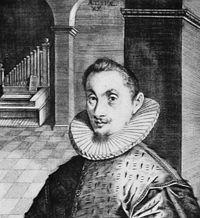
1564 - 1612 Person Name: Hans Leo Hassler, 1564-1612 Topics: Pastor Composer of "PASSION CHORALE " in Oramos Cantando = We Pray In Song Hans Leo Hassler Germany 1564-1612. Born at Nuremberg, Germany, he came from a family of famous musicians and received early education from his father. He then studied in Venice, Italy, with Andrea Gabrieli, uncle of Giovanni Gabrieli, his friend, with whom he composed a wedding motet. The uncle taught him to play the organ. He learned the polychoral style and took it back to Germany after Andrea Gabrieli's death. He served as organist and composer for Octavian Fugger, the princely art patron of Augsburg (1585-1601). He was a prolific composer but found his influence limited, as he was Protestant in a still heavily Catholic region. In 1602 he became director of town music and organist in the Frauenkirche in Nuremberg until 1608. He married Cordula Claus in 1604. He was finally court musician for the Elector of Saxony in Dresden, Germany, evenually becoming Kapellmeister (1608-1612). A Lutheran, he composed both for Roman Catholic liturgy and for Lutheran churches. He produced two volumns of motets, a famous collection of court songs, and a volume of simpler hymn settings. He published both secular and religious music, managing to compose much for the Catholic church that was also usable in Lutheran settings. He was also a consultant to organ builders. In 1596 he, with 53 other organists, had the opportunity to examine a new instrument with 59 stops at the Schlosskirche, Groningen. He was recognized for his expertise in organ design and often was called on to examine new instruments. He entered the world of mechanical instrument construction, developing a clockwork organ that was later sold to Emperor Rudolf II. He died of tuberculosis in Frankfurt, Germany. John Perry

John Ellerton

1826 - 1893 Topics: Burial Of Pastor Author of "Now the laborer's task is o'er" in The Hymnal John Ellerton (b. London, England, 1826; d. Torquay, Devonshire, England, 1893) Educated at King William's College on the Isle of Man and at Trinity College, Cambridge, England, he was ordained in the Church of England in 1851. He served six parishes, spending the longest time in Crewe Green (1860-1872), a church of steelworkers and farmers. Ellerton wrote and translated about eighty hymns, many of which are still sung today. He helped to compile Church Hymns and wrote its handbook, Notes and Illustrations to Church Hymns (1882). Some of his other hymn texts were published in The London Mission Hymn Book (1884). Bert Polman ========================= Ellerton, John, M.A., son of George Ellerton, was born in London, Dec. 16, 1826, and educated at Trinity College, Cambridge (B.A. 1849; M.A. 1854). Taking Holy Orders he was successively Curate of Easebourne, Sussex, 1850; Brighton, and Lecturer of St. Peter's, Brighton, 1852; Vicar of Crewe Green, and Chaplain to Lord Crewe, 1860; Rector of Hinstock, 1872; of Barnes, 1876; and of White Roding, 1886. Mr. Ellerton's prose writings include The Holiest Manhood, 1882; Our Infirmities, 1883, &c. It is, however, as a hymnologist, editor, hymnwriter, and translator, that he is most widely known. As editor he published: Hymns for Schools and Bible Classes, Brighton, 1859. He was also co-editor with Bishop How and others of the Society for Promoting Christian Knowledge Church Hymns, 1871. His Notes and Illustrations of Church Hymns, their authors and translators, were published in the folio edition of 1881. The notes on the hymns which are special to the collection, and many of which were contributed thereto, are full, accurate, and of special value. Those on the older hymns are too general for accuracy. They are written in a popular form, which necessarily precludes extended research, fulness, and exactness of detail. The result is acceptable to the general public, but disappointing to the hymnological expert. Mr. Ellerton's original hymns number about fifty, and his translations from the Latin ten or more. Nearly every one of these are in common use and include:— 1. Before the day draws near its ending. Afternoon. Written April 22, 1880, for a Festival of Choirs at Nantwich, and first published in the Nantwich Festival Book, 1880. In 1883 it passed into the Westminster Abbey Hymn Book. 2. Behold us, Lord, a little space. General for Weekdays. Written in 1870 for a mid-day service in a City Church, and published in Church Hymns in 1871. It has passed into several collections. 3. Come forth, 0 Christian brothers. Processional for Choral Festival. Written for a Festival of Parochial Choirs held at Chester, May, 1870, and 1st printed in the Service-book of the same. In 1871 it passed into Church Hymns. 4. Father, Name of love and fear. Confirmation. Written in 1871 for a Confirmation in the North of England, and published in Church Hymns, 1871, and other collections. 5. God, Creator and Preserver. In Time of Scarcity. Written for and first published in The Hymnary, 1870; and again in the revised edition, 1872, and other hymnbooks. 6. Hail to the Lord Who comes. Presentation of Christ in the Temple. Written Oct. 6, 1880, for Mrs. Brock's Children's Hymn Book, and published therein, 1881. 7. In the Name which earth and heaven. Foundation of a Church. Written for and first published in Church Hymns, 1871, and repeated in several collections. The hymn sung at the re-opening of the Nave of Chester Cathedral, January 25, 1872, was compiled by Mr. Ellerton from this hymn, and his "Lift the strain of high thanksgiving.” 8 King Messiah, long expected. The Circumcision. Written Jan. 14, 1871, and first published in Church Hymns, 1871. It has passed into other collections. 9. King of Saints, to Whom the number. St. Bartholomew. Written for and first published in Church Hymns., 1871. It is very popular, and has been repeated in many hymnals. 10. Mary at the Master's feet. Catechizing. Written for and first published in Church Hymns, 1871. 11. O Father, all-creating. Holy Matrimony. Written Jan. 29, 1876, at the request of the Duke of Westminster, for the marriage of his daughter to the Marquess of Ormonde. It was published in Thring's Collection, 1880 and 1882. 12 O! how fair the morning broke. Septuagesima. Written March 13, 1880, for Mrs. Brock's Children's Hymn Book, and included therein, 1881. 13. O Lord of life and death, welcome. In Time of Pestilence. Written for and first published in Church Hymns, 1871. 14. O shining city of our God. Concerning the Hereafter. First published in the Rev. R. Brown-Borthwick's Sixteen Hymns with Tunes, &c, 1870; and again in Church Hymns, 1871. 15. O Son of God, our Captain of Salvation. St. Barnabas. Written April 5, 1871, and first published in Church Hymns, 1871; and again in Hymns Ancient & Modern, 1875, Thring's Collection, 1882, and others. 16. O Thou in Whom Thy saints repose. Consecration of a Burial Ground. Written for the consecration of an addition to the Parish Churchyard of Tarporley, Cheshire, 1870, and published in Church Hymns, 1871. 17. O Thou Whose bounty fills the earth. Flower Services. Written for a Flower Service at St. Luke's Church, Chelsea, June 6, 1880, and published in Mrs. Brock's Children's Hymn Book, 1881. 18. Praise to our God, Whose bounteous hand. National Thanksgiving. Written in 1870 for Church Hymns, but first published in the Rev. R. Brown-Borthwick's Select Hymns, &c., 1871, and then in Church Hymns later the same year. 19. The day Thou gavest, Lord, is ended. The darkness, &c. Evening. Written in 1870 for A Liturgy for Missionary Meetings (Frome, Hodges), and revised for Church Hymns, 1871. The revised form has passed into other collections. 20. The Lord be with us when we bend. Close of Afternoon Service. Written [in 1870] at the request of a friend for use at the close of Service on Sunday afternoons when (as in summer) strictly Evening hymns would be unsuitable. It was published in Church Hymns, 1871, Thring's Collection, 1882, and others. 21. This day the Lord's disciples met. Whitsuntide. "Originally written in 1855 for a class of children, as a hymn of 8 verses of 5 lines each, beginning, 'The Fiftieth day was come at last.’ It was abridged, revised, and compressed into C.M. for Mrs. Brock's Children's Hymn Book, 1880," and published therein, 1881. 22. Thou in Whose Name the two or three. Wednesday. Appeared in the Parish Magazine, May, 1871, as a hymn for Wednesday. After revision it was included in Church Hymns, 1871, and repeated in other collections. 23. Thou Who sentest Thine Apostles. SS. Simon and Jude. Written in June, 1874, for the revised edition of Hymns Ancient & Modern, and published in the same in 1875. 24. We sing the glorious conquest. Conversion of St. Paul. Written Feb. 28, 1871, for and published later the same year in Church Hymns. It was repeated in Hymns Ancient & Modern, 1875. 25. When the day of toil is done. Eternal Best. Written in Jan., 1870, and first published in the Rev. R. Brown-Borthwick's Sixteen Hymns with Tunes, &c. 1870, Church Hymns, 1871, and subsequently in several Scottish hymn-books. The tune "Preston," in Church Hymns was written for this hymn. To these hymns must be added those which are annotated under their respective first lines, and the translations from the Latin. The grandest of his original compositions is, "Throned upon the awful tree," and the most beautiful and tender, "Saviour, again to Thy dear Name we raise"; and of his translations, "Sing Alleluia forth in duteous praise," and "Welcome, happy morning, age to age shall say," are the most successful and popular. The subjects of Mr. Ellerton's hymns, and the circumstances under which they were written, had much to do with the concentration of thought and terseness of expression by which they are characterized. The words which he uses are usually short and simple; the thought is clear and well stated; the rhythm is good and stately. Ordinary facts in sacred history and in daily life are lifted above the commonplace rhymes with which they are usually associated, thereby rendering the hymns bearable to the cultured, and instructive to the devout. His antitheses are frequent and terse, almost too much so for devotional verse, and are in danger of interrupting the tranquil flow of devotion. His sympathy with nature, especially in her sadder moods, is great; he loves the fading light and the peace of eve, and lingers in the shadows. Unlike many writers who set forth their illustrations in detail, and then tie to them the moral which they are to teach, he weaves his moral into his metaphor, and pleases the imagination and refreshes the spirit together. Now and again he falls into the weakness of ringing changes on words; but taken as a whole his verse is elevated in tone, devotional in spirit, and elegant in diction. -- John Julian, Dictionary of Hymnology (1907) ===================== Ellerton, John, p. 326, i. Other hymns are:— 1. O Father, bless the children. Holy Baptism. Written in 1886, and published in his Hymns, &c, 1888, in 4 stanzas of 8 lines. Also in the 1889 Suppl. Hymns to Hymns Ancient & Modern. 2. O Thou Who givest food to all. Temperance. Written Aug. 30, 1882, and printed in the Church of England Temperance Chronicle, Sept. 1882. Also in his Hymns, &c, 1888. 3. Praise our God for all the wonders. St. Nicholas's Day. Dated in his Hymns, 1888, "December 1882." It was written for the Dedication Festival of St. Nicholas's Church, Brighton, and first printed as a leaflet in 1882. 4. Praise our God, Whose open hand. Bad Harvest. Written as a hymn for the bad harvest of 1881, and printed in the Guardian in August of that year. Also in his Hymns, &c, 1888. 5. Praise to the Heavenly Wisdom. St. Matthias's Day. Dated in his Hymns, &c, 1888, "January, 1888." Also in the 1889 Suppl. Hymns to Hymns Ancient & Modern. 6. Shine Thou upon us, Lord. For a Teachers' Meeting. Contributed to the 1889 Suppl. Hymns to Hymns Ancient & Modern. 7. Thou Who wearied by the well. Temperance. Written for the Opening of a Workmen's Coffee Tavern, and dated in his Hymns, &c, 1888, "September 23, 1882." It was printed in the Church of England Temperance Chronicle the same year. 8. Throned upon the awful Tree. Good Friday. Written in 1875, and published in the 1875 ed. of Hymns Ancient & Modern. It has passed into many collections, and is one of the finest of Mr. Ellerton's productions. Mr. Ellerton's original and translated hymns to the number of 76 were collected, and published by Skeffington & Son in 1888, as Hymns, Original and Translated. By John Ellerton, Rector of White Roding. --John Julian, Dictionary of Hymnology, Appendix, Part II (1907) =================== Ellerton, J., pp. 326, ii.; 1561, ii. He was appointed Hon. Canon of St. Albans in 1892. and died June 15, 1893. His Life and Works, by H. Housman, was published in 1896. --John Julian, Dictionary of Hymnology, New Supplement (1907)

Nicolaus Ludwig, Graf von Zinzendorf

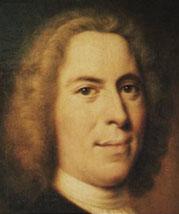
1700 - 1760 Person Name: Nicholas L. von Zinzendorf, 1700-1760 Topics: Pastoral Care of the Sick Author of "Jesus, Lead the Way" in Gather Comprehensive, Second Edition Zinzendorf, Count Nicolaus Ludwig, the founder of the religious community of Herrnhut and the apostle of the United Brethren, was born at Dresden May 26, 1700. It is not often that noble blood and worldly wealth are allied with true piety and missionary zeal. Such, however, was the case with Count Zinzendorf. In 1731 Zinzendorf resigned all public duties and devoted himself to missionary work. He traveled extensively on the Continent, in Great Britain, and in America, preaching "Christ, and him crucified," and organizing societies of Moravian brethren. John Wesley is said to have been under obligation to Zinzendorf for some ideas on singing, organization of classes, and Church government. Zinzendorf was the author of some two thousand hymns. Many of them are of little worth, but a few are very valuable, full of gospel sweetness and holy fervor. He died at Herrnhut May 6, 1760. —Hymn Writers of the Church by Charles Nutter ================ Zinzendorf, Nicolaus Ludwig, Count von, was born at Dresden, May 26, 1700; was educated at the Paedagogium at Halle (1710-1716), and at the University of Wittenberg (1716-1719); became Hof-und Justizrath at the Saxon court at Dresden in the autumn of 1721; received a license to preach from the Theological Faculty of the University of Tubingen in 1734; was consecrated Bishop of the Moravian Brethren's Unity at Berlin, May 10, 1737; and died at Herrnhut, May 9, 1760. An adequate sketch of the life and labours of this remarkable man would far exceed the limits of our space. The details of his life are fully given in his Leben, by A. G. Spangenberg, 8 vols., Barby, 1772-75 (English version, abridged, by Samuel Jackson, London, 1838); and good sketches, with references to the fuller biographies, will be found in Koch, v. 248, Herzog's Real-Encyklopädie, xvii. 513, &c. The English reader may also consult T. Kübler's Historical Notes to the Lyra Germanica, 1865, p. 107; Josiah Miller's Singers and Songs, 1869, p. 160; Miss Winkworth's Christian Singers of Germany, 1869, p. 305, &c. It is impossible to speak of Zinzendorf apart from the religious Communion of which he was the Second Founder. Zinzendorf's first hymn was written at Halle in 1712, and his last at Herrnhut, May 4, 1760. Between these dates he wrote more than 2000 hymns. He himself published an edition of his poems as his Teutsche Gedichte at Herrnhut, 1735 (2nd ed., Barby, 1766), but this only contains 128 hymns. The fullest representation of them is in Albert Knapp's Geistliche Gedichte des Graf en von Zinzendorf, published at Stuttgart in 1845 (hereafter, in this article, referred to as Knapp, 1845). This contains 770 pieces, arranged in three books, with an introduction and a biographical sketch by Knapp. In preparing this edition Knapp had access to much unpublished material in the archives at Herrnhut, and found there many of the hymns in Zinzendorf's autograph. But too much of the labour he bestowed thereon was spent in endeavouring, not so much to reconstruct the text from the original sources, as to modernise it. In various instances the hymns are altogether rewritten, so that the form in which they appear is not that in which, as a matter of fact, Zinzendorf did write them, but that in which he might have written them had he been Albert Knapp, and lived in the year of grace 1845. So much is this the case, that comparatively few of the hymns are given in Knapp's edition in their original form. If not altered they are often either abridged or else combined with others. The keynote of Zinzendorf's hymns, and of his religious character, was a deep and earnest personal devotion to and fellowship with the crucified Saviour. This is seen even in his worst pieces, where it is his perverted fervour that leads him into objectionable familiarity with sacred things both in thought and in expression. If his self-restraint had been equal to his imaginative and productive powers, he would have ranked as one of the greatest German hymnwriters. As it is, most even of his best pieces err in some way or other, for if they are reverent and in good taste, they are apt to lack concentration and to be far too diffuse. His best hymns, and those which have been most popular in German and English beyond the Moravian connection, are those of the period prior to 1734. Among the characteristically Moravian hymns of the period 1734 to 1742 there are also, various noble pieces. The later productions, especially from 1743 to 1750, are as a rule one-sided, unreal, and exaggerated in sentiment, and debased in style; exemplifying a tendency inherited from Scheffler, and suffered to run to riot. Without doubt he wrote too much (especially considering the limited range of subjects treated of in his hymns), and gave too little care to revision and condensation. Yet many of his hymns are worthy of note, and are distinguished by a certain noble simplicity, true sweetness, lyric grace, unshaken faith in the reconciling grace of Christ, entire self-consecration, willingness to spend and be spent in the Master's service, and fervent brotherly love. The more important hymnbooks in which Zinzendorf’s productions mainly appeared may for convenience be briefly noted here, as follows:— (1) Sammlung geistlicher und lieblicher Lieder, Leipzig, 1725, with 889 hymns. The 2nd edition was published circa 1728, and contains anAnhäng with Nos. 890-1078 [Berlin Library, Ei. 2017]; while some copies have a Zugabe with Nos. 1079-1149 [Berlin, Ei. 2016], and others have also an Andere Zugabe, circa 1730, with hymns 1-44, bound up with them [Berlin, Ei, 2014, and British Museum]. The 3rd edition, with 1416 hymns in all, was published at Görlitz in 1731. A copy of this, now in the Hamburg Library, has bound up with Nachlese einiger geistlicher Lieder, dated 1733. (2) Herrnhut Gesang-Buch 1735 (Das Gesang-Buch der Gemeine in Herrn-Huth) with its various Anhange and Zugaben up to 1748. (3) London Gesang-Buch 1753-54 (Etwas vom Liede Mosis ... das ist: Alt- und neuer Brüder-Gesang, &c), published at London, vol. i. 1753, ii. 1754. (4) Brüder Gesang-Buch 1778 (Gesangbuch zum Gebrauch der evangelischen Brüdergemeinen), published at Barby in 1778. Zinzendorf's hymns passed into German non-Moravian use mainly through the Ebersdorf Gesang-Buch, 1742 (Evangelisches Gesangbuch in einen hinlänglichen Auszug der Alten, Neuern und Neuesten Lieder, &c), and in recent times through Knapp's Evangelischer Lieder-Schatz, 1837-1865. Comparatively few are found in non-Moravian English hymnbooks prior to 1840, save in the versions made by John Wesley. The translations made by the English Moravians have been very little used by others, except by those who were connected by birth with the Moravians, such as James Montgomery (through whose influence several were included in Mercer's Church Psalter & Hymn Book, 1855 and 1857), J. A. Latrobe and C. H. Bateman. The versions made by English non-Moravians since 1840 have been mostly of hymns which the Moravians themselves had not thought good to translate. In the larger edition of the English Moravian Hymn Book of 1886, hymns which are by Zinzendorf may easily be traced, his name being added to them, and the first line of the original German prefixed. The others which have passed into use outside the Moravian connection, or have been translated by non-Moravians, are here noted as follows:— i. Ach Bein von meinen Beinen. Longing for Heaven. Written circa 1750 (Knapp, 1845, p. 176). Included in the Kleine Brüder Gesang-Buch, 2nd ed. Barby, 1761, No. 2110, in 2 stanzas of 8 lines; repeated, altered, in the Brüder Gesang-Buch,1778. No. 1681. Translated as:— 1. The seasons, Lord! are Thine—how soon. A free version as No. 479 in J. A. Latrobe's Psalms & Hymns, 1841. 2. How soon, exalted Jesus. This is No. 838 in the Moravian Hymn Book, 1789 (1886, No. 1233). ii. Ach! mein verwundter Fürste. Union with Christ. Written Aug. 1737 (Knapp, 1845, p. 125). First published in Appendix viii., circa 1738, to the Herrnhut Gesang-Buch as No. 1197, and in 4 stanzas of 6 lines. In the Brüder Gesang-Buch, 1778, No. 774, stanza iv. was omitted. The translation in common use is of stanzas i., ii. Another translation is, "My wounded Prince enthron'd on high," by C. Kinchen, as No. 85 in the Moravian Hymn Book, 1742. In the 1808 and later editions(1886, No. 352), stanza iii. altered to "Lord, take my sinful, worthless heart "is continued. iii. Der Gott von unserm Bunde. Supplication. Written in 1737 ( Knap , 1845, p. 231). First published in Appendix vii., circa 1738, to the Herrnhut Gesang-Buch, as No. 1201, in 5 stanzas of 6 lines, entitled, "Hymn for the Hours of Prayer." In the Brüder Gesang-Buch, 1778, No. 1474. The translation in common use is based on stanza i., ii. Other translations are (1) "The God to whom we homage pay." This is No. 97 in pt. iii. 1748 of the Moravian Hymn Book. (2) "O may the God of mercies." This is No. 592 in the Moravian Hymn Book, 1801. In the ed. of 1886, No. 706, it begins with stanza iii., "Lord, our High Priest and Saviour." iv. Die Bäume blühen ab. Autumn . In the Teutsche Gedichte, 1735, No. 12, dated Autumn, 1721, and entitled "Comforting thoughts on Death." It is in Knapp, 1845, p. 17. Further noted under "Wie wird mir einst doch sein". v. Du Vater aller Kreatur. Work for Christ. Written 1722 (Knapp, 1845, p. 26). First published in Appendix. vi., circa 1737, to the Herrnhut Gesang-Buch, as No. 1159, and in 13 stanzas of 4 lines. In the Brüder Gesang-Buch, 1778, No. 1717 consists of stanza viii.-xiii. beginning, "Des Lebens abgestecktes Ziel." Translated as:— Whether the period of this life. This is a translation of stanza viii.-x. as No. 847 in the Moravian Hymn Book, 1789. To this in later eds. (1886, No. 1235) No. 848 was added. This is "Lord may 1 live to Thee by faith," and is a translation of an anonymous 17th century stanza, "Herr Jesu! dir leb ich," which is No. 1686 in the Brüder Gesang-Buch, 1778. The full form is in J. A. Latrobe's Psalms & Hymns, 1841. vi. Geschwister! wir geben uns Herzen und Hände. Christian Work. Written 1737 (Knap p, 1845, p. 234). First published in Appendix vii., circa 1738, to the Herrnhut Gesang-Buch as No. 1217, and in 8 stanzas of 4 lines. In the Brüder Gesang-Buch, 1778, No. 1391, it is united, as in Knapp, with "Gesinde des Heilands". Translated as:— Grace! how good, how cheap, how free. This is a translation, by C. Kinchen, of stanza v., as No. 28 in the Moravian Hymn Book, 1742. Included in Spurgeon's Our Own Hymn Book, 1866. vii. Glanz der Ewigkeit. Morning. In the Teutsche Gedichte, 1735, p. 13, dated Berlin, May, 1721. First published as No. 470 in the Sammlung, 1725, in 15 stanzas of 6 lines. In Knapp, 1845, p. 16. The only stanza translated into English is stanza xi. as part of "Jesu, geh' voran”. viii. Grosser Bundes-Engel. Ascensiontide. Written for Ascension Day (his birthday), 1740 (Knapp, 1845, p. 144, dated May 26, 1740). First published in Appendix xi., circa 1741, to the Herrnhut Gesang-Buch as No. 1426, in 27 stanzas of 8 lines. In the Brüder Gesang-Buch, 1778, No. 603. Translated as:— Lord, when Thou saidst, So let it be. This is a translation, by C. G. Clemens, of stanza iii., as No. 156 in the Moravian Hymn Book , 1789 (1849, No. 190). Included in the Congregational Hymn Book, 1836, and in Dr. Martineau's Hymns, 1840 and 1873. ix. Heiliger, heiliger, heiliger Herr Zebaoth. Eternal Life. Heaven Anticipated. The Rev. J. T. Müller, of Herrnhut, informs me that this was written in 1723 on the occasion of the birthday (Oct.6) of Zinzendorf s grandmother, H. C. von Gersdorf. Knapp, 1845, p. 193, dates it Oct. 18, 1723. First published as No. 1078 (2) in the 2nd ed., circa 1728, of the Sammlung in 7 stanzas of 7 lines, entitled, Closing Hymn. In the Brüder Gesang-Buch, 1778, stanza ii., iii., beginning "Hatten wir," are included as stanzas i., ii., of No. 1739. Translated as:— Had we nought, had we nought. This is a translation of stanzas ii., iii., by W. O. Keley, as No. 1189 in the 1808 Supplement to the Moravian Hymn Book, 1801 (1849, No. 1186), and repeated in J. A. Latrobe's Psalms & Hymns, 1841, No. 475. x. Ich bin ein kleines Kindelein. Children. This is No. 1022 in the 3rd ed., 1731, of the Sammlung, in 13 stanzas of 4 lines. In the Brüder Gesang-Buch, 1778, No. 1214, and in the Hist. Nachricht thereto (1835, p. 188) marked as a catechetical hymn for children, and dated 1723. Knapp, 1845, p. 40, dates it June, 1723, and alters it to "Ich bin ein Kindlein, arm und klein." It is a simple and beautiful hymn, and is contained in a number of recent German non-Moravian collections, e.g. in the Berlin Geistliche Lieder, ed. 1863, No. 1408. Translated as:— 1. Saviour, who didst from Heaven come down. This is a free translation of stanzas ii.,iii., v., made by James Bullivant Tomalin in 1860, and contributed to Lord Selborne's Book of Praise, ed. 1866, Appendix, No. 27, with the note at p. 500, "I am indebted for this to the kindness of the translator." Repeated in S. D. Major's Book of Praise for Home & School, 1869, and in America in the Baptist Service of Song, 1871, &c. In M. W. Stryker's Christian Chorals, 1885, and Church Song, 1889, it is altered, beginning, "O Saviour, Who from Heav'n came down." 2. I am a little child you see. By C. Kinchen, as No. 49 in the Moravian Hymn Book 1742. This form is followed in the edition of 1886, No. 1038, and in the Bible Hymn Book, 1845. In the Moravian Hymn Book, 1789, it begins with stanza ii., "Thou, gracious Saviour, for my good;" and this form altered to, "My Saviour dear, Thou for my good," is in Montgomery's Christian Psalmist, 1825. xi. Kommt, Sünder, und blicket dem ewigen Sohne. Repentance or Lent. Mr. Müller informs me that this was written in Aug. 1736, at , 1845, p. 130, dates it Nov. 22,1738. First published in Appendix viii., circa 1739, to the Herrnhut Gesang-Buch as No. 1308, in 9 stanzas of 4 lines. In the Brüder Gesang-Buch 1778, No. 321. Translated as:— Sinners! come; the Saviour see. This a good and full translation by C. Kinchen, as No. 120, in the Moravian Hymn Book, 1742. Of this stanzas i., ii. are included in Spurgeon's Our Own Hymn Book, 1866. Other forms are (1) "Are you formed a creature new" (stanza vi.). In the Moravian Hymn Book, 1769 (1886, No. 1280), Montgomery's Christian Psalmist, 1825, &c. (2) "Rise, go forth to meet the Lamb" (stanza viii. alt.). In J. A. Latrobe's Psalms & Hymns, 1852, No. 457. xii. Kron' und Lohn behertzter Ringer. The Beatitudes. Founded on St. Matt. v. 3-12. In his Teutsche Gedichte, 1735. p. 41, dated, Sept. 7, 1722 (his marriage day), and entitled, "Thoughts on my own marriage." First published as No. 700 in the Sammlung, 1725, in 16 stanzas of 12 lines. In Knapp, 1845, p. 30. In the Brüder Gesang-Buch, 1778, No. 513, beginning, "Jesu, der du uns erworben." Translated as:— Jesu! Lord so great and glorious. This, omitting stanzas xiv., xv., is No. 226 in pt. ii. of the Moravian Hymn Book, 1754, as "Jesus, Lord most great and glorious"). The versions of stanzas i., ix., xvi., from the Moravian Hymn Book, 1789, were included in the Dalston Hospital Hymn Book, 1848. xiii. Naht heran, ihr lieben Glieder. Holy Communion. Written in 1731 (Knapp, 1845, p. 212). 1st published in the 3rd ed., 1731, of the Sammlung as No. 1416 in 16 stanzas of 4 lines. Also in the Brüder Gesang-Buch 1778, No. 1148. Translated as:— 1. Friends in Jesus, now draw near. This is a free translation, omitting stanza v., vi., viii.-x.,xiv., by Miss Borthwick in Hymns from the Land of Luther, 4th ser., 1862, p. 57, the German being quoted as "Kommt herein, ihr lieben Glieder." This translation is repeated in full in Lyra Eucharistica, 1863, p. 34, and abridged in G. S. Jellicoe's Collection 1867, Windle, No. 480, and Harland, 1876, No. 451. 2. Come, approach to Jesu's table. This is No. 556 in the Moravian Hymn Book, 1789 (1849, No. 965), xiv. 0 du Hüter Ephraim. Supplication for Grace. In his Teutsche Gedichte, 1735,p. 158, dated 1728,entitled, "On his wife's 28th birthday " (she was born Nov. 7, 1700), and with the note, "This poem was written for the birthday festival of the Countess, was sung by a company or coterie of friends, each member of which was indicated according to their circumstances at the time." It had previously appeared, without the first stanza, and this form, which begins, "Herz der göttlichen Natur". xv. Rath, Kraft, und Held, und Wunderbar. Christmas. Founded on Is. ix. 6. In his Teutsche Gedichte, 1735, p. 25, in 9 stanzas of 6 lines, entitled, "Christmas Thoughts," and dated 1721; and in the Herrnhut Gesang-Buch,1735, No. 827. In Knapp, 1845, p. 21. In the Brüder Gesang-Buch, 1778, No. 488, it begins with stanza vi., "Mein alles! mehr als alle Welt." Translated as:— My all things more than earth and sky. This is a translation of stanza vi., by C. G. Clemens, as No. 306 in the Moravian Hymn Book, 1789. In 1801 altered to "My all in all, my faithful Friend;" and to this in 1826, trs. of stanzas ii., vii.-ix.,by P. Latrobe, were added (1886.No. 399). From this form a cento in 5 stanzas of L. M., beginning, "O Lord! Thou art my rock, my guide," was included in Dr. Martineau's Hymns, 1840. xvi. Ruht aus von eurer Mühe. Christian Church. Written in 1737 (Knapp 1845, p. 232, as Du gestern und auch heute). First published in Appendix vi., circa 1737, to the Herrnhut Gesang-Buch, as No. 1183, in 8 stanzas of 8 lines, entitled, "Hymn of the witnesses." In the Brüder Gesang-Buch, 1778, stanza iv. is given as No. 1042. Translated as:— 0 Jesus Christ, most holy. This is a translation of stanza iv. by C. G. Clemens, as No. 487 in the Moravian Hymn Book, 1789 (1849, No. 807 ; 1886, No. 795, beginning, "Lord Jesus Christ") Included in Spurgeon's Our Own Hymn Book, 1866. xvii. Seligs Volk der Zeugenwolk. Holy Communion. Written in 1739 (Knapp, 1845, p. 138, beginning, "Christi Blut, Die Segensfluth," and p. 256, "Selig Volk.") First published in Appendix viii., circa 1739, to the Herrnhut Gesang-Buch, as No. 1340, in 14 stanzas of 8 lines, entitled, "Hymn at the Feast of Love." In the Brüder Gesang-Buch, 1778, as Nos. 1127 and 1422, the latter beginning, "Werther Tod und Wunden roth; " and including stanza xi. ("Wisst ihr was? So heisst der Pass"), xiii., xiv. Translated as:— 1. Would the world our passport see. This is a translation of stanza xi., xiii. as No. 1152 in the 1808 Supplement to the Moravian Hymn Book of 1801 (1886, No. 895). Included as No. 212 in J. A. Latrobe's Psalms & Hymns, 1841. 2. Flock of Grace, ye Witnesses. This is No. 40 in pt. iii. 1748 of the Moravian Hymn Book. 3. Happy race of witnesses. By C. Kinchen as No. 551 in the Moravian Hymn Book, 1789. In 1886 four stanzas are given as No. 951, and the other two beginning, "Eat and rest at this great feast" (stanza viii.) as No. 1022. xviii. Was hatten wir für Freude oder Ehre . Repentance. Written in 1739 (Knapp, 1845, p. 139). First published in Appendix viii., circa 1739, to the Herrnhut Gesang-Buch as No. 1349, and in 48 stanza of 2 lines. In the Brüder Gesang-Buch, 1778, No. 396, reduced to 19 stanzas. Translated as:— What Joy or Honour could we have. In full as No. 161 in the Moravian Hymn Book, 1742; abridged in 1789 to 12, and in 1801 to 7 stanzas. The 1801 version, which represents stanzas i.-iv., viii., ix., xi. was included in Montgomery's Christian Psalmist, 1825; and with the trs. of stanzas iii., xi. omitted, and a hortatory stanza added, as No. 268 in J. A. Latrobe's Psalms & Hymns, 1841. In the Moravian Hymn Book, 1886, No. 322, it begins with the translation of stanza iii., "None is so holy, pure, and just." xix. Wenn sich die Kinder freuen. Christian Work. Written about 1752 (Knapp, 1845, p. 179, as "Wenn wir uns kindlich freuen"). Included as No. 2101 in the London Gesang-Buch (Etwas vom Liede Mosis, &c), 1753, in 15 stanzas of 4 lines. In the Brüder Gesang-Buch, 1778, No. 490 consists of stanzas i.—iii., vi., ix., xiii.-xv. beginning, "Wenu wir uns kindlich freuen." Translated as:— 1. When we seek with loving heart. By Miss Borthwick, in full from the 1778 (with an original stanza as stanza ix.) in the Family Treasury, 1861, pt. ii., p. 112, and in Hymns from the Land of Luther, 1862, p. 89 (1884, p. 250). Repeated, abridged, in E. T. Prust's Supplemental Hymn Book, 1869. 2. When the children joyful are. This is No. 312 in pt. ii. of the Moravian Hymn Book, 1754. 3. When children are rejoicing . This is at p. 373 of pt. ii. in the Moravian Hymn Book, 1754. xx. Wir sind nur dazu. Christian Warfare. Written in 1734 (Knapp, 1845, p. 113). First published in Appendix iii., circa 1737, to the Herrnhut Gesang-Buch, as No. 1073, and in 21 stanzas of 6 lines. In the Brüder Gesang-Buch, 1778, No. 1330 has 13 stanzas; while stanza xvii. ("Die Streitertreue") is given as stanza v. of No. 1394. Translated as:— Warrior, on thy station stand. This is a translation of stanza xvii. as No. 1161 in the 1808 Supplement to the Moravian Hymn Book, 1801 (1886, No. 896). Adopted by Dr. Martineau in his Hymns, 1840 and 1873, altered to "Warrior! to thy duty stand." Hymns not in English common use:— xxi. Auf, auf, es ist geschehe. Holy Communion. This is No. 166 in the Sammlung, 1725, in 12 stanzas of 4 lines, and in the Teutsche Gedichte, 1735, p. 2. In the Brüder Gesang-Buch, 1778, No. 1188 it begins, "Ich eil in Jesu Armen" (5 stanzas being added, and stanzas viii., xi. omitted), and in the Hist. Nachricht thereto (ed. 1851, p. 188) is marked as written on the occasion of his first communion in 1714. In Knapp, 1845, p. 6, it begins, "Ist's ja, es ist geschehen," Translated as "Happy, thrice happy hour of grace." By L. T. Nyberg, of stanzas i., xii., as No. 693 in the Moravian Hymn Book, 1789 (1886, No. 1021) ; repeated in C. H. Bateman's Congregational Psalmist, 1846. xxii. Christen sind ein göttlich Volk. Christian Life. In the Teutsche Gedichte, 1735, p. 231, dated 1731, and entitled, "Hymn for a Royal Princess-apparent," viz. for Charlotte Amelia, daughter of King Christian VI. of Denmark. It had appeared in the Nachlese of 1733 to Knapp, 1845, p. 97, and in the Brüder Gesang-Buch, 1778, No. 491. Translated as “Christians are a holy band, Gathered by the Saviour's hand." This is by Dr. J. F. Hurst in his translation of K. R. Hagenbach's History of the Church in the 18th and 19th Centuries, N. Y., 1869, vol. i., p. 434. xxiii. Das äussre Schifflein wälgert sich. For those at Sea. First published in the Zugabe, circa 1744, to Appendix xi. to the Herrnhut Gesang-Buch as No. 1855, in 16 stanzas of 4 lines entitled, "Hymn for the ship's company, February, 1743." Written during a stormy passage from America to Germany. In Knapp, 1845, p. 164. The translations are: (1) "Our ship upon the surging sea." In the British Herald, Aug. 1866, p. 313, repeated in Reid's Praise Book, 1872. (2) "Our little bark, it rocks itself." In L. Rehfuess's Church at Sea, 1868, p. 18. xxiv. Die Christen gehn von Ort zu Ort. Burial of the Dead. In the Teutsche Gedichte, 1735, p. 113, as part of No. 45, which is entitled "Over the grave of the grandmother" (Henriette Catharine von Gersdorf. She died March 6, 1726), and dated March, 1726. The hymn itself is entitled, "Air after the funeral rites." It had appeared in the Andere Zugabe, circa 1730, to the Sammlung as No. 6 (ed. 1731, No. 1246), in 3 stanzas of 8 lines entitled, “Funeral Hymn." In Knapp, 1845, p. 72, and in the Brüder Gesang-Buch, 1778, No. 1701. The translations are : 1) "Believers go from place to place." By Dr. J. Hunt in his Spiritual Songs of Martin Luther, 1853, p. 146. (2) "Through scenes of woe, from place to place." By Dr. G. Walker, 1860, p. 50. (3) "From place to place the Christian goes." By J. D. Burns in his Memoir & Remains, 1869, p. 263. (4) “From land to land the Christian goes." This is No. 1251 in the Moravian Hymn Book, 1886. xxv. Du innig geliebter Erloser der Sünder. Readiness to serve Christ. Written in 1735 (Knapp, 1845, p. 222). First published in Appendix iv., circa 1737, to the Herrnhut Gesang-Buch, as No. 1080, and in 6 stanzas of 4 lines. In the Brüder Gesang-Buch, 1778, No. 1335. Translated as "Sinners' Redeemer whom we only love." This is a translation of stanzas i., iv., v., by C. Kinchen, as No. 121 in the Moravian Hymn Book, 1742. In the 1789 and later editions (1886, No. 861), it begins, "Sinners' Redeemer, gracious Lamb of God." The text of 1742, slightly altered, is No. 206 in Lady Huntingdon's Selection, 1780. xxvi. Du Vater aller Geister. Evening. In the Teutsche Gedichte, 1735, p. 15, entitled, "Evening Thoughts," and dated Oct. 1721. It is No. 497 in the Sammlung, 1725, in 6 stanzas of 8 lines. In Knapp, 1845, p. 16, and in the Brüder Gesang-Buch, 1778, No. 235. Translated as “Father of living Nature." By H. J. Buckoll, 1842, p. 102. xxvii. Gesinde des Heilands des seligen Gottes. Christian Work. Written in 1737 (Knapp, 1845, p. 234), first published in Appendix vii., circa 1738, to the Herrnhut Gesang-Buch as No. 1216, and in 10 stanzas of 4 lines. In the Brüder Gesang-Buch, 1778, No. 1391. Translated as "Ye blest Domestics of the slaughter'd Lamb." In full as No. 178 in the Moravian Hymn Book, 1742 (1754, pt. ii., No. 250). Repeated, abridged, in the Bible Hymn Book, 1845, No. 286. xxviii. Ich bitt dich, herzliches Gottes-Lamm! Love to Christ. Written in Oct. 1741 (Knapp, 1845, p. 152, as "Ein selig Herze führt diese Sprach"). First published in Appendix xi., circa 1743, to the Herrnhut Gesang-Buch, as No. 1724, and in 12 stanzas of 5 lines, In the Brüder Gesang-Buch, 1778, No. 704, it begins, with stanza ii., altered to "Ein selges Herze führt diese Sprach." Translated as "When heavenwards my best affections move." By Miss Borthwick (from the 1778), dated April, 1861, in the Family Treasury , 1861, p. 328. In Hymns from the Land of Luther, 4th ser., 1862, p. 60 (1884, p. 223), altered to "When towards heaven." xxix. 0 du Hüter Ephraim. Burial of the Dead. This is included at p. 10 in the Nachlese of 1733 to the 3rd ed. 1731 of the Sammlung, and is in 8 stanzas of 8 lines, entitled, "Of departure to the Father;" and in the Teutsche Gedichte, 1735, p. 256, entitled, "In the name of the community." Included as No. 695 in the Herrnhut Gesang-Buch, 1735, beginning with stanza ii. altered to "Tödten ist dem Herrn erlaubt." In the Brüder Gesang-Buch, 1778, No. 1715, it begins with stanza iii., "Ehmals sollts gestorben sein," and in the Hist. Nachricht thereto (1835, p. 190) is marked as written on the death of Matthaus Linner in 1732. In Knapp, 1845, p. 101. Translated as "Once the sentence justly sounded." By Miss Borthwick in Hymns from the Land of Luther, 1862, p. 92 (1884, p. 252). xxx. 0 Liebe, die in fremde Noth. On Unity. In the Teutsche Gedichte, 1735, p. 94, dated 1725, and entitled, "On the Saviour's faithfulness." First published as No. 198 (b) in the 1725 Sammlung, in 18 stanzas of 4 lines. In the London Gesang-Buch, 1753, No. 1764, stanzas ix., x., beginning, " Der du noch in der letzten Nacht," were given as a separate hymn; and this form is repeated in the Brüder Gesang-Buch, 1778, No. 714, the Berlin Geistliches Lieder, ed. 1863, No. 1037, &c. In Knapp, 1845, p. 70. The translations, all of stanza ix., x., are: (1) "Lord Jesus, who that very night." By P. H. Molther, as stanzas ii., iii. of No. 387 in the Moravian Hymn Book, 1789 (1886, No. 477, beginning, "Lord Jesus, in that"). (2) "Thou Who didst die for all and each." By Miss Cox, 1841, p. 147. (3) "O Thou, Who with Thy latest breath." By Lady E. Fortescue, 1843, p. 66. (4) "Thou who in that bitter night." By Miss Warner, 1858, p. 436. (5) "Thou who in that last sad night." By Miss Fry, 1859, p. 151. (6) "Thou who upon that last sad night." In the Family Treasury, 1859, p. 200. (7) "O Thou who didst on that last night." By R. Massie in the British Herald, Feb. 1865, p. 28. (8) "O Thou, who on that last sad eve." By E. Massie, 1866, p. 69. xxxi. O wie so gliicklich waren wir. Love to Christ. On the blessedness of union with Christ. First published in Appendix vii., circa 1738, to the Herrnhut Gesang-Buch as No. 1237, and in 8 stanzas of 8 lines. In the Brüder Gesang-Buch, 1778, No. 829, and in the Hist. Nachricht thereto (1835, p. 186) marked as written for J. A. Rothe (p. 978, i.), and dated 1737. In Knapp, 1845, p. 236. Translated as "How full our cup of joy would be." By Miss Burlingham in the British Herald, Sept. 1865, p. 131, and in Reid's Praise Book, 1872. xxxii. Reiner Bräutgam meiner Seelen. Desire for Holiness. Written in 1721 (Knapp, 1845, p. 21). Included in the 2nd edition, circa 1728, of the Sammlung as No. 1001, and in the Christ-Catholisches Singe- und Bet-Büchlein, 1727, p. 133, in 30 stanzas of 4 lines. In the Brüder Gesang-Buch, 1778, No. 798. Translated as "Jesu, to Thee my heart I bow." This is a free translation of stanzas i., x.-xii., xvi., xvii., by J. Wesley in Psalms & Hymns, Charlestown, 1736-7, and Hymns and Sacred Poems, 1739 (Poetical Works 1868-72, vol i., p. 109). Repeated in the Wesley Hymns & Spiritual Songs, 1753, Moravian Hymn Book, 1754, Bayley's Selection, Manchester, 1789, Bateman's Congregational Psalmist, 1846. xxxiii. Schau von deinem Thron. Supplication. Written in 1720 (Knapp, 1845, p. 14), and founded on the Lord's Prayer. In the Sammlung, 1725, No. 443, in 6 stanzas of 6 lines. Translated as "All glory to the Eternal Three." By J. Wesley in Hymns & Sacred Poems, 1739 (Poetical Works, 1868-72, vol. i., p. 130). xxxiv. Solche Leute will der König küssen. Humility. First published in Appendix vii., circa 1738, to the Herrnhut Gesang-Buch, as No. 1241, and in 4 stanzas of 4 lines. Mr. Müller informs me that it was written in 1738, and was dedicated to Eva Maria Immig née Ziegelbauer, who on March 5,1740, became the wife of A. G. Spangenberg. In the Brüder Gesang-Buch, 1778, No. 842, stanzas ii., iii. are stanzas i., iv. of this Knapp, 1845, p. 89 dates it 1728. The translations are:—(1) "To such the King will give a kiss of Love." This is No. 154 in the Moravian Hymn Book, 1742 (1754, pt. ii., No. 62). (2) "His loving kindness those shall richly share." This is No. 508 in the Moravian Hymn Book, 1801. (3) "Such the King will stoop to and embrace." By Miss Winkworth, 1869, p. 310. xxxv. Verliebter in die Sünderschaft. Love to Christ. First published in Appendix iii., circa 1737, to the Herrnhut Gesang-Buch, as No. 1072, in 4 stanzas of 8 lines. In the Brüder Gesang-Buch

Thomas Andrew Dorsey

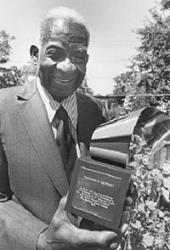
1899 - 1993 Person Name: Thomas A. Dorsey, 1899-1993 Topics: Pastoral Care of the Sick Author of "Precious Lord, Take My Hand" in Gather Comprehensive, Second Edition Thomas Andrew Dorsey was born in Villa Rica, a small rural town near Atlanta, Georgia. In 1919 he moved to Chicago. Most of his musical training was in the church, but he also studied and played jazz and blues. He later combined jazz and blues with religious texts, giving birth to gospel music. In 1931, along with Magnolia Lewis-Butts and Theodore Roosevelt Frye, he established the first gospel choir at Ebenezer Baptist Church in Chicago. He went on to lead the gospel choir at Pilgrim Baptist Church, which he led for 60 years. Dorsey was also instrumental in founding the National Convention of Gospel Choirs and Choruses (NCGCC) in 1933. The convention taught choirs all over the country how to sing gospel music. Dianne Shapiro, from "Gospel" in Encyclopedia of Chicago (accessed 8/12/2020)

Pages


Export as CSV
It looks like you are using an ad-blocker. Ad revenue helps keep us running. Please consider white-listing Hymnary.org or getting Hymnary Pro to eliminate ads entirely and help support Hymnary.org.