You help make Hymnary.org possible. More than 10 million people from 200+ countries found hymns, liturgical resources and encouragement on Hymnary.org in 2025, including you. Every visit affirms the global impact of this ministry.

If Hymnary has been meaningful to you this year, would you take a moment today to help sustain it? A gift of any size—paired with a note of encouragement if you wish—directly supports the server costs, research work and curation that keep this resource freely available to the world.

Give securely online today, or mail a check to:
Hymnary.org
Calvin University
3201 Burton Street SE
Grand Rapids, MI 49546

Thank you for your partnership, and may the hope of Advent fill your heart.

Person Results

Topics:proper+8
In:person

Planning worship? Check out our sister site, ZeteoSearch.org, for 20+ additional resources related to your search.
Showing 41 - 50 of 246Results Per Page: 102050

Thomas O. Chisholm

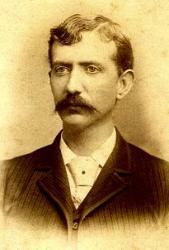
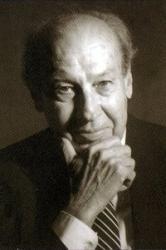
1866 - 1960 Topics: Proper 8 Year B Author of "Great Is Thy Faithfulness" in Voices United Thomas O. Chisholm was born in Franklin, Kentucky in 1866. His boyhood was spent on a farm and in teaching district schools. He spent five years as editor of the local paper at Franklin. He was converted to Christianity at the age of 26 and soon after was business manager and office editor of the "Pentecostal Herald" of Louisville, Ky. In 1903 he entered the ministry of the M. E. Church South. His aim in writing was to incorporate as much Scripture as possible and to avoid flippant or sentimental themes. Dianne Shapiro, from "The Singers and Their Songs: sketches of living gospel hymn writers" by Charles Hutchinson Gabriel (Chicago: The Rodeheaver Company, 1916) ============================== Signed letter from Chisholm dated 9 August 1953 located in the DNAH Archives.

Samuel Crossman

1623 - 1684 Person Name: Samuel Crossman, 1624-1683 Topics: Proper 8 Year C Author of "My song is love unknown" in Common Praise Crossman, Samuel , B.D. From A. Wood's Athenae Oxonienses (1720, vol. ii. p. 730) we gather all that is known of this hymnwriter. Wood says concerning him:— "Samuel Crossman, Bachelor of Divinity of Cambridge, and Prebendary of Bristol, son of Samuel Crossman, of Bradfield Monachorum, in Suffolk. He hath written and published several things, as The Young Man's Monitor, &c, London, 1664, 8vo., and several sermons, among which are two sermons preached in the Cathedral of Bristol, 30th Jan., 1679, and 30th Jan., 1680, being the days of public humiliation for the execrable murder of King Charles I, printed at London, 1681, &c.; also a sermon preached 23rd April, 1680, in the Cathedral Church of Bristol, before the Gentlemen of the Artillery Company newly raised in that City, printed at London, 1680, &c; and, "An Humble Plea for the quiet rest of God's Ark," preached before Sir Joh. Moore, Lord Mayor of London, at St. Mildred's Church in the Poultrey, 5th February, 1681, London, 1682, 4to, &c. He died 4th February, 1683, aged 69 years, and was buried in the South Aisle of the Cathedral Church in Bristol" [of which he had been appointed Dean a few weeks before]. Crossman's contributions to hymnody were given in a small pamphlet entitled:— The Young Man's Meditation, or some few Sacred Poems upon Select Subjects, and Scriptures. By Samuel Crossman, B.D. London, Printed by J. H., &c, 1664. This pamphlet, which was reprinted by D. Sedgwick, London, 1863, contains 9 sacred poems. Of these the following are in common use:— 1. My life's a shade, my days. Resurrection. This is in 6 stanzas of 4 lines, together with a chorus to each stanza of 4 Lines. It is sometimes given as "Life is a shade, my days," as in Kennedy, 1863. 2. Sweet place, sweet place alone, Pt. i. Jerusalem on high, Pt. ii. These two parts form one poem on Heaven. The most popular portion is Pt. ii. This is given in numerous collections in Great Britain and America. Part i. is not so extensively used. From the two parts the cento "Earth's but a sorry tent," in the Dutch Reformed Hymns of the Church, N. Y. 1869, is also taken. 3. Farewell, poor world, I must be gone. Death anticipated. This is given in the Comprehensive Rippon, 1844, and in a few of the older American hymnbooks. 4. My song is love unknown. In the Anglican Hymnbook, 1863 -- John Julian, Dictionary of Hymnology (1907)

John Newton

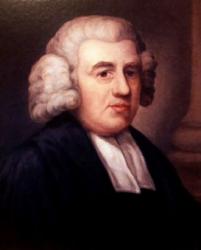
1725 - 1807 Person Name: John Newton, 1725-1807 Topics: Year A Proper 8 Author (vs. 1-4) of "Amazing grace " in Complete Anglican Hymns Old and New John Newton (b. London, England, 1725; d. London, 1807) was born into a Christian home, but his godly mother died when he was seven, and he joined his father at sea when he was eleven. His licentious and tumul­tuous sailing life included a flogging for attempted desertion from the Royal Navy and captivity by a slave trader in West Africa. After his escape he himself became the captain of a slave ship. Several factors contributed to Newton's conversion: a near-drowning in 1748, the piety of his friend Mary Catlett, (whom he married in 1750), and his reading of Thomas à Kempis' Imitation of Christ. In 1754 he gave up the slave trade and, in association with William Wilberforce, eventually became an ardent abolitionist. After becoming a tide-surveyor in Liverpool, England, Newton came under the influence of George Whitefield and John and Charles Wesley and began to study for the ministry. He was ordained in the Church of England and served in Olney (1764-1780) and St. Mary Woolnoth, London (1780-1807). His legacy to the Christian church includes his hymns as well as his collaboration with William Cowper (PHH 434) in publishing Olney Hymns (1779), to which Newton contributed 280 hymns, including “Amazing Grace.” Bert Polman ================== Newton, John, who was born in London, July 24, 1725, and died there Dec. 21, 1807, occupied an unique position among the founders of the Evangelical School, due as much to the romance of his young life and the striking history of his conversion, as to his force of character. His mother, a pious Dissenter, stored his childish mind with Scripture, but died when he was seven years old. At the age of eleven, after two years' schooling, during which he learned the rudiments of Latin, he went to sea with his father. His life at sea teems with wonderful escapes, vivid dreams, and sailor recklessness. He grew into an abandoned and godless sailor. The religious fits of his boyhood changed into settled infidelity, through the study of Shaftesbury and the instruction of one of his comrades. Disappointing repeatedly the plans of his father, he was flogged as a deserter from the navy, and for fifteen months lived, half-starved and ill-treated, in abject degradation under a slave-dealer in Africa. The one restraining influence of his life was his faithful love for his future wife, Mary Catlett, formed when he was seventeen, and she only in her fourteenth year. A chance reading of Thomas à Kempis sowed the seed of his conversion; which quickened under the awful contemplations of a night spent in steering a water-logged vessel in the face of apparent death (1748). He was then twenty-three. The six following years, during which he commanded a slave ship, matured his Christian belief. Nine years more, spent chiefly at Liverpool, in intercourse with Whitefield, Wesley, and Nonconformists, in the study of Hebrew and Greek, in exercises of devotion and occasional preaching among the Dissenters, elapsed before his ordination to the curacy of Olney, Bucks (1764). The Olney period was the most fruitful of his life. His zeal in pastoral visiting, preaching and prayer-meetings was unwearied. He formed his lifelong friendship with Cowper, and became the spiritual father of Scott the commentator. At Olney his best works—-Omicron's Letters (1774); Olney Hymns (1779); Cardiphonia, written from Olney, though published 1781—were composed. As rector of St. Mary Woolnoth, London, in the centre of the Evangelical movement (1780-1807) his zeal was as ardent as before. In 1805, when no longer able to read his text, his reply when pressed to discontinue preaching, was, "What, shall the old African blasphemer stop while he can speak!" The story of his sins and his conversion, published by himself, and the subject of lifelong allusion, was the base of his influence; but it would have been little but for the vigour of his mind (shown even in Africa by his reading Euclid drawing its figures on the sand), his warm heart, candour, tolerance, and piety. These qualities gained him the friendship of Hannah More, Cecil, Wilberforce, and others; and his renown as a guide in experimental religion made him the centre of a host of inquirers, with whom he maintained patient, loving, and generally judicious correspondence, of which a monument remains in the often beautiful letters of Cardiphonia. As a hymnwriter, Montgomery says that he was distanced by Cowper. But Lord Selborne's contrast of the "manliness" of Newton and the "tenderness" of Cowper is far juster. A comparison of the hymns of both in The Book of Praise will show no great inequality between them. Amid much that is bald, tame, and matter-of-fact, his rich acquaintance with Scripture, knowledge of the heart, directness and force, and a certain sailor imagination, tell strongly. The one splendid hymn of praise, "Glorious things of thee are spoken," in the Olney collection, is his. "One there is above all others" has a depth of realizing love, sustained excellence of expression, and ease of development. "How sweet the name of Jesus sounds" is in Scriptural richness superior, and in structure, cadence, and almost tenderness, equal to Cowper's "Oh! for a closer walk with God." The most characteristic hymns are those which depict in the language of intense humiliation his mourning for the abiding sins of his regenerate life, and the sense of the withdrawal of God's face, coincident with the never-failing conviction of acceptance in The Beloved. The feeling may be seen in the speeches, writings, and diaries of his whole life. [Rev. H. Leigh Bennett, M.A.] A large number of Newton's hymns have some personal history connected with them, or were associated with circumstances of importance. These are annotated under their respective first lines. Of the rest, the known history of which is confined to the fact that they appeared in the Olney Hymns, 1779, the following are in common use:— 1. Be still, my heart, these anxious cares. Conflict. 2. Begone, unbelief, my Saviour is near. Trust. 3. By the poor widow's oil and meal. Providence. 4. Chief Shepherd of Thy chosen sheep. On behalf of Ministers. 5. Darkness overspreads us here. Hope. 6. Does the Gospel-word proclaim. Rest in Christ. 7. Fix my heart and eyes on Thine. True Happiness. 8. From Egypt lately freed. The Pilgrim's Song. 9. He Who on earth as man was Known. Christ the Rock. 10. How blest are they to whom the Lord. Gospel Privileges. 11. How blest the righteous are. Death of the Righteous. 12. How lost was my [our] condition. Christ the Physician. 13. How tedious and tasteless the hours. Fellowship with Christ. 14. How welcome to the saints [soul] when pressed. Sunday. 15. Hungry, and faint, and poor. Before Sermon. 16. In mercy, not in wrath, rebuke. Pleading for Mercy. 17. In themselves, as weak as worms. Power of Prayer. 18. Incarnate God, the soul that knows. The Believer's Safety. 19. Jesus, Who bought us with His blood. The God of Israel. "Teach us, 0 Lord, aright to plead," is from this hymn. 20. Joy is a [the] fruit that will not grow. Joy. 21. Let hearts and tongues unite. Close of the Year. From this "Now, through another year," is taken. 22. Let us adore the grace that seeks. New Year. 23. Mary to her [the] Saviour's tomb. Easter. 24. Mercy, 0 Thou Son of David. Blind Bartimeus. 25. My harp untun'd and laid aside. Hoping for a Revival. From this "While I to grief my soul gave way" is taken. 26. Nay, I cannot let thee go. Prayer. Sometimes, "Lord, I cannot let Thee go." 27. Now may He Who from the dead. After Sermon. 28. 0 happy they who know the Lord, With whom He deigns to dwell. Gospel Privilege. 29. O Lord, how vile am I. Lent. 30. On man in His own Image made. Adam. 31. 0 speak that gracious word again. Peace through Pardon. 32. Our Lord, Who knows full well. The Importunate Widow. Sometimes altered to "Jesus, Who knows full well," and again, "The Lord, Who truly knows." 33. Physician of my sin-sick soul. Lent. 34. Pleasing spring again is here. Spring. 35. Poor, weak, and worthless, though I am. Jesus the Friend. 36. Prepare a thankful song. Praise to Jesus. 37. Refreshed by the bread and wine. Holy Communion. Sometimes given as "Refreshed by sacred bread and wine." 38. Rejoice, believer, in the Lord. Sometimes “Let us rejoice in Christ the Lord." Perseverance. 39. Salvation, what a glorious plan. Salvation. 40. Saviour, shine and cheer my soul. Trust in Jesus. The cento "Once I thought my mountain strong," is from this hymn. 41. Saviour, visit Thy plantation. Prayer for the Church. 42. See another year [week] is gone. Uncertainty of Life. 43. See the corn again in ear. Harvest. 44. Sinner, art thou still secure? Preparation for the Future. 45. Sinners, hear the [thy] Saviour's call. Invitation. 46. Sovereign grace has power alone. The two Malefactors. 47. Stop, poor sinner, stop and think. Caution and Alarm. 48. Sweeter sounds than music knows. Christmas. 49. Sweet was the time when first I felt. Joy in Believing. 50. Ten thousand talents once I owed. Forgiveness and Peace. 51. The grass and flowers, which clothe the field. Hay-time. 52. The peace which God alone reveals. Close of Service. 53. Thy promise, Lord, and Thy command. Before Sermon. 54. Time, by moments, steals away. The New Year. 55. To Thee our wants are known. Close of Divine Service. 56. We seek a rest beyond the skies. Heaven anticipated. 57. When any turn from Zion's way. Jesus only. 58. When Israel, by divine command. God, the Guide and Sustainer of Life. 59. With Israel's God who can compare? After Sermon. 60. Yes, since God Himself has said it. Confidence. 61. Zion, the city of our God. Journeying Zionward. -- John Julian, Dictionary of Hymnology (1907) ================= Newton, J., p. 803, i. Another hymn in common use from the Olney Hymns, 1779, is "Let me dwell on Golgotha" (Holy Communion). --John Julian, Dictionary of Hymnology, Appendix, Part II (1907) ----- John Newton was born in London, July 24, 1725. His mother died when he was seven years old. In his eleventh year he accompanied his father, a sea captain, on a voyage. For several years his life was one of dissipation and crime. He was disgraced while in the navy. Afterwards he engaged in the slave trade. Returning to England in 1748, the vessel was nearly wrecked in a storm. This peril forced solemn reflection upon him, and from that time he was a changed man. It was six years, however, before he relinquished the slave trade, which was not then regarded as an unlawful occupation. But in 1754, he gave up sea-faring life, and holding some favourable civil position, began also religious work. In 1764, in his thirty-ninth year, he entered upon a regular ministry as the Curate of Olney. In this position he had intimate intercourse with Cowper, and with him produced the "Olney Hymns." In 1779, Newton became Rector of S. Mary Woolnoth, in London, in which position he became more widely known. It was here he died, Dec. 21, 1807, His published works are quite numerous, consisting of sermons, letters, devotional aids, and hymns. He calls his hymns "The fruit and expression of his own experience." --Annotations of the Hymnal, Charles Hutchins, M.A. 1872 See also in: Hymn Writers of the Church =======================

Thomas Augustine Arne

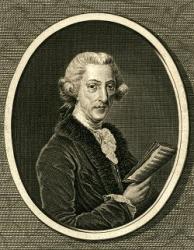
1710 - 1778 Topics: Proper 8 Year C Composer of "ARLINGTON" in Voices United Dr. Thomas Augustine Arne was born March 12, 1710, in London; became early celebrated as a composer, and established his reputation by settling Milton's "Comus" to music - light, airy, and original; he composed many songs, and nearly all his attempts were successful; died March 5, 1778, aged 68. A Dictionary of Musical Information by John W. Moore, Boston: Oliver, Ditson & Company, 1876

Orlando Gibbons

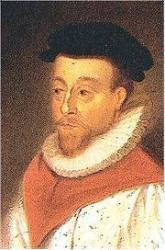
1583 - 1625 Person Name: Orlando Gibbons, 1583-1625 Topics: Proper 8 Year A Composer of "SONG 1 " in Common Praise Orlando Gibbons (baptised 25 December 1583 – 5 June 1625) was an English composer, virginalist and organist of the late Tudor and early Jacobean periods. He was a leading composer in the England of his day. Gibbons was born in Cambridge and christened at Oxford the same year – thus appearing in Oxford church records. Between 1596 and 1598 he sang in the Choir of King's College, Cambridge, where his brother Edward Gibbons (1568–1650), eldest of the four sons of William Gibbons, was master of the choristers. The second brother Ellis Gibbons (1573–1603) was also a promising composer, but died young. Orlando entered the university in 1598 and achieved the degree of Bachelor of Music in 1606. James I appointed him a Gentleman of the Chapel Royal, where he served as an organist from at least 1615 until his death. In 1623 he became senior organist at the Chapel Royal, with Thomas Tomkins as junior organist. He also held positions as keyboard player in the privy chamber of the court of Prince Charles (later King Charles I), and organist at Westminster Abbey. He died at age 41 in Canterbury of apoplexy, and a monument to him was built in Canterbury Cathedral. A suspicion immediately arose that Gibbons had died of the plague, which was rife in England that year. Two physicians who had been present at his death were ordered to make a report, and performed an autopsy, the account of which survives in The National Archives: We whose names are here underwritten: having been called to give our counsels to Mr. Orlando Gibbons; in the time of his late and sudden sickness, which we found in the beginning lethargical, or a profound sleep; out of which, we could never recover him, neither by inward nor outward medicines, & then instantly he fell in most strong, & sharp convulsions; which did wring his mouth up to his ears, & his eyes were distorted, as though they would have been thrust out of his head & then suddenly he lost both speech, sight and hearing, & so grew apoplectical & lost the whole motion of every part of his body, & so died. Then here upon (his death being so sudden) rumours were cast out that he did die of the plague, whereupon we . . . caused his body to be searched by certain women that were sworn to deliver the truth, who did affirm that they never saw a fairer corpse. Yet notwithstanding we to give full satisfaction to all did cause the skull to be opened in our presence & we carefully viewed the body, which we found also to be very clean without any show or spot of any contagious matter. In the brain we found the whole & sole cause of his sickness namely a great admirable blackness & syderation in the outside of the brain. Within the brain (being opened) there did issue out abundance of water intermixed with blood & this we affirm to be the only cause of his sudden death. His death was a shock to peers and the suddenness of his passing drew comment more for the haste of his burial – and of its location at Canterbury rather than the body being returned to London. His wife, Elizabeth, died a little over a year later, aged in her mid-30s, leaving Orlando's eldest brother, Edward, to care for the children left orphans by this event. Of these children only the eldest son, Christopher Gibbons, went on to become a musician. One of the most versatile English composers of his time, Gibbons wrote a quantity of keyboard works, around thirty fantasias for viols, a number of madrigals (the best-known being "The Silver Swan"), and many popular verse anthems. His choral music is distinguished by his complete mastery of counterpoint, combined with his wonderful gift for melody. Perhaps his most well known verse anthem is This is the record of John, which sets an Advent text for solo countertenor or tenor, alternating with full chorus. The soloist is required to demonstrate considerable technical facility at points, and the work at once expresses the rhetorical force of the text, whilst never being demonstrative or bombastic. He also produced two major settings of Evensong, the Short Service and the Second Service. The former includes a beautifully expressive Nunc dimittis, while the latter is an extended composition, combining verse and full sections. Gibbons's full anthems include the expressive O Lord, in thy wrath, and the Ascension Day anthem O clap your hands together for eight voices. He contributed six pieces to the first printed collection of keyboard music in England, Parthenia (to which he was by far the youngest of the three contributors), published in about 1611. Gibbons's surviving keyboard output comprises some 45 pieces. The polyphonic fantasia and dance forms are the best represented genres. Gibbons's writing exhibits full mastery of three- and four-part counterpoint. Most of the fantasias are complex, multisectional pieces, treating multiple subjects imitatively. Gibbons's approach to melody in both fantasias and dances features a capability for almost limitless development of simple musical ideas, on display in works such as Pavane in D minor and Lord Salisbury's Pavan and Galliard. In the 20th century, the Canadian pianist Glenn Gould championed Gibbons's music, and named him as his favorite composer. Gould wrote of Gibbons's hymns and anthems: "ever since my teen-age years this music ... has moved me more deeply than any other sound experience I can think of." In one interview, Gould compared Gibbons to Beethoven and Webern: ...despite the requisite quota of scales and shakes in such half-hearted virtuoso vehicles as the Salisbury Galliard, one is never quite able to counter the impression of music of supreme beauty that lacks its ideal means of reproduction. Like Beethoven in his last quartets, or Webern at almost any time, Gibbons is an artist of such intractable commitment that, in the keyboard field, at least, his works work better in one's memory, or on paper, than they ever can through the intercession of a sounding-board. To this day, Gibbons's obit service is commemorated every year in King's College Chapel, Cambridge. --wikipedia.org

Jaroslav J. Vajda

1919 - 2008 Topics: Proper 8 Year A Translator, v. 2 of "If You Will Trust in God to Guide You" in Voices United Jaroslav J. Vajda (b. Lorain, Ohio, 1919; d. 2008) Born of Czechoslovakian parents, Vajda was educated at Concordia College in Fort Wayne, Indiana, and Concordia Theological Seminary in St. Louis, Missouri. Ordained as a Lutheran pastor in 1944, he served congregations in Pennsylvania and Indiana until 1963. He was editor of the periodicals The Lutheran Beacon (1959-1963) and This Day (1963-1971) and book editor and developer for Concordia Publishing House in St. Louis from 1971 until his retirement in 1986. Working mainly with hymn texts, Vajda served on several Lutheran commissions of worship. A writer of original poetry since his teens, he was the author of They Followed the King (1965) and Follow the King (1977). His translations from Slovak include Bloody Sonnets (1950), Slovak Christmas (1960), An Anthology of Slovak Literature (1977), and contributions to the Lutheran Worship Supplement (1969) and the Lutheran Book of Worship (1978). A collection of his hymn texts, carols, and hymn translations was issued as Now the Joyful Celebration (1987); its sequel is So Much to Sing About (1991). Vajda's hymns are included in many modern hymnals, and he was honored as a Fellow of the Hymn Society in the United States and Canada in 1988. Bert Polman

John Keble

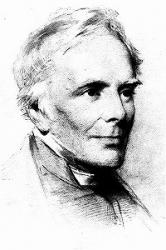
1792 - 1866 Person Name: John Keble, 1792-1866 Topics: Year B Proper 8 Author of "New every morning is the love" in Complete Anglican Hymns Old and New Keble, John, M.A., was born at Fairford, in Gloucestershire, on St. Mark's Day, 1792. His father was Vicar of Coln St. Aldwin's, about three miles distant, but lived at Fairford in a house of his own, where he educated entirely his two sons, John and Thomas, up to the time of their entrance at Oxford. In 1806 John Keble won a Scholarship at Corpus Christi College, and in 1810 a Double First Class, a distinction which up to that time had been gained by no one except Sir Robert Peel. In 1811 he was elected a Fellow of Oriel, a very great honour, especially for a boy under 19 years of age; and in 1811 he won the University Prizes both for the English and Latin Essays. It is somewhat remarkable that amid this brilliantly successful career, one competition in which the future poet was unsuccessful was that for English verse, in which he was defeated by Mr. Rolleston. After his election at Oriel, he resided in College, and engaged in private tuition. At the close of 1813 he was appointed Examining Master in the Schools, and was an exceedingly popular and efficient examiner. On Trinity Sunday, 1815, he was ordained Deacon, and in 1816 Priest, by the Bishop of Oxford, and became Curate of East Leach and Burthorpe, though he still continued to reside at Oxford. In 1818 he was appointed College Tutor at Oriel, which office he retained until 1823. On the death of his mother in the same year, he left Oxford, and returned to live with his father and two surviving sisters at Fairford. In addition to East Leach and Burthorpe, he also accepted the Curacy of Southrop, and the two brothers, John and Thomas, undertook the duties between them, at the same time helping their father at Coln. It should be added, as an apology for Keble thus becoming a sort of pluralist among "the inferior clergy," that the population of all his little cures did not exceed 1000, nor the income £100 a year. In 1824 came the only offer of a dignity in the Church, and that a very humble one, which he ever received. The newly-appointed Bishop of Barbadoes (Coleridge) wished Keble to go out with him as Archdeacon, and but for his father's delicate state of health, he would probably have accepted the offer. In 1825 he became Curate of Hursley, on the recommendation of his old pupil, Sir William Heathcote; but in 1826, on the death of his sister, Mary Ann, he returned to Fairford, feeling that he ought not to separate himself from his father and only surviving sister. He supplied his father's place at Coln entirely. 1827 was memorable for the publication of The Christian Year, and 1828 for the election to the Provostship of Oriel, which his friends, rather than himself, seem to have been anxious to secure for him. In 1829 the living of Hursley was offered to him by Sir William Heathcote, but declined on the ground that he could not leave his father. In 1830 he published his admirable edition of Hooker's Works. In 1831 the Bishop of Exeter (Dr. Philpotts) offered him the valuable living of Paignton, but it was declined for the same reason that Hursley had been declined. In the same year he was also elected to the Poetry Professorship at Oxford. His Praelectiones in that capacity were much admired. In 1833 he preached his famous Assize Sermon at Oxford, which is said by Dr. Newman to have given the first start to the Oxford Movement. Very soon after the publication of this sermon the Tracts for the Times began to be issued. Of these Tracts Keble wrote Nos. 4, 13, 40, and 89. In 1835 his father died, and Keble and his sister retired from Fairford to Coln. In the same year he married Miss Clarke and the Vicarage of Hursley, again becoming vacant, was again offered to him by Sir W. Heathcote, and as the reason for his previous refusal of it no longer existed, he accepted the offer, and in 1836 settled at Hursley for the remainder of his life. That life was simply the life of a devoted and indefatigable parish priest, varied by intellectual pursuits. In 1864 his health began to give way, and on March 29, 1866, he passed away, his dearly loved wife only surviving him six weeks. Both are buried, side by side, in Hursley churchyard. In his country vicarage he was not idle with his pen. In 1839 he published his Metrical Version of the Psalms. The year before, he began to edit, in conjunction with Drs. Pusey and Newman, the Library of the Fathers. In 1846 he published the Lyra Innocentium, and in 1847 a volume of Academical and Occasional Sermons. His pen then seems to have rested for nearly ten years, when the agitation about the Divorce Bill called forth from him in 1851 an essay entitled, An Argument for not proceeding immediately to repeal the Laws which treat the Nuptial Bond as Indissoluble; and in the same year the decision of Archbishop Sumner in the Denison case elicited another essay, the full title of which is The Worship of Our Lord and Saviour in the Sacrament of the Holy Communion, but which is shortly entitled, Eucharistical Adoration. In 1863 he published his last work, The Life of Bishop Wilson (of Sodor and Man). This cost him more pains than anything he wrote, but it was essentially a labour of love. In the popular sense of the word "hymn," Keble can scarcely be called a hymnwriter at all. Very many of his verses have found their way into popular collections of Hymns for Public Worship, but these are mostly centos. Often they are violently detached from their context in a way which seriously damages their significance. Two glaring instances of this occur in the Morning and Evening hymns. In the former the verse "Only, O Lord, in Thy dear love, Fit us for perfect rest above," loses half its meaning when the preceding verse, ending "The secret this of rest below," is excised, as it generally is in collections for public worship, and the same may be said of that most familiar of all Keble's lines, "Sun of my soul, thou Saviour dear," which has of course especial reference to the preceding verse, "'Tis gone, that bright and orbed blaze," &c. The Lyra Innocentium has furnished but few verses which have been adopted into hymn collections; the Psalter has been more fortunate, but the translations from the Latin are almost unknown. Taking, however, the word "hymn" in the wider sense in which Dr. Johnson defines it, as "a song of adoration to some superior being," Keble stands in the very first rank of hymnwriters. His uneventful life was the very ideal life for such a poet as Keble was, but not the sort of life which would be best adapted to train a popular hymnwriter. The Christian Year and the Lyra Innocentium reflect in a remarkable degree the surroundings of the writer. They are essentially the works of a refined and cultured mind, and require a refined and cultured mind to enter into their spirit. Keble, all his life long, and never more than in the earlier portion of it, before he wrote, and when he was writing The Christian Year, breathed an atmosphere of culture and refinement. He had imbibed neither the good nor the evil which the training of a public or even of a private, school brings. It was not even the ordinary home education which he had received. He had been trained, up to the very time of his going to college, by his father, who was clearly a man of culture and refinement, and had been himself successively Scholar and Fellow of Corpus. When he went to Oxford, he can scarcely be said to have entered into the whirl of university life. The Corpus of those days has been admirably described by Keble's own biographer, Sir John Coleridge, and by Dean Stanley in his Life of Dr. Arnold; and the impression which the two vivid pictures leave upon the mind is that of a home circle, on rather a large scale, composed of about twenty youths, all more or less scholarly and refined, and some of them clearly destined to become men of mark. When he removed across the road to Oriel, he found himself in the midst of a still more distinguished band. Whether at home or at college he had never come into contact with anything rude or coarse. And his poetry is just what one would expect from such a career. Exquisitely delicate and refined thoughts, expressed in the most delicate and refined language, are characteristic of it all. Even the occasional roughnesses of versification may not be altogether unconnected with the absence of a public school education, when public schools laid excessive stress upon the form of composition, especially in verse. The Christian Year again bears traces of the life which the writer led, in a clerical atmosphere, just at the eve of a great Church Revival, "cujus pars magna fuit." “You know," he writes to a friend, “the C. Y. (as far as I remember it) everywhere supposes the Church to be in a state of decay." Still more obviously is this the case in regard to the Lyra Innocentium. It was being composed during the time when the writer was stricken by what he always seems to have regarded as the great sorrow of his life. Not the death of his nearest relations—-and he had several trials of this kind—-not the greatest of his own personal troubles dealt to him so severe a blow as the secession of J. H. Newman to the Church of Rome. The whole circumstances of the fierce controversy connected with the Tract movement troubled and unsettled him; and one can well understand with what a sense of relief he turned to write, not for, but about, little children, a most important distinction, which has too often been unnoticed. If the Lyra had been written for children it would have been an almost ludicrous failure, for the obscurity which has been frequently complained of in The Christian Year, is still more conspicuous in the latter work. The title is somewhat misleading, and has caused it to be regarded as a suitable gift-book for the young, who are quite incapable of appreciating it. For the Lyra is written in a deeper tone, and expresses the more matured convictions of the author; and though it is a far less successful achievement as a whole, it rises in places to a higher strain of poetry than The Christian Year does. Another marked feature of Keble's poetry is to a great extent traceable to his early life, viz. the wonderful accuracy and vividness of his descriptions of natural scenery. The ordinary schoolboy or undergraduate cares little for natural scenery. The country is to him a mere playing field. But Keble's training led him to love the country for its own sake. Hence, as Dean Stanley remarks, “Oxford, Bagley Wood, and the neighbourhood of Hursley might be traced through hundreds of lines, both in The Christian Year and the Lyra Innocentium.” The same writer testifies, with an authority which no other Englishman could claim, to "the exactness of the descriptions of Palestine, which he [Keble] had never visited.” And may not this remarkable fact be also traced to some extent to his early training? Brought up under the immediate supervision of a pious father, whom he venerated and loved dearly, he had been encouraged to study intelligently his Bible in a way in which a boy differently educated was not likely to do. Hence, as Sir John Coleridge remarks, "The Christian Year is so wonderfully scriptural. Keble's mind was, by long, patient and affectionate study of Scripture, so imbued with it that its language, its train of thought, its mode of reasoning, seems to flow out into his poetry, almost, one should think, unconsciously to himself." To this may we not add that the same intimate knowledge of the Bible had rendered the memory of the Holy Land so familiar to him that he was able to describe it as accurately as if he had seen it? One other early influence of Keble's life upon his poetry must be noticed. Circumstances brought him into contact with the "Lake poets." The near relation of one of the greatest of them had been his college friend, and John Coleridge introduced him to the writings not only of his uncle, S. T. Coleridge, but also of Wordsworth, to whom he dedicated his Praelectiones, and whose poetry and personal character he admired enthusiastically. To the same college friend he was indebted for an introduction to Southey, whom he found to be "a noble and delightful character," and there is no doubt that the writings of these three great men, but especially Wordsworth, had very much to do with the formation of Keble's own mind as a poet. It has been remarked that in Keble's later life his poetical genius seemed to have, to a great extent, forsaken him; and that the Miscellaneous Poems do not show many traces of the spirit which animated The Christian Year and the Lyra Innocentium. Perhaps one reason for this change may be found in the increased interest "which Keble took in public questions which were not conducive to the calm, introspective state of mind so necessary to the production of good poetry. The poet should live in a world of his own, not in a world perpetually wrangling about University Reform, about Courts of Final Appeal, about Marriage with Deceased Wife's Sister, and other like matters into which Keble, in his later years, threw himself—heart and soul. It is not needful to say much about Keble's other poetical works, The Psalter was not a success, and Keble did not expect it to be. It was undertaken," he tells us, "in the first instance with a serious apprehension, which has since grown into a full conviction, that the thing attempted is, strictly speaking, impossible." At the same time, if Keble did not achieve what he owned to be impossible, he produced a version which has the rare merit of never offending against good taste; one which in every line reflects the mind of the cultured and elegant scholar, who had been used to the work of translating from other languages into English. Hymnal compilers have hitherto strangely neglected this volume; but it is a volume worth the attention of the hymn compiler of the future. There is scarcely a verse in it which would do discredit to any hymnbook; while there are parts which would be an acquisition to any collection. His translations from the Latin have not commended themselves to hymnal compilers. Some of his detached hymns have been more popular. But it is after all as writer of The Christian Year that Keble has established his claim to be reckoned among the immortals. It would be hardly too much to say that what the Prayer Book is in prose, The Christian Year is in poetry. They never pall upon one; they realise Keble's own exquisite simile:— "As for some dear familiar strain Untired we ask, and ask again; Ever in its melodious store Finding a spell unheard before." And it would hardly be too bold to prophesy that The Christian Year will live as long as the Prayer Book, whose spirit Keble had so thoroughly imbibed, and whose "soothing influence" it was his especial object to illustrate and commend. [Rev. John H. 0verton, D.D.] Keble's hymns, poetical pieces, and translations appeared in the following works :— (1.) The Christian Year: Thoughts in Verse for the Sundays and Holy days Throughout the Year. Oxford: John Henry Parker, 1827. Preface dated "May 30th, 1827." The last poem, that on the “Commination," is dated March 9, 1827. The poems on the "Forms of Prayer to be used at Sea," "Gunpowder Treason," "King Charles the Martyr," "The Restoration of the Royal Family," "The Accession," and "Ordination," were added to the 4th edition, 1828. The Messrs. Parker have pub. a large number of editions to date, including a facsimile reprint of the first edition, and an edition with the addition of the dates of composition of each poem. A facsimile of Keble's manuscript as it existed in 1822 was also lithographed in 1882, by Eliot Stock, but its publication was suppressed by a legal injunction, and only a few copies came into the hands of the public. Since the expiration of the first copyright other publishers have issued the work in various forms. (2.) Contributions to the British Magazine, which were included in Lyra Apostolica, 1836, with the signature of "γ." (3.) The Psalter or Psalms of David; In English Verse; By a Member of the University of Oxford. Adapted for the most part, to Tunes in Common Use; and dedicated by permission to the Lord Bishop of Oxford. . . . Oxford, John Henry Parker: J. G. & F. Rivington, London, MDCCCXXXIX. Preface dated “Oxford, May 29, 1839." (4.) The Child's Christian Year: Hymns for every Sunday and Holy-Day. Compiled for the use of Parochial Schools. Oxford: John Henry Parker, 1841. This was compiled by Mrs. Yonge. Keble wrote the Preface, dated “Hursley, Nov. 6, 1841," and signed it “J. K." To it he contributed the four poems noted below. (5.) Lyra Innocentium: Thoughts in Verse on Christian Children, their Ways and their Privileges . . . Oxford: John Henry Parker : F. & J. Rivington, London, 1846. The Metrical Address (in place of Preface) “To all Friendly Readers," is dated "Feb. 8, 1846." (6.) Lays of the Sanctuary, and otter Poems. Compiled and Edited by G. Stevenson de M. Rutherford... London: Hamilton, Adams & Co., 1859. This was a volume of poems published on behalf of Mrs. Elizabeth Good. To it Keble contributed the three pieces noted below. (7.) The Salisbury Hymn-Book 1857. Edited by Earl Nelson. To this be contributed a few hymns, some translations from the Latin, and some rewritten forms of well-known hymns, as "Guide me, 0 Thou great Jehovah," &c. (8.) Miscellaneous Poems by the. Rev. J. Keble, M.A., Vicar of Hursley. Oxford and London: Parker & Co., 1869. The excellent Preface to this posthumous work is dated "Chester, Feb. 22, 1869," and is signed "G.M," i.e. by George Moberly, late Bishop of Salisbury. This volume contains Keble's Ode written for the Installation of the Duke of Wellington as Chancellor of the University of Oxford, in 1834, his poems from the Lyra Apostolica, his hymns named above, his translations from the Latin, and other pieces not published in his works. The most important centos from The Christian Year, which are in common use as hymns, and also the hymns contributed to the Salisbury Hymn Book, 1857, are annotated in full under the first lines of the original poems. The translations from the Latin and Greek are given under the first lines of the originals. There are also several of his more important pieces noted in the body of this work. Those that …have no special history, are the following (the dates given being those of the composition of each piece):— i. From The Christian Year, 1827 and 1828. 1. Creator, Saviour, strengthening Guide. Trinity Sunday. (March 3, 1826.) 2. Father, what treasures of sweet thought. Churching of Women. (March 13, 1827.) 3. God is not in the earthquake: but behold. 9th Sunday after Trinity. The still mall voice. (Aug. 13,1822.) 4. In troublous days of anguish and rebuke. 9th S. after Trinity. The still small voice. (Aug. 13, 1822.) 5. Lessons sweet of spring returning. 1st Sunday after Epiphany. Spring. (May 17,1824.) 6. My Saviour, can it ever be? 4th Sunday after Easter. The promised Comforter. 7. 0 Father of long suffering grace. 18th Sunday after Trinity. God's longsuffering. (Oct. 6, 1823.) 8. 0 God of mercy, God of might, How should, &c. Holy Communion. (Jan. 31, 1827.) 9. 0 Lord my God, do Thou Thy holy will. Wednesday before Easter. Resignation. (Aug. 13, 1821.) 10. 0 say not, dream [think] not, heavenly notes. Catechism. (Feb. 16, 1827.) 11. 0 shame upon thee, listless heart. SS. Philip & James. (Aug. 3, 1825.) 12. 0 who shall dare in this frail scene? St. Mark's Day. (1820.) 13. Red o'er the forest peers the setting sun. 23rd Sunday after Trinity. The Resurrection of the body. (Nov. 12, 1825.) 14. Spirit of Christ, Thine earnest give. Ordination. (March 28, 1828.) 15. Spirit of light and truth, to Thee. Ordination. (March 28, 1828.) 16. Spirit of might and sweetness too. Confirmation. (Feb. 21, 1827.) 17. Sweet nurslings of the vernal skies. 15th S. after Trinity. Consider the lilies. Live for today. (Feb. 3, 1826) 18. The days of hope and prayer are past. 4th Sunday after Easter. The promised Comforter. 19. The live-long night we've toiled in vain. 5th Sunday after Trinity. Miracle of the Fishes. (1821.) 20. The midday sun with fiercest glare. Conversion of St. Paul. (Mar. 2,1822.) 21. The shadow of the Almighty's cloud. Confirmation. (Feb. 22, 1827.) 22. The silent joy that sinks so deep. 2nd Sunday after Epiphany. Turning Water into Wine. 23. Then, fainting soul, arise and sing. 4th Sunday after Easter. The promised Comforter. 24. When brothers part for manhood's race. St. Andrew's Day. (Jan. 27, 1822.) 25. Who is God’s chosen priest ? St. Matthias's Day. 26. Why doth my Saviour weep? 10th Sunday after Trinity. Christ weeping over Jerusalem. (1819.) 27. Why should we faint and fear to live alone? 24th Sunday after Trinity. God's goodness in veiling the future. (June 7, 1825.) 28. Wish not, dear friends, my pain away. 16th Sunday after Trinity. Resignation. (1824.) ii. From The Psalter, 1839. 29. From deeps so wild and drear. Ps. cxxx. 30. God our Hope and Strength abiding. Ps. xlvi. 31. How pleasant, Lord of hosts, how dear. Ps. lxxxiv. 32. Lord, be my Judge, for I have trod. Ps. xxvi. 33. Lord, Thy heart in love hath yearned. Ps. lxxxv. 34. Lord, Thou hast search'd me out and known. Ps. cxxxix 35. My God, my God, why hast Thou me? Ps. xxii. 36. My Shepherd is the living God. Ps. xxiii. 37. My Shepherd is the Lord; J know. Ps. xxiii. 38. Praise the Lord, for He is love. Ps. cxxxvi. 39. Praise ye the Lord from heaven. Ps.cxlviii. 40. Sing the song unheard before. Ps. xcvi. 41. Sound high Jehovah's Name. Ps. cxxxv. 42. The earth is all the Lord's, with all. Ps. xxiv. 43. The mercies of the Lord my God. Ps. lxxxix. 44. The seed of Jacob, one and all. Ps. xxii. iii. From The Child's Christian Year, 1841, and later editions. 45. Bethlehem, above all cities blest. Innocents’ Day. 46. Lo, from the Eastern hills the Lord. l0th Sunday after Trinity. The Gospel. (Late editions.) 47. Our God in glory sits on high. 1st Sunday after Easter. The Epistle. 48. When Christ to village comes or town. 16th Sunday after Trinity. The Gospel. (Late editions.) iv. From Lyra Innocentium, 1846. 49. Christ before thy door is waiting. Presence of Christ in His poor; or, Offertory. 50. How [When] the new-born saints, assembling. Offertory. 51. Once in His Name Who made thee. Holy Baptism. 52. Who for the like of me will care? Naamans' Servant-maid v. From Lays of the Sanctuary, 1859. 53. Lord, lift my heart to Thee at morn. Emigrant's Midnight Hymn. 54. O Love unseen, we know Thee nigh. Cento from No. 53. 55. Slowly the gleaming stars retire. Morning Hymn for Emigrants at Sea. 56. The twilight hour is sweet at home. Evening hymn for Emigrants at Sea. The editor of Keble's Miscellaneous Poems says concerning Nos. 53, 55, and 56:— "The three hymns for Emigrants, for use at Midnight, Morning, and Evening, were written at the request of his friend Sir Frederic Rogers, at that time Emigration Commissioner. They were printed in the first edition of the ‘Prayers for Emigrants, which he had compiled, but were subsequently omitted, perhaps as being thought not sufficiently simple for the class of people for whose use the Book of Prayers was chiefly intended." Preface, p. vi. It is found that nearly 100 hymns (counting centos as such) by Keble are in common use at the present time, and of these some rank with the finest and most popular in the English language. -- John Julian, Dictionary of Hymnology (1907)

E. S. Elliott

1836 - 1897 Person Name: Emily Elizabeth Steele Elliot, 1836-1897 Topics: Year C Proper 8 Author (attributed to) of "Thou didst leave thy throne " in Complete Anglican Hymns Old and New Elliott, Emily Elizabeth Steele, third daughter of the late Rev. E. B. Elliott, of Brighton, author of the Horae Apocalypticae was born at Brighton, and now [1887] lives in London. She has contributed hymns, some of which have obtained wide acceptance, to the choir manuals, and Additional Hymns, 1866 (Nos. 8, 34) for use in St. Mark's Church, Brighton; to the Church Missionary Juvenile Instructor, which she edited for six years. Her Chimes of Consecration, a volume of 70 hymns and poems, was published in 1873, and her Chimes for Daily Service in 1880. The latter contains 71 hymns in two parts. The second part of 48 hymns is also published separately as Under the Pillow, for use as a cheap large type hymn-book (with corresponding tune-book) for hospitals and infirmaries and the sick generally. Her hymn, “Let us keep the feast" (Holy Communion), was first published in The Feast of Sacrifice and The Feast of 'Remembrance, 1865, in 5 stanzas of 5 lines. [Rev. James Mearns, M.A.] -- John Julian, Dictionary of Hymnology (1907) ================= Elliott, Emily E. 8., p. 328, ii. The following additional hymns by Miss Elliott have recently come into common use:— 1. Brothers, sisters, pray for us. [Missionaries' Farewell.] Appeared in the C. M. Gleaner, Sept. 1896, p. 14?, and entitled "The Missionaries' Departing Petition." In the Church Miss. Hymn Book, 1899. 2. Rabboni, Master, we have heard. [Consecration of Self to Duty.] In theC. M. Gleaner, Dec. 1895, p. 195. It was sung for the first time at the Gleaners' Union Anniversary, 1895. In the Church Miss. Hymn Book, 1899. 3. Full consecration! heart and spirit yielded. [Full Consecration.] Given in Hymns of Consecration and Faith, 1902. 4. They come and go, the seasons fair, [Second Advent.] In the C. M. Gleaner, Nov. 1891, p. 172, as "What will be when the King comes?" It was sung for the first time at the Gleaners' Union Anniversary, Oct. 30, 1891. In the Church Miss. Hymn Book, 1899. Miss Elliott was born at Brighton, July 22, 1836, and died at Mildmay, London, Aug. 3, 1897. --John Julian, Dictionary of Hymnology, New Supplement (1907)

Michael Forster

b. 1946 Person Name: Michael Forster, b. 1946 Topics: Year C Proper 8 Adapter of "Thou didst leave thy throne " in Complete Anglican Hymns Old and New

Daniel Iverson

1890 - 1977 Topics: Proper 8 Year C Author (v. 1) of "Spirit of the Living God" in Voices United Daniel Iverson (b. Brunswick, GA, 1890; d. Asheville, NC, 1977) wrote the first stanza and tune of this hymn after hearing a sermon on the Holy Spirit during an evangelism crusade by the George Stephens Evangelistic Team in Orlando, Florida, 1926. The hymn was sung at the crusade and then printed in leaflets for use at other services. Published anonymously in Robert H. Coleman's Revival Songs (1929) with alterations in the tune, this short hymn gained much popularity by the middle of the century. Since the 1960s it has again been properly credited to Iverson. Iverson studied at the University of Georgia, Moody Bible Institute, Columbia Theological Seminary, and the University of South Carolina. Ordained in the Presbyterian Church in 1914, he served congregations in Georgia and in North and South Carolina. In 1927 he founded the Shenandoah Presbyterian Church in Miami, Florida, and served there until his retirement in 1951. An evangelist as well as a preacher, Iverson planted seven new congregations during his ministry in Miami. --www.hymnary.org/hymn/PsH/424

Pages


Export as CSV
It looks like you are using an ad-blocker. Ad revenue helps keep us running. Please consider white-listing Hymnary.org or getting Hymnary Pro to eliminate ads entirely and help support Hymnary.org.