You help make Hymnary.org possible. More than 10 million people from 200+ countries found hymns, liturgical resources and encouragement on Hymnary.org in 2025, including you. Every visit affirms the global impact of this ministry.

If Hymnary has been meaningful to you this year, would you take a moment today to help sustain it? A gift of any size—paired with a note of encouragement if you wish—directly supports the server costs, research work and curation that keep this resource freely available to the world.

Give securely online today, or mail a check to:
Hymnary.org
Calvin University
3201 Burton Street SE
Grand Rapids, MI 49546

Thank you for your partnership, and may the hope of Advent fill your heart.

Person Results

Topics:the+second+coming+of+christ
In:people

Planning worship? Check out our sister site, ZeteoSearch.org, for 20+ additional resources related to your search.
Showing 41 - 50 of 250Results Per Page: 102050

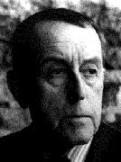
Jacques Berthier

1923 - 1994 Person Name: Jacques Berthier, 1923-94 Topics: Second Coming of Christ Composer of "MAGNIFICAT" in Hymnal Supplement 98 Jacques Berthier (b. Auxerre, Burgundy, June 27, 1923; d. June 27, 1994) A son of musical parents, Berthier studied music at the Ecole Cesar Franck in Paris. From 1961 until his death he served as organist at St. Ignace Church, Paris. Although his published works include numerous compositions for organ, voice, and instruments, Berthier is best known as the composer of service music for the Taizé community near Cluny, Burgundy. Influenced by the French liturgist and church musician Joseph Gelineau, Berthier began writing songs for equal voices in 1955 for the services of the then nascent community of twenty brothers at Taizé. As the Taizé community grew, Berthier continued to compose most of the mini-hymns, canons, and various associated instrumental arrangements, which are now universally known as the Taizé repertoire. In the past two decades this repertoire has become widely used in North American church music in both Roman Catholic and Protestant traditions. Bert Polman

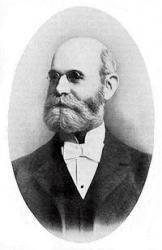
Robert Prescott Stewart

1825 - 1894 Person Name: R. P. Stewart Topics: Second Coming of Christ Composer of "[Hark! ten thousand harps and voices]" in The Lutheran Hymnary

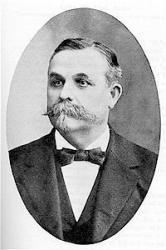
William J. Kirkpatrick

1838 - 1921 Topics: The Second Coming of Christ Composer of "TRUMP OF THE GREAT ARCHANGEL" in Redemption Hymnal William J. Kirkpatrick (b. Duncannon, PA, 1838; d. Philadelphia, PA, 1921) received his musical training from his father and several other private teachers. A carpenter by trade, he engaged in the furniture business from 1862 to 1878. He left that profession to dedicate his life to music, serving as music director at Grace Methodist Church in Philadelphia. Kirkpatrick compiled some one hundred gospel song collections; his first, Devotional Melodies (1859), was published when he was only twenty-one years old. Many of these collections were first published by the John Hood Company and later by Kirkpatrick's own Praise Publishing Company, both in Philadelphia. Bert Polman

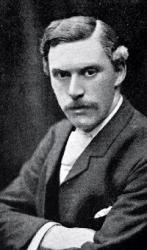
Johann Walter

1496 - 1570 Person Name: J. Walther Topics: Second Coming of Christ Author of "Soon will the heavenly Bridegroom come" in The Lutheran Hymnary Johann Walther (b. Kahla, Thuringia, Germany, 1496: d. Torgau, Germany, 1570) was one of the great early influences in Lutheran church music. At first he seemed destined to be primarily a court musician. A singer in the choir of the Elector of Saxony in the Torgau court in 1521, he became the court's music director in 1525. After the court orchestra was disbanded in 1530 and reconstituted by the town, Walther became cantor at the local school in 1534 and directed the music in several churches. He served the Elector of Saxony at the Dresden court from 1548 to 1554 and then retired in Torgau. Walther met Martin Luther in 1525 and lived with him for three weeks to help in the preparation of Luther's German Mass. In 1524 Walther published the first edition of a collection of German hymns, Geystliche gesangk Buchleyn. This collection and several later hymnals compiled by Walther went through many later editions and made a permanent impact on Lutheran hymnody. Bert Polman ================ Walther, Johann, was born in 1496 at a village near Cola (perhaps Kahla, or else Colleda, near Sachsenburg) in Thuringia. In 1524 we find him at Torgau, as bassist at the court of Friedrich the Wise, Elector of Saxony. The Elector Johann of Saxony made him "Sengermeister" (choirmaster) in 1526. When the Electoral orchestra (Kapelle) at Torgau was disbanded in 1530, it was reconstituted by the town, and in 1534 Walther was also appointed cantor (singing-master) to the school at Torgau. On the accession of the Elector Moritz of Saxony, in 1548, Walther went with him to Dresden as his Kapellmeister. He was pensioned by decree of Aug. 7, 1554, and soon after returned to Torgau, still retaining the title of "Sengermeister." He died at Torgau, perhaps on March 25, or at least before April 24, 1570. (Monatshefte für Musikgeschichte, 1871, p. 8, and 1878, p. 85; Archiv für Litteraturgeschichte, vol. xii., 1884, p. 185; Dr. Otto Taubert's Pflege der Musilz in Torgau, 1868, and his Gymnasial Singe-Chor zu Torgau, n.d., 1870, &c.) Walther was more distinguished as a musician than as a hymnwriter. In 1524 he spent three weeks in Luther's house at Wittenberg, helping to adapt the old church music to the Lutheran services, and harmonising the tunes in five parts for the Geystliche gesangk Bucklyn, published at Wittenberg in 1524. He was also present in the Stadtkirche at Wittenberg, when, on Oct. 29, 1525, the service for the Holy Communion, as rearranged by Luther and himself, was first used in German. His hymns appeared mostly in his Das christlich Kinderlied D. Martini Lutheri, Erhalt uns Herr, &c. Auffs new in sechs Stimmen gesetzt, und rait etlichen schönen Christlichen Texten, Lateinischen und Teutschen Gesengen gemehrt, &c, Wittenberg. Those of Walther's hymns which have passed into English are:— i. Herzlich Lieb hab ich dich, mein Gott. Trinity Sunday. First published in 1566 as above, and thence in Wackernage, iii. p. 204, in 4 stanzas of 8 lines. Translated as:— 0 God, my Rock! my heart on Thee. This is a good translation of stanza i., iii., iv., by A. T. Russell, as No. 133 in his Psalms & Hymns, 1851. ii. Herzlich thut mich erfreuen. Eternal Life. First published separately, in 33 stanzas, at Wittenberg, in 1552, entitled "A beautiful spiritual and Christian new miner's song, of the Last Day and Eternal Life" [Konigsberg Library]. Thence in Wackernagel, iii. p. 187, in 34 stanzas, stanza 33 being added from the Dresden reprint of 1557. It is set to the melody of a popular song on the Joys of Summer. It is a fresh and beautiful hymn, but is only partially available on account of its length. Translated as:— 1. Now fain my joyous heart would sing. This is a translation of stanza 1, 4, 5, 17, 33, 34, by Miss Winkworth, in her Lyra Germanica 2nd Ser., 1858, p. 223. Her translations of stanzas 1, 4, 5, were included in the English Presbyterian Psalms & Hymns, 1867, No. 325. 2. Soon will the heavenly Bridegroom come. This is by Dr. Kennedy, in his Hymn. Christanza, 1863, No. 1009, and follows the text of the Geistliche Lieder omitting stanza 16, 18, 13. It is repeated in the Laudes Domini, N. Y., 1884, &c. 3. The Bridegroom soon will call us. By Dr. M. Loy, from the Geistliche Lieder, but omitting stanzas 18, 13, as No. 24 in the Ohio Lutheran Hymnal, 1880. [Rev. James Mearns, M.A. ] --Excerpts from John Julian, Dictionary of Hymnology (1907)

Claire Cloninger

1942 - 2019 Topics: Everlasting Fellowship The Second Coming of Christ Author of "While We Are Waiting, Come" in The Celebration Hymnal

James McGranahan

1840 - 1907 Topics: The Second Coming of Christ Composer of "O LORD JESUS HOW LONG" in Redemption Hymnal James McGranahan USA 1840-1907. Born at West Fallowfield, PA, uncle of Hugh McGranahan, and son of a farmer, he farmed during boyhood. Due to his love of music his father let him attend singing school, where he learned to play the bass viol. At age 19 he organized his first singing class and soon became a popular teacher in his area of the state. He became a noted musician and hymns composer. His father was reluctant to let him pursue this career, but he soon made enough money doing it that he was able to hire a replacement farmhand to help his father while he studied music. His father, a wise man, soon realized how his son was being used by God to win souls through his music. He entered the Normal Music School at Genesco, NY, under William B Bradbury in 1861-62. He met Miss Addie Vickery there. They married in 1863, and were very close to each other their whole marriage, but had no children. She was also a musician and hymnwriter in her own right. For a time he held a postmaster’s job in Rome, PA. In 1875 he worked for three years as a teacher and director at Dr. Root’s Normal Music Institute. He because well-known and successful as a result, and his work attracted much attention. He had a rare tenor voice, and was told he should train for the operatic stage. It was a dazzling prospect, but his friend, Philip Bliss, who had given his wondrous voice to the service of song for Christ for more than a decade, urged him to do the same. Preparing to go on a Christmas vacation with his wife, Bliss wrote McGranahan a letter about it, which McGranahan discussed with his friend Major Whittle. Those two met in person for the first time at Ashtubula, OH, both trying to retrieve the bodies of the Bliss’s, who died in a bridge-failed train wreck. Whittle thought upon meeting McGranahan, that here is the man Bliss has chosen to replace him in evangelism. The men returned to Chicago together and prayed about the matter. McGranahan gave up his post office job and the world gained a sweet gospel singer/composer as a result. McGranahan and his wife, and Major Whittle worked together for 11 years evangelizing in the U.S., Great Britain, and Ireland. They made two visits to the United Kingdom, in 1880 and 1883, the latter associated with Dwight Moody and Ira Sankey evangelistic work. McGranahan pioneered use of the male choir in gospel song. While holding meetings in Worcester, MA, he found himself with a choir of only male voices. Resourcefully, he quickly adapted the music to those voices and continued with the meetings. The music was powerful and started what is known as male choir and quartet music. Music he published included: “The choice”, “Harvest of song”, “Gospel Choir”,, “Gospel hymns #3,#4, #5, #6” (with Sankey and Stebbins), “Songs of the gospel”, and “Male chorus book”. The latter three were issued in England. In 1887 McGranahan’s health compelled him to give up active work in evangelism. He then built a beautiful home, Maplehurst, among friends at Kinsman, OH, and settled down to the composition of music, which would become an extension of his evangelistic work. Though his health limited his hours, of productivity, some of his best hymns were written during these days. McGranahan was a most lovable, gentle, modest, unassuming, gentleman, and a refined and cultured Christian. He loved good fellowship, and often treated guests to the most delightful social feast. He died of diabetes at Kinsman, OH, and went home to be with his Savior. John Perry

Johann Crüger

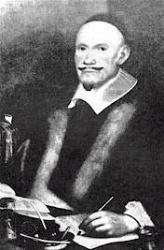
1598 - 1662 Topics: The Second Coming of Christ Composer of "CRUGER" in Redemption Hymnal Johann Crüger (b. Grossbriesen, near Guben, Prussia, Germany, 1598; d. Berlin, Germany, 1662) Crüger attended the Jesuit College at Olmutz and the Poets' School in Regensburg, and later studied theology at the University of Wittenberg. He moved to Berlin in 1615, where he published music for the rest of his life. In 1622 he became the Lutheran cantor at the St. Nicholas Church and a teacher for the Gray Cloister. He wrote music instruction manuals, the best known of which is Synopsis musica (1630), and tirelessly promoted congregational singing. With his tunes he often included elaborate accom­paniment for various instruments. Crüger's hymn collection, Neues vollkomliches Gesangbuch (1640), was one of the first hymnals to include figured bass accompaniment (musical shorthand) with the chorale melody rather than full harmonization written out. It included eighteen of Crüger's tunes. His next publication, Praxis Pietatis Melica (1644), is considered one of the most important collections of German hymnody in the seventeenth century. It was reprinted forty-four times in the following hundred years. Another of his publications, Geistliche Kirchen Melodien (1649), is a collection arranged for four voices, two descanting instruments, and keyboard and bass accompaniment. Crüger also published a complete psalter, Psalmodia sacra (1657), which included the Lobwasser translation set to all the Genevan tunes. Bert Polman =============================== Crüger, Johann, was born April 9, 1598, at Gross-Breese, near Guben, Brandenburg. After passing through the schools at Guben, Sorau and Breslau, the Jesuit College at Olmütz, and the Poets' school at Regensburg, he made a tour in Austria, and, in 1615, settled at Berlin. There, save for a short residence at the University of Wittenberg, in 1620, he employed himself as a private tutor till 1622. In 1622 he was appointed Cantor of St. Nicholas's Church at Berlin, and also one of the masters of the Greyfriars Gymnasium. He died at Berlin Feb. 23, 1662. Crüger wrote no hymns, although in some American hymnals he appears as "Johann Krüger, 1610,” as the author of the supposed original of C. Wesley's "Hearts of stone relent, relent" (q.v.). He was one of the most distinguished musicians of his time. Of his hymn tunes, which are generally noble and simple in style, some 20 are still in use, the best known probably being that to "Nun danket alle Gott" (q.v.), which is set to No. 379 in Hymns Ancient & Modern, ed. 1875. His claim to notice in this work is as editor and contributor to several of the most important German hymnological works of the 16th century, and these are most conveniently treated of under his name. (The principal authorities on his works are Dr. J. F. Bachmann's Zur Geschichte der Berliner Gesangbücher 1857; his Vortrag on P. Gerhard, 1863; and his edition of Gerhardt's Geistliche Lieder, 1866. Besides these there are the notices in Bode, and in R. Eitner's Monatshefte für Musik-Geschichte, 1873 and 1880). These works are:— 1. Newes vollkömmliches Gesangbuch, Augspur-gischer Confession, &c, Berlin, 1640 [Library of St. Nicholas's Church, Berlin], with 248 hymns, very few being published for the first time. 2. Praxis pietatis melica. Das ist: Ubung der Gottseligkeit in Christlichen und trostreichen Gesängen. The history of this, the most important work of the century, is still obscure. The 1st edition has been variously dated 1640 and 1644, while Crüger, in the preface to No. 3, says that the 3rd edition appeared in 1648. A considerable correspondence with German collectors and librarians has failed to bring to light any of the editions which Koch, iv. 102, 103, quotes as 1644, 1647, 1649, 1650, 1651, 1652, 1653. The imperfect edition noted below as probably that of 1648 is the earliest Berlin edition we have been able to find. The imperfect edition, probably ix. of 1659, formerly in the hands of Dr. Schneider of Schleswig [see Mützell, 1858, No. 264] was inaccessible. The earliest perfect Berlin edition we have found is 1653. The edition printed at Frankfurt in 1656 by Caspar Röteln was probably a reprint of a Berlin edition, c. 1656. The editions printed at Frankfurt-am-Main by B. C. Wust (of which the 1666 is in the preface described as the 3rd) are in considerable measure independent works. In the forty-five Berlin and over a dozen Frankfurt editions of this work many of the hymns of P. Gerhardt, J. Franck, P. J. Spener, and others, appear for the first time, and therein also appear many of the best melodies of the period. 3. Geistliche Kirchen-Melodien, &c, Leipzig, 1649 [Library of St. Katherine's Church, Brandenburg]. This contains the first stanzas only of 161 hymns, with music in four vocal and two instrumental parts. It is the earliest source of the first stanzas of various hymns by Gerhardt, Franck, &c. 4. D. M. Luther's und anderer vornehmen geisU reichen und gelehrten Manner Geistliche Lieder und Psalmen, &c, Berlin, 1653 [Hamburg Town Library], with 375 hymns. This was edited by C. Runge, the publisher, and to it Crüger contributed some 37 melodies. It was prepared at the request of Luise Henriette (q.v.), as a book for the joint use of the Lutherans and the Re¬formed, and is the earliest source of the hymns ascribed to her, and of the complete versions of many hymns by Gerhardt and Franck. 5. Psalmodia Sacra, &c, Berlin, 1658 [Royal Library, Berlin]. The first section of this work is in an ed. of A. Lobwasser's German Psalter; the second, with a similar title to No. 4, and the date 1657, is practically a recast of No. 4,146 of those in 1653 being omitted, and the rest of the 319 hymns principally taken from the Praxis of 1656 and the hymn-books of the Bohemian Brethren. New eds. appeared in 1676, 1700, 1704, 1711, and 1736. [Rev. James Mearns, M.A.] -- Excerpt from John Julian, Dictionary of Hymnology (1907) ======================= Crüger, Johann, p. 271, ii. Dr. J. Zahn, now of Neuendettelsau, in Bavaria, has recently acquired a copy of the 5th ed., Berlin, 1653, of the Praxis. --John Julian, Dictionary of Hymnology, Appendix, Part II (1907)

Charles Silvester Horne

1865 - 1914 Topics: The Second Coming of Christ Author of "Sing we the King" in Redemption Hymnal Charles Silvester Horne (1865–1914) was a famous late 19th century and early 20th century Congregationalist minister, who additionally served as Liberal M.P. for Ipswich, and was a noted orator. He was also the father of the humorous broadcaster, Kenneth Horne. He was born in Cuckfield, Sussex on 15 April 1865, the youngest child of Charles Horne, the minister of Cuckfield Congregational Church, and his wife, whose maiden name was Harriet Silvester Simpson. When he was six weeks old the family moved to Newport, Shropshire. Here Charles Horne gave up the ministry, becoming the editor of the local newspaper, the Newport Advertiser and became a partner of his wife's uncle, Charles Silvester in a printing and bookselling firm. Horne lived the rest of his childhood in the town, and was educated at Adams' Grammar School, where his headmaster was a Mr. Tom Collins. His father's newspaper was very much a family business, and every member of the family helped with it at some point. The family at this time attended the Newport Congregational Chapel, which is described by Horne's biographer as "The most considerable Nonconformist place of worship in the town." It was through this church that Horne first began to preach, and his thoughts turned towards the Congregational ministry. He graduated MA from Glasgow University in 1886 and subsequently studied Theology at Mansfield College, Oxford, where he was in the first intake of students at the new Congregational college, before beginning his working life as Minister of Kensington Chapel. During this period he married Katharine, the eldest daughter of Lord Cozens Hardy, Master of the Rolls from 1907 until 1918. His fame as a preacher and author grew after he took over the Whitefield's Church, Tottenham Court Road, writing hymns which are still sung today. From 1910 until his death he had a national platform for his views as an MP. In 1914, while on holiday in Canada, returning from Niagara Falls, he was suddenly taken ill travelling on a steamer and died, aged forty-nine, before arriving at Toronto. His body was taken home and buried at Church Stretton, Shropshire, in the cemetery at Cunnery Road. Tributes poured in and his memorial service was attended by David Lloyd George. His wife and children were to outlive him by over half a century, his youngest daughter living until 1984. One of his grandchildren, Archibald Ronald McDonald Gordon, was Bishop of Portsmouth from 1975 to 1984. --en.wikipedia.org/wiki/S

Henry Burton

1840 - 1930 Topics: The Second Coming of Christ Author of "There’s a Light upon the Mountains" in Redemption Hymnal Rv Alfred Henry Burton DD United Kingdom 1840-1930. Born at Swannington, Leicestershire, he emigrated with family to America and became a student at Beloit College, WI, graduating with honours. After a pastorate in the Methodist Episcopal Church at Monroe, WI, he returned to England and entered the Wesleyan Ministry in 1865. He married Ellen Pearse. He then ministered mostly in Lanca-shire and London. Published works include ”Gleanings in the gospels:, “Wayside songs”, “St. Luke in Expositor's Bible”. John Perry ===================== Burton, H. In I. D. Sankey's Sacred Songs and Solos, 1878, the hymns, "Come, for the feast is spread," (The Gospel Invitation), and "Look away to Jesus" (Looking unto Jesus) are attributed to the "Rev. H. Burton” --John Julian, Dictionary of Hymnology, Appendix, Part II (1907) ===================== Burton, Henry, D.D., p. 1555, i., born at Swannington, Leicestershire, in 1840. His parents having emigrated to America, he became a student at Beloit College, and graduated in honours. After labouring as a minister of the Methodist Episcopal Church for a time he returned to England, entered the Wesleyan Ministry in 1865, and has since laboured chiefly in Lanca¬shire and London. His published works include Gleanings in the Gospels, Wayside Songs, 1886, St. Luke in the Expositor's Bible, &c. His hymns in common use, in addition to those named on p. 1555, i., include:— 1. Break, day of God, 0 break. [Second Advent.] Written at Blundell Sauds, near Liverpool, on Christmas Eve, 1900, and included in The Methodist Hymn Book, 1904. "The opening stanza was composed on the Railway Bridge where I lingered on my way home" (Author's MS!.). 2. In the secret of His presence. [Peace in Christ.] Written at Acton, London, published in his Wayside Songs, 1886, and included in the Epworth Hymnal, U.S.A. 3. 0 King of Kings, 0 Lord of hosts. [National Hymn.] Dr. Burton's history of this hymn is: "In the late Queen's Jubilee year, 1887, I composed an Ode which was set to music by Sir J. Stainer, and sung at a Jubilee Festival in the Royal Albert Hall, London. As the Ode could not be sung at any other time, Sir J. Stainer requested me to compose a hymn to which the same music should be set [and of a national character]. This led me to write the hymn" Author's MS.). It is No. 975 in The Methodist Hymn Book, 1904. 4. Have you had a kindness shown? Pass it on. [Kind Deeds.] "This is based on a little incident in the life of my brother-in-law, the Rev. Mark Guy Pearse. When a boy returning home from a Moravian school in Holland, the steward of the boat on which he sailed from Bristol to Hayle showed him marked attention and kindness, because Mr. Pearse's father, years before, had proved a great friend to his mother. And so he was simply 'passing on' the kindness." (Author's MS.). The hymn was written at Acton on April 8, 1885, and first printed in The Christian Advocate, N.Y., 1886, and again in Wayside Songs, 1886, p. 81. The first stanza has been adopted as a motto by the "International Sunshine Society," of New York. --John Julian, Dictionary of Hymnology, New Supplement (1907) ========================== See also in: Hymn Writers of the Church

John Wesley

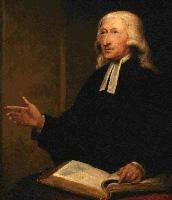
1703 - 1791 Topics: Advent; Christ; Jesus Christ; Judgment; Kingdom; Prophecy; Second Coming; Son of God; The Lord Jesus Christ Second Coming; Watchfulness Alterer of "Lo! He Comes With Clouds Descending" in Great Songs of the Church (Revised) John Wesley, the son of Samuel, and brother of Charles Wesley, was born at Epworth, June 17, 1703. He was educated at the Charterhouse, London, and at Christ Church, Oxford. He became a Fellow of Lincoln College, Oxford, and graduated M.A. in 1726. At Oxford, he was one of the small band consisting of George Whitefield, Hames Hervey, Charles Wesley, and a few others, who were even then known for their piety; they were deridingly called "Methodists." After his ordination he went, in 1735, on a mission to Georgia. The mission was not successful, and he returned to England in 1738. From that time, his life was one of great labour, preaching the Gospel, and publishing his commentaries and other theological works. He died in London, in 1791, in his eighty-eighth year. His prose works are very numerous, but he did not write many useful hymns. It is to him, however, and not to his brother Charles, that we are indebted for the translations from the German. --Annotations of the Hymnal, Charles Hutchins, M.A., 1872 ====================== John Wesley, M.A., was born at Epworth Rectory in 1703, and, like the rest of the family, received his early education from his mother. He narrowly escaped perishing in the fire which destroyed the rectory house in 1709, and his deliverance made a life-long impression upon him. In 1714 he was nominated on the foundation of Charterhouse by his father's patron, the Duke of Buckingham, and remained at that school until 1720, when he went up, with a scholarship, from Charterhouse to Christ Church, Oxford. Having taken his degree, he received Holy Orders from the Bishop of Oxford (Dr. Potter) in 1725. In 1726 he was elected Fellow of Lincoln College, and remained at Oxford until 1727, when he returned into Lincolnshire to assist his father as curate at Epworth and Wroot. In 1729 he was summoned back to Oxford by his firm friend, Dr. Morley, Rector of Lincoln, to assist in the College tuition. There he found already established the little band of "Oxford Methodists" who immediately placed themselves under his direction. In 1735 he went, as a Missionary of the Society for the Propagation of the Gospel, to Georgia, where a new colony had been founded under the governorship of General Oglethorpe. On his voyage out he was deeply impressed with the piety and Christian courage of some German fellow travellers, Moravians. During his short ministry in Georgia he met with many discouragements, and returned home saddened and dissatisfied both with himself and his work; but in London he again fell in with the Moravians, especially with Peter Bohler; and one memorable night (May 24, 1738) he went to a meeting in Aldersgate Street, where some one was reading Luther's preface to the Epistle to the Romans. There, "About a quarter before nine, while he was describing the change which God works in the heart through faith in Christ, I felt my heart strangely warmed. I felt I did trust in Christ, Christ alone, for salvation; and an assurance was given me, that He had taken away my sins, even mine, and saved me from the law of sin and death." From that moment his future course was sealed; and for more than half a century he laboured, through evil report and good report, to spread what he believed to be the everlasting Gospel, travelling more miles, preaching more sermons, publishing more books of a practical sort, and making more converts than any man of his day, or perhaps of any day, and dying at last, March 2, 1791, in harness, at the patriarchal age of 88. The popular conception of the division of labour between the two brothers in the Revival, is that John was the preacher, and Charles the hymnwriter. But this is not strictly accurate. On the one hand Charles was also a great preacher, second only to his brother and George Whitefield in the effects which he produced. On the other hand, John by no means relegated to Charles the exclusive task of supplying the people with their hymns. John Wesley was not the sort of man to depute any part of his work entirely to another: and this part was, in his opinion, one of vital importance. With that wonderful instinct for gauging the popular mind, which was one element in his success, he saw at once that hymns might be utilized, not only for raising the devotion, but also for instructing, and establishing the faith of his disciples. He intended the hymns to be not merely a constituent part of public worship, but also a kind of creed in verse. They were to be "a body of experimental and practical divinity." "In what other publication," he asks in his Preface to the Wesleyan Hymn Book, 1780 (Preface, Oct. 20,1779), "have you so distinct and full an account of Scriptural Christianity; such a declaration of the heights and depths of religion, speculative and practical; so strong cautions against the most plausible errors, particularly those now most prevalent; and so clear directions for making your calling and election sure; for perfecting holiness in the fear of God?" The part which he actually took in writing the hymns, it is not easy to ascertain; but it is certain that more than thirty translations from the German, French and Spanish (chiefly from the German) were exclusively his; and there are some original hymns, admittedly his composition, which are not unworthy to stand by the side of his brother's. His translations from the German especially have had a wide circulation. Although somewhat free as translations they embody the fire and energy of the originals. It has been the common practice, however for a hundred years or more to ascribe all translations from the German to John Wesley, as he only of the two brothers knew that language; and to assign to Charles Wesley all the original hymns except such as are traceable to John Wesley through his Journals and other works. The list of 482 original hymns by John and Charles Wesley listed in this Dictionary of Hymnology have formed an important part of Methodist hymnody and show the enormous influence of the Wesleys on the English hymnody of the nineteenth century. -- Excerpts from John Julian, Dictionary of Hymnology (1907) =================== See also in: Hymn Writers of the Church

Pages


Export as CSV
It looks like you are using an ad-blocker. Ad revenue helps keep us running. Please consider white-listing Hymnary.org or getting Hymnary Pro to eliminate ads entirely and help support Hymnary.org.