You help make Hymnary.org possible. More than 10 million people from 200+ countries found hymns, liturgical resources and encouragement on Hymnary.org in 2025, including you. Every visit affirms the global impact of this ministry.

If Hymnary has been meaningful to you this year, would you take a moment today to help sustain it? A gift of any size—paired with a note of encouragement if you wish—directly supports the server costs, research work and curation that keep this resource freely available to the world.

Give securely online today, or mail a check to:
Hymnary.org
Calvin University
3201 Burton Street SE
Grand Rapids, MI 49546

Thank you for your partnership, and may the hope of Advent fill your heart.

Person Results

Topics:trinity+2
In:people

Planning worship? Check out our sister site, ZeteoSearch.org, for 20+ additional resources related to your search.
Showing 41 - 50 of 234Results Per Page: 102050

Hugh Wilson

1766 - 1824 Topics: Ash Wednesday Gospel; Lent 2 Old Testament; Trinity 10 Collect; Trinity 12 Collect; Lent; Penitence; Prayer Composer of "MARTYRDOM (AVON)" in Magnify the Lord Hugh Wilson (b. Fenwick, Ayrshire, Scotland, c. 1766; d. Duntocher, Scotland, 1824) learned the shoemaker trade from his father. He also studied music and mathematics and became proficient enough in various subjects to become a part-­time teacher to the villagers. Around 1800, he moved to Pollokshaws to work in the cotton mills and later moved to Duntocher, where he became a draftsman in the local mill. He also made sundials and composed hymn tunes as a hobby. Wilson was a member of the Secession Church, which had separated from the Church of Scotland. He served as a manager and precentor in the church in Duntocher and helped found its first Sunday school. It is thought that he composed and adapted a number of psalm tunes, but only two have survived because he gave instructions shortly before his death that all his music manuscripts were to be destroyed. Bert Polman

Aurelius Clemens Prudentius

348 - 410 Topics: The Christian Year Christmas; Adoration and Praise; Angels; Christian Year Advent; Christian Year Christmas; Creation; God Creator; Jesus Christ Adoration and Praise; Jesus Christ Birth and Infancy; Jesus Christ Divinity; Jesus Christ Incarnation; Jesus Christ Lord of Life; Jesus Christ name; Jesus Christ Second Coming; Music and Singing; Mystery; Praise; Prophets; Redemption; Second Coming; Service Music Doxologies; Testimony; Trinity; Word of God; Worship; Advent 4 Year A; Christmas Eve Year A; Christmas Day 1 Year A; Christmas Day 2 Year A; Christmas 2 Year A; Epiphany Last/Transfig. Year A; Proper 13 Year A; Reign of Christ Year A; Advent 2 Year B; Advent 4 Year B; Christmas Day 2 Year B; Christmas Day 2 Year B; Christmas 2 Year B; All Saints Year B; Reign of Christ Year B; Advent 3 Year C; Christmas Day 2 Year C; Baptism of Jesus Year C; Easter 4 Year C; Proper 28 Year C; Reign of Christ Year C; Reign of Christ Year C Author of "Of the Father's Love Begotten" in Voices United Marcus Aurelius Clemens Prudentius, "The Christian Pindar" was born in northern Spain, a magistrate whose religious convictions came late in life. His subsequent sacred poems were literary and personal, not, like those of St. Ambrose, designed for singing. Selections from them soon entered the Mozarabic rite, however, and have since remained exquisite treasures of the Western churches. His Cathemerinon liber, Peristephanon, and Psychomachia were among the most widely read books of the Middle Ages. A concordance to his works was published by the Medieval Academy of America in 1932. There is a considerable literature on his works. --The Hymnal 1940 Companion ============= Prudentius, Aurelius Clemens , with the occasional prefix of Marcus (cf. Migne, vol. lix. p. 593, and Dressel, p. ii. n), is the name of the most prominent and most prolific author of sacred Latin poetry in its earliest days. Of the writer himself we know nothing, or next to nothing, beyond what he has himself told us in a short introduction in verse to his works. From that source we learn that he was a Spaniard, of good family evidently, and that he was born A.D. 348 somewhere in the north of Spain, either at Saragossa, Tarragona, or Calahorra, but at which is left uncertain, by his applying the same expression to all, which if applied only to one would have fixed his place of birth. After receiving a good education befitting his social status he applied himself for some years to practising as a pleader in the local courts of law, until he received promotion to a judgeship in two cities successively:— "Bis legum moderanrine Frenos nobilium reximus urbium Jus civile bonis reddidimus, terruimus reos;" and afterwards to a post of still higher authority: "Tandem militiae gradu Evectum pietas principis extulit." Archbishop Trench considers this last to have been "a high military appointment at court," and such the poet's own words would seem to describe; but it may well be doubted whether a civilian and a lawyer would be eligible for such employment; in which case we may adopt the solution of the difficulty offered in the Prolegomena to our author's works (Migne, vol. lix. p. 601):— "Evectus indeest ad superiorem rnilitia? gradum, nimirum militia? civil is, palatinae, aut praesidialis, non bellicae, castrensis, aut cohortalis; nam ii qui officiis jure consultorum praesidum, rectorum et similium funguntur, vulgo in cod. Theod. militare et ad superiores militias ascendere dicuntur." It was after this lengthened experience at a comparatively early age of positions of trust and power that Prudentius, conscience-smitten on account of the follies and worldliness that had marked his youth and earlier manhood, determined to throw up all his secular employments, and devote the remainder of his life to advancing the interests of Christ's Church by the power of his pen rather than that of his purse and personal position. Accordingly we find that he retired in his 57th year into poverty and private life, and began that remarkable succession of sacred poems upon which his fame now entirely rests. We have no reason however to regard him as another St. Augustine, rescued from the "wretchedness of most unclean living" by this flight from the temptations and engrossing cares of official life into the calm seclusion of a wholly devotional leisure. He had probably rather learnt from sad experience the emptiness and vanity for an immortal soul of the surroundings of even the high places of this world. As he himself expresses it:— "Numquid talia proderunt Carnis post obitum vel bona, vel mala, Cum jam, quicquid id est, quod fueram, mors aboleverit?" and sought, at the cost of all that the world holds dear, those good things which God hath prepared for them that love Him. Beyond the fact of his retirement from the world in this way, and the fruits which it produced in the shape of his voluminous contributions to sacred poetry, we have no further information about our author. To judge from the amount he wrote, his life must have been extended many years after he began his new career, but how long his life was or where he died we are not told. Probably he died circa 413. His works are:— (1) Liber Cathemerinon. "Christian Day, as we may call it" W. S. Lilly, "Chapters in European History," vol. i. p. 208). (2) Liber Peristephanon. "Martyrs' Garlands" (id.). (3) Apotheosis. A work on the Divine Nature, or the Deification of Human Nature in Christ. (4) Hamartigenia. A treatise on the Origin of Sin, directed against the Marcionites. (5) Psychomachia or "The Spiritual Combat"-—an allegorical work. (6) Libri contra Symmachum. A controversial work against the restoration in the Senate House at Rome of the altar of Victory which Gratian had removed. Symmachus had petitioned Valentinian II. for its restoration in 384, but the influence of St. Ambrose had prevailed against him at that time. In 392 the altar was restored, but removed again by Theodosius in 394. After the death of the latter the attempt to restore it was renewed by Arcadius and Honorius, and it was at that time that Prudentius wrote his first book. The second (for there are two) was written in 405. Fague considers that the first may date in 395. (7) The Dittochseon = the double food or double Testament, is a wordy collection of 49 sets of four verses each, on Old and New Testament scenes. Of these different works the most important are the first two, and it is from them that the Liturgical hymns enumerated below have been chiefly compiled. The general character of Prudentius's writings it is not easy fairly to estimate, and to judge by the wholesale laudation he obtains from some of his critics, and the equally unsparing censure of others, his judges have so found it. In venturing upon any opinion upon such a subject, the reader must bear in mind the peculiar position in which the period at which he was writing found the poet. The poetry of classical Rome in all its exact beauty of form had long passed its meridian, and was being replaced by a style which was yet in its infancy, but which burst forth into new life and beauty in the hands of the Mediaeval hymnologists. Prudentius wrote before rhyming Latin verse was thought of, but after attention had ceased to be given to quantities. Under such circumstances it were vain to look for very finished work from him, and such certainly we do not find. But amidst a good deal of what one must confess is tasteless verbiage or clumsy rhetorical ornament-—however varied the metres he employs, numbering some 17—-there are also passages to be found, not unfrequently, of dramatic vigour and noble expression, which may well hold their own with the more musical utterances of a later date. He writes as a man intensely in earnest, and we may gather much from his writings concerning the points of conduct which were deemed the most important in Christian living at a time when a great portion of mankind were still the victims or slaves of a morality which, heathen at the best, was lowered and corrupted the more as the universality of its influence was more and more successfully challenged by the spread of the Gospel of Christ. If, there¬fore, we can scarcely go as far in our author's praise as Barth—-much given to lavish commendation—-who describes him as "Poeta eximius eruditissimus et sanctissimus scriptor; nemo divinius de rebus Christianis unquam scripsit"; or as Bentley—-not given to praise--who calls him the "Horace and Virgil of the Christians," we shall be as loath, considering under what circumstances he wrote, to carp at his style as not being formed on the best ancient models but as confessedly impure; feeling with Archbishop Trench that it is his merit that "whether consciously or unconsciously, he acted on the principle that the new life claimed new forms in which to manifest itself; that he did not shrink from helping forward that great transformation of the Latin language, which it needed to undergo, now that it should be the vehicle of truths which, were all together novel to it." (Sacred Latin Poetry, 1874, p. 121.) The reader will find so exhaustive an account of the various writings of Prudentius in the account given of him and them in Smith and Wace's Dictionary of Christian Biography, and Smith's Dictionary of Greek and Roman Biography, that it is only necessary in this work to refer very briefly to them as above. The poems have been constantly reprinted and re-edited, till the editor who produced the best edition we have of them, Albert Dressel (Leipsic, 1860), is able to say that his is the sixty-third. The use made of Prudentius's poems in the ancient Breviaries and Hymnaries was very extensive. In the form of centos stanzas and lines wore compiled and used as hymns; and it is mainly from these centos, and not from the original poems, that the translations into English were made. Daniel, i., Nos. 103-115, gives 13 genuine hymns as having been in use for "Morning," "Christmas," "Epiphany," "Lent," "Easter," "Transfiguration," "Burial," &c, in the older Breviaries. ….Many more which were used in like manner have been translated into English. When to these are added the hymns and those which have not been translated into English, we realise the position and power of Prudentius in the hymnody of the Church. [Rev. Digby S. Wrangham, M.A.] --John Julian, Dictionary of Hymnology (1907) ============== Prudentius, A. C, p. 915, ii. Two somewhat full versions of Prudentius are: (1) The Cathemerinon and other Poems of Aurelius Prudentius Clemens in English Verse, Lond., Rivington, 1845; and (2) Translations from Prudentius. By Francis St. John Thackeray, M.A.. F.S.A. Lond., Bell & Sons, 1890. --John Julian, Dictionary of Hymnology, Appendix, Part II (1907)

Bianco da Siena

1350 - 1434 Topics: Holy Spirit Praise and Invocation; Beauty; Christian Year Pentecost; Comfort/Consolation; Commitment; Consecration; Creation; Faith; God Love; Holy Spirit; Holy Spirit Indwelling; Holy Spirit Movement; Holy Spirit Power; Holy Spirit Presence; Humility; Inspiration; Light; Love; Mercy; New Creation; Opening Hymns; Petition; Seeking God; Thirst For God; Vision/Dream; Lent 3 Year A; Easter 2 Year A; Easter 6 Year A; Ascension Year A; Pentecost Year A; Proper 25 Year A; Proper 25 Year A; Epiphany 2 Year B; Pentecost Year B; Proper 19 Year B; Baptism of Jesus Year C; Epiphany 2 Year C; Easter 2 Year C; Easter 6 Year C; Pentecost Year C; Pentecost Year C; Trinity Sunday Year C Author of "Come Down, O Love Divine" in Voices United Bianco da Siena (b. Anciolina, circa 1350; d. Venice, Italy, circa 1434), an Italian poet and wool worker who was born at Anciolina, in the Val d'Arno. In 1367 he entered the Order of Jesuates, consisting of unordained men who followed the rule of St. Augustine. This order was instituted in that year by one John Colombinus of Siena, and suppressed by Pope Clement IX, possibly because of fear of not being able to control their mystical fervor. Little is known of Bianco beyond the fact that he is said to have lived in Venice for some years, and died there in 1434. His hymns were published at Lucca, in 1851, and edited by T. Bini, under the title, Laudi spirituali del Bianco da Siena. Emily Brink ============== Bianco da Siena, born at Anciolina, in the Val d'Arno, date unknown. In 1367 he entered the Order of Jesuates, consisting of unordained men who followed the rule of St. Augustine. This order was instituted in that year by one John Colombinus of Siena, and suppressed by Pope Clement IX. in 1668. Little is known of Bianco beyond the fact that he is said to have lived in Venice for some years, and died there in 1434. His hymns were published at Lucca, in 1851, and edited by T. Bini, under the title, Laudi spirituali del Bianco da Siena. This work contains 92 pieces. Of these the following have been translated into English, and have come into common use:— 1. Discendi, Amor santo. The Holy Spirit desired. This is No. 35 in the above work and is in 8 stanzas. Of these, Dr. Littledale gave 4 in the People's Hymnal, 1867, No. 473, as, "Come down, 0 Love Divine." 2. Gesil Christo amoroso. Missions. This is No. 79 of the above wdrk. It has been rendered into English by Dr. Littledale, and was published in the People's Hymnal, 1867, No. 400, as, "0 Jesu Christ, the loving.” 3. Vergine santa, sposa dell’ Agnello. St. Lucy. V. M . This is also from the foregoing work, No. 74, in 15 stanzas of 3 lines. Dr. Littledale's translation in the People's Hymnal, 1867, No. 226, is in 7 stanzas of 4 lines, and begins, "0 Virgin Spouse of Christ the Lamb." 4. Ama Jesu el tuo sposo diletto. Love for Jesus . This is No. 45 in the above work, in 33 stanzas. In 1866 Dr. Littledale contributed a cento therefrom to R. Brett's Office of the Moat Holy Name. This was transferred to Brooke's Churchman's Manual of Private & Family Devotion, 1882. It begins, "Love Jesus, Who hath sought thee so." Although the translations Nos. 1-3 have not gone any further than the People's Hymnal, Nos. 1 and 2 are worthy of more extended use. [Rev. John Julian, D.D.] -- John Julian, Dictionary of Hymnology (1907)

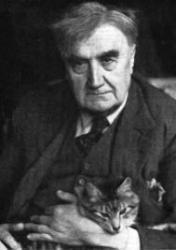
Ralph Vaughan Williams

1872 - 1958 Topics: Holy Spirit Praise and Invocation; Beauty; Christian Year Pentecost; Comfort/Consolation; Commitment; Consecration; Creation; Faith; God Love; Holy Spirit; Holy Spirit Indwelling; Holy Spirit Movement; Holy Spirit Power; Holy Spirit Presence; Humility; Inspiration; Light; Love; Mercy; New Creation; Opening Hymns; Petition; Seeking God; Thirst For God; Vision/Dream; Lent 3 Year A; Easter 2 Year A; Easter 6 Year A; Ascension Year A; Pentecost Year A; Proper 25 Year A; Proper 25 Year A; Epiphany 2 Year B; Pentecost Year B; Proper 19 Year B; Baptism of Jesus Year C; Epiphany 2 Year C; Easter 2 Year C; Easter 6 Year C; Pentecost Year C; Pentecost Year C; Trinity Sunday Year C Composer of "DOWN AMPNEY" in Voices United Through his composing, conducting, collecting, editing, and teaching, Ralph Vaughan Williams (b. Down Ampney, Gloucestershire, England, October 12, 1872; d. Westminster, London, England, August 26, 1958) became the chief figure in the realm of English music and church music in the first half of the twentieth century. His education included instruction at the Royal College of Music in London and Trinity College, Cambridge, as well as additional studies in Berlin and Paris. During World War I he served in the army medical corps in France. Vaughan Williams taught music at the Royal College of Music (1920-1940), conducted the Bach Choir in London (1920-1927), and directed the Leith Hill Music Festival in Dorking (1905-1953). A major influence in his life was the English folk song. A knowledgeable collector of folk songs, he was also a member of the Folksong Society and a supporter of the English Folk Dance Society. Vaughan Williams wrote various articles and books, including National Music (1935), and composed numerous arrange­ments of folk songs; many of his compositions show the impact of folk rhythms and melodic modes. His original compositions cover nearly all musical genres, from orchestral symphonies and concertos to choral works, from songs to operas, and from chamber music to music for films. Vaughan Williams's church music includes anthems; choral-orchestral works, such as Magnificat (1932), Dona Nobis Pacem (1936), and Hodie (1953); and hymn tune settings for organ. But most important to the history of hymnody, he was music editor of the most influential British hymnal at the beginning of the twentieth century, The English Hymnal (1906), and coeditor (with Martin Shaw) of Songs of Praise (1925, 1931) and the Oxford Book of Carols (1928). Bert Polman

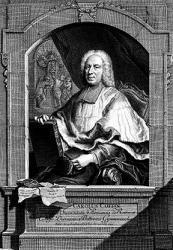
Charles Coffin

1676 - 1749 Topics: Biblical Characters John, the Baptist; Biblical Places Jordan; Christian Year Advent; Evangelism (Good News); Forgiveness from God; Freedom; God Mercy; Good News, Gospel; Grace; Healing; Jesus Christ Baptism; Jesus Christ Lamb of God; Jesus Christ Saviour; Light; Mercy; New Creation; Prophets; Renewal; Repentance; Salvation; Supplication; Trinity; Advent 2 Year A; Advent 2 Year B; Advent 2 Year C; Advent 3 Year C Author of "On Jordan's Bank" in Voices United Coffin, Charles, born at Buzaney (Ardennes) in 1676, died 1749, was principal of the college at Beauvais, 1712 (succeeding the historian Rollin), and rector of the University of Paris, 1718. He published in 1727 some, of his Latin poems, for which he was already noted, and in 1736 the bulk of his hymns appeared in the Paris Breviary of that year. In the same year he published them as Hymni Sacri Auctore Carolo Coffin, and in 1755 a complete ed. of his Works was issued in 2 vols. To his Hymni Sacri is prefixed an interesting preface. The whole plan of his hymns, and of the Paris Breviary which he so largely influenced, comes out in his words. "In his porro scribendis Hymnis non tam poetico indulgendunv spiritui, quam nitoro et pietate consulendum esse existimavi. Pleraque igitur, argumentis convenientia e purissiinis Scripturae Sacrae fontibus deprompsi quac idoneis Ecclesiae cantui numeris alligarem." His hymns are described by a French critic as having less brilliancy than those of Santüil (q.v.), but more simplicity and unction. They number 100 in the edition of 1736. Translated into English by J. Chandler, I. Williams and others, are noted under their respective Latin first lines. [William T. Brooke] -- John Julian, Dictionary of Hymnology (1907)

Mary E. Byrne

1880 - 1931 Person Name: Mary Elizabeth Byrne Topics: The Church in the World Commitment: Pilgrimage; Commitment; Conflict and Struggle; Consecration; Empowerment; Funerals and Memorial Services; God Image (Father); God Kingdom, Majesty, Realm; God Law; God Presence; God Wisdom; Guidance; Heaven(s)/Paradise; Inspiration; Integrity; Jesus Christ Images of; Jesus Christ Lord of Life; Jesus Christ Presence; Pilgrimage and Conflict; Reward; Surrender; Treasure; Union With God/Christ; Victory; Vision/Dream; Vocation; Youth; Epiphany 4 Year A; Epiphany 4 Year A; Proper 8 Year A; Proper 13 Year A; Lent 2 Year B; Easter 2 Year B; Easter 3 Year B; Proper 15 Year B; Proper 18 Year B; Proper 19 Year B; Proper 20 Year B; Proper 21 Year B; Proper 25 Year B; Lent 5 Year C; Lent 5 Year C; Easter 2 Year C; Trinity Sunday Year C; Proper 8 Year C; Proper 11 Year C; Proper 14 Year C; Proper 15 Year C; Proper 16 Year C; Proper 18 Year C; Proper 26 Year C; Ash Wednesday Year ABC Translator of "Be Thou My Vision" in Voices United Mary Elizabeth Byrne, M.A. (July 2, 1880 – January 19, 1931) was born in Ireland. She translated the Old Irish Hymn, "Bí Thusa 'mo Shúile," into English as "Be Thou My Vision" in Ériu (the journal of the School of Irish Learning), in 1905. See also in: Wikipedia

Eleanor Hull

1860 - 1935 Person Name: Eleanor H. Hull Topics: The Church in the World Commitment: Pilgrimage; Commitment; Conflict and Struggle; Consecration; Empowerment; Funerals and Memorial Services; God Image (Father); God Kingdom, Majesty, Realm; God Law; God Presence; God Wisdom; Guidance; Heaven(s)/Paradise; Inspiration; Integrity; Jesus Christ Images of; Jesus Christ Lord of Life; Jesus Christ Presence; Pilgrimage and Conflict; Reward; Surrender; Treasure; Union With God/Christ; Victory; Vision/Dream; Vocation; Youth; Epiphany 4 Year A; Epiphany 4 Year A; Proper 8 Year A; Proper 13 Year A; Lent 2 Year B; Easter 2 Year B; Easter 3 Year B; Proper 15 Year B; Proper 18 Year B; Proper 19 Year B; Proper 20 Year B; Proper 21 Year B; Proper 25 Year B; Lent 5 Year C; Lent 5 Year C; Easter 2 Year C; Trinity Sunday Year C; Proper 8 Year C; Proper 11 Year C; Proper 14 Year C; Proper 15 Year C; Proper 16 Year C; Proper 18 Year C; Proper 26 Year C; Ash Wednesday Year ABC Versifier of "Be Thou My Vision" in Voices United

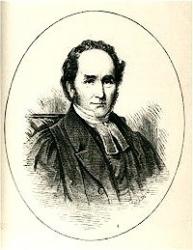
W. H. Havergal

1793 - 1870 Topics: Biblical Characters John, the Baptist; Biblical Places Jordan; Christian Year Advent; Evangelism (Good News); Forgiveness from God; Freedom; God Mercy; Good News, Gospel; Grace; Healing; Jesus Christ Baptism; Jesus Christ Lamb of God; Jesus Christ Saviour; Light; Mercy; New Creation; Prophets; Renewal; Repentance; Salvation; Supplication; Trinity; Advent 2 Year A; Advent 2 Year B; Advent 2 Year C; Advent 3 Year C Arranger of "WINCHESTER NEW" in Voices United Havergal, William Henry, M.A, son of William Havergal, was born at High Wycombe, Buckinghamshire, 1793, and was educated at St. Edmund's Hall, Oxford (B.A. 1815, M.A. 1819). On taking Holy Orders he became in 1829 Rector of Astley, Worcestershire; in 1842, Rector of St. Nicholas, Worcester; and in 1860, Rector of Shareshill, near Wolverhampton. He was also Hon. Canon in Worcester Cathedral from 1845. He died April 18, 1870. His hymns, about 100 in all, were in many instances written for special services in his own church, and printed as leaflets. Several were included in W. Carus Wilson's Book of General Psalmody, 1840 (2nd ed., 1842); and in Metrical Psalms & Hymns for Singing in Churches, Worcester, Deighton, 1849, commonly known as the Worcester Diocesan Hymn Book, and of which he was the Editor. In Life Echoes, 1883, his hymns are given with those of Miss Havergal. Of those in common use the greater part are in Mercer, and Snepp's Songs of Grace & Glory. Although his hymns are all good, and two or three are excellent, it is not as a hymnwriter but as a musician that Canon Havergal is best known. His musical works and compositions included, in addition to numerous individual hymn tunes and chants, the Gresham Prize Service, 1836; the Gresham Prize Anthem, 1845; Old Church Psalmody, 1849; History of the Old 100th Psalm tune, 1854, &c. He also reprinted Ravenscroft’s Psalter of 1611. His hymns in common use include:— 1. Blessed Jesus, lord and Brother. School Festivals, 1833. Published in Life Echoes, 1883. 2. Brighter than meridian splendour. Christ the glory of His Church. 1830. Published in W. C. Wilson's Book of General Psalms, 1840; the Worcester Psalms & Hymns, 1849, &c. 3. Christians, awake to joy and praise. Christmas Carol, c. 1860. Printed on broadsheet, with music by the author, and sold on behalf of the Lancashire Cotton Distress Fund. 4. Come, Shepherds, come, 'tis just a year. Christmas Carol. 1860. Published in Snepp's Songs of Grace & Glory, 5. For ever and for ever, Lord. Missions, 1866, for the Church Mission Society. Published in Snepp's Songs of Grace & Glory, 1872, and the Life Echoes, 1883. 6. Hallelujah, Lord, our voices. Sunday. 1828. Published in W. C. Wilson's Book of General Psalms, 1840; the Worcester Psalms & Hymns, 1849; Life Echoes, 1883, &c. 7. Heralds of the Lord of glory. Missions. First sung in Astley Church, Sep. 23, 1827. Published in Miss Havergal's Starlight through the Shadows, 1880; Snepp's Songs of Grace & Glory, 1872, &c. 8. Hosanna, raise the pealing hymn. Praise to Christ, 1833, and first sung in Astley Church, June 9, 1833. Published in W. C. Wilson's Book of General Psalmody, 1840; the Worcester Psalms & Hymns, 1849; Life Echoes 1883, &c. 9. How vast the field of souls. Missions. 1858. Printed for Shareshill Church Miss. Anniversary, 1863, and published in Snepp's Songs of Grace & Glory, 1872, and the Life Echoes, 1883. 10. In doubt and dread dismay. Missions. Written in 1837, and published in W. C. Wilson's Book of General Psalmody, 1840; the Worcester Psalms & Hymns, 1849, &c. 11. Jerusalem the golden, The home of saints shall be. Heaven. Published in Life Echoes, 1883. 12. My times are in Thy hand, Their best, &c. 1860. Published in Snepp's Songs of Grace & Glory, 1872, the Records of the author's life and work, and Life Echoes, 1883. The editor of the Records says (p. 159) "this hymn has been much appreciated, and well illustrates the devotional and cheerful spirit of the writer." 13. No dawn of holy light. Sunday. 1825. Printed in 1831 on a leaflet, and published in W. C. Wilson's Book of General Psalmody, 1840; the Worcester Psalms & Hymns, 1849; Life Echoes, 1883, &c. 14. Our faithful God hath sent us. Harvest. Written at Shareshill in 1863, for a Harvest Festival. Published in Snepp's Songs of Grace & Glory 1872, and Life Echoes, 1883. 15. Shout, 0 earth! from silence waking. Praise to Jesus for Redemption. 1841. Published in the Worcester Psalms & Hymns, 1849; Snepp's Songs of Grace & Glory, 1872, &c. 16. So happy all the day. Christmas Carol, c. 1834. Published in Snepp's Songs of Grace & Glory, 1872. 17. Soon the trumpet of salvation. Missions. 1826. Published in Snepp's Songs of Grace & Glory, 1872. 18. To praise our Shepherd's [Saviour's] care. The Good Shepherd. Written after witnessing the death of Elizabeth Edwards, aged 12, of St. Nicholas, Worcester, and printed as a leaflet. Published in W. C. Wilson's Book of General Psalmody, 1840; the Worcester Psalms & Hymns, 1849; Life Echoes, &c, 1883. The author also published a Memoir of the child. 19. Widely 'midst the slumbering nations. Missions. 1828. Published in the Worcester Psalms & Hymns, 1849; Snepp's Songs of Grace & Glory, 1872, &c. In addition to these hymns, his carols, "How grand, and how bright," "Our festal morn is come," and others are annotated under their respective first lines. Most of these carols and hymns were reprinted in Christmas Carols & Sacred Songs, Chiefly by the Rev. W. H. Havergal, London, Nisbet, 1869. --John Julian, Dictionary of Hymnology (1907) ===================== Havergal, W. H., p. 498, i. Other hymns are: — 1. Lord, if judgments now are waking. Second Advent. Published in W. Carus Wilson's Book of General Psalmody, 1840; in Kennedy, 1863, &c. 2. Remember, Lord, Thy word of old displayed. Missions. "Composed for a special prayer-meeting for missionary labourers, held in the author's schoolroom, in the parish of St. Nicholas's, Worcester." (W. F. Stevenson's Hymns for Church and Home, 1873, where the original text is also given.) It must be noted that No. 17, at p. 498, ii., "Soon the trumpet of salvation," was first published in A Collection of Original Airs adapted to Hymns, &c, 1826. --John Julian, Dictionary of Hymnology, Appendix, Part II (1907)

Hal H. Hopson

1933 - 2025 Person Name: Hal Hopson Topics: Biblical Characters John, the Baptist; Biblical Places Jordan; Christian Year Advent; Evangelism (Good News); Forgiveness from God; Freedom; God Mercy; Good News, Gospel; Grace; Healing; Jesus Christ Baptism; Jesus Christ Lamb of God; Jesus Christ Saviour; Light; Mercy; New Creation; Prophets; Renewal; Repentance; Salvation; Supplication; Trinity; Advent 2 Year A; Advent 2 Year B; Advent 2 Year C; Advent 3 Year C Composer (descant) of "WINCHESTER NEW" in Voices United Hal H. Hopson (b. Texas, 1933) is a prolific composer, arranger, clinician, teacher and promoter of congregational song, with more than 1300 published works, especially of hymn and psalm arrangements, choir anthems, and creative ideas for choral and organ music in worship. Born in Texas, with degrees from Baylor University (BA, 1954), and Southern Baptist Seminary (MSM, 1956), he served churches in Nashville, TN, and most recently at Preston Hollow Presbyterian Church in Dallas, Texas. He has served on national boards of the Presbyterian Association of Musicians and the Choristers Guild, and taught numerous workshops at various national conferences. In 2009, a collection of sixty four of his hymn tunes were published in Hymns for Our Time: The Collected Tunes of Hal H. Hopson. Emily Brink

John Oxenham

1852 - 1941 Topics: Church in the World Discipleship: Love in Action; Body of Christ; Brotherhood/Sisterhood; Church Community in Christ; Church Ecumenism; Church Universal; Community; Family; Freedom; Jesus Christ Example; Jesus Christ Friend; Justice; Love; Love for Others; Service; Social Concerns; Unity; World; Pentecost Year A; Proper 4 Year A; Proper 11 Year A; Proper 15 Year A; Easter 5 Year B; Trinity Sunday Year B; Proper 5 Year B; Proper 11 Year B; Proper 18 Year B; Advent 2 Year C; Epiphany 2 Year C; Epiphany 3 Year C; Lent 1 Year C; Easter 5 Year C; Pentecost Year C; Proper 7 Year C; Proper 13 Year C Author of "In Christ There Is No East or West" in Voices United John Oxenham is a pseudonym for William Arthur Dunkerley, and is used as the name authority by the Library of Congress.

Pages


Export as CSV
It looks like you are using an ad-blocker. Ad revenue helps keep us running. Please consider white-listing Hymnary.org or getting Hymnary Pro to eliminate ads entirely and help support Hymnary.org.