You help make Hymnary.org possible. More than 10 million people from 200+ countries found hymns, liturgical resources and encouragement on Hymnary.org in 2025, including you. Every visit affirms the global impact of this ministry.

If Hymnary has been meaningful to you this year, would you take a moment today to help sustain it? A gift of any size—paired with a note of encouragement if you wish—directly supports the server costs, research work and curation that keep this resource freely available to the world.

Give securely online today, or mail a check to:
Hymnary.org
Calvin University
3201 Burton Street SE
Grand Rapids, MI 49546

Thank you for your partnership, and may the hope of Advent fill your heart.

Person Results

Topics:understanding
In:people

Planning worship? Check out our sister site, ZeteoSearch.org, for 20+ additional resources related to your search.
Showing 41 - 50 of 65Results Per Page: 102050

Robert L. Sanders

1906 - 1974 Person Name: Robert L. Sanders, b. 1906 Topics: Wisdom and Understanding Composer of "KEITH" in Singing the Living Tradition

Robert Fleming

1921 - 1976 Person Name: Robert J. B. Fleming Topics: Understanding Composer of "CONCORD" in Voices United

Christopher M. Idle

b. 1938 Person Name: Christopher M. Idle, b. 1938 Topics: Understanding Author of "Jesus, Come! For We Invite You (Ven, Jesús, Que Te Invitamos)" in Oramos Cantando = We Pray In Song Christopher Martin Idle (b. Bromley, Kent, England, 1938) was educated at Elthan College, St. Peter's College, Oxford, and Clifton Theological College in Bristol, and was ordained in the Church of England. He served churches in Barrow-in-­Furness, Cumbria; London; and Oakley, Suffolk; and recently returned to London, where he is involved in various hymnal projects. A prolific author of articles on the Christian's public responsibilities, Idle has also published The Lion Book of Favorite Hymns (1980) and at least one hundred of his own hymns and biblical paraphrases. Some of his texts first appeared in hymnals published by the Jubilate Group, with which he is associated. He was also editor of Anglican Praise (1987). In 1998 Hope Publishing released Light Upon the River, a collection of 279 of his psalm and hymn texts, along with suggested tunes, scripture references, and commentary. Bert Polman

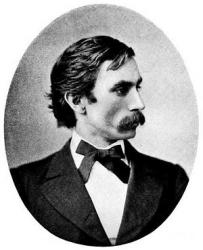
Richard Watson Gilder

1844 - 1909 Topics: Prayer For Understanding Author of "God of the strong, God of the weak" in Elmhurst Hymnal Gilder, Richard Watson, LL.D., was born at Bordentown, N.J., Feb. 8, 1844, and educated at a Seminary at Flushing, L.I. He was associate-editor of Scribner's Monthly (now The Century) from its commencement in 1870 to 1881, when, on the death of J. G. Holland, he became editor-in-chief. His poetical works are somewhat numerous, and include The New Day, 1875; Lyrics, 1885; Two Worlds, 1801; Poems and Inscriptions, 1901; and In the Heights, 1905. His hymns in common use are:— 1. In myriad forms, by myriad names. [ Divine Incomprehensibility.] This, in In Excelsis, N.Y., 1897, is composed of the last two stanzas of a hymn sung at the presentation of the Egyptian Obelisk to the City of New York, Feb. 22, 1881. The hymn is in his Lyrics, 1885, p. 5. 2. To Thee, Eternal Soul, be praise! [God speaking through His Saints.] Written for the Methodist Hymnal, N.Y., 190 [Rev. L. F. Benson, D.D.] --John Julian, Dictionary of Hymnology, New Supplement (1907) ======================= Gilder, Richard Watson, L.L.D. (February 8, 1844--November 18, 1909). Dr. Guilder's schooling began at his father's school for girls at Belle Vue, Bordentown, New Jersey, where he was the only boy enrolled. Details of his further education are vague, but the future editor began his journalistic work at the age of twelve or thirteen by publishing a paper of his own. He read law for a time before becoming a reporter on Newark, New Jersey, papers. In 1863, he joined a volunteer company of the Union Army, the First Philadelphia Artillery, but saw little actual combat service. Later he acted as paymaster for a railway company. He was a pioneer in magazine illustration beginning with his early association with Scribner's. Always a leader in plans for civic betterment, he was quite active through his late years; though in failing health he delivered a public lecture only two weeks before his death, which occurred at the home of a friend in New York City. His real contribution to American literature was as editor of an excellent literary magazine rather than through his own writing. He was the recipient of many honorary degrees from various educational institutions. Sources: Dictionary of American Biography; Appleton's Cyclopedia of American Biography; National Cyclopedia of American Biography; Who Was Who I. --Robert G. McCutchan, DNAH Archives

John Thornburg

b. 1954 Topics: Knowledge and Understanding; Knowledge and Understanding Author of "As We Part for the Towns and Cities" in Worship and Song

Chas. H. Scott

Topics: Prayer For Understanding Author of "Open my eyes that I may see" in Elmhurst Hymnal Some hymnals show the author of the hymn "Open My Eyes and I Shall See" incorrectly as "Charles" Scott or "Chas. H." Scott The hymn was written by Clara H. Scott.

William Albright

1944 - 1998 Person Name: William Albright, 1944- Topics: Wisdom and Understanding Composer of "PROCESSION" in Singing the Living Tradition

Mark A. Miller

Topics: Knowledge and Understanding; Knowledge and Understanding Composer of "HIXON" in Worship and Song

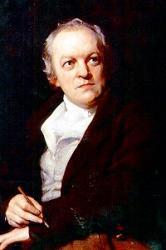
William Blake

1757 - 1827 Person Name: William Blake, 1757-1827 Topics: Wisdom and Understanding Author of "Every Night and Every Morn" in Singing the Living Tradition Blake, William, poet and painter, born 1757, and died 1827. Published Songs of Innocence in 1789, in which appeared a poem in 9 stanzas of 4 lines beginning. "Can I see another's woe" (Sympathy), and headed "On Another's Sorrow." (See also The Poems of William Blake, &c, Lond., W. Pickering, 1874, p. 105.) This poem is repeated in Martineau's Hymns, &c, 1873, and others. --John Julian, Dictionary of Hymnology, Appendix, Part II (1907) ==================== Blake, William, p. 1553, ii. Another poem from his Songs of Innocence is "To Mercy, Pity, Peace and Love." In 1789 ed., p. 17, it is entitled "The Divine Image." The English Hymnal, 1906, No. 506, ranks it among General Hymns. It is certainly difficult to call it a hymn at all, or to assign it to any special purpose. [Rev. James Mearns, M.A.] --John Julian, Dictionary of Hymnology, New Supplement (1907)

Andrew Pratt

b. 1948 Topics: Understanding Author of "Help Us Trace Your Rainbow Colors" in New Hymns of Hope

Pages


Export as CSV
It looks like you are using an ad-blocker. Ad revenue helps keep us running. Please consider white-listing Hymnary.org or getting Hymnary Pro to eliminate ads entirely and help support Hymnary.org.