You help make Hymnary.org possible. More than 10 million people from 200+ countries found hymns, liturgical resources and encouragement on Hymnary.org in 2025, including you. Every visit affirms the global impact of this ministry.

If Hymnary has been meaningful to you this year, would you take a moment today to help sustain it? A gift of any size—paired with a note of encouragement if you wish—directly supports the server costs, research work and curation that keep this resource freely available to the world.

Give securely online today, or mail a check to:
Hymnary.org
Calvin University
3201 Burton Street SE
Grand Rapids, MI 49546

Thank you for your partnership, and may the hope of Advent fill your heart.

Person Results

Tune Identifier:"^albano_novello$"
In:person

Planning worship? Check out our sister site, ZeteoSearch.org, for 20+ additional resources related to your search.
Showing 31 - 35 of 35Results Per Page: 102050

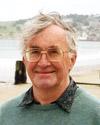
David Mowbray

b. 1938 Person Name: David Mowbray (born 1938) Adapter of "O Christ, the Master Carpenter" in Hymns for Today's Church (2nd ed.) David Mowbray (b. 1938) was born in Wallington, Surrey, England. He attended Dulwich College, Fitzwilliam, Cambridge where he read English. He gained an MA at Trinity in Bristol and a BD at London (External). Ordained in the Church of England, he was a curate at St. Giles in Northampton and at St. Mary's in Walford. Appointed Vicar of Broxborne, Herts in 1970 in 1984, he became Vicar of All Saints, Hertfordshire. In 1991 he became Vicar of St. Matthew's Darley Abbey, Derby, where he serves to this day. He has been writing hymns since 1977 and most of his texts are represented by Jubilate Hymns. Three of his hymn texts have been included in Hope's new hymnal Worship & Rejoice (2001). --www.hopepublishing.com

James Holme

1801 - 1882 Person Name: Rev. James Holme Author of "God, my Father, hear me pray" in The Hymnal, Revised and Enlarged, as adopted by the General Convention of the Protestant Episcopal Church in the United States of America in the year of our Lord 1892 Holme, James, B.A., son of T. Holme, Orton, Westmorland, was born in 1801, and educated at Caius College, Cambridge (B.A. 1825). Ordained in 1825, he held successively the Incumbency of Low Harrowgate, the Vicarage of Kirkleatham, and the charge of Bolton, near Bradford. He died in 1882. He published Leisure Musings and Devotions, &c, 1835; Mount Grace Abbey, a poem, 1843, and with his brother, the Rev. T. Holme (q.v.), Hymns & Sacred Poetry, Christian Book Society, 1861. From this last work, "All things are ours, how abundant the treasure" (Praise in Sickness), in Snepp's Songs of Grace & Glory, 1872, is taken. "God my Father, hear me pray" (Lent), in the Anglican Hymn Book, 1868, is attributed to him, and dated 1861. It is, however, from his Leisure Musings, 1835, p. 117, in 4 stanzas of 6 lines, but it is not in the Hymns & Sacred Poetry. His hymn, "Lord Jesus, God of grace and love" (Holy Communion), is from the Hymns & Sacred Poetry, 1861. These works are worthy of the attention of compilers of children's hymnbooks. -- John Julian, Dictionary of Hymnology

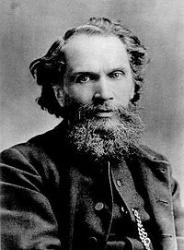
Benjamin Waugh

1839 - 1908 Person Name: B. Waugh Author of "O happy pair of Nazareth" in The American Hymnal for Chapel Service Waugh, Benjamin, was born at Settle, in Yorkshire, Feb. 20, 1839, and educated for the Congregational Ministry at Airedale College, Bradford. He has held pastorates at Newbury, Berkshire, Greenwich, and New Southgate. He has been for several years editor of The Sunday Magazine, and a large contributor to its pages. He has published (1) The Goal Cradle, Who rocks it; (2) Sunday Evenings with my Children; (3) The Children's Sunday Hour; (4) The Child of the English Savage; (5) Imperial Legislation and Street Children. Mr. Waugh's hymns have appeared from time to time in The Sunday Magazine, and have not been separately published. Those which have come into common use include:— 1. Jesus, the Friend of friendless men. Jesus the Sinner's Friend. 1874. 2. 0 happy pair of Nazareth. The Child Jesus. 3. O let me see Thy beauty. Lord. The Beauty of the Lord. This is given in a revised form as “Now let us see Thy beauty, Lord," in Horder's Congregational Hymns, 1884. Mr. Waugh's hymns are for children's use, and are exceedingly fresh and unconventional. Several others of merit might be selected from the Sunday Magazine with advantage to children's hymnody. [Rev. W. Garrett Horder] -- John Julian, Dictionary of Hymnology (1907) ================= Waugh, B., p. 1241, ii. He has published a collection of 93 original Hymns for Children, 1892. Nos. 1, 3 of those noted here are in the Sunday School Hymnary, 1905; No. 2 is in Worship Song, 1905. 1. Heavenly Father, I would serve Thee. [Childlike Service.] Written 1890; 1892, as above, p. 64. 2. I'll come to Thee, 0 Jesus Christ, [Following Jesus.] Written 1879; first published in the Sunday Magazine in 1882. 3. Where is Jesus, little children. [Jesus ever present.) Written 1890; 1892, p. 54; also in School Hymns, 1891, No. 422. Mr. Waugh's work at p. 1241, ii., as The Good Cradle, &c, should be The Goal Cradle, &c. [Rev. James Mearns, M.A.] --John Julian, Dictionary of Hymnology, New Supplement (1907)

Hester P. Hawkins

1846 - 1928 Person Name: H. P. Hawkins Author of "Thy little one, O Saviour dear" in The Sunday School Hymnary Hawkins, Hester P., née Lewis, wife of Joshua Hawkins, of Bedford. In 1885, Mrs. Hawkins published The Home Hymn Book, A Manual of Sacred Song for the Family Circle, London, Novello & Co. To this collection she contributed 7 hymns under the signature of "H. P. H." For home use we know of no book of equal comprehensiveness and merit. The music also is well adapted to the family circle. --John Julian, Dictionary of Hymnology, Appendix, Part II (1907) ======================= Hawkins, Hester Periam, p. 1570, i. Her hymns, in the Home Hymn Book, 1885, have almost all passed into other collections. The seven given with her initials "H. P. H." in the Home H. Book are:— 1. Father of all, again we meet. p. 1563, 2. Heavenly Father, Thou hast brought us. Golden Wedding. 3. Kind Shepherd, see Thy little lamb. Evening. 4. O Thou the great Unknown, Unseen. The Thought of God. 5. The twilight softly falling. Sunday Evening. 6. Thy little one, O Saviour dear. Morning. 7. To Thee, the Giver of all good. For Mothers. Mrs. Hawkins informs me that the following in the Home H. Book, 1885, are also by her:— 8. I come to Thee, my Father. Birthdays. 9. In the Name of God our Father. Beginning of Term. 10. Jesu, loving Saviour. The Love of Jesus. 11. Now the days are dark and dreary. Winter. 12. Sweetly o'er the meadows fair. Sunday Evening. 13. The happy days have come again. End of Term. There is a bright and happy home. Heaven. [Rev. James Mearns, M.A.] --John Julian, Dictionary of Hymnology, New Supplement (1907)

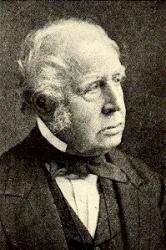
Edward Denny

1796 - 1889 Person Name: Edward Denny (1796-1889) Author of "O Gracious Lord, Be With Us Now" in The Believers Hymn Book Denny, Sir Edward, Bart . Sir Edward Denny, son of Sir E. Denny, 4th baronet, of Tralee Castle, County of Kerry, was born 2 Oct., 1796, and succeeded his father in August, 1831. He is a member of the Plymouth Brethren, and has contributed largely to their hymnody. His first publication, in which many of his hymns appeared, was A Selection of Hymns, Lond. Central Tract Depot, 1839. This was followed by Hymns & Poems , Lond., 1848 (third ed., 1870). He has also published several prose works. Many of his hymns are popular, and are in extensive use as:—" A pilgrim through this lonely world"; "Bride of the Lamb, rejoice, rejoice"; “Bright with all His crowns of glory"; “Light of the lonely pilgrim's heart”; "Sweet feast of love divine," and several others. In addition to these, which are separately annotated, and those which are confined in their use to the congregations of the "Brethren," there are also nearly 20 in limited use in Great Britain and America. Of these the following appeared, first in his Selection of Hymns, 1839; then, in the Appendix to Hymns for the Poor of the Flock, 1841; and then in his Hymns & Poems, 1848-70 :— 1. Break forth, 0 earth, in praises. Praise for Redemption. This is given in several collections in Great Britain and America. 2. Children of God, in all your need. The Great High Priest. In limited use. 3. Children of light, arise and shine. Looking unto Jesus. In numerous hymnals in G. Britain and America. 4. Children of light, awake, awake. Advent . This hymn is an application of the Parable of the Ten Virgins to the Second Coming of Christ. 5. Dear Lord, amid the throng that pressed. The Holy Women at the Cross. The use of this hymn in America is somewhat extensive. 6. Hope of our hearts, 0 Lord, appear. The Second Advent desired. In the Hymns for the Poor of the Flock, 1837; and the author's Hymns & Poems, 1848-60, and various collections in Great Britain and America. 7. Joy to the ransomed earth. Jesus the King. Its use is limited. 8. Lo 'tis the heavenly army. The Second Advent. The original of this hymn is in 4 stanzas of 10 lines and as such it is usually given: but in the Peoples Hymnal, 1867, it is arranged in 4 stanzas of 8 lines, and is also slightly altered. 9. 0 grace divine! the Saviour shed. Good Friday. In limited use. 10. 0 what a bright and blessed world. The New Earth. This hymn is based upon Gen. v. 29, as interpreted from a Millennial point of view. Christ is regarded as the Rest (Noah-Rest) of His people, and the remover of the curse from the earth. 11. Sweet was the hour, 0 Lord, to Thee. Christ at the Well of Sychar. Limited in use. 12. Thou vain deceitful world, farewell. Forsaking the World for Christ. In several collections. 13. Through Israel's land the Lord of all . Mission to the Jews. In addition to its use in its full form, it is also given as: "O Zion, when thy Saviour came," as in Dr. Walker's Psalms & Hymns, 1855-71; Snepp's Songs of Grace & Glory, and others. This opens with stanza ii. 14. 'Tis finish'd all—our souls to win. Jesus the Guide and Friend. In several collections. 15. 'Tis He, the Mighty Saviour comes . Missions . Given in Snepp, and one or two others. 16. 'Tis night, but O the joyful morn. Hope. In a few hymnals; also, beginning with stanzas ii., "Lord of our hearts, beloved of Thee," in Dr. Hatfield's Church Hymn Book, N. Y., 1872. 17. To Calvary, Lord, in Spirit now. Good Friday. This is given in several hymnals, including Spurgeon's Our Own Hymn Book, 1866, &c. The next is in the Selection of 1839, and the Hymns & Poems, 1848-70:— 18. 0 Blessed Lord, Thy feeble Sheep. The Good Shepherd. Its use is limited. The three with which we close are from J. G, Deck's Psalms & Hymns, 1842, Pt. ii., and the Hymns & Poems, 1848-70:— 19. Hark to the trump! behold it breaks . The Resurrection . The design of this hymn is thus described, by the author: "These lines are supposed to be the utterance of the saints at the blessed moment when they are actually ascending to meet the Lord in the air, as described in 1 Cor. xv. 51-57 and 1 Thess. iv. 16-18. It is given in several collections." 20. Isles of the deep, rejoice, rejoice. Missions. 21. Where, in this waste unlovely [and desert] world! Rest for the Weary. Its use is limited. -- John Julian, Dictionary of Hymnology (1907) ===================== Denny, Sir Edward, Bart., p. 287, ii., died in London, June 13, 1889. Additional pieces from his Selection of Hymns, 1839, are in modern collections including:— 1. O wondrous hour! when, Jesus, Thou. Good Friday . 2. 'Tis past, the dark and dreary night. Easter. 3. While in sweet communion feeding. Holy Communion. --John Julian, Dictionary of Hymnology, Appendix, Part II (1907)

Pages


Export as CSV
It looks like you are using an ad-blocker. Ad revenue helps keep us running. Please consider white-listing Hymnary.org or getting Hymnary Pro to eliminate ads entirely and help support Hymnary.org.