You help make Hymnary.org possible. More than 10 million people from 200+ countries found hymns, liturgical resources and encouragement on Hymnary.org in 2025, including you. Every visit affirms the global impact of this ministry.

If Hymnary has been meaningful to you this year, would you take a moment today to help sustain it? A gift of any size—paired with a note of encouragement if you wish—directly supports the server costs, research work and curation that keep this resource freely available to the world.

Give securely online today, or mail a check to:
Hymnary.org
Calvin University
3201 Burton Street SE
Grand Rapids, MI 49546

Thank you for your partnership, and may the hope of Advent fill your heart.

Person Results

Tune Identifier:"^bangor_tansur$"
In:people

Planning worship? Check out our sister site, ZeteoSearch.org, for 20+ additional resources related to your search.
Showing 41 - 50 of 52Results Per Page: 102050

E. Heritage

Person Name: E. Heritage, Philadelphia Arranger of "BANGOR" in The Social Harp Elphrey Heritage lived in Philadelphia, was associated with the publisher S. C. Collins of that city, and composed hymn tunes that appeared inter alia in The Hesperian Harp (1848), The Timbrel of Zion (1853), and The Social Harp (1855). He was the brother of Jason Heritage of New Jersey. (Source: Daniel W. Patterson's "Introduction" to the 1973 reprint of The Social Harp, xii-xiii)

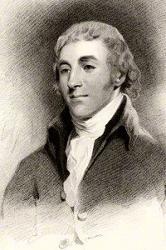
Thomas Gisborne

1758 - 1846 Person Name: Thomas Gisborne (born c. 1760) Author of "Prepared the trumpet's call to greet" in The Oxford Hymn Book Thomas Gisborne was born at Derby, in 1758. He became perpetual Curate of Barton-under-Needwood, Staffordshire, in 1783, and Prebendary of Durham in 1826. He died in 1846. --Annotations of the Hymnal, Charles Hutchins, M.A. 1872. ================== Osborne, Thomas, M.A., son of Mr. John Gisborne, of Yoxall, was b. circa 1760, and educated at St. John's College, Cambridge, where he was 5th Wrangler of his year, and Chancellor's Medalist, graduating B.A. in 1780, and M.A. in 1783. Subsequently he became a Prebendary of Durham. He was the author of Sermons; the Duties of Men; the Duties of Women; Poems Sacred and Moral, 1799 (to the later editions of which his hymns were added), 3rd ed. 1803; and of another volume of poetry entitled, Walks in a Forest, 1795. The following hymns by him are found in the Uttoxeter Selection:— 1. A soldier's course from battles won. Soldiers of Christ. No. 72, in 6 stanzas of 4 lines, and in several hymn-books. 2. Hark! 'tis the bell with solemn toll. Death. No. 74, in 6 stanzas of 4 lines. 3. O Father, glorify Thy name. In Sickness. No. 92, in 5 stanzas of 4 lines. 4. Saviour! when night involves the skies. Christ All and in All. No. 80, in 4 stanzas of 4 lines. 5. Thy humblest works with full accord. Teachings of Nature. No. 118, in 4 stanzas of 4 lines. 6. When groves by moonlight silence keep. The hour of Peace. No. 116, in 4 stanzas of 4 lines. All the above hymns, except No. 2, are in Gisborne's Poems, 3rd ed., 1803. -- Julian, John, Dictionary of Hymnology (1907)

Daniel Jones

1788 - 1848 Person Name: Dl. J. (?-1848) Author (stanza 4 and 5) of "O, anfon Di yr Ysbryd Glân" in Welsh and English Hymns and Anthems Also Daniel Jones, Tredegar.

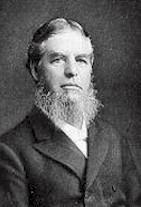
John White Chadwick

1840 - 1904 Author of "O love divine, of all that is" in Hymns of the Spirit for Use in the Free Churches of America Chadwick, John White, was born at Marblehead, Mass., U.S., Oct. 19, 1840; graduated at the Cambridge Divinity School, July 19, 1864, and ordained minister of the Second Unitarian Church, Brooklyn, N.Y., Dec. 21, 1864. A frequent contributor to the Christian Examiner; The Radical; Old and New; Harper's Magazine; and has published many poems in American periodicals. His hymn on Unity, "Eternal Ruler of the ceaseless round," was written for the graduating class of the Divinity School, Cambridge, June 19, 1864. It is in Horder's Congregational Hymns, 1884. It is a hymn of superior merit. [Rev. W. Garrett Horder] --John Julian, Dictionary of Hymnology (1907) ======================== Chadwick, J. W, p. 216, i. Mr. Chadwick's important prose works were the Life of Theodore Parker, 1890, and that of William Ellery Channing, 1903; and his poetical productions A Book of Poems, 1876, and In Nazareth Town and other Poems, 1883. He received his M.A. from Harvard in 1888; and d. Dec. 11, 1901. In addition to "Eternal Ruler of the ceaseless round," already noted on p. 216, ii., Mr. Chadwick's widow has supplied us with the following data concerning his hymns:— 1. A gentle tumult in the earth. [Easter.] Dated 1876. 2. Another year of setting suns. [New Year.] Written as a New Year's Hymn for 1873, and originally began "That this shall be a better year." In The Pilgrim Hymnal, Boston, 1904. 3. Come, let us sing a tender song, [Communion of Saints.] Dated 1901, and included in The Pilgrim Hymnal, 1904. 4. Everlasting Holy One. [Invocation.] 1875. 5. It singeth low in every heart. [In Memoriam.] Written in 1876, for the 25th Anniversary of the Dedication of his Church at Brooklyn. It has passed into a great many collections in America, and a few in Great Britain, including Horder's Worship Song, 1905. 6. Now sing we a song for the harvest. [Harvest.] Written for a Harvest Thanksgiving Service in 1871. Given in The Pilgrim Hymnal, 1904, and others. 7. 0 God, we come not as of old. [Perfect Law of Liberty.] Written in 1874, and entitled "The Perfect Law." 8. 0 Love Divine of all that is. [Trust.] Written in 1865, and included in his Book of Poems, 1876, as "A Song of Trust." In several American collections. 9. 0 Thou, Whose perfect goodness crowns. [For an Anniversary.] "Written for the 23th Anniversary of his Installation, Dec. 21, 1889." In The Pilgrim Hymnal, and other collections. 10. Thou Whose Spirit dwells in all. [Easter.] Written in 1890. 11. What has drawn us thus apart? [For Unity.] Undated, in the Boston Unitarian Hymns for Church and Home, 1895. During the past ten years Mr. Chadwick's hymns have become very popular in America, and especially with the compilers of Congrega¬tional and Unitarian collections. --John Julian, Dictionary of Hymnology, New Supplement (1907)

James Merrick

1720 - 1769 Author of "Eternal God, We Look to Thee" in The Cyber Hymnal Merrick, James , M.A., was born in 1720, and educated at Oxford, where he became a Fellow of Trinity College. He entered Holy Orders, but his health would not admit of parish work. He died at Reading, 1769. His publications include:— (1) Messiah, a Divine Essay. Humbly dedicated to the Reverend the Vice-Chancellor of the University of Oxford and the Visitors of the Free School in Reading. By James Merrick, Ætat. 14, Senior Scholar of the School at their last Terminal Visitation, the 7th of October, 1734. Reading. (2) The Destruction of Troy. Translated from the Greek of Tryphiodorus into English Verse, with Notes, &c. 1742. (3) Poems on Sacred Subjects. Oxford . 1763. (4) The Psalms of David Translated or Paraphrased in English Verse. By James Merrick, M.A., late Fellow of Trinity College, Oxford. Reading. J. Carnan and Co. 1765. 2nd ed. 1766. A few only of these paraphrases were divided into stanzas. In 1797 the Rev. W. D. Tattersall pulished the work "Divided into stanzas for Parochial Use, and paraphrased in such language as will be intelligible to every capacity . . . with a suitable Collect to each Psalm from the Works of Archbishop Parker." Merrick's paraphrases, although weak and verbose, were in extensive use in the early part of the present century, both in the Church of England and with Nonconformists. They have, however, fallen very much into disuse. Those in modern hymn-books, mainly in the form of centos, include:— 1. Blest Instructor, from Thy ways. Ps. xix. 2. Descend, O Lord! from heaven descend. Ps. cxliv. (In time of National Peril.) 3. Far as creation's bounds extend. Ps. cxlv. 4. God of my strength, the wise, the just. Ps. xxxi. 5. He who with generous pity glows. Ps. xli. 6. How pleasant, Lord.Thy dwellings are. Ps. lxxxiv. 7. Lift up your voice and thankful sing. Ps. cxxxvi. 8. Lo, my Shepherd's hand divine. Ps. xxiii. 9. Lord, my Strength, to Thee I pray. Ps. xxviii. 10. My heart its noblest theme has found. Ps.xlv. 11. O let me, [gracious] heavenly Lord extend. Ps. xxxix. 12. O turn, great Ruler of the skies. Ps. li. 13. Praise, O praise the Name divine. Ps. cl. 14. Sing, ye sons of [men] might, O sing. Ps. xxix. 15. Teach me, O teach me, Lord, Thy way. Ps. cxix. 16. The festal morn, my [O] God, is come. Ps. cxxii, (Sunday Morning.) 17. The morn and eve Thy praise resound. Ps. lxv. (Harvest.) 18. To Thy pastures, fair and large. Ps. xxiii. From his Poems on Sacred Subjects, 1763, the following centos have also come into common use: -- 19. Author of good, to Thee we turn. Resignation. 20. Eternal God, we look to Thee. Resignation. 21. 'Tis enough, the hour is come. Nunc Dimittis. John Julian, Dictionary of Hymnology (1907)

Mary Louise Bringle

b. 1953 Author of "Cast Out, O Christ" in Voices Together

Alan J. Hommerding

Person Name: Alan J. Hommerding (b. 1956) Author of "From ashes to the living font" in Ancient and Modern

Harry Webb Farrington

1880 - 1930 Person Name: Harry W. Farrington Author of "I Know Not How That Bethlehem's Babe" in Pilgrim Hymnal

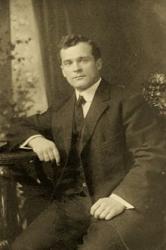
Daniel Protheroe

1866 - 1934 Person Name: D. P. Translator of "O! anfon Di yr Ysbryd Glân (Send down Thy Holy Spirit, Lord)" in Cân a Mawl

Una R. Lias

Person Name: U. R. L. Author of "Though mountains may depart from thee" in Christian Science Hymnal (Rev. and enl.)

Pages


Export as CSV
It looks like you are using an ad-blocker. Ad revenue helps keep us running. Please consider white-listing Hymnary.org or getting Hymnary Pro to eliminate ads entirely and help support Hymnary.org.