You help make Hymnary.org possible. More than 10 million people from 200+ countries found hymns, liturgical resources and encouragement on Hymnary.org in 2025, including you. Every visit affirms the global impact of this ministry.

If Hymnary has been meaningful to you this year, would you take a moment today to help sustain it? A gift of any size—paired with a note of encouragement if you wish—directly supports the server costs, research work and curation that keep this resource freely available to the world.

Give securely online today, or mail a check to:
Hymnary.org
Calvin University
3201 Burton Street SE
Grand Rapids, MI 49546

Thank you for your partnership, and may the hope of Advent fill your heart.

Person Results

Topics:ordinary+time
In:people

Planning worship? Check out our sister site, ZeteoSearch.org, for 20+ additional resources related to your search.
Showing 461 - 470 of 956Results Per Page: 102050

Stephen F. Key

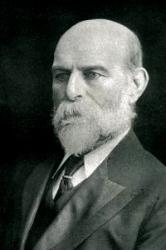
Person Name: Stephen Key Topics: Year A, Ordinary Time after Pentecost, August 21-27; Year B, Ordinary Time after Pentecost, June 5-11 (if after Trinity Sunday); Year C, Ordinary Time after Epiphany, 5th Sunday; Year C, Ordinary Time after Pentecost, July 24-30 Composer of "[Thank you, Lord, thank you, Lord]" in Psalms for All Seasons A native of Washington D. C., Stephen Key is a composer, arranger, and performer. He writes and arranges for the group Steve Key & Company. He is also the Founder and President of StepKey Music. He serves on the musical staff of Third Street Church of God, Asbury United Methodist Church (Washington, DC), and Alfred Street Baptist Church (Alexandria, VA). He graduated from the University of Maryland Baltimore and works as a Computer Specialist.

George Kirbye

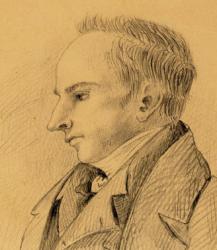
1565 - 1634 Person Name: Goerge Kirbye Topics: Year A, Ordinary Time after Pentecost, October 23-29; Year B, Ordinary Time after Pentecost, September 18-24; Year C, Ordinary Time after Epiphany, 6th Sunday; Year C, Ordinary Time after Pentecost Composer (attributed to) of "WINCESTER OLD" in Psalms for All Seasons George Kirbye (c. 1565 – buried October 6, 1634) was an English composer of the late Tudor period and early Jacobean era. He was one of the members of the English Madrigal School, but also composed sacred music. Little is known of the details of his life, though some of his contacts can be inferred. He worked at Rushbrooke Hall near Bury St Edmunds, evidently as a tutor to the daughters of Sir Robert Jermyn. In 1598 he married Anne Saxye, afterwards moving to Bury St Edmunds. Around this time he probably made the acquaintance of John Wilbye, a much more famous madrigalist, who lived and worked only a few miles away, and whose style he sometimes approaches. In 1626 his wife died, and he is known to have been a churchwarden during the next several years until his death. Kirbye's most significant musical contributions were the psalm settings he wrote for East's psalter in 1592, the madrigals he wrote for the Triumphs of Oriana (1601), the famous collection dedicated to Elizabeth I, and an independent set of madrigals published in 1597. Stylistically his madrigals have more in common with the Italian models provided by Marenzio than do many of the others by his countrymen: they tend to be serious, in a minor mode, and show a careful attention to text setting; unlike Marenzio, however, he is restrained in his specific imagery. Kirbye avoided the light style of Morley, which was hugely popular, and brought into the madrigal serious style of pre-madrigal English music. He is not as often sung as Morley, Weelkes or Wilbye, but neither was he as prolific; still, some of his madrigals appear in modern collections. --en.wikipedia.org/wiki/

Chrétien Urhan

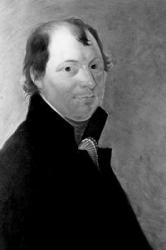
1790 - 1845 Topics: Year C, Ordinary Time after Pentecost, June 12-18 (if after Trinity Sunday); Year C, Ordinary Time after Pentecost, October 30-November 5 Composer of "RUTHERFORD" in Psalms for All Seasons Chrétien Urhan (Baptised as Christian Urhan; 16 February 1790, Montjoie - 2 November 1845, Belleville) was a French violinist, organist, composer and player of the viola and the viola d'amore. His father first introduced him to the violin. He was first mentioned in 1804 by Joséphine de Beauharnais that he had replaced a violinist for a performance of Haydn's The Creation, at the young age of 14. From there he was sent to work in Paris, where he took instruction from Jean-François Lesueur, master of the chapel of the Tuileries. He also learned from prominent teachers such as François-Antoine Habeneck, Rodolphe Kreutzer and Pierre Rode. He was invited to join the imperial chapel as a violinist in 1810. In this period the young Urhan shared lodgings with his friends the harpist Franz Anton Stockhausen (father of Julius Stockhausen) and the painter Carl Begas the elder (who was studying with Antoine Jean Gros, 1813-15). In 1815, through a Quartermaster in the Prussian army of occupation, Urhan and Stockhausen (who corresponded with Beethoven) obtained a score of Beethoven's Eroica Symphony and set it before Habeneck, with the result that the work was introduced to Paris. The two were among Amis de Beethoven, or Beethoven-Bruder in Paris, together with Wilhelm Mangold and others. In the early 1820s the violinist Sina, a member of the string quartet led by Schuppanzigh for Andreas Razumovsky, with Urhan gave new encouragement to Habeneck to continue with the master's works. Until Stockhausen's marriage to the singer Margarethe Schmuck, a member of their circle, in 1825, he lived with Urhan, who remained a lifelong friend. In 1816, Urhan was appointed solo viola at the Opéra de Paris, and became solo violinist in 1825. Strongly Catholic, he was also appointed the organist at the Church of Saint-Vincent-de-Paul in Paris in 1827, a position that he held until his death. In this position he met the young Franz Liszt, with whom he played chamber music, and also the Beethoven Kreutzer Sonata in a mass. A number of composers wrote prominent parts for Urhan. Meyerbeer composed for him solo viola and solo viola d'amore parts in his opera Les Huguenots, and Rudolph Kreutzer, the solo viola d'amore part in his opera Le Paradis de Mahomet. In 1834, Berlioz wrote his Harold en Italie for orchestra with viola obbligato at the request of Niccolò Paganini, who refused to play the work. Berlioz offered the solo viola part to Urhan and the premiere was given on 23 November 1834 at the Paris Conservatory. According to Ernest Legouvé, he was both entirely religious and entirely devoted to music. He lived like a medieval ascetic, abstaining from almost everything except his daily visit to the Café des Anglais. His love for theatre music created a severe inner conflict, which he overcame by asking the permission of the Archbishop to play in the orchestra of the Opéra (of which he was Leader), being told it was a matter for his own conscience. He accepted this by always being seated with his back to the stage, so that he never saw the singers or dancers for whom he played, even when providing solo accompaniment for a dancer. Legouvé thought there were several greater violin virtuousi in Paris than Urhan, but that he outshone them through his profound knowledge of the masters and respect for their music, and through the indefinable quality of style which he brought to them. He often differed with Habeneck, when the conductor wanted to make cuts, and actually published and signed an article against Habeneck when he withdrew some double-basses from Beethoven's Choral Symphony. He did not merely guard the reputation of the old masters, but he was also a fierce advocate and defender of the new, and of those of the future. He was the first to introduce a song of Schubert's into France ('L'Adieu'). For Legouvé, to see him play was like watching Fra Angelico painting in his cell, a medieval mystic at work. The Stockhausens visited Urhan in his fifth-floor Paris apartment in 1839, and found him living in great simplicity in two rooms, with a piano and five stools in his bedroom, where they sat and were made very welcome. In 1843 Urhan encouraged their son Julius while he was in Paris. In November 1845 Julius wrote to inform his parents of Urhan's death. He had been living in pitiable conditions in Belleville, and began to refuse his food: thoughts of suicide made him resolve to starve himself to death. He suffered agonies of pain and descended into a frenzy, giving terrible grief to his friends, none of whom could talk him out of it. All interventions failed, and Urhan, whom the Stockhausen and Legentil families considered their dear friend, and who had formerly taken communion every Sunday, lost his faith in God and his desire for life. Thus he died, quietly at last with friends at his bedside, on 2 November 1845. --en.wikipedia.org/wiki/ (excerpts)

John Bowring

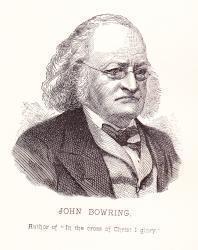
1792 - 1872 Topics: Cross of Christ; Christ Cross of; Christ Passion; Christ Sacrifice; Cross of Christ; Passion; Sacrifice Author of "In the Cross of Christ" James Bowring was born at Exeter, in 1792. He possessed at an early age a remarkable power of attaining languages, and acquired some reputation by his metrical translations of foreign poems. He became editor of "The Westminster Review" in 1825, and was elected to Parliament in 1835. In 1849, he was appointed Consul at Canton, and in 1854, was made Governor of Hong Kong, and received the honour of knighthood. He is the author of some important works on politics and travel, and is the recipient of several testimonials from foreign governments and societies. His poems and hymns have also added to his reputation. His "Matins and Vespers" have passed through many editions. In religion he is a Unitarian. --Annotations of the Hymnal, Charles Hutchins, M.A., 1872 ======================================= Bowring, Sir John, LL.D., a distinguished man of letters, was born at Exeter, Oct. 17, 1792. His studies extended to philology, poetry, politics, and other branches of learning, whilst as editor of the Westminster Review for some years (he received the appointment in 1825) he did considerable work as a reviewer. He held several official appointments under the Government as Commissioner to France on commercial matters (1831-5); British Consul at Hong Kong (1849); and Governor of Hong Kong (1854). He was twice Member of Parliament, and was knighted in 1854. He died Nov. 23rd, 1872. His published works are very numerous, and display an astonishing acquaintance with various languages. Those specially bearing on poetry include:— (1) Russian Anthology, with Biographical and Critical notices of the Poets of Russia, 1821; (2) Specimens of the Russian Poets, 1823; (3) Ancient Poetry and Romance of Spain, 1824; (4) Batavian Anthology, or Specimens of Dutch Poets, 1824; (5) Servian Popular Poetry, 1821; (6) Specimens of Polish Poets, 1827; (1) Poetry of the Magyars, 1830; (8) History of the Poetical Literature of Bohemia, 1832, &c. In addition to these works, which are mainly translations, Sir John Bowring wrote original verse. This was published interspersed with a few translations, as follows:— (1) Matins and Vespers with Hymns and Occasional Devotional Pieces, Lond., 1823; 2nd edition, enlarged, 1824; 3rd edition, again enlarged, 1841; and the 4th, still further enlarged, in 1851. (2) Hymns: as a Sequel to the Matins, 1825. In addition he contributed to a few Unitarian hymnals, especially that of the Rev. J. R. Beard of Manchester, 1837. In that Collection many of the hymns added to the 3rd edition of Matins, &c, 1841, were first published A selection from these, together with a biographical sketch, was published by Lady Bowring in 1873, as a Memorial Volume of Sacred Poetry. This work contains hymns from the Matins and Vespers, together with others from Periodicals, and from his manuscripts. Of his hymns a very large percentage have come into common use. A few have been adopted by almost all denominations, as, "God is love, His mercy brightens;" "How sweetly flow'd the gospel sound;" "In the Cross of Christ I glory;" "Watchman, tell us of the night;"; and others, but the greater portion are confined to the Unitarian collections of Great Britain and America, of which denomination he was a member. In addition to the more important, which are annotated under their first lines, there are also the following in common use:—- 1. Clay to clay, and dust to dust. Burial. From his Hymns, 1825, into the Hymn & Tune Book, Boston, U.S., 1868, &c. 2. Come the rich, and come the poor. Divine Worship. Contributed to Beard's Collection, 1837, No. 290, and repeated in Bowring's Matins, &c., 3rd edition, 1841. It is in a few American collections. 3. Drop the limpid waters now. Holy Baptism. From Matins and Vespers, 3rd edition, 1841, into Kennedy, 1863. 4. Earth's transitory things decay. The Memory of the Just. From his Hymns, 1825, into Beard, 1837; the American Plymouth Collection, 1855; and the Songs for the Sanctuary, N.Y., 1865, &c. 5. Father, glorify Thy name. The Father glorified. Also from Hymns, 1825, into Beard, 1837; the Hymns of the Spirit, Boston, U.S., 1864, &c. 6. Father and Friend, Thy light, Thy love. Omnipresence. From Matins and Vespers, 2nd edition, 1824, into several collections, and sometimes in an abbreviated form. 7. Father of Spirits, humbly bent before Thee. Also in Hymns, 1825, and Dr. Martineau's Hymns of Praise & Prayer, 1873. In Longfellow and Johnson's Hymns of the Spirit, Boston, U.S., 1864, it is given as, "Father of Spirits, gathered now before Thee." 8. From all evil, all temptation. Preservation implored. Contributed to Beard's Collection, 1837. 9. From the recesses of a lowly spirit. Prayer of trust. From Matins and Vespers, 1st edition, 1823, into several American collections. 10. Gather up, 0 earth, thy dead. Published in his Matins & Vespers, 3rd ed., 1841, in 3 stanzas of 8 lines and repeated, slightly altered, in Kennedy, 1863, No. 753. 11. Gently the shades of night descends Evening. A cento from his poem on "Sunday Evening," in the Matins, &c, 1st edition, 1823, p. 6. It is given in the Boston Hymns of the Spirit, 1864; the Boston Hymn & Tune Book, 1868, and other collections. 12. How dark, how desolate. Hope. 1st published in his Matins, &c, 1823, p. 246. In Dr. Martineau's Hymns of Praise & Prayer, 1873, it is No. 515. 13. How shall we praise Thee, Lord of Light! Evening. A cento from the same poem as No. 7 above. It is given in the Hymns of the Spirit, 1864, and other American collections. 14. Lead us with Thy gentle sway. Divine Guidance desired. Hymns, 1825, into Hymns of the Spirit, 1864, and others. 15. Lord, in heaven, Thy dwelling-place. Praise. Contributed to Beard's Collection, 1837, No. 70, repeated in the author's Matins, &c, 3rd edition 1841, p. 235, and given in a few American collections. In the Hymns of the Spirit, 1864, it is altered to "Lord of every time and place." 16. 0 let my [thy] trembling soul be still. Resignation. From the 1st edition of the Matins, &c, 1823, p. 251, in 3 stanzas of 6 lines, into Beard's Collection, 1837; the Hymns of the Spirit, 1864, and others. It is sometimes given as, "0 let thy," &c. 17. 0, sweet it is to feel and know. Monday Morning. A poem in 16 stanzas of 4 lines, given in his Matins, &c, 1823, p. 60. In 1837 stanzas i.-iii. were given in Beard's Collection as No. 448, and entitled "God near in sorrow." In the 3rd edition of the Matins, &c, 1841, this cento was repeated (p. 245), with the same title, notwithstanding the full poem was in the same book. 18. On the dust I'm doomed to sleep. Resurrection. Appeared in his Matins, &c, 1st edition, 1823, p. 252, in 2 stanzas of 8 lines. In the 2nd edition, 1824, p. 232, it was altered to "In the dust," &c. This was repeated in 1841. In some hymnals it reads:— 19. The heavenly spheres to Thee, 0 God. Evening. This "Hymn to the Deity" appeared in the 2nd edition of his Matins, &c, 1824, pp. 235-6, in 4 stanzas of 4 double lines. It is also in the 3rd edition, 1841; the Boston Hymns of the Spirit, 1864 and other American collections. 20. When before Thy throne we kneel. Divine Worship. From his Hymns, 1825, into Beard's Collection, 1837, No. 93; the Boston Hymn & Tune Book, 1868, No. 21, and others. 21. Where is thy sting, 0 death! Death. Also from the Hymns, 1825, into the same collections as No. 20 above. It will be noted that Beard's Collection, 1837, is frequently named above. The full title of that hymnal is— A Collection of Hymns for Public and Private Worship. Compiled by John R. Board, Lond., John Green, 1837. The Rev. John Relly Beard was an Unitarian Minister in Manchester, and the collection is dedicated "To the Manchester Meeting of Ministers." It contained a large number of original hymns. Bowring contributed 82, of which 33 were published therein for the first time. Some of his hymns are of great merit, and most of them are characterised by great earnestness and deep devotion. -- John Julian, Dictionary of Hymnology (1907) ================== Bowring, Sir John, p. 166, i. In the article on Bowring the hymns numbered therein as 4 and 20 are stated to have appeared in his Hymns, 1825, but in error. The earliest date to which we can positively trace them is Beard's Collection, 1837. From the Hymns, 1825, we find, however, that the following are in modern hymnals:— 1. Our God is nigh. Divine Presence. 2. 'Tis not the gift; but 'tis the spirit. Outward and Inward Virtue. 3. When the storms of sorrow gather. God our Guide. From the various editions of his Matins and Vespers additional hymns arc also in modern use:— 4. If all our hopes and all our fears. Heaven Anticipated. (1823.) 5. In Thy courts let peace be found. Public Worship. (1841.) 6. The offerings to Thy throne which rise. Heart Worship. (1824.) 7. Who shall roll away the stone? Easter. In Beard's Collection, 1837, and Matins & Vespers, 1841. --John Julian, Dictionary of Hymnology, Appendix, Part II (1907)

Michael Morgan

b. 1948 Topics: Year C, Ordinary Time after Pentecost, September 18-24 Author of "Bless the LORD, O Saints and Servants" in Psalms for All Seasons Michael Morgan (b. 1948) is a church musician, Psalm scholar, and collector of English Bibles and Psalters from Atlanta, Georgia. After almost 40 years, he now serves as Organist Emeritus for Atlanta’s historic Central Presbyterian Church, and as Seminary Musician at Columbia Theological Seminary. He holds degrees from Florida State University and Atlanta University, and did post-graduate study with composer Richard Purvis in San Francisco. He has played recitals, worship services, and master classes across the U. S., and in England, France, Spain, Switzerland, and Germany. He is author of the Psalter for Christian Worship (1999; rev. 2010), and a regular contributor in the field of psalmody (most recently to the Reformed collections Psalms for All Seasons and Lift Up Your Hearts, and the new Presbyterian hymnal, Glory to God). Michael Morgan

J. F. Bahnmaier

1774 - 1841 Person Name: Jonathan F. Bahnmaier Topics: Ordinary Time Week 6 Author of "Spread, oh, Spread the Mighty Word" in Hymns and Devotions for Daily Worship Bahnmaier, Jonathan Friedrich, son of J. G. Bahnmaier, Town Preacher at Oberstenfeld, near Bottwar, Württemberg, was born at Oberstenfeld, July 12, 1774. After completing his studies at Tübingen, his first appointment was, in 1798, as assistant to his father. He became Diaconus at Marbach on the Neckar in 1806, and at Ludwigsburg in 1810, where he was for a time the head of a young ladies' school. In 1815 he was appointed Professor of Education and Homiletics at Tübingen, but in the troublous times that followed had to resign his post. He received in 1819 the appointment of Decan and Town Preacher at Kirchheim-unter-Teck, where he continued as a faithful, unwearied, and successful worker for 21 years. He was distinguished as a preacher, and greatly interested in the causes of education, of missions, and of Bible societies. He was also one of the principal members of the committee which compiled the Württemberg Gesang-Buch of 1842. He preached his last sermon at Kirchheim, on the 10th Sunday after Trinity, Aug. 15, 1841. Two days later he held a visitation at Owen. While inspecting the school at the adjacent village of Brucker, he was struck by paralysis, and being conveyed back to Owen, died there, Aug. 18, 1841 (Koch vii. 81-84; Allgemeine Deutsche Biographie, i. 766-767). Of his hymns two have been translated into English: i. Jesu als du wiederkehrtest. [Schools.] First published in his Christliche Blätter aus Tübingen, pts. 9-12 for 1819, p. 85, in 2 stanzas of 8 lines, entitled "Prayer after School"; as one of 7 metrical prayers for Children, and for the School and House. Included as No. 2947 in Knapp's Evanglischer Lieder-Schatz, 1837 (1865, No. 2614), and No. 513 in the Württemberg Gesang-Buch, 1842. The only translation in common use is: Jesu, when Thou once returnest. In full by Miss Winkworth in her Chorale Book for England, 1863, No. 178. ii. Walte, fürder, nah und fern. [Missions.] According to Koch, vii. 84, first printed separately 1827. Included as No. 97 in the Kern des deutschen Ziederschatzes, Nürnberg, 1828, and as No. 260, beginning,"Walte, walte, nah und fern" in Bunsen's Versuch, 1833, in 7 stanzas of 4 line, and since in the Württemberg Gesang-Buch, 1842, and other recent collections. One of the best and most useful of hymns for Foreign Missions. The translations in common use are: 1. Far and near, Almighty Word. A good and full translation by Miss Cox in her Sacred Hymns, Boston, U.S., 1853, and Dean Alford's Year of Praise, 1867, stanza i. was omitted and the hymn thus began, "Word by God the Father sent." 2. Spread thy triumph far and nigh, by H. J. Buckoll. By omitting stanzas ii., iv. as No. 65 in the Rugby School Hymn Book, 1850 (in the Rugby School Hymn Book, 1870, No. 175, the translation is complete). The translations of stanzas iii., v.-vii. altered and beginning "Word of Him whose sovereign will", were included in the Marylebone Collection, 1851, and Burgess and Money's Psalms and Hymns, 1857. The Wellington College Hymn Book, 1863, begins with the translations of stanza v., "Word of life, so pure and free." 3. Spread, oh spread, thou mighty Word. A full and very good translation by Miss Winkworth in her Lyra Germanica, 2nd Series, 1858, p. 60, repeated in her Chorale Book for England, 1863, No. 176. Since included in Kennedy, People's Hymnal, 1867, Horder's Congregational Hymns, 1884, and others; and in America in the Pennsylvania Lutheran Church Book, 1868, Hymns and Songs of Praise, N. Y., 1874, Evangelical Hymnal, and others. In Longfellow and Johnson's Hymns of the Spirit, Boston, 1864, it begins with st. v., "Word of life, most pure, most strong." Other translations are: (1) "Go forth, thou mighty word of grace", by Lady E, Fortescue, 1343 (ed. 1847, p. 31). (2) "0 Word of God, reign everywhere," by Dr. G. Walker, 1860, p. 85. (3) "Word of God! with glory crown'd", in L. Rehfuess's Ch. at Sea, 1868, p. 109. [Rev. James Mearns, M. A.] -- John Julian, Dictionary of Hymnology (1907)

Randall Keith DeBruyn

b. 1947 Person Name: Randall DeBruyn, b. 1947 Topics: Ordinary Time Common Psalm Author (verses) of "Psalm 27: The Lord Is My Light" in Glory and Praise (3rd. ed.)

Jakob Hintze

1622 - 1702 Person Name: Jakob Hintze, 1622-1702 Topics: Ordinary Time, Twenty-Sixth Sunday B Composer of "SALZBURG" in Worship (4th ed.) Partly as a result of the Thirty Years' War and partly to further his musical education, Jakob Hintze (b. Bernau, Germany, 1622; d. Berlin, Germany, 1702) traveled widely as a youth, including trips to Sweden and Lithuania. In 1659 he settled in Berlin, where he served as court musician to the Elector of Brandenburg from 1666 to 1695. Hintze is known mainly for his editing of the later editions of Johann Crüger's Praxis Pietatis Melica, to which he contributed some sixty-five of his original tunes. Bert Polman

Shirley Berkeley

b. 1929 Person Name: Shirley M.K. Berkeley Topics: Ordinary Time Week 14 Author of "I Will Bless the Lord" in Hymns and Devotions for Daily Worship (African American Edition) Berkeley, a fourth-generation Washingtonian, started playing the piano at 9. Her first major job as a pianist was at Walker Memorial Baptist Church. She began directing choirs and became the director of the D.C. chapter of the Gospel Music Workshop, part of a national network of musicians who performed and recorded with Cleveland. Berkeley is the Minister of Music emeritus at the First Baptist Church of Glenarden. In addition to recording music and serving on the board of the Gospel Music Workshop of America, Berkeley has also published songs in five hymnals, including songs such as "He Has Done Great Things for Me" and "I Will Bless the Lord at All Times." NN, Hymnary. Source: http://www.washingtonpost.com/wp-dyn/content/article/2009/08/08/AR2009080802478.html

William Edwards

1848 - 1929 Topics: Ordinary Time Week 24 Translator of "Here Is Love, Vast as the Ocean" in Hymns and Devotions for Daily Worship Born: March 16, 1848, Llanafon, in a small white-washed farmhouse on the borders of Pembrokeshire and Carmarthenshire, Wales. Died: February 28, 1929, Cardiff, Wales. Buried: Cardiff, Wales. From Pontypool Baptist College, Edwards went to Regent’s Park, graduated from London University, was a tutor at Haverfordwest Baptist College (1872-80), then returned to Pontypool as principal and tutor in New Testament Greek. In 1882, he was one of the chief promoters of University College, Cardiff (of whose council he was a member the rest of his life). He was one of the most active supporters of the move of his own college from Pontypool to Cardiff in 1883. Edwards published many small books, and his translation of the New Testament from Greek to Welsh, Cyfieithiad Newydd a’r Teatament Newydd (four volumes, 1894, 1898, 1913 & 1915). In his denomination, he was an energetic administrator; he was chairman of the Welsh Baptist Union in 1906, and of the Baptist Union of Great Britain and Ireland in 1911. In politics, he was a liberal and liberationalist, and a notable orator. The University of Wales awarded him an honorary LLD degree in 1925. --www.hymntime.com/tch

Pages


Export as CSV
It looks like you are using an ad-blocker. Ad revenue helps keep us running. Please consider white-listing Hymnary.org or getting Hymnary Pro to eliminate ads entirely and help support Hymnary.org.