You help make Hymnary.org possible. More than 10 million people from 200+ countries found hymns, liturgical resources and encouragement on Hymnary.org in 2025, including you. Every visit affirms the global impact of this ministry.

If Hymnary has been meaningful to you this year, would you take a moment today to help sustain it? A gift of any size—paired with a note of encouragement if you wish—directly supports the server costs, research work and curation that keep this resource freely available to the world.

Give securely online today, or mail a check to:
Hymnary.org
Calvin University
3201 Burton Street SE
Grand Rapids, MI 49546

Thank you for your partnership, and may the hope of Advent fill your heart.

Person Results

Meter:8.6.8.6
All:extender
In:person

Planning worship? Check out our sister site, ZeteoSearch.org, for 20+ additional resources related to your search.
Showing 51 - 60 of 77Results Per Page: 102050

Thomas Turton

1780 - 1864 Meter: 8.6.8.6 Composer of "ST. ETHELDREDA" in Psalms and Hymns to the Living God Turton, Thomas; b. 25 Feb. 1780 Yorkshire, England; d. 7 Jan. 1864 London; clergyman and scholar

Sarah White Livermore

1789 - 1874 Person Name: Sarah W. Livermore Meter: 8.6.8.6 Author of "Our Pilgrim Brethren, Dwelling Far" in The Cyber Hymnal Livermore, Sarah White, aunt of A. A. Livermore (q.v.), was born at Wilton, New Hampshire, July 20, 1789; and died there July 3, 1874, having spent most of her life as a Teacher. Two hymns were contributed by her to the Cheshire P. A.'s Christian Hymns, 1844:— (1) Glory to God, and peace on earth, Christmas. (2) Our pilgrim brethren, dwelling far. Missions. She wrote many others, of which two are given in Putnam's Singers and Songs of the Liberal Faith, 1875. --John Julian, Dictionary of Hymnology (1907)

Nicholas Brady

1659 - 1726 Meter: 8.6.8.6 Author of "The Lord Himself, The Mighty Lord" in The Cyber Hymnal Nicholas Brady, the son of an officer in the Royalist army, was born in Brandon, Ireland, 1659. He studied at Westminster School, and at Christ Church College, oxford, and graduated at Trinity College, Dublin. He held several positions in the ministry, but later in life retired to Richmond Surrey, where he established a school. Here he translated some of the Psalms. Several volumes of his sermons and smaller works were published, but his chief work, like that of his co-colabourer Tate, was the "Metrical Version of Psalms." This version was authorized by King William in 1696, and has, since that time, taken the place of the earlier translation by Sternhold and Hopkins, which was published in 1562. The whole of the Psalms, with tunes, appeared in 1698, and a Supplement of Church Hymns in 1703. Of this version, which has little poetic merit, Montgomery says "It is nearly as inanimate as the former, though a little more refined." None of the "Metrical Psalms" are to be compared with the Psalms of the Prayer Book Psalter, and very few of them are worthy a place in a collection of hymns. --Annotations of the Hymnal, Charles Hutchins, 1872.

Maurice Greene

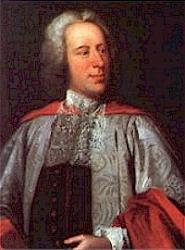
1696 - 1755 Person Name: Maurice Greene, 1696-1755 Meter: 8.6.8.6 Composer of "ST. NICHOLAS (Greene)" in The Cyber Hymnal Born: August 12, 1696, London, England. Died: December 1, 1755, England. Buried: Originally at St. Olave’s, Old Jewry. On the demolition of St. Olave’s, his remains were moved to St. Paul’s and placed in Boyce’s grave, May 18, 1888. Maurice Greene (12 August 1696 – 1 December 1755) was an English composer and organist. Born in London, the son of a clergyman, Greene became a choirboy at St Paul's Cathedral under Jeremiah Clarke and Charles King. He studied the organ under Richard Brind, and after Brind died, Greene became organist at St Paul's. With the death of William Croft in 1727, Greene became organist at the Chapel Royal, and in 1730 he became Professor of Music at Cambridge University. In 1735 he was appointed Master of the King's Musick. At his death, Greene was working on the compilation Cathedral Music, which his student and successor as Master of the King's Musick, William Boyce, was to complete. Many items from that collection are still used in Anglican services today. He wrote very competent music in the Georgian style, particularly long Verse Anthems. His acknowledged masterpiece, Lord, let me know mine end, is a representative example. Greene sets a text full of pathos using a polyphonic texture over a continuous instrumental walking bass, with a particularly effective treble duet in the middle of the work. Both this section and the end of the anthem contain superb examples of the Neapolitan sixth chord. --en.wikipedia.org/wiki/

John Barnard

1681 - 1770 Meter: 8.6.8.6 Author of "O God, To Our Repeated Cries" in The Cyber Hymnal John Barnard, born in Boston, Nov. 6, 1681; in 1752 made a version of psalms with the music; settled at Marblehead; introduced new music ther; died Jan 14, 1770, aged 89. A Dictionary of Musical Information by John W. Moore, Boston: Oliver, Ditson & Company, 1876

Thomas Jackson

1715 - 1781 Person Name: Thomas Jackson, 1715-1781 Meter: 8.6.8.6 Composer of "JACKSON (BYZANTIUM)" in The Irish Presbyterian Hymnbook Jackson played the organ at Newark, England (1768-81). His works include: Twelve Psalm Tunes and Eighteen…Chants, circa 1780 --www.hymntime.com/tch

Edith Sinclair Downing

Person Name: Edith Sinclair Downing (b. 1922) Meter: 8.6.8.6 Author of "How can we know how long you wait" in Church Hymnary (4th ed.)

J. T. White

1821 - 1894 Meter: 8.6.8.6 Author of "On Jordan's stormy banks I stand" in The Southern Harmony, and Musical Companion (New ed. thoroughly rev. and much enl.) Nephew of B. F. White

James Nares

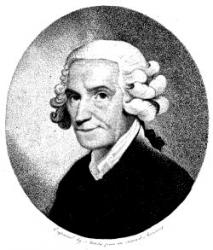
1715 - 1783 Person Name: James Nares, 1715-1783 Meter: 8.6.8.6 Composer (attributed to) of "ICONIUM" in The Irish Presbyterian Hymnbook Born: April 19, 1715, Stanwell, Middlesex, England. Died: February 10, 1783. Buried: St. Margaret’s, Westminster, England. After his family moved to Oxford, Nares became a chorister in the Chapel Royal. He later became deputy organist at St. George’s Chapel, Windsor; organist in York Cathedral (1734); and organist in the Royal Chapel and composer to the king (1756). He received a doctorate of music degree from Cambridge University in 1756. In 1770, the Catch Club awarded him a prize for his glee To All Lovers of Harmony. Sources: Frost, p. 683 Nutter, p. 462 http://www.hymntime.com/tch/bio/n/a/r/nares_j.htm ==================== http://en.wikipedia.org/wiki/James_Nares

Leonard Blake

1907 - 1989 Person Name: Leonard Blake, 1907-89 Meter: 8.6.8.6 Composer of "WINCHCOMBE" in Together in Song

Pages


Export as CSV
It looks like you are using an ad-blocker. Ad revenue helps keep us running. Please consider white-listing Hymnary.org or getting Hymnary Pro to eliminate ads entirely and help support Hymnary.org.