

 My Starred Hymns
 My FlexScores
 My Hymnals
 My Purchased Files
Planning worship?
Check out our sister site, ZeteoSearch.org,
for 20+ additional resources related to your search.
- |
User Links
Person Results
Richard R. Chope
1830 - 1928 Person Name: R. R. Chope Scripture: 1 Samuel 3:18 Composer of "HERBERT" in Laudes Domini Chope, Richard Robert, M.A., born Sept. 21, 1830, educated at Exeter College, Oxford, B.A., 1855, and took Holy Orders as Curate of Stapleton, 1856. During his residence at Stapleton the necessities of the Choir led him to plan his Congregational Hymn and Tune Book, published in 1857. In 1858 he took the Curacy of Sherborne, Dorset; in the following year that of Upton Scudamore, where he undertook the training of the Chorus of the Warminster district for the first Choral Festival in Salisbury Cathedral; and in 1861 that of Brompton. The enlarged edition of The Congregational Hymn Book was published 1862, and The Canticles, Psalter, &c, of the Prayer Book, Noted and Pointed, during the same year. In 1865 he was preferred to the parish of St. Augustine's, Queen's Gate, South Kensington, and subsequently published Carols for Use in Church during Christmas and Epiphany, 1875; Carols for Easier and Other Tides, 1887; and other works. Mr. Chope has been one of the leaders in the revival and reform of Church Music as adapted to the Public Services. He was one of the originators of The Choir and Musical Record, and was for some time the proprietor and assistant editor of the Literary Churchman.
--John Julian, Dictionary of Hymnology (1907)
Richard R. Chope
Juanita R. de Balloch
1894 - 1959 Person Name: Juanita R. de Balloch, 1894-1994 Scripture: 1 Samuel 3:9 Translator of "Lord, Speak to Me That I May Speak (Oh, ruégote, Señor Jesús)" in Santo, Santo, Santo Born: 1894, Spain.
Juanita R. de Balloch
Peter Hurford
b. 1930 Person Name: Peter Hurford, b. 1930 Scripture: 1 Samuel 3:8-10 Composer of "THE HOLY SON" in Common Praise
Peter Hurford
Philip Armes
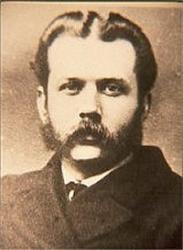
1836 - 1908 Scripture: 1 Samuel 3:10 Composer of "GALILEE" in Redemption Hymnal Philip Armes, born in Norwich,England, Aug. 15, 1836. Organist; chorister in Norwich Cathedral in 1846-48, and in Rochester Cathedral 1848-51; articled pupil of Dr. John Larkin Hopkins at Rochester, 1850-55; was organist of Trinity Church, Milton, Gravesend in 1855-57, at St. Andrew's, Wells Street, London, in 1857-61, of Chichester Cathedral in 1861-62, and of Durham Cathedral since 1862. Mus. Bac., Oxford 1858; Mus. Doc., Oxford, 1865. degrees also from University of Durham, 1863-1864. Works: Hezekiah, oratorio, performed at Worcester Festival, 1878; St. John the Evangelist, do., York Festival 1881; Communion Services in A; do. in B-flat; Te Deum; Morning and Evening Service in G; Anthems; Chants; Hymns, etc.
Cyclopedia of Music and Musicians by John Denison Camplin, Jr. and William Foster Apthorp (Charles Scribner’s Sons, 1888)
Philip Armes
Marilyn L. Haskel
b. 1945 Person Name: Marilyn L. Haskel (b. 1945) Scripture: 1 Samuel 3:9 Adapter of "[Alleluia, Alleluia] (Tone 2)" in Wonder, Love, and Praise
Marilyn L. Haskel
José Luis Castillo
b. 1958 Person Name: José Luis Castillo, n. 1958 Scripture: 1 Samuel 3:9 Composer of "[Aleluya, aleluya]" in Flor Y Canto (2nd ed.)
José Luis Castillo
Kelvin Skidmore Matthewson Thomas
1919 - 2019 Person Name: Kelvin Thomas Scripture: 1 Samuel 3:4 Composer of "SAMUEL’S HYMN" in Redemption Hymnal
Kelvin Skidmore Matthewson Thomas
James Russell Lowell
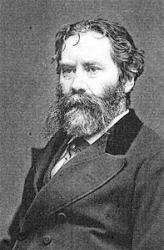
1819 - 1891 Person Name: James Russell Lowell, 1819-1891 Scripture: 1 Samuel 3:1-20 Author of "Once to Every Man and Nation" in Common Praise (1998) Lowell, James Russell, LL.D., was born at Cambridge, Massachusetts, February 22, 1819; graduated at Harvard College, 1838, and was called to the Bar in 1840. Professor of Modern Languages and Literature (succeeding the Poet Longfellow) in Harvard, 1855; American Minister to Spain, also to England in 1881. He was editor of the Atlantic Monthly, from 1857 to 1862; and of the North American Review from 1863 to 1872. Professor Lowell is the most intellectual of American poets, and first of her art critics and humorists. He has written much admirable moral and sacred poetry, but no hymns. One piece, “Men, whose boast it is that ye" (Against Slavery), is part of an Anti-Slavery poem, and in its present form is found in Hymns of the Spirit, 1864. Part of this is given in Songs for the Sanctuary, N.Y., 1865, as "They are slaves who will not choose.” [Rev. F. M. Bird, M.A.]
--John Julian, Dictionary of Hymnology (1907)
James Russell Lowell
Thomas John Williams
1869 - 1944 Person Name: Thomas John Williams, 1869-1944 Scripture: 1 Samuel 3:1-20 Composer of "EBENEZER" in Common Praise (1998) Although his primary vocation was in the insurance business, Thomas John Williams (b. Ynysmeudwy, Glamorganshire, Wales, 1869; d. Llanelly, Carmarthenshire, Wales, 1944) studied with David Evans at Cardiff and later was organist and choirmaster at Zion Chapel (1903-1913) and Calfaria Chapel (1913-1931), both in Llanelly. He composed a number of hymn tunes and a few anthems.
Bert Polman
Thomas John Williams
Gerard Moultrie
1829 - 1885 Person Name: Gerald Moultrie, 1829-85 Scripture: 1 Samuel 3:9-10 Translator of "Let all mortal flesh keep silence" in Together in Song Moultrie, Gerard, M.A., son of the Rev. John Moultrie, was born at Rugby Rectory, Sept. 16, 1829, and educated at Rugby and Exeter College, Oxford (B.A. 1851, M.A. 1856). Taking Holy Orders, he became Third Master and Chaplain in Shrewsbury School; Chaplain to the Dowager Marchioness of Londonderry, 1855-59; curate of Brightwaltham, 1859; and of Brinfield, Berks, 1860; Chaplain of the Donative of Barrow Gurney, Bristol, 1864: Vicar of Southleigh, 1869, and Warden of St. James's College, Southleigh,1873. He died April 25, 1885. His publications include:
1) The Primer set forth at large for the use of the Faithful. In Family and Private Prayer. Edited from the Post Reformation editions, 1864. (2) Hymns and Lyrics for the Seasons and Saints' Days of the Church, 1867. The hymns of his sister, Mary Dunlop Moultrie (q.v.), were included in this volume. (3) The Espousals of S. Dorothea and Other Verses, 1870. (5) The Devout Communicant, 1867. (6) Six Years' work in Southleigh, 1875. (7) Cantica Sanctorum, or Hymns for the Black Letter Saints Days in the English and Scottish Calendars, to which are added a few Hymns for Special Occasions, 1880.
Mr. Moultrie's hymns include translations from the Greek, Latin, and German, in addition to original compositions. A large number appeared in the Church Times, and other papers; and many were written for special Saints' Days, and Other Festivals, for the People's Hymnal, 1867, in which some were signed "D. P." (i.e. Desiderius Pastor). The following are in common use:—
i. In The Primer, 1864.
1. Father of all, to Thee we pray. Lord's Prayer.
2. In the Name of God the Father. Laying Foundation Stone. (2nd stanza: "And as on the morning stillness.") First appeared in the Church Times, Oct. 1, 1864, and again (as rewritten for the laying of the foundation stone of St. Margaret's, East Grinstead), July 29, 1865.
ii. In Hymns and Lyrics, 1867.
3. Bishop of the souls of men. St. Matthias.
4. Come, faithful people, come away. Palm Sunday.
5. Easter-day is here, and we. Easter.
6. Heavenly Father, God alone. Harvest.
7. Mother, from whose bosom's veil. St. Anne. July 26.
8. 0 Jesu, 0 Redeemer. St. Luke.
9. Mary, maiden undefiled. Visitation of the Blessed Virgin Mary.
10. Silence reigns at eventide. Whitsuntide. In the Altar Hymnal, 1884, it begins with st. iii., "Hark, a rushing mighty sound."
11. The Marriage feast is ready. All Saints. Usually given in an abbreviated form.
12. Virgin-born the King of heaven. Christmas Midnight Hymn. ("To be sung at the Midnight Cele¬bration.") In the Church Times, Nov. 26, 1864, and revised for Hymns & Lyrics.
13. We march, we march to victory. Processional. In the Church Times, Aug, 19, 1865, and headed "Processional hymn before service (written expressly for use during present troubles)."
14. Who is this that shines so bright! St. Laurence. In the People's Hymnal, 1867.
15. Who keeps his birthday feast tonight? Beheading of St. John Baptist. In the People's Hymnal, 1867.
iii. In The People's Hymnal, 1867.
16. Heart to heart, and side by side. Holy Matrimony.
17. I know that my Redeemer liveth. Burial. A paraphrase of the Responsory in the Roman Office for the Dead.
18. Jesus Christ, we humbly pray. Opening of a School House.
19. Lord of heaven, Whose faithful love. Ember Days.
20. Lord, today we bring to Thee. Reception of a Privately Baptized Child.
21. Lord, we come today to Thee. Choir Festival.
22. 0 God, Who bad'st Thine angel sheathe. National Thanksgiving for restored Public Health. This is given in the Society for Promoting Christian Knowledge Church Hymns, 1871, as "0 God, Whose angel stayed his hand," and in the Hymnary, 1872, as "Lord, Who didst bid Thine angel sheathe."
23. 0 Lord of Hosts, Thou God of might. National Thanksgiving for Peace. In several collections.
24. Sevenfold Spirit, Lord of life. Consecration of a Bishop. First sung at the consecration of an American bishop at New York, in 1867. Included in the author's Espousals of St. Dorothea, 1870.
25. Sounds the bell in solemn cadence. Burial. In The Espousals of S. Dorothea, 1870, p. 82, the note is added, "This hymn was first sung at the funeral of the Rev. Warwick Wroth of Clerkenwell." It is headed "Funeral Hymn for a Priest."
iv. In Cantica Sanctorum, 1880.
26. In the midst of gladness, sorrow. Annunciation in Holy Week.
27. Jesus, tender Shepherd. Holy Communion.
28. Swing the censer, wave the banner. Processional.
v. In The Altar Hymnal, 1884.
29. Our great High Priest is standing. Holy Communion.
30. Lo, the Sacrifice atoning. Holy Communion.
vi. Various.
31. Forward, Christians, forward. Processional. Written for the Church of England Working Men's Society in 1879, and issued as a leaflet, of which 40,000 copies were sold during the first year.
32. Laid in this garden full of bloom. Easter Eve. In the Churchman's Companion, April, 1879.
33. On the wings of the wind fell a hymn from the sky. Christmas. In Husband's Supplemental Hymns, N.D. [1873].
34. Shades of night are falling round us. Evening. Novello & Co., with Music by Shad Frost.
35. There is a sound of rejoicing around the great throne. Processional. Written for St. Michael's Church, Folkestone, and published in E. Husband's Appendix to Hymns Ancient & Modern, N.D. [1873]. It was set to music by Mr. Husband, and is commonly known as "The Folkestone Processional."
36. This is the festal day of jubilation. Sunday School Anniversary. A hymn to be sung alternately by men and boys during the collection, written in 1877 for St. Agnes's, Kennington, London.
37. This is the hour of peace and blest communion. Holy Communion. Written for the English Church Union Commemoration held at St. Agnes's, Kennington Park, London, June 9, 1880.
From the subjects of the hymns noted above it will be seen that Mr. Moultrie wrote principally on matters not usually dealt with by hymnwriters. This is specially the case with his Cantica Sanctorum, in which most of the 103 hymns are for "Black Letter Saints' Days."
--John Julian, Dictionary of Hymnology (1907)
===================
Moultrie, G., p. 771, ii. We find that Mr. Moultrie wrote the preface to the Cantica Sanctorum, 1880, but did not edit the book. He and others contributed some thirteen hymns thereto. It was edited by Miss Isabella Leefe, p. 1663, i., who wrote 90 of the hymns.
--John Julian, Dictionary of Hymnology, New Supplement (1907)
See also in:
Hymn Writers of the Church
Gerard Moultrie
Pages




