You help make Hymnary.org possible. More than 10 million people from 200+ countries found hymns, liturgical resources and encouragement on Hymnary.org in 2025, including you. Every visit affirms the global impact of this ministry.

If Hymnary has been meaningful to you this year, would you take a moment today to help sustain it? A gift of any size—paired with a note of encouragement if you wish—directly supports the server costs, research work and curation that keep this resource freely available to the world.

Give securely online today, or mail a check to:
Hymnary.org
Calvin University
3201 Burton Street SE
Grand Rapids, MI 49546

Thank you for your partnership, and may the hope of Advent fill your heart.

Person Results

Text Identifier:"^we_praise_thee_o_god_we_acknowledg_chant$"
In:person

Planning worship? Check out our sister site, ZeteoSearch.org, for 20+ additional resources related to your search.
Showing 51 - 60 of 79Results Per Page: 102050

Edward F. Rimbault

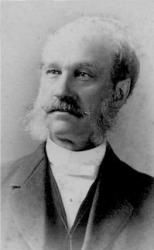
1816 - 1876 Person Name: Edward F. Rimbault, 1816-1876 Composer of "TE DEUM LAUDAMUS" in Hymns for Schools and Colleges Edward Francis Rimbault PhD LLD United Kingdom 1816-1876. Born in Soho, London, England, son of an organist and composer of French descent, he was taught music by his father., Samuel Wesley, and Wiliam Crotch. At age 16 he became organist of the Swiss Church in Soho. He later became organist at various churches, including St Peter’s, Vere Street, and St John’s Wood Presbyterian Church. He edited many collections of music, journals, and publications of music, and arranged music compositions. In addition to editing or arranging contemporary operas, he had a strong interest in editing or arranging earlier English music. He studied the musical treatises in the library of Archbishop Tenison, one of the oldest public libraries in London. In 1838, At age 22 he began lecturing about the history of English music, and was in much demand due to the interest aroused. He did editorial work for the Percy Society, the Camden Society, the Motet Society, and the Handel Society. For the latter he edited the “Messiah”, “Saul”, and “Samson” He was elected a Fellow of the Society of Antiquaries, and was granted membership in the Academy of Music in Stockholm, Sweden. Gottingen University also conferred upon him a PhD. His reputation was such that he was offered a teaching position at Harvard University in the U.S., which he turned down. In 1848 he was given an honorary degree by the University of Oxford. In 1849 he published a collection of English nursery rhymes and the tunes to which they were sung. Rimbault authored 76 books, a few named here include : “Bibliotheca madrigaliana” (1847); “The pianoforte” (1860); “Early English organ builders and their works” (1865). In 1855 he co-authored “The organ- its history and construction” with John Hopkins. He did a small amount of composing as well. He wrote an operetta in 1838, and a musical drama. He also composed a large number of pianoforte scores for operas by others. He was an admirable harmonium player. Traveling to various auctions for years, he accumulated a rare collection of books. After his death his extensive collection was auctioned off in 1877, with many items going to the British Library. About 300 items were sold to an individual, and upon his death in 1888, the ‘Drexel collection’ was bequeathed to the Lenox Library (precursor of the New York Public Library). Today, the collection is part of the Music Division of the NY Public Library for the Performing Arts. He was an author, editor, arranger, composer, lithographer, translator, scribe, adapter, and bookseller. He died at London, England. No information found regarding a family. John Perry

William Boyce

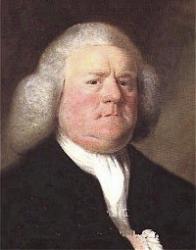
1711 - 1779 Person Name: W. Boyce, 1710 - 1779 Composer of "[We praise thee, O God] (Boyce)" in The Hymnary William Boyce (baptised 1711 – d. 7 February 1779) was an English composer and organist. See also in: Wikipedia

Edwin George Monk

1819 - 1900 Person Name: Edwin G. Monk, 1819-1900 Composer of "[We praise thee, O God]" in Pilgrim Hymnal

William F. Sherwin

1826 - 1888 Person Name: Wm. F. Sherwin Composer of "[We praise Thee, O God; we acknowledge Thee to be the Lord]" in Zion's Praises (1st ed.) Sherwin, William Fisk, an American Baptist, was born at Buckland, Massachusetts, March 14,1826. His educational opportunities, so far as schools were concerned, were few, but he made excellent use of his time and surroundings. At fifteen he went to Boston and studied music under Dr. Mason: In due course he became a teacher of vocal music, and held several important appointments in Massachusetts; in Hudson and Albany, New York County, and then in New York City. Taking special interest in Sunday Schools, he composed carols and hymn-tunes largely for their use, and was associated with the Rev. R. Lowry and others in preparing Bright Jewels, and other popular Sunday School hymn and tune books. A few of his melodies are known in Great Britain through I. D. Sankey's Sacred Songs and Solos, where they are given with his signature. His hymnwriting was limited. The following pieces are in common use:— 1. Grander than ocean's story (1871). The Love of God. 2. Hark, bark, the merry Christmas bells. Christmas Carol. 3. Lo, the day of God is breaking. The Spiritual Warfare. 4. Wake the song of joy and gladness. Sunday School or Temperance Anniversary. 5. Why is thy faith, 0 Child of God, so small. Safety in Jesus. Mr. Sherwin died at Boston, Massachusetts, April 14, 1888. -- John Julian, Dictionary of Hymnology (1907) ================== Sherwin, W. F., p. 1055, i. Another hymn from his Bright Jewels, 1869, p. 68, is "Sound the battle cry" (Christian Courage), in the Sunday School Hymnary, 1905, and several other collections. --John Julian, Dictionary of Hymnology, New Supplement (1907)

Samuel Webbe

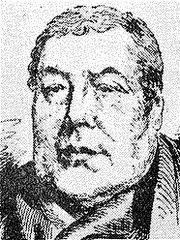
1740 - 1816 Person Name: S. Webbe Composer of "[We praise Thee, O God]" in Sunday-School Book Samuel Webbe (the elder; b. London, England, 1740; d. London, 1816) Webbe's father died soon after Samuel was born without providing financial security for the family. Thus Webbe received little education and was apprenticed to a cabinet­maker at the age of eleven. However, he was determined to study and taught himself Latin, Greek, Hebrew, French, German, and Italian while working on his apprentice­ship. He also worked as a music copyist and received musical training from Carl Barbant, organist at the Bavarian Embassy. Restricted at this time in England, Roman Catholic worship was freely permitted in the foreign embassies. Because Webbe was Roman Catholic, he became organist at the Portuguese Chapel and later at the Sardinian and Spanish chapels in their respective embassies. He wrote much music for Roman Catholic services and composed hymn tunes, motets, and madrigals. Webbe is considered an outstanding composer of glees and catches, as is evident in his nine published collections of these smaller choral works. He also published A Collection of Sacred Music (c. 1790), A Collection of Masses for Small Choirs (1792), and, with his son Samuel (the younger), Antiphons in Six Books of Anthems (1818). Bert Polman

Samuel Wesley

1766 - 1837 Person Name: S. Wesley Composer of "[We praise Thee, O God]" in The Methodist Hymn-Book with Tunes Samuel Wesley; b. Feb. 24, 1766, Bristol; d. Oct. 11, 1837, London; composer and organist. Son of Charles Wesley, grandson of Samuel Wesley, 1662-1735

Matthew Camidge

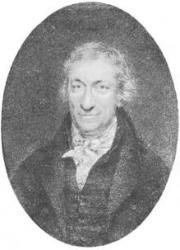
1764 - 1844 Person Name: M. Camidge, 1758 - 1844 Composer of "[We praise thee, O God] (Camidge)" in The Hymnary Matthew Camidge (25 May 1758 - 23 Oct 1844 in York) was a well-known local musician in Northern England, famous for his organ playing and conducting oratorios. His compositions are solid in craftsmanship though quite conservative. He was the son of John Camdige,who was also an organist and composer and Elizabeth Camidge. After some time as a chorister of the Chapel Royal under James Nares, Matthew returned to York where he lived the rest of his life. He served as his father's assistant and in 1799 he succeeded his father as organist of York Minster. He played an active part in the musical life of York, appearing as a soloist in piano and organ concertos and promoting music festivals in York Minster. After Matthew retired in 1842, his son, John Camidge, succeeded him as organist. Matthew Camidge was known for his brilliant organ improvisations. He organized huge music festivals given at York in 1823, 1825, and later. As a violinist, he led the orchestra of the York Musical Society. He contributed 30 excellent hymn tunes for William Richardson's Collection of Psalms, which in later editions became widely known as The York Psalm and Hymn Book. It is likely that Camidge introduced the practice of psalm chanting to St Michael-le-Belfrey, his other church job, which he obtained in 1801. Matthew Camidge published works of practical material written for his work as a church musician and teacher as well as anthems and service settings in Cathedral Music, Hymn and psalm tunes, an edition of Henry Lawes' Psalmody for a single voice, Instructions for the Piano forte or Harpsichord and some songs. From Camidge family wiki (https://en.m.wikipedia.org/wiki/Camidge_family), Creative Commons License

Jack Boyd

b. 1932 Arranger of "TE DEUM LAUDAMUS" in Great Songs of the Church (Revised) Jack Arthur Boyd (b. Indianapolis, Indiana, February 9, 1932) was the music editor of *Great Songs of the Church, Revised*, published by ACU Press in 1986. He earned a B.S. degree in music education from Abilene Christian University, a masters degree in music composition and theory from the University of North Texas, and a Ph.D. in choral literature from the University of Iowa. Boyd edited *Children, Rejoice!* (Sweet, 1979) and he authored *Rehearsal Guide for the Choral Director* (Parker, 1970) and *Leading the Lord's Singing* (Quality, 1981). He is a member of Churches of Christ and lives in Abilene, Texas. Monty Lynn

John Randall

1717 - 1799 Person Name: J. Randall, 1715 - 1799 Composer of "[We praise thee, O God] (Randall)" in The Hymnary

Edward Hodges

1796 - 1867 Person Name: Hodges Composer of "[We praise Thee, O God]" in Voices of Praise Born: Ju­ly 20, 1796, Bris­tol, Eng­land. Died: Sep­tem­ber 1, 1867, Clif­ton, Bris­tol, Eng­land. Buried: Church of St. Mary the Vir­gin, Stan­ton Drew (about eight miles south of Bristol). Hodges’ mu­sic­al gift showed it­self at an ear­ly age; by 1819, he was play­ing the or­gan at St. James’ Church in Bris­tol, and at St. Nicholas’, 1821-1838. He al­so had an in­ter­est­ing me­chan­ic­al bent, and spurred sev­er­al tech­ni­cal im­prove­ments in or­gan de­sign. He com­posed a num­ber of serv­ic­es and an­them piec­es, and Cam­bridge Un­i­ver­si­ty award­ed him a doc­tor­ate in mu­sic in 1825. Hodges event­u­al­ly em­i­grat­ed, ac­cept­ing a post at the ca­thed­ral in To­ron­to, Ca­na­da, in 1838. The next year, he be­came mu­sic di­rect­or at Trin­i­ty Par­ish in New York Ci­ty. He be­came the or­gan­ist at Trin­i­ty Church when it opened in 1846 (the church had its or­gan built to his spe­ci­fi­ca­tions). He re­tired for health rea­sons in 1859, and re­turned to his native Eng­land in 1863. Hodges’ works in­clude: An Apol­o­gy for Church Mu­sic and Mu­sic­al Fes­tiv­als, in Ans­wer…to the Stan­dard and the Re­cord (Lond­on: 1834) Essays on the Ob­jects of Mu­sic­al Study (Bris­tol, Eng­land: 1838) An Es­say on the Cul­ti­va­tion of Church Mu­sic (New York: 1841) Contributions to the Quar­ter­ly Mu­sic­al Mag­a­zine & Mu­sic­al World Trin­i­ty Col­lect­ion of Church Mu­sic (Bos­ton, Mass­a­chu­setts: 1864) (ed­it­or) Music-- BRISTOL GLOUCESTER HABAKKUK HYMN TO JOY --www.hymntime.com/

Pages


Export as CSV
It looks like you are using an ad-blocker. Ad revenue helps keep us running. Please consider white-listing Hymnary.org or getting Hymnary Pro to eliminate ads entirely and help support Hymnary.org.