

 My Starred Hymns
 My FlexScores
 My Hymnals
 My Purchased Files
Planning worship?
Check out our sister site, ZeteoSearch.org,
for 20+ additional resources related to your search.
- |
User Links
Person Results
Spencer Lane
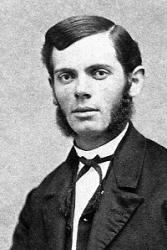
1843 - 1903 Topics: Conformity to God's Will Composer of "PENITENCE" in The Hymnal of the Protestant Episcopal Church in the United States of America 1940 Spencer Lane USA 1843-1903. Born at Tilton, NH, he served in the 8th NH Infantry during the American Civil War. After the war, he studied at the New England Conservatory and taught vocal and instrumental music at Oneida and Utica, NY. He married Isabel F. (no information on children was found). He later moved to Woonsocket, RI, where he ran a music store and served as organist and directed the choir for the St. James Episcopal Church for 13 years. He moved to Monson, MA, then to Richmond, VA, and in 1896 to Baltimore, MD. In Baltimore he worked for the music firm of Sanders & Stayman and was music director at the All Saints Protestant Episcopal Church. While at Woonsocket, his pastor gave him the hymns for an evening service, one of whose tune he didn’t care for, so he composed another tune for it, ‘Penitence’. That is his only hymn contribution. He was an author and music composer: “My beloved, I’ll think of thee”, “A dream – grand march”, others. He died at Reedville, VA.
John Perry
Spencer Lane
John Wesley
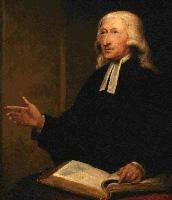
1703 - 1791 Topics: Conformity to Christ Translator of "Teach me, my God and King" in Book of Worship with Hymns and Tunes John Wesley, the son of Samuel, and brother of Charles Wesley, was born at Epworth, June 17, 1703. He was educated at the Charterhouse, London, and at Christ Church, Oxford. He became a Fellow of Lincoln College, Oxford, and graduated M.A. in 1726. At Oxford, he was one of the small band consisting of George Whitefield, Hames Hervey, Charles Wesley, and a few others, who were even then known for their piety; they were deridingly called "Methodists." After his ordination he went, in 1735, on a mission to Georgia. The mission was not successful, and he returned to England in 1738. From that time, his life was one of great labour, preaching the Gospel, and publishing his commentaries and other theological works. He died in London, in 1791, in his eighty-eighth year. His prose works are very numerous, but he did not write many useful hymns. It is to him, however, and not to his brother Charles, that we are indebted for the translations from the German.
--Annotations of the Hymnal, Charles Hutchins, M.A., 1872
======================
John Wesley, M.A., was born at Epworth Rectory in 1703, and, like the rest of the family, received his early education from his mother. He narrowly escaped perishing in the fire which destroyed the rectory house in 1709, and his deliverance made a life-long impression upon him. In 1714 he was nominated on the foundation of Charterhouse by his father's patron, the Duke of Buckingham, and remained at that school until 1720, when he went up, with a scholarship, from Charterhouse to Christ Church, Oxford. Having taken his degree, he received Holy Orders from the Bishop of Oxford (Dr. Potter) in 1725. In 1726 he was elected Fellow of Lincoln College, and remained at Oxford until 1727, when he returned into Lincolnshire to assist his father as curate at Epworth and Wroot. In 1729 he was summoned back to Oxford by his firm friend, Dr. Morley, Rector of Lincoln, to assist in the College tuition. There he found already established the little band of "Oxford Methodists" who immediately placed themselves under his direction. In 1735 he went, as a Missionary of the Society for the Propagation of the Gospel, to Georgia, where a new colony had been founded under the governorship of General Oglethorpe. On his voyage out he was deeply impressed with the piety and Christian courage of some German fellow travellers, Moravians. During his short ministry in Georgia he met with many discouragements, and returned home saddened and dissatisfied both with himself and his work; but in London he again fell in with the Moravians, especially with Peter Bohler; and one memorable night (May 24, 1738) he went to a meeting in Aldersgate Street, where some one was reading Luther's preface to the Epistle to the Romans. There, "About a quarter before nine, while he was describing the change which God works in the heart through faith in Christ, I felt my heart strangely warmed. I felt I did trust in Christ, Christ alone, for salvation; and an assurance was given me, that He had taken away my sins, even mine, and saved me from the law of sin and death." From that moment his future course was sealed; and for more than half a century he laboured, through evil report and good report, to spread what he believed to be the everlasting Gospel, travelling more miles, preaching more sermons, publishing more books of a practical sort, and making more converts than any man of his day, or perhaps of any day, and dying at last, March 2, 1791, in harness, at the patriarchal age of 88.
The popular conception of the division of labour between the two brothers in the Revival, is that John was the preacher, and Charles the hymnwriter. But this is not strictly accurate. On the one hand Charles was also a great preacher, second only to his brother and George Whitefield in the effects which he produced. On the other hand, John by no means relegated to Charles the exclusive task of supplying the people with their hymns. John Wesley was not the sort of man to depute any part of his work entirely to another: and this part was, in his opinion, one of vital importance. With that wonderful instinct for gauging the popular mind, which was one element in his success, he saw at once that hymns might be utilized, not only for raising the devotion, but also for instructing, and establishing the faith of his disciples. He intended the hymns to be not merely a constituent part of public worship, but also a kind of creed in verse. They were to be "a body of experimental and practical divinity." "In what other publication," he asks in his Preface to the Wesleyan Hymn Book, 1780 (Preface, Oct. 20,1779), "have you so distinct and full an account of Scriptural Christianity; such a declaration of the heights and depths of religion, speculative and practical; so strong cautions against the most plausible errors, particularly those now most prevalent; and so clear directions for making your calling and election sure; for perfecting holiness in the fear of God?" The part which he actually took in writing the hymns, it is not easy to ascertain; but it is certain that more than thirty translations from the German, French and Spanish (chiefly from the German) were exclusively his; and there are some original hymns, admittedly his composition, which are not unworthy to stand by the side of his brother's. His translations from the German especially have had a wide circulation. Although somewhat free as translations they embody the fire and energy of the originals.
It has been the common practice, however for a hundred years or more to ascribe all translations from the German to John Wesley, as he only of the two brothers knew that language; and to assign to Charles Wesley all the original hymns except such as are traceable to John Wesley through his Journals and other works.
The list of 482 original hymns by John and Charles Wesley listed in this Dictionary of Hymnology have formed an important part of Methodist hymnody and show the enormous influence of the Wesleys on the English hymnody of the nineteenth century.
-- Excerpts from John Julian, Dictionary of Hymnology (1907)
===================
See also in:
Hymn Writers of the Church
John Wesley
Johann Martin Spiess
1691 - 1772 Topics: Conformity to God's Will Composer of "SWABIA" in The Hymnal of the Protestant Episcopal Church in the United States of America 1940
Johann Martin Spiess
William Horn
1839 - 1917 Topics: Conformity to Christ Author of "Mighty God, we humbly pray" in Hymnal and Liturgies of the Moravian Church Horn, William. (Germany, May 1, 1839--April 27, 1917). Evangelical. Come to United States in 1855, settled in Wisconsin. Licensed in 1861, ordained elder 1866, presiding elder 1871, bishop 1891. Editor of various Evangelical German-language publications, including Das Evangelische Magazin and Christliche Kinderfreund. Editor of German weekly of the Evangelical Association, 1883, Christliche Botschafter.
Editor of Evangelisches Gesangbuch, 1877, for which he supplied a number of hymns. His most famous hymn was "Pure and free from all corruption." He wrote 24 hymns in all, and has been called one of the greatest of the German writers in America. Translated many English hymns into German.
Retired as bishop in 1915.
--Robert S. Wilson, DNAH Archives
--Ellen Jane Lorenz, DNAH Archives
William Horn was born in Germany May 1, 1839. He died in 1917. He came to U.S. in 1855 and settled in Wisconsin. Licensed in 1861, he rose through the ranks of ordained elder and bishop. He retired as Bishop in 1915 and died April 27, 1917.
He was the editor of various Evangelical German-lanuage publications
including EVANGELISCHES GESANGBUCH of 1877, for which he supplied a number of hymns.
Of his twenty-four hymns the most famous, according to Ellen J. Lorenz, was "Pure and free from all corruption". He also translated many English hymns into German.
—Mary L. VanDyke for Dictionary of American Hymnology, Oberlin College Library (14 December 2003)
William Horn
Arthur William Farlander
1898 - 1952 Person Name: Arthur W. Farlander Topics: Conformity to God's Will Translator of "Commit thou all that grieves thee" in The Hymnal of the Protestant Episcopal Church in the United States of America 1940
Arthur William Farlander
I. B. Woodbury
1819 - 1858 Person Name: Isaac B. Woodbury Topics: Conformity to Christ Composer of "DESIRE" in Book of Worship with Hymns and Tunes Woodbury, Isaac Baker. (Beverly, Massachusetts, October 23, 1819--October 26, 1858, Columbia, South Carolina). Music editor. As a boy, he studied music in nearby Boston, then spent his nineteenth year in further study in London and Paris.
He taught for six years in Boston, traveling throughout New England with the Bay State Glee Club. He later lived at Bellow Falls, Vermont, where he organized the New Hampshire and Vermont Musical Association. In 1849 he settled in New York City where he directed the music at the Rutgers Street Church until ill-health caused him to resign in 1851. He became editor of the New York Musical Review and made another trip to Europe in 1852 to collect material for the magazine. in the fall of 1858 his health broke down from overwork and he went south hoping to regain his strength, but died three days after reaching Columbia, South Carolina.
He published a number of tune-books, of which the Dulcimer, of New York Collection of Sacred Music, went through a number of editions. His Elements of Musical Composition, 1844, was later issued as the Self-instructor in Musical Composition. He also assisted in the compilation of the Methodist Hymn Book of 1857.
--Leonard Ellinwood, DNAH Archives
I. B. Woodbury
Winfred Douglas
1867 - 1944 Topics: Conformity to God's Will Translator of "Commit thou all that grieves thee" in The Hymnal of the Protestant Episcopal Church in the United States of America 1940 Charles Winfred Douglas (b. Oswego, NY, 1867; d. Santa Rosa, CA, 1944), an influential leader in Episcopalian liturgical and musical life. Educated at Syracuse University and St. Andrews Divinity School, Syracuse, New York, he moved to Colorado for his health. There he studied at St. Matthew's Hall, Denver, and founded the Mission of the Transfiguration in Evergreen (1897). Ordained a priest in the Episcopal Church in 1899, he also studied in France, Germany and England, where he spent time with the Benedictines of Solesmes on the Island of Wight from 1903 to 1906. For much of his life, Douglas served as director of music at the Community of St. Mary in Peekskill, New York, and had associations with cathedrals in Denver, Colorado, and Fond du Lac, Wisconsin. He promoted chanting and plainsong in the Episcopal Church through workshops and publications such as The American Psalter (1929), the Plainsong Psalter (1932), and the Monastic Diurnal (1932). His writings include program notes for the Denver Symphony Orchestra, various hymn preludes; organ, as well as the book, Church Music in History and Practice (1937). He was editor of both the Hymnal 1916 and its significant successor, Hymnal 1940, of the Episcopal Church. Douglas's other achievements include a thorough knowledge of the life and culture of Hopi and Navajo natives, among whom he lived for a number of years.
Bert Polman
Winfred Douglas
L. O. Emerson

1820 - 1915 Person Name: Luther O. Emerson Topics: Conformity to Christ Composer of "WOODSIDE" in Book of Worship with Hymns and Tunes Luther Orlando Emerson was born at Parsonsfield, Maine, August 3, 1820. He descended from distinguished English ancestry. His parents were quite musical, and while the family circle were together, they had a choir and orchestra of their own. The father played the violoncello, the mother was an excellent singer, the flute and violin added their sweet tones, till the quiet homestead rang with melody.
Mr. Emerson's education was obtained at the district school, Parsonsfield Seminary and Effingham Academy. He was full of energy, quick and versatile, an apt scholar, and with a view to entering the profession of medicine he entered Dracut Academy, Mass. But his great love for music swerved him from that course, and now, having far better opportunities for cultivating and enjoying this taste and ability, he soon determined upon music as the profession of his choice. He accordingly commenced a course of musical instruction under the late I. B. Woodbury, then a popular teacher of music. After several years of study on the voice, piano, organ and in harmony, Mr. Emerson went to Salem, Mass., began teaching, and took charge of his first choir at a salary of one hundred dollars per year. Here he commenced the composition of music for his own choir, whiich was so popular with its members and the congregation, that Mr. Emerson was encouraged to seek a larger hearing by publishing a collection of church music. Among the tunes was that of Sessions, named after his pastor, which was destined to have a perennial popularity, and is often used in worship in the place of Old Hundred, for the Doxology. At the great Peace Jubilee it was received with applause when sung by a chorus of ten thousand voices, accompanied by an orchestra of two hundred instruments and a great pipe organ. The effect was sublime beyond expression.
In 1847 occurred the marriage of Mr. Emerson to Miss Mary Gore, daughter of a prominent Boston merchant. She was a lady of much musical taste and ability.
In 1853 he decided to make an effort to put his music before the public, and accordingly went to Boston in search of a publisher. Like most young and unknown authors, he met with but little encouragement, but finally found a publisher in the person of Mr. B. B. Muzzy. Thus was the Romberg Collection published. The book was not pushed — hence it found no market.
After a residence of eight years in Salem, Mr. Emerson removed to Boston, accepting the position of organist and musical director at the Bulfinch Street Church, then under the pastoral care of Rev. Wm. R. Alger, which he filled for four years. He eagerly improved the rare means of culture which were once more enjoyed, meanwhile teaching and composing music.
In 1857 he formed the connection with Oliver Ditson Company, of Boston, of author and publisher, which has continued to the present time with but one interruption (a single volume brought out by another firm), the Golden Wreath, which at once became popular, and sold forty thousand during the first year, this being the initial volume in the long series since brought out by these publishers. In 1858 came the Golden Harp, which was also a success. These successes gave him not only encouragement, but reputation.
Mr. Emerson now entered upon a career of usefulness and popularity for which he had been preparing during the years of self-denying struggle and discipline. He was called to take charge of the music in the Second Congregational Church, Greenfield, Mass., and also of the musical department of Power's Institute, at Bernardston. Amid nature's most beautiful surroundings, he had a quiet retreat for the pursuit of his true vocation, the composition of church music.
The first fruit of his genius here was the Sabbath Harmony, in 1860. This book was also a success. In 1863 followed the Harp of Judah, which had the remarkable sale of nearly fifty thousand copies in the first three months. This book probably gave Mr. Emerson his preeminence as a composer of church music, containing as it did his anthem, Guide Me, O Thou Great Jehovah, and many of his finest compositions.
Having declined the solicitations of Dr. Lowell Mason to become his associate in music, Mr. Emerson started forth on his own plans, and attained the highest rank among those who loved the pure and beautiful in song. Mr. W. S. B. Mathews, a musical critic, pronounces him the best melodist of all the psalmodic writers.
In 1866 the equally successful Jubilate appeared, followed by the Choral Tribute, the Standard and the Leader. In the last two Dr. I. R. Pahner was associated with him. Later on came the Salutation, Voice of Worship, Herald of Praise, etc. The diligence with which Mr. Emerson plied his pen can be estimated when one recalls the fact that he has made seventy-two collections of music, embracing music for churches, singing schools, public schools, choral societies and conventions, instruction books for voice, organ, etc. He has also composed and published scores of songs, quartets and instrumental pieces.
The great amount of work this represents can only be appreciated by those who have undertaken similar labors. Some years ago the degree of Doctor of Music was conferred upon Professor Emerson by the Faculty of Findlay College, Findlay, Ohio.
For many years past. Dr. Emerson has devoted his energies to the grand purpose of elevating the general character of music in our churches, and thus largely advancing the interests of true worship. He places great stress upon the mission of church music. He regards sacred music as the best expression of devotional feeling that exists. He looks upon sacred song as prayer, and believes that it inspires and intensifies prayer. With this view he has taken an active and prominent part in musical festivals and conventions, of which he has conducted over three hundred throughout the United States and Canada. As a conductor, he stands in the front rank. As a teacher. Dr. Emerson has an exceedingly happy faculty of imparting in a concise manner to his classes. His very pleasing address enables him to command the undivided attention of his pupils.
As a singer, he has always held high rank, and has sung much in public. His voice is a baritone of great compass, and quite powerful. As a lecturer upon music, Dr. Emerson has attracted much attention. His most popular lecture is entitled The World of Music, in which he traces its origin and progress, and gives some excellent traits of the lives of the great composers. In this lecture he also shows the design of music, and how it has been prized in every age of the world, among all nations — its power in the Church and State, and the need of its influence in the family — in joy and sorrow — for this life and the life to come.
-Biography of Gospel Song and Hymn Writers
L. O. Emerson
Johannes de Watteville
1718 - 1788 Person Name: Bishop Johannes de Watteville, 1718-1788 Topics: Conformity to Christ Translator of "Jesus, thyself to us reveal" in Hymnal and Liturgies of the Moravian Church Johannes de Watteville, was the son-in-law of Nicholas Ludwig, Graf von Zinzendorf, married to Zinzendorf's daughter Benigna. He was a Moravian bishop in Germany. He originated the Christingle tradition in 1747 when he gave each child in his church a lighted candle wrapped in a red ribbon with a prayer that said "Lord Jesus, kindle a flame in these dear children's hearts."
================
Watteville, Johannes von, originally Johann Michael Langguth, but adopted by F. von Watteville, b. Oct. 18, 1718, at Walschleben near Erfurt. Member of the Unity's Direction, 1764. d. Oct. li, 1788, at Gnadenfrei, Silesia.
--John Julian, Dictionary of Hymnology (1907)
Johannes de Watteville
Richard Farrant
1525 - 1580 Person Name: R. Farrant Topics: Conformity Composer of "FARRANT" in Laudes Domini Like many composers of his day, the early years of Richard Farrant’s (c.1525- November 30, 1580) life are not well documented. The first acknowledgment of him is in a list of the Gentleman of the Chapel Royal in 1552. It is assumed from that list that his birth was around 1525. Although, that cannot be accurately determined. During his life he was able to establish himself as a successful composer, develop the English drama considerably, founded the first Blackfriar Theatre, and be the first to write verse-anthems. He married Anne Bower, daughter of Richard Bower who was Master of the Chapel Royal choristers at the time. With Anne he conceived ten children, one of whom was also named, Richard.
As a member of the Gentleman of the Chapel Royal, Farrant was active in ceremonies surrounding the royal family. He began his work with the Chapel Royal around 1550 under the reign of Edward VI. Fortunately, for Farrant, this is a time that saw huge developments in Latin Church Music. Composers like William Byrd and Christopher Tye were busy expanding and elaborating on the Church Music of the day. In Farrant's twelve years with the Chapel Royal, he was able to participate in funerals for Edward VI and Mary I, and coronations for Mary I and Elizabeth I. After his work there, he took up a post as organist at St. George’s Chapel at Windsor.
For Farrant, the post at at Windsor became a permanent one that he retained for the rest of his life. Along with this, he also acquired the position of Master of the Chapel Royal choristers in November of 1569. Having the choirs of both of these institutions at his disposal gave him an outlet to showcase all of his compositions and plays. In fact, every winter he was able to produce a play for the Queen herself. These positions also allowed him to move back to London in 1576 and begin a public theater of sorts where he rehearsed some of his choir music openly. It was soon after, in 1580, that he passed away, having left his house to his wife.
Unlike many composers of his day that stuck to only music composition, Farrant also wrote many plays. One of his most important contributions to drama in England is of course the creation of the first Blackfriars Theatre. This eventually became one of the most important places in London for drama to develop during the Renaissance. Farrant is also one of the earliest and most well known composers that began to mix the two mediums of music and drama. It was this uncommon mixture that allowed him to begin to develop the composition style of 'verse.' This becomes prominent in a lot of his pieces including the anthems "When as we sat in Babylon" and "Call to remembrance" and "Hide not thou thy face."
--en.wikipedia.org/wiki/
Richard Farrant
Pages




