

 My Starred Hymns
 My FlexScores
 My Hymnals
 My Purchased Files
Planning worship?
Check out our sister site, ZeteoSearch.org,
for 20+ additional resources related to your search.
- |
User Links
Person Results
Chas. H. Gabriel
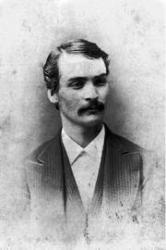
1856 - 1932 Person Name: Charles H. Gabriel Topics: Adoration; Christ Exaltation of; Christ Second Coming of; Christ The Saviour; Christ Worshiped; Christians Duties of; Church Glory of; Contributions; God Adored and Exalted; God Creator of All; God Glorious; God the judge; God Kingly Character of; God Sovereignty of ; Gospel Gracious Fruit of; Gospel Invitations of ; Grace Justifying; Grace Redeeming; Idolatry; Judgment Day; Liberality; Missions Encouragements of; Missions Triumphs of; Nations Owe Allegiance to Christ; Offerings; Praise By Men; Praise By Nations; Praise By Universe; Praise Calls to; Praise For God's Justice; Praise Part of Public Worship; Royalty of Christ In His Church; Royalty of Christ Judgment the Prerogative of; Royalty of Christ Ultimate Acknowledgement of; Spritual Sacrifices; Salvation Thanksgiving for; The Sea; Temperance Songs; Worship Acts of; Worship Call to Composer of "LUCILE" in The Psalter Pseudonyms: C. D. Emerson, Charlotte G. Homer, S. B. Jackson, A. W. Lawrence, Jennie Ree
=============
For the first seventeen years of his life Charles Hutchinson Gabriel (b. Wilton, IA, 1856; d. Los Angeles, CA, 1932) lived on an Iowa farm, where friends and neighbors often gathered to sing. Gabriel accompanied them on the family reed organ he had taught himself to play. At the age of sixteen he began teaching singing in schools (following in his father's footsteps) and soon was acclaimed as a fine teacher and composer. He moved to California in 1887 and served as Sunday school music director at the Grace Methodist Church in San Francisco. After moving to Chicago in 1892, Gabriel edited numerous collections of anthems, cantatas, and a large number of songbooks for the Homer Rodeheaver, Hope, and E. O. Excell publishing companies. He composed hundreds of tunes and texts, at times using pseudonyms such as Charlotte G. Homer. The total number of his compositions is estimated at about seven thousand. Gabriel's gospel songs became widely circulated through the Billy Sunday-Homer Rodeheaver urban crusades.
Bert Polman
Chas. H. Gabriel
Iona Community
Topics: Atheism; Blessing; Church Year All Saints' Day; Commitment; Conflict; Discipleship; Elements of Worship Praise and Adoration; Emmaus Road; Endurance; Evil; God Obedience to; God's Seeing; God's Seeing; God's Will; God's Word; God's law; God's Love; Jesus Christ Good Shepherd; Jesus Christ Mind of; Jesus Christ Teacher; Jesus Christ Way, Truth, and Life; Judgment; Mercy; Obedience; Remnant of Isarel; Servants of God; Truth; Wisdom Psalms; Year A, Ordinary Time after Pentecost, October 23-29; Year B, Easter, 7th Sunday; Year B, Ordinary Time after Pentecost, September 18-24; Year C, Ordinary Time after Epiphany, 6th Sunday; Year C, Ordinary Time after Pentecost; September 4-10 Author of "Happy Is the One" in Psalms for All Seasons Iona Community, an ecumenical Christian group of men and women based on the small island of Iona off the coast of Scotland. The community began in 1938 when the Rev. George MacLeod of the Church of Scotland began a ministry among the unemployed poor who had been neglected by the church. He took a handful of men to the island to rebuild the ruins of a thousand-year-old abbey church. That rebuilding became a metaphor for the rebuilding of the common life, a return to the belief that daily activity is the stuff of godly service – work, and worship. The Community has since grown to include a group of members, associates, and friends all over the United Kingdom and many other countries. In addition to many conferences that attract people to Iona from around the world, the Community is known for its publishing of new songs and prayers for worship, both developed in community and gathered from around the world. For more information on the Iona Community, check their website: www.iona.org.uk. John Bell is probably the community’s most well-known member, having composed and arranged much of the community’s music.
Sing! A New Creation
Iona Community
Lucien Deiss
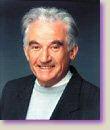
1921 - 2007 Person Name: Lucien Deiss, 1921 Topics: Adoration and Praise; Adversity; Ancestors; Celebration of Faith; Faithfulness of God; Joy; Judgment of God; Liberation; Majesty of God; Proclamation: Witness; Saints Days and Holy Days Apostles; Thanksgiving Paraphraser of "All you nations, sing out your joy to the Lord" in Together in Song Born: 1921, Paris, France.
Died: October 9, 2007, Île-de-France, France.
Buried: Seminaire des Missions, Chevilly-Larue, Île-de-France, France.
A member of the Holy Spirit Fathers, Deiss attended the Gregorian University in Rome and taught theology at the Grand Scholasticat of Cheville in Paris, France. His works include:
Early Sources of the Liturgy, 1967
It’s the Lord’s Supper/, 1976
Spring Time of the Liturgy, 1979
Sources:
Brink & Polman, P. 313
--www.hymntime.com/tch/
=================
Fr. Deiss was pastor, liturgist, author, international lecturer, renowned Scripture scholar, and an expert on liturgical music. He was selected by Pope Paul VI to coordinate the Lectionary psalter following the Second Vatican Council. His Biblical Hymns and Psalms was the one of the first major collections of liturgical music in the vernacular, and gave us such songs as "All the Earth," "Keep in Mind," and "Grant to Us, O Lord." A tireless advocate of the reforms of Vatican II, Fr. Deiss continually encouraged those who worked in liturgical reform to remain fervent in prayer, and he dedicated much of his life to liturgical catechesis through workshops and writings.
--www.decanimusic.co.uk/
Lucien Deiss
Chester G. Allen
1838 - 1878 Topics: Day Of Prayer; Deliverance From Trouble; Goodness of God; Judgment; Name Of God; God in Nature; Providence of God Composer of "GREATOREX" in Psalter Hymnal (Red) Chester Gilbert Allen (Feb. 15, 1838 – Oct. 18, 1878) was an American music educator, compiler, and hymn composer. He taught music in the Cleveland, Ohio, public schools and edited or co-edited Sunday-school songbooks that shaped the gospel repertoire of his day. Allen is best remembered for the tune Joyful Song, written for Fanny J. Crosby’s hymn Praise Him! Praise Him! Jesus, our blessed Redeemer and first published in Bright Jewels (1869). His lively, march-like melodies typify mid-nineteenth-century American gospel hymnody and remain in use today.
J. S. McDuff (from nineteenth-century American hymn collections and public-domain historical notices, retrieved 9/15/2025)
Chester G. Allen
L. O. Emerson

1820 - 1915 Person Name: Luther O. Emerson Topics: Assurance Declared; Blessedness Of Those Obeying Christ; Character Good and Bad Contrasted; Character Value of Good; Christ Communion with; Christians Blessedness of; Christians Growth of; Companions Evil; Spiritual Illumination; Judgment Day; Law of God; Meditation; Nature An Emblem of Grace; Obedience; Providence of God Over Saints; The Christian's Reward; The Righteous Blessedness of; The Righteous Contrasted with the Wicked; The Wicked Fate of; The Wicked Separation from; The Wicked Warned Composer of "REDEEMER" in The Psalter Luther Orlando Emerson was born at Parsonsfield, Maine, August 3, 1820. He descended from distinguished English ancestry. His parents were quite musical, and while the family circle were together, they had a choir and orchestra of their own. The father played the violoncello, the mother was an excellent singer, the flute and violin added their sweet tones, till the quiet homestead rang with melody.
Mr. Emerson's education was obtained at the district school, Parsonsfield Seminary and Effingham Academy. He was full of energy, quick and versatile, an apt scholar, and with a view to entering the profession of medicine he entered Dracut Academy, Mass. But his great love for music swerved him from that course, and now, having far better opportunities for cultivating and enjoying this taste and ability, he soon determined upon music as the profession of his choice. He accordingly commenced a course of musical instruction under the late I. B. Woodbury, then a popular teacher of music. After several years of study on the voice, piano, organ and in harmony, Mr. Emerson went to Salem, Mass., began teaching, and took charge of his first choir at a salary of one hundred dollars per year. Here he commenced the composition of music for his own choir, whiich was so popular with its members and the congregation, that Mr. Emerson was encouraged to seek a larger hearing by publishing a collection of church music. Among the tunes was that of Sessions, named after his pastor, which was destined to have a perennial popularity, and is often used in worship in the place of Old Hundred, for the Doxology. At the great Peace Jubilee it was received with applause when sung by a chorus of ten thousand voices, accompanied by an orchestra of two hundred instruments and a great pipe organ. The effect was sublime beyond expression.
In 1847 occurred the marriage of Mr. Emerson to Miss Mary Gore, daughter of a prominent Boston merchant. She was a lady of much musical taste and ability.
In 1853 he decided to make an effort to put his music before the public, and accordingly went to Boston in search of a publisher. Like most young and unknown authors, he met with but little encouragement, but finally found a publisher in the person of Mr. B. B. Muzzy. Thus was the Romberg Collection published. The book was not pushed — hence it found no market.
After a residence of eight years in Salem, Mr. Emerson removed to Boston, accepting the position of organist and musical director at the Bulfinch Street Church, then under the pastoral care of Rev. Wm. R. Alger, which he filled for four years. He eagerly improved the rare means of culture which were once more enjoyed, meanwhile teaching and composing music.
In 1857 he formed the connection with Oliver Ditson Company, of Boston, of author and publisher, which has continued to the present time with but one interruption (a single volume brought out by another firm), the Golden Wreath, which at once became popular, and sold forty thousand during the first year, this being the initial volume in the long series since brought out by these publishers. In 1858 came the Golden Harp, which was also a success. These successes gave him not only encouragement, but reputation.
Mr. Emerson now entered upon a career of usefulness and popularity for which he had been preparing during the years of self-denying struggle and discipline. He was called to take charge of the music in the Second Congregational Church, Greenfield, Mass., and also of the musical department of Power's Institute, at Bernardston. Amid nature's most beautiful surroundings, he had a quiet retreat for the pursuit of his true vocation, the composition of church music.
The first fruit of his genius here was the Sabbath Harmony, in 1860. This book was also a success. In 1863 followed the Harp of Judah, which had the remarkable sale of nearly fifty thousand copies in the first three months. This book probably gave Mr. Emerson his preeminence as a composer of church music, containing as it did his anthem, Guide Me, O Thou Great Jehovah, and many of his finest compositions.
Having declined the solicitations of Dr. Lowell Mason to become his associate in music, Mr. Emerson started forth on his own plans, and attained the highest rank among those who loved the pure and beautiful in song. Mr. W. S. B. Mathews, a musical critic, pronounces him the best melodist of all the psalmodic writers.
In 1866 the equally successful Jubilate appeared, followed by the Choral Tribute, the Standard and the Leader. In the last two Dr. I. R. Pahner was associated with him. Later on came the Salutation, Voice of Worship, Herald of Praise, etc. The diligence with which Mr. Emerson plied his pen can be estimated when one recalls the fact that he has made seventy-two collections of music, embracing music for churches, singing schools, public schools, choral societies and conventions, instruction books for voice, organ, etc. He has also composed and published scores of songs, quartets and instrumental pieces.
The great amount of work this represents can only be appreciated by those who have undertaken similar labors. Some years ago the degree of Doctor of Music was conferred upon Professor Emerson by the Faculty of Findlay College, Findlay, Ohio.
For many years past. Dr. Emerson has devoted his energies to the grand purpose of elevating the general character of music in our churches, and thus largely advancing the interests of true worship. He places great stress upon the mission of church music. He regards sacred music as the best expression of devotional feeling that exists. He looks upon sacred song as prayer, and believes that it inspires and intensifies prayer. With this view he has taken an active and prominent part in musical festivals and conventions, of which he has conducted over three hundred throughout the United States and Canada. As a conductor, he stands in the front rank. As a teacher. Dr. Emerson has an exceedingly happy faculty of imparting in a concise manner to his classes. His very pleasing address enables him to command the undivided attention of his pupils.
As a singer, he has always held high rank, and has sung much in public. His voice is a baritone of great compass, and quite powerful. As a lecturer upon music, Dr. Emerson has attracted much attention. His most popular lecture is entitled The World of Music, in which he traces its origin and progress, and gives some excellent traits of the lives of the great composers. In this lecture he also shows the design of music, and how it has been prized in every age of the world, among all nations — its power in the Church and State, and the need of its influence in the family — in joy and sorrow — for this life and the life to come.
-Biography of Gospel Song and Hymn Writers
L. O. Emerson
George Kirbye
1565 - 1634 Person Name: Goerge Kirbye Topics: Atheism; Blessing; Blessing; Church Year All Saints' Day; Commitment; Conflict; Discipleship; Elements of Worship Praise and Adoration; Emmaus Road; Endurance; Evil; God Obedience to; God's Will; God's Will; God's Word; God's law; God's Love; Jesus Christ Good Shepherd; Jesus Christ Mind of; Jesus Christ Teacher; Jesus Christ Way, Truth, and Life; Judgment; Mercy; Obedience; Remnant of Isarel; Servants of God; Truth; Wisdom Psalms; Year A, Ordinary Time after Pentecost, October 23-29; Year B, Easter, 7th Sunday; Year B, Ordinary Time after Pentecost, September 18-24; Year C, Ordinary Time after Epiphany, 6th Sunday; Year C, Ordinary Time after Pentecost; September 4-10 Composer (attributed to) of "WINCESTER OLD" in Psalms for All Seasons George Kirbye (c. 1565 – buried October 6, 1634) was an English composer of the late Tudor period and early Jacobean era. He was one of the members of the English Madrigal School, but also composed sacred music.
Little is known of the details of his life, though some of his contacts can be inferred. He worked at Rushbrooke Hall near Bury St Edmunds, evidently as a tutor to the daughters of Sir Robert Jermyn. In 1598 he married Anne Saxye, afterwards moving to Bury St Edmunds. Around this time he probably made the acquaintance of John Wilbye, a much more famous madrigalist, who lived and worked only a few miles away, and whose style he sometimes approaches. In 1626 his wife died, and he is known to have been a churchwarden during the next several years until his death.
Kirbye's most significant musical contributions were the psalm settings he wrote for East's psalter in 1592, the madrigals he wrote for the Triumphs of Oriana (1601), the famous collection dedicated to Elizabeth I, and an independent set of madrigals published in 1597. Stylistically his madrigals have more in common with the Italian models provided by Marenzio than do many of the others by his countrymen: they tend to be serious, in a minor mode, and show a careful attention to text setting; unlike Marenzio, however, he is restrained in his specific imagery.
Kirbye avoided the light style of Morley, which was hugely popular, and brought into the madrigal serious style of pre-madrigal English music. He is not as often sung as Morley, Weelkes or Wilbye, but neither was he as prolific; still, some of his madrigals appear in modern collections.
--en.wikipedia.org/wiki/
George Kirbye
William Dalrymple Maclagan
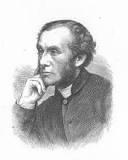
1826 - 1910 Person Name: William D. Maclagan Topics: Day Of Prayer; Judgment, Divine; Nature, God In Composer of "BREAD OF HEAVEN" in Psalter Hymnal (Blue) Maclagan, William Dalrymple , D.D., son of David Maclagan, M.D., was born in Edinburgh, June 18, 1826. In early life he entered the army, and served for some time in India. Retiring with the rank of lieutenant, he entered St. Peter's College, Cambridge, where he graduated B.A. 1856 and M.A. in 1860. Taking Holy Orders, he was curate of St. Saviour's, Paddington, 1856-58, and St. Stephen's, Marylebone, 1858-60. He then became Secretary to the London Diocesan Church Building Society, from 1860 to 1865; curate of Enfield, 1865-69; Rector of Newington, 1869-75; and Vicar of Kensington, 1875-78. He was also Hon. Chaplain to the Queen, and Prebendary of Reculverland in St. Paul's Cathedral, London. In 1878 he was consecrated Bishop of Lichfield. Bishop Maclagan's work has been mainly of a practical character, and his publications are few. The few hymns which he has written have been received with great favour, and create a desire for more of the same kind and quality. The following are in common use.:—
1. Again the trumpet sounds. Missions. Written about 1870. Appeared in the Hymns Ancient & Modern Hymns Ancient & Modern series of Hymns for Mission Services. 1871.
2. Be still, my soul, for God is near. Holy Communion. Part ii. is “O Body, broken for my sake." Written about 1873 for St. Mary's, Newington. In Thring's Collection, 1882.
3. Holy Spirit, Lord of love. Confirmation. Written about 1873, and published in Mrs. C. Brock's Children's Hymn Book, 1884.
4. It is finished, blessed Jesus [Saviour]. Good Friday. Written for Hymns Ancient & Modern, 1875. In several collections.
5. Lord, when Thy Kingdom comes, remember me. Good Friday. Written for the 1875 ed. of Hymns Ancient & Modern. Sometimes given in two parts: Pt. ii. Beginning, “Lord, when with dying lips my prayer is said."
6. The Saints of God their conflict past. All Saints. First published in Church Bells, 1870; and again in the Society for Promoting Christian Knowledge Church Hymns, 1871.
7. What thanks and praise to Thee we owe. St. Luke. Written for the 1875 edition of Hymns Ancient & Modern
These hymns are of more than usual merit, being characterized by great simplicity, tenderness, and fervour. The special season or purpose is clearly indicated, and its lessons earnestly enforced.
-- John Julian, Dictionary of Hymnology (1907)
=============
Maclagan, Abp. W. D., pp. 709, i.; 1578, ii. At the present time all Abp. Maclagan's hymns are in common use, and most of his tunes likewise. With regard to the latter, it is exceptional to find so many tunes by the author of popular hymns sharing the same popularity in the principal hymnals. In Church Hymnal, 1903, and Hymns Ancient & Modern, 1904, combined, there are eight of his tunes, whilst the hymns are six in all.
--John Julian, Dictionary of Hymnology, New Supplement (1907)
William Dalrymple Maclagan
Thomas of Celano
1200 - 1265 Topics: Christ Refuge; Day of Wrath; Judgment; Wrath Of God Author of "The day of wrath, that dreadful day" in Book of Worship with Hymns and Tunes Thomas of Celano was born at Celano in the Abruzzi, and joined St. Francis of Assisi c. 1214. He was commissioned by Gregory IX to write the life of St. Francis: the First Legend, 1229; the Second Legend, 1247; and the Tract on the Miracle of St. Francis a few years later. His Legend of St. Clare was composed in 1255. He was probably among the first band of friars to visit Germany, 1221.
--The Hymnal 1940 Companion
===============================
Thomas of Celano. It is somewhat remarkable that neither the date of the birth nor of the death of this writer, whose name is so intimately associated with the Dies Irae, is on record. He was a native of Celano, a small town near the lake Fucino, in the farther Abruzzo, and hence his name of Thomas of Celano. Several of the inhabitants of this town were driven therefrom by Frederick II. in 1223, and Thomas with the rest. He found his way to Assisi, and became a monk there during the lifetime of St. Francis. The Franciscan Order was established in 1208, Thomas was therefore one of the early students at Assisi. He was subsequently "custos of the convents of Worms, Mentz, and Cologne, and afterwards sole custos of the Rhine districts." The last named appointment he held till 1230, when he returned to Assisi. As intimated above the date of his death is not on record. It is sometimes given as 1255. Thomas also wrote a Life of St. Francis.
--John Julian, Dictionary of Hymnology, Appendix I (1907)
See also in:
Hymn Writers of the Church
Thomas of Celano
I-to Loh
b. 1936 Person Name: I-to Loh, b. 1936 Topics: Atheism; Blessing; Church Year All Saints' Day; Commitment; Conflict; Discipleship; Elements of Worship Praise and Adoration; Emmaus Road; Endurance; Evil; God Obedience to; God's Seeing; God's Will; God's Word; God's law; God's Love; Jesus Christ Good Shepherd; Jesus Christ Mind of; Jesus Christ Teacher; Jesus Christ Way, Truth, and Life; Judgment; Mercy; Obedience; Remnant of Isarel; Servants of God; Truth; Wisdom Psalms; Year A, Ordinary Time after Pentecost, October 23-29; Year B, Easter, 7th Sunday; Year B, Ordinary Time after Pentecost, September 18-24; Year C, Ordinary Time after Epiphany, 6th Sunday; Year C, Ordinary Time after Pentecost; September 4-10; Texts in Languages Other than English Thai Arranger of "SRI LAMPANG" in Psalms for All Seasons
I-to Loh
George Kingsley
1811 - 1884 Topics: Afflictions Deliverance from; Afflictions Promises for; Aspirations For Peace and Rest; Assurance Declared; Assurance Desired; Christians Saved by Grace; Enemies Destruction of; Faith Confidence of; Glory of God In Providence; God Adored and Exalted; God the judge; God Our Refuge; Grace Quickening; Grace Redeeming; Hell; Humility; Judgment Day; Judgments On the Wicked; Meekness; Missions Encouragements of; Missions Need for; Patience; Praise Calls to; Praise For Works of Providence; Retribution Inflicted; Retribution Threatened; Royalty of Christ Guarantee of Salvation; Royalty of Christ Judgment the Prerogative of; Safety Assured; The Wicked Fate of; The Wicked Prayers for Punishment of; The Wicked Self-Destroyed; The Wicked Warned Composer of "FREDERICK" in The Psalter Born: July 7, 1811, Northampton, Massachusetts.
Died: March 14, 1884, Northampton, Massachusetts.
Kingsley played the organ at the Old South Church and Hollis Street Church in Boston, Massachusetts. He also taught music at Girard College in Philadelphia, Pennsylvania, served as music supervisor for public schools in Philadelphia, and compiled a number of music books, including:
Sunday School Singing Book, 1832
The Harmonist, 1833
The Social Choir, 1836
The Sacred Choir, 1838
The Harp of David, 1844
The Young Ladies’ Harp, 1847
Templi Carmina (Northampton, Massachusetts: 1853)
The Juvenile Choir, 1865
--www.hymntime.com/tch
George Kingsley
Pages




