You help make Hymnary.org possible. More than 10 million people from 200+ countries found hymns, liturgical resources and encouragement on Hymnary.org in 2025, including you. Every visit affirms the global impact of this ministry.

If Hymnary has been meaningful to you this year, would you take a moment today to help sustain it? A gift of any size—paired with a note of encouragement if you wish—directly supports the server costs, research work and curation that keep this resource freely available to the world.

Give securely online today, or mail a check to:
Hymnary.org
Calvin University
3201 Burton Street SE
Grand Rapids, MI 49546

Thank you for your partnership, and may the hope of Advent fill your heart.

Person Results

Topics:god+as+king+of+kings
In:people

Planning worship? Check out our sister site, ZeteoSearch.org, for 20+ additional resources related to your search.
Showing 51 - 60 of 307Results Per Page: 102050

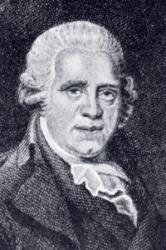
Edward Miller

1735 - 1807 Topics: Commitment & Dedication; King, God/Christ as; Commitment & Dedication; King, God/Christ as; Lord's Supper; Offering; Opening of Worship; Thanksgiving & Gratitude Adapter of "ROCKINGHAM" in Psalter Hymnal (Gray) Edward Miller, Born in the United Kingdom. The son of a pavior (stone paver), Miller left home to study music at King's Lynn. He was a flautist in Handel's orchestra. In 1752 he published “Six Solos for the German Flute”. In 1756 he was appointed organist of St. George Minster Doncaster, continuing in that post for 50 years. He also gave pianoforte lessons. He published hymns and sonatas for harpsichord, 16 editions of “The Institues of Music”, “Elegies for Voice & Pianoforte”, and Psalms of David set to music, arranged for each Sunday of the year. That work had over 5000 subscribers. He published his thoughts on performance of Psalmody in the Church of England, addressed to clergy. In 1801 he published the Psalms of Watts and Wesley for use by Methodists, and in 1804 the history and antiques of Doncaster with a map. John Perry

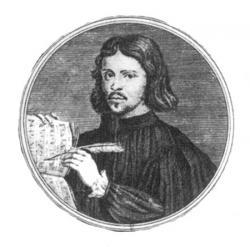
Thomas Tallis

1505 - 1585 Topics: Angels; Atonement; Biblical Names and Places Israel; Biblical Names and Places Moses; Blessing; Church Year Lent; Church Year Maundy Thursday; Covenant; Elements of Worship Assurance of Pardon; Elements of Worship Baptism; Elements of Worship Lord's Supper; Elements of Worship Praise and Adoration; Elements of Worship Thanksgiving after the Lord's Supper; Faith; Forgiveness; God Changelessness of; God as King; God as Slow to Anger; God's Sovereignty; God's Word; God's Anger; God's Compassion; God's Faithfulness; God's Forgiveness; God's Generosity; God's Goodness; God's Justice; God's Kingdom; God's Love; God's Name; God's People (flock, sheep); Grace; Grave; Healing; Hope; Humanity Sustained by God; Hymns of Praise; Jesus Christ Friend of Sinners; Jesus Christ Healer; Jesus Christ Teacher; Life Stages Family; Life Stages Generations; Life Stages Old Age; Life Stages Youth; Lord's Prayer 3rd petition (your will be done); Lord's Prayer 6th petition (save us from the time of trail…); Love; Mercy; Occasional Services Christian Marriage; Occasional Services Funerals; Occasional Services Healing Service; Occasional Services New Year; Peace; People of God / Church Family of God; People of God / Church Family of God; Prayer; Remembering; Salvation; Servants of God; Temptation And Trial; The Creation; The Fall; Victory; Witness; Year A, Ordinary Time after Pentecost, September 11-17; Year B, Ordinary Time after Epiphany, 8th Sunday; Year B, Ordinary Time after Pentecost, May 24-May 28 (if after Trinity Sunday); Year C, Ordinary Time after Pentecost, August 21-27 Composer of "TALLIS ORDINAL" in Psalms for All Seasons Thomas Tallis (b. Leicestershire [?], England, c. 1505; d. Greenwich, Kent, England 1585) was one of the few Tudor musicians who served during the reigns of Henry VIII: Edward VI, Mary, and Elizabeth I and managed to remain in the good favor of both Catholic and Protestant monarchs. He was court organist and composer from 1543 until his death, composing music for Roman Catholic masses and Anglican liturgies (depending on the monarch). With William Byrd, Tallis also enjoyed a long-term monopoly on music printing. Prior to his court connections Tallis had served at Waltham Abbey and Canterbury Cathedral. He composed mostly church music, including Latin motets, English anthems, settings of the liturgy, magnificats, and two sets of lamentations. His most extensive contrapuntal work was the choral composition, "Spem in alium," a work in forty parts for eight five-voice choirs. He also provided nine modal psalm tunes for Matthew Parker's Psalter (c. 1561). Bert Polman

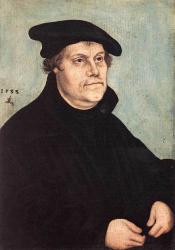
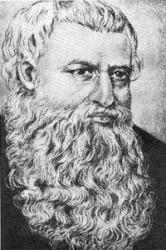
Martin Luther

1483 - 1546 Topics: Fearlessness; God our Helper; Holy Spirit; Christ as King; Kingdom of God; Persecution Of Believers; Reformation Day; God of Christ our Refuge; Renunciation; Satan; Security; Truth; Victory Author of "A Mighty Fortress is Our God" in Psalter Hymnal (Red) Luther, Martin, born at Eisleben, Nov. 10, 1483; entered the University of Erfurt, 1501 (B.A. 1502, M.A.. 1503); became an Augustinian monk, 1505; ordained priest, 1507; appointed Professor at the University of Wittenberg, 1508, and in 1512 D.D.; published his 95 Theses, 1517; and burnt the Papal Bull which had condemned them, 1520; attended the Diet of Worms, 1521; translated the Bible into German, 1521-34; and died at Eisleben, Feb. 18, 1546. The details of his life and of his work as a reformer are accessible to English readers in a great variety of forms. Luther had a huge influence on German hymnody. i. Hymn Books. 1. Ellich cristlich lider Lobgesang un Psalm. Wittenberg, 1524. [Hamburg Library.] This contains 8 German hymns, of which 4 are by Luther. 2. Eyn Enchiridion oder Handbuchlein. Erfurt, 1524 [Goslar Library], with 25 German hymns, of which 18 are by Luther. 3. Geystliche Gesangk Buchleyn. Wittenberg, 1524 [Munich Library], with 32 German hymns, of which 24 are by Luther. 4. Geistliche Lieder auffs new gebessert. Wittenberg. J. Klug, 1529. No copy of this book is now known, but there was one in 1788 in the possession of G. E. Waldau, pastor at Nürnberg, and from his description it is evident that the first part of the Rostock Gesang-Buch, 1531, is a reprint of it. The Rostock Gesang-Buch, 1531, was reprinted by C. M. Wiechmann-Kadow at Schwerin in 1858. The 1529 evidently contained 50 German hymns, of which 29 (including the Litany) were by Luther. 5. Geistliche Lieder auffs new gebessert. Erfurt. A. Rauscher, 1531 [Helmstädt, now Wolfenbüttel Library], a reprint of No. 4. 6. Geistliche Lieder. Wittenberg. J. Klug, 1535 [Munich Library. Titlepage lost], with 52 German hymns, of which 29 are by Luther. 7. Geistliche Lieder auffs new gebessert. Leipzig. V. Schumann, 1539 [Wernigerode Library], with 68 German hymns, of which 29 are by Luther. 8. Geistliche Lieder. Wittenberg. J. Klug, 1543 [Hamburg Library], with 61 German hymns, of which 35 are by Luther. 9. Geystliche Lieder. Leipzig. V. Babst, 1545 [Gottingen Library]. This contains Luther's finally revised text, but adds no new hymns by himself. In pt. i. are 61 German hymns, in pt. ii. 40, of which 35 in all are by Luther. For these books Luther wrote three prefaces, first published respectively in Nos. 3, 4, 9. A fourth is found in his Christliche Geseng, Lateinisch und Deudsch, zum Begrebnis, Wittenberg, J. Klug, 1542. These four prefaces are reprinted in Wackernagel’s Bibliographie, 1855, pp. 543-583, and in the various editions of Luther's Hymns. Among modern editions of Luther's Geistliche Lieder may be mentioned the following:— Carl von Winterfeld, 1840; Dr. C. E. P. Wackernagel, 1848; Q. C. H. Stip, 1854; Wilhelm Schircks, 1854; Dr. Danneil, 1883; Dr. Karl Gerok, 1883; Dr. A. F. W. Fischer, 1883; A. Frommel, 1883; Karl Goedeke, 1883, &c. In The Hymns of Martin Luther. Set to their original melodies. With an English version. New York, 1883, ed. by Dr. Leonard Woolsey Bacon and Nathan H. Allen, there are the four prefaces, and English versions of all Luther's hymns, principally taken more or less altered, from the versions by A. T. Russell, R. Massie and Miss Winkworth [repub. in London, 1884]. Complete translations of Luther's hymns have been published by Dr. John Anderson, 1846 (2nd ed. 1847), Dr. John Hunt, 1853, Richard Massie, 1854, and Dr. G. Macdonald in the Sunday Magazine, 1867, and his Exotics, 1876. The other versions are given in detail in the notes on the individual hymns. ii. Classified List of Luther's Hymns. Of Luther's hymns no classification can be quite perfect, e.g. No. 3 (see below) takes hardly anything from the Latin, and No. 18 hardly anything from the Psalm. No. 29 is partly based on earlier hymns (see p. 225, i.). No. 30 is partly based on St. Mark i. 9-11, and xvi., 15, 16 (see p. 226, ii.). No. 35 is partly based on St. Luke ii. 10-16. The following arrangement, however, will answer all practical purposes. A. Translations from the Latin. i. From Latin Hymns: 1. Christum wir sollen loben schon. A solis ortus cardine 2. Der du bist drei in Einigkeit. O Lux beata Trinitas. 3. Jesus Christus unser Heiland, Der von. Jesus Christus nostra salus 4. Komm Gott Schopfer, heiliger Geist. Veni Creator Spiritus, Mentes. 5. Nun komm der Beidenheiland. Veni Redemptor gentium 6. Was flirchst du Feind Herodes sehr. A solis ortus cardine ii. From Latin Antiphons, &c.: 7. Herr Gott dich loben wir. Te Deum laudamus. 8. Verleih uns Frieden gnädiglich. Dapacem, Domine 9. Wir glauben all an einen Gott. iii. Partly from the Latin, the translated stanzas being adopted from Pre-Reformation Versions: 10. Komm, heiliger Geist, Herre Gott. 11. Mitten wir im Leben sind. Media vita in morte sumus. B. Hymns revised and enlarged from Pre-Reformation popular hymns. 12. Gelobet seist du Jesus Christ. 13. Gott der Vater wohn uns bei. 14. Gott sei gelobet und gebenedeiet. 15. Nun bitten wir den heiligen Geist. C. Psalm versions. 16. Ach Gott vom Himmel, sieh darein. 17. Aus tiefer Noth schrei ich zu dir. 18. Ein' feste Burg ist unser Gott. 19. Es spricht der Unweisen Mund wohl. 20. Es wollt uns Gott genädig sein. 21. War Gott nicht mit uns diese Zeit. 22. Wohl dem, der in Gotten Furcht steht. D. Paraphrases of other portions of Holy Scripture. 23. Diess sind die heilgen zehn Gebot. 24. Jesaia dem Propheten das geschah. 25. Mensch willt du leben seliglich. 26. Mit Fried und Freud ich fahr dahin. 27. Sie ist mir lieb die werthe Magd. 28. Vater unser im Himmelreich. E. Hymns mainly Original. 29. Christ lag in Todesbanden. 30. Christ unser Herr zum Jordan kam. 31. Ein neues Lied wir heben an. 32. Erhalt uns Herr bei deinem Wort. 33. Jesus Christus unser Heiland, Der den, 34. Nun freut euch lieben Christengemein. 35. Vom Himmel hoch da komm ich her. 36. Vom Himmel kam der Engel Schaar. In addition to these — 37. Fur alien Freuden auf Erden. 38. Kyrie eleison. In the Blätter fur Hymnologie, 1883, Dr. Daniel arranges Luther's hymns according to what he thinks their adaptation to modern German common use as follows:— i. Hymns which ought to be included in every good Evangelical hymn-book: Nos. 7-18, 20, 22, 28, 29, 30, 32, 34, 35, 36, 38. ii. Hymns the reception of which into a hymn-book might be contested: Nos. 2, 3, 4, 19, 21, 22, 23, 24, 25, 33. iii. Hymns not suited for a hymn-book: Nos. 1, 5, 6, 27, 31, 37. [Rev. James Mearns, M.A.] --John Julian, Dictionary of Hymnology (1907)

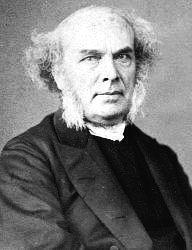
Frederic Henry Hedge

1805 - 1890 Person Name: Rev. Frederick H. Hedge Topics: Fearlessness; God our Helper; Holy Spirit; Christ as King; Kingdom of God; Persecution Of Believers; Reformation Day; God of Christ our Refuge; Renunciation; Satan; Security; Truth; Victory Translator of "A Mighty Fortress is Our God" in Psalter Hymnal (Red) Hedge, Frederick Henry, D.D., son of Professor Hedge of Harvard College, was born at Cambridge, Massachusetts, 1805, and educated in Germany and at Harvard. In 1829 he became pastor of the Unitarian Church, West Cambridge. In 1835 he removed to Bangor, Maine; in 1850 to Providence, and in 1856 to Brookline, Mass. He was appointed in 1857, Professor of Ecclesiastical History at Cambridge (U.S.), and in 1872, Professor of German Literature at Harvard. Dr. Hedge is one of the editors of the Christian Examiner, and the author of The Prose Writers of Germany, and other works. In 1853 he edited, with Dr. F. D. Huntington, the Unitarian Hymns for the Church of Christ, Boston Crosby, Nichols & Co. To that collection and the supplement (1853) he contributed the following translations from the German:— 1. A mighty fortress is our God. (Ein feste Burg.) 2. Christ hath arisen! joy to, &c. (Goethe's Faust.) 3. The sun is still for ever sounding. (Goethe's Faust.) There is also in the Unitarian Hymn [& Tune] Book for The Church & Home, Boston, 1868, a translation from the Latin. 4. Holy Spirit, Fire divine. (“Veni Sancte Spiritus.") Dr. Hedge's original hymns, given in the Hymns for the Church, 1853, are:— 5. Beneath Thine hammer, Lord, I lie. Resignation. 6. Sovereign and transforming grace. Ordination. Written for the Ordination of H. D. Barlow at Lynn, Mass., Dec. 9, 1829. It is given in several collections. 7. 'Twas in the East, the mystic East. Christmas. 8. 'Twas the day when God's anointed. Good Friday. Written originally for a Confirmation at Bangor, Maine, held on Good Friday, 1843. The hymn "It is finished, Man of Sorrows! From Thy cross, &c," in a few collections, including Martineau's Hymns, &c, 1873, is composed of st. iv.-vi. of this hymn. [Rev. F. M. Bird, M.A.] --John Julian, Dictionary of Hymnology (1907)

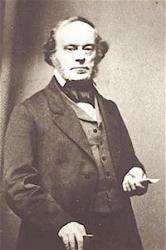
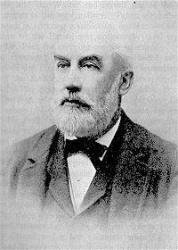
Horatius Bonar

1808 - 1889 Topics: Christ Exaltation of; Christ As King; Christ As Lamb of God; Christ Praise of Author of "Blessing and Honor and Glory and Power" in Trinity Psalter Hymnal Horatius Bonar was born at Edinburgh, in 1808. His education was obtained at the High School, and the University of his native city. He was ordained to the ministry, in 1837, and since then has been pastor at Kelso. In 1843, he joined the Free Church of Scotland. His reputation as a religious writer was first gained on the publication of the "Kelso Tracts," of which he was the author. He has also written many other prose works, some of which have had a very large circulation. Nor is he less favorably known as a religious poet and hymn-writer. The three series of "Hymns of Faith and Hope," have passed through several editions. --Annotations of the Hymnal, Charles Hutchins, M.A. 1872 ================================ Bonar, Horatius, D.D. Dr. Bonar's family has had representatives among the clergy of the Church of Scotland during two centuries and more. His father, James Bonar, second Solicitor of Excise in Edinburgh, was a man of intellectual power, varied learning, and deop piety. Horatius Bonar was born in Edinburgh, Dec. 19th, 1808; and educated at the High School and the University of Edinburgh. After completing his studies, he was "licensed" to preach, and became assistant to the Rev. John Lewis, minister of St. James's, Leith. He was ordained minister of the North Parish, Kelso, on the 30th November, 1837, but left the Established Church at the "Disruption," in May, 1848, remaining in Kelso as a minister of the Free Church of Scotland. The University of Aberdeen conferred on him the doctorate of divinity in 1853. In 1866 he was translated to the Chalmers Memorial Church, the Grange, Edinburgh; and in 1883 he was chosen Moderator of the General Assembly of of the Free Church of Scotland. Dr. Bonar's hymns and poems were, he tells us, composed amid a great variety of circumstances; in many cases he cannot himself recall these circumstances; they also appeared in several publications, but nearly all have boen published or republished in the following:— (i) Songs for the Wilderness, 1843-4. (2) The Bible Hymn Book, 1845. (3) Hymns, Original and Selected, 1846. (4) Hymns of Faith and Hope, First Series, 1857; Second Series, 1861; Third Series, 1866. (5) The Song of the New Creation, 1872. (6) My Old Letters, a long poem, 1877. (7) Hymns of the Nativity, 1879. (8) Communion Hymns, 1881. In addition to numerous prose works, he has also edited The New Jerusalem; a Hymn of the Olden Time, 1852, &c. Dr. Bonar's poems—-including many beautiful lyrics, several psalm versions, and translations from the Greek and Latin, a large number of hymns, and a long meditative poem—-are very numerous, too numerous, perhaps, for their permanent fame as a whole. Dr. Bonar's scholarship is thorough and extensive; and his poems display the grace of style and wealth of allusion which are the fruit of ripe culture. Affected very slightly by current literary moods, still less by the influence of other religious poetry, they reveal extreme susceptibility to the emotional power which the phases of natural and of spiritual life exercise; the phases of natural life being recognised chiefly as conveying and fashioning spiritual life, used chiefly for depicting spiritual life, and handled for this purpose with greater delicacy of touch than in the Olney Hymns, and with less conscious purpose than in the Christian Year. As a result of this susceptibility, and from habitual contemplation of the Second Advent as the era of this world's true bliss, his hymns and poems are distinguished by a tone of pensive reflection, which some might call pessimism. But they are more than the record of emotion; another element is supplied by his intellectual and personal grasp of Divine truth, these truths particularly:—The gift of a Substitute, our Blessed Saviour; Divine grace, righteous, yet free and universal in offer; the duty of immediate reliance upon the privilege of immediate assurance through that grace; communion with God, especially in the Lord's Supper, respecting which he insists on the privilege of cherishing the highest conceptions which Scripture warrants; and finally, the Second Advent of our Lord: by his vigorous celebration of these and other truths as the source and strength of spiritual life, his hymns are protected from the blight of unhealthy, sentimental introspection. To sum up: Dr. Bonar's hymns satisfy the fastidious by their instinctive good taste; they mirror the life of Christ in the soul, partially, perhaps, but with vivid accuracy; they win the heart by their tone of tender sympathy; they sing the truth of God in ringing notes; and although, when taken as a whole, they are not perfect ; although, in reading them, we meet with feeble stanzas, halting rhythm, defective rhyme, meaningless Iteration; yet a singularly large number have been stamped with approval, both in literary circles and by the Church. In Great Britain and America nearly 100 of Dr. Bonar's hymns are in common use. They are found in almost all modern hymnals from four in Hymns Ancient & Modern to more than twenty in the American Songs for the Sanctuary, N. Y., 1865-72. The most widely known are, "A few more years shall roll;" "Come, Lord, and tarry not;" "Here, O my Lord, I see Thee face to face;" "I heard the Voice of Jesus say;" "The Church has waited long;" and "Thy way, not mine, O Lord." In addition to these and others which are annotated under their respective first lines, the following are also in common use:— From Songs for the Wilderness, No. 1, 1843. 1. For Thee we long and pray. Sunday Morning. 2. Holy Father, hear my cry. A Child's Prayer. 3. I thought upon my sins and I was sad. Christ our Peace. 4. Peace to the world, our Lord is come. A Millennial Song. 5. Spirit of everlasting grace. The Vision of Dry Bones. ii. From Songs for the Wilderness, No. 2,1844. 6. Ho, ye thirsty, parched and fainting. Invitation. 7. 0 'tis not what we fancied it. The world renounced. 8. Sing them, my children, sing them still. Children exhorted to Praise. 9. Time's sun is fast setting. Advent. 10. Weep, pilgrim, weep, yet 'tis not for the sorrow. Faith. 11. Yes, for me, for me He careth. Christ the Elder Brother . iii. From The Bible Hymn Book, 1845. 12. Jesus, my sorrow lies too deep. Jesus, the Great High Priest. 13. There is a Morning Star, my soul. The Morning Star. 14. This is not my place of resting. Pressing towards heaven. iv. From Hymns, Original and Selected, 1845. 15. Let there be light, Jehovah said. Creation. v. From Hymns of Faith and Hope, 1st series, 1857. 16. Be brave, my brother. The Fight of Faith. 17. Blessed be God, our God. Good Friday. 18. Everlasting praises. Doxology. 19. Go up, go up, my heart. Heavenly aspirations desired. 20. I close my heavy eye. Evening. Sometimes given as "We close our heavy eyes." 21. I see the crowd in Pilate's hall. Good Friday. 22. Jesus, while this rongh desert soil. Strength by the Way. 23. Jesus, Whom angel-hosts adore. The Word made Flesh. From "The Son of God, in mighty love." 24. Make haste, 0 man, to live. Exhortation to lay hold of Life. 25. No seas again shall sever. Heaven. 26. Oppressed with noonday's scorching heat. Shadow of the Cross. 27. Rest for the toiling hand. Burial. From "Lie down, frail body, here." 28. Shall this life of mine be wasted? Exhortation to Duty. 29. These are the crowns that we shall wear. Heaven. 30. Thy works, not mine, O Christ [Lord]. The Sin-bearer. 31. Where the faded flower shall freshen. Heaven. vi. From Hymns of Faith and Hope. 2nd series, 1861. 32. Be still, my soul, Jehovah loveth Thee. Rest in the Love of God. 33. Christ has done the mighty work. Good Friday. 34. Come, mighty Spirit, penetrate. Whitsuntide. 35. Deep down beneath the unresting surge. Burial at Sea. 36. Fear not the foe, thou flock of God [thou little flock]. Battle-Song of the Church. 37. For lack of love I languish. Lent. 38. From this bleak hill of storms. Eternal Rest desired. 39. He liveth long who liveth well. The True Life. 40. Here shall death's triumph end: the rock-barred door. Easter. From "The tomb is empty: wouldst thou have it full." 41. Jesus, Sun and Shield art Thou. Jesus the First and Last. 42. Jesus, the Christ of God. Praise to Christ. 43. Light of the world, for ever, ever shining. Christ the Light of the World. From "Why walk in darkness? Has the dear light vanished?" 44. Make use of me, my God. Duty desired. 45. Not what I am, 0 Lord, but what Thou art. The Love of God. 46. 0 Light of Light, shine in. Cry of the Weary. 47. 0 love of God, how strong and true. Love of God. 48. 0 love that casts out fear. Love of God. 49. 0 strong to save and bless. Lent. 50. 0 this soul, how dark and blind. Lent. 51. Safe across the waters. Thanksgiving at end of a journey. 52. Silent, like men in solemn haste. Pressing onwards. 53. Speak, lips of mine. Exhortation to Praise. 54. The Bridegroom comes. Advent. vii. From Hymns of Faith and Hope. 3rd series, 1866. 55. Bear Thou my burden, Thou Who bar'st my sin. Lent or Passiontide. 56. Done is the work that saves. Easter. 57. Father, our children keep. Prayer on behalf of Children. 58. Fill Thou my life, 0 Lord my God. Life's Praise. 59. Finish Thy work, the time is short. Earnest labour to the end. 60. From the Cross the blood is falling. Good Friday. 61. He called them, and they left. Obedience. 62. Help me, my [0] God to speak. Truth desired. 63. Holy Father, Mighty God. Holy Trinity. 64. How are my troubles multiplied. Ps. iii. 65. How sweetly doth He show His face Flower Service. 66. Light hath arisen, we walk in its brightness. Sustaining power of Faith. 67. Lo, God, our God has come. Christmas. 68. Lord, give me light to do Thy work. Divine guidance desired. 69. No, not despairingly. Lent. 70. Not to ourselves again. Life in Christ, or, Living unto God. 71. Now in parting, Father, bless us. Post Communion. 72. Sounds the trumpet from afar. Battle-Song of the Church. 73. Thee in the loving bloom of morn. God in all. 74. Through good report and evil, Lord. Faithfulness. 75. To Jehovah, God of might. Praise to the Father. 76. To the name of God on high. Doxology. 77. Upward, where the stars are burning. Heavenward Aspirations. 78. We take the peace which He hath won. The Gift of Peace. 79. When the weary, seeking rest. Intercession for all Conditions of Men. viii. From The Song of the New Creation,1872. 80. For the Bread and for the Wine. Holy Communion. 81. Light of life so softly shining. Light of Life. 82. Yet there is room. The Lamb's bright hall of song. Home Missions. ix. From Hymns of the Nativity, 1879. 83. Great Ruler of the land and sea. Sailors' Liturgy. From Communion Hymns, 1881. 84. Beloved, let us love. Brotherly Love. In several instances these hymns are given in an abbreviated form, and sometimes alterations are also introduced. In this latter respect however Dr. Bonar has suffered less than most modern hymn-writers. [Rev. James Mearns, M.A.] -- John Julian, Dictionary of Hymnology (1907) ==================== Bonar, Horatius, p. 161, i. He died at Edinburgh, July 31, 1889. In 1890 his son published a posthumous volume of his poetical pieces as Until the Day Break and other Hymns and Poems left behind. The following additional hymns are in common use:— 1. Almighty Comforter and Friend. (1866.) Whitsuntide. 2. Father, make use of me. An altered form of No. 44, p. 162, ii. 3. I ask a perfect creed. (1861.) Creed not Opinions. From this is also taken "O True One, give me truth." 4. Long, long deferred, now come at last. Marriage of the Lamb. Part of "Ascend, Beloved, to the joy." (1861.) 5. Nay 'tis not what we fancied it. (1857.) Vanity of the World. 6. No blood, no altar now. (1861.) The Finished Sacrifice. 7. No shadows yonder. (1857.) Heaven Anticipated. 8. Not with the light and vain. (1857.) Godly Companionship. 9. O Love invisible, yet infinite. (1866.) Divine Love. 10. On the great love of God I lean. (1866.) Love of God our Resting-place. 11. On Thee, O Jesus, strongly leaning. (1866.) Fellowship with Christ. 12. Peace upon peace, like wave on wave. (1866.) Divine Peace. 13. Sower divine, sow the good seed in me. (1857.) Heavenly Sowing. 14. Speaketh the sinner's sin within my heart. (1866.) Ps. xxxvi. 15. Still one in life and one in death. (1857.) Communion of Saints. Part of "'Tis thus they press the hand and part." 16. Surely, yon heaven, where angels see God's face. (1857.) Heaven Anticipated. 17. That city with the jewelled crest. (1857.) Heaven. Part of "These are the crowns that we shall wear." Another cento from the same is "Yon city, with the jewelled crest." 18. That clime is not like this dull clime of ours. (1843.) Heaven. 19. The Free One makes you free: He breaks the rod. (1857.) Freedom in Christ. From "Of old they sang the song of liberty." 20. There is a Morning-star, my soul. (1357.) Christ the Morning Star. 21. This is the day of toil. (1866.) Pressing Onwards. 22. Thy thoughts are here, my God. (1866.) Holy Scripture. 23. Till the day dawn. (1857.) Life's Journey. 24. To Him Who spread the skies. (1866.) Creation's Song. 25. Trustingly, trustingly. (1866.) Trust. 26. Unto th' eternal hills. (1866.) Ps. cxxi. The above dates are: 1843, Songs in the Wilderness; 1857, Hymns of Faith and Hope, 1st Series; 1861, same, 2nd Ser. (not 1864); 1866, same, 3rd Ser. (not 1867), The dates 1857, 1864,1867, were given by Dr. Bonar, but the British Museum copies are 1857, 1861, 1866 respectively. --John Julian, Dictionary of Hymnology, Appendix, Part II (1907) ============== Bonar, H., pp. 161, i.; 1554, i. The Rev. H. N. Bonar, Dr. Bonar's son, published in 1904, Hymns by Horatius Bonar, Selected and Arranged by his Son H. N. Bonar, With a brief History of some of the Hymns, &c. (London: H. Frowde). From this work we must correct the date of his Song of the New Creation to 1872. We have also enriched our pages by additional and expanded notes on several of Dr. Bonar's most widely used hymns. In his biographical notes, Mr. Bonar refers to Dr. Bonar's work as editor of the Quarterly Journal of Prophecy, begun in 1848, to which he contributed a hymn for each number. We find that the number of hymns contributed thereto is 101. With Dr. Bonar's poetical productions great difficulty has been encountered by the historian and annotator because of his absolute indifference to dates and details. It was enough for him that he had written, and that the Church of Christ approved and gladly used what, out of the fulness of his heart, he had given her. --Excerpt from John Julian, Dictionary of Hymnology, New Supplement (1907)

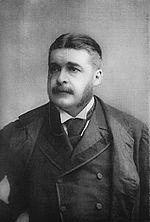
Arthur Sullivan

1842 - 1900 Person Name: Sir Arthur S. Sullivan Topics: Communion with God; Compassion of God; Christian Education; Forbearance of God; Glory And Majesty Of God; Goodness of God; Grace of God; God as King; Kingdom of God; Love Of God; Praise for God's Perfections; Praise for God's Works; Works of God Arranger of "GERARD" in Psalter Hymnal (Red) Arthur Seymour Sullivan (b Lambeth, London. England. 1842; d. Westminster, London, 1900) was born of an Italian mother and an Irish father who was an army band­master and a professor of music. Sullivan entered the Chapel Royal as a chorister in 1854. He was elected as the first Mendelssohn scholar in 1856, when he began his studies at the Royal Academy of Music in London. He also studied at the Leipzig Conservatory (1858-1861) and in 1866 was appointed professor of composition at the Royal Academy of Music. Early in his career Sullivan composed oratorios and music for some Shakespeare plays. However, he is best known for writing the music for lyrics by William S. Gilbert, which produced popular operettas such as H.M.S. Pinafore (1878), The Pirates of Penzance (1879), The Mikado (1884), and Yeomen of the Guard (1888). These operettas satirized the court and everyday life in Victorian times. Although he com­posed some anthems, in the area of church music Sullivan is best remembered for his hymn tunes, written between 1867 and 1874 and published in The Hymnary (1872) and Church Hymns (1874), both of which he edited. He contributed hymns to A Hymnal Chiefly from The Book of Praise (1867) and to the Presbyterian collection Psalms and Hymns for Divine Worship (1867). A complete collection of his hymns and arrangements was published posthumously as Hymn Tunes by Arthur Sullivan (1902). Sullivan steadfastly refused to grant permission to those who wished to make hymn tunes from the popular melodies in his operettas. Bert Polman

Nikolaus Herman

1500 - 1561 Person Name: Nikolaus Herman, 1480-1561 Topics: Biblical Names and Places Zion; Church Year Christ the King; God as King; Elements of Worship Opening of Worship: Called And Gathered Composer of "LOBT GOTT, IHR CHRISTEN" in Lift Up Your Hearts Herman, Nicolaus, is always associated with Joachimsthal in Bohemia, just over the mountains from Saxony. The town was not of importance till the mines began to be extensively worked about 1516. Whether Herman was a native of this place is not known, but he was apparently there in 1518, and was certainly in office there in 1524. For many years he held the post of Master in the Latin School, and Cantor or Organist and Choirmaster in the church. Towards the end of his life he suffered greatly from gout, and had to resign even his post as Cantor a number of years before his death. He died at Joachimsthal, May 3, 1561. (Koch, i. 390-398; Allgemeine Deutsche Biographie, xii. 186-188, &c.) He was a great friend and helper of J. Mathesius (q.v.) (who in 1532 became rector of the school, but in 1541 diaconus and in 1545 pastor of the church), and it was said that whenever Mathesius preached a specially good sermon Herman straightway embodied its leading ideas in a hymn. His hymns, however, were not primarily written for use in church, but were intended for the boys and girls in the schools, to supplant profane songs in the mouths of the young men and women, or for the daily life of the “housefathers and housemothers" in Joachimsthal, at home, and in their work in the mines. He is a poet of the people, homely, earnest, and picturesque in style; by his naiveté reminding us of Hans Sachs. He was an ardent lover of music and a very good organist. The chorales which he published with his hymns are apparently all of his own composition, and are among the best of the Reformation period. Many of Herman's hymns soon passed into Church use in Germany, and a number are found in almost all books in present use. About 190 in all, they appeared principally in:— (1) Die Sontags Evangelia uber des gantze Jar, in Gesenge verfasset, für die Kinder und christlichen Haussvetter, &c, Wittenberg, 1560 (dedication by Herman dated Trinity Sunday, 1559), with 101 hymns and 17 melodies. The best are those interspersed specially meant for children and not directly founded on the Gospel for the day. (2) Die Historien von der Sindfludt, Joseph, Mose, Helia, Elisa und der Susanna, sampt etlichen Historien aus den Evangelisten, &c., Wittenberg, 1562 (preface by Herman dated St. Bartholomew's Day, 1560), with 73 hymns and 20 melodies. In this case also the general hymns are the best. A selection of 60 (really 61) of his hymns, with a memoir by K. F. Ledderhose, was published at Halle, 1855. One of Herman's hymns is noted under “Wenn mein Stündlein vorhanden ist." The others which have passed into English are:— i. Bescher uns, Herr, das täglioh Brod. Grace before Meat. 1562, as above, and thence in Wackernagel, iii. p. 1228, in 6 stanzas of 4 lines; in Ledderhose, p. 70; and in the Berlin Geistliche Lieder, ed. 1863, No. 1133. Translated as:— 1. Thou art our Father and our God. This, by P. H. Molther, a translation of stanza vi., as No. 180 in the Moravian Hymn Book, 1789 (1849, No. 220, st. v.). 2. As children we are owned by Thee, a translation of stanza vi., as st. iii. of No. 191 in the Moravian Hymn Book, 1801 (1849, No. 220, stanza iii.). ii. Die helle Sonn leucht jetzt herfür. Morning. 1560, as above, and thence in Wackernagel, iii. p. 1184, in 4 stanzas of 4 lines, in Ledderhose, p. 87; and in the Unverfälschter Liedersegen, 1851, No. 450. Translated as:— The morning beam revives our eyes, a good and full translation by. A. T. Russell, as No. 71 in the Dalston Hospital Hymn Book 1848. iii. Erschienen ist der herrliche Tag. Easter. 1560, as above, in 14 stanzas of 4 lines, entitled, "A new Spiritual Song of the Joyful Resurrection of our Saviour Jesus Christ; for the maidens of the girls' school in Joachimsthal”; and thence in Wackernagel, iii. p. 1175; in Ledderhose p. 23, and Unverfälschter Liedersegen, 1851, No. 134. It has reminiscences of the "Erstanden ist der heil'ge Christ". Translated as:— The day hath dawn'd—-the day of days, a good translation by A. T. Russell of stanzas i., ii., xiii., xiv., as No. 113 in his Psalms & Hymns, 1851. Another tr. is, "At length appears the glorious day," by Dr. G. Walker, 1860, p. 28. iv. Hinunter ist der Sonnen Schein. Evening. 1560, as above, and thence in Wackernagel, iii. p. 1184, in 4 stanzas of 4 lines; in Ledderhose, p. 88; and in the Unverfälschter Liedersegen1851, No. 523. Some of the phrases may have been suggested by the "Christe qui lux es et dies" (q. v.). Translated as:— 1. Sunk is the sun's last beam of light, a full and good translation by Miss Cox in her Sacred Hymns from the German, 1841, p. 57. Included in Alford's Psalms & Hymns, 1844, and Tear of Praise, 1867; in Dale's English Hymn Book, 1875; in the Pennsylvania Lutheran Church Book, 1868, and others. It is also given considerably altered and beginning, "Sunk is the Sun! the daylight gone," in W. J. Blew's Church Hymn and Tune Book, 1851-55. 2. The happy sunshine all is gone, in full, by Miss Winkworth in her Lyra Germanica, 1st Ser., 1855, p. 225; repeated in her Chorale Book for England, 1863, and the Ohio Lutheran Hymnal, 1880. Other translations are: (1) "Did I perhaps Thee somewhat grieve," a translation of stanza iii. in the Moravian Hymn Book, 1789, No. 756. In the 1801 and later eds. (1886, No. 1181, st. iii.), it begins, "Where'er I Thee this day did grieve." (2) "The sun’s fair sheen is past and gone," by H. J. Buckoll, 1842, p. 68. (3) "The sun hath run his daily race," by Lady E. Fortescue, 1843, p. 14. v. Lobt Gott, ihr Christen alle gleich. Christmas. Written c. 1554, but first published 1560 as above, as the first of "Three Spiritual Christmas Songs of the new-born child Jesus, for the children in Joachimsthal." Thence in Wackernagel iii. p. 1169, in 8 stanzas of 4 lines; in Ledderhose, p. 1; and in the Unverfälschter Liedersegen, 1851, No. 47. It is one of the most popular German Christmas hymns. The melody set to it in 1560 is also by Herman; in 1554 to his "Kommt her ihr liebsten Schwesterlein" [in the Hymnal Companioncalled "St. George's (old)"]. Translated as :— 1. Let all together praise our God, a good translation of stanzas i., iii., vi., viii., by A. T. Russell, as No. 52 in his Psalms & Hymns, 1851. Repeated in Kennedy, 1863, adding a translation of st. ii., and beginning, "Let all creation praise our God." 2. Praise ye the Lord, ye Christians I yea, in full, by E. Cronenwett, as No. 31 in the Ohio Lutheran Hymnal 1880. Other translations are: (1) "A wondrous change He with us makes," a tr. of stanza viii., ix. as No. 438 in pt. i. of the Moravian Hymn Book, 1754, repeated 1789-1826. (2) "Come, brethren, lets the song arise," by Dr. G. Walker, 1860, p. 26. (3) "Praise God, now Christians, all alike," by Miss Manington, 1864, p. 9. (4) "Praise God, upon His throne on high," in the Sunday Magazine, 1874, p. 384, signed "P. J." The hymn “Shepherds rejoice, lift up your eyes," given by J. C. Jacobi in his Psalmodia Germanica, 1722, p. 8, to Herman's melody (which was first published 1554) is, as stated in his Preface, taken from Bk. i. of Isaac Watts's Horse Lyricae vi. So wahr ich leb, spricht Gott der Herr. Absolution. 1560, as above, in 11 stanzas of 4 lines, entitled "A hymn on the power of the keys and the virtue of holy absolution; for the children in Joachimsthal." Thence in Wackernagel, iii. p. 1183; in Ledderhose, p. 47; and the Unverfälschter Liedersegen, 1851, No. 429. It probably suggested the better known hymn, "So wahr ich lebe," q. v., by Johann Heermann. Translated as:— Yea, as I live, Jehovah saith, I do not wish the sinner's death, in full, by Dr. M. Loy, as No. 245, in the Ohio Lutheran Hymnal, 1880. [Rev. James Mearns, M.A.] --John Julian, Dictionary of Hymnology (1907)

William Kethe

? - 1594 Topics: Church Year Christ the King; Church Year Passion/Palm Sunday; Daily Prayer Morning Prayer; Disciples / Calling; Earth; Elements of Worship Baptism; Elements of Worship Call to Worship; Elements of Worship Gathering; Elements of Worship Praise and Adoration; God Changelessness of; God as Shepherd; God as Creator; God as King; God's Triumph; God's Word; God's Faithfulness; God's Generosity; God's Goodness; God's Greatness; God's Love; God's Name; God's People (flock, sheep); God's Presence; Grace; Gratitude; Hymns of Praise; Joy; Life Stages Generations; Mercy; Mission; Occasional Services Christian Marriage; Occasional Services Civic / National Occasions; Occasional Services Dedication / Consecration / Anniversary; Occasional Services New Year; Occasional Services Thanksgving Day / Harvest Festival; People of God / Church Family of God; People of God / Church Witnessing; Processions; Rejoicing; Remembering; Temple; Unity and Fellowship; Witness; Worship; Year A, Ordinary Time after Pentecost, June 12-18 (if ater Trinity Sunday); Year A, Reign of Christ, November 20-26; Year C, Thanksgiving Day, Canada, 2nd Monday in October; Year C, Thanksgiving Day, USA, 4th Thursday in November; Texts in Languages Other than English Chinese; Texts in Languages Other than English Dutch; Texts in Languages Other than English French; Texts in Languages Other than English German; Texts in Languages Other than English Hungarian; Texts in Languages Other than English Indonesian; Texts in Languages Other than English Japanese; Texts in Languages Other than English Korean; Texts in Languages Other than English Spanish; Texts in Languages Other than English Swahili Author (English) of "All People That on Earth Do Dwell" in Psalms for All Seasons William Kethe (b. Scotland [?], d. Dorset England, c. 1594). Although both the time and place of Kethe's birth and death are unknown, scholars think he was a Scotsman. A Protestant, he fled to the continent during Queen Mary's persecution in the late 1550s. He lived in Geneva for some time but traveled to Basel and Strasbourg to maintain contact with other English refugees. Kethe is thought to be one of the scholars who translated and published the English-language Geneva Bible (1560), a version favored over the King James Bible by the Pilgrim fathers. The twenty-five psalm versifications Kethe prepared for the Anglo-Genevan Psalter of 1561 were also adopted into the Scottish Psalter of 1565. His versification of Psalm 100 (All People that on Earth do Dwell) is the only one that found its way into modern psalmody. Bert Polman ======================== Kethe, William, is said by Thomas Warton in his History of English Poetry, and by John Strype in his Annals of the Reformation, to have been a Scotsman. Where he was born, or whether he held any preferment in England in the time of Edward VI., we have been unable to discover. In the Brieff discours off the troubles begonne at Franckford, 1575, he is mentioned as in exile at Frankfurt in 1555, at Geneva in 1557; as being sent on a mission to the exiles in Basel, Strassburg, &c, in 1558; and as returning with their answers to Geneva in 1559. Whether he was one of those left behind in 1559 to "finishe the bible, and the psalmes bothe in meeter and prose," does not appear. The Discours further mentions him as being with the Earl of Warwick and the Queen's forces at Newhaven [Havre] in 1563, and in the north in 1569. John Hutchins in his County history of Dorset, 1774, vol. ii. p. 316, says that he was instituted in 1561 as Rector of Childe Okeford, near Blandford. But as there were two Rectors and only one church, leave of absence might easily be extended. His connection with Okeford seems to have ceased by death or otherwise about 1593. The Rev. Sir Talbot H. B. Baker, Bart., of Ranston, Blandford, who very kindly made researches on the spot, has informed me that the Registers at Childe Okeford begin with 1652-53, that the copies kept in Blandford date only from 1732 (the earlier having probably perished in the great fire there in 1731), that no will can be found in the district Probate Court, and that no monument or tablet is now to be found at Childe Okeford. By a communication to me from the Diocesan Registrar of Bristol, it appears that in a book professing to contain a list of Presentations deposited in the Consistory Court, Kethe is said to have been presented in 1565 by Henry Capel, the Patron of Childe Okeford Inferior. In the 1813 edition of Hutchins, vol. iii. pp. 355-6, William Watkinson is said to have been presented to this moiety by Arthur Capel in 1593. Twenty-five Psalm versions by Kethe are included in the Anglo-Genevan Psalter of 1561, viz. Ps. 27, 36, 47, 54, 58, 62, 70, 85, 88, 90, 91, 94, 100, 101, 104, 107, 111, 112, 113, 122, 125, 126, 134, 138, 142,—the whole of which were adopted in the Scottish Psalter of 1564-65. Only nine, viz. Ps. 104, 107, 111, 112, 113, 122, 125, 126, 134, were included in the English Psalter of 1562; Ps. 100 being however added in 1565. Being mostly in peculiar metres, only one, Ps. 100, was transferred to the Scottish Psalter of 1650. The version of Ps. 104, "My soul, praise the Lord," is found, in a greatly altered form, in some modern hymnals. Warton calls him ”a Scotch divine, no unready rhymer," says he had seen a moralisation of some of Ovid by him, and also mentions verses by him prefixed to a pamphlet by Christopher Goodman, printed at Geneva in 1558; a version of Ps. 93 added to Knox's Appellation to the Scottish Bishops, also printed at Geneva in 1558; and an anti-papal ballad, "Tye the mare Tom-boy." A sermon he preached before the Sessions at Blandford on Jan. 17, 1571, was printed by John Daye in 1571 (preface dated Childe Okeford, Jan. 29,157?), and dedicated to Ambrose Earl of Warwick. [Rev James Mearns, M.A]. -- John Julian, Dictionary of Hymnology (1907) ==================== Kethe, William, p. 624, i., line 30. The version which Warton describes as of Psalm 93 is really of Psalm 94, and is that noted under Scottish Hymnody, p. 1022, ii., as the version of Psalms 94 by W. Kethe. --John Julian, Dictionary of Hymnology, Appendix, Part II (1907)

Louis Bourgeois

1510 - 1561 Person Name: Louis Bourgeois, ca. 1510-1561 Topics: Church Year Christ the King; Church Year Passion/Palm Sunday; Daily Prayer Morning Prayer; Disciples / Calling; Earth; Elements of Worship Baptism; Elements of Worship Call to Worship; Elements of Worship Gathering; Elements of Worship Praise and Adoration; God Changelessness of; God as Shepherd; God as Creator; God as King; God's Triumph; God's Word; God's Faithfulness; God's Generosity; God's Goodness; God's Greatness; God's Love; God's Name; God's People (flock, sheep); God's Presence; Grace; Gratitude; Hymns of Praise; Joy; Life Stages Generations; Mercy; Mission; Occasional Services Christian Marriage; Occasional Services Civic / National Occasions; Occasional Services Dedication / Consecration / Anniversary; Occasional Services New Year; Occasional Services Thanksgving Day / Harvest Festival; People of God / Church Family of God; People of God / Church Witnessing; Processions; Rejoicing; Remembering; Temple; Unity and Fellowship; Witness; Worship; Year A, Ordinary Time after Pentecost, June 12-18 (if ater Trinity Sunday); Year A, Reign of Christ, November 20-26; Year C, Thanksgiving Day, Canada, 2nd Monday in October; Year C, Thanksgiving Day, USA, 4th Thursday in November; Texts in Languages Other than English Chinese; Texts in Languages Other than English Dutch; Texts in Languages Other than English French; Texts in Languages Other than English German; Texts in Languages Other than English Hungarian; Texts in Languages Other than English Indonesian; Texts in Languages Other than English Japanese; Texts in Languages Other than English Korean; Texts in Languages Other than English Spanish; Texts in Languages Other than English Swahili Composer of "GENEVAN 134 (OLD HUNDREDTH)" in Psalms for All Seasons Louis Bourgeois (b. Paris, France, c. 1510; d. Paris, 1561). In both his early and later years Bourgeois wrote French songs to entertain the rich, but in the history of church music he is known especially for his contribution to the Genevan Psalter. Apparently moving to Geneva in 1541, the same year John Calvin returned to Geneva from Strasbourg, Bourgeois served as cantor and master of the choristers at both St. Pierre and St. Gervais, which is to say he was music director there under the pastoral leadership of Calvin. Bourgeois used the choristers to teach the new psalm tunes to the congregation. The extent of Bourgeois's involvement in the Genevan Psalter is a matter of scholar­ly debate. Calvin had published several partial psalters, including one in Strasbourg in 1539 and another in Geneva in 1542, with melodies by unknown composers. In 1551 another French psalter appeared in Geneva, Eighty-three Psalms of David, with texts by Marot and de Beze, and with most of the melodies by Bourgeois, who supplied thirty­ four original tunes and thirty-six revisions of older tunes. This edition was republished repeatedly, and later Bourgeois's tunes were incorporated into the complete Genevan Psalter (1562). However, his revision of some older tunes was not uniformly appreciat­ed by those who were familiar with the original versions; he was actually imprisoned overnight for some of his musical arrangements but freed after Calvin's intervention. In addition to his contribution to the 1551 Psalter, Bourgeois produced a four-part harmonization of fifty psalms, published in Lyons (1547, enlarged 1554), and wrote a textbook on singing and sight-reading, La Droit Chemin de Musique (1550). He left Geneva in 1552 and lived in Lyons and Paris for the remainder of his life. Bert Polman

Arthur Henry Messiter

1834 - 1916 Topics: God as King of Kings Composer of "MARION" in Christian Worship Arthur H. Messiter (b. Frome, Somersetshire, England, 1834; d. New York, NY, 1916) Educated by private tutors in England, he, immigrated to the United States in 1863 and had an active musical career in Philadelphia, which included an organist position at St. James the Less. At Trinity Church in New York City, he modeled with distinction the British cathedral tradition of music. Messiter was an editor of the Episcopal Hymnal (1893), compiled the Psalter (1889) and Choir Office Book (1891), and wrote a musical history of Trinity Episcopal Church, New York (1906). Bert Polman

Pages


Export as CSV
It looks like you are using an ad-blocker. Ad revenue helps keep us running. Please consider white-listing Hymnary.org or getting Hymnary Pro to eliminate ads entirely and help support Hymnary.org.