

 My Starred Hymns
 My FlexScores
 My Hymnals
 My Purchased Files
Planning worship?
Check out our sister site, ZeteoSearch.org,
for 20+ additional resources related to your search.
- |
User Links
Person Results
Michael Praetorius

1571 - 1621 Topics: Jesus Christ Life and Teaching; Adoration and Praise; Jesus Christ Baptism; Jesus Christ Cross; Jesus Christ Incarnation; Jesus Christ Life and Ministry; Jesus Christ Life of; Jesus Christ Love of; Jesus Christ Saviour; Jesus Christ Son of God/Man (David); Jesus Christ Teacher/Teachings; Love; Obedience; Sacrifice; Service Music Doxologies; Trinity; Christmas 1 Year A; Baptism of Jesus Year A; Epiphany 2 Year A; Epiphany 7 Year A; Lent 1 Year A; Proper 17 Year A; Proper 21 Year A; Proper 21 Year A; Reign of Christ Year A; Advent 2 Year B; Baptism of Jesus Year B; Lent 1 Year B; Lent 5 Year B; Palm/Passion Sunday Year B; Easter 5 Year B; Proper 12 Year B; Proper 26 Year B; Proper 27 Year B; Proper 28 Year B; Reign of Christ Year B; Epiphany 6 Year C; Epiphany Last/Transfig. Year C; Lent 1 Year C; Lent 2 Year C; Lent 4 Year C; Holy Thursday Year C; Easter 4 Year C; Easter 7 Year C; Tuesday in Holy Week Year ABC; Holy thursday Year ABC Adapter of "PUER NOBIS NASCITUR" in Voices United Born into a staunchly Lutheran family, Michael Praetorius (b. Creuzburg, Germany, February 15, 1571; d. Wolfenbüttel, Germany, February 15, 1621) was educated at the University of Frankfort-an-der-Oder. In 1595 he began a long association with Duke Heinrich Julius of Brunswick, when he was appointed court organist and later music director and secretary. The duke resided in Wolfenbüttel, and Praetorius spent much of his time at the court there, eventually establishing his own residence in Wolfenbüttel as well. When the duke died, Praetorius officially retained his position, but he spent long periods of time engaged in various musical appointments in Dresden, Magdeburg, and Halle. Praetorius produced a prodigious amount of music and music theory. His church music consists of over one thousand titles, including the sixteen-volume Musae Sionae (1605-1612), which contains Lutheran hymns in settings ranging from two voices to multiple choirs. His Syntagma Musicum (1614-1619) is a veritable encyclopedia of music and includes valuable information about the musical instruments of his time.
Bert Polman
Michael Praetorius
Ray Palmer
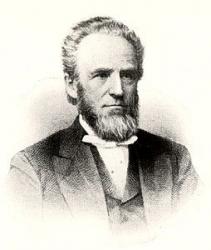
1808 - 1887 Topics: The Church at Worship Holy Communion; liturgical Communion Songs; Adoration and Praise; Comfort/Consolation; Consecration; Faith; Feast; God Presence; Jesus Christ Friend; Jesus Christ Light; Jesus Christ Love For; Jesus Christ Person; Jesus Christ Presence; Joy; Life; Light; Nurture; Peace (Inner, Calmness, Serenity; Petition; Seeking God; Thirst For God; Truth; Lent 3 Year A; Easter 2 Year A; Pentecost Year A; Proper 23 Year A; Palm/Passion Sunday Year B; Proper 5 Year B; Proper 13 Year B; Proper 14 Year B; Proper 15 Year B; Lent 3 Year C; Proper 10 Year C; Proper 11 Year C; Proper 13 Year C; Proper 17 Year C; Tuesday in Holy Week Year ABC Translator of "O Jesus, Joy of Loving Hearts" in Voices United Ray Palmer (b. Little Compton, RI, 1808; d. Newark, NJ, 1887) is often considered to be one of America's best nineteenth-century hymn writers. After completing grammar school he worked in a Boston dry goods store, but a religious awakening prodded him to study for the ministry. He attended Yale College (supporting himself by teaching) and was ordained in 1835. A pastor in Congregational churches in Bath, Maine (1835-1850), and Albany, New York (1850-1865), he also served as secretary of the American Congregational Union (1865-1878). Palmer was a popular preacher and author, writing original poetry as well as translating hymns. He published several volumes of poetry and hymns, including Sabbath Hymn Book (1858), Hymns and Sacred Pieces (1865), and Hymns of My Holy Hours (1868). His complete poetical works were published in 1876.
Bert Polman
===================
Palmer, Ray, D.D., son of the Hon. Thomas Palmer, a Judge in Rhode Island, was born at Little Compton, Rhode Island, Nov. 12, 1808. His early life was spent at Boston, where he was for some time clerk in a dry-goods store. At Boston he joined the Park Street Congregational Church, then under the pastoral care of Dr. S. E. Dwight. After spending three years at Phillips Academy, Andover, he entered Yale College, New Haven, where he graduated in 1830. In 1835 he became pastor of the Central Congregational Church, Bath, Maine. During his pastorate there he visited Europe in 1847. In 1850 he was appointed to the First Congregational Church, at Albany, New York, and in 1865 Corresponding Secretary to the American Congregational Union, New York. He resigned in 1878, and retired to Newark, New Jersey. He died at Newark, Mar. 29, 1887. Dr. Palmer's published works in prose and verse include:--
(1) Memoirs and Select Remains of Charles Pond, 1829; (2) The Spirit's Life, a Poem, 1837; (3) How to Live, or Memoirs of Mrs. C. L. Watson, 1839; (4) Doctrinal Text Book, 1839; (5) Spiritual Improvement, 1839, republished as Closet Hours in 185; (6) What is Truth? or Hints on the Formation of Religious Opinions, 1860; (7) Remember Me, or The Holy Communion, 1865; (8) Hymns and Sacred Pieces, with Miscellaneous Poems, 1865; (9) Hymns of my Holy Hours, and Other Pieces, 1868; (10) Home, or the Unlost Paradise, 1873; and (11) Voices of Hope and Gladness, 1881.
Most of Dr. Palmer's hymns have passed into congregational use, and have won great acceptance. The best of them by their combination of thought, poetry, and devotion, are superior to almost all others of American origin. The first which he wrote has become the most widely known of all. It is:—
1. My faith looks up to Thee. Faith in Christ. This hymn was written by the author when fresh from College, and during an engagement in teaching in New York. This was in 1830. The author says concerning its composition, "I gave form to what I felt, by writing, with little effort, the stanzas. I recollect I wrote them with very tender emotion, and ended the last line with tears." A short time afterwards the hymn was given to Dr. Lowell Mason for use, if thought good, in a work then being compiled by him and Dr. T. Hastings. In 1831 that work was published as Spiritual Songs for Social Worship: adapted to the use of Families, &c. Words and Music arranged by Thomas Hastings, of New York, and Lowell Mason of Boston. It is No. 141 in 4 stanzas of 8 lines, entitled "Self Consecration," and accompanied with the tune by Dr. L. Mason, there given as "My faith looks up to Thee, "but subsequently known as Olivet. (Orig. text of hymn in Thring's Collection, 1882.) It has passed into most modern collections in all English-speaking countries, and has been rendered into numerous languages. That in Latin, by H. M. Macgill (p. 708, ii.), begins "Fides Te mea spectat."
2. Fount of everlasting love. Praise for renewed Spiritual Life. This also appeared in the Spiritual Songs, &c, 1831, No. 191, in 4 stanzas of 4 lines, and headed "Praise for a Revival."
The hymns which are given below are all in Dr. Palmer's Poetical Works, N. Y., 1876, and the dates appended in brackets are those given by him in that work.
3. Thou who roll'st the year around. (1832.) Close of the Year. In several American collections.
4. Away from earth my spirit turns. (1833.) Holy Communion. Appeared in Lowell Mason's Union Hymns, in 4 stanzas of 4 lines. In the Church Praise Book, N. Y.. 1882, it begins with st. ii., "Thou, Saviour, art the Living Bread."
5. Before Thy throne with tearful eyes. (1834.) Liberty of Faith.
6. Stealing from the world away. (1834.) Evening. Written at New Haven in 1834, and is very popular in America.
7. Thine [Thy] holy day's returning. (1834.) Sunday Morning.
8. Wake thee, 0 Zion. (1862.) Zion Exultant.
9. We stand in deep repentance. (1834.) Lent.
This last, No. 9, in common with Nos. 10, 11, 12, is marked "original," in the Presbyterian Parish Hymns, 1843. Probably they were given to the editors of that book in manuscript, and had not previously appeared.
10. And is there, Lord, a rest? (1843.) Rest in Heaven. Written at Bath, Maine, in 1843.
11. 0 sweetly breathe the lyres above. Consecration to Christ. This was accidentally omitted from Dr. Palmer's Poetical Works, 18?6. S. W. Duffield says:—
"It was written in the winter of 1842-43, at a time of revival. At the previous Communion several had been received under circumstances that made Doddridge's hymn, ‘0 happy day that fixed my choice 'a most appropriate selection. Not caring to repeat it, and needing something similar, Dr. Palmer composed the present hymn." English Hymns, N. Y., 1886, p. 432.
12. When downward to the darksome tomb. (1842.) Death Contemplated. Written at Bath, Maine, 1842.
From 1843 there comes a long break, and Dr. Palmer seems to have done no more hymn-writing until called upon by Professors Park and Phelps, of Andover, for contributions to their Sabbath Hymn-Book, 1858. His hymns written for that important collection rank amongst the best that America has produced. This is specially true of the first four (Nos. 13-16) from the Latin.
13. Jesus, Thou joy of loving hearts. (l858.) Translation of a cento from "Jesu dulcis memoria" (p. 588, ii.).
14. 0 Bread to Pilgrims given. (1858.) Translation of “O esca viatorum" (q.v.).
15. 0 Christ our King, Creator Lord. (1858.) Translation of “Rex Christe, factor omnium "
16. Come Holy Ghost, in love. (1858.) Translation of “Veni Sancte Spiritus" (q.v.)
17. Jesus, these eyes have never seen. (1858.) Christ loved, though unseen. This hymn is accounted by many as next in merit and beauty to "My faith looks up to Thee."
18. Lord, my weak thought in vain would climb. (1858.) God Unsearchable. This hymn deals with the mysteries of Predestination in a reverent and devout manner.
19. Thy Father's house! thine own bright home. (1858.) Heaven.
The next group, Nos. 20-27, appeared in Dr. Robinson's Songs for the Sanctuary, 1865.
20. Lord, Thou wilt bring the joyful day. (1864.) Contemplation of Heaven. Written in New York City.
21. Eternal Father, Thou hast said. (i860.) Missions.
22. Jesus, Lamb of God, for me. (1863.) Jesus, the Way of Salvation. Written in Albany, New York.
23. Take me, 0 my Father, take me. (1864.) Lent.
24. Wouldst thou eternal life obtain. (1864.) Good Friday.
25. Come Jesus, Redeemer, abide Thou with me. (1864.) Holy Communion.
26. Lord, Thou on earth didst love Thine own. (1864.) Fellowship with Christ.
27. Thou, Saviour, from Thy throne on high. (1864.) Prayer.
The next four (Nos. 28-31) present another group. They appeared in D. E. Jones's Songs for the New Life, 1869, and the Reformed Dutch Hymns of the Church, N. Y., 1869. The dates of composition are from Dr. Palmer's Poems, 1876.
28. Lord, Thou hast taught our hearts to glow. (1865.) Ordination, or Meeting of Ministers.
29. When inward turns my searching gaze. (1868.) Evening.
30. 0 Jesus, sweet the tears I shed. (1867.) Good Friday.
31. Jesus, this [my] heart within me burns. (1868.) Love.
The hymns which follow are from various sources.
32. 0 Christ, the Lord of heaven, to Thee. (1867.) Universal Praise to Christ. Appeared in the author's Hymns of my Holy Hours, 1867. It is a hymn of great merit, and is widely used.
33. Behold the shade of night is now receding. (1869.) A translation of "Ecce jam noctis." (p. 320, i., and Various).
34. Hid evening shadows let us all be waking. (1869.) A translation of "Nocte surgentes" (p. 809, i.).
35. I give my heart to Thee. (Aug. 20, 1868.) A translation of "Cor meum Tibi dedo," p. 262, ii.
36. Holy Ghost, that promised came. (1873.) Whitsuntide. From the author's Poems, 1876.
37. 0 Holy Comforter, I hear. The Comforter. Appeared in the Boston Congregationalist, September 7th, 1867.
38. Lord, when my soul her secrets doth reveal. (1865.) Holy Communion.
Most of the foregoing hymns are in common in Great Britain, and all are found in one or more American hymnbooks of importance. [Rev. F. M. Bird, M.A.]
-- John Julian, Dictionary of Hymnology (1907)
===================
Palmer, Ray, D.D., p. 877, i. The following original hymns by Dr. Palmer are also in common use:—
1. O Rock of Ages, since on Thee. Faith. From his Poetical Works, 1876, p. 27, where it is dated 1869. Bp. Bickersteth says "This hymn"... is "worthy of Luther." (Note Hymnal Companion, ed. 1876.)
2. Thy holy will, my God, be mine. Resignation. From his Hymns of my Holy Hours, &c, 1868, p. 47. Also in his P. Works, 1876, dated 1867.
3. We praise Thee, Saviour, for Thy grace. Holy Communion. From his Hymns and Sacred Pieces, &c, 1865. Also in P. Works, 1876, dated 1864.
--John Julian, Dictionary of Hymnology, Appendix, Part II (1907)
==========
Ray Palmer was born at Little Compton, Rhode Island, in 1808. He studied at Phillip's Academy, Andover, Mass., and graduated at Yale College in 1830. In 1835, he was ordained pastor of a Congregational Society in Bath, Maine, from which he removed, in 1850, to the pastorate of a Congregational Society in Albany, N.Y. He has published many hymns, some of his own authorship, and some translations. He has published some sermons and reviews.
--Annotations of the Hymnal, Charles Hutchins, M.A. 1872.
Ray Palmer
John Bacchus Dykes
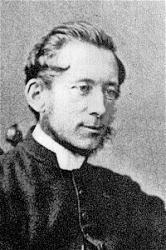
1823 - 1876 Person Name: John Bacchus Dykes, 1823-1876 Topics: Temptation, Penitence and Forgiveness; The Holy Trinity; Year A Proper 23; Year B Second Sunday Before Lent; Year C Epiphany 2; Year C Proper 4; Year C Proper 5; Years A, B, and C Christmas 2; Years A, B, and C Monday of Holy Week Composer of "RIEVAULX" in Complete Anglican Hymns Old and New As a young child John Bacchus Dykes (b. Kingston-upon-Hull' England, 1823; d. Ticehurst, Sussex, England, 1876) took violin and piano lessons. At the age of ten he became the organist of St. John's in Hull, where his grandfather was vicar. After receiving a classics degree from St. Catherine College, Cambridge, England, he was ordained in the Church of England in 1847. In 1849 he became the precentor and choir director at Durham Cathedral, where he introduced reforms in the choir by insisting on consistent attendance, increasing rehearsals, and initiating music festivals. He served the parish of St. Oswald in Durham from 1862 until the year of his death. To the chagrin of his bishop, Dykes favored the high church practices associated with the Oxford Movement (choir robes, incense, and the like). A number of his three hundred hymn tunes are still respected as durable examples of Victorian hymnody. Most of his tunes were first published in Chope's Congregational Hymn and Tune Book (1857) and in early editions of the famous British hymnal, Hymns Ancient and Modern.
Bert Polman
John Bacchus Dykes
John Ernest Bode

1816 - 1874 Topics: The Christian Year Lent; Calling and Response; Christian Year Lent; Commitment; Confirmation; Conflict and Struggle; Décision; Discipleship and Service; Guidance; Installation Services; Jesus Christ Friend; Jesus Christ Guide and Leader; Jesus Christ Master; Jesus Christ Presence; Jesus Christ Strength and Refuge; Love for God/Christ; Obedience; Promise(s); Surrender; Temptation; Trust; Epiphany 3 Year A; Epiphany 5 Year A; Epiphany 6 Year A; Lent 1 Year A; Easter 4 Year A; Proper 8 Year A; Proper 10 Year A; Lent 2 Year B; Lent 5 Year B; Easter 7 Year B; Proper 7 Year B; Epiphany Last/Transfig. Year C; Lent 3 Year C; Easter 3 Year C; Proper 7 Year C; Proper 9 Year C; Proper 17 Year C; Proper 20 Year C; Monday in Holy Week Year ABC; Tuesday in Holy Week Year ABC Author of "O Jesus, I Have Promised" in Voices United John E. Bode (b. St. Pancras, England, 1816; d. Castle Camps, Cambridgeshire, England, 1874) A fine student at Christ Church, Oxford, England, and a prominent scholar who gave the famous Bampton Lectures ("for the exposition and defense of the Christian faith") at Oxford in 1855, was a rector in Westwell, Oxfordshire, and in Castle Camps. This gifted poet and hymn writer published Hymns for the Gospel of the Day, for Each Sunday and Festivals of Our Lord in 1860.
Bert Polman
==============
Bode, John Ernest, M.A., son of Mr. William Bode, late of the General Post Office, b. 1816, and educated at Eton, the Charter House, and at Christ Church, Oxford, graduating B.A. 1837, and M.A. in due course. Taking Holy Orders in 1841, he became Rector of Westwell, Oxfordshire, 1847; and then of Castle Camps, Cambridgeshire, 1860. He was also for a time Tutor of his College, and Classical Examiner. His Bampton Lectures were delivered in 1855. He d. at Castle Camps, Oct. 6, 1874. In addition to his Bampton Lectures, and Ballads from Herodotus, he published Hymns from the Gospel of the Day for each Sunday and Festivals of our Lord, 1860; and Short Occasional Poems, Lond., Longmans, 1858. In addition to his well-known hymn, “O Jesu, I have promised " (q. v.), the following from his Hys. from the Gospel are also in common use:—
1. God of heaven, enthroned in might. H. Trinity.
2. Spirit of Truth, indwelling Light. Whitsuntide.
-John Julian, Dictionary of Hymnology (1907)
=================
Bode, John E. , p. 151, ii. Additional pieces from his Hys.from the Gospel of the Day, &c, 1800, are in common use :— (1) "Sweetly the Sabbath bell" (Sunday); (2) "Thou Who hast called us by Thy word" (20th S. after Trinity).
--John Julian, Dictionary of Hymnology, Appendix, Part II (1907)
John Ernest Bode
Martin Luther
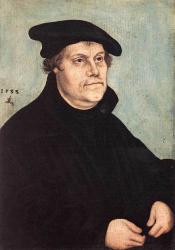
1483 - 1546 Topics: God Nature of God; Assurance; Change; Christian Year Reformation Day; Confidence; Conflict and Struggle; Courage; Empowerment; Evil; Faith; Funerals and Memorial Services; God Creator; God Guardian/Help; God Images; God Kingdom, Majesty, Realm; God Nature; God Power/Might; God Presence; God Protection; God Reign; God Sovereignty; God Strength and Refuge; God Truth; Heritage; Holy Spirit Gifts; Jesus Christ name; Jesus Christ Strength and Refuge; Joy; Kingdom of God; Pilgrimage and Conflict; Praise; Processionals (Opening of Worship); Providence; Psalter/Psalm Paraphrases; Risk; Satan/Demonic Forces/Devil; Security; Sin; Struggle and Conflict; Trust; Truth; Victory; Word of God; Worship; Proper 6 Year A; Proper 16 Year A; Lent 1 Year B; Lent 5 Year B; Proper 16 Year B; Proper 17 Year B; Proper 26 Year B; Epiphany 3 Year C; Epiphany 4 Year C; Lent 1 Year C; Proper 16 Year C; Proper 20 Year C; Proper 24 Year C; Reign of Christ Year C; Tuesday in Holy Week Year ABC Author of "A Mighty Fortress Is Our God" in Voices United Luther, Martin, born at Eisleben, Nov. 10, 1483; entered the University of Erfurt, 1501 (B.A. 1502, M.A.. 1503); became an Augustinian monk, 1505; ordained priest, 1507; appointed Professor at the University of Wittenberg, 1508, and in 1512 D.D.; published his 95 Theses, 1517; and burnt the Papal Bull which had condemned them, 1520; attended the Diet of Worms, 1521; translated the Bible into German, 1521-34; and died at Eisleben, Feb. 18, 1546. The details of his life and of his work as a reformer are accessible to English readers in a great variety of forms. Luther had a huge influence on German hymnody.
i. Hymn Books.
1. Ellich cristlich lider Lobgesang un Psalm. Wittenberg, 1524. [Hamburg Library.] This contains 8 German hymns, of which 4 are by Luther.
2. Eyn Enchiridion oder Handbuchlein. Erfurt, 1524 [Goslar Library], with 25 German hymns, of which 18 are by Luther.
3. Geystliche Gesangk Buchleyn. Wittenberg, 1524 [Munich Library], with 32 German hymns, of which 24 are by Luther.
4. Geistliche Lieder auffs new gebessert. Wittenberg. J. Klug, 1529. No copy of this book is now known, but there was one in 1788 in the possession of G. E. Waldau, pastor at Nürnberg, and from his description it is evident that the first part of the Rostock Gesang-Buch, 1531, is a reprint of it. The Rostock Gesang-Buch, 1531, was reprinted by C. M. Wiechmann-Kadow at Schwerin in 1858. The 1529 evidently contained 50 German hymns, of which 29 (including the Litany) were by Luther.
5. Geistliche Lieder auffs new gebessert. Erfurt. A. Rauscher, 1531 [Helmstädt, now Wolfenbüttel Library], a reprint of No. 4.
6. Geistliche Lieder. Wittenberg. J. Klug, 1535 [Munich Library. Titlepage lost], with 52 German hymns, of which 29 are by Luther.
7. Geistliche Lieder auffs new gebessert. Leipzig. V. Schumann, 1539 [Wernigerode Library], with 68 German hymns, of which 29 are by Luther.
8. Geistliche Lieder. Wittenberg. J. Klug, 1543 [Hamburg Library], with 61 German hymns, of which 35 are by Luther.
9. Geystliche Lieder. Leipzig. V. Babst, 1545 [Gottingen Library]. This contains Luther's finally revised text, but adds no new hymns by himself. In pt. i. are 61 German hymns, in pt. ii. 40, of which 35 in all are by Luther.
For these books Luther wrote three prefaces, first published respectively in Nos. 3, 4, 9. A fourth is found in his Christliche Geseng, Lateinisch und Deudsch, zum Begrebnis, Wittenberg, J. Klug, 1542. These four prefaces are reprinted in Wackernagel’s Bibliographie, 1855, pp. 543-583, and in the various editions of Luther's Hymns. Among modern editions of Luther's Geistliche Lieder may be mentioned the following:—
Carl von Winterfeld, 1840; Dr. C. E. P. Wackernagel, 1848; Q. C. H. Stip, 1854; Wilhelm Schircks, 1854; Dr. Danneil, 1883; Dr. Karl Gerok, 1883; Dr. A. F. W. Fischer, 1883; A. Frommel, 1883; Karl Goedeke, 1883, &c. In The Hymns of Martin Luther. Set to their original melodies. With an English version. New York, 1883, ed. by Dr. Leonard Woolsey Bacon and Nathan H. Allen, there are the four prefaces, and English versions of all Luther's hymns, principally taken more or less altered, from the versions by A. T. Russell, R. Massie and Miss Winkworth [repub. in London, 1884]. Complete translations of Luther's hymns have been published by Dr. John Anderson, 1846 (2nd ed. 1847), Dr. John Hunt, 1853, Richard Massie, 1854, and Dr. G. Macdonald in the Sunday Magazine, 1867, and his Exotics, 1876. The other versions are given in detail in the notes on the individual hymns.
ii. Classified List of Luther's Hymns. Of Luther's hymns no classification can be quite perfect, e.g. No. 3 (see below) takes hardly anything from the Latin, and No. 18 hardly anything from the Psalm. No. 29 is partly based on earlier hymns (see p. 225, i.). No. 30 is partly based on St. Mark i. 9-11, and xvi., 15, 16 (see p. 226, ii.). No. 35 is partly based on St. Luke ii. 10-16. The following arrangement, however, will answer all practical purposes.
A. Translations from the Latin.
i. From Latin Hymns:
1. Christum wir sollen loben schon. A solis ortus cardine
2. Der du bist drei in Einigkeit. O Lux beata Trinitas.
3. Jesus Christus unser Heiland, Der von. Jesus Christus nostra salus
4. Komm Gott Schopfer, heiliger Geist. Veni Creator Spiritus, Mentes.
5. Nun komm der Beidenheiland. Veni Redemptor gentium
6. Was flirchst du Feind Herodes sehr. A solis ortus cardine
ii. From Latin Antiphons, &c.:
7. Herr Gott dich loben wir. Te Deum laudamus.
8. Verleih uns Frieden gnädiglich. Dapacem, Domine
9. Wir glauben all an einen Gott.
iii. Partly from the Latin, the translated stanzas being adopted from Pre-Reformation Versions:
10. Komm, heiliger Geist, Herre Gott.
11. Mitten wir im Leben sind. Media vita in morte sumus.
B. Hymns revised and enlarged from Pre-Reformation popular hymns.
12. Gelobet seist du Jesus Christ.
13. Gott der Vater wohn uns bei.
14. Gott sei gelobet und gebenedeiet.
15. Nun bitten wir den heiligen Geist.
C. Psalm versions.
16. Ach Gott vom Himmel, sieh darein.
17. Aus tiefer Noth schrei ich zu dir.
18. Ein' feste Burg ist unser Gott.
19. Es spricht der Unweisen Mund wohl.
20. Es wollt uns Gott genädig sein.
21. War Gott nicht mit uns diese Zeit.
22. Wohl dem, der in Gotten Furcht steht.
D. Paraphrases of other portions of Holy Scripture.
23. Diess sind die heilgen zehn Gebot.
24. Jesaia dem Propheten das geschah.
25. Mensch willt du leben seliglich.
26. Mit Fried und Freud ich fahr dahin.
27. Sie ist mir lieb die werthe Magd.
28. Vater unser im Himmelreich.
E. Hymns mainly Original.
29. Christ lag in Todesbanden.
30. Christ unser Herr zum Jordan kam.
31. Ein neues Lied wir heben an.
32. Erhalt uns Herr bei deinem Wort.
33. Jesus Christus unser Heiland, Der den,
34. Nun freut euch lieben Christengemein.
35. Vom Himmel hoch da komm ich her.
36. Vom Himmel kam der Engel Schaar.
In addition to these —
37. Fur alien Freuden auf Erden.
38. Kyrie eleison.
In the Blätter fur Hymnologie, 1883, Dr. Daniel arranges Luther's hymns according to what he thinks their adaptation to modern German common use as follows:—
i. Hymns which ought to be included in every good Evangelical hymn-book: Nos. 7-18, 20, 22, 28, 29, 30, 32, 34, 35, 36, 38.
ii. Hymns the reception of which into a hymn-book might be contested: Nos. 2, 3, 4, 19, 21, 22, 23, 24, 25, 33.
iii. Hymns not suited for a hymn-book: Nos. 1, 5, 6, 27, 31, 37.
[Rev. James Mearns, M.A.]
--John Julian, Dictionary of Hymnology (1907)
Martin Luther
Frederic Henry Hedge
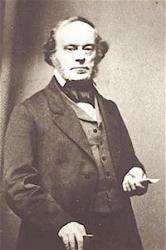
1805 - 1890 Person Name: Frederick H. Hedge Topics: God Nature of God; Assurance; Change; Christian Year Reformation Day; Confidence; Conflict and Struggle; Courage; Empowerment; Evil; Faith; Funerals and Memorial Services; God Creator; God Guardian/Help; God Images; God Kingdom, Majesty, Realm; God Nature; God Power/Might; God Presence; God Protection; God Reign; God Sovereignty; God Strength and Refuge; God Truth; Heritage; Holy Spirit Gifts; Jesus Christ name; Jesus Christ Strength and Refuge; Joy; Kingdom of God; Pilgrimage and Conflict; Praise; Processionals (Opening of Worship); Providence; Psalter/Psalm Paraphrases; Risk; Satan/Demonic Forces/Devil; Security; Sin; Struggle and Conflict; Trust; Truth; Victory; Word of God; Worship; Proper 6 Year A; Proper 16 Year A; Lent 1 Year B; Lent 5 Year B; Proper 16 Year B; Proper 17 Year B; Proper 26 Year B; Epiphany 3 Year C; Epiphany 4 Year C; Lent 1 Year C; Proper 16 Year C; Proper 20 Year C; Proper 24 Year C; Reign of Christ Year C; Tuesday in Holy Week Year ABC Translator of "A Mighty Fortress Is Our God" in Voices United Hedge, Frederick Henry, D.D., son of Professor Hedge of Harvard College, was born at Cambridge, Massachusetts, 1805, and educated in Germany and at Harvard. In 1829 he became pastor of the Unitarian Church, West Cambridge. In 1835 he removed to Bangor, Maine; in 1850 to Providence, and in 1856 to Brookline, Mass. He was appointed in 1857, Professor of Ecclesiastical History at Cambridge (U.S.), and in 1872, Professor of German Literature at Harvard. Dr. Hedge is one of the editors of the Christian Examiner, and the author of The Prose Writers of Germany, and other works. In 1853 he edited, with Dr. F. D. Huntington, the Unitarian Hymns for the Church of Christ, Boston Crosby, Nichols & Co. To that collection and the supplement (1853) he contributed the following translations from the German:—
1. A mighty fortress is our God. (Ein feste Burg.)
2. Christ hath arisen! joy to, &c. (Goethe's Faust.)
3. The sun is still for ever sounding. (Goethe's Faust.)
There is also in the Unitarian Hymn [& Tune] Book for The Church & Home, Boston, 1868, a translation from the Latin.
4. Holy Spirit, Fire divine. (“Veni Sancte Spiritus.")
Dr. Hedge's original hymns, given in the Hymns for the Church, 1853, are:—
5. Beneath Thine hammer, Lord, I lie. Resignation.
6. Sovereign and transforming grace. Ordination. Written for the Ordination of H. D. Barlow at Lynn, Mass., Dec. 9, 1829. It is given in several collections.
7. 'Twas in the East, the mystic East. Christmas.
8. 'Twas the day when God's anointed. Good Friday. Written originally for a Confirmation at Bangor, Maine, held on Good Friday, 1843. The hymn "It is finished, Man of Sorrows! From Thy cross, &c," in a few collections, including Martineau's Hymns, &c, 1873, is composed of st. iv.-vi. of this hymn. [Rev. F. M. Bird, M.A.]
--John Julian, Dictionary of Hymnology (1907)
Frederic Henry Hedge
Caroline M. Noel
1817 - 1877 Person Name: Caroline Maria Noel Topics: Jesus Christ Praise and Thanksgiving; Adoration and Praise; Adoration and Praise; Christian Year Passion/Palm Sunday; Christian Year Holy Week; Christian Year Triduum; Commitment; Conversion; Faithfulness; Humility; Jesus Christ Adoration and Praise; Jesus Christ Creator; Jesus Christ Faithfulness; Jesus Christ Kingship, Conqueror; Jesus Christ Love of; Jesus Christ name; Jesus Christ Praise; Jesus Christ Reign; Jesus Christ Saviour; Jesus Christ Second Coming; Jesus Christ Word; Salvation; Second Coming; Surrender; Temptation; Trust; Truth; Witness; Word of God; Worship; Christmas 1 Year A; Christmas 2 Year A; Baptism of Jesus Year A; Palm/Passion Sunday Year A; Easter 2 Year A; Ascension Year A; Proper 8 Year A; Proper 13 Year A; Proper 14 Year A; Proper 16 Year A; Proper 19 Year A; Proper 21 Year A; Reign of Christ Year A; Advent 4 Year B; Christmas 2 Year B; Epiphany Last/Transfig. Year B; Lent 3 Year B; Palm/Passion Sunday Year B; Easter 4 Year B; Proper 21 Year B; Proper 27 Year B; Reign of Christ Year B; Advent 3 Year C; Baptism of Jesus Year C; Epiphany Last/Transfig. Year C; Lent 1 Year C; Palm/Passion Sunday Year C; Proper 4 Year C; Proper 9 Year C; Proper 20 Year C; Reign of Christ Year C; Easter Evening Year ABC Author of "At the Name of Jesus" in Voices United Caroline Marie Noel (b. Teston, Kent, England, 1817; d. St. Marylebone, London, England, 1877) The daughter of an Anglican clergyman and hymn writer, she began to write poetry in her late teens but then abandoned it until she was in her forties. During those years she suffered frequent bouts of illness and eventually became an invalid. To encourage both herself and others who were ill or incapacitated, Noel began to write devotional verse again. Her poems were collected in The Name of Jesus and Other Verses for the Sick and Lonely (1861, enlarged in 1870).
Bert Polman
================
Noel, Caroline Maria, daughter of the Hon. Gerard T. Noel (p. 809, ii.), and niece of the Hon. Baptist W. Noel, was born in London, April 10, 1817, and died at 39 Great Cumberland Place, Hyde Park, Dec. 7, 1877. Her first hymn, "Draw nigh unto my soul" (Indwelling), was written when she was 17. During the next three years she wrote about a dozen pieces: from 20 years of age to 40 she wrote nothing; and during the next 20 years the rest of her pieces were written. The first edition of her compositions was published as The Name of Jesus and Other Verses for the Sick and Lonely, in 1861. This was enlarged from time to time, and its title subsequently changed by the publishers to The Name of Jesus and Other Poems. The 1878 ed. contains 78 pieces.
Miss Noel, in common with Miss Charlotte Elliott, was a great sufferer, and many of these verses were the outcome of her days of pain. They are specially adapted "for the Sick and Lonely" and were written rather for private meditation than for public use, although several are suited to the latter purpose. Her best known hymn is the Processional for Ascension Day, "At the Name of Jesus." It is in the enlarged edition of The Name of Jesus, &c, 1870, p. 59, and is dated 1870 by her family.
--John Julian, Dictionary of Hymnology, Appendix, Part II (1907)
Caroline M. Noel
Thomas Kelly
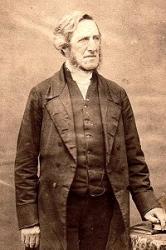
1769 - 1855 Person Name: Thomas Kelly, 1769-1855 Topics: Passiontide and Holy Week; Lent V Year B Author of "We sing the praise of him who died" in Common Praise Kelly, Thomas, B.A., son of Thomas Kelly, a Judge of the Irish Court of Common Pleas, was born in Dublin, July 13, 1769, and educated at Trinity College, Dublin. He was designed for the Bar, and entered the Temple, London, with that intention; but having undergone a very marked spiritual change he took Holy Orders in 1792. His earnest evangelical preaching in Dublin led Archbishop Fowler to inhibit him and his companion preacher, Rowland Hill, from preaching in the city. For some time he preached in two unconsecrated buildings in Dublin, Plunket Street, and the Bethesda, and then, having seceded from the Established Church, he erected places of worship at Athy, Portarlington, Wexford, &c, in which he conducted divine worship and preached. He died May 14, 1854. Miller, in his Singers & Songs of the Church, 1869, p. 338 (from which some of the foregoing details are taken), says:—
"Mr. Kelly was a man of great and varied learning, skilled in the Oriental tongues, and an excellent Bible critic. He was possessed also of musical talent, and composed and published a work that was received witli favour, consisting of music adapted to every form of metre in his hymn-book. Naturally of an amiable disposition and thorough in his Christian piety, Mr. Kelly became the friend of good men, and the advocate of every worthy, benevolent, and religious cause. He was admired alike for his zeal and his humility; and his liberality found ample scope in Ireland, especially during the year of famine."
Kelly's hymns, 765 in all, were composed and published over a period of 51 years, as follows:—
(1) A Collection of Psalms and Hymns extracted from Various Authors, by Thomas Kelly, A.B., Dublin, 1802. This work contains 247 hymns by various authors, and an Appendix of 33 original hymns by Kelly.
(2) Hymns on Various Passages of Scripture, Dublin, 1804. Of this work several editions were published: 1st, 1804; 2nd, 1806; 3rd, 1809; 4th, 1812. This last edition was published in two divisions, one as Hymns on Various Passages of Scripture, and the second as Hymns adapted for Social Worship. In 1815 Kelly issued Hymns by Thomas Kelly, not before Published. The 5th edition, 1820, included the two divisions of 1812, and the new hymns of 1815, as one work. To the later editions of 1820, 1826, 1836, 1840, 1846, and 1853, new hymns were added, until the last published by M. Moses, of Dublin, 1853, contained the total of 765.
As a hymn-writer Kelly was most successful. As a rule his strength appears in hymns of Praise and in metres not generally adopted by the older hymn writers. His "Come, see the place where Jesus lay" (from "He's gone, see where His body lay"),"From Egypt lately come"; “Look, ye saints, the sight is glorious"; "On the mountain's top appearing"; "The Head that once was crowned with thorns"; "Through the day Thy love has spared us"; and “We sing the praise of Him Who died," rank with the first hymns in the English language. Several of his hymns of great merit still remain unknown through so many modern editors being apparently adverse to original investigation. In addition to the hymns named and others, which are annotated under their respective first lines, the following are also in common use:—
i. From the Psalms and Hymns, 1802:—
1. Grant us, Lord, Thy gracious presence. Commencement of Divine Worship.
2. Jesus, Immortal King, go on [display]. Missions.
3. Saviour, through the desert lead us. Divine Guidance Desired.
4. The day of rest once more [again] comes round. Sunday.
5. We've no abiding city here. Seeking Heaven.
ii. From the Hymns on Varous Passages of Scripture, first edition, 1804 :—
6. Boundless glory, Lord, be thine. Praise for the Gospel.
7. By whom shall Jacob now arise? Epiphany.
8. Glory, glory to our King. Praise to Christ as King.
9. How pleasant is the sound of praise. Praise for Redemption.
10. How sweet to leave the world awhile. In Retirement, or For a Retreat.
11. Inform I long had bowed the knee. Jesus, the Saviour, or Praise for Salvation.
12. It is finished! sinners, hear it. Good Friday.
13. Jesus, the Shepherd of the sheep. The Good Shepherd.
14. Let reason vainly boast her power. Death.
15. Poor and afflicted, Lord, are Thine. Affliction.
16. Praise we Him to Whose kind favour. Close of Service.
11. Spared a little longer. Safety in God.
18. Stricken, smitten, and afflicted. Passiontide.
ii. From the Hymns, &c, second edition, 1806:—
19. Far from us be grief and sadness. Joy of Believers.
20. Give us room that we may dwell. Missions.
21. Glory, glory everlasting. Praise of Jesus.
22. God has.turned my grief to gladness. Joy after Sorrow.
23. Happy they who trust in Jesus. Peace in Jesus.
24. Hark, the notes of angels singing. Angels praising Jesus.
25. Hark! 'tis a martial sound. Christian Life a Warfare.
26. I hear a sound [voice] that comes from far. The Gospel Message.
27. Jesus is gone up on high. Divine Worship.
28. Now [O] may the Gospel's conquering power. Home Missions. In the 1853 edition of the Hymns it begins “O may the Gospel's conqu'ring force."
29. O Zion, when I think on thee. Desiring Heaven.
30. Praise the Saviour, ye who know Him. Praise of Jesus.
31. See from Zion's sacred mountain. The Fountain of Life.
32. The atoning work is done. Jesus the High Priest.
33. Zion is Jehovah's dwelling. The Church of God.
34. Zion stands by hills surrounded. The Safety of the Church.
35. Zion's King shall reign victorious. Missions.
iv. From the Hymns, &c, 3rd edition, 1809:—
36. Behold the Temple of the Lord. The Church a Spiritual Temple.
37. Blessed Fountain, full of grace. Fountain for Sin.
38. Brethren, come, our Saviour bids us. Holy Communion.
39. Fly, ye seasons, fly still faster. Second Advent Desired.
40. God of Israel, we adore Thee. Evening.
41. Gracious Lord, my heart is fixed. Trust and Peace.
42. Hark, a voice! it comes from heaven. Death.
43. Hark, that shout of rapt'rous joy. Second Advent.
44. If our warfare be laborious. Labour and Rest .
45. Lo, He comes, let all adore Him. Missions.
46. Nothing know we of the season. Time of Second Advent uncertain.
47. O had I the wings of a dove. Holiness and Heaven desired.
48. O where is now that glowing love. Despondency.
49. Our Father sits on yonder throne. God the Father.
50. Ours is a rich and royal Feast. Holy Communion.
51. Shepherd of the chosen number. Safety in the
Good Shepherd.
52. We're bound for yonder land. Life, a Voyage.
53. Welcome sight! the Lord descending. The Advent.
54. What is life? 'tis but a vapour. Death anticipated.
55. Who is this that comes from Edom? Ascension.
56. Why those fears ? Behold 'tis Jesus. Stilling the Sea.
57. Without blood is no remission. Passiontide.
58. Yes, we trust the day is breaking. Missions.
v. FromHymns: Not before Published, 1815:—
59. Behold the Lamb with glory crowned. Exaltation of Christ.
60. God is love, His word has said it. God is Love.
61. God of our salvation, hear us. Opening or Close of Divine Worship.
62. In Thy Name, O Lord, assembling. Commencement of Divine Worship.
63. Keep us, Lord, O [and] keep us ever. Divine Worship.
64. Let sinners saved give thanks, and sing. Praise for Salvation.
65. Praise the Lord Who died to save us. Passiontide.
66. Salvation is of God alone. God the Author of Salvation.
67. Saviour, come, Thy [saints] friends await Thee [are waiting] . Second Advent desired.
68. Sweet were the sounds that reached our ears. Divine Mercy.
69. We'll sing of the Shepherd that died. The Lost Sheep.
70. When we cannot see our way. Trust and Peace.
71. Who is this that calms the ocean? Stilling the Sea.
vi. From the Hymns on F. Passages of Scripture, &c, eds. 1820 and 1826 :-—
72. Grace is the sweetest sound. Divine Grace.
73. Now let a great effectual door. Missions.
74. Now may the mighty arm awake. Missions.
75. Now may the Spirit from above. Home Missions.
76. Sing, sing His lofty praise. Praise of Jesus.
77. Sound, 6ound the truth abroad. Missions.
78. Speed Thy servants, Saviour, speed them. Departure of Missionaries.
vii. From the Hymns on Various Passages, &c, 1836:—
79. Come, O Lord, the heavens rending. Prayer for Blessings.
80. The night is far spent, the day is at hand. The Second Advent.
viii. From the Hymns on Various Passages, &c, circa 1845:—
81. Joyful be the hours today. Sunday.
82. Lord, behold us few and weak. Opening of Divine Service.
83. Meet Thy people, Saviour, meet us. Meetings for Prayer.
84. Saviour, send a blessing to us. Prayer for Blessings.
85. Sing of Jesus, sing for ever. Praise of Jesus.
ix. From the Hymns on Various Passages, &c, 1853:—
86. Precious volume, what thou doest. Holy Scripture.
87. Unfold to us, O Lord, unfold. Divine aid to reading Holy Scripture.
All these hymns, together with those annotated under their respective first lines are in the 1853 edition of Kelly's Hymns published in Dublin by M. Moses, and in London by Simpkin, Marshall & Co. Kelly's musical editions are issued by the same publishers.
-- John Julian, Dictionary of Hymnology (1907)
==================
Kelly, Thomas, p. 615, i. Other hymns in common use are:
1. Behold the Man! How glorious He. (1809.) Good Friday.
2. Jesus the [Thou] Shepherd of the Sheep. (1804.) Good Shepherd.
3. Saved ourselves by Jesu's blood. (1802.) For a Revival.
4. Saviour, 'tis to [unto] Thee. (1853*.) Lent.
5. See the vineyard lately planted. (1806.) Missions. Sometimes given as "See, O Lord, the vineyard planted."
6. Sing aloud to God our strength. (1809.) Praise to the Father.
7. Sing, sing His lofty praise. (1820.) Praise to Jesus. Sometimes as "Hail our eternal King" (p. 615, No. 76).
8. Sing of Him Who bore our guilt. (1853*.) Praise to Jesus.
9. Sing we praise to God above, God our Saviour, &c. (1815.) Praise for Divine Mercy.
10. Sing we praise to God above, Sing we praise, &c. (1853*.) Praise.
11. Sons of Zion, raise your songs. (1820-26) The Exalted Saviour.
12. The Lord Himself will keep. (1809.) From “We're bound for yonder land" (sec p. 615, No. 52.)
13. The God [Lord] of glory dwells on high. (1809.) Humility and Love of Christ.
14. The people of the Lord Are on their way, &c. (1820.) Life a Pilgrimage.
15. Thus saith God of His Anointed. (1809.) Missions.
16. 'Tis to us no cause of sorrow. (1815.) Resignation.
17. To the Ark away, or perish. (1815.) Safety in Jesus only.
18. To our Lord a throne is given. (1838.) Christ the King.
19. Trust ye in the Lord for ever. (1853*.) Trust in God.
20. We'll sing in spite of scorn. (1806.) Christmas. From this "The long-expected morn" is taken.
21. What tongue can tell, what fancy paint. (1806.) Saints in Glory
22. What were Sinai's awful wonders. (1809.) Advent.
23. Whence those sounds symphonious? (1815.) Christmas.
24. While in the [this] world we still [yet] remain. (1806.) Communion of Saints.
25. Yes, 'tis a rough and thorny road. (1809.) Resignation. Sometimes given as "Though rough and thorny be the way."
The dates given above are those of the various editions of Kelly's Hymns. The date 1853* indicates that the hymn is in the 1853 ed. of the Hymns, but had also appeared in a previous edition which we have not seen.
--John Julian, Dictionary of Hymnology, Appendix, Part II (1907)
Thomas Kelly
Ralph Vaughan Williams
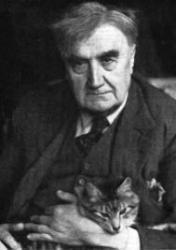
1872 - 1958 Topics: Jesus Christ Praise and Thanksgiving; Adoration and Praise; Adoration and Praise; Christian Year Passion/Palm Sunday; Christian Year Holy Week; Christian Year Triduum; Commitment; Conversion; Faithfulness; Humility; Jesus Christ Adoration and Praise; Jesus Christ Creator; Jesus Christ Faithfulness; Jesus Christ Kingship, Conqueror; Jesus Christ Love of; Jesus Christ name; Jesus Christ Praise; Jesus Christ Reign; Jesus Christ Saviour; Jesus Christ Second Coming; Jesus Christ Word; Salvation; Second Coming; Surrender; Temptation; Trust; Truth; Witness; Word of God; Worship; Christmas 1 Year A; Christmas 2 Year A; Baptism of Jesus Year A; Palm/Passion Sunday Year A; Easter 2 Year A; Ascension Year A; Proper 8 Year A; Proper 13 Year A; Proper 14 Year A; Proper 16 Year A; Proper 19 Year A; Proper 21 Year A; Reign of Christ Year A; Advent 4 Year B; Christmas 2 Year B; Epiphany Last/Transfig. Year B; Lent 3 Year B; Palm/Passion Sunday Year B; Easter 4 Year B; Proper 21 Year B; Proper 27 Year B; Reign of Christ Year B; Advent 3 Year C; Baptism of Jesus Year C; Epiphany Last/Transfig. Year C; Lent 1 Year C; Palm/Passion Sunday Year C; Proper 4 Year C; Proper 9 Year C; Proper 20 Year C; Reign of Christ Year C; Easter Evening Year ABC Composer of "KING'S WESTON" in Voices United Through his composing, conducting, collecting, editing, and teaching, Ralph Vaughan Williams (b. Down Ampney, Gloucestershire, England, October 12, 1872; d. Westminster, London, England, August 26, 1958) became the chief figure in the realm of English music and church music in the first half of the twentieth century. His education included instruction at the Royal College of Music in London and Trinity College, Cambridge, as well as additional studies in Berlin and Paris. During World War I he served in the army medical corps in France. Vaughan Williams taught music at the Royal College of Music (1920-1940), conducted the Bach Choir in London (1920-1927), and directed the Leith Hill Music Festival in Dorking (1905-1953). A major influence in his life was the English folk song. A knowledgeable collector of folk songs, he was also a member of the Folksong Society and a supporter of the English Folk Dance Society. Vaughan Williams wrote various articles and books, including National Music (1935), and composed numerous arrangements of folk songs; many of his compositions show the impact of folk rhythms and melodic modes. His original compositions cover nearly all musical genres, from orchestral symphonies and concertos to choral works, from songs to operas, and from chamber music to music for films. Vaughan Williams's church music includes anthems; choral-orchestral works, such as Magnificat (1932), Dona Nobis Pacem (1936), and Hodie (1953); and hymn tune settings for organ. But most important to the history of hymnody, he was music editor of the most influential British hymnal at the beginning of the twentieth century, The English Hymnal (1906), and coeditor (with Martin Shaw) of Songs of Praise (1925, 1931) and the Oxford Book of Carols (1928).
Bert Polman
Ralph Vaughan Williams
Frederick William Faber
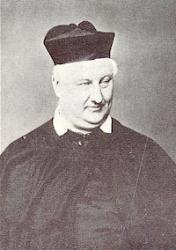
1814 - 1863 Topics: God Nature of God; Assurance; Calling and Response; Comfort/Consolation; Confession; Forgiveness; Forgiveness from God; Freedom; God Justice (Judgment); God Kindness; God Love; God Love for; God Mercy; God Nature; God Presence; Grace; Healing; Jesus Christ Atonement; Jesus Christ Blood; Jesus Christ Mercy; Joy; Justice; Kindness; Love; Love for God/Christ; Love for Others; Mercy; Pardon; Reconciliation; Redemption; Sin; Trust; Christmas 2 Year A; Easter 4 Year A; Proper 5 Year A; Proper 7 Year A; Proper 15 Year A; Proper 21 Year A; Christmas 2 Year B; Epiphany 8 Year B; Lent 4 Year B; Proper 10 Year B; Proper 13 Year B; Lent 3 Year C; Lent 4 Year C; Easter 7 Year C; Proper 6 Year C; Proper 8 Year C; Proper 13 Year C; Proper 19 Year C; Proper 24 Year C; Proper 26 Year C; Monday in Holy Week Year ABC Author of "There's a Wideness in God's Mercy" in Voices United Raised in the Church of England, Frederick W. Faber (b. Calverly, Yorkshire, England, 1814; d. Kensington, London, England, 1863) came from a Huguenot and strict Calvinistic family background. He was educated at Balliol College, Oxford, and ordained in the Church of England in 1839. Influenced by the teaching of John Henry Newman, Faber followed Newman into the Roman Catholic Church in 1845 and served under Newman's supervision in the Oratory of St. Philip Neri. Because he believed that Roman Catholics should sing hymns like those written by John Newton, Charles Wesley, and William Cowpe, Faber wrote 150 hymns himself. One of his best known, "Faith of Our Fathers," originally had these words in its third stanza: "Faith of Our Fathers! Mary's prayers/Shall win our country back to thee." He published his hymns in various volumes and finally collected all of them in Hymns (1862).
Bert Polman
=================
Faber, Frederick William, D.D., son of Mr. T. H. Faber, was born at Calverley Vicarage, Yorkshire, June 28, 1814, and educated at Balliol College, Oxford, graduating B.A. in 1836. He was for some time a Fellow of University College, in the same University. Taking Holy Orders in 1837, he became Rector of Elton, Huntingdonshire, in 1843, but in 1846 he seceded to the Church of Rome. After residing for some time at St. Wilfrid's, Staffordshire, he went to London in 1849, and established the London "Oratorians," or, "Priests of the Congregation of St. Philip Neri," in King William Street, Strand. In 1854 the Oratory was removed to Brompton. Dr. Faber died Sept. 26, 1863. Before his secession he published several prose works, some of which were in defence of the Church of England; and afterwards several followed as Spiritual Conferences, All for Jesus, &c. Although he published his Cherwell Waterlily and Other Poems, 1840; The Styrian Lake, and Other Poems, 1842; Sir Lancelot, 1844; and The Rosary and Other Poems, 1845; and his Lives of the Saints, in verse, before he joined the Church of Rome, all his hymns were published after he joined that communion. They were included in his:—
(1) A small book of eleven Hymns1849, for the School at St. Wilfrid's, Staffordshire. (2) Jesus and Mary: or, Catholic Hymns for Singing and Reading, London 1849. In 1852 the 2nd edition was published with an addition of 20 new hymns. (3) Oratory Hymns, 1854; and (4) Hymns, 1862, being a collected edition of what he had written and published from time to time.
Dr. Faber's account of the origin of his hymn-writing is given in his Preface to Jesus & Mary. After dwelling on the influence, respectively, of St. Theresa, of St. Ignatius, and of St. Philip Neri, on Catholicism; and of the last that "sanctity in the world, perfection at home, high attainments in common earthly callings…was the principal end of his apostolate," he says:—
“It was natural then that an English son of St. Philip should feel the want of a collection of English Catholic hymns fitted for singing. The few in the Garden of the Soul were all that were at hand, and of course they were not numerous enough to furnish the requisite variety. As to translations they do not express Saxon thought and feelings, and consequently the poor do not seem to take to them. The domestic wants of the Oratory, too, keep alive the feeling that something of the sort was needed: though at the same time the author's ignorance of music appeared in some measure to disqualify him for the work of supplying the defect. Eleven, however, of the hymns were written, most of them, for particular tunes and on particular occasions, and became very popular with a country congregation. They were afterwards printed for the Schools at St. Wilfrid's, and the very numerous applications to the printer for them seemed to show that, in spite of very glaring literary defects, such as careless grammar and slipshod metre, people were anxious to have Catholic hymns of any sort. The manuscript of the present volume was submitted to a musical friend, who replied that certain verses of all or nearly all of the hymns would do for singing; and this encouragement has led to the publication of the volume."
In the same Preface he clearly points to the Olney Hymns and those of the Wesleys as being the models which for simplicity and intense fervour he would endeavour to emulate. From the small book of eleven hymns printed for the schools at St. Wilfrid's, his hymn-writing resulted in a total of 150 pieces, all of which are in his Hymns, 1862, and many of them in various Roman Catholic collections for missions and schools. Few hymns are more popular than his "My God, how wonderful Thou art," "O come and mourn with me awhile," and "Sweet Saviour, bless us ere we go." They excel in directness, simplicity, and pathos. "Hark, hark, my soul, angelic songs are swelling," and "O Paradise, O Paradise," are also widely known. These possess, however, an element of unreality which is against their permanent popularity. Many of Faber's hymns are annotated under their respective first lines; the rest in common use include:—
i. From his Jesus and Mary, 1849 and 1852.
1. Fountain of love, Thyself true God. The Holy Ghost.
2. How shalt thou bear the Cross, that now. The Eternal Years.
3. I come to Thee, once more, O God. Returning to God.
4. Joy, joy, the Mother comes. The Purification.
5. My soul, what hast thou done for God? Self-Examination
6. O how the thought of God attract. Holiness Desired.
7. O soul of Jesus, sick to death. Passiontide. Sometimes this is divided into two parts, Pt. ii. beginning, “My God, my God, and can it be."
ii. From his Oratory Hymns, 1854.
8. Christians, to the war! Gather from afar. The Christian Warfare.
9. O come to the merciful Saviour that calls you. Divine Invitation. In many collections.
10. O God, Thy power is wonderful. Power and Eternity of God.
11. O it is sweet to think, Of those that are departed. Memory of the Dead.
12. O what are the wages of sin? The Wages of Sin.
13. O what is this splendour that beams on me now? Heaven.
14. Saint of the Sacred Heart. St. John the Evangelist.
iii. From his Hymns, 1862.
15. Father, the sweetest, dearest Name. The Eternal Father.
16. Full of glory, full of wonders, Majesty Divine. Holy Trinity.
17. Hark ! the sound of the fight. Processions.
18. How pleasant are thy paths, 0 death. Death Contemplated.
19. O God, Whose thoughts are brightest light. Thinking no Evil.
20. O why art thou sorrowful, servant of God? Trust in God.
21. Souls of men, why will ye scatter? The Divine Call.
22. The land beyond the sea. Heaven Contemplated.
23. The thought of God, the thought of thee. Thoughts of God.
24. We come to Thee, sweet Saviour. Jesus, our Rest.
In addition to these there are also several hymns in common use in Roman Catholic hymn-books which are confined to those collections. In the Hymns for the Year, by Dr. Rawes, Nos. 77, 110, 112, 117, 120, 121, 122, 125, 127, 128, 131, 140, 152, 154,169, 170, 174, 179, 180, 192, 222, 226, 230, 271, 272, are also by Faber, and relate principally to the Blessed Virgin Mary. Several of these are repeated in other Roman Catholic collections.
--John Julian, Dictionary of Hymnology (1907
==================
Faber, Frederick William, p. 361, i. To this article the following additions have to be made:—
1. Blood is the price of heaven. Good Friday. (1862.)
2. Exceeding sorrowful to death. Gethsemane. This in the Scottish Ibrox Hymnal, 1871, is a cento from "O soul of Jesus, sick to death," p. 362, i., 7.
3. From pain to pain, from woe to woe. Good Friday. (1854.)
4. I wish to have no wishes left. Wishes about death. (1862.)
5. Why is thy face so lit with smiles? Ascension. (1849.)
The dates here given are those of Faber's works in which the hymns appeared. In addition to these hymns there are also the following in common use:—
6. Dear God of orphans, hear our prayer. On behalf of Orphans. This appeared in a miscellaneous collection entitled A May Garland, John Philip, n.d. [1863], No. 1, in 7 stanzas of 4 lines. In the Roman Catholic Parochial Hymn Book, 1880, it begins, "O God of orphans, hear our prayer."
7. Sleep, sleep my beautiful babe. Christmas Carol. This carol we have failed to trace.
8. By the Archangel's word of love. Pt. i. Life of our Lord. This, and Pt. ii., “By the blood that flowed from Thee"; Pt. iii., "By the first bright Easter day"; also, "By the word to Mary given"; "By the name which Thou didst take"; in The Crown Hymn Book and other Roman Catholic collections, we have seen ascribed to Dr. Faber, but in the Rev. H. Formby's Catholic Hymns, 1853, they are all signed "C. M. C," i.e. Cecilia M. Caddell (p. 200, i.).
--John Julian, Dictionary of Hymnology, Appendix, Part II (1907)
======================
Faber, F. W., pp. 361, i.; 1562, ii. We are informed by members of Dr. Faber's family that his father was Mr. Thomas Henry Faber, sometime Lay Secretary of the Bishop of Durham. In addition to his hymns already noted in this Dictionary, the following are found in various Roman Catholic collections, viz.:—
i. From St. Wilfrid's Hymns, 1849:—
1. Dear Father Philip, holy Sire. S. Philip Neri.
2. Hail, holy Joseph, hail. S. Joseph.
3. Mother of Mercy, day by day. Blessed Virgin Mary.
ii. Jesus and Mary, 1849:—
4. Ah ! dearest Lord! I cannot pray. Prayer.
5. Dear Husband of Mary. S. Joseph.
6. Dear Little One, how sweet Thou art. Christmas.
7. Father and God! my endless doom. Predestination.
8. Hail, holy Wilfrid, hail. S. Wilfrid.
9. O Jesus, if in days gone by. Love of the World.
10. O turn to Jesus, Mother, turn. B. V. M.
11. Sing, sing, ye angel bands. Assum. B. V. M.
iii. Jesus and Mary, 1852:—
12. All ye who love the ways of sin. S. Philip Neri.
13. Day set on Rome! its golden morn. S. Philip Neri.
14. Hail, bright Archangel! Prince of heaven. S. Michael.
15. Hail, Gabriel, hail. S. Gabriel.
16. O Flower of Grace, divinest Flower. B. V. M.
17. Saint Philip! 1 have never known. S. Philip Neri.
18. Sweet Saint Philip, thou hast won us. S. Philip Neri. Previously in the Rambler, May, 1850, p. 425.
iv. Oratory Hymns, 1854:—
19. Day breaks on temple roofs and towers. Expect. of B. V. M.
20. How gently flow the silent years. S. Martin and S. Philip.
21. How the light of Heaven is stealing. Grace.
22. Like the dawning of the morning. Expect. of B. V. M.
23. Mother Mary ! at thine altar. For Orphans.
24. My God! Who art nothing but mercy and kindness. Repentance.
25. O blessed Father! sent by God. S. Vincent of Paul.
26. O do you hear that voice from heaven? Forgiveness.
27. The chains that have bound me. Absolution.
28. The day, the happy day, is dawning. B. V. M.
29. The moon is in the heavens above. B. V. M.
30. Why art thou sorrowful, servant of God? Mercy.
v. Hymns, 1862:—
31. At last Thou art come, little Saviour. Christmas.
32. By the spring of God's compassions. S. Raphael.
33. Fair are the portals of the day. B. V. M.
34. Father of many children. S. Benedict.
35. From the highest heights of glory. S. Mary Magdalene.
36. Like the voiceless starlight falling. B. V. M.
37. Mary! dearest mother. B. V. M.
38. Mother of God, we hail thy heart. B. V. M.
39. O Anne! thou hadst lived through those long dreary years. S. Anne. Previously in Holy Family Hymns, 1860.
40. O balmy and bright as moonlit night. B. V. M.
41. O Blessed Trinity! Thy children. Holy Trinity.
42. O dear Saint Martha, busy saint. S. Martha
43. O Mother, will it always be. B. V. M.
44. O vision bright. B. V. M.
45. Summer suns for ever shining. B. V. M.
46. There are many saints above. S. Joseph. Previously in Holy Family Hymns, 1860.
vi. Centos and altered forms:—
47. Confraternity men to the fight. From "Hark the sound of the fight," p. 362, i.
48. Hail, sainted Mungo, hail. From No. 8.
49. I bow to Thee, sweet will of God. From "I worship Thee," p. 559, ii.
50. They whom we loved on earth. From "0 it is sweet to think," p. 362, i.
51. Vincent! like Mother Mary, thou. From No. 25.
When Dr. Faber's hymns which are in common use are enumerated, the total falls little short of one hundred. In this respect he outnumbers most of his contemporaries. [Rev. James Mearns]
--John Julian, Dictionary of Hymnology, New Supplement (1907)
--------------
See also in:
Hymn Writers of the Church
Frederick William Faber
Pages




