You help make Hymnary.org possible. More than 10 million people from 200+ countries found hymns, liturgical resources and encouragement on Hymnary.org in 2025, including you. Every visit affirms the global impact of this ministry.

If Hymnary has been meaningful to you this year, would you take a moment today to help sustain it? A gift of any size—paired with a note of encouragement if you wish—directly supports the server costs, research work and curation that keep this resource freely available to the world.

Give securely online today, or mail a check to:
Hymnary.org
Calvin University
3201 Burton Street SE
Grand Rapids, MI 49546

Thank you for your partnership, and may the hope of Advent fill your heart.

Person Results

Topics:saving+work+of+christ
In:people

Planning worship? Check out our sister site, ZeteoSearch.org, for 20+ additional resources related to your search.
Showing 51 - 60 of 108Results Per Page: 102050

Francis H. Rowley

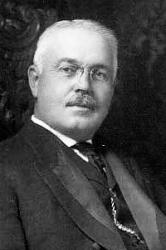
1854 - 1952 Topics: Saving Work of Christ Author of "I Will Sing the Wondrous Story" in The Worshiping Church Rv Francis Harold Rowley DD USA 1854-1952. Born at Hilton, NH, the son of a doctor, he graduated from Rochester University in 1875 and Rochester Theological Seminary of NY in 1878. He married Ida Amelia Babcock in 1878, and they had four children: John, Alice, Charles, and Esmond. He became a Baptist minister, animal welfare campaigner, and hymn writer. He pastored for over 30 years at Titusville, PA, North Adams, MA (1884-1892), Oak Park, IL, Fall River, MA, and the First Baptist Church at Boston, MA, until 1910. He preached at Appleton Chapel, Harvard University. He was also a trustee of the University of Chicago Divinity School (1894-1896). While at North Adams, MA, Peter Bilhorn, a fine musician and his assistant minister, asked him to write a hymn for Bilhorn to set to music. He wrote the hymn text overnight. The hymn was presented to Ira Sankey and he altered the text some before publishing it. Visiting in London, he once heard a Salvation Army band playing his hymn. They had no idea he was nearby. Rowley became aware of dismemberment of animals in slaughter houses across the country and lobbied for the animals to be rendered unconscious before being cut open. From 1892-1900 he was Secretary of the American Humane Association. In 1915, through his influence, a building was made to house the MA Society for the Prevention of Cruelty to Animals. He was president of that organization and of the American Humane Education Society from 1908-1945, and the Angell Memorial Animal Hospital. He was also Chairman of the Animal Protection Committee for the MA Committee on Public Safety and VP of the American Society for the Humane Regulation of Vivisection. In 1947 the Rowley School of Human Understanding was established in his honor. In 1948 the MA Society for the Prevention of Cruelty to Animals named the Rowley Memorial Hospital in Springfield, MA, for him. A humanitarian, he also worked with hospitals: Robert Brigham Hospital (for incurables) and N E Baptist Hospital of Boston. He was a member of the advisory council at Yenching University, China; a member of the alumni committee, University of Rochester, NY; member Alpha Delta Phi, Phi Beta Kappa. Rochester University gave him an honorary Doctor of Divinity degree. He died at Boston, MA. Oglethorpe University, Atlanta, GA, named the Rowley School of Humanities after him. John Perry

Fred Pratt Green

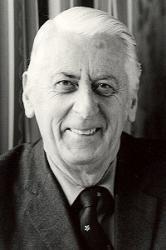
1903 - 2000 Topics: Saving Work of Christ Author of "This Is the Threefold Truth" in The Worshiping Church The name of the Rev. F. Pratt Green is one of the best-known of the contemporary school of hymnwriters in the British Isles. His name and writings appear in practically every new hymnal and "hymn supplement" wherever English is spoken and sung. And now they are appearing in American hymnals, poetry magazines, and anthologies. Mr. Green was born in Liverpool, England, in 1903. Ordained in the British Methodist ministry, he has been pastor and district superintendent in Brighton and York, and now served in Norwich. There he continued to write new hymns "that fill the gap between the hymns of the first part of this century and the 'far-out' compositions that have crowded into some churches in the last decade or more." --Seven New Hymns of Hope , 1971. Used by permission.

E. E. Hewitt

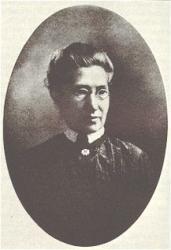
1851 - 1920 Person Name: Lidie H. Edmunds Topics: Saving Work of Christ Author of "My Faith Has Found a Resting Place" in The Worshiping Church Pseudonym: Li­die H. Ed­munds. Eliza Edmunds Hewitt was born in Philadelphia 28 June 1851. She was educated in the public schools and after graduation from high school became a teacher. However, she developed a spinal malady which cut short her career and made her a shut-in for many years. During her convalescence, she studied English literature. She felt a need to be useful to her church and began writing poems for the primary department. she went on to teach Sunday school, take an active part in the Philadelphia Elementary Union and become Superintendent of the primary department of Calvin Presbyterian Church. Dianne Shapiro, from "The Singers and Their Songs: sketches of living gospel hymn writers" by Charles Hutchinson Gabriel (Chicago: The Rodeheaver Company, 1916)

Luise Reichardt

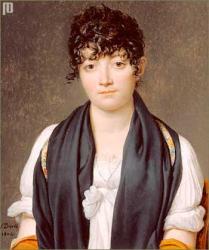
1779 - 1826 Person Name: C. Luise Reichardt Topics: Saving Work of Christ Composer of "ARMAGEDDON" in The Worshiping Church Caroline Luise Reichardt Germany 1779-1826. Born in Berlin to middle class parents and musical composers, she received some formal education and musical training from her father and his friends, but also was self-taught. Her grandfather was Konzertmeister, and her father was Kapellmeister at the court of Frederick, the Great. Louise was musical and had a good voice. She played piano and sang. In 1800 four of her own compositions were published along with a collection of her father’s songs. The Reichardts entertained well-known literary figures of the day. She later used poetry from Phillip Ludwig Achim von Arnim in a collection of 12 songs she composed. In 1809 she settled in Hamburg, Germany, where she made a living as a singing teacher and composed music. She also organized and directed a women’s chorus. She did behind-the-scenes conducting of music when she could. She was known for her untiring efforts in the production of Handel choral works, translating and preparing texts and choruses to be conducted by male counterparts. She also translated the Latin works of Hasse and Graun into German. She played a significant role in the formation of the German choral movement, a driving force in 19th century musical nationalism. She composed 75+ songs and choral pieces in various styles and accompaniments. Her husband-to-be, Friedrich August Eschen, died suddenly on the eve before their wedding. Her second husband-to-be, a painter, Franz Gareis, also died before their wedding. She died at Hamburg, Germany. John Perry

Charles Vincent

1852 - 1934 Person Name: Charles J. Vincent Topics: Saving Work of Christ Arranger of "PAX TECUM" in The Worshiping Church Vincent, Charles; b. Sept. 19, 1852, Houghton-le-Spring, Durham, d. Feb. 28, 1934, Monte Carlo; English organist. Full name Charles John Vincent, Jr.

Michael Baughen

b. 1930 Topics: Saving Work of Christ Author of "Because He Died and Is Risen" in The Worshiping Church

John H. Stockton

1813 - 1877 Person Name: J. H. Stockton Topics: Christ Conqueror; Christians Believers; Christians Conquerors; Christians Saved by Grace; Church Triumph of; Comfort in Trials; Faith Blessedness of; Faith Confession of; Faith Confidence of; God Hearer of Prayer; Praise For Work of Redemption; Prayer confidence in; Prayer For Deliverance from Trouble; Prayer For Rulers; Prayer God Hears; Prayer Intercession in; Safety Assured; Vanity Of Men and Riches; Worship Grace Needed for Composer of "[Jehovah hear thee in the day]" in Bible Songs Stockton, John Hart, a Methodist minister, was born in 1813, and died in 1877. He was a member of the New Jersey Annual Conference of the Methodist Episcopal Church, and the successive pastoral charges that he filled as a member of that Conference are found in the Conference Journal. He was not only a preacher, but a musician and composer of tunes, as well as hymn writer. He published two gospel song books: Salvation Melodies, 1874, and Precious Songs, 1875. Hymn Writers of the Church by Charles Nutter, 1911 =============== Stockton, John Hart, b. April 19, 1813, and d. March 25, 1877, was the author of "Come, every soul by sin oppressed" (Invitation), in I.D. Sankey's Sacred Songs and Solos, 1878, and of "The Cross, the Cross, the blood¬stained Cross" (Good Friday) in the same collection. --John Julian, Dictionary of Hymnology, Appendix, Part II (1907) =============== Stockton, John Hart. (New Hope, Pennsylvania, April 19, 1813--March 25, 1877). Born of Presbyterian parents, he was converted at a Methodist camp meeting in 1838, being received into full membership in the New Jersey Conference in 1857. Because of ill health he twice took the "supernumerary relations." He withdrew from actual pastoral work in 1874 and engaged in compiling and publishing gospel hymn books, issuing Salvation Melodies that year and Precious Songs in 1875, writing both words and music for a number of the songs. He died suddenly after attending a Sunday morning service at Arch Street Church, Philadelphia. Our Hymnody, McCutchan, has, perhaps, the fullest account of him readily available. --Robert G. McCutchan, DNAH Archives

Frederick William Faber

1814 - 1863 Person Name: Frederick W. Faber Topics: Redemption in Christ Christ's Saving Work; God Justice; God Mercy; Love Our Love of God Author of "There's a Wideness in God's Mercy" in The Worshiping Church Raised in the Church of England, Frederick W. Faber (b. Calverly, Yorkshire, England, 1814; d. Kensington, London, England, 1863) came from a Huguenot and strict Calvinistic family background. He was educated at Balliol College, Oxford, and ordained in the Church of England in 1839. Influenced by the teaching of John Henry Newman, Faber followed Newman into the Roman Catholic Church in 1845 and served under Newman's supervision in the Oratory of St. Philip Neri. Because he believed that Roman Catholics should sing hymns like those written by John Newton, Charles Wesley, and William Cowpe, Faber wrote 150 hymns himself. One of his best known, "Faith of Our Fathers," originally had these words in its third stanza: "Faith of Our Fathers! Mary's prayers/Shall win our country back to thee." He published his hymns in various volumes and finally collected all of them in Hymns (1862). Bert Polman ================= Faber, Frederick William, D.D., son of Mr. T. H. Faber, was born at Calverley Vicarage, Yorkshire, June 28, 1814, and educated at Balliol College, Oxford, graduating B.A. in 1836. He was for some time a Fellow of University College, in the same University. Taking Holy Orders in 1837, he became Rector of Elton, Huntingdonshire, in 1843, but in 1846 he seceded to the Church of Rome. After residing for some time at St. Wilfrid's, Staffordshire, he went to London in 1849, and established the London "Oratorians," or, "Priests of the Congregation of St. Philip Neri," in King William Street, Strand. In 1854 the Oratory was removed to Brompton. Dr. Faber died Sept. 26, 1863. Before his secession he published several prose works, some of which were in defence of the Church of England; and afterwards several followed as Spiritual Conferences, All for Jesus, &c. Although he published his Cherwell Waterlily and Other Poems, 1840; The Styrian Lake, and Other Poems, 1842; Sir Lancelot, 1844; and The Rosary and Other Poems, 1845; and his Lives of the Saints, in verse, before he joined the Church of Rome, all his hymns were published after he joined that communion. They were included in his:— (1) A small book of eleven Hymns1849, for the School at St. Wilfrid's, Staffordshire. (2) Jesus and Mary: or, Catholic Hymns for Singing and Reading, London 1849. In 1852 the 2nd edition was published with an addition of 20 new hymns. (3) Oratory Hymns, 1854; and (4) Hymns, 1862, being a collected edition of what he had written and published from time to time. Dr. Faber's account of the origin of his hymn-writing is given in his Preface to Jesus & Mary. After dwelling on the influence, respectively, of St. Theresa, of St. Ignatius, and of St. Philip Neri, on Catholicism; and of the last that "sanctity in the world, perfection at home, high attainments in common earthly callings…was the principal end of his apostolate," he says:— “It was natural then that an English son of St. Philip should feel the want of a collection of English Catholic hymns fitted for singing. The few in the Garden of the Soul were all that were at hand, and of course they were not numerous enough to furnish the requisite variety. As to translations they do not express Saxon thought and feelings, and consequently the poor do not seem to take to them. The domestic wants of the Oratory, too, keep alive the feeling that something of the sort was needed: though at the same time the author's ignorance of music appeared in some measure to disqualify him for the work of supplying the defect. Eleven, however, of the hymns were written, most of them, for particular tunes and on particular occasions, and became very popular with a country congregation. They were afterwards printed for the Schools at St. Wilfrid's, and the very numerous applications to the printer for them seemed to show that, in spite of very glaring literary defects, such as careless grammar and slipshod metre, people were anxious to have Catholic hymns of any sort. The manuscript of the present volume was submitted to a musical friend, who replied that certain verses of all or nearly all of the hymns would do for singing; and this encouragement has led to the publication of the volume." In the same Preface he clearly points to the Olney Hymns and those of the Wesleys as being the models which for simplicity and intense fervour he would endeavour to emulate. From the small book of eleven hymns printed for the schools at St. Wilfrid's, his hymn-writing resulted in a total of 150 pieces, all of which are in his Hymns, 1862, and many of them in various Roman Catholic collections for missions and schools. Few hymns are more popular than his "My God, how wonderful Thou art," "O come and mourn with me awhile," and "Sweet Saviour, bless us ere we go." They excel in directness, simplicity, and pathos. "Hark, hark, my soul, angelic songs are swelling," and "O Paradise, O Paradise," are also widely known. These possess, however, an element of unreality which is against their permanent popularity. Many of Faber's hymns are annotated under their respective first lines; the rest in common use include:— i. From his Jesus and Mary, 1849 and 1852. 1. Fountain of love, Thyself true God. The Holy Ghost. 2. How shalt thou bear the Cross, that now. The Eternal Years. 3. I come to Thee, once more, O God. Returning to God. 4. Joy, joy, the Mother comes. The Purification. 5. My soul, what hast thou done for God? Self-Examination 6. O how the thought of God attract. Holiness Desired. 7. O soul of Jesus, sick to death. Passiontide. Sometimes this is divided into two parts, Pt. ii. beginning, “My God, my God, and can it be." ii. From his Oratory Hymns, 1854. 8. Christians, to the war! Gather from afar. The Christian Warfare. 9. O come to the merciful Saviour that calls you. Divine Invitation. In many collections. 10. O God, Thy power is wonderful. Power and Eternity of God. 11. O it is sweet to think, Of those that are departed. Memory of the Dead. 12. O what are the wages of sin? The Wages of Sin. 13. O what is this splendour that beams on me now? Heaven. 14. Saint of the Sacred Heart. St. John the Evangelist. iii. From his Hymns, 1862. 15. Father, the sweetest, dearest Name. The Eternal Father. 16. Full of glory, full of wonders, Majesty Divine. Holy Trinity. 17. Hark ! the sound of the fight. Processions. 18. How pleasant are thy paths, 0 death. Death Contemplated. 19. O God, Whose thoughts are brightest light. Thinking no Evil. 20. O why art thou sorrowful, servant of God? Trust in God. 21. Souls of men, why will ye scatter? The Divine Call. 22. The land beyond the sea. Heaven Contemplated. 23. The thought of God, the thought of thee. Thoughts of God. 24. We come to Thee, sweet Saviour. Jesus, our Rest. In addition to these there are also several hymns in common use in Roman Catholic hymn-books which are confined to those collections. In the Hymns for the Year, by Dr. Rawes, Nos. 77, 110, 112, 117, 120, 121, 122, 125, 127, 128, 131, 140, 152, 154,169, 170, 174, 179, 180, 192, 222, 226, 230, 271, 272, are also by Faber, and relate principally to the Blessed Virgin Mary. Several of these are repeated in other Roman Catholic collections. --John Julian, Dictionary of Hymnology (1907 ================== Faber, Frederick William, p. 361, i. To this article the following additions have to be made:— 1. Blood is the price of heaven. Good Friday. (1862.) 2. Exceeding sorrowful to death. Gethsemane. This in the Scottish Ibrox Hymnal, 1871, is a cento from "O soul of Jesus, sick to death," p. 362, i., 7. 3. From pain to pain, from woe to woe. Good Friday. (1854.) 4. I wish to have no wishes left. Wishes about death. (1862.) 5. Why is thy face so lit with smiles? Ascension. (1849.) The dates here given are those of Faber's works in which the hymns appeared. In addition to these hymns there are also the following in common use:— 6. Dear God of orphans, hear our prayer. On behalf of Orphans. This appeared in a miscellaneous collection entitled A May Garland, John Philip, n.d. [1863], No. 1, in 7 stanzas of 4 lines. In the Roman Catholic Parochial Hymn Book, 1880, it begins, "O God of orphans, hear our prayer." 7. Sleep, sleep my beautiful babe. Christmas Carol. This carol we have failed to trace. 8. By the Archangel's word of love. Pt. i. Life of our Lord. This, and Pt. ii., “By the blood that flowed from Thee"; Pt. iii., "By the first bright Easter day"; also, "By the word to Mary given"; "By the name which Thou didst take"; in The Crown Hymn Book and other Roman Catholic collections, we have seen ascribed to Dr. Faber, but in the Rev. H. Formby's Catholic Hymns, 1853, they are all signed "C. M. C," i.e. Cecilia M. Caddell (p. 200, i.). --John Julian, Dictionary of Hymnology, Appendix, Part II (1907) ====================== Faber, F. W., pp. 361, i.; 1562, ii. We are informed by members of Dr. Faber's family that his father was Mr. Thomas Henry Faber, sometime Lay Secretary of the Bishop of Durham. In addition to his hymns already noted in this Dictionary, the following are found in various Roman Catholic collections, viz.:— i. From St. Wilfrid's Hymns, 1849:— 1. Dear Father Philip, holy Sire. S. Philip Neri. 2. Hail, holy Joseph, hail. S. Joseph. 3. Mother of Mercy, day by day. Blessed Virgin Mary. ii. Jesus and Mary, 1849:— 4. Ah ! dearest Lord! I cannot pray. Prayer. 5. Dear Husband of Mary. S. Joseph. 6. Dear Little One, how sweet Thou art. Christmas. 7. Father and God! my endless doom. Predestination. 8. Hail, holy Wilfrid, hail. S. Wilfrid. 9. O Jesus, if in days gone by. Love of the World. 10. O turn to Jesus, Mother, turn. B. V. M. 11. Sing, sing, ye angel bands. Assum. B. V. M. iii. Jesus and Mary, 1852:— 12. All ye who love the ways of sin. S. Philip Neri. 13. Day set on Rome! its golden morn. S. Philip Neri. 14. Hail, bright Archangel! Prince of heaven. S. Michael. 15. Hail, Gabriel, hail. S. Gabriel. 16. O Flower of Grace, divinest Flower. B. V. M. 17. Saint Philip! 1 have never known. S. Philip Neri. 18. Sweet Saint Philip, thou hast won us. S. Philip Neri. Previously in the Rambler, May, 1850, p. 425. iv. Oratory Hymns, 1854:— 19. Day breaks on temple roofs and towers. Expect. of B. V. M. 20. How gently flow the silent years. S. Martin and S. Philip. 21. How the light of Heaven is stealing. Grace. 22. Like the dawning of the morning. Expect. of B. V. M. 23. Mother Mary ! at thine altar. For Orphans. 24. My God! Who art nothing but mercy and kindness. Repentance. 25. O blessed Father! sent by God. S. Vincent of Paul. 26. O do you hear that voice from heaven? Forgiveness. 27. The chains that have bound me. Absolution. 28. The day, the happy day, is dawning. B. V. M. 29. The moon is in the heavens above. B. V. M. 30. Why art thou sorrowful, servant of God? Mercy. v. Hymns, 1862:— 31. At last Thou art come, little Saviour. Christmas. 32. By the spring of God's compassions. S. Raphael. 33. Fair are the portals of the day. B. V. M. 34. Father of many children. S. Benedict. 35. From the highest heights of glory. S. Mary Magdalene. 36. Like the voiceless starlight falling. B. V. M. 37. Mary! dearest mother. B. V. M. 38. Mother of God, we hail thy heart. B. V. M. 39. O Anne! thou hadst lived through those long dreary years. S. Anne. Previously in Holy Family Hymns, 1860. 40. O balmy and bright as moonlit night. B. V. M. 41. O Blessed Trinity! Thy children. Holy Trinity. 42. O dear Saint Martha, busy saint. S. Martha 43. O Mother, will it always be. B. V. M. 44. O vision bright. B. V. M. 45. Summer suns for ever shining. B. V. M. 46. There are many saints above. S. Joseph. Previously in Holy Family Hymns, 1860. vi. Centos and altered forms:— 47. Confraternity men to the fight. From "Hark the sound of the fight," p. 362, i. 48. Hail, sainted Mungo, hail. From No. 8. 49. I bow to Thee, sweet will of God. From "I worship Thee," p. 559, ii. 50. They whom we loved on earth. From "0 it is sweet to think," p. 362, i. 51. Vincent! like Mother Mary, thou. From No. 25. When Dr. Faber's hymns which are in common use are enumerated, the total falls little short of one hundred. In this respect he outnumbers most of his contemporaries. [Rev. James Mearns] --John Julian, Dictionary of Hymnology, New Supplement (1907) -------------- See also in: Hymn Writers of the Church

William Tidd Matson

1833 - 1899 Person Name: William T. Matson Topics: Saving Work of Christ Author of "Lord, I Was Blind" in The Worshiping Church Matson, William Tidd, was born at West Hackney, London, Oct. 17, 1833. He was educated first under the Rev. J. M. Gould, and then at St. John's College, Cambridge. Subsequently he studied under Professor Nesbitt, at the Agricultural and Chemical College, Kennington. In 1853 he underwent a great spiritual change. Leaving the Church of England, he first joined the Methodist New Connexion body, and then the Congregationalists. After the usual theological training, he entered the ministry, and held several pastorates, including Havant, Hants; Gosport; Highbury; Portsmouth, and others. His poetical works include:— (1) A Summer Evening Reverie, and Other Poems, 1857; (2) Poems, 1858; (3) Pleasures of the Sanctuary, 1865; (4) The Inner Life, 1866; (5) Sacred Lyrics, 1870; (6) Three Supplemental Hymns, &c, 1872; (7) The World Redeemed, 1881, &c. Several of Matson's hymns have been given in Allon's Supplemental Hymns; Horder's Congregational Hymns; The Baptist Hymnal; Dale's English Hymn Book.; Barrett's Congregational Church Hymnal, 1887, and others. The best known are:— 1. Father, of all, Whose wondrous power. Prayer to the Holy Trinity. 2. Glory, glory to God in the highest. Christmas. 3. God is in His temple. Divine Worship. 4. I'm but a little child. A Child's Prayer. 5. In whom shall I find comfort? God, the Source of Comfort. 6. Lord, I was blind, I could not see. Christ, the Life of Men. 7. O blessed Life, the heart at rest. Christ the Life of Men. 8. Teach me, O Lord, Thy holy way. Divine Guidance desired. Mr Matson's hymns show a considerable mastery of the forms of hymnic expression, but are somewhat lacking in lyric energy. Those written for use with German chorales are excellent efforts, and rank with his best work. Taken as a whole his hymns are far above the average, and deserve wide acknowledgment. [Rev. W. Garrett Horder] --John Julian, Dictionary of Hymnology (1907) ================ Matson, W. T, p. 719, ii. His "Glory to God in the highest, Shall be our song to-day" (Christmas) is in the Scottish Hymnal, 1884. --John Julian, Dictionary of Hymnology, Appendix, Part II (1907) ================= Matson, W. T. , p. 719, ii. He died in 1899. The hymn, "Glory to God in the highest, shall be our song to-day," p. 1591, i., is given to Mr. Matson in error. It is found in W. B. Bradbury's Golden Censer, 1864, p. 116, without authorship, and again in P. Phillips's Singing Pilgrim, 1866, p. 79, as by Mrs. E. H. Gates. [Rev. James Mearns, M.A.] --John Julian, Dictionary of Hymnology, New Supplement (1907)

George Thomas Caldbeck

1852 - 1918 Person Name: George T. Caldbeck Topics: Saving Work of Christ Composer of "PAX TECUM" in The Worshiping Church George Thomas Caldbeck United Kingdom 1852-1918. Born in Waterford, Ireland, he attended the National Model School, Waterford, and Islington Theological College. His desire to be a missionary was thwarted by his poor health. He returned to Cork and became a schoolmaster and evangelist in ireland. In 1888 he moved to London as an independent itinerant preacher. He was arrested in 1912 for selling scripture cards door to door without a license. The judge dismissed the case upon learning he was composer of the hymn tune” Pax Tecum.”. At the time he was living in a church hostel. He died in Epsom, Surrey. John Perry

Pages


Export as CSV
It looks like you are using an ad-blocker. Ad revenue helps keep us running. Please consider white-listing Hymnary.org or getting Hymnary Pro to eliminate ads entirely and help support Hymnary.org.