You help make Hymnary.org possible. More than 10 million people from 200+ countries found hymns, liturgical resources and encouragement on Hymnary.org in 2025, including you. Every visit affirms the global impact of this ministry.

If Hymnary has been meaningful to you this year, would you take a moment today to help sustain it? A gift of any size—paired with a note of encouragement if you wish—directly supports the server costs, research work and curation that keep this resource freely available to the world.

Give securely online today, or mail a check to:
Hymnary.org
Calvin University
3201 Burton Street SE
Grand Rapids, MI 49546

Thank you for your partnership, and may the hope of Advent fill your heart.

Person Results

Topics:scripture+songs
In:people

Planning worship? Check out our sister site, ZeteoSearch.org, for 20+ additional resources related to your search.
Showing 51 - 60 of 293Results Per Page: 102050

Jimmy Owens

1930 - 2023 Topics: Scripture Songs Composer of "[If My people which are called by My name]" in Sing Joyfully Owens, James Lloyd (Jimmy). (Clarksdale, Mississippi, December 9, 1930-November 26. 2023). Foursquare. Attended Millsaps College, Jackson, Miss.; Southwestern College, Memphis, Tennessee; Cathedral School of the Bible, Oakland, California; Cabot College, San Leandro, Calif. Minister of Music, The Neighborhood Church, Oakland, Calif., 1951-1966; Minister of Music, United Community Church, Glendale, Calif., 1966-1968; Minister of Music, Anaheim Christian Center (now Melodyland Christian Center), Anaheim, Calif., 1968-1969. With his wife Carol, Owens composed four Christian musicals. He recorded several albums. --Terry W. York, DNAH Archives     (updated 2025 by Leland Bryant Ross)

George Croly

1780 - 1860 Topics: liturgical Scripture Songs Author of "The Ten Commandments" in Voices United Croly, George, LL.D., born in Dublin, Aug. 17, 1780, and educated at the Dublin University (M.A. 1804, LL.D. 1831). After taking Holy Orders, he laboured in Ireland till about 1810, when he took up his residence in London, and devoted himself to literature. In 1835 he succeeded to the united benefices of St. Stephen's, Walbrook, and St. Benet Sherehog, retaining the same till his death, which occurred suddenly in the public street, Holborn, Nov. 24, 1860. His prose publications, in addition to contributions to Blackwood's Magazine, were numerous, and dealt with biographical, historical, and scriptural subjects. His hymns were given in his— Psalms and Hymns for Public Worship. Written and compiled by the Rev. George Croly, LL.D. London Kendrick, 1854. This collection contained 25 psalms, 50 hymns, and 6 poems. Of these 10 psalms, 12 hymns, and the 6 poems bear Dr. Croly's initial. The following have come into common use mainly through Windle's Collection:— 1. Be still, be still, impatient soul. Patience. 2. Behold me, Lord, and if thou find. Lent. 3. Lift up your heads, ye gates of light. Ascension. 4. Lord, who hast sought us out, unsought. Public Worship. 5. Teach us, O Lord, this day. Sunday. 6. Thou, Lord of mercy and of might. Lent. All these date from 1854, with the exception of No. 6, which appeared in his Scenes from Scripture and other Poems, 1851. -- John Julian, Dictionary of Hymnology (1907)

Lowell Mason

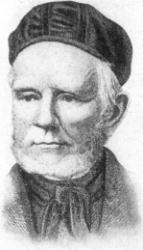
1792 - 1872 Topics: Scripture Songs Composer of "[Nearer, my God, to Thee]" in Sing Joyfully Dr. Lowell Mason (the degree was conferred by the University of New York) is justly called the father of American church music; and by his labors were founded the germinating principles of national musical intelligence and knowledge, which afforded a soil upon which all higher musical culture has been founded. To him we owe some of our best ideas in religious church music, elementary musical education, music in the schools, the popularization of classical chorus singing, and the art of teaching music upon the Inductive or Pestalozzian plan. More than that, we owe him no small share of the respect which the profession of music enjoys at the present time as contrasted with the contempt in which it was held a century or more ago. In fact, the entire art of music, as now understood and practiced in America, has derived advantage from the work of this great man. Lowell Mason was born in Medfield, Mass., January 8, 1792. From childhood he had manifested an intense love for music, and had devoted all his spare time and effort to improving himself according to such opportunities as were available to him. At the age of twenty he found himself filling a clerkship in a banking house in Savannah, Ga. Here he lost no opportunity of gratifying his passion for musical advancement, and was fortunate to meet for the first time a thoroughly qualified instructor, in the person of F. L. Abel. Applying his spare hours assiduously to the cultivation of the pursuit to which his passion inclined him, he soon acquired a proficiency that enabled him to enter the field of original composition, and his first work of this kind was embodied in the compilation of a collection of church music, which contained many of his own compositions. The manuscript was offered unavailingly to publishers in Philadelphia and in Boston. Fortunately for our musical advancement it finally secured the attention of the Boston Handel and Haydn Society, and by its committee was submitted to Dr. G. K. Jackson, the severest critic in Boston. Dr. Jackson approved most heartily of the work, and added a few of his own compositions to it. Thus enlarged, it was finally published in 1822 as The Handel and Haydn Society Collection of Church Music. Mason's name was omitted from the publication at his own request, which he thus explains, "I was then a bank officer in Savannah, and did not wish to be known as a musical man, as I had not the least thought of ever making music a profession." President Winchester, of the Handel and Haydn Society, sold the copyright for the young man. Mr. Mason went back to Savannah with probably $500 in his pocket as the preliminary result of his Boston visit. The book soon sprang into universal popularity, being at once adopted by the singing schools of New England, and through this means entering into the church choirs, to whom it opened up a higher field of harmonic beauty. Its career of success ran through some seventeen editions. On realizing this success, Mason determined to accept an invitation to come to Boston and enter upon a musical career. This was in 1826. He was made an honorary member of the Handel and Haydn Society, but declined to accept this, and entered the ranks as an active member. He had been invited to come to Boston by President Winchester and other musical friends and was guaranteed an income of $2,000 a year. He was also appointed, by the influence of these friends, director of music at the Hanover, Green, and Park Street churches, to alternate six months with each congregation. Finally he made a permanent arrangement with the Bowdoin Street Church, and gave up the guarantee, but again friendly influence stepped in and procured for him the position of teller at the American Bank. In 1827 Lowell Mason became president and conductor of the Handel and Haydn Society. It was the beginning of a career that was to win for him as has been already stated the title of "The Father of American Church Music." Although this may seem rather a bold claim it is not too much under the circumstances. Mr. Mason might have been in the average ranks of musicianship had he lived in Europe; in America he was well in advance of his surroundings. It was not too high praise (in spite of Mason's very simple style) when Dr. Jackson wrote of his song collection: "It is much the best book I have seen published in this country, and I do not hesitate to give it my most decided approbation," or that the great contrapuntist, Hauptmann, should say the harmonies of the tunes were dignified and churchlike and that the counterpoint was good, plain, singable and melodious. Charles C. Perkins gives a few of the reasons why Lowell Mason was the very man to lead American music as it then existed. He says, "First and foremost, he was not so very much superior to the members as to be unreasonably impatient at their shortcomings. Second, he was a born teacher, who, by hard work, had fitted himself to give instruction in singing. Third, he was one of themselves, a plain, self-made man, who could understand them and be understood of them." The personality of Dr. Mason was of great use to the art and appreciation of music in this country. He was of strong mind, dignified manners, sensitive, yet sweet and engaging. Prof. Horace Mann, one of the great educators of that day, said he would walk fifty miles to see and hear Mr. Mason teach if he could not otherwise have that advantage. Dr. Mason visited a number of the music schools in Europe, studied their methods, and incorporated the best things in his own work. He founded the Boston Academy of Music. The aim of this institution was to reach the masses and introduce music into the public schools. Dr. Mason resided in Boston from 1826 to 1851, when he removed to New York. Not only Boston benefited directly by this enthusiastic teacher's instruction, but he was constantly traveling to other societies in distant cities and helping their work. He had a notable class at North Reading, Mass., and he went in his later years as far as Rochester, where he trained a chorus of five hundred voices, many of them teachers, and some of them coming long distances to study under him. Before 1810 he had developed his idea of "Teachers' Conventions," and, as in these he had representatives from different states, he made musical missionaries for almost the entire country. He left behind him no less than fifty volumes of musical collections, instruction books, and manuals. As a composer of solid, enduring church music. Dr. Mason was one of the most successful this country has introduced. He was a deeply pious man, and was a communicant of the Presbyterian Church. Dr. Mason in 1817 married Miss Abigail Gregory, of Leesborough, Mass. The family consisted of four sons, Daniel Gregory, Lowell, William and Henry. The two former founded the publishing house of Mason Bros., dissolved by the death of the former in 1869. Lowell and Henry were the founders of the great organ manufacturer of Mason & Hamlin. Dr. William Mason was one of the most eminent musicians that America has yet produced. Dr. Lowell Mason died at "Silverspring," a beautiful residence on the side of Orange Mountain, New Jersey, August 11, 1872, bequeathing his great musical library, much of which had been collected abroad, to Yale College. --Hall, J. H. (c1914). Biography of Gospel Song and Hymn Writers. New York: Fleming H. Revell Company.

Harry D. Clarke

1888 - 1957 Topics: Scripture Songs; Scripture Songs Author of "Fishers of Men" in Hymns of Faith Orphaned at an early age, Clarke ran away from the orphanage and worked at sea for almost 10 years. He eventually moved to London, then to America. He attended the Moody Bible Institute, Chicago, Illinois, then went into composing, music publishing, and evangelism. He served as song leader for Harry vom Bruch and Billy Sunday, being so impressed by Sunday that he established the Billy Sunday Memorial Chapel in Sioux City, Iowa (where he served as pastor until 1945). Clarke also worked in the evangelism field in Garards Fort, Pennsylvania, and South Milford, Indiana. © The Cyber Hymnal™. Used by permission. (www.hymntime.com)

Felix Mendelssohn-Bartholdy

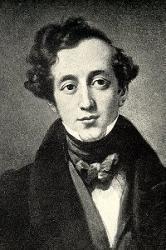
1809 - 1847 Person Name: Felix Mendelssohn Topics: The Church at Worship Scripture; liturgical Songs of Illumination; Bible; Advent 2 Year A; Christmas Day 2 Year A; Epiphany 4 Year A; Lent 3 Year B; Proper 15 Year B; Proper 23 Year B; Proper 24 Year C Arranger of "MUNICH" in Voices United Felix Mendelssohn-Bartholdy (b. Hamburg, Germany, 1809; d. Leipzig, Germany, 1847) was the son of banker Abraham Mendelssohn and the grandson of philosopher Moses Mendelssohn. His Jewish family became Christian and took the Bartholdy name (name of the estate of Mendelssohn's uncle) when baptized into the Lutheran church. The children all received an excellent musical education. Mendelssohn had his first public performance at the age of nine and by the age of sixteen had written several symphonies. Profoundly influenced by J. S. Bach's music, he conducted a performance of the St. Matthew Passion in 1829 (at age 20!) – the first performance since Bach's death, thus reintroducing Bach to the world. Mendelssohn organized the Domchor in Berlin and founded the Leipzig Conservatory of Music in 1843. Traveling widely, he not only became familiar with various styles of music but also became well known himself in countries other than Germany, especially in England. He left a rich treasury of music: organ and piano works, overtures and incidental music, oratorios (including St. Paul or Elijah and choral works, and symphonies. He harmonized a number of hymn tunes himself, but hymnbook editors also arranged some of his other tunes into hymn tunes. Bert Polman

William Wright

Topics: liturgical Scripture Songs Composer of "DEER PARK" in Voices United William Wright was Director of Music and Organist at Deer Park United Church in Toronto from 1965-2009. He taught at the University of Toronto and at the Toronto School of Theology. Dianne Shapiro

Emily R. Brink

b. 1940 Topics: liturgical Scripture Songs Harmonizer of "TZENA" in Voices United Emily R. Brink is a Senior Research Fellow of the Calvin Institute of Christian Worship and Adjunct Professor of Church Music and Worship at Calvin Theological Seminary, Grand Rapids, Michigan. Her main areas of responsibility are conference planning and global resources. She is program manager of the annual Calvin Symposium on Worship, which draws more than 70 presenters and 1600 participants from around the world. She also travels widely to lecture and to learn about worship in different parts of the world, especially in Asia, where she has lectured in Bangladesh, China, Hong Kong, India, Indonesia, Japan, Nepal, Pakistan, Philippines, Singapore, and Taiwan. Her areas of interest include congregational song from all times and places; psalmody; hymnal editing. She was editor of four hymnals and consults with a wide range of churches on worship renewal issues. Dr. Brink is active in the American Guild of Organists, serving in both local and national offices, as well as in the Hymn Society in the United States and Canada (president from 1990 1992) and named a Fellow of the Hymn Society in 2004 in recognition of distinguished services to hymnody and hymnology. --internal.calvinseminary.edu/

Henry Francis Lyte

1793 - 1847 Person Name: Henry F. Lyte Topics: Scripture Songs Author of "Praise, My Soul, the King of Heaven" in Sing Joyfully Lyte, Henry Francis, M.A., son of Captain Thomas Lyte, was born at Ednam, near Kelso, June 1, 1793, and educated at Portora (the Royal School of Enniskillen), and at Trinity College, Dublin, of which he was a Scholar, and where he graduated in 1814. During his University course he distinguished himself by gaining the English prize poem on three occasions. At one time he had intended studying Medicine; but this he abandoned for Theology, and took Holy Orders in 1815, his first curacy being in the neighbourhood of Wexford. In 1817, he removed to Marazion, in Cornwall. There, in 1818, he underwent a great spiritual change, which shaped and influenced the whole of his after life, the immediate cause being the illness and death of a brother clergyman. Lyte says of him:— "He died happy under the belief that though he had deeply erred, there was One whose death and sufferings would atone for his delinquencies, and be accepted for all that he had incurred;" and concerning himself he adds:— "I was greatly affected by the whole matter, and brought to look at life and its issue with a different eye than before; and I began to study my Bible, and preach in another manner than I had previously done." From Marazion he removed, in 1819, to Lymington, where he composed his Tales on the Lord's Prayer in verse (pub. in 1826); and in 1823 he was appointed Perpetual Curate of Lower Brixham, Devon. That appointment he held until his death, on Nov. 20, 1847. His Poems of Henry Vaughan, with a Memoir, were published in 1846. His own Poetical works were:— (1) Poems chiefly Religious 1833; 2nd ed. enlarged, 1845. (2) The Spirit of the Psalms, 1834, written in the first instance for use in his own Church at Lower Brixham, and enlarged in 1836; (3) Miscellaneous Poems (posthumously) in 1868. This last is a reprint of the 1845 ed. of his Poems, with "Abide with me" added. (4) Remains, 1850. Lyte's Poems have been somewhat freely drawn upon by hymnal compilers; but by far the larger portion of his hymns found in modern collections are from his Spirit of the Psalms. In America his hymns are very popular. In many instances, however, through mistaking Miss Auber's (q. v.) Spirit of the Psalms, 1829, for his, he is credited with more than is his due. The Andover Sabbath Hymn Book, 1858, is specially at fault in this respect. The best known and most widely used of his compositions are "Abide with me, fast falls the eventide;” “Far from my heavenly home;" "God of mercy, God of grace;" "Pleasant are Thy courts above;" "Praise, my soul, the King of heaven;" and "There is a safe and secret place." These and several others are annotated under their respective first lines: the rest in common use are:— i. From his Poems chiefly Religious, 1833 and 1845. 1. Above me hangs the silent sky. For Use at Sea. 2. Again, 0 Lord, I ope mine eyes. Morning. 3. Hail to another Year. New Year. 4. How good, how faithful, Lord, art Thou. Divine care of Men. 5. In tears and trials we must sow (1845). Sorrow followed by Joy. 6. My [our] rest is in heaven, my [our] rest is not here. Heaven our Home. 7. 0 Lord, how infinite Thy love. The Love of God in Christ. 8. Omniscient God, Thine eye divine. The Holy Ghost Omniscient. 9. The leaves around me falling. Autumn. 10. The Lord hath builded for Himself. The Universe the Temple of God. 11. Vain were all our toil and labour. Success is of God. 12. When at Thy footstool, Lord, I bend. Lent. 13. When earthly joys glide swift away. Ps. cii. 14. Wilt Thou return to me, O Lord. Lent. 15. With joy we hail the sacred day. Sunday. ii. From his Spirit of the Psalms, 1834. 16. Be merciful to us, O God. Ps. lvii. 17. Blest is the man who knows the Lord. Ps. cxii. 18. Blest is the man whose spirit shares. Ps. xli. 19. From depths of woe to God I cry. Ps. cxxxx. 20. Gently, gently lay Thy rod. Ps. vi. 21. Glorious Shepherd of the sheep. Ps. xxiii. 22. Glory and praise to Jehovah on high. Ps. xxix. 23. God in His Church is known. Ps. lxxvi. 24. God is our Refuge, tried and proved. Ps. xlvi. 25. Great Source of my being. Ps. lxxiii. 26. Hear, O Lord, our supplication. Ps. lxiv. 27. How blest the man who fears the Lord. Ps.cxxviii. 28. Humble, Lord, my haughty spirit. Ps. cxxxi. 29. In this wide, weary world of care. Ps. cxxxii. 30. In vain the powers of darkness try. Ps.lii. 31. Jehovah speaks, let man be awed. Ps. xlix. 32. Judge me, O Lord, and try my heart. Ps. xxvi. 33. Judge me, O Lord, to Thee I fly. Ps. xliii. 34. Lord, I have sinned, but O forgive. Ps. xli. 35. Lord, my God, in Thee I trust. Ps. vii. 36. Lord of the realms above, Our Prophet, &c. Ps.xlv. 37. Lone amidst the dead and dying. Ps. lxii. 38. Lord God of my salvation. Ps. lxxxviii. 39. Lord, I look to Thee for all. Ps. xxxi. 40. Lord, I would stand with thoughtful eye. Ps. lxix. 41. Lord, my God, in Thee I trust. Ps. vii. 42. My God, my King, Thy praise I sing. Ps. cviii. 43. My God, what monuments I see. Ps. xxxvi. 44. My spirit on [to] Thy care. Ps. xxxi. 45. My trust is in the Lord. Ps. xi. 46. Not unto us, Almighty Lord [God]. Ps. cxv. 47. O God of glory, God of grace. Ps. xc. 48. O God of love, how blest are they. Ps. xxxvii. 49. O God of love, my God Thou art. Ps. lxiii. 50. O God of truth and grace. Ps. xviii. 51. O had I, my Saviour, the wings of a dove. Ps. lv. 52. O how blest the congregation. Ps. lxxxix. 53. O how safe and [how] happy he. Ps. xci. 54. O plead my cause, my Saviour plead. Ps. xxxv. 55. O praise the Lord, 'tis sweet to raise. Ps. cxlvii. 56. O praise the Lord; ye nations, pour. Ps. cxvii. 57. O praise ye the Lord With heart, &c. Ps. cxlix. 58. O that the Lord's salvation. Ps. xiv. 59. O Thou Whom thoughtless men condemn. Ps. xxxvi. 60. Of every earthly stay bereft. Ps. lxxiv. 61. Our hearts shall praise Thee, God of love. Ps. cxxxviii. 62. Pilgrims here on earth and strangers. Ps. xvi. 63. Praise for Thee, Lord, in Zion waits. Ps. lxv. 64. Praise to God on high be given. Ps. cxxxiv. 65. Praise ye the Lord, His servants, raise. Ps. cxiii. 66. Redeem'd from guilt, redeem'd from fears. Ps. cxvi. 67. Save me by Thy glorious name. Ps. liv. 68. Shout, ye people, clap your hands. Ps. xlvii. 69. Sing to the Lord our might. Ps. lxxxi. 70. Strangers and pilgrims here below. Ps. cix. 71. Sweet is the solemn voice that calls. Ps. cxxii. 72. The Church of God below. Ps. lxxxvii. 73. The Lord is King, let earth be glad. Ps. xcvii. 74. The Lord is on His throne. Ps. xciii. 75. The Lord is our Refuge, the Lord is our Guide. Ps. xlvii. 76. The mercies of my God and King. Ps. lxxxix. 77. The Lord Who died on earth for men. Ps. xxi. 78. Tis a pleasant thing to fee. Ps. cxxxiii. 79. Thy promise, Lord, is perfect peace. Ps. iii. 80. Unto Thee I lift mine [my] eyes. Ps. cxxiii. 81. Whom shall [should] we love like Thee? Ps. xviii. Lyte's versions of the Psalms are criticised where their sadness, tenderness and beauty are set forth. His hymns in the Poems are characterized by the same features, and rarely swell out into joy and gladness. --John Julian, Dictionary of Hymnology (1907) ================== Lyte, Henry Francis, p. 706, i. Additional versions of Psalms are in common use:-- 1. Lord, a thousand foes surround us. Psalms lix. 2. Praise, Lord, for Thee in Zion waits. Psalms lxv. 3. The Christian like his Lord of old. Psalms cxl. 4. The Lord of all my Shepherd is. Psalms xxiii. 5. The Lord of heaven to earth is come. Psalms xcviii. 6. Thy mercy, Lord, the sinner's hope. Psalms xxxvi. 7. To Thee, O Lord, in deep distress. Psalms cxlii. Sometimes given as "To God I turned in wild distress." 8. Uphold me, Lord, too prone to stray. Psalms i. 9. When Jesus to our [my] rescue came. Psalms cxxvi. These versions appeared in the 1st edition of Lyte's Spirit of the Psalms, 1834. It must be noted that the texts of the 1834, the 1836, and the 3rd ed., 1858, vary considerably, but Lyte was not responsible for the alterations and omissions in the last, which was edited by another hand for use at St. Mark's, Torquay. Lyte's version of Psalms xxix., "Glory and praise to Jehovah on high" (p. 706, ii., 22), first appeared in his Poems, 1st ed., 1833, p. 25. Read also No. 39 as "Lord, I look for all to Thee." --John Julian, Dictionary of Hymnology, Appendix, Part II (1907)

William Knapp

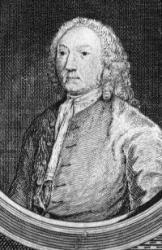
1698 - 1768 Topics: Scriptural Songs Composer of "SPETISBURY" in The Summit Choirbook Born: 1698, Ware­ham, Dor­set­shire, Eng­land. Died: Sep­tem­ber 26, 1768, Poole, Dor­set­shire, Eng­land. Buried: Poole, Dor­set­shire, Eng­land.

William F. Sherwin

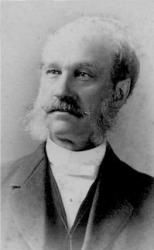
1826 - 1888 Person Name: William Fisk Sherwin Topics: The Church at Worship Scripture; liturgical Songs of Illumination; Bible; Biblical Narrative; Calmness and Serenity; Comfort/Consolation; Holy Spirit Illumination; Jesus Christ Presence; Jesus Christ Word; Last Supper; Peace (Inner, Calmness, Serenity; Service Music Prayer for Illumination; Truth; Word of God; Proper 13 Year A; Easter 7 Year B; Proper 9 Year B; Proper 13 Year B; Palm/Passion Sunday Year C Composer of "BREAD OF LIFE" in Voices United Sherwin, William Fisk, an American Baptist, was born at Buckland, Massachusetts, March 14,1826. His educational opportunities, so far as schools were concerned, were few, but he made excellent use of his time and surroundings. At fifteen he went to Boston and studied music under Dr. Mason: In due course he became a teacher of vocal music, and held several important appointments in Massachusetts; in Hudson and Albany, New York County, and then in New York City. Taking special interest in Sunday Schools, he composed carols and hymn-tunes largely for their use, and was associated with the Rev. R. Lowry and others in preparing Bright Jewels, and other popular Sunday School hymn and tune books. A few of his melodies are known in Great Britain through I. D. Sankey's Sacred Songs and Solos, where they are given with his signature. His hymnwriting was limited. The following pieces are in common use:— 1. Grander than ocean's story (1871). The Love of God. 2. Hark, bark, the merry Christmas bells. Christmas Carol. 3. Lo, the day of God is breaking. The Spiritual Warfare. 4. Wake the song of joy and gladness. Sunday School or Temperance Anniversary. 5. Why is thy faith, 0 Child of God, so small. Safety in Jesus. Mr. Sherwin died at Boston, Massachusetts, April 14, 1888. -- John Julian, Dictionary of Hymnology (1907) ================== Sherwin, W. F., p. 1055, i. Another hymn from his Bright Jewels, 1869, p. 68, is "Sound the battle cry" (Christian Courage), in the Sunday School Hymnary, 1905, and several other collections. --John Julian, Dictionary of Hymnology, New Supplement (1907)

Pages


Export as CSV
It looks like you are using an ad-blocker. Ad revenue helps keep us running. Please consider white-listing Hymnary.org or getting Hymnary Pro to eliminate ads entirely and help support Hymnary.org.