You help make Hymnary.org possible. More than 10 million people from 200+ countries found hymns, liturgical resources and encouragement on Hymnary.org in 2025, including you. Every visit affirms the global impact of this ministry.

If Hymnary has been meaningful to you this year, would you take a moment today to help sustain it? A gift of any size—paired with a note of encouragement if you wish—directly supports the server costs, research work and curation that keep this resource freely available to the world.

Give securely online today, or mail a check to:
Hymnary.org
Calvin University
3201 Burton Street SE
Grand Rapids, MI 49546

Thank you for your partnership, and may the hope of Advent fill your heart.

Person Results

Topics:sunday+next+before+advent
In:people

Planning worship? Check out our sister site, ZeteoSearch.org, for 20+ additional resources related to your search.
Showing 51 - 60 of 74Results Per Page: 102050

Geoffrey Anketel Studdert Kennedy

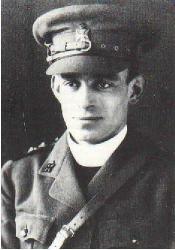
1883 - 1929 Person Name: Geoffrey Abjetekk Studdert-Kennedy Topics: Sunday next before Advent Morning Prayer Opening Author of "Awake, awake to love and work!" in The Hymnal of the Protestant Episcopal Church in the United States of America 1940 Born with Irish heritage to the vicarage in a deprived parish in Leeds. Studdert Kennedy got into Trinity College Dublin at the age of 14, though poverty meant he did not attend until later, graduating with a First Class degree. He was a popular teacher at Calday Grange Grammar School on the Wirral Peninsula before entering the Anglican Ministry; ordained in Worcester Cathedral in 1908 and married in 1914. He worked in deprived parishes: in Rugby, with his Father in Leeds and St Paul's in Worcester. He was known for his forgetfulness, his generosity (he famously gave away the marital bed to an old lady in need recruiting his wife to help carry the mattress) and his plain speaking. He became a military chaplain (AKA the Padre) in 1915. He spent time with the men waiting to go to the Front speaking with them and offering to write letters home. He carried a large canvas sack of New Testaments and Woodbine Cigarettes to distribute, often staying on the trains up to the front well after they had left the station earning great popularity and the affectionate nickname Woodbine Willie. In 1917 he was awarded the Military Cross for fetching morphine for a first aid post on the Front while under bombardment and repeatedly going to help the wounded or bury the dead in No Man's Land. During the war his first collection of poetry "Rough Rhymes of a Padre" was published and he achieved widespread national fame. His poems did not shy from the horrors of war or questions of faith raised. He was always on the side of the 'ordinary man'. After the war he continued in parish ministry before taking an itinerant role with the Industrial Christian Fellowship (still operating) where he proclaimed the gospel and fought for the disadvantaged. He died in Liverpool 1929 intending to keep a commitment despite exhaustion. His memorial in Worcester Cathedral says "A poet: a prophet: a passionate seeker after truth: an ardent advocate of Christian fellowship." His hymns are taken from his collections of verse later anthologised in The Unutterable Beauty (1927). David L. Gent

Martin E. Leckebusch

b. 1962 Person Name: Martin Leckebusch (b. 1962) Topics: Christ the King (The Sunday next before Advent) Year C Author of "Come, see the Lord in his breathtaking splendour" in Ancient and Modern

Lewis Hensley

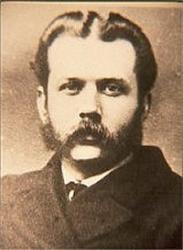
1824 - 1905 Person Name: Lewis Hensley, 1824-1905 Topics: Advent; Evangelism; Harvest Festival; Hope and Consolation; Year A Epiphany 3; Year A Sunday Next Before Lent; Year B All Saints; Year C Easter 5; Year C Proper 12 Author of "Thy Kingdom come, O God" in Complete Anglican Hymns Old and New Hensley, Lewis, M.A., born May, 1824, and educated at Trinity College, Cambridge, where in 1846 he graduated as Senior Wrangler, and first Smith's Prizeman. From 1846 to 1852 he was a Fellow and Assistant Tutor of Trinity College. Taking Holy Orders in 1851, he held successively the Curacy of Upton-with-Chalvey, Bucks; the Vicarage of Ippolyts-with-Great-Wymondly, Hertfordshire, and that of Hitchin, in the same county; Rural Dean, 1867. His works include Household Devotions; Shorter Household Devotions, &c. His hymns appeared in his Hymns for the Sundays after Trinity, London, Bell & Daldy, 1864; and Hymns for the Minor Sundays from Advent to Whitsuntide, London, Bell & Daldy, 1867. His Advent hymn, "Thy Kingdom come, O God," is from the latter of these works. --John Julian, Dictionary of Hymnology (1907) =============== Hensley, L. , p. 511, i., was b. May 20, 1824, and d. suddenly in a railway train, near Great Eyburgh, Norfolk, Aug. 1, 1905. --John Julian, Dictionary of Hymnology, New Supplement (1907)

Alexander Groves

1842 - 1909 Topics: Sunday Next Before Advent Gospel Author (st. 3-4) of "Break thou the Bread of Life, Dear Lord, to me" in Magnify the Lord

Mark Andrews

1875 - 1939 Topics: Sunday Next Before Advent Collect Composer of "LAUDA ANIMA (Andrews)" in Magnify the Lord Mark Andrews was born in Erith, Kent, England in 1875 and emigrated to the United States in 1903. Trained at Westminster Abbey under organist John Thomas Ruch, he served as organist for St. Luke’s Episcopal, First Baptist, and First Congregational churches in Montclair, New Jersey. Andrews was a Fellow of the American Guild of Organists and an Associate of the Royal College of Organists, and he taught many pupils who became noted church musicians. A prolific composer of more than three hundred works, Andrews is remembered for hymn tunes such as Audrey (likely memorializing his daughter), Exultation, Fosdick, Whitney, and a distinct tune also titled Lauda Anima, written as an alternative setting for “Praise, My Soul, the King of Heaven.” His music reflects the English cathedral tradition blended with American congregational song, and several of his tunes remain in hymnals today. J.S. McDuff (from Montclair church archives and early 20th-century hymnals including Hymns of the Living Church 1910, retrieved 9/15/2025)

Philip Armes

1836 - 1908 Person Name: Philip Armes (1836-1908) Topics: Christ the King (The Sunday next before Advent) Year B Composer of "GALILEE" in Ancient and Modern Philip Armes, born in Norwich,England, Aug. 15, 1836. Organist; chorister in Norwich Cathedral in 1846-48, and in Rochester Cathedral 1848-51; articled pupil of Dr. John Larkin Hopkins at Rochester, 1850-55; was organist of Trinity Church, Milton, Gravesend in 1855-57, at St. Andrew's, Wells Street, London, in 1857-61, of Chichester Cathedral in 1861-62, and of Durham Cathedral since 1862. Mus. Bac., Oxford 1858; Mus. Doc., Oxford, 1865. degrees also from University of Durham, 1863-1864. Works: Hezekiah, oratorio, performed at Worcester Festival, 1878; St. John the Evangelist, do., York Festival 1881; Communion Services in A; do. in B-flat; Te Deum; Morning and Evening Service in G; Anthems; Chants; Hymns, etc. Cyclopedia of Music and Musicians by John Denison Camplin, Jr. and William Foster Apthorp (Charles Scribner’s Sons, 1888)

Charles E. Oakley

1832 - 1865 Person Name: Charles Edward Oakley Topics: Sunday Next Before Advent Old Testament Author of "Hills of the North, rejoice; Echoing songs arise" in Magnify the Lord Oakley, Charles Edward, M.A., born in 1832, and educated at Oxford (B.A. 1855). Entering Holy Orders in 1855, he became Rector of Wickwar in 1856, and later Rector of St. Paul's, Covent Garden. He died Sep. 15, 1865. His fine Missionary hymn, "Hills of the north, rejoice," appeared in Bp. T. V. French's Hymns adapted to the Christian Seasons, and the Hymnal Companion in 1870. --John Julian, Dictionary of Hymnology, Appendix, Part II (1907)

James Lancelot

b. 1952 Person Name: James Lancelot (b. 1952) Topics: Christ the King (The Sunday next before Advent) Year A Arranger (last stanza) of "DIADEMATA" in Ancient and Modern

L. G. Hayne

1836 - 1883 Person Name: Leighton George Hayne, 1836-1883 Topics: Advent; Evangelism; Harvest Festival; Hope and Consolation; Year A Epiphany 3; Year A Sunday Next Before Lent; Year B All Saints; Year C Easter 5; Year C Proper 12 Composer of "ST CECILIA" in Complete Anglican Hymns Old and New Born: February 28, 1836, St. David’s Hall, Exeter, England. Died: March 3, 1883, Bradfield, Essex, England. Son of Richard Hayne, Rector of Mistley, Leighton graduated from Eton and Queen’s College, Oxford (BMus 1856, DMus 1860); at school, he was Eton College’s organist and conducted the Oxford University chorus. He also served as chaplain of Queen’s College; Vicar of Helston, Cornwall (1866-67); Succentor of Eton (1867-71); and Rector of Mistley, Essex (1871-83), and was well known as an organ builder. Music: BUCKLAND CHALVEY ST. CECILIA ST. LAWRENCE --www.hymntime.com/tch/

George Hugh Bourne

1840 - 1925 Person Name: George Hugh Bourne (1840-1925) Topics: Christ the King (The Sunday next before Advent) Year A Author of "Lord, enthroned in heavenly splendour" in Ancient and Modern Bourne, George Hugh, D.C.L., son of Rev. R. B. Bourne, born at St. Paul's Cray, Kent, 8th Nov. 1840, and educated at Eton, and O. C. C, Oxford, graduating B.A., 1863; B.C.L., 1866; and D.C.L. 1871. Taking Holy Orders in 1863, he became Curate of Sandford-on-Thames, 1863. He was afterwards Head Master of Chardstock College, and is now (1886) Warden of the same school, which has been transferred to St. Edmund's, Salisbury. Dr. Bourne has written the following hymns:— 1. Scarce discerning aught before us. General, Written in Switzerland in 1861, and published in Lyra Messianica, 1864, p. 17, in 10 stanzas of 4 lines, and repeated in the Appendix to the Society for Promoting Christian Knowledge Psalms & Hymns, 1869, in an abbreviated form. 2. 0 Christ, the king of human life. Holy Matrimony. A hymn on Holy Matrimony, written in 1867 for the marriage of Dr. A. B. Webb, Bishop of Bloemfontein, and included in the Society for Promoting Christian Knowledge Appendix to the Psalms & Hymns, 1869, and thence into Church Hymns, 1871. 3. Of the wondrous Body, 0 my tongue be telling. A translation of "Pange lingua gloriosi corporis," q.v., contributed to Lyra Eucharistica, 2nd edition, 1864. Dr. Bourne has also written seven Post-Communion hymns for use in the Chapel of St. Edmund's College, Salisbury. These hymns have not been published. -- John Julian, Dictionary of Hymnology (1907) =================== Bourne, George H, p. 164, ii. From his Post Communion Hymns, privately printed in 1874 (see p. 165, i., 3), the hymns "O Christ, our God, 'Who with Thine own hast been" (Holy Communion), and "Lord, enthroned in heavenly splendour" (Holy Communion), are taken. --John Julian, Dictionary of Hymnology, Appendix, Part II (1907)

Pages


Export as CSV
It looks like you are using an ad-blocker. Ad revenue helps keep us running. Please consider white-listing Hymnary.org or getting Hymnary Pro to eliminate ads entirely and help support Hymnary.org.