You help make Hymnary.org possible. More than 10 million people from 200+ countries found hymns, liturgical resources and encouragement on Hymnary.org in 2025, including you. Every visit affirms the global impact of this ministry.

If Hymnary has been meaningful to you this year, would you take a moment today to help sustain it? A gift of any size—paired with a note of encouragement if you wish—directly supports the server costs, research work and curation that keep this resource freely available to the world.

Give securely online today, or mail a check to:
Hymnary.org
Calvin University
3201 Burton Street SE
Grand Rapids, MI 49546

Thank you for your partnership, and may the hope of Advent fill your heart.

Person Results

Topics:attributes+of+god
In:person

Planning worship? Check out our sister site, ZeteoSearch.org, for 20+ additional resources related to your search.
Showing 51 - 60 of 272Results Per Page: 102050

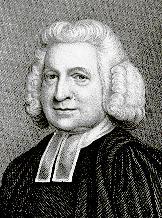
Charles Wesley

1707 - 1788 Topics: Wisdom Attributes and Providence of God Author of "God of my life, whose gracious power" in The Seventh-Day Adventist Hymn and Tune Book Charles Wesley, M.A. was the great hymn-writer of the Wesley family, perhaps, taking quantity and quality into consideration, the great hymn-writer of all ages. Charles Wesley was the youngest son and 18th child of Samuel and Susanna Wesley, and was born at Epworth Rectory, Dec. 18, 1707. In 1716 he went to Westminster School, being provided with a home and board by his elder brother Samuel, then usher at the school, until 1721, when he was elected King's Scholar, and as such received his board and education free. In 1726 Charles Wesley was elected to a Westminster studentship at Christ Church, Oxford, where he took his degree in 1729, and became a college tutor. In the early part of the same year his religious impressions were much deepened, and he became one of the first band of "Oxford Methodists." In 1735 he went with his brother John to Georgia, as secretary to General Oglethorpe, having before he set out received Deacon's and Priest's Orders on two successive Sundays. His stay in Georgia was very short; he returned to England in 1736, and in 1737 came under the influence of Count Zinzendorf and the Moravians, especially of that remarkable man who had so large a share in moulding John Wesley's career, Peter Bonier, and also of a Mr. Bray, a brazier in Little Britain. On Whitsunday, 1737, [sic. 1738] he "found rest to his soul," and in 1738 he became curate to his friend, Mr. Stonehouse, Vicar of Islington, but the opposition of the churchwardens was so great that the Vicar consented that he "should preach in his church no more." Henceforth his work was identified with that of his brother John, and he became an indefatigable itinerant and field preacher. On April 8, 1749, he married Miss Sarah Gwynne. His marriage, unlike that of his brother John, was a most happy one; his wife was accustomed to accompany him on his evangelistic journeys, which were as frequent as ever until the year 1756," when he ceased to itinerate, and mainly devoted himself to the care of the Societies in London and Bristol. Bristol was his headquarters until 1771, when he removed with his family to London, and, besides attending to the Societies, devoted himself much, as he had done in his youth, to the spiritual care of prisoners in Newgate. He had long been troubled about the relations of Methodism to the Church of England, and strongly disapproved of his brother John's "ordinations." Wesley-like, he expressed his disapproval in the most outspoken fashion, but, as in the case of Samuel at an earlier period, the differences between the brothers never led to a breach of friendship. He died in London, March 29, 1788, and was buried in Marylebone churchyard. His brother John was deeply grieved because he would not consent to be interred in the burial-ground of the City Road Chapel, where he had prepared a grave for himself, but Charles said, "I have lived, and I die, in the Communion of the Church of England, and I will be buried in the yard of my parish church." Eight clergymen of the Church of England bore his pall. He had a large family, four of whom survived him; three sons, who all became distinguished in the musical world, and one daughter, who inherited some of her father's poetical genius. The widow and orphans were treated with the greatest kindness and generosity by John Wesley. As a hymn-writer Charles Wesley was unique. He is said to have written no less than 6500 hymns, and though, of course, in so vast a number some are of unequal merit, it is perfectly marvellous how many there are which rise to the highest degree of excellence. His feelings on every occasion of importance, whether private or public, found their best expression in a hymn. His own conversion, his own marriage, the earthquake panic, the rumours of an invasion from France, the defeat of Prince Charles Edward at Culloden, the Gordon riots, every Festival of the Christian Church, every doctrine of the Christian Faith, striking scenes in Scripture history, striking scenes which came within his own view, the deaths of friends as they passed away, one by one, before him, all furnished occasions for the exercise of his divine gift. Nor must we forget his hymns for little children, a branch of sacred poetry in which the mantle of Dr. Watts seems to have fallen upon him. It would be simply impossible within our space to enumerate even those of the hymns which have become really classical. The saying that a really good hymn is as rare an appearance as that of a comet is falsified by the work of Charles Wesley; for hymns, which are really good in every respect, flowed from his pen in quick succession, and death alone stopped the course of the perennial stream. It has been the common practice, however for a hundred years or more to ascribe all translations from the German to John Wesley, as he only of the two brothers knew that language; and to assign to Charles Wesley all the original hymns except such as are traceable to John Wesley through his Journals and other works. The list of 482 original hymns by John and Charles Wesley listed in this Dictionary of Hymnology have formed an important part of Methodist hymnody and show the enormous influence of the Wesleys on the English hymnody of the nineteenth century. -- Excerpts from John Julian, Dictionary of Hymnology (1907) ================== Charles Wesley, the son of Samuel Wesley, was born at Epworth, Dec. 18, 1707. He was educated at Westminster School and afterwards at Christ Church, Oxford, where he graduated M.A. In 1735, he took Orders and immediately proceeded with his brother John to Georgia, both being employed as missionaries of the S.P.G. He returned to England in 1736. For many years he engaged with his brother in preaching the Gospel. He died March 29, 1788. To Charles Wesley has been justly assigned the appellation of the "Bard of Methodism." His prominence in hymn writing may be judged from the fact that in the "Wesleyan Hymn Book," 623 of the 770 hymns were written by him; and he published more than thirty poetical works, written either by himself alone, or in conjunction with his brother. The number of his separate hymns is at least five thousand. --Annotations of the Hymnal, Charles Hutchins, M.A., 1872.

George F. Root

1820 - 1895 Topics: Worship Attributes and Providence of God Composer of "VARINA" in The Seventh-Day Adventist Hymn and Tune Book Root, George F., MUS. DOC, born in Sheffield, Berkshire County, Mass., Aug. 30, 1820. He is much more widely known as a composer of popular music than as a hymn writer. Four of his hymns are in I. D. Sankey's Sacred Songs & Solos, 1878. Nos. 16, 100, 293, and 297. A sympathetic biographical sketch, with portrait, is in The Tonic Sol-Fa Reporter, Sep. 1886. He died Aug. 6, 1895. --John Julian, Dictionary of Hymnology, Appendix, Part II (1907) ===================== George Frederick Root was born in Sheffield, Mass., August 30, 1820. His father moved to North Reading, near Boston, when the boy was six years old, and there his youth was spent. He was always fond of music— not singing at all as a boy, but played upon every kind of instrument that came in his way. At thirteen it was his pride that he could "play a tune" on as many instruments as he was years old. His dream of life was to be a musician, although such an ambition was looked down upon by all his relatives and friends, excepting a fond mother. In the fall of 1838 he went to Boston and made an engagement to work for Mr. A. N. Johnson and take lessons on the piano. His father and one of the brothers were at the time in South America, and the mother, with six younger children, was at home on the farm. When he secured the engagement with Mr. Johnson to receive three dollars a week and board and lessons, the neighbors became interested and encouraged him to go ahead, they promising to help look after the farm and see that the family got along. The young man's happiness over these events can better be imagined than described. On the second day of October, 1838, he entered upon his duties in his new heaven on earth located at Harmony Hall, Mr. Johnson's music-room, in Boston. His duties were to see to the fires, care for the room, answer callers, give information about Mr. Johnson when he was out, and practice his lessons when not otherwise engaged. He worked industriously and made steady progress. It was but a few weeks till Mr. Johnson had him playing for the prayer-meeting, and but a few more till he began turning over pupils to him. In about seven weeks' time Mr. Johnson encouraged him by a considerable increase of salary. A most important event to him was meeting Dr. Lowell Mason and being accepted as a bass singer in the celebrated Bowdoin Street choir. Also, on Mr. Johnson's recommendation, he began taking private voice lessons of Mr. Geo. Jas. Webb, the then celebrated voice teacher of Boston. He continued at least a year with Mr. Webb. His first real singing class was taught the following fall, 1839, at the North End. It lasted nearly through the winter, and on the closing night his class made him a present of a silver goblet, suitably engraved, which he kept among his treasures. Before the first year was up Mr. Johnson proposed a five year partnership, by which Mr. Root was to receive one-third of their earnings, and the former was to have the privilege of visiting Germany part of the time if he chose. They then changed their quarters to three rooms in the basement of Park Street Church. The annual rental was six hundred dollars. They were kept quite busy. At this time Dr. Mason's music teaching in the public schools was a growing success, and Messrs. Johnson and Root were employed to assist him. Drs. Mason and Webb had introduced what is now called Musical Conventions a year or two previous to this. They called them "The Teachers' Class." Teachers and singers were called to Boston from surrounding territory to study and practice pretty much as they do now at normals. In 1841 Mr. Root became one of the teachers in this class. He taught vocal training and continued this work for years afterward in Dr. Mason's teachers' classes, and later incorporated the same method in his own normals. During this year Mr. Johnson went to Germany, and left the two large church choirs (Winter Street and Park Street) in charge of Mr. Root. One of the organs was played by a pupil — Mr. S. A. Bancroft. Everything went smoothly during Mr. Johnson's absence as it did also after his return. During the last year of the five-year partnership, Mr. Root was called to take the organ at Bowdoin Street, Mr. Mason changing to Winter Street. An amicable settlement was made between Messrs. Johnson and Root, and the partnership dissolved. In 1811, Mr. Jacob Abbott (father of Lyman Abbott)and his three brothers had established a young ladies' school in New York City. They wanted a music teacher, and offered the position to Mr. Root. They also secured him the organ and choir of the Mercer Street Church, with prospects for other good work. It required pretty strong persuasive arguments to tempt Mr. Root to leave Boston, he was doing well there, and as the sequel shows, there was an attraction in Boston that held him in too tight a grasp to be relinquished by the mere offer of greater power and place. He made up his mind, however, only after getting the consent of the powders of Boston to take with him this [to him] the greatest attraction of the city — Miss Mary Olive Woodman — an accomplished lady, a sweet singer, and a member of a prominent family of musicians. He went to New York first to prepare a home, and in August, 1845, returned for his bride, who took her place in his New York choir as leading soprano, and through his long and eventful career she was ever at his side, a true helpmeet. He was soon employed at Rutger's Female Institute, Miss Haines' School for Young Ladies, Union Theological Seminary and the New York State Institution for the Blind. Within six weeks after he arrived in New York his time was fully occupied. He continued with Mr. Abbott's young ladies' school ten years. While teaching in New York he continued his summer work with Messrs. Mason and Webb in Teachers' Classes. Up to the year 1849 he had written but little music; only a few hymn tunes while in Boston. He needed more music for the young ladies of his schools, so he made his first book, The Young Ladies' Choir, of which he had enough copies made for his own use, as he had no thought of offering it to the public. Then in connection with Mr. J. E. Sweetser, they compiled the Root and Sweetser's Collection. Mr. Root did work enough for two men, hence broke down in health. Mr. Abbott suggested that he take a trip to Paris. After weighing the matter carefully, in December, 1853, he sailed, and in due time arrived at Paris, where he began studying French, voice culture and piano under celebrated teachers. After spending nearly a year abroad, he returned home in improved health and ready for active work. He began to feel the need of new music for his classes, and after some thought decided upon a musical play ; the subject and title, The Flower Queen. At the Institution for the Blind was a young lady, a former pupil, but now a teacher who had shown some poetical talent. He asked her to help him with the words. He would suggest in prose what the flowers might say and she would put it into rhyme. She did it so well that it seldom needed any alteration. This lady was the now famous Fanny Crosby. The cantata became very popular. About this time Mr. Root wrote a half dozen simple songs for the people. They all sold pretty well, but Hazel Dell and Rosalie, the Prairie Flower, became the most popular, and had a large sale. It was in the summer of 1853 that the first real normal was held. Mr. Root originated it, and held it in New York. The principal teachers were Messrs. Mason, Root, Hastings, and Bradbury. This school became famous. Sessions were also held at North Reading, Mass., a village near Mr. Root's "Willow Farm Home," with Dr. Mason, Mr. Webb, Mr. Bradbury and himself as principal teachers. About this time Mr. Root decided to give up his work in New York, and devote himself entirely to conventions, normal work and authorship. He was eminently successful. Among the most eminent teachers and composers of our country have been students in Dr. Geo. F. Root's Normal Musical Institute. In 1860 Dr. Root settled in Chicago and entered the music publishing business with his brother E. T. Root, and C. M. Cady, as "Root & Cady," Mr. Root's reputation being the most important capital of the firm. His books and popular songs soon made the new firm prosperous. Then came the war with its horror. Dr. Root wielded his musical sword in the way of writing war songs, which made him famous. The Battle Cry of Freedom, Just Before the Battle, Mother, and others, made thousands of dollars for the music house. In the great Chicago fire of 1871 the interests of the firm of Root & Cady became engulfed in the general ruin. Their loss was upward of a quarter of a million dollars. They then sold their book catalogue, plates and copyrights to John Church & Co., of Cincinnati, and the sheet music plates and copyrights to S. Brainard's Sons, Cleveland. These sales realized about §130,000. The final result was that Dr. Root, his talented son F. W., and others became connected with John Church & Co. Under this new business relationship Mr. Root went right on with his normal and convention work; also issued a great many new books and cantatas. In 1872 the Chicago University very worthily conferred upon him the degree Doctor of Music. In 1886 he made a trip to Scotland and England, and arranged with publishers to issue some of his cantatas. He was royally received. Dr. Root was the author of about seventy-five books, nearly two hundred songs in sheet form, and many popular gospel songs. Dr. Root occupies a prominent place in the musical history of this country. It was Dr. Mason who lifted music from almost nothing and gave it an impetus, but he left no better follower than Dr. Root to carry on his work. He was a man of spotless integrity and high Christian character, and to know him was to love him. At the time of Dr. Root's death he was at Bailey Island, Maine, a summer resort, where he and other relatives had cottages. On August 6, 1895, he was seized with neuralgia of the heart — and died within one hour. He was buried at North Reading, Mass., his old home. --Hall, J. H. (c1914). Biographies of Gospel Song and Hymn Writers. New York: Fleming H. Revell Company.

Ernst Lange

1650 - 1727 Topics: God Attributes of Author of "The Unsearchable" in Hymnal of the Methodist Episcopal Church Lange, Ernst, was born at Danzig, Jan. 3, 1650, where his father, Matthias Lange, was in the service of the Senate. He was for some time secretary in Danzig, and thereafter in Warsaw. In 1691 he was appointed judge in the Altstadt of Danzig, and in 1694 senator. He died at Danzig, Aug. 20, 1727 (Bode, p. 103; Allegemeine Deutsche Biographie, xvii. 623, &c). After a visit to the Netherlands in 1698, Lange allied himself with the Mennonites and Pietists in Danzig, and came into conflict with the Lutheran clergy. His hymns were mostly written about the time when the pestilence visited Danzig, in 1710, and principally appeared in his LXI. Gott geheiligte Stunden, without place or date of publication., but probably at Danzig, 1711 (Preface dated "Danzig, Feb. 12, 1711"). The idea of this work was as a thankoffering for preservation during this trying time; and it embraced 61 hymns, viz., one for each year of his life. A number of additional hymns seem to have been contributed in manuscripts to Freylinghausen's Neues geistreiches Gesang-Buch, 1714. Lange's hymns which have passed into English are:— i. Im Abend blinkt der Morgenstern. Epiphany, 1711, as above, p. 4, in 19 stanzas of 4 lines, entitled, "The Saviour Who appeared at Bethlehem to the Wise men from the East, set forth; from Matt. ii. 1-12." A new stanza was added as xx. (probably from his MS.), when the hymn was included by Freylinghausen, 1714, No. 59. Repeated, abridged, in Knapp's Evangelischer Lieder-Schatz, 1837, No. 435 (1865, No. 414). The translation in common use is:— The wondering sages trace from far. A translation of stanzas i., ii., xx., by Miss Cox, in her Sacred Hymns from the German, 1841, p. 23 (1864, p. 43). Repeated in Hedge & Huntington's American Hymns for the Church of Christ, Boston, 1853; Schaff's Christ in Song, 1869 and 1870, &c. Another translation is: "At eve appears the Morning Star," by Lady E. Fortescue, 1843, p. 5. ii. 0 Gott, du Tiefe sonder Grund. God's Majesty, First printed as No. 140, in Freylingkausen, 1714> in 10 stanzas of 141.; repeated in the Berlin Geistliche Lieder, ed. 1863. F. Schleiermacher called it "A masterpiece of sacred poetry." The translation in common use is :— 0 God, Thou bottomless abyss. A spirited tr., omitting stanzas vi., ix., and in 8 stanzas of 12 lines, by J. Wesley, in his Collection of Psalms & Hymns, Charlestown, 1737, No. 16, and the Wesley Hymns and Sacred Poems, 1739 (Poetical Works, 1868-72, vol. i. p. 143). The lines— "Thy wakened wrath doth slowly move, Thy willing mercy flies apace" are adapted from the New Version of Ps. ciii. 8. The hymn passed into the Wesleyan Hymn Book, 1780, in two parts, Nos. 231 and 232 (ed. 1875, Nos. 240, 241). In other hymn-books it has appeared in a variety of centos. As these are all from the text of the Wesleyan Hymn Book, more or less altered and transposed, it will suffice to give their first lines with references to the text of 1780. These centos include:— (1) While Thee, Unsearchable, I set (i., line 9 alt.). Martineau's Hymns, 1840. (2) Unchangeable, all-perfect Lord (ii., line 9). Longfellow & Johnson's Book of Hymns, Boston, U.S., 1848. (3) Thy parent-hand, Thy forming skill (iii). American Methodist Episcopal South Collection, 1847. (4) Thou, true and only God, lead'st forth (v.). Wesleyan Hymn Book, 1780, No. 232. (5) Thine, Lord, is Wisdom, Thine alone. Wesleyan Hymn Book (vi.). Scottish Evangelical Union Hymn, 1856. (6) Parent of good! Thy bounteous hand (vii.). Martineau's Hymns, 1840. (7) Parent of good! Thy genial ray (vii. alt.). Dr. Thomas's Augustine Hymn Book, 1866. These details show the extensive use of this hymn in English-speaking countries. Another translation is, "O God, Thou bottomless Abyss! How shall I competently know Thee," as No. 673 in pt. i. of the Moravian Hymn Book, 1754. In the edition 1886, No. 174, it begins, "O God, Thou fathomless abyss." iii. Unter denen grossen Gütern. Brotherly Love, or, Quinquagesima. A fine paraphrase of 1 Cor. xiii. First published 1711, as above, p. 37, in 5 stanzas of 10 1., entitled, "The preeminence of Love. From 1 Cor. xiii. 1, 2, 3, 13." When included as No. 423, in Freylinghausen, 1714, a new stanza was added as stanza vi., and this form is No. 798 in the Univerfälschter Liedersegen, 1851. Translated as:— Many a gift did Christ impart. A full and good translation by Miss Winkworth, in her Lyra Germanica, 1855, p. 50; repeated, abridged, in Kennedy, 1863. In the American Unitarian Hymns of the Spirit, Boston, 1864, and in the Laudes Domini, N. Y. 1884, &c., it begins with the translation of stanza ii., line 5, "Though I speak with angel tongues." [Rev. James Mearns, M.A.] --John Julian, Dictionary of Hymnology (1907)

Thomas Jervis

1748 - 1833 Person Name: Jervis Topics: Attributes of God our confidence; The Attributes of God our Confidence Author of "Great God! thine attributes divine" in A Collection of Psalms and Hymns for Christian Worship (10th ed.) Jervis, Thomas, son of a Presbyterian Minister of the same name, was born at Ipswich in 1748, and educated for the Ministry at Hoxton. In 1770 he was appointed classical and mathematical tutor at the Exeter Academy. From 1772 to 1783 he was tutor to the sons of the Earl of Shelburne, at Bowood, where Dr. Priestley was librarian. In the latter year Jervis succeeded Dr. A. Rees at St. Thomas's Southwark, moving in 1796, after the death of Dr. Kippis, to the Princes' St. Chapel, Westminster. From 1808 to 1818 he was minister at the Mill Hill Chapel, Leeds. After his retirement he lived in the neighbourhood of London, and died there in 1833. Jervis was one of the four editors of A Collection of Hymns & Psalms for Public & Private Worship, London, 1795. He contributed 17 hymns to the 1st ed., and 4 to its Supplement, 1807. Of these several are found in later Unitarian collections in Great Britain and America, including:— 1. God to correct a guilty world. Divine Providence. 2. Great God, Thine attributes divine. Confidence in God. 3. Lord of the world's majestic frame. Praise a Duty. 4. Shall I forsake that heavenly Friend? Constancy desired. 5. Sweet is the friendly voice which [that] speaks. Peace to the Penitent. 6. Thou, Lord, in mercy wilt regard. Penitence. 7. With sacred joy we lift our eyes. Divine Worship. This is given in Laudes Domini, N.Y., 1884, as: "With joy we lift our eyes." These hymns all date from 1795, and the most popular are Nos. 4 and 6. [Rev. Valentine D. Davis, B.A.] --John Julian, Dictionary of Hymnology (1907)

Henry Basford

Topics: God Attributes of Composer of "LUX CŒLESTIS" in The Psalter

John Warrington Hatton

1710 - 1793 Person Name: John Hatton Topics: God Attributes of Composer of "DUKE STREET" in The Psalter John Warrington Hatton (b. Warrington, England, c. 1710; d, St. Helen's, Lancaster, England, 1793) was christened in Warrington, Lancashire, England. He supposedly lived on Duke Street in Lancashire, from where his famous tune name comes. Very little is known about Hatton, but he was most likely a Presbyterian, and the story goes that he was killed in a stagecoach accident. Bert Polman

Simon Browne

1680 - 1732 Person Name: Browne Topics: Attributes of God Goodness Author of "Lord! thou art good: all nature shows" in The Voice of Praise Simon Browne was born at Shepton Mallet, Somersetshire, about 1680. He began to preach as an "Independent" before he was twenty years of age, and was soon after settled at Portsmouth. In 1716, he became pastor in London. In 1723, he met with some misfortunes, which preyed upon his mind, and produced that singular case of monomania, recorded in the text-books of Mental Philosophy; he thought that God had "annihilated in him the thinking substance, and utterly divested him of consciousness." "Notwithstanding," says Toplady, "instead of having no soul, he wrote, reasoned, and prayed as if he had two." He died in 1732. His publications number twenty-three, of which some are still in repute. --Annotations of the Hymnal, Charles Hutchins, M.A., 1872. ================== Browne, Simon. A contemporary of Dr. Watts, born at Shepton Mallet, Somersetshire, cir. 1680, and died in 1732. After studying for the Independent Ministry under the Rev. John Moore, of Bridgewater, he became pastor of an Independent charge in Portsmouth, and then, in 1716, of the Independent-Chapel in Old Jewry, London. His lateryears were clouded by a peculiar malady, under the influence of which "he imagined that God had in a gradual manner annihilated in him the thinking substance, and utterly divested him of consciousness." It is supposed that the death of a highwayman at his hands during a violent struggle, followed by that of his wife and son a short time after, had much to do in producing this sad result. Whilst thus contending that he had no power to think, he produced a work in defence of Christianity, another in defence of the Trinity, a third as an Exposition of the 1st Epistle to the Corinthians, and a fourth in the form of a Dictionary. His publications number over 20. Of these works, he is known to hymnology through his:— Hymns and Spiritual Songs, in Three Books, designed as a Supplement to Dr. Watts, &c, 1720, 2nd edition 1741, 3rd edition 1760. It contains 166 hymns, 7 doxologies, and a Preface of some historical interest. In the old collections Simon Browne's hymns (all of which are from the above collection) held a prominent position, but in modern hymnals they are fast passing out of use. The best known and most widely used are "Come, Holy [gracious] Spirit, Heavenly Dove," "O God, on Thee we all depend," and "Lord, at Thy feet we sinners lie." In addition the following are also in common use:— 1. Eternal God, Almighty Cause. Unity of God. 2. Eternal God, of beings First. God all in all . 3. Frequent the day of God returns. Sunday. 4. Great First of beings, Mighty Lord. Creation. 5. Great God, my joyful thanks to Thee. Thanksgiving. 6. Great God, Thy peerless excellence. Imitation of God. 7. Great Lord of earth and seas and skies. Providence. 8. Great Ruler of the earth and sky. Providence. 9. Hail, Holy Spirit, bright, immortal, Dove. Whitsuntide. 10. Hail, happy day, the [thou] day of holy rest. Sunday. 11. I cannot shun the stroke of death. Death. 12. Lord, Thou art good; all nature shows. Divine Goodness. 13. Lord, what a feeble frame is ours. Frailty of Life. 14. O God, on Thee we all depend. Confidence in God. -- John Julian, Dictionary of Hymnology (1907)

Philip Doddridge

1702 - 1751 Topics: Worship Attributes and Providence of God Author of "How gentle God's commands!" in The Seventh-Day Adventist Hymn and Tune Book Philip Doddridge (b. London, England, 1702; d. Lisbon, Portugal, 1751) belonged to the Non-conformist Church (not associated with the Church of England). Its members were frequently the focus of discrimination. Offered an education by a rich patron to prepare him for ordination in the Church of England, Doddridge chose instead to remain in the Non-conformist Church. For twenty years he pastored a poor parish in Northampton, where he opened an academy for training Non-conformist ministers and taught most of the subjects himself. Doddridge suffered from tuberculosis, and when Lady Huntington, one of his patrons, offered to finance a trip to Lisbon for his health, he is reputed to have said, "I can as well go to heaven from Lisbon as from Northampton." He died in Lisbon soon after his arrival. Doddridge wrote some four hundred hymn texts, generally to accompany his sermons. These hymns were published posthumously in Hymns, Founded on Various Texts in the Holy Scriptures (1755); relatively few are still sung today. Bert Polman ======================== Doddridge, Philip, D.D., was born in London, June 26, 1702. His grandfather was one of the ministers under the Commonwealth, who were ejected in 1662. His father was a London oilman. He was offered by the Duchess of Bedford an University training for ordination in the Church of England, but declined it. He entered Mr. Jennings's non-conformist seminary at Kibworth instead; preached his first sermon at Hinckley, to which Mr. Jennings had removed his academy. In 1723 he was chosen pastor at Kibworth. In 1725 he changed his residence to Market Harborough, still ministering at Kibworth. The settled work of his life as a preceptor and divine began in 1729, with his appointment to the Castle Hill Meeting at Northampton, and continued till in the last stage of consumption. He sailed to Lisbon, in 1751, where he died October 26, the same year. Two hundred pupils in all, gathered from England, Scotland and Holland, were prepared in his seminary, chiefly for the dissenting ministry, but partly for professions. The wide range of subjects, including daily readings in Hebrew and Greek, Algebra, Trigonometry, Watts' Logic, outline of Philosophy, and copious Divinity, is itself a proof of Doddridge's learning. He was presented with his D.D. degree by the University of Aberdeen. His fame as a divine, combined with his wide sympathies and gentle, unaffected goodness, won for him the friendship of Watts, Col. Gardiner and Hervey, and the esteem of Seeker and Warburton. He welcomed the work of Wesley and Whitefield, and entertained the latter on his visit to Northampton. His Rise and Progress of Religion in the Soul and The Family Expositor both did good work in their day. For criticism of his hymns see English Hymnody, Early, § XIV. [Rev. H. Leigh Bennett, M.A.] After Dr. Doddridge's death his hymns were published by his friend Job Orton, in 1755, as:— "Hymns founded on Various Texts in the Holy Scriptures. By the late Reverend Philip Doddridge, D.D. Published from the Author's Manuscript by Job Orton . . . Salop. Printed by J. Eddowes and J. Cotton, &c. MDCCLV." Concerning the text of the hymns, Orton says in his Preface:— "There may perhaps be some improprieties, owing to my not being able to read the author's manuscript in particular places, and being obliged, without a poetical genius, to supply those deficiencies, whereby the beauty of the stanza may be greatly defaced, though the sense is preserved." The 1st edition contained 370 hymns; the 2nd, 1759, 374; and the 3rd, 1766, and later editions, 375. In 1839 Doddridge's great-grandson re-edited the hymns from the original manuscript and published the same as:— Scriptural Hymns by the Rev. Philip Doddridge, D.D. New and corrected edition containing many hymns never before printed. Edited from the Original Documents by the Author's great-grandson, John Doddridge Humphreys, Esq. Lond. Darton & Clark, 1839. This work contains 22 additional hymns. The text differs in many instances from Orton's, but these changes have not come into common use. In addition to the manuscript used by Orton and J. D. Humphreys, another containing 100 hymns (five of which are not in any edition of the Hymns), all in the author's handwriting, and most of them dated, is referred to in this Dictionary as the "D. Manuscripts." It is the property of Mr. W. S. Booker and family. A manuscript, not in Doddridge's handwriting, of 77 "Hymns by P. Doddridge, Mar. 16, 1739/1740," is in the possession of Mr. W. T. Brooke. The existence of these manuscripts is accounted for from the fact that Doddridge's hymns were freely circulated in manuscript during his lifetime. It is from his correspondence with R. Blair (q.v.) that the few compositions traceable to him in the Scottish Trans. & Paraphrases were derived. The hymns by Doddridge which have attained to the greatest popularity are:— “Awake, my soul, stretch every nerve"; " Do not I love Thee, O my Lord? " "Grace 'tis a charming sound”; " Hark, the glad sound, the Saviour comes"; "My God, and is Thy table spread?" "O happy day, that fixed my choice"; "O God of Jacob [Bethel], by Whose hand”; " See Israel's gentle Shepherd stand"; "Ye servants of the Lord." These hymns, with many besides, are annotated under their respective first lines. Of the rest, taken from the Hymns, &c, 1755, the following are also in common use:— 1. Behold the gloomy vale. Death anticipated. 2. Behold the Great Physician stands. Christ the Physician. 3. Captives of Israel, hear. Spiritual Deliverance. 4. Eternal God, our wondering souls. Enoch's Piety and Translation. 5. Eternal Source of life and thought. Subjection to the Father. G. Exalted Prince of Life, we own. Christ the Prince and Saviour. 7. Father Divine, the Saviour cried. Christ's Submission to the Father. 8. Father Divine, Thy piercing eye. Secret Prayer. 9. Father of mercies, send Thy grace. Sympathy. The Good Samaritan. 10. Go, saith the Lord, proclaim my grace. Forgiveness. 11. God of Eternity, from Thee. Redeeming the Time. 12. God of my life, through all its [my] days. Praising God continually. 13. God. of salvation, we adore. Praise to God for Redemption. 14. Great Father of mankind. Gentiles brought into the Church. 15. Great God, we sing that mighty hand. The New Tear. 16. Great Leader of Thine Israel's host. During Persecution. 17. Great Lord of angels, we adore. Ordination. 18. Great Spirit of immortal love. Purity of Heart desired. 19. Great Teacher of Thy Church, we own. The Divine Precepts. 20. Hail, everlasting Prince of Peace. Sympathy. 21. Hail to the Prince of life and peace. Praise to Christ. 22. Hear, gracious [Saviour] Sovereign, from Thy throne. The Blessings of the Holy Spirit desired. 23. How gentle God's commands. God's Care of His Own. 24. How rich Thy favours, God of grace. God and His Living Temple. 25. How swift the torrent flows [rolls]. Our Fathers, where are they? 26. Jesus the Lord, our souls adore. Christ the Forerunner. 27. Jesus, we own Thy Sovereign hand. Christ to be fully known hereafter. 28. Loud let the tuneful trumpet sound. Gospel Jubilee. 29. My gracious Lord, I own Thy right. Life in Jesus. 30. My [Dear] Saviour, I am [we are] Thine. Joined to Christ through the Spirit. 31. My soul, with all thy waking powers. The Choice of Moses. 32. Now let our voices join. Singing in the ways of God. 33. 0 injured Majesty of heaven. Lent. 34. 0 Zion, tune thy voice. Glory of the Church of Christ. 35. Peace, 'tis the Lord Jehovah's hand. Resignation. 36. Praise the Lord of boundless might. The Father of Lights. 37. Praise to Thy Name, Eternal God. Growth in Grace desired. 38. Remark, my soul, the narrow bounds. The New Year. 39. Repent, the Voice celestial cries. Lent. 40. Return, my roving heart, return. Heart communing. 41. Salvation, O melodious sound. God our Salvation. 42. Saviour of men, and Lord of love. Ministry and Death of Christ. 43. Searcher of hearts, before Thy face. Peter to Simon Magus. 44. Shepherd of Israel, Thou dost keep. Induction or Settlement of a Minister. 45. Shine forth, eternal Source of light. Knowledge of God desired. 46. Shine on our souls, eternal God. Sunday. 47. Sing, ye redeemed of the Lord. Joy on the Homeward Way. 48. Sovereign of life, before Thine eye. Life and Death in God's hands. 49. The darkened sky, how thick it lours. Sorrow followed by Joy. 50. The day approacheth, O my soul. Judgment anticipated. 51. The King of heaven His table spreads. The Gospel Feast. 52. The promises I sing. The unchanging promises of God. 53. The swift-declining day. Walk in the Light. 54. These mortal joys, how soon they fade. Treasures, Perishable and Eternal. 55. Thy judgments cry aloud. Retributive Providence. 56. Thy presence, Everlasting God. Omnipresence of the Father. 57. 'Tis mine, the covenant of His grace. Death anticipated. 58. To Thee, my God; my days are known. Life under the eye of God. 59. Tomorrow, Lord, is Thine. Uncertainty of Life. 60. Triumphant Lord, Thy goodness reigns. The Divine Goodness. 61. Triumphant Zion, lift thy head. The Church Purified and Guarded. 62. Unite my roving thoughts, unite. Peace. 63. What mysteries, Lord, in Thee combine. Christ, the First and Last. 64. While on the verge of life I stand. Death anticipated with Joy. 65. With ecstacy of Joy. Christ the Living Stone. 66. Ye golden lamps of heaven, farewell. Heaven opening. 67. Ye hearts with youthful vigour warm. The Young encouraged. 68. Ye humble souls, that seek the Lord. Easter. 69. Ye sons of men, with joy record. Praise of the Works of God. 70. Yes, the Redeemer rose. Easter In Dr. Hatfield's Church HymnBook, N. Y., 1872, Nos. 9, 12, 14, 15, 21, 23, 25, 29, 30, 32, 34, 35, 39, 40, 44, 47, 51, 61, 64, 65, 67, 69, 70, as above, are dated 1740. What authority there may be for this date we cannot say, these hymns not being in any “D. MSS." with which we are acquainted, and no dates are given in the Hymns, &c, 1755. Some later American editors have copied this date from Dr. Hatfield. Doddridge's hymns are largely used by Unitarians both in Great Britain and America. As might be expected, the Congregationalists also draw freely from his stores. The Baptists come next. In the hymnals of the Church of England the choicest, only are in use. Taken together, over one-third of his hymns are in common usage at the present time. -- John Julian, Dictionary of Hymnology (1907) ================ Doddridge, Philip, D.D. At p. 305 an account is given of a manuscript volume of Doddridge's Hymns, which is the property of the Rooker family. Since that article was written another manuscript vol. has been found. It was the property of Lady Frances Gardiner, née Erskine, an intimate friend of Doddridge, and wife of Col. Gardiner. It is a copy of the Rooker manuscipt, with the revised text, as in the margin of that ms., and is in Doddridge's hand¬writing. It was from this manuscript that the Doddridge hymns were taken for the Scottish Translationsand Paraphrases, 1745. Additional hymns by Dr. Doddridge still in common use include:— 1. My God, how cheerful is the sound. All in Christ. 2. My Saviour, let me hear Thy voice. Pardon desired. 3. My soul, triumphant in the Lord. Divine Guidance assured. 4. No «iore, ye wise, your wisdom boast. Glorying in God alone. From Hymns, No. 128. 5. Now be that Sacrifice survey'd. Christ our Sacrifice. 6. 0 Israel, blest beyond compare. Happiness of God's Israel. 7. Our fathers, where are they? Considering the Past. From Hymns, No. 164. 8. Praise to the Lord on high. Missions. 9. Praise to the radiant Source of bliss. Praise for Divine Guidance. 10. Return, my soul, and seek thy rest. Rest in Jesus. 11. Salvation doth to God belong. National Thanksgiving. 12. Sovereign of Life, I own Thy hand. On Recovery from Sickness. 13. The sepulchres, how thick they stand. Burial. 14. There is a Shepherd kind and strong. The Good Shepherd. From Hymns, No. 216. 15. Wait on the Lord, ye heirs of hope. Waiting on God. 16. We bless the eternal Source of light. Christ's care of the Church. 17. With transport, Lord, our souls proclaim. Immutability of Christ. 18. Ye mourning saints, whose streaming tears. Death and Burial. These all appeared in Dr. Doddridge's Hymns, 1755. --John Julian, Dictionary of Hymnology, Appendix, Part II (1907)

Timothy R. Matthews

1826 - 1910 Person Name: Timothy Richard Matthews, 1826-1910 Topics: God: His Attributes, Works and Word The Holy Scriptures; The Church The Communion of Saints; Hymns for the Young The Holy Scriptures Composer of "CHENIES" in The Book of Praise Timothy Richard Matthews MusB United Kingdom 1826-1910. Born at Colmworth, England, son of the Colmworth rector, he attended the Bedford and Gonville Schools and Caius College, Cambridge. In 1853 he became a private tutor to the family of Rev Lord Wriothesley Russell, a canon of St. George’s Chapel, Windsor Castle, where he studied under organist, George Elvey, subsequently a lifelong friend. He married Margaret Mary Thompson, and they had 11 children: Norton, Mary, George, Cecil, Evelyn, Eleanor, Anne, Arthur, Wilfred, Stephen, and John. Matthews served as Curate and Curate-in-Charge of St Mary’s Church, Nottingham (1853-1869). While there, he founded the Nottingham Working Men’s Institute. He became Rector at North Coates, Lincolnshire (1869-1907). He retired in 1907 to live with his eldest son, Norton, at Tetney vicarage. He edited the “North Coates supplemental tune book” and “Village organist”. An author, arranger, and editor, he composed morning and evening services, chants, and responses, earning a reputation for simple but effective hymn tunes, writing 100+. On a request he wrote six tunes for a children’s hymnal in one day. He composed a Christmas carol and a few songs. His sons, Norton, and Arthur, were also known as hymn tune composers. He died at Tetney, Lincolnshire, England. John Perry

John Zundel

1815 - 1882 Topics: Attributes of God Composer of "BEECHER" in Baptist Hymnal 2008 John Zundel; b. 1815, near Stuttgart, Germany; organist in Brooklyn, N. Y., from 1847 to 1878; d. Cannstadt, Germany, 1882 Evangelical Lutheran Hymnal, 1908

Pages


Export as CSV
It looks like you are using an ad-blocker. Ad revenue helps keep us running. Please consider white-listing Hymnary.org or getting Hymnary Pro to eliminate ads entirely and help support Hymnary.org.