You help make Hymnary.org possible. More than 10 million people from 200+ countries found hymns, liturgical resources and encouragement on Hymnary.org in 2025, including you. Every visit affirms the global impact of this ministry.

If Hymnary has been meaningful to you this year, would you take a moment today to help sustain it? A gift of any size—paired with a note of encouragement if you wish—directly supports the server costs, research work and curation that keep this resource freely available to the world.

Give securely online today, or mail a check to:
Hymnary.org
Calvin University
3201 Burton Street SE
Grand Rapids, MI 49546

Thank you for your partnership, and may the hope of Advent fill your heart.

Person Results

Topics:epiphany+5
In:people

Planning worship? Check out our sister site, ZeteoSearch.org, for 20+ additional resources related to your search.
Showing 51 - 60 of 355Results Per Page: 102050

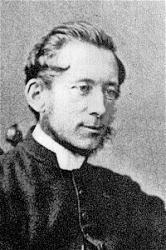
Horatius Bonar

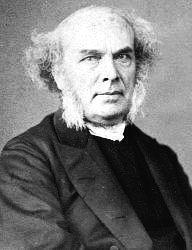
1808 - 1889 Person Name: H. Bonar (1808-1889) Topics: Epiphany 5, Revelation The Wisdom of God Author of "Your way, not mine, O Lord" in Hymns for Today's Church (2nd ed.) Horatius Bonar was born at Edinburgh, in 1808. His education was obtained at the High School, and the University of his native city. He was ordained to the ministry, in 1837, and since then has been pastor at Kelso. In 1843, he joined the Free Church of Scotland. His reputation as a religious writer was first gained on the publication of the "Kelso Tracts," of which he was the author. He has also written many other prose works, some of which have had a very large circulation. Nor is he less favorably known as a religious poet and hymn-writer. The three series of "Hymns of Faith and Hope," have passed through several editions. --Annotations of the Hymnal, Charles Hutchins, M.A. 1872 ================================ Bonar, Horatius, D.D. Dr. Bonar's family has had representatives among the clergy of the Church of Scotland during two centuries and more. His father, James Bonar, second Solicitor of Excise in Edinburgh, was a man of intellectual power, varied learning, and deop piety. Horatius Bonar was born in Edinburgh, Dec. 19th, 1808; and educated at the High School and the University of Edinburgh. After completing his studies, he was "licensed" to preach, and became assistant to the Rev. John Lewis, minister of St. James's, Leith. He was ordained minister of the North Parish, Kelso, on the 30th November, 1837, but left the Established Church at the "Disruption," in May, 1848, remaining in Kelso as a minister of the Free Church of Scotland. The University of Aberdeen conferred on him the doctorate of divinity in 1853. In 1866 he was translated to the Chalmers Memorial Church, the Grange, Edinburgh; and in 1883 he was chosen Moderator of the General Assembly of of the Free Church of Scotland. Dr. Bonar's hymns and poems were, he tells us, composed amid a great variety of circumstances; in many cases he cannot himself recall these circumstances; they also appeared in several publications, but nearly all have boen published or republished in the following:— (i) Songs for the Wilderness, 1843-4. (2) The Bible Hymn Book, 1845. (3) Hymns, Original and Selected, 1846. (4) Hymns of Faith and Hope, First Series, 1857; Second Series, 1861; Third Series, 1866. (5) The Song of the New Creation, 1872. (6) My Old Letters, a long poem, 1877. (7) Hymns of the Nativity, 1879. (8) Communion Hymns, 1881. In addition to numerous prose works, he has also edited The New Jerusalem; a Hymn of the Olden Time, 1852, &c. Dr. Bonar's poems—-including many beautiful lyrics, several psalm versions, and translations from the Greek and Latin, a large number of hymns, and a long meditative poem—-are very numerous, too numerous, perhaps, for their permanent fame as a whole. Dr. Bonar's scholarship is thorough and extensive; and his poems display the grace of style and wealth of allusion which are the fruit of ripe culture. Affected very slightly by current literary moods, still less by the influence of other religious poetry, they reveal extreme susceptibility to the emotional power which the phases of natural and of spiritual life exercise; the phases of natural life being recognised chiefly as conveying and fashioning spiritual life, used chiefly for depicting spiritual life, and handled for this purpose with greater delicacy of touch than in the Olney Hymns, and with less conscious purpose than in the Christian Year. As a result of this susceptibility, and from habitual contemplation of the Second Advent as the era of this world's true bliss, his hymns and poems are distinguished by a tone of pensive reflection, which some might call pessimism. But they are more than the record of emotion; another element is supplied by his intellectual and personal grasp of Divine truth, these truths particularly:—The gift of a Substitute, our Blessed Saviour; Divine grace, righteous, yet free and universal in offer; the duty of immediate reliance upon the privilege of immediate assurance through that grace; communion with God, especially in the Lord's Supper, respecting which he insists on the privilege of cherishing the highest conceptions which Scripture warrants; and finally, the Second Advent of our Lord: by his vigorous celebration of these and other truths as the source and strength of spiritual life, his hymns are protected from the blight of unhealthy, sentimental introspection. To sum up: Dr. Bonar's hymns satisfy the fastidious by their instinctive good taste; they mirror the life of Christ in the soul, partially, perhaps, but with vivid accuracy; they win the heart by their tone of tender sympathy; they sing the truth of God in ringing notes; and although, when taken as a whole, they are not perfect ; although, in reading them, we meet with feeble stanzas, halting rhythm, defective rhyme, meaningless Iteration; yet a singularly large number have been stamped with approval, both in literary circles and by the Church. In Great Britain and America nearly 100 of Dr. Bonar's hymns are in common use. They are found in almost all modern hymnals from four in Hymns Ancient & Modern to more than twenty in the American Songs for the Sanctuary, N. Y., 1865-72. The most widely known are, "A few more years shall roll;" "Come, Lord, and tarry not;" "Here, O my Lord, I see Thee face to face;" "I heard the Voice of Jesus say;" "The Church has waited long;" and "Thy way, not mine, O Lord." In addition to these and others which are annotated under their respective first lines, the following are also in common use:— From Songs for the Wilderness, No. 1, 1843. 1. For Thee we long and pray. Sunday Morning. 2. Holy Father, hear my cry. A Child's Prayer. 3. I thought upon my sins and I was sad. Christ our Peace. 4. Peace to the world, our Lord is come. A Millennial Song. 5. Spirit of everlasting grace. The Vision of Dry Bones. ii. From Songs for the Wilderness, No. 2,1844. 6. Ho, ye thirsty, parched and fainting. Invitation. 7. 0 'tis not what we fancied it. The world renounced. 8. Sing them, my children, sing them still. Children exhorted to Praise. 9. Time's sun is fast setting. Advent. 10. Weep, pilgrim, weep, yet 'tis not for the sorrow. Faith. 11. Yes, for me, for me He careth. Christ the Elder Brother . iii. From The Bible Hymn Book, 1845. 12. Jesus, my sorrow lies too deep. Jesus, the Great High Priest. 13. There is a Morning Star, my soul. The Morning Star. 14. This is not my place of resting. Pressing towards heaven. iv. From Hymns, Original and Selected, 1845. 15. Let there be light, Jehovah said. Creation. v. From Hymns of Faith and Hope, 1st series, 1857. 16. Be brave, my brother. The Fight of Faith. 17. Blessed be God, our God. Good Friday. 18. Everlasting praises. Doxology. 19. Go up, go up, my heart. Heavenly aspirations desired. 20. I close my heavy eye. Evening. Sometimes given as "We close our heavy eyes." 21. I see the crowd in Pilate's hall. Good Friday. 22. Jesus, while this rongh desert soil. Strength by the Way. 23. Jesus, Whom angel-hosts adore. The Word made Flesh. From "The Son of God, in mighty love." 24. Make haste, 0 man, to live. Exhortation to lay hold of Life. 25. No seas again shall sever. Heaven. 26. Oppressed with noonday's scorching heat. Shadow of the Cross. 27. Rest for the toiling hand. Burial. From "Lie down, frail body, here." 28. Shall this life of mine be wasted? Exhortation to Duty. 29. These are the crowns that we shall wear. Heaven. 30. Thy works, not mine, O Christ [Lord]. The Sin-bearer. 31. Where the faded flower shall freshen. Heaven. vi. From Hymns of Faith and Hope. 2nd series, 1861. 32. Be still, my soul, Jehovah loveth Thee. Rest in the Love of God. 33. Christ has done the mighty work. Good Friday. 34. Come, mighty Spirit, penetrate. Whitsuntide. 35. Deep down beneath the unresting surge. Burial at Sea. 36. Fear not the foe, thou flock of God [thou little flock]. Battle-Song of the Church. 37. For lack of love I languish. Lent. 38. From this bleak hill of storms. Eternal Rest desired. 39. He liveth long who liveth well. The True Life. 40. Here shall death's triumph end: the rock-barred door. Easter. From "The tomb is empty: wouldst thou have it full." 41. Jesus, Sun and Shield art Thou. Jesus the First and Last. 42. Jesus, the Christ of God. Praise to Christ. 43. Light of the world, for ever, ever shining. Christ the Light of the World. From "Why walk in darkness? Has the dear light vanished?" 44. Make use of me, my God. Duty desired. 45. Not what I am, 0 Lord, but what Thou art. The Love of God. 46. 0 Light of Light, shine in. Cry of the Weary. 47. 0 love of God, how strong and true. Love of God. 48. 0 love that casts out fear. Love of God. 49. 0 strong to save and bless. Lent. 50. 0 this soul, how dark and blind. Lent. 51. Safe across the waters. Thanksgiving at end of a journey. 52. Silent, like men in solemn haste. Pressing onwards. 53. Speak, lips of mine. Exhortation to Praise. 54. The Bridegroom comes. Advent. vii. From Hymns of Faith and Hope. 3rd series, 1866. 55. Bear Thou my burden, Thou Who bar'st my sin. Lent or Passiontide. 56. Done is the work that saves. Easter. 57. Father, our children keep. Prayer on behalf of Children. 58. Fill Thou my life, 0 Lord my God. Life's Praise. 59. Finish Thy work, the time is short. Earnest labour to the end. 60. From the Cross the blood is falling. Good Friday. 61. He called them, and they left. Obedience. 62. Help me, my [0] God to speak. Truth desired. 63. Holy Father, Mighty God. Holy Trinity. 64. How are my troubles multiplied. Ps. iii. 65. How sweetly doth He show His face Flower Service. 66. Light hath arisen, we walk in its brightness. Sustaining power of Faith. 67. Lo, God, our God has come. Christmas. 68. Lord, give me light to do Thy work. Divine guidance desired. 69. No, not despairingly. Lent. 70. Not to ourselves again. Life in Christ, or, Living unto God. 71. Now in parting, Father, bless us. Post Communion. 72. Sounds the trumpet from afar. Battle-Song of the Church. 73. Thee in the loving bloom of morn. God in all. 74. Through good report and evil, Lord. Faithfulness. 75. To Jehovah, God of might. Praise to the Father. 76. To the name of God on high. Doxology. 77. Upward, where the stars are burning. Heavenward Aspirations. 78. We take the peace which He hath won. The Gift of Peace. 79. When the weary, seeking rest. Intercession for all Conditions of Men. viii. From The Song of the New Creation,1872. 80. For the Bread and for the Wine. Holy Communion. 81. Light of life so softly shining. Light of Life. 82. Yet there is room. The Lamb's bright hall of song. Home Missions. ix. From Hymns of the Nativity, 1879. 83. Great Ruler of the land and sea. Sailors' Liturgy. From Communion Hymns, 1881. 84. Beloved, let us love. Brotherly Love. In several instances these hymns are given in an abbreviated form, and sometimes alterations are also introduced. In this latter respect however Dr. Bonar has suffered less than most modern hymn-writers. [Rev. James Mearns, M.A.] -- John Julian, Dictionary of Hymnology (1907) ==================== Bonar, Horatius, p. 161, i. He died at Edinburgh, July 31, 1889. In 1890 his son published a posthumous volume of his poetical pieces as Until the Day Break and other Hymns and Poems left behind. The following additional hymns are in common use:— 1. Almighty Comforter and Friend. (1866.) Whitsuntide. 2. Father, make use of me. An altered form of No. 44, p. 162, ii. 3. I ask a perfect creed. (1861.) Creed not Opinions. From this is also taken "O True One, give me truth." 4. Long, long deferred, now come at last. Marriage of the Lamb. Part of "Ascend, Beloved, to the joy." (1861.) 5. Nay 'tis not what we fancied it. (1857.) Vanity of the World. 6. No blood, no altar now. (1861.) The Finished Sacrifice. 7. No shadows yonder. (1857.) Heaven Anticipated. 8. Not with the light and vain. (1857.) Godly Companionship. 9. O Love invisible, yet infinite. (1866.) Divine Love. 10. On the great love of God I lean. (1866.) Love of God our Resting-place. 11. On Thee, O Jesus, strongly leaning. (1866.) Fellowship with Christ. 12. Peace upon peace, like wave on wave. (1866.) Divine Peace. 13. Sower divine, sow the good seed in me. (1857.) Heavenly Sowing. 14. Speaketh the sinner's sin within my heart. (1866.) Ps. xxxvi. 15. Still one in life and one in death. (1857.) Communion of Saints. Part of "'Tis thus they press the hand and part." 16. Surely, yon heaven, where angels see God's face. (1857.) Heaven Anticipated. 17. That city with the jewelled crest. (1857.) Heaven. Part of "These are the crowns that we shall wear." Another cento from the same is "Yon city, with the jewelled crest." 18. That clime is not like this dull clime of ours. (1843.) Heaven. 19. The Free One makes you free: He breaks the rod. (1857.) Freedom in Christ. From "Of old they sang the song of liberty." 20. There is a Morning-star, my soul. (1357.) Christ the Morning Star. 21. This is the day of toil. (1866.) Pressing Onwards. 22. Thy thoughts are here, my God. (1866.) Holy Scripture. 23. Till the day dawn. (1857.) Life's Journey. 24. To Him Who spread the skies. (1866.) Creation's Song. 25. Trustingly, trustingly. (1866.) Trust. 26. Unto th' eternal hills. (1866.) Ps. cxxi. The above dates are: 1843, Songs in the Wilderness; 1857, Hymns of Faith and Hope, 1st Series; 1861, same, 2nd Ser. (not 1864); 1866, same, 3rd Ser. (not 1867), The dates 1857, 1864,1867, were given by Dr. Bonar, but the British Museum copies are 1857, 1861, 1866 respectively. --John Julian, Dictionary of Hymnology, Appendix, Part II (1907) ============== Bonar, H., pp. 161, i.; 1554, i. The Rev. H. N. Bonar, Dr. Bonar's son, published in 1904, Hymns by Horatius Bonar, Selected and Arranged by his Son H. N. Bonar, With a brief History of some of the Hymns, &c. (London: H. Frowde). From this work we must correct the date of his Song of the New Creation to 1872. We have also enriched our pages by additional and expanded notes on several of Dr. Bonar's most widely used hymns. In his biographical notes, Mr. Bonar refers to Dr. Bonar's work as editor of the Quarterly Journal of Prophecy, begun in 1848, to which he contributed a hymn for each number. We find that the number of hymns contributed thereto is 101. With Dr. Bonar's poetical productions great difficulty has been encountered by the historian and annotator because of his absolute indifference to dates and details. It was enough for him that he had written, and that the Church of Christ approved and gladly used what, out of the fulness of his heart, he had given her. --Excerpt from John Julian, Dictionary of Hymnology, New Supplement (1907)

Frederick Whitfield

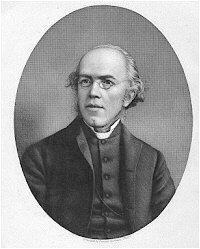
1829 - 1904 Topics: Year C Epiphany 5 Author of "There Is a Name I Love to Hear (O How I Love Jesus)" in The New Century Hymnal Whitfield, Frederick, B.A., son of H. Whitfield, was born at Threapwood, Shropshire, Jan. 7, 1829, and educated at Trinity College, Dublin, where he took his B.A. in 1859. On taking Holy Orders, he was successively curate of Otley, vicar of Kirby-Ravensworth, senior curate of Greenwich, and Vicar of Stanza John's, Bexley. In 1875 he was preferred to St. Mary's, Hastings. Mr. Whitfield's works in prose and verse number upwards of thirty, including Spiritual unfolding from the Word of Life; Voices from the Valley Testifying of Jesus; The Word Unveiled; Gleanings from Scripture, &c. Several of his hymns appeared in his Sacred Poems and Prose, 1861, 2nd Series, 1864; The Casket, and Quiet Hours in the Sanctuary. The hymn by which he is most widely known is I need Thee, precious Jesu.” Other hymns by him in common use include:~ 1. I have a Great High Priest above. Christ the High Priest. 2. I saw the Cross of Jesus. The Cross. 3. In spirit, Lord, we meet Thee now. Missions. This was written at the request of the Committee of the Irish Church Missions for one of their annual meetings in London. 4. Jesus, Thou Name of magic power. The Name of Jesus. Sometimes given as "Jesus, Thou Name of power divine." 5. The sprinkled blood is speaking. The Blood of Christ. 6. There is a day I long to see. Heaven Anticipated. 7. There is a Name I love to hear. The Name of Jesus. Published in 1855 in hymnsheets and leaflets in various languages. From this the hymn “Jesus, the Name I love so well" is taken. 8. There's naught on earth to rest upon. God Unchangeable. 9. When dead in sin and far from God. Redemption. All these hymns, with the exception of No. 3, are in his Sacred Poems and Prose, 1861, and several of them have been printed as leaflets, and set to special music. The Sacred Poems, &c, contains 26 hymns, some of which are of considerable merit. -- John Julian, Dictionary of Hymnology (1907)

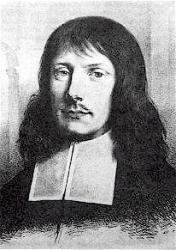
Joachim Neander

1650 - 1680 Topics: Epiphany 5 Year B Author of "Praise to the Lord, the Almighty (Peuples, criez de joie et bondissez d'allégresse)" in Voices United Neander, Joachim, was born at Bremen, in 1650, as the eldest child of the marriage of Johann Joachim Neander and Catharina Knipping, which took place on Sept. 18, 1649, the father being then master of the Third Form in the Paedagogium at Bremen. The family name was originally Neumann (Newman) or Niemann, but the grandfather of the poet had assumed the Greek form of the name, i.e. Neander. After passing through the Paedagogium he entered himself as a student at the Gymnasium illustre (Academic Gymnasium) of Bremen in Oct. 1666. German student life in the 17th century was anything but refined, and Neander seems to have been as riotous and as fond of questionable pleasures as most of his fellows. In July 1670, Theodore Under-Eyck came to Bremen as pastor of St. Martin's Church, with the reputation of a Pietist and holder of conventicles. Not long after Neander, with two like-minded comrades, went to service there one Sunday, in order to criticise and find matter of amusement. But the earnest words of Under-Eyck touched his heart; and this, with his subsequent conversations with Under-Eyck, proved the turning-point of his spiritual life. In the spring of 1671 he became tutor to five young men, mostly, if not all, sons of wealthy merchants at Frankfurt-am-Main, and accompanied them to the University of Heidelberg, where they seem to have remained till the autumn of 1673, and where Neander learned to know and love the beauties of Nature. The winter of 1673-74 he spent at Frankfurt with the friends of his pupils, and here he became acquainted with P. J. Spener (q.v.) and J. J. Schütz (q.v.) In the spring of 1674 he was appointed Rector of the Latin school at Düsseldorf (see further below). Finally, in 1679, he was invited to Bremen as unordained assistant to Under-Eyck at St. Martin's Church, and began his duties about the middle of July. The post was not inviting, and was regarded merely as a stepping stone to further preferment, the remuneration being a free house and 40 thalers a year, and the Sunday duty being a service with sermon at the extraordinary hour of 5 a.m. Had he lived, Under-Eyck would doubtless have done his best to get him appointed to St. Stephen's Church, the pastorate of which became vacant in Sept., 1680. But meantime Neander himself fell into a decline, and died at Bremen May 31, 1680 (Joachim Neander, sein Leben und seine Lieder. With a Portrait. By J. F. Iken, Bremen, 1880; Allgemeine Deutsche Biographie, xxiii. 327, &c.) Neander was the first important hymn-writer of the German Reformed Church since the times of Blaurer and Zwick. His hymns appear to have been written mostly at Düsseldorf, after his lips had been sealed to any but official work. The true history of his unfortunate conflict has now been established from the original documents, and may be summarized thus. The school at Düsseldorf was entirely under the control of the minister and elders of the Reformed Church there. The minister from about July, 1673, to about May, 1677, was Sylvester Lürsen (a native of Bremen, and only a few years older than Neander), a man of ability and earnestness, but jealous, and, in later times at least, quarrelsome. With him Neander at first worked harmoniously, frequently preaching in the church, assisting in the visitation of the sick, &c. But he soon introduced practices which inevitably brought on a conflict. He began to hold prayer meetings of his own, without informing or consulting minister or elders; he began to absent himself from Holy Communion, on the ground that he could not conscientiously communicate along with the unconverted, and also persuaded others to follow this example; and became less regular in his attendance at the ordinary services of the Church. Besides these causes of offence he drew out a new timetable for the school, made alterations on the school buildings, held examinations and appointed holidays without consulting any one. The result of all this was a Visitation of the school on Nov. 29, 1676, and then his suspension from school and pulpit on Feb. 3, 1677. On Feb. 17 he signed a full and definite declaration by which "without mental reservations" he bound himself not to repeat any of the acts complained of; and thereupon was permitted to resume his duties as rector but not as assistant minister. The suspension thus lasted only 14 days, and his salary was never actually stopped. The statements that he was banished from Düsseldorf, and that he lived for months in a cave in the Neanderthal near Mettmann are therefore without foundation. Still his having had to sign such a document was a humiliation which he must have felt keenly, and when, after Lürsen's departure, the second master of the Latin school was appointed permanent assistant pastor, this feeling would be renewed. Neander thus thrown back on himself, found consolation in communion with God and Nature, and in the composition of his hymns. Many were without doubt inspired by the scenery of the Neanderthal (a lovely valley with high rocky sides, between which flows the little river Düssel); and the tradition is probable enough that some of them were composed in a cave there. A number were circulated among his friends at Düsseldorf in MS., but they were first collected and published after his removal to Bremen, and appeared as:— A und Ώ, Joachimi Neandri Glaub-und Liebesübung: — auffgemuntert durch ein fällige Bundes Lieder und Danck-Psalmen, Bremen, Hermann Brauer, 1680; 2nd ed. Bremen, 1683 ; 3rd ed. Bremen, 1687; 4th ed. Frankfurt, 1689. These editions contain 57 hymns. In the 5th ed., Frankfurt and Leipzig, 1691, edited by G. C. Strattner, eight hymns were added as being also by Neander. [The whole of these eds. are in the Royal Library, Berlin. The so-called 3rd. ed. at Wesel, 1686, also found in Berlin, was evidently pirated.] Other editions rapidly followed till we find the complete set (i.e. 57 or 58) formally incorporated as part of a hymnbook, e.g. in the Marburg Reformed Gesang-Buch, 1722, where the first part consists of Lobwasser's Psalter, the second of Neander's Bundeslieder, and the third of other hymns. Neander's Bundeslieder also form a division of the Lemgo Reformed Gesang-Buch, 1722; and of a favourite book used in the meetings conducted by G. Tersteegen, which in the 5th ed., Solingen, 1760, has the title Gott-geheiligtes Harfen-Spiel der Kinder Zion; bestehend in Joachimi Neandri sämtlichen Bundes-Liedern, &c. In this way, especially in the district near Düsseldorf and on the Ruhr, Neander's name was honoured and beloved long after it had passed out of memory at Bremen. Many of Neander's hymns were speedily received into the Lutheran hymnbooks, and are still in universal use. The finest are the jubilant hymns of Praise and Thanksgiving, such as his "Lobe den Herren”, and those setting forth the Majesty of God in His works of beauty and wonder in Nature, such as his "Himmel, Erde", and "Unbegreiflich Gut"; while some of his hymns of Penitence, such as his "Sieh hier bin ich, Ehrenkönig" (q.v.), are also very beautiful. Many are of a decidedly subjective cast, but for this the circumstances of their origin, and the fact that the author did not expect them to be used in public worship, will sufficiently account. Here and there there are doubtless harshnesses, and occasionally imagery which is rather jarring; and naturally enough the characteristic expressions and points of view of German 17th cent. Pietism and of the "Covenant Theology" are easily enough detected. But the glow and sweetness of his better hymns, their firm faith, originality, Scripturalness, variety and mastery of rhythmical forms, and genuine lyric character fully entitled them to the high place they hold. Of the melodies in the original edition of 1680 there are 19 by Neander himself, the best known being those to Nos. viii. and xi. below. The hymns by Neander which have passed into English, and have not already been referred to, are:— Hymns in English common use: i. Meine Hoffnung stehet feste. Thanksgiving. Founded on 1 Tim. vi. 17. 1680 as above, p. 115, in 5 stanzas of 7 lines, entitled "Grace after meat." In the Unverfälschter Liedersegen, 1851, No. 712. Translated as:— All my hope is grounded surely. A full and good translation by Miss Winkworth, as No. 8 in her Chorale Book for England, 1863. Another translation is: "All my Hope is fix'd and grounded." By J. C. Jacobi, 1720, p. 17, repeated in his ed., 1732, p. 64, altered and beginning, "All my Hope is firmly grounded." ii. Unbegreiflich Gut, wahrer Gott alleine. Summer. According to tradition this was written in the summer of 1677, in a cave in the Neanderthal near Düsseldorf, while Neander was in enforced absence from his school duties (Koch, vi. 20). It is founded on Ps. civ. 24. 1680, p. 165, in 12 stanzas of 6 lines, and entitled, "The Joys of Summer and Autumn in Field and Forest." The following note shows that the "Feeling for Nature" is not entirely modern. “It is also a travelling hymn in summer or autumn for those who, on their way to Frankfurt on the Main, go up and down the river Rhine, where between Cologne and Mainz, mountains, cliffs, brooks and rocks are to be beheld with particular wonder; also in the district of Berg in the rocky region [the ‘Gestein' now called the Neanderthal], not far from Düsseldorf." The hymn is in Knapp's Evangelischer Lieder-Schatz 1850, No. 2163 (1865, No. 2231), omitting st. x. Translated as:-— 0 Thou true God alone. A very good translation, omitting st. x., by Miss Winkworth, in her Christian Singers, 1869, p. 286. Her translation of st. i., iii.-v. altered in metre, and beginning "Thou true God alone," are No. 53 in M. W. Stryker's Christian Chorals, 1885. Hymns not in English common use:—— iii. Auf, auf, mein Geist, erhebe dich zum Himmel. Holy Communion. Founded on Ps. xxiii. 6. 1860, as above, p. 27, in 5 stanzas, entitled, "The soul strengthened and refreshed. After the reception of the Holy Communion." In Porst's Gesang-Buch, ed. 1855, No. 218. In the Moravian London Gesang-Buch, 1753, No. 697, it begins, "Den Himmels-Vorschmack hab' ich auf der Erde," and in the Brüder Gesang-Buch, 1778, No. 1178, it was further recast (by C. Gregor?) and altered to "hab'ich schon hinieden." Translated as "Heav'n's foretaste I may here already have." By F W. Foster & J. Miller, as No. 596, in the Moravian Hymn Book, 1789. In the 1801 ed. (1849, No. 1003) it begins, “Since Jesus dy'd, my guilty soul to save." iv. Der Tag ist hin, mein Jesu, bei mir bleibe. Evening. Founded on St. Luke xxiv. 29. 1680, p. 15, in 6 stanzas entitled, "The Christian returning thanks at eventide." In the Unverfälschter Liedersegen, 1851, No. 512. The translations are: (1) "The Day is gone, come Jesu my Protector." In the Supplement to German Psalmody, ed. 1765, p. 72. (2) "The day is past, Thou Saviour dear, still dwell my breast within." By H. J. Buckoll, 1842, p. 82. (3) "The day is gone, abide with me tonight." By E. Massie, 1867, p. 192. (4) "The day is gone, abide with me, 0 Jesus." By R. Massie, in the Day of Rest, 1877. v. Grosser Prophete, mein Herze begehret. Love to Christ. Founded on 1 Cor. xvi. 22. 1680, p. 191, in 4 stanzas. Translated as “Heavenly Prophet, my Heart is desiring." By J. C. Jacobi, 1720, p. 40. vi. Jehovah ist mein Licht und Gnadensonne. God's Perfections. Founded on 1 John i. 7. 1680, p. 19 in 4 stanzas, entitled, "Walking in the Light." Translated as, "Jehovah is my light, salvation showing." By Dr. H. Mills, 1845 (1856, p. 6). vii. 0 allerhöchster Menschenhüter. Morning. A hymn of praise to our Almighty Preserver. 1680, p. 11, in 6 stanzas, founded on Ps. lix. 16; and entitled, "The Christian singing at Morning." Translated as, "O Thou Most Highest! Guardian of mankind." By Miss Winkworth, 1858, p. 72. viii. Unser Herrscher, unser König. Thanksgiving. Founded on Acts viii. 2. 1680, p. 147, in 6 stanzas, entitled, "The glorious Jehovah." In the Unverfälschter Liedersegen 1851, No. 344. The well-known melody (in the Society for Promoting Christian Knowledge Church Hymns called Munich) is also by Neander, and appeared along with the hymn. Translated as, "Sovereign Ruler, King victorious," in the British Herald, Dec, 1865, p. 185, and Reid's Praise Book, 1872. ix. Wie fleucht dahin der Menschenzeit. For the Dying. A powerful hymn on the vanity of the earthly, founded on Ps. xc. 12. 1680, p. 174, in 7 stanzas, entitled, "He that counts his days." In the Unverfälschter Liedersegen, 1851, No. 845. The translations are: (1) "This life is like a flying dream" (beginning with st. ii. "Das Leben ist gleich wie ein Traum"). By Mrs. Findlater, in Hymns from the Land of Luther, 1858, p. 24 (1884, p. 146). (2) "Though hastening onward to the grave." By E. Massie, 1867, p. 36. x. Wo soil ich hin? wer helfet mir? Lent. Founded on Romans vii. 24. 1680, p. 51, in 5 st. entitled “The distressed one longing for Redemption." In the Unverfälschter Liedersegen, 1851, No. 393. The translations are: (1) "For help, O whither shall I flee." By Dr. H. Mills, 1845 (1856, p. 146). (2) "How shall I get there? who will aid?" By Miss Warner, 1858, p. 52. xi. Wunderbarer König. Thanksgiving. Founded on Ps. cl. 6. 1680, p. 159, in 4 stanzas, entitled, "Inciting oneself to the Praise of God." In the Unverfälschter Liedersegen, 1851, No. 787. The melody, a very fine one (called by Mr. Mercer Groningen), is also by Neander, and appeared along with the hymn. The translations are: (1) "Wonderful Creator." By J. C. Jacobi, 1722, p. 88. (2) "Wonderful and blessed." By J. D. Burns in his Memoir and Remains, 1869, p. 230. (3) "Wondrous King Almighty." By N. L. Frothingham, 1870, p. 266. [Rev. James Mearns, M.A.] --John Julian, Dictionary of Hymnology (1907)

Catherine Winkworth

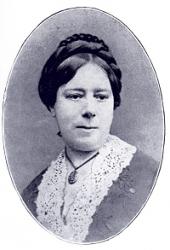
1827 - 1878 Topics: Epiphany 5 Year B Translator (into Englsih) of "Praise to the Lord, the Almighty (Peuples, criez de joie et bondissez d'allégresse)" in Voices United Catherine Winkworth (b. Holborn, London, England, 1827; d. Monnetier, Savoy, France, 1878) is well known for her English translations of German hymns; her translations were polished and yet remained close to the original. Educated initially by her mother, she lived with relatives in Dresden, Germany, in 1845, where she acquired her knowledge of German and interest in German hymnody. After residing near Manchester until 1862, she moved to Clifton, near Bristol. A pioneer in promoting women's rights, Winkworth put much of her energy into the encouragement of higher education for women. She translated a large number of German hymn texts from hymnals owned by a friend, Baron Bunsen. Though often altered, these translations continue to be used in many modern hymnals. Her work was published in two series of Lyra Germanica (1855, 1858) and in The Chorale Book for England (1863), which included the appropriate German tune with each text as provided by Sterndale Bennett and Otto Goldschmidt. Winkworth also translated biographies of German Christians who promoted ministries to the poor and sick and compiled a handbook of biographies of German hymn authors, Christian Singers of Germany (1869). Bert Polman ======================== Winkworth, Catherine, daughter of Henry Winkworth, of Alderley Edge, Cheshire, was born in London, Sep. 13, 1829. Most of her early life was spent in the neighbourhood of Manchester. Subsequently she removed with the family to Clifton, near Bristol. She died suddenly of heart disease, at Monnetier, in Savoy, in July, 1878. Miss Winkworth published:— Translations from the German of the Life of Pastor Fliedner, the Founder of the Sisterhood of Protestant Deaconesses at Kaiserworth, 1861; and of the Life of Amelia Sieveking, 1863. Her sympathy with practical efforts for the benefit of women, and with a pure devotional life, as seen in these translations, received from her the most practical illustration possible in the deep and active interest which she took in educational work in connection with the Clifton Association for the Higher Education of Women, and kindred societies there and elsewhere. Our interest, however, is mainly centred in her hymnological work as embodied in her:— (1) Lyra Germanica, 1st Ser., 1855. (2) Lyra Germanica, 2nd Ser., 1858. (3) The Chorale Book for England (containing translations from the German, together with music), 1863; and (4) her charming biographical work, the Christian Singers of Germany, 1869. In a sympathetic article on Miss Winkworth in the Inquirer of July 20, 1878, Dr. Martineau says:— "The translations contained in these volumes are invariably faithful, and for the most part both terse and delicate; and an admirable art is applied to the management of complex and difficult versification. They have not quite the fire of John Wesley's versions of Moravian hymns, or the wonderful fusion and reproduction of thought which may be found in Coleridge. But if less flowing they are more conscientious than either, and attain a result as poetical as severe exactitude admits, being only a little short of ‘native music'" Dr. Percival, then Principal of Clifton College, also wrote concerning her (in the Bristol Times and Mirror), in July, 1878:— "She was a person of remarkable intellectual and social gifts, and very unusual attainments; but what specially distinguished her was her combination of rare ability and great knowledge with a certain tender and sympathetic refinement which constitutes the special charm of the true womanly character." Dr. Martineau (as above) says her religious life afforded "a happy example of the piety which the Church of England discipline may implant.....The fast hold she retained of her discipleship of Christ was no example of ‘feminine simplicity,' carrying on the childish mind into maturer years, but the clear allegiance of a firm mind, familiar with the pretensions of non-Christian schools, well able to test them, and undiverted by them from her first love." Miss Winkworth, although not the earliest of modern translators from the German into English, is certainly the foremost in rank and popularity. Her translations are the most widely used of any from that language, and have had more to do with the modern revival of the English use of German hymns than the versions of any other writer. -- John Julian, Dictionary of Hymnology (1907) ============================ See also in: Hymn Writers of the Church

Henry J. Gauntlett

1805 - 1876 Person Name: Henry John Gauntlett Topics: Epiphany 5 Year A Composer of "IRBY" in Voices United Henry J. Gauntlett (b. Wellington, Shropshire, July 9, 1805; d. London, England, February 21, 1876) When he was nine years old, Henry John Gauntlett (b. Wellington, Shropshire, England, 1805; d. Kensington, London, England, 1876) became organist at his father's church in Olney, Buckinghamshire. At his father's insistence he studied law, practicing it until 1844, after which he chose to devote the rest of his life to music. He was an organist in various churches in the London area and became an important figure in the history of British pipe organs. A designer of organs for William Hill's company, Gauntlett extend­ed the organ pedal range and in 1851 took out a patent on electric action for organs. Felix Mendelssohn chose him to play the organ part at the first performance of Elijah in Birmingham, England, in 1846. Gauntlett is said to have composed some ten thousand hymn tunes, most of which have been forgotten. Also a supporter of the use of plainchant in the church, Gauntlett published the Gregorian Hymnal of Matins and Evensong (1844). Bert Polman

John Bacchus Dykes

1823 - 1876 Topics: Epiphany 5 Year C Composer of "NICÆA" in Voices United As a young child John Bacchus Dykes (b. Kingston-upon-Hull' England, 1823; d. Ticehurst, Sussex, England, 1876) took violin and piano lessons. At the age of ten he became the organist of St. John's in Hull, where his grandfather was vicar. After receiving a classics degree from St. Catherine College, Cambridge, England, he was ordained in the Church of England in 1847. In 1849 he became the precentor and choir director at Durham Cathedral, where he introduced reforms in the choir by insisting on consistent attendance, increasing rehearsals, and initiating music festivals. He served the parish of St. Oswald in Durham from 1862 until the year of his death. To the chagrin of his bishop, Dykes favored the high church practices associated with the Oxford Movement (choir robes, incense, and the like). A number of his three hundred hymn tunes are still respected as durable examples of Victorian hymnody. Most of his tunes were first published in Chope's Congregational Hymn and Tune Book (1857) and in early editions of the famous British hymnal, Hymns Ancient and Modern. Bert Polman

Anonymous

Person Name: Unknown Topics: Epiphany 5 Year C Composer of "MOZART" in Voices United In some hymnals, the editors noted that a hymn's author is unknown to them, and so this artificial "person" entry is used to reflect that fact. Obviously, the hymns attributed to "Author Unknown" "Unknown" or "Anonymous" could have been written by many people over a span of many centuries.

Johann Jakob Schütz

1640 - 1690 Person Name: Johann Jacob Schütz Topics: Epiphany 5 Year B; Epiphany 5 Year B Author of "Sing Praise to God, Who Reigns Above" in Voices United Schütz, Johann Jakob, was born Sept. 7, 1640, at Frankfurt am Main. After studying at Tübingen (where he became a licentiate in civil and canon law), he began to practise as an advocate in Frankfurt, and in later years with the title of Rath. He seems to have been a man of considerable legal learning as well as of deep piety. He was an intimate friend of P. J. Spener; and it was, in great measure, at his suggestion, that Spener began his famous Collegia Pietatis. After Spener left Frankfurt, in 1686, Schütz came under the influence of J. W. Petersen; and carrying out Petersen's prin¬ciples to their logical conclusion, he became a Separatist, and ceased to attend the Lutheran services or to communicate. He died at Frankfurt, May 22, 1690 (Koch, iv. 220; Blätter fur Hymnologie, Feb. 1883). Schütz is known as an author by two tractates; one being his Christliche Lebensregeln, Frankfurt, 1677; the other, that which contains his hymns, Christliches Gedenckbüchlein, zu Beforderung eines anfangenden neuen Lebens, &c, Frankfurt am Main, 1675 [Library of the Predigerministerium at Frankfurt]. This work includes 5 hymns, in a separate section, which is headed, “Hierauf folgen etliche Gesänge." These hymns are:— i. Die Wollust dieser Welt. ii. Was inich auf dieser Welt betrübt. iii. So komm, geliebte Todes-Stund. iv. Scheuet ihr, ihr matten Glieder. v. Sei Lob und Ehr dem höchsten Gut. Of these No. v. is undoubtedly by Schütz, and the other four exhibit much the same style of thought as, and frequent parallels to, the prose portions of the work. None of these have been traced earlier than 1675; and until this has been done, it is pretty safe to ascribe them all to Schütz. Three of these hymns have passed into English, viz.:— i. Sei Lob und Ehr dem höchsten Gut. Praise and Thanksgiving. First published in 1675, as above, No. v. It is founded on Deut. xxxii. 3; entitled, "Hymn of Thanksgiving ;" and is in 9 stanzas of 6 lines, and the refrain, "Gebt unserm Gott die Ehre”. Koch, iv. 220, speaks of this hymn as "outweighing many hundred others; and a classical hymn, which, from its first appearance, attracted unusual attention." And Lauxmann, in Koch, viii. 334-339, relates how delighted J. J. Moser was, when, on entering church the first Sunday after his captivity at Hohentwiel, he heard this hymn, and how heartily he joined in it; how it comforted the dying G. C. Rieger, of Stuttgart, on Tuesday, in Easter Week, 1743, and many other incidents. Translations in common use:— 1. All Glory to the Sov'reign Good. This is a full and good translation by J. OJacobi, in his Psalter Germanica, 2nd ed., 1732, p. 151, where it is entitled, "The Malabarian Hymn." 2. All glory be to God most high. A good translation by A. T. Russell, of st. i., iv., viii., for the Dalston Hospital Hymn Book, 1848, No. 59. 3. All praise and thanks to God most high. This is a good tr., omitting st. ix., by Miss Winkworth, in her Lyra Germanica, 2nd Ser., 1858, p. 146. 4. Sing praise to God Who reigns above. A good tr., omitting st. ix., contributed by Miss Cox to Lyra Eucharistica, 1864, p. 33, and included in her Hymns from the German, 1864, p. 235. 5. To God a joyful anthem raise. A good tr. of st. i., ii., iv., v., viii., by J. M. Sloan, as No. 314, in J. H. Wilson's Service of Praise, 1865. The following are also translated into English:— ii. So komm, geliebte Todes-Stund. For the Dying. First published in 1675, as above, No. iii., in 11 st. of 8 1., entitled, "The thoughts on Death of a Royal Princess, after the usual interpretation of Job xix. 25." This Princess was Sophie Elisabethe. daughter of Duke Philipp Ludwig, of Holstein-Sonderburg (b. at Homburg vor der Hohe, May 4, 1653; married, in 1676. to Duke Moritz, of Sachse-Zeitz; d. at Schleusingen, Aug. 19, 1684), who had been a regular attender at Spener's conferences at Frankfurt, and thus associated with Schütz. This hymn has often been ascribed to her; and she had already chosen Job xix. 25, as the text of her funeral sermon. But it is more probable that both hymns were written by Schütz for her use, or in her honour. The trs. are :—(1) "Come, happy hour of death, and close." By Dr. G. Walker, 1860, p. 56. (2) "O come, delightful hour of death." By Dr. G. Walker, 1860, p. 106. iii. Was mich auf dieser Welt betriibt. Earthly Vanities. This hymn, on Renunciation of the World, first appeared in 1675, as above, No. ii., in 4 st. of 10 1., and entitled "From the World to God." It has sometimes been erroneously ascribed to Michael Franck. It is tr. as "The woes that weigh my body down." By Miss Manington, 1863, p. 32. [Rev. James Mearns, M.A.] --Excerpts from John Julian, Dictionary of Hymnology (1907)

John Ernest Bode

1816 - 1874 Topics: Epiphany 5 Year A Author of "O Jesus, I Have Promised" in Voices United John E. Bode (b. St. Pancras, England, 1816; d. Castle Camps, Cambridgeshire, England, 1874) A fine student at Christ Church, Oxford, England, and a prominent scholar who gave the famous Bampton Lectures ("for the exposition and defense of the Christian faith") at Oxford in 1855, was a rector in Westwell, Oxfordshire, and in Castle Camps. This gifted poet and hymn writer published Hymns for the Gospel of the Day, for Each Sunday and Festivals of Our Lord in 1860. Bert Polman ============== Bode, John Ernest, M.A., son of Mr. William Bode, late of the General Post Office, b. 1816, and educated at Eton, the Charter House, and at Christ Church, Oxford, graduating B.A. 1837, and M.A. in due course. Taking Holy Orders in 1841, he became Rector of Westwell, Oxfordshire, 1847; and then of Castle Camps, Cambridgeshire, 1860. He was also for a time Tutor of his College, and Classical Examiner. His Bampton Lectures were delivered in 1855. He d. at Castle Camps, Oct. 6, 1874. In addition to his Bampton Lectures, and Ballads from Herodotus, he published Hymns from the Gospel of the Day for each Sunday and Festivals of our Lord, 1860; and Short Occasional Poems, Lond., Longmans, 1858. In addition to his well-known hymn, “O Jesu, I have promised " (q. v.), the following from his Hys. from the Gospel are also in common use:— 1. God of heaven, enthroned in might. H. Trinity. 2. Spirit of Truth, indwelling Light. Whitsuntide. -John Julian, Dictionary of Hymnology (1907) ================= Bode, John E. , p. 151, ii. Additional pieces from his Hys.from the Gospel of the Day, &c, 1800, are in common use :— (1) "Sweetly the Sabbath bell" (Sunday); (2) "Thou Who hast called us by Thy word" (20th S. after Trinity). --John Julian, Dictionary of Hymnology, Appendix, Part II (1907)

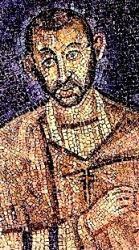
St. Ambrose

340 - 397 Person Name: Ambrose of Milan Topics: Epiphany 5 Year A Author of "O Splendour of God's Glory Bright" in Voices United Ambrose (b. Treves, Germany, 340; d. Milan, Italy, 397), one of the great Latin church fathers, is remembered best for his preaching, his struggle against the Arian heresy, and his introduction of metrical and antiphonal singing into the Western church. Ambrose was trained in legal studies and distinguished himself in a civic career, becoming a consul in Northern Italy. When the bishop of Milan, an Arian, died in 374, the people demanded that Ambrose, who was not ordained or even baptized, become the bishop. He was promptly baptized and ordained, and he remained bishop of Milan until his death. Ambrose successfully resisted the Arian heresy and the attempts of the Roman emperors to dominate the church. His most famous convert and disciple was Augustine. Of the many hymns sometimes attributed to Ambrose, only a handful are thought to be authentic. Bert Polman ===================== Ambrosius (St. Ambrose), second son and third child of Ambrosius, Prefect of the Gauls, was born at Lyons, Aries, or Treves--probably the last--in 340 A.D. On the death of his father in 353 his mother removed to Rome with her three children. Ambrose went through the usual course of education, attaining considerable proficiency in Greek; and then entered the profession which his elder brother Satyrus had chosen, that of the law. In this he so distinguished himself that, after practising in the court of Probus, the Praetorian Prefect of Italy, he was, in 374, appointed Consular of Liguria and Aemilia. This office necessitated his residence in Milan. Not many months after, Auxentius, bishop of Milan, who had joined the Arian party, died; and much was felt to depend upon the person appointed as his successor. The church in which the election was held was so filled with excited people that the Consular found it necessary to take steps fur preserving the peace, and himself exhorted them to peace and order: when a voice suddenly exclaimed, "Ambrose is Bishop," and the cry was taken up on all sides. He was compelled to accept the post, though still only a catechumen; was forthwith baptized, and in a week more consecrated Bishop, Dec. 7, 374. The death of the Emperor Valentinian I., in 375, brought him into collision with Justina, Valentinian's second wife, an adherent of the Arian party: Ambrose was supported by Gratian, the elder son of Valentinian, and by Theodosius, whom Gratian in 379 associated with himself in the empire. Gratian was assassinated in 383 by a partisau of Maximus, and Ambrose was sent to treat with the usurper, a piece of diplomacy in which he was fairly successful. He found himself, however, left to carry on the contest with the Arians and the Empress almost alone. He and the faithful gallantly defended the churches which the heretics attempted to seize. Justina was foiled: and the advance of Maximus on Milan led to her flight, and eventually to her death in 388. It was in this year, or more probably the year before (387), that Ambrose received into the Church by baptism his great scholar Augustine, once a Manichaean heretic. Theodosius was now virtually head of the Roman empire, his colleague Valentinian II., Justina's son, being a youth of only 17. In the early part of 390 the news of a riot at Thessalonica, brought to him at Milan, caused him to give a hasty order for a general massacre at that city, and his command was but too faithfully obeyed. On his presenting himself a few days after at the door of the principal church in Milan, he was met by Ambrose, who refused him entrance till he should have done penance for his crime. It was not till Christmas, eight months after, that the Emperor declared his penitence, and was received into communion again by the Bishop. Valentinian was murdered by Arbogastes, a Frank general, in 392; and the murderer and his puppet emperor Eugenius were defeated by Theodosius in 394. But the fatigues of the campaign told on the Emperor, and he died the following year. Ambrose preached his funeral sermon, as he had done that of Valentinian. The loss of these two friends and supporters was a severe blow to Ambrose; two unquiet years passed, and then, worn with labours and anxieties, he himself rested from his labours on Easter Eve, 397. It was the 4th of April, and on that day the great Bishop of Milan is remembered by the Western Church, but Rome commemorates his consecration only, Dec. 7th. Great he was indeed, as a scholar, an organiser, a statesman; still greater as a theologian, the earnest and brilliant defender of the Catholic faith against the Arians of the West, just as Athanasius (whose name, one cannot but remark, is the same as his in meaning) was its champion against those of the East. We are now mainly concerned with him as musician and poet, "the father of Church song" as he is called by Grimm. He introduced from the East the practice of antiphonal chanting, and began the task, which St. Gregory completed, of systematizing the music of the Church. As a writer of sacred poetry he is remarkable for depth and severity. He does not warm with his subject, like Adam of St. Victor, or St. Bernard. "We feel," says Abp. Trench, "as though there were a certain coldness in his hymns, an aloofness of the author from his subject. "A large number of hymns has been attributed to his pen; Daniel gives no fewer than 92 called Ambrosian. Of these the great majority (including one on himself) cannot possibly be his; there is more or less doubt about the rest. The authorities on the subject are the Benedictine ed. of his works, the Psalterium, or Hymnary, of Cardinal Thomasius, and the Thesaurus Hymnologicus of Daniel. The Benedictine editors give 12 hymns as assignable to him, as follows:—1. Aeterna Christi munera. 2. Aeterne rerum Conditor. 3. Consors Paterni luminii. 4. Deus Creator omnium. 5. Fit porta Christi pervia, 6. Illuminans Altissimus. 7. Jam surgit hora tertia. 8. 0 Lux Beata Trinitas. 9. Orabo mente Dominum. 10. Somno refectis artubus. 11. Splendor Paternae gloriae. 12. Veni Redemptor gentium. Histories of these hymns, together with details of translations into English, are given in this work, and may be found under their respective first lines. The Bollandists and Daniel are inclined to attribute to St. Ambrose a hymn, Grates tibi Jesu novas, on the finding of the relics of SS. Gervasius and Protasius. These, we know, were discovered by him in 386, and it is by no means unlikely that the bishop should have commemorated in verse an event which he announces by letter to his sister Marcellina with so much satisfaction, not to say exultation.A beautiful tradition makes the Te Deum laudamus to have been composed under inspiration, and recited alternately, by SS. Ambrose and Augustine immediately after the baptism of the latter in 387. But the story rests upon a passage which there is every reason to consider spurious, in the Chronicon of Dacius, Bishop of Milan in 550. There is no hint of such an occurrence in the Confessions of St. Augustine, nor in Paulinue's life of St. Ambrose, nor in any authentic writing of St. Ambrose himself. The hymn is essentially a compilation, and there is much reason to believe, with Merati, that it originated in the 5th century, in the monastery of St. Honoratus at Lerins. [Te Deum.] -- John Julian, Dictionary of Hymnology (1907) Also known as: Ambrotio, Ambrosio de Milán Ambrosius Mediolanensis Ambrosius Saint, Bp. of Milan Ambrosius von Mailand Aurelio Ambrogio, Saint, Bishop of Milan Aurelius Ambrosius, Saint, Bishop of Milan Milan, d. 397

Pages


Export as CSV
It looks like you are using an ad-blocker. Ad revenue helps keep us running. Please consider white-listing Hymnary.org or getting Hymnary Pro to eliminate ads entirely and help support Hymnary.org.