You help make Hymnary.org possible. More than 10 million people from 200+ countries found hymns, liturgical resources and encouragement on Hymnary.org in 2025, including you. Every visit affirms the global impact of this ministry.

If Hymnary has been meaningful to you this year, would you take a moment today to help sustain it? A gift of any size—paired with a note of encouragement if you wish—directly supports the server costs, research work and curation that keep this resource freely available to the world.

Give securely online today, or mail a check to:
Hymnary.org
Calvin University
3201 Burton Street SE
Grand Rapids, MI 49546

Thank you for your partnership, and may the hope of Advent fill your heart.

Person Results

Topics:example+of+christ
In:people

Planning worship? Check out our sister site, ZeteoSearch.org, for 20+ additional resources related to your search.
Showing 51 - 60 of 214Results Per Page: 102050

Georgia Elma Harkness

1891 - 1974 Topics: The Christian Year Reign of Christ; Church Ecumenism; Compassion; Courage; Discipleship and Service; Empowerment; Gift(s); Guidance; Healing; Hope; Hunger; Jesus Christ Cross; Jesus Christ Example; Jesus Christ Guide and Leader; Jesus Christ Images of; Jesus Christ Kingship, Conqueror; Jesus Christ Life In; Jesus Christ Reign; Light; Manna, Bread of Life; Mercy; Ministry; Mission and Outreach; Opening Hymns; Peace (World); Providence; Service Music Offering; Sin; Social Concerns; Struggle and Conflict; Temptation; Trust; Unity; Walking with God/Jesus Christ; World; Advent 2 Year A; Epiphany 5 Year A; Epiphany 6 Year A; Ascension Year A; Proper 6 Year A; Proper 12 Year A; Proper 17 Year A; Proper 23 Year A; Proper 28 Year A; Epiphany 4 Year B; Easter 7 Year B; Proper 10 Year B; Proper 11 Year B; Proper 13 Year B; Proper 22 Year B; Proper 23 Year B; Advent 4 Year C; Epiphany 6 Year C; Lent 5 Year C; All Saints Year C; Proper 28 Year C; Ash Wednesday Year ABC Author of "Hope of the World" in Voices United

John Greenleaf Whittier

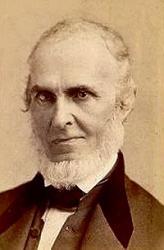
1807 - 1892 Person Name: John G. Whittier Topics: Example of Christ Author of "Dear Lord and Father of mankind" in The Hymnal Whittier, John Greenleaf, the American Quaker poet, was born at Haverhill, Massachusetts, Dec. 17, 1807. He began life as a farm-boy and shoemaker, and subsequently became a successful journalist, editor and poet. In 1828 he became editor of the American Manufacturer (Boston), in 1830 of the New England Review, and an 1836 (on becoming Secretary to the American Anti-Slavery Society) of the Pennsylvania Freeman. He was also for some time, beginning with 1847, the corresponding editor of the National Era. In 1840 he removed to Amesbury, Massachusetts, where most of his later works have been written. At the present time [1890] he lives alternately at Amesbury and Boston. His first poetical piece was printed in the Newburyport Free Press in 1824. Since then his publications have been numerous, including:— Voices of Freedom, 1833; Songs of Labour, and other Poems, 1850; Ballads and other Poems, London, 1844; The Panorama, and other Poems, 1856; In War Time, 1863; Occasional Poems, 1865; Poetical Works, 1869; Complete Poetical Works, 1876; The Bay of the Seven Islands, and other Poems, 1883, &c. From his numerous poems the following hymns have been compiled, and have come into common use, more especially amongst the American Unitarians:— 1. All as God wills, Who wisely heeds. Trust. This begins with stanza xi. of Whittier's poem, "My Psalm." in his workThe Panorama, and other Poems, 1856 (Complete Poetical Works, Boston, 1876, p. 179), and is given in Lyra Sacra Americana , 1868; Border's Congregational Hymns, 1884, &c. 2. All things are Thine: no gift have we. Opening of a Place of Worship. Written for the Opening of Plymouth Church, Minnesota, 1872 ( Complete Poetical Works , p. 281). In Horder's Congregational Hymns, 1884. 3. Another hand is beckoning us. Bereavement. From his poem " Gone," written in 1845 (Complete Poetical Works, p. 106). In Horder's Congregational Hymns, 1884. 4. Dear Lord and Father of mankind. Calmness in God desired. From his poem “The Brewing of Soma," beginning with stanza xii. (Complete Poetical Works p. 266). In Horder's Congregational Hymns, 1884. 5. God giveth quietness at last. Death and Burial. This begins with stanza xvii. of his poem, “The Singer," written in 1871 (Author's MS.), and included in the Complete Poetical Works, 1876, p. 265. In Martineau's Hymns, 1875. 6. Hast thou, 'midst life's empty noises. The Purpose of Life. Written in 1842. It is in Longfellow and Johnson's Unitarian Book of Hymns, Boston, 1846, and several other later American collections. Also in Lyra Sacra Americana, 1864. 7. I ask not now for gold to gild. Resignation. From his poem "The Wish of To-Day." Written in 1848 (Author's MS.). In Hedge and Huntingdon's Unitarian Hymns for the Church of Christ, Boston, 1853; the Laudes Domini, 1884, and other collections. 8. Immortal love, for ever full. The Love of Jesus. This poem, entitled “Our Master," appeared in Whittier's work, The Panorama, and other Poems, 1856, in 35 stanzas of 4 lines; in Schaff’s Christ in Song, 1869-70, p. 117; and in the Complete Poetical Works, 1876, p. 231, and others. From this poem the following centos have come into common use:— (1) Immortal love for ever full. In the 1890 edition of the Hymnal Companion and others. (2) 0 Lord and Master of us all. Begins with stanza xvi. (3) 0 Love! O Life! our faith and sight. Begins with stanza xxiv. In several American hymnals, including the Unitarian Hymn [and Tune Book ], Boston, 1868, and others. (4) Our Friend, our Brother, and our Lord. Begins with stanza xxxiv. In Horder's Congregational Hymns, 1884, &c. (5) We faintly hear, we dimly see. Begins with stanza xxvi. In Barrett's Congregational Church Hymnal, 1887. (6) We may not climb the heavenly steeps. Begins with stanza v. In Laudes Domini, 1884; the Primitive Methodist Hymnal, 1887, &c. The use of these centos shows that the hymnic element in the original poem is of a high and enduring order. 9. It may not be our lot to wield. Duty and its Reward. This begins with stanza iv. of his poem "Seedtime and Harvest." Written circa 1850 (Author's MS.). Given in his Complete Poetical Works, p. 114. The hymn is in Laudes Domini, 1884, and other American collections. 10. May freedom speed onward, wherever the blood. Freedom. In the 1848 Supplement to the Boston Book of Hymns, Boston, No. 582, Hymns of the Spirit, 1864, and other collections. In Whittier's Poetical Works, Boston, 1869, p. 68, it is given as, “Right onward, O speed it! Wherever the blood”. 11. Now is the seed-time; God alone. Self-Sacrifice. In the Boston Hymns of the Spirit, 1864, No. 683. 12. 0 backward-looking son of time. New and Old. This begins with stanza xix. of his poem "The Reformer," and is given in this form in the Boston Hymns for the Church of Christ, Boston, 1853, No. 835, and again in later collections. In full in the Complete Poetical Works, p. 78. 13. 0 beauty, old yet ever new. The Law of Love. This in the Boston Hymns of the Spirit, 1864, begins with stanza xxi. of his poem on “The Shadow and the Light,” given in full in the Complete Poetical Works , p. 173. 14. 0 fairest-born of love and light. American National Hymn. This is from his poem "Democracy," which is dated "Election Day, 1843," and is in his Ballads and other Poems, London, 1844, p. 214, and his Complete Poetical Works, p. 82. 15. 0, he whom Jesus loves has truly spoken. True Worship. This in the 1848 Supplement to the Boston Book of Hymns, 1848, No. 578, begins with stanza xi. of his poem on “Worship," given in full in his Complete Poetical Works, p. 96. The poem is dated by the Author, 1848 (Author's MS.). 16. 0 holy Father, just and true. Freedom. "Lines written for the Celebration of the third Anniversary of British Emancipation at the Broadway Tabernacle, N. Y., First of August, 1837." (Complete Poetical Works, p. 47.) It was included in the Unitarian Christian Hymns, Boston, 1844, and has been repeated in later collections. 17. 0 Maker of the Fruits and Flowers. Flower Services. This begins with stanza iv. of his "Lines for the Agricultural and Horticultural Exhibition at Amesbury and Salisbury, Sep. 28, 1858," as given in his Complete Poetical Works , p. 183. It is in the Boston Hymns of the Spirit, 1864, and as "O Painter of the fruits and flowers," in Horder's Congregational Hymns, 1884. 18. O not alone with outward sign. Divine Invitation. This begins with stanza ii. of his poem, "The Call of the Christian," given in his Ballads and other Poems, London, 1844, p. 185, and his Complete Poetical Works, p. 73. The hymn appeared in the Boston Book of Hymns, 1846, and again in later collections. 19. O pure Reformers, not in vain. Freedom. This begins with stanza xii. of his poem "To the Reformers of England," as given in his Complete Poetical Works, p. 77. The hymn was included in the Boston Book of Hymns, 1846, and has been repeated in later collections. 20. O sometimes gleams upon our sight. Old and New. This is taken from his poem "The Chapel of the Hermits," 1852 (in 94 stanzas of 4 lines), and begins with stanza xi. (Comp. Poetical Works, p. 115.) The cento was given in the Boston Hymns of the Spirit, 1864, and repeated in later collections. 21. O Thou, at Whose rebuke the grave. Mercy. This was given in the Boston Book of Hymns, 1848, No. 44l. 22. O [God] Thou, Whose presence went before. National Hymn. This hymn is dated by the author 1834 (Author's MS.), and was written for the Anti-slavery Meeting at Chatham Street Chapel, New York, "on the 4th of the 7th month, 1831." It is No. 750 in the Unitarian Christian Hymns, 1844. It is sometimes given as “0 God, whose presence went before." 23. 0, what though our feet may not tread where Christ trod. Presence of Christ's Spirit. The author dates this 1837 (Author's MS.). It is No. 150 in the Boston Book of Hymns, 1846. In their Hymns of the Spirit, 1864, No. 652, it begins: "0, wherefore the dream of the earthly abode." Both centos are from his poem “Poledom." 24. Shall we grow weary in our watch? Patience, or Resignation. This begins with stanza x. of his poem "The Cypress-Tree of Ceylon." (Complete Poetical Works, p. 84.) This form of the text was given in the Boston Book of Hymns, 1846, No. 278, in 7 stanzas of 4 lines, and again in Horder's Congregational Hymns, 1884, in 3 stanzas. 25. Sport of the changeful multitude. Persecution. This begins with line 6 of stanza x. of his poem "Ezekiel," and was given in the Boston Hymns of the Spirit, 1864, No. 65lines In full in Complete Poetical Works, p. 67. 26. The green earth sends its incense up. Worship of Nature. The author dates this 1845 (Author's MS.). It is from his poem “The Worship of Nature," and was given in this form in the Boston Hymns for the Church of Christ, 1853, No. 193. The cento "The harp at Nature's advent strung," in the Unitarian Hymn [and Tune] Book, Boston, 1868, No. 195, is from the same poem. The cento No. 321 in the Boston Hymns of the Spirit, 1864, is also (altered) from this poem. 27. The path of life we walk today. The Shadowing Rock. This in the Boston Hys. of the Spirit, 1864, begins with stanza i. of his poem on "The Rock in El Gh'or," which the author dates 1859 (Author's MS.). In full in Complete Poetical Works, p. 180. 28. Thine are all the gifts, 0 God. Children's Missions, or Ragged Schools. Written for the Anniversary of the Children's Mission, Boston, 1878. It is given in Horder's Congregational Hymns, 1884. 29. Thou hast fallen in thine armour. Death. From his poem "To the memory of Charles B. Storrs, late President of Western Reserve College," published in his Ballads and other Poems, London, 1844, p. 84. Dated by the author 1835 (Author's MS.). Abridged form in the Hymns of the Spirit, 1864. 30. To-day, beneath Thy chastening eye. Seeking Rest. This begins with stanza iv. of his poem, "The Wish of To-Day," dated by the author 1847 (Author's MS.), and given in full in his Complete Poetical Works, p. 114. The cento is in Martineau's Hymns, 1873, and others. 31. We see not, know not; all our way. Resignation. "Written at the opening of the Civil War, 1861" (Author's MS.), and included in his In War Time, 1863, and his Complete Poetical Works, p. 190. In full in the Prim. Methodist Hymnal, 1887. 32. When on my day of life the night is falling. Old Age. Written in 1882 (Author's MS.), and included in his work The Bay of the Seven Islands, and other Poems, 1883. In Horder's Congregational Hymns, 1884. 33. With silence only as their benediction. Death. 1845. "Written on the death of Sophia Sturge, sister of Joseph Sturge, of Birmingham, England" (Author's MS.). It is in several collections, including Martineau's Hymns, &c, 1873; Horder's Congregational Hymns, 1884, and others. Notwithstanding this extensive use of portions of Mr. Whittier's poems as hymns for congregational use, he modestly says concerning himself: "I am really not a hymn-writer, for the good reason that I know nothing of music. Only a very few of my pieces were written for singing. A good hymn is the best use to which poetry can be devoted, but I do not claim that I have succeeded in composing one." (Author's MS.) We must add, however, that these pieces are characterized by rich poetic beauty, sweet tenderness, and deep sympathy with human kind. -- John Julian, Dictionary of Hymnology (1907) ======================== Whittier, J. G, p. 1277, i. In addition to the large number of this author's hymns already annotated from his own manuscript, the following have also come into use, mainly in the form of centos from his poems, during the past ten years:— i. From Poems, 1850:— 1. O brother man! Fold to thy heart thy brother. [Brotherly Love.] From his poem, “Worship." Written in 1848, and published in Poems, 1850. ii. From Songs of Labour, and Other Poems, 1850;— 2. Bowed down in lowliness of min. [Resignation.] From the poem “The Wish of To-day." iii. From The Chapel of the Hermits, and Other Poems, 1853:— 3. O, sometimes glimpses on our sight. [Light in Darkness.] First published in The National Era, 1851, and again as above, 1853. In The Pilgrim Hymnal, N.Y. 1904, it begins " 0 sometimes gleams upon our sight," and in Hymns of the Ages, 1904, "Yet sometimes glimpses on my sight"; see p. 1277, ii. 20. iv. From The Panorama, and Other Poems, 1856:— 4. Thou, 0 most compassionate. [Divine Compassion.] This cento is from the poem "My Dream," and is dated 1855. v. From Home Ballads and Poems, 1860:— 5. I mourn no more my vanished years. [Life's Review.] A cento from "My Psalm," dated 1859, opening with st. i. 6. No longer forward nor behind. This begins with st. iii. of "My Psalm." 7. O hearts of love, O souls that turn. [Life from, Christ.] A cento from the poem, "The Overheart." 8. O Love Divine, Whose constant beam. [Divine Love Universal.] From the poem, "The Shadow and the Light." The form in which it is given in The Pilgrim Hymnal, 1904, first appeared in The Independent, Nov. 1860. 9. Once more the liberal year laughs out. [Autumn.] From his "For an Autumn Festival," 1859. vi. From In War Time, and Other Poems, 1864:— 10. I can only urge the plea. [Cry for Mercy.] A cento from “Andrew Rykman’s Prayer,” dated 1863. 11. What Thou wilt, O Father, give. Also from “Andrew Kykman's Prayer." vii. From The Tent on the Beach, and Other Poems, 1867:— 12. I bow my forehead to [in] the dust. St. ix., &c. 13. I know not what the future hath. St. xvi., &c. 14. I long for household voices gone. St. xv., &c. 15. I see the wrong that round me lies. St. x., &c. 16. Who fathoms the Eternal Thought. St. iv., &c. 17. Yet, in the maddening maze of things. St. xi., &c. These centos are taken from the poem, "The Eternal Goodness," which is dated 1865. viii. From Among the Hills, and Other Poems, 1869:— 18. For ever round the mercy-seat. [God's Love and Man's Unfaithfulness.] From the poem, “The Answer." ix. From The Pennsylvania Pilgrim, and Other Poems, 1873:— 19. Best for the weary hands is good. [Daily Renewal.] This is from "My Birthday," which appeared in the Atlantic Monthly, 1871, and again as above, 1873. x. From Hazel Blossoms, 1875:— 20. All things [gifts] are Thine, p. 1277, i. 2. The church for which this was written, in 1873, was Plymouth Church, St. Paul, Minn. The hymn was included in Hazel Blossoms, 1875. 21. We need love's tender lessons taught. [Love.] From Child-Songs," in Hazel Blossoms, opening with st. ix. xi. From The Bay of the Seven Islands, 1883:— 22. As from the lighted hearths behind me. [Anticipation of the Future.] This begins with st. iii. of the poem, "What the Traveller said at Sunset." xii. Additional Notes:— 23. Lord, for the things we see. [Public Gatherings.] This hymn is from "Poledom," 1837. 24. Not always as the whirlwind's rush. [Call to the Ministry.] Published in The Poetical Writings, 1857, Vol. i., p. 254, and again in the Oxford edition of his Poetical Works, 1904, p. 455. It is dated 1833. 25. Sound over all waters, [The Coming Kingdom.) This, in Horder's Worship Song, 1905, is from Whittier's Complete Poetical Works, Boston, 1876, p. 280, where it is dated 1873. 26. Take courage, Temperance workers. [Temperance.] Mr. Pickard, Whittier's literary executor, cannot trace this hymn in any of the author's writings, and we also are at fault. 27. The harp at Nature's advent strung. [Nature's acknowledgement of God.] Dr. Charles L. Noyes, one of the editors of The Pilgrim Hymnal, 1904, writes us concerning this hymn: "It was first published in its present form [as in the American hymn-books] in 1867 in The Tent on the Beach." But a hymn almost identical was written when Whittier was in his teens, and published in the Haverhill Gazette, October 5, 1827. The same poem appeared in The Palladium, 1829. It was revised for The Tent on the Beach, 1867 (p. 1278, i. 26). 28. We see not, know not; all our way, p. 1278, i. 31. This hymn, written in 1861, first appeared in the Atlantic Monthly, 1862, vol. 10, p. 235. 29. Wherever through the ages rise. [Love is universal.] Opens with line 1 of a section in the poem "Miriam," in Miriam, and Other Poems, 1871, p. 13. 30. Who calls Thy glorious service hard? [Duty.] This begins with st. iii. of his poem "Seedtime and Harvest," noted on p. 1277, ii. 9. 31. O Lord and Father of mankind. This is a slightly altered form of "Dear Lord and Father of mankind." p. 1277, i. 4. The poem, “Our Master," stated on p. 1277, i., No. 8, as having appeared in The Panorama, 1856, in error, was given in The Tent on the Beach, and Other Poems, Boston, 1867, pp. 143-152. In compiling the foregoing, we have been materially assisted by Mr. Pickard, the poet's literary executor, and the Rev. Dr. Charles L. Noyes, of Somerville, Mass. Whittier died at Hampton Falls, New Hampshire, Sep. 7, 1892. --John Julian, Dictionary of Hymnology, New Supplement (1907) ======================= See also in: Hymn Writers of the Church

Richard Proulx

1937 - 2010 Topics: Christ's Example; Christ--Presence of; Christ's Example; Labor and laborers Harmonizer of "PLEADING SAVIOR" in Moravian Book of Worship Richard Proulx (b. St. Paul, MN, April 3, 1937; d. Chicago, IL, February 18, 2010). A composer, conductor, and teacher, Proulx was director of music at the Holy Name Cathedral in Chicago, Illinois (1980-1997); before that he was organist and choirmaster at St. Thomas' Episcopal Church in Seattle, Washington. He contributed his expertise to the Roman Catholic Worship III (1986), The Episcopal Hymnal 1982, The United Methodist Hymnal (1989), and the ecumenical A New Hymnal for Colleges and Schools (1992). He was educated at the University of Minnesota, MacPhail College of Music in Minneapolis, Minnesota, St. John's Abbey in Collegeville, Minnesota, and the Royal School of Church Music in England. He composed more than 250 works. Bert Polman

E. S. Elliott

1836 - 1897 Person Name: Emily E.S. Elliott Topics: Example of Christ Author of "Thou didst leave Thy throne" in The Hymnal Elliott, Emily Elizabeth Steele, third daughter of the late Rev. E. B. Elliott, of Brighton, author of the Horae Apocalypticae was born at Brighton, and now [1887] lives in London. She has contributed hymns, some of which have obtained wide acceptance, to the choir manuals, and Additional Hymns, 1866 (Nos. 8, 34) for use in St. Mark's Church, Brighton; to the Church Missionary Juvenile Instructor, which she edited for six years. Her Chimes of Consecration, a volume of 70 hymns and poems, was published in 1873, and her Chimes for Daily Service in 1880. The latter contains 71 hymns in two parts. The second part of 48 hymns is also published separately as Under the Pillow, for use as a cheap large type hymn-book (with corresponding tune-book) for hospitals and infirmaries and the sick generally. Her hymn, “Let us keep the feast" (Holy Communion), was first published in The Feast of Sacrifice and The Feast of 'Remembrance, 1865, in 5 stanzas of 5 lines. [Rev. James Mearns, M.A.] -- John Julian, Dictionary of Hymnology (1907) ================= Elliott, Emily E. 8., p. 328, ii. The following additional hymns by Miss Elliott have recently come into common use:— 1. Brothers, sisters, pray for us. [Missionaries' Farewell.] Appeared in the C. M. Gleaner, Sept. 1896, p. 14?, and entitled "The Missionaries' Departing Petition." In the Church Miss. Hymn Book, 1899. 2. Rabboni, Master, we have heard. [Consecration of Self to Duty.] In theC. M. Gleaner, Dec. 1895, p. 195. It was sung for the first time at the Gleaners' Union Anniversary, 1895. In the Church Miss. Hymn Book, 1899. 3. Full consecration! heart and spirit yielded. [Full Consecration.] Given in Hymns of Consecration and Faith, 1902. 4. They come and go, the seasons fair, [Second Advent.] In the C. M. Gleaner, Nov. 1891, p. 172, as "What will be when the King comes?" It was sung for the first time at the Gleaners' Union Anniversary, Oct. 30, 1891. In the Church Miss. Hymn Book, 1899. Miss Elliott was born at Brighton, July 22, 1836, and died at Mildmay, London, Aug. 3, 1897. --John Julian, Dictionary of Hymnology, New Supplement (1907)

John Bacchus Dykes

1823 - 1876 Person Name: J. B. Dykes Topics: Christ Example of Composer of "VOC DILECTI" in Laudes Domini As a young child John Bacchus Dykes (b. Kingston-upon-Hull' England, 1823; d. Ticehurst, Sussex, England, 1876) took violin and piano lessons. At the age of ten he became the organist of St. John's in Hull, where his grandfather was vicar. After receiving a classics degree from St. Catherine College, Cambridge, England, he was ordained in the Church of England in 1847. In 1849 he became the precentor and choir director at Durham Cathedral, where he introduced reforms in the choir by insisting on consistent attendance, increasing rehearsals, and initiating music festivals. He served the parish of St. Oswald in Durham from 1862 until the year of his death. To the chagrin of his bishop, Dykes favored the high church practices associated with the Oxford Movement (choir robes, incense, and the like). A number of his three hundred hymn tunes are still respected as durable examples of Victorian hymnody. Most of his tunes were first published in Chope's Congregational Hymn and Tune Book (1857) and in early editions of the famous British hymnal, Hymns Ancient and Modern. Bert Polman

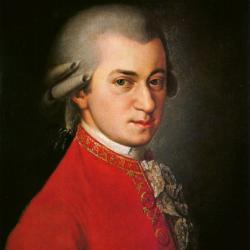
Wolfgang Amadeus Mozart

1756 - 1791 Person Name: W. A. Mozart, (1756-1791.) Topics: Christ Example of Composer of "DONA NOBIS" in Christian Hymns Wolfgang Amadeus Mozart Austria 1756-1791. Born at Salzburg, Austria, the son of Leopold Mozart, a minor composer and violinist, and youngest of seven children, he showed amazing ability on violin and keyboard from earliest childhood, even starting to compose music at age four when his father would play a piece and Mozart would play it exactly as did his father. At five, he composed some of his own music, which he played to his father, who wrote it down. When Mozart was eight, he wrote his first symphony, probably transcribed by his father. In his early years his father was his only teacher, teaching his children languages and academic subjects, as well as fundamentals of their strict Catholic faith. Some of his early compositions came as a surprise to his father, who eventually gave up composing himself when he realized how talented his son was. His family made several European journeys and he and his sister, Nanneri, performed as child prodigies, at the court of Prince-elector Maximillian II of Bavaria in Munich, and at the Imperial Courts in Vienna and Prague. A long concert tour followed, for 3.5 years, taking the family to courts in Munich, Mannheim, Paris, London, Dover, The Hague, Amsterdam, Utrecht, Mechelen, and again to Paris, and back home via Zurich, Donaueschingen, and Munich. During these trips Mozart met many musicians, acquainting himself with the works of other composers. He met Johann Christian Bach in London in 1764. Family trips were challenging, and travel conditions were primitive. They had to wait for invitations and reimbursements from nobility, and they endured long, near-fatal illnesses far from home. First Leopold (1764) got sick, then both children (1765). They traveled again to Vienna in 1767 and stayed there over a year. After a year back in Salzburg, Leopold and Wolfgang went to Italy (1769-1771), Leopold wished to display his son’s abilities as a performer and maturing composer. In Bologna, Italy, Wolfgang was accepted as a member of the famous Academia Filamonica. In Rome he heard Gregorio Allegri’s Miserere twice in performance. Back in the Sistine Chapel, Mozart wrote the whole performance out from memory, thus producing the first unauthorized copy of this closely guarded property of the Vatican. In the next few years Mozart wrote several operas performed with success in Italy, but his father’s hopes of securing a professional appointment for his son were not realized. At age 17 he was engaged as a musician at the Salzburg court, but grew restless and traveled in search of a better position. After returning to Salzburg, Mozart was employed as a court musician by the ruler of Salzburg, Prince Archbishop Hieronymus Colloredo. This gave Mozart ample opportunity to develop relationships with other musicians and his admirers, resulting in his development of new symphonies, sonatas, string quartets, masses, serenades, and some minor operas. In 1775 he wrote his only violin concertos, five in all. Again, he was discontent with work in Salzburg and traveled to find more opportunity to write operas. He and his father again visited Munich and Vienna, but neither visit was successful with the exception of his opera ‘La finta giardiniera’ in Munich. In 1777 he resigned his Salzburg position and went to Augsburg, Mannheim, Paris, and Munich again. In Mannheim he met and fell in love with Aloysia Weber, one of four daughters of a musical family. He could find no real employment there and left for Paris in 1778. He might have had a position as organist at Versailles, but he was not interested in that. He fell into debt and started pawning valuables. During these events his mother died. Meanwhile his father was still trying to find him a position in Salzburg. After checking out several other European cities and Munich, he again encountered Aloysia, but she was no longer interested in him, so he returned to Salzburg, having written another symphony, concerto, and piano sonata, and took the new appointment his father had found. However, he was still in discontent. Visiting Vienna in 1781, he was dismissed from his Salzburg position. He wrote another opera, ‘Idomeneo’, in 1781, that was successful in Munich. Two months later he was summoned to Vienna, where his employer, Archbishop Colloredo, wanted him around due to his notoriety. Mozart wished to meet the emperor and perform for him, and finally got that opportunity. It resulted in a part-time position and substantial commissions. Colloredo became a nemesis to Mozart’s career, finally releasing Mozart from his employ with a literal kick in the pants, much against his father’s wishes. However, he was now independent. Mozart then decided to settle in Vienna as a free lance performer and composer. He lived with the Fridolin Weber family, who had moved from Mannheim to Vienna. Fridolin, the father, had died, and they were taking in lodgers to make ends meet. His career there went well, and he performed as a pianist before the Emperor, establishing himself as the finest keyboard player in Vienna. He wrote another opera in 1782, again achieving success. Mozart had now become a prolific and influential composer of the Classical period and was known throughout Europe. Aloysia was now married to actor, Joseph Lange, and Mozart’s interest shifted to her sister, Constanze. In 1782 he married Constanze Weber Mozart Nissen. The marriage started out with a brief separation, and there was a problem getting Mozart’s father’s permission, which finally came. They had six children, but only two survived infancy: Carl and Franz. He lived in Vienna and achieved some notoriety, composing many of his best-known symphonies, concertos, and operas. In 1782-83 he became intimately acquainted with Johann Sebastian Bach and George Friederic Handel, as his friend, Gottfried van Swieten, owned many manuscripts of the Baroque masters, which Mozart studied intently. He altered his style of composition as a result. That year Mozart and his wife visited his father and sister, and he composed a liturgical piece, a Mass, with a singing part for his wife. He also met Joseph Hadyn in Vienna in 1784 and they became friends. They even played together in a string quartet from time to time. Mozart wrote six quartets dedicated to Hadyn. In 1785 Hadyn told Leopold Mozart, “Your son is the greatest composer known to me by person and repute, he has taste, and what is more, the greatest skill in composition”. Over the next several years Mozart booked several piano concertos in various places as a sole performer to delighted audiences, making substantial remuneration for his work. He and his wife then adopted a more luxurious lifestyle. They moved to an expensive apartment and he bought a fine fortepiano and billiard table. They sent their son, Karl, to an expensive boarding school and also kept servants. In 1784 Mozart became a Freemason and even composed Masonic music. Over the next several years he did little operatic writing and focused on his career as a piano soloist and writer of concertos. He again began operatic collaboration in 1785, creating ‘The marriage of Figaro’, then ‘Don Giovanni’ in 1787. That year his father died. Also that year he obtained a steady post under Emperor Joseph II as his chamber composer. This was part-time employment that was important when hard times arrived. However, Joseph aimed at keeping Mozart from leaving Vienna for better work. The Austrio-Turkish War made life difficult for musicians, and his aristocracy support had declined. He moved to save on expenses, but that did not help much, and he was reduced to borrowing funds from his friends, and pleading for loans. During this period he produced his last three symphonies. In 1789 he then set up on a journey to Leipzig, Dresden, and Berlin hoping to improve his fortunes. In 1790 he was highly productive, producing concertos, an opera, ‘The magic flute’, a series of string quintets, a motet, and an (unfinished) Requiem. Finances began to improve and he begin paying back his debts. Public reaction to his works also brought him great satisfaction. In 1791, while in Prague for the premiere of his opera, ‘La clemenza di Tito’, he fell ill. He continued professional functions for a short time, but had to go home and be nursed by his wife over the next couple of months. He died at Vienna, Austria, at the age of 35, a small thin man with undistinguishing characteristics. He was buried in a modest grave, having had a small funeral. Beethoven composed his early works in the shadow of Mozart, and Joseph Hadyn wrote “posterity will not see such a talent (as Mozart) again in 100 years”. 600+ works. Side note: Mozart enjoyed billiards, dancing, and had a pet canary, a starling, a dog, and a horse for recreational riding. He liked off-color humor. He wore elegant clothing when performing and had a modest tenor voice. John Perry

Henry J. Gauntlett

1805 - 1876 Topics: Christ Example of Composer of "IRBY" in Trinity Hymnal Henry J. Gauntlett (b. Wellington, Shropshire, July 9, 1805; d. London, England, February 21, 1876) When he was nine years old, Henry John Gauntlett (b. Wellington, Shropshire, England, 1805; d. Kensington, London, England, 1876) became organist at his father's church in Olney, Buckinghamshire. At his father's insistence he studied law, practicing it until 1844, after which he chose to devote the rest of his life to music. He was an organist in various churches in the London area and became an important figure in the history of British pipe organs. A designer of organs for William Hill's company, Gauntlett extend­ed the organ pedal range and in 1851 took out a patent on electric action for organs. Felix Mendelssohn chose him to play the organ part at the first performance of Elijah in Birmingham, England, in 1846. Gauntlett is said to have composed some ten thousand hymn tunes, most of which have been forgotten. Also a supporter of the use of plainchant in the church, Gauntlett published the Gregorian Hymnal of Matins and Evensong (1844). Bert Polman

James G. Deck

1802 - 1884 Topics: Christ Example of Author of "Christ's earthly path" in Laudes Domini Deck, James George, eldest son of John Deck, of Bury St. Edmunds, was born in 1802 and educated for the army, and became an officer in the Indian service. Retiring from the army, and having joined the Plymouth Brethren, he undertook, in 1843, the charge of a congregation of that body, at Wellington, Somerset. In 1852 be went abroad and settled in New Zealand. His hymns were published in Hymns for the Poor of the Flock, 1837-1838; Psalms and Hymns, &c, London, Walther (containing those in the former collection), 1842; the Wellington Hymn Book, 1857; Hymns and Spiritual Songs, 1860. Of his hymns now in use outside his own denomination, the greater part appeared in the 1837-1838 book, and are found in his brother-in-law's (Dr. Walker's) Cheltenham Psalms & Hymns, 1855. His compositions are marked by directness of aim, simplicity of language, and great earnestness. The rhythm is good, and an expressive tenderness pervades many of them. Although dealing mainly with the "Second Advent," there are several on other subjects which are of more than average merit. In a collected form they were published in his Hymns and Sacred Poems, Melbourne, H. Seelenmeyer, 1876. The more important of his hymns are annotated under their respective first lines. Of the rest we have:— i. From Hymns for the Poor of the Flock, 1838. 1. Behold yon bright and countless throng. All Saints. Repeated in Maurice's Choral Hymnbook, 1861. 2. How long, O Lord our Saviour. Second Advent desired. In the Parish Hymnbook., 1803 and 1875, this is altered to "How long, O Lord, Beloved." 3. Jesus, spotless Lamb of God. Good Friday. 4. Lord Jesus, are we [we are] one with Thee? One with Christ. In Walker's Psalms and Hymns, 1855-1880, and several American hymn-books. 5. Lord, we are Thine, our God Thou art. One with Christ. Originally in 4 st. of 8 1., it appeared, in a re-written form in 3 st. in Walker's Psalms and Hymns, 1855, as " Lord, we are Thine, in Thee we live." 6. 0 happy day when first we felt. The Day of Peace. 7. 0 Jesus Christ, the Saviour. Jesus All in All. In Walker's Psalms and Hymns, it begins: "0 Jesus Christ, our Saviour." 8. 0 Jesus, gracious Saviour." The Advocate. 9. 0 Lord, when we the path retrace. Christ our Example. 10. 0 Lord, who now art seated. Christ in glory. 11. Saviour, haste; our souls are waiting. Second Advent desired. This is given in Walker's Psalms and Hymns, in a rewritten form as "Saviour, hasten Thine appearing." 12. Soon shall our Master come. Waiting for Christ. 13. There is a place of endless joy. Heaven. 14. We're not of the world that fadeth away. Christ's Sheep. 15. When along life's thorny road. Passiontide. ii. From Appendix, to the 1841 edition of the Hymns for the Poor of the Flock. 16. Lamb of God, our souls adore Thee. Praise to Christ. Sometimes it begins with st. ii.," Lamb of God, Thy Father's bosom." 17. Lamb of God, Thou now art seated. 2nd Part. of No. 10. iii. From Psalms and Hymns, in Two Parts, Lond., D. Waither, 1842. 18. Again we meet in Jesus' name. Divine Worship. 19. Great Captain of Salvation. Burial. In the Irish Church Hymnal, and other collections. 20. Jesus, Thy name indeed is sweet. Hope of the Resurrection. 21. O blessed Jesus, Lamb of God. Praise to Jesus. 22. 0 Lamb of God, still keep me [us]. Christ's Presence desired. This hymn is somewhat popular in America. 23. 0 Lord, in nothing would I boast. Christ All in All. 24. Oft we, alas! forget the love. Holy Communion. 25. The veil is rent! lo, Jesus stands [our souls draw near]. The Intercessor. 26. We bless our Saviour's name. Thanksgiving for Forgiveness. iv. From Psalms and Hymns for Public and Social Worship (Dr. Walker's Collection), 1855. 27. Father, to seek Thy face. Public Worship. 28. Jesus, [I] we rest in [on] Thee. Joy in Forgiveness. 29. 0 Lord, 'tis joy to look above. Joy in the service of Christ. 30. Thou hast stood here, Lord Jesus. Burial. 31. 'Twas Thy love, 0 God, that knew us. Praise to God. 32. When first o'erwhelm ed with sin and shame. Peace with God. All these hymns, except No. 1, are given in Dr. Walker's Collection, 1855-1880, and most of them are also found in other collections. -- John Julian, Dictionary of Hymnology (1907) ====================== Deck, James George, p. 285, ii. He died circa 1884. His hymn, noted on p. 286, No. 28, "Jesus [I] we rest in [on] Thee," should be dated 1842. Additional hymns in common use are:—(1) "Lord Jesus, when I think of Thee," 1856 (Jesus, All and in All); (2) "The day of glory, bearing," 1838 (Passiontide). --John Julian, Dictionary of Hymnology, Appendix, Part II (1907) ==================== Deck, J. G., pp. 285, ii.; 1559, ii. Miss M. O. Deck, of Motueka, Nelson, New Zealand, informs us that her father, Mr. J. G. Deck, died at the village of Motueka, near Nelson, N.Z., on the 14th of August, 1884. --John Julian, Dictionary of Hymnology, New Supplement (1907) ==================== James Deck wrote of his youth, "I hoped there were no God," yet his mother's training pursued after him. "She read to me of Jesus, Of all his grace and love." After his conversion, the study of scripture revealed the doctrinal error of his Anglican upbringing. Forsaking all, he set his heart to follow God "at any cost." Later, his son testified this determination was "a trust never disappointed." - Psalms and Hymns and Spiritual Songs (2018)

Claude Goudimel

1514 - 1572 Topics: The Christian Year Reign of Christ; Church Ecumenism; Compassion; Courage; Discipleship and Service; Empowerment; Gift(s); Guidance; Healing; Hope; Hunger; Jesus Christ Cross; Jesus Christ Example; Jesus Christ Guide and Leader; Jesus Christ Images of; Jesus Christ Kingship, Conqueror; Jesus Christ Life In; Jesus Christ Reign; Light; Manna, Bread of Life; Mercy; Ministry; Mission and Outreach; Opening Hymns; Peace (World); Providence; Service Music Offering; Sin; Social Concerns; Struggle and Conflict; Temptation; Trust; Unity; Walking with God/Jesus Christ; World; Advent 2 Year A; Epiphany 5 Year A; Epiphany 6 Year A; Ascension Year A; Proper 6 Year A; Proper 12 Year A; Proper 17 Year A; Proper 23 Year A; Proper 28 Year A; Epiphany 4 Year B; Easter 7 Year B; Proper 10 Year B; Proper 11 Year B; Proper 13 Year B; Proper 22 Year B; Proper 23 Year B; Advent 4 Year C; Epiphany 6 Year C; Lent 5 Year C; All Saints Year C; Proper 28 Year C; Ash Wednesday Year ABC Harmonizer of "DONNE SECOURS" in Voices United The music of Claude Goudimel (b. Besançon, France, c. 1505; d. Lyons, France, 1572) was first published in Paris, and by 1551 he was composing harmonizations for some Genevan psalm tunes-initially for use by both Roman Catholics and Protestants. He became a Calvinist in 1557 while living in the Huguenot community in Metz. When the complete Genevan Psalter with its unison melodies was published in 1562, Goudimel began to compose various polyphonic settings of all the Genevan tunes. He actually composed three complete harmonizations of the Genevan Psalter, usually with the tune in the tenor part: simple hymn-style settings (1564), slightly more complicated harmonizations (1565), and quite elaborate, motet-like settings (1565-1566). The various Goudimel settings became popular throughout Calvinist Europe, both for domestic singing and later for use as organ harmonizations in church. Goudimel was one of the victims of the St. Bartholomew's Day massacre of Huguenots, which oc­curred throughout France. Bert Polman

Anne Steele

1717 - 1778 Topics: Christ Example of Author of "The name "Jesus"" in Laudes Domini Anne Steele was the daughter of Particular Baptist preacher and timber merchant William Steele. She spent her entire life in Broughton, Hampshire, near the southern coast of England, and devoted much of her time to writing. Some accounts of her life portray her as a lonely, melancholy invalid, but a revival of research in the last decade indicates that she had been more active and social than what was previously thought. She was theologically conversant with Dissenting ministers and "found herself at the centre of a literary circle that included family members from various generations, as well as local literati." She chose a life of singleness to focus on her craft. Before Christmas in 1742, she declined a marriage proposal from contemporary minister-hymnist Benjamin Beddome. All the same, some of Steele's sufferings were very real. She lost her mother at age 3, a potential suitor at age 20, her step mom at 43, and her sister-in-law at 45. She spent many years caring for her father until his death in 1769. For most of her life, she exhibited symptoms of malaria, including persistent pain, fever, headaches, and stomach aches. Caleb Evans, in his preface to Steele's posthumous Miscellaneous Pieces in Verse and Prose (1780), noted that she had been bed ridden for "some years" before her death: When the interesting hour came, she welcomed its arrival, and though her feeble body was excruciated with pain, her mind was perfectly serene. . . . She took the most affectionate leave of her weeping friends around her, and at length, the happy moment of her dismission arising, she closed her eyes, and with these animating words on her dying lips, "I know that my Redeemer liveth," gently fell asleep in Jesus. Historically, her most popular hymn has been "When I survey life's varied scene" (and its shortened form, "Father, whate'er of earthly bliss"), a hymn that turns earthly loss or denial into a spirit of thankfulness, published in over 800 North American hymnals since 1792. Not all of her work deals with personal agony. Her hymns span a wide doctrinal and ecclesiastical range, some crafted and used for her father's congregation. Her metrical psalms are among the finest of the genre. Steele's hymns and psalms were published in two volumes in 1760, Poems on Subjects Chiefly Devotional, under the pseudonym Theodosia, with an additional volume of material published after her death, in Miscellaneous Pieces in Verse and Prose, 1780. Another small collection, Verses for Children, was issued in 1788, with two other editions given in 1803 and 1806. Sixty-two of her hymns, including new material and some revisions by Steele, were published in a hymnal for Baptists in 1769, A Collection of Hymns Adapted to Public Worship, edited by Caleb Evans and John Ash. Forty seven were included in John Rippon's A Selection of Hymns from the Best Authors in 1787; the only author with larger representation was Philip Doddridge, with 101. These collections represent the earliest attempts to anthologize Baptist hymns and were vital for bringing Steele's hymns into wider public worship, where they have been a mainstay for over two hundred years. Chris Fenner adapted from The Towers (Southern Baptist Theological Seminary, August 2015) Recommended Bibliography: Cynthia Y. Aalders, To Express the Ineffable: The Hymns and Spirituality of Anne Steele (Milton Keynes, U.K.: Paternoster, 2008). Cynthia Y. Aalders, "In melting grief and ardent love: Anne Steele's contribution to eighteenth-century hymnody," The Hymn (summer 2009), 16-25. J.R. Broome, A Bruised Reed: The Life and Times of Anne Steele (Harpenden, U.K.: Gospel Standard Trust Publications, 2007). Joseph Carmichael, The Hymns of Anne Steele in John Rippon's Selection of Hymns: A Theological Analysis in the Context of the English Particular Baptist Revival (2012), dissertation, http://digital.library.sbts.edu/handle/10392/4112 Priscilla Wong, Anne Steele and Her Spiritual Vision (Grand Rapids: Reformation Heritage Books, 2012). Timothy Whelan & Julia B. Griffin, eds., Nonconformist Women Writers, 1720–1840, vols. 1 & 2 (London: Pickering & Chatto, 2011). ======================== Steele, Anne, born in 1716, was the daughter of Mr. Wm. Steele, a timber merchant, and pastor, without salary, of the Baptist Church at Broughton, in Hampshire. At an early age she showed a taste for literature, and would often entertain her friends by her poetical compositions. But it was not until 1760 that she could be prevailed upon to publish. In that year two volumes appeared under the title of Poems on Subjects chiefly Devotional, by Theodosia. After her death, which occurred in November, 1778, a new edition was published with an additional volume and a Preface by the Rev. Dr. Caleb Evans, of Bristol (Bristol, 1780). In the three volumes are 144 hymns, 34 Psalms in verse, and about 30 short poems. They have been reprinted in one vol. by D. Sedgwick, 1863…. Among Baptist hymnwriters Miss Steele stands at the head, if we regard either the number of her hymns which have found a place in the hymnals of the last 120 years, or the frequency with which they have been sung. Although few of them can be placed in the first rank of lyrical compositions, they are almost uniformly simple in language, natural and pleasing in imagery, and full of genuine Christian feeling. Miss Steele may not inappropriately be compared with Miss F. R. Havergal, our "Theodosia" of the 19th century. In both there is the same evangelic fervour, in both the same intense personal devotion to the Lord Jesus. But whilst Miss Steele seems to think of Him more frequently as her "bleeding, dying Lord "—dwelling on His sufferings in their physical aspect—Miss Havergal oftener refers to His living help and sympathy, recognizes with gladness His present claims as "Master" and "King," and anticipates almost with ecstasy His second coming. Looking at the whole of Miss Steele's hymns, we find in them a wider range of thought than in Miss Havergal's compositions. She treats of a greater variety of subjects. On the other hand, Miss Havergal, living in this age of missions and general philanthropy, has much more to say concerning Christian work and personal service for Christ and for humanity. Miss Steele suffered from delicacy of health and from a great sorrow, which befell her in the death of her betrothed under peculiarly painful circumstances. In other respects her life was uneventful, and occupied chiefly in the discharge of such domestic and social duties as usually fall to the lot of the eldest daughter of a village pastor. She was buried in Broughton churchyard. [Rev W. R. Stevenson, M.A.] A large number of Miss Steele's hymns are in common use, the larger proportion being in American hymnbooks. In addition to "Almighty Maker of my frame," “Far from these narrow scenes of night," "Father of mercies in Thy word," and others annotated under their respective first lines, there are also:— i. From her Poems on Subjects Chiefly Devotional, 1760, vols. i., ii. 1. Come, let our souls adore the Lord. Pleading for Mercy. One of two hymns "On the Fast, Feb. 11, 1757," the first being "While justice waves her vengeful hand." 2. Come, tune ye saints, your noblest strains. Christ Dying and Rising. 3. Deep are the wounds which sin has made. Christ, the Physician. 4. Enslaved by sin, and bound in chains. Redemption. 5. Eternal power, almighty God. Divine Condescension. 6. Eternal Source of joys divine. Divine Assurance desired. 7. Great God, to Thee my evening song. Evening. 8. Great Source of boundless power and grace. Desiring to Trust in God. 9. Hear, gracious [God] Lord, my humble moan [prayer] . The presence of God desired. 10. Hear, O my God, with pity hear. Ps. cxliii. 11. How long shall earth's alluring toys ? On Longing after unseen pleasures. 12. How lovely, how divinely sweet. Ps. lxxziv. 13. How oft, alas, this wretched heart. Pardoning Love. 14. In vain my roving thoughts would find. Lasting Happiness. 15. Jesus, the spring of joys divine. Christ the Way. 16. Lord, how mysterious are Thy ways. Providence. 17. Lord, Thou hast been Thy Children's God. Ps. xc. 18. Lord, we adore Thy boundless grace. Divine Bounty. 19. Lord, when my [our] raptured thought surveys. Creation and Providence. 20. Lord, when my thoughts delighted rove. Passiontide. 21. My God, 'tis to Thy mercy seat. Divine Mercy. 22. My God, to Thee I call. Lent. 23. O for a sweet, inspiring ray. The Ascended Saviour. 24. O Thou Whose tender mercy hears. Lent. 25. Permit me, Lord, to seek Thy face. Strength and Safety in God alone. 26. Should famine o'er the mourning field. During Scarcity. 27. So fades the lovely, blooming flower. Death of a Child. 28. Stretched on the Cross the Saviour dies. Good Friday. 29. The Lord, my Shepherd and my Guide. Ps.xxiii. 30. The Lord, the God of glory reigns. Ps. xciii. 31. The Saviour calls; let every ear. The Invitation. 32. There is a glorious world on high. True Honour. 33. Thou lovely [only] Source of true delight. Desiring to know Jesus. 34. Thou only Sovereign of my heart. Life in Christ alone. 35. To Jesus, our exalted Lord. Holy Communion. 36. To our Redeemer's glorious Name. Praise to the Redeemer. 37. To your Creator, God. A Rural Hymn. 38. When I survey life's varied scene. Resignation. 39. When sins and fears prevailing rise. Christ the Life of the Soul. 40. Where is my God? does He retire. Rreathing after God. 41. While my Redeemer's near. The Good Shepherd. 42. Why sinks my weak desponding mind? Hope in God. 43. Ye earthly vanities, depart. Love for Christ desired. 44. Ye glittering toys of earih adieu. The Pearl of great Price. 45. Ye humble souls, approach your God. Divine Goodness. ii. From the Bristol Baptist Collection of Ash & Evans, 1769. 46. Come ye that love the Saviour's Name. Jesus, the King of Saints. 47. How helpless guilty nature lies. Need of Receiving Grace. 48. Praise ye the Lord let praise employ. Praise. iii. Centos and Altered Texts, 49. How blest are those, how truly wise. True honour. From "There is a glorious world on high." 50. How far beyond our mortal view. Christ the Supreme Beauty. From "Should nature's charms to please the eye," 1760, st. iii. 51. In vain I trace creation o'er. True happiness. From "When fancy spreads her boldest wings," 1760, st. ii. 52. Jesus, and didst thou leave the sky? Praise to Jesus. From “Jesus, in Thy transporting name," 1760, st. iv. 53. Look up, my soul, with cheerful eye. Breathing after God. From No. 40, st. v. 54. Lord, in the temple of Thy grace. Christ His people's Joy. From "The wondering nations have beheld," 1760, st. iii. 55. My God, O could I make the claim. Part of No. 9 above. 56. My soul, to God, its source, aspires. God, the Soul's only Portion. From "In vain the world's alluring smile," st. iii. 57. O could our thoughts and wishes fly. Part of No. 11 above, st. iv. 58. O for the eye of faith divine. Death anticipated. From "When death appears before my sight," 1760, st. iii., vii., viii. altered, with opening stanzas from another source. 59. O Jesus, our exalted Head. Holy Communion. From "To Jesus, our exalted Lord." See No. 35. 60. O world of bliss, could mortal eyes. Heaven. From "Far from these narrow scenes of night." 61. See, Lord, Thy willing subjects bow. Praise to Christ. From "O dearer to my thankful heart," 1780, st. 5. 62. Stern winter throws his icy chains. Winter. From "Now faintly smile day's hasty hours," 1760, st. ii. 63. Sure, the blest Comforter is nigh. Whitsuntide. From "Dear Lord, and shall Thy Spirit rest," 1760, st. iii. 64. The God of my salvation lives. In Affliction. From, "Should famine, &c," No. 26, st. iv. 65. The Gospel, O what endless charms. The Gospel of Redeeming Love. From "Come, Heavenly Love, inspire my song." 66. The mind was formed lo mount sublime. The Fettered Mind. From "Ah! why should this immortal mind?" 1760, st. ii. 67. The once loved form now cold and dead. Death of a Child. From "Life is a span, a fleeting hour," 1760, st. iii. 68. Thy gracious presence, O my God. Consolation in Affliction. From "In vain, while dark affliction spreads," 1780, st. iv. 69. Thy kingdom, Lord, for ever stands. Ps. cxlv. From "My God, my King, to Thee I'll raise," 1760, st. xii. 70. Triumphant, Christ ascends on high. Ascension. From "Come, Heavenly Love, inspire my song," 1760, st. xxxii. 71. When blest with that transporting view. Christ the Redeemer. From "Almighty Father, gracious Lord," 1760, st. xi. 72. When death before my sight. Death Anticipated. From "When death appears before my sight," 1760. 73. When gloomy thoughts and boding fears. Com¬forts of Religion. From "O blest religion, heavenly fair," 1760, st. ii. 74. When weary souls with sin distrest. Invitation to Rest. From "Come, weary souls, with sin distressed," 1760. 75. Whene'er the angry passions rise. Example of Christ. From “And is the gospel peace and love?" 1760, st. ii. All the foregoing hymns are in D. Sedgwick's reprint of Miss Steele's Hymns, 1863. --Excerpts from John Julian, Dictionary of Hymnology (1907) ==================== Steele, Anne, p. 1089, i., Additional hymns in common use: 1. Amazing love that stoop'd so low. Thankfulness. From "O dearer to my thankful heart," 1780, iii. 2. Bright scenes of bliss, unclouded skies. Saved by Hope. Poems, 1760, i. p. 228. 3. Jesus demands this heart of mine. Pardon De¬sired. Poems, 1760, i. p. 120. 4. Jesus, Thou Source divine. Christ the Way. Poems, 1760, i. p. 53, altered. 5. Lord, how mysterious are Thy ways. Mysteries of Providence. Poems, 1760, i. p. 131. 6. Lord^in Thy great, Thy glorious Name. Ps. xxxi. Poems, 1760, ii. p. 158. --John Julian, Dictionary of Hymnology, Appendix, Part II (1907)

Pages


Export as CSV
It looks like you are using an ad-blocker. Ad revenue helps keep us running. Please consider white-listing Hymnary.org or getting Hymnary Pro to eliminate ads entirely and help support Hymnary.org.