You help make Hymnary.org possible. More than 10 million people from 200+ countries found hymns, liturgical resources and encouragement on Hymnary.org in 2025, including you. Every visit affirms the global impact of this ministry.

If Hymnary has been meaningful to you this year, would you take a moment today to help sustain it? A gift of any size—paired with a note of encouragement if you wish—directly supports the server costs, research work and curation that keep this resource freely available to the world.

Give securely online today, or mail a check to:
Hymnary.org
Calvin University
3201 Burton Street SE
Grand Rapids, MI 49546

Thank you for your partnership, and may the hope of Advent fill your heart.

Person Results

Topics:judgment
In:people

Planning worship? Check out our sister site, ZeteoSearch.org, for 20+ additional resources related to your search.
Showing 51 - 60 of 761Results Per Page: 102050

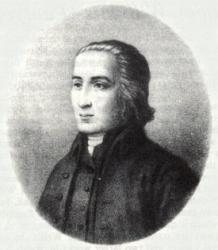
John Cennick

1718 - 1755 Topics: Second Advent Executive Judgment Author of "Lo, he cometh! countless trumpets" in The Seventh-Day Adventist Hymn and Tune Book John Cennick was born at Reading, Berkshire, in the year 1717. He became acquainted with Wesley and Whitefield, and preached in the Methodist connection. On the separation of Wesley and Whitefield he joined the latter. In 1745, he attached himself to the Moravians, and made a tour in Germany to fully acquaint himself with the Moravian doctrines. He afterwards ministered in Dublin, and in the north of Ireland. He died in London, in 1755, and was buried in the Moravian Cemetery, Chelsea. He was the author of many hymns, some of which are to be found in every collection. --Annotations of the Hymnal, Charles Hutchins, M.A. 1872. ======================= Cennick, John, a prolific and successful hymnwriter, was descended from a family of Quakers, but brought up in the Church of England. He assisted J. Wesley and then G. Whitefield in their labours for a time, and then passed over to, and died as a minister of, the Moravian Church. Born at Reading, Dec. 12, 1718, he was for some time a land surveyor at Reading, but becoming acquainted with the Wesleys in 1739, he was appointed by J. Wesley as a teacher of a school for colliers' children at Kingswood in the following year. This was followed by his becoming a lay preacher, but in 1740 he parted from the Wesleys on doctrinal grounds. He assisted Whitefield until 1745, when he joined the Mora¬vians, and was ordained deacon, in London, in 1749. His duties led him twice to Germany and also to the North of Ireland. He died in London, July 4, 1755. In addition to a few prose works, and some sermons, he published:— (1) Sacred Hymns, for the Children of God in the Days of their Pilgrimage, Lond., J. Lewis, n.d. (2nd ed. Lond., B. Milles, 1741), Pts. ii., iii., 1742; (2) Sacred Hymns for the Use of Religious Societies, &c, Bristol, F. Farley, 1743; (3) A Collection of Sacred Hymns, &c, Dublin, S. Powell, 3rd ed., 1749; (4) Hymns to the honour of Jesus Christ, composed for such Little Children as desire to be saved. Dublin, S. Powell, 1754. Additional hymns from his manuscripts were published by his son-in-law, the Rev. J. Swertner, in the Moravian Hymn Book, 1789, of which he was the editor. There are also 16 of his hymns in his Sermons, 2 vols., 1753-4, some being old hymns rewritten, and others new. Many of Cennick's hymns are widely known, as, "Lo, He cometh, countless trumpets;" “Brethren, let us join to bless;" "Jesus, my all, to heaven is gone;" "Children of the heavenly King;" "Ere I sleep, for every favour;" "We sing to Thee, Thou Son of God;" and the Graces: " Be present at our table, Lord;" and "We thank Thee, Lord;" &c. Some of the stanzas of his hymns are very fine, but the hymns taken as a whole are most unequal. Some excellent centos might be compiled from his various works. His religious experiences were given as a preface to his Sacred Hymns, 1741. In addition to the hymns named, and others annotated under their first lines, the following are in common use:— 1. Be with me [us] Lord, where'er I [we] go. Divine Protection. [1741.] 2. Cast thy burden on the Lord. Submission. [1743.] 3. Not unto us, but Thee alone. Praise to Jesus. [1743.] 4. Thou dear Redeemer, dying Lamb. Priesthood of Christ. [1743.] 5. We sing to Thee, Thou Son of God. Praise to Jesus. [1743.] 6. When, 0 dear Jesus, when shall I? Sunday Evening. [1743.] --John Julian, Dictionary of Hymnology (1907)

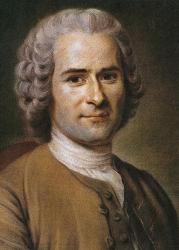
Jean-Jacques Rousseau

1712 - 1778 Person Name: Jean Jacques Rouseau Topics: Judgment Composer of "GREENVILLE" in Pentecostal Hymns Nos. 5 and 6 Combined Jean Jacques Rousseau; b. 1712, Geneva; d. 1778, Paris. Born in the city-state of Geneva in the Swiss Confederacy, his mother died whenhe was 9 days old. Rousseau's father was a watchmaker, but got into trouble with local officials and left the town, leaving his son with an uncle who had Rousseau and his own son board with a Calvinist minister for 2 years. He was later apprenticed to a notary and then to an engraver, who beat him. He ran away from Geneva at 16. In nearby Savoy, he sheltered with a Roman Catholic priest. He was sent to Italy to convert to Catholicism. He supported himself as a servant, secretary, and tutor. His life was filled with personal and political upheaval, and his writings infuriated many, to the point he had to leave several habitations. He had many friends and enemies due to his philosophies on life, religion, and God. He was concerned with decay of society (having experienced the French Revolution) and became a philosopher, writer, botanist, and composer, he influenced the Enlightenment period through his political philosophy, both in France and across Europe, including aspects of the French Revolution and overall development of modern political and educational thought. A member of the Jacobin Club, he was the most popular of philosophers. He believed that self-preservation was the highest virtue and that we should study to understand how society operates and where pitfalls lie. His personal family life was very chaotic as a result of his outspoken opinions and writings. He returned to his Calvinistic beliefs in later life, but digressed from them on several issues important to that church. John Perry

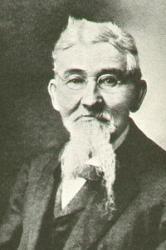
E. R. Latta

1839 - 1915 Person Name: Edna Reeder Latta, b. 1839 Topics: Warning Message Preparation for Death and Judgment Author of "When We in the Judgment Stand" in The Christian Hymnary Rv Eden Reeder Latta USA 1839-1915. Born at Haw Patch, IN, the son of a Methodist minister, (also a boyhood friend of hymn writer Willam A Ogden) he became a school teacher. During the American Civil War he preached for the Manchester Methodist Church and other congregations (possibly as a circuit rider filling empty pulpits). In 1863 he married Mary Elizabeth Wright, and they had five children: Arthur, Robert, Jennie, two others. He taught for the public schools of Manchester, and later Colesburg, IA. He moved to Guttenberg, IA, in the 1890s, and continued writing song lyrics for several major gospel composers, including William Ogden, James McGranahan, James Fillmore, and Edmund Lorenz. He wrote 1600+ songs and hymns, many being widely popular in his day. His older brother, William, composed hymn tunes. He died at Guttenbert, IA. John Perry

Carlton R. Young

b. 1926 Topics: Judgment Harmonizer and Arranger of "CHARLESTOWN" in The United Methodist Hymnal

John J. Overholt

1918 - 2000 Topics: Warning Message The Judgment Composer of "GERICHT" in The Christian Hymnary John J. Overholt was born to an Amish family of limited means in the state of Ohio in 1918. As a child he was soon introduced to his father's personal collection of gospel songs and hymns, which was to have a marked influence on his later life. With his twin brother Joe, he early was exposed to the Amish-Mennonite tradition hymn-singing and praising worship. An early career in Christian service led to a two-year period of relief work in the country of Poland following World War II. During that interim he began to gather many European songs and hymns as a personal hobby, not realizing that these selections would become invaluable to The Christian Hymnary which was begun in 1960 and completed twelve years later in 1972, with a compilation of 1000 songs, hymns and chorales. (The largest Menn. hymnal). A second hymnal was begun simultaneously in the German language entitled Erweckungs Lieder Nr.1 which was brought to completion in 1986. This hymnal has a total of 200 selections with a small addendum of English hymns. Mr. Overholt married in 1965 to an accomplished soprano Vera Marie Sommers, who was not to be outdone by her husband's creativity and compiled a hymnal of 156 selections entitled Be Glad and Sing, directed to children and youth and first printed in 1986. During this later career of hymn publishing, Mr. Overholt also found time for Gospel team work throughout Europe. At this writing he is preparing for a 5th consecutive tour which he arranges and guides. The countries visited will be Belgium, Switzerland, France, Germany, Poland, USSR and Romania. Mr. Overholt was called to the Christian ministry in 1957 and resides at Sarasota, Florida where he is co-minister of a Beachy Amish-Mennonite Church. Five children were born to this family and all enjoy worship in song. --Letter from Hannah Joanna Overholt to Mary Louise VanDyke, 10 October 1990, DNAH Archives. Photo enclosed.

William Williams

1717 - 1791 Person Name: William Williams, 1717-1791 Topics: Judgment Author of "Guide us, O thou great Jehovah" in The Hymnal William Williams, called the "Watts of Wales," was born in 1717, at Cefn-y-coed, near Llandovery, Carmarthenshire. He originally studied medicine, but abandoned it for theology. He was ordained Deacon in the Church of England, but was refused Priest's Orders, and subsequently attached himself to the Calvinistic Methodists. For half a century he travelled in Wales, preaching the Gospel. He died in 1791. Williams composed his hymns chiefly in the Welsh language; they are still largely used by various religious bodies in the principality. Many of his hymns have appeared in English, and have been collected and published by Sedgwick. His two principal poetical works are "Hosannah to the Son of David," and "Gloria in Excelsis." --Annotations of the Hymnal, Charles Hutchins, M.A. 1872. ===================== Williams, William, of Pantycelyn, was the Sweet Singer of Wales. He was born at Cefn-y-Coed, in the Parish of Llanfair-y-bryn, near Llandovery, in 1717. He was ordained a deacon of the Established Church in 1740, by Dr. Claget, Bishop of St. Davids, and for three years he served the Curacies of Llan-wrtyd and Llanddewi-Abergwesyn. He never received Priest's Orders. He became early acquainted with the revivalist Daniel Rowlands, and for thirty-five years he preached once a month at Llanllian and Caio and Llansawel, besides the preaching journeys he took in North and South Wales. He was held in great esteem as a preacher. In 1744 his first book of hymns appeared under the title of Halleluiah, and soon ran through three editions. In1762, he published another book under the title of Y Môr o Wydr, which soon went through five editions. His son John published an excellent edition of his hymns in the year 181lines In addition to his Welsh hymns Williams also published several in English as:— (1.) Hosannah to the Son of David; or, Hymns of Praise to God, For our glorious Redemption by Christ. Some few translated from the Welsh Hymn-Book, but mostly composed on new Subjects. By William Williams. Bristol: Printed by John Grabham, in Narrow-Wine Street, 1759. This contains 51 hymns of which 11 are translated from his Welsh hymns. This little book was reprinted by D. Sedgwick in 1859. (2.) Gloria in Excelsis: or, Hymns of Praise to God and the Lamb. By W. Williams . . . Carmarthen. Printed for the Author by John Ross, removed to Priory Street, near the Church, M.DCC.LXXI. This contains 70 hymns, not including parts. From these volumes the following hymns are in common use:— i. From the Hosannah, 1759:— 1. Jesus, my Saviour is enough. Jesus, All in All. 2. My God, my God, Who art my all. Communion with God desired. 3. The enormous load of human guilt. God's love unspeakable. ii. From the Gloria in Excelsis, 1772. 4. Awake, my soul, and rise. Passiontide. 5. Beneath Thy Cross I lay me down. Passiontide. 6. Hark! the voice of my Beloved. The Voice of Jesus. 7. Jesus, lead us with Thy power. Divine Guidance Desired. Sometimes given as "Father, lead us with Thy power." 8. Jesus, Whose Almighty sceptre. Jesus as King. 9. Saviour, look on Thy beloved. The Help of Jesus desired. 10. White and ruddy is my Beloved. Beauties of Jesus. Williams is most widely known through his two hymns, "Guide me, O Thou great Jehovah," and "O'er those gloomy hills of darkness." Williams died at Pantycelyn, Jan. 11, 1791. [Rev. W. Glanffrwd Thomas] -- John Julian, Dictionary of Hymnology (1907) ================= See also in: Hymn Writers of the Church

Benjamin Webb

1819 - 1885 Topics: Christ Second Coming and Judgment of Translator of "A Hymn of Glory Let Us Sing" in Trinity Hymnal (Rev. ed.) Benjamin Webb (b. London, England, 1819; d. Marylebone, London, 1885) originally translated the text in eight stanzas, although six only appear in Lift Up Your Hearts. It was published in The Hymnal Noted (1852), produced by his friend John Mason Neale. Webb received his education at Trinity College, Cambridge, England, and became a priest in the Church of England in 1843. Among the parishes he served was St. Andrews, Wells Street, London, where he worked from 1862 to 1881. Webb's years there coincided with the service of the talented choir director and organist Joseph Barnby, and the church became known for its excellent music program. Webb edited The Ecclesiologist, a periodi­cal of the Cambridge Ecclesiological Society (1842-1868). A composer of anthems, Webb also wrote hymns and hymn translations and served as one of the editors of The Hymnary (1872). Bert Polman ================== Webb, Benjamin, M.A., was born in London in 1820, and was educated in St. Paul's School; whence he passed to Trinity College, Cambridge, in 1838, B.A. 1842, M.A. 1845. Ordained by the Bishop [Monk] of Gloucester and Bristol he was Assistant Curate of Kemeston in Gloucestershire, 1843-44; of Christ Church, St. Pancras, 1847-49; and of Brasted, Kent, 1849-51; at which date he was presented to the P. C. of Sheen in Staffordshire, which he held until 1862, when he became Vicar of St. Andrews, Wells Street, London. In 1881 the Bishop [Jackson] of London collated him to the Prebend of Portpool in St. Paul's Cathedral. Mr. Webb was one of the Founders of the Cambridge Camden, afterwards the Ecclesiological Society; and the Editor of the Ecclesiologist from 1842 to 1868, as well as the General Editor of the Society's publications. His first appearance in print was as joint editor of Bishop Montague's Articles of Inquiry in 184; in 1843 he was joined with Mr. J. M. Neale in An Essay on Symbolism, and A Translation of Durandus; in 1847 he put forth his valuable work on Continental Ecclesiology; in 1848 he was joint editor with Dr. Mill of Frank’s Sermons, for the Anglo-Catholic Library, and with the Rev. J. Fuller-Russell of Hierurgia Anglicana. After the decease of his father-in-law (Dr. Mill), he edited Dr. Mill's Catechetical Lectures, 1856; a second edition of Dr. Mill's Christian Advocates Publications on the Mythical Interpretation of the Gospels, 1861; and of Dr. Mill's Sermons on our Lord's Temptation, 1873. He was also one of the editors of the Burntisland reprint of the Sarum Missal. One of his most valuable works is Instructions and Prayers for Candidates for Confirmation, of which the third edition was published in 1882. Mr. Webb was one of the original editors of the Hymnal Noted, and of the sub-Committee of the Ecclesiological Society, appointed to arrange the words and the music of that book; and was also the translator of some of the hymns. In conjunction with the Rev. Canon W. Cooke he was editor of the Hymnary, 1872, for which office his habitual reconstruction and composition of the words of the anthems used at St. Andrew's, Wells Street, as well as his connection with the Hymnal Noted, eminently qualified him. His original hymns contributed to the Hymnary, 1871 and 1872, were:-- 1. Assessor to thy King. St. Bartholomew. In the Hymnary, 1872. 2. Behold He comes, thy King most holy. Advent. Originally written to be sung in St. Andrew's Church, Wells Street, as an anthem to the music of Schumann's Advent-lied, and afterwards published in the Hymnary, 1872. 3. Praise God, the Holy Trinity. Hymn of Faith. Originally written for use in St. Andrew's, Wells Street, and subsequently in the Hymnary, 1872. 4. Praise the Rock of our salvation. Dedication of a Church. Published in the Hymnary, 1872. Mr. Webb's authorised text is in the Westminster Abbey Hymn Book, 1883. 5. Ye angel hosts above. Universal Praise to God. In the Hymnary, 1872. He died in London, Nov. 27, 1885. [Rev. William Cooke, M.A.] -- John Julian, Dictionary of Hymnology (1907)

B. B. Edmiaston

1881 - 1955 Person Name: Bernard Bates Edmiaston, 1881-1964 Topics: Christian Commission Warning Men of Judgment Author of "As You Journey Through This World" in The Christian Hymnary Bernard Bates Edmiaston Born: Ju­ly 16, 1881, Ben­netts, Bax­ter Coun­ty, Ar­kan­sas. Died: De­cem­ber 2, 1964, Bronte, Tex­as. Buried: Fair­view Ce­me­te­ry, Bronte, Tex­as. Bernard was the son of Da­vid W. Ed­mi­as­ton and Geor­gia Ann Flu­ty, and hus­band of El­la Al­len. He stu­died mu­sic un­der Ru­fus Tur­ner, Frank­lin Ei­land, W. H. Law­son, Ber­ry Mc­Gee, Em­mett Dean, G. W. Fields, John Her­bert, and ma­ny oth­ers, and taught sing­ing schools for at least 38 years. He wrote and pub­lished songs through the Trio Mu­sic Com­pa­ny, Wa­co, Tex­as, and was di­rec­tor of the South­ern De­vel­op­ment Nor­mal School of Mu­sic in W­aco. © The Cyber Hymnal™ (www.hymntime.com/tch)

John Ellerton

1826 - 1893 Topics: God His Laws and Judgment Author (stanzas 3 and 4) of "God the Omnipotent" in The Mennonite Hymnal John Ellerton (b. London, England, 1826; d. Torquay, Devonshire, England, 1893) Educated at King William's College on the Isle of Man and at Trinity College, Cambridge, England, he was ordained in the Church of England in 1851. He served six parishes, spending the longest time in Crewe Green (1860-1872), a church of steelworkers and farmers. Ellerton wrote and translated about eighty hymns, many of which are still sung today. He helped to compile Church Hymns and wrote its handbook, Notes and Illustrations to Church Hymns (1882). Some of his other hymn texts were published in The London Mission Hymn Book (1884). Bert Polman ========================= Ellerton, John, M.A., son of George Ellerton, was born in London, Dec. 16, 1826, and educated at Trinity College, Cambridge (B.A. 1849; M.A. 1854). Taking Holy Orders he was successively Curate of Easebourne, Sussex, 1850; Brighton, and Lecturer of St. Peter's, Brighton, 1852; Vicar of Crewe Green, and Chaplain to Lord Crewe, 1860; Rector of Hinstock, 1872; of Barnes, 1876; and of White Roding, 1886. Mr. Ellerton's prose writings include The Holiest Manhood, 1882; Our Infirmities, 1883, &c. It is, however, as a hymnologist, editor, hymnwriter, and translator, that he is most widely known. As editor he published: Hymns for Schools and Bible Classes, Brighton, 1859. He was also co-editor with Bishop How and others of the Society for Promoting Christian Knowledge Church Hymns, 1871. His Notes and Illustrations of Church Hymns, their authors and translators, were published in the folio edition of 1881. The notes on the hymns which are special to the collection, and many of which were contributed thereto, are full, accurate, and of special value. Those on the older hymns are too general for accuracy. They are written in a popular form, which necessarily precludes extended research, fulness, and exactness of detail. The result is acceptable to the general public, but disappointing to the hymnological expert. Mr. Ellerton's original hymns number about fifty, and his translations from the Latin ten or more. Nearly every one of these are in common use and include:— 1. Before the day draws near its ending. Afternoon. Written April 22, 1880, for a Festival of Choirs at Nantwich, and first published in the Nantwich Festival Book, 1880. In 1883 it passed into the Westminster Abbey Hymn Book. 2. Behold us, Lord, a little space. General for Weekdays. Written in 1870 for a mid-day service in a City Church, and published in Church Hymns in 1871. It has passed into several collections. 3. Come forth, 0 Christian brothers. Processional for Choral Festival. Written for a Festival of Parochial Choirs held at Chester, May, 1870, and 1st printed in the Service-book of the same. In 1871 it passed into Church Hymns. 4. Father, Name of love and fear. Confirmation. Written in 1871 for a Confirmation in the North of England, and published in Church Hymns, 1871, and other collections. 5. God, Creator and Preserver. In Time of Scarcity. Written for and first published in The Hymnary, 1870; and again in the revised edition, 1872, and other hymnbooks. 6. Hail to the Lord Who comes. Presentation of Christ in the Temple. Written Oct. 6, 1880, for Mrs. Brock's Children's Hymn Book, and published therein, 1881. 7. In the Name which earth and heaven. Foundation of a Church. Written for and first published in Church Hymns, 1871, and repeated in several collections. The hymn sung at the re-opening of the Nave of Chester Cathedral, January 25, 1872, was compiled by Mr. Ellerton from this hymn, and his "Lift the strain of high thanksgiving.” 8 King Messiah, long expected. The Circumcision. Written Jan. 14, 1871, and first published in Church Hymns, 1871. It has passed into other collections. 9. King of Saints, to Whom the number. St. Bartholomew. Written for and first published in Church Hymns., 1871. It is very popular, and has been repeated in many hymnals. 10. Mary at the Master's feet. Catechizing. Written for and first published in Church Hymns, 1871. 11. O Father, all-creating. Holy Matrimony. Written Jan. 29, 1876, at the request of the Duke of Westminster, for the marriage of his daughter to the Marquess of Ormonde. It was published in Thring's Collection, 1880 and 1882. 12 O! how fair the morning broke. Septuagesima. Written March 13, 1880, for Mrs. Brock's Children's Hymn Book, and included therein, 1881. 13. O Lord of life and death, welcome. In Time of Pestilence. Written for and first published in Church Hymns, 1871. 14. O shining city of our God. Concerning the Hereafter. First published in the Rev. R. Brown-Borthwick's Sixteen Hymns with Tunes, &c, 1870; and again in Church Hymns, 1871. 15. O Son of God, our Captain of Salvation. St. Barnabas. Written April 5, 1871, and first published in Church Hymns, 1871; and again in Hymns Ancient & Modern, 1875, Thring's Collection, 1882, and others. 16. O Thou in Whom Thy saints repose. Consecration of a Burial Ground. Written for the consecration of an addition to the Parish Churchyard of Tarporley, Cheshire, 1870, and published in Church Hymns, 1871. 17. O Thou Whose bounty fills the earth. Flower Services. Written for a Flower Service at St. Luke's Church, Chelsea, June 6, 1880, and published in Mrs. Brock's Children's Hymn Book, 1881. 18. Praise to our God, Whose bounteous hand. National Thanksgiving. Written in 1870 for Church Hymns, but first published in the Rev. R. Brown-Borthwick's Select Hymns, &c., 1871, and then in Church Hymns later the same year. 19. The day Thou gavest, Lord, is ended. The darkness, &c. Evening. Written in 1870 for A Liturgy for Missionary Meetings (Frome, Hodges), and revised for Church Hymns, 1871. The revised form has passed into other collections. 20. The Lord be with us when we bend. Close of Afternoon Service. Written [in 1870] at the request of a friend for use at the close of Service on Sunday afternoons when (as in summer) strictly Evening hymns would be unsuitable. It was published in Church Hymns, 1871, Thring's Collection, 1882, and others. 21. This day the Lord's disciples met. Whitsuntide. "Originally written in 1855 for a class of children, as a hymn of 8 verses of 5 lines each, beginning, 'The Fiftieth day was come at last.’ It was abridged, revised, and compressed into C.M. for Mrs. Brock's Children's Hymn Book, 1880," and published therein, 1881. 22. Thou in Whose Name the two or three. Wednesday. Appeared in the Parish Magazine, May, 1871, as a hymn for Wednesday. After revision it was included in Church Hymns, 1871, and repeated in other collections. 23. Thou Who sentest Thine Apostles. SS. Simon and Jude. Written in June, 1874, for the revised edition of Hymns Ancient & Modern, and published in the same in 1875. 24. We sing the glorious conquest. Conversion of St. Paul. Written Feb. 28, 1871, for and published later the same year in Church Hymns. It was repeated in Hymns Ancient & Modern, 1875. 25. When the day of toil is done. Eternal Best. Written in Jan., 1870, and first published in the Rev. R. Brown-Borthwick's Sixteen Hymns with Tunes, &c. 1870, Church Hymns, 1871, and subsequently in several Scottish hymn-books. The tune "Preston," in Church Hymns was written for this hymn. To these hymns must be added those which are annotated under their respective first lines, and the translations from the Latin. The grandest of his original compositions is, "Throned upon the awful tree," and the most beautiful and tender, "Saviour, again to Thy dear Name we raise"; and of his translations, "Sing Alleluia forth in duteous praise," and "Welcome, happy morning, age to age shall say," are the most successful and popular. The subjects of Mr. Ellerton's hymns, and the circumstances under which they were written, had much to do with the concentration of thought and terseness of expression by which they are characterized. The words which he uses are usually short and simple; the thought is clear and well stated; the rhythm is good and stately. Ordinary facts in sacred history and in daily life are lifted above the commonplace rhymes with which they are usually associated, thereby rendering the hymns bearable to the cultured, and instructive to the devout. His antitheses are frequent and terse, almost too much so for devotional verse, and are in danger of interrupting the tranquil flow of devotion. His sympathy with nature, especially in her sadder moods, is great; he loves the fading light and the peace of eve, and lingers in the shadows. Unlike many writers who set forth their illustrations in detail, and then tie to them the moral which they are to teach, he weaves his moral into his metaphor, and pleases the imagination and refreshes the spirit together. Now and again he falls into the weakness of ringing changes on words; but taken as a whole his verse is elevated in tone, devotional in spirit, and elegant in diction. -- John Julian, Dictionary of Hymnology (1907) ===================== Ellerton, John, p. 326, i. Other hymns are:— 1. O Father, bless the children. Holy Baptism. Written in 1886, and published in his Hymns, &c, 1888, in 4 stanzas of 8 lines. Also in the 1889 Suppl. Hymns to Hymns Ancient & Modern. 2. O Thou Who givest food to all. Temperance. Written Aug. 30, 1882, and printed in the Church of England Temperance Chronicle, Sept. 1882. Also in his Hymns, &c, 1888. 3. Praise our God for all the wonders. St. Nicholas's Day. Dated in his Hymns, 1888, "December 1882." It was written for the Dedication Festival of St. Nicholas's Church, Brighton, and first printed as a leaflet in 1882. 4. Praise our God, Whose open hand. Bad Harvest. Written as a hymn for the bad harvest of 1881, and printed in the Guardian in August of that year. Also in his Hymns, &c, 1888. 5. Praise to the Heavenly Wisdom. St. Matthias's Day. Dated in his Hymns, &c, 1888, "January, 1888." Also in the 1889 Suppl. Hymns to Hymns Ancient & Modern. 6. Shine Thou upon us, Lord. For a Teachers' Meeting. Contributed to the 1889 Suppl. Hymns to Hymns Ancient & Modern. 7. Thou Who wearied by the well. Temperance. Written for the Opening of a Workmen's Coffee Tavern, and dated in his Hymns, &c, 1888, "September 23, 1882." It was printed in the Church of England Temperance Chronicle the same year. 8. Throned upon the awful Tree. Good Friday. Written in 1875, and published in the 1875 ed. of Hymns Ancient & Modern. It has passed into many collections, and is one of the finest of Mr. Ellerton's productions. Mr. Ellerton's original and translated hymns to the number of 76 were collected, and published by Skeffington & Son in 1888, as Hymns, Original and Translated. By John Ellerton, Rector of White Roding. --John Julian, Dictionary of Hymnology, Appendix, Part II (1907) =================== Ellerton, J., pp. 326, ii.; 1561, ii. He was appointed Hon. Canon of St. Albans in 1892. and died June 15, 1893. His Life and Works, by H. Housman, was published in 1896. --John Julian, Dictionary of Hymnology, New Supplement (1907)

John Fawcett

1740 - 1817 Person Name: Rev. John Fawcett, 1739-1817 Topics: Judgment Author of "Lord, dismiss us with Thy blessing" in Hymnal and Liturgies of the Moravian Church An orphan at the age of twelve, John Fawcett (b. Lidget Green, Yorkshire, England, 1740; d. Hebden Bridge, Yorkshire, 1817) became apprenticed to a tailor and was largely self-educated. He was converted by the preaching of George Whitefield at the age of sixteen and began preaching soon thereafter. In 1765 Fawcett was called to a small, poor, Baptist country church in Wainsgate, Yorkshire. Seven years later he received a call from the large and influential Carter's Lane Church in London, England. Fawcett accepted the call and preached his farewell sermon. The day of departure came, and his family's belongings were loaded on carts, but the distraught congregation begged him to stay. In Singers and Songs of the Church (1869), Josiah Miller tells the story associated with this text: This favorite hymn is said to have been written in 1772, to commemorate the determination of its author to remain with his attached people at Wainsgate. The farewell sermon was preached, the wagons were loaded, when love and tears prevailed, and Dr. Fawcett sacrificed the attraction of a London pulpit to the affection of his poor but devoted flock. Fawcett continued to serve in Wainsgate and in the nearby village of Hebden Bridge for the remainder of his active ministry. Bert Polman =============== Fawcett, John, D.D., was born Jan. 6, 1739 or 1740, at Lidget Green, near Bradford, Yorks. Converted at the age of sixteen under the ministry of G. Whitefield, he at first joined the Methodists, but three years later united with the Baptist Church at Bradford. Having begun to preach he was, in 1765, ordained Baptist minister at Wainsgate, near Hebden Bridge, Yorks. In 1772 he was invited to London, to succeed the celebrated Dr. J. Gill, as pastor of Carter's Lane; the invitation had been formally accepted, the farewell sermon at Wainsgate had been preached and the wagons loaded with his goods for removal, when the love and tears of his attached people prevailed and he decided to remain. In 1777 a new chapel was built for him at Hebden Bridge, and about the same time he opened a school at Brearley Hall, his place of residence. In 1793 he was invited to become President of the Baptist Academy at Bristol, but declined. In 1811 he received from America the degree of D.D., and died in 1817, at the age of 78. Dr. Fawcett was the author of a number of prose works on Practical Religion, several of which attained a large circulation. His poetical publications are:— (1) Poetic Essays, 1767; (2) The Christian's Humble Plea, a Poem, in answer to Dr. Priestley against the Divinity of our Lord Jesus Christ, 1772; (3) Three hymns, in the Gospel Magazine, 1777; (4) The Death of Eumenio, a Divine Poem, 1779; (5) Another poem, suggested by the decease of a friend, The Reign of Death, 1780; and (6) Hymns adapted to the circumstances of Public Worship and Private Devotion, Leeds, G. Wright & Son. 1782. They are 166 in number, and were mostly composed to be sung after sermons by the author. Whilst not attaining a high degree of excellence as poetry, they are "eminently spiritual and practical," and a number of them are found in all the Baptist and Congregational hymn-books that have appeared during the last 100 years. The best known of these are, “Infinite excellence is Thine;" "How precious is the Book divine;" "Thus far my God hath led me on;" "Religion is the chief concern;" "Blest be the tie that binds;" “I my Ebenezer raise;" and "Praise to Thee, Thou great Creator." These hymns, together with others by Fawcett, are annotated under their respective first lines. [Rev. W. R. Stevenson, M.A.] In addition the following hymns, also by Fawcett, but of less importance, are in common use: 1. Behold the sin-atoning Lamb. Passiontide. No. 60 of his Hymns, 1782, in 7 stanzas of 4 lines. In several hymnals in Great Britain and America. 2. I my Ebenezer raise. Birthday. No. 102 of his Hymns, in 10 stanzas of 4 lines. Usually given in an abbreviated form. 3. Infinite excellence is Thine. Jesus the Desire of Nations. No. 42 of his Hymns, in 12 stanzas of 4 lines. In several hymn-books in Great Britain and America in an abridged form. 4. Jesus, the heavenly Lover, gave. Redemption in Christ. No. 10 of his Hymns, &c., 1782, in 7 stanzas of 4 lines, and headed, "The marriage between Christ and the Soul." In Snepp's Songs of Grace & Glory, 1872, it reads, “Jesus, the heavenly Bridegroom, gave," and stanza v. is omitted. 5. Lord, hast Thou made me know Thy ways? Perseverance. No. 122 of his Hymns, &c., 1782, in 8 stanza of 4 lines. In the Baptist Hymnal, 1879, No. 451, stanzas iv.-vii. are omitted. 6. 0 God, my Helper, ever near. New Year. No. 108 of his Hymns, &c., 1782, in 6 stanzas of 4 lines. The New Congregational Hymn Book, 1859-69 omits st. vi. 7. 0, my soul, what means this sadness? Sorrow turned to Joy. No. 111 of his Hymns, &c., 1782, in 5 stanzas of 6 lines, and based upon the words, "Why art Thou cast down, O my soul?" &c. It is in common use in America, and usually with the omission of stanza ii. as in Dr. Hatfield's Church Hymn Book, 1872. 8. Sinners, the voice of God regard. Invitation to Repentance. No. 63 of his Hymns, &c., 1782, in 7 stanzas of 4 lines on Isaiah lv. 7, "Let the wicked forsake his way," &c. It is in common use in America, but usually in an abbreviated form. 9. Thy presence, gracious God, afford. Before Sermon. No 165 in his Hymns, &c., in 4 stanzas of 4 lines, and a chorus of two lines. In Dr. Hatfield's Church Hymnbook, 1872, No. 126, the chorus is omitted. Fawcett has another hymn on the same subject (No. 79) and beginning, "Thy blessing, gracious God, afford," but this is not in common use. 10. Thy way, 0 God, is in the sea. Imperfect Knowledge of God. No. 66 in his Hymns, &c., 1782, in 7 stanzas of 4 lines on 1 Corinthians xiii. 9, "We know in part," &c. It is in several American collections, usually abbreviated, and sometimes as, "Thy way, O Lord, is in the sea." In this form it is in The Sabbath Hymn Book, 1858, &c. 11. With humble heart and tongue. Prayer for Guidance in Youth. No. 86 in his Hymns, &c., 1782, in 7 stanzas of 4 lines on Psalms cxix. 9. "Wherewith shall a young man cleanse his way." It is No. 954 in the Baptist Psalms and Hymns, 1858-80. About 20 of Fawcett's hymns are thus still in common use. Two hymns which have been ascribed to him from time to time, but concerning which there are some doubts, are fully annotated under their respective first lines. These are," Humble souls that seek salvation," and "Lord, dismiss us with Thy blessing." -- John Julian, Dictionary of Hymnology (1907)

Pages


Export as CSV
It looks like you are using an ad-blocker. Ad revenue helps keep us running. Please consider white-listing Hymnary.org or getting Hymnary Pro to eliminate ads entirely and help support Hymnary.org.