You help make Hymnary.org possible. More than 10 million people from 200+ countries found hymns, liturgical resources and encouragement on Hymnary.org in 2025, including you. Every visit affirms the global impact of this ministry.

If Hymnary has been meaningful to you this year, would you take a moment today to help sustain it? A gift of any size—paired with a note of encouragement if you wish—directly supports the server costs, research work and curation that keep this resource freely available to the world.

Give securely online today, or mail a check to:
Hymnary.org
Calvin University
3201 Burton Street SE
Grand Rapids, MI 49546

Thank you for your partnership, and may the hope of Advent fill your heart.

Person Results

Topics:proper+15
In:people

Planning worship? Check out our sister site, ZeteoSearch.org, for 20+ additional resources related to your search.
Showing 51 - 60 of 218Results Per Page: 102050

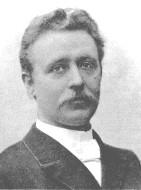
Carl Boberg

1859 - 1940 Person Name: Carl Gustav Boberg Topics: Proper 15 Year A Author of "O Lord My God (How Great Thou Art)" in Voices United Boberg, Carl Gustaf. (Mönsterås, Sweden, August 16, 1859--January 7, 1940, Kalmar). Swedish Covenant. Bible school at Kristinehamn. Editor of Sanningsvittnet 1890-1916, organ of the Evangelical National Foundation. Member of the Swedish Parliament, 1912-1931. Popular speaker and appreciated writer. Published several collections of poetry and a number of hymns. Member of committee responsible for first two hymnals of the Swedish Covenant. Author of "Jesus, Jesus, O det ordet" ("Jesus, Jesus, Name Most Precious"); "Min själ berömmer Gud med fröjd" (My Soul Now Magnifies the Lord"); "O store Gud" ("O Mighty God"). The text now known as "How Great Thou Art" is an English translation of a Russian version based on an earlier German translation of "O store Gud." --J. Irving Erickson, DNAH Archives

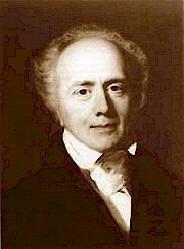
Henry Thomas Smart

1813 - 1879 Person Name: Henry Smart, 1813-1879 Topics: Year C Proper 15 Composer of "REGENT SQUARE" in Complete Anglican Hymns Old and New Henry Smart (b. Marylebone, London, England, 1813; d. Hampstead, London, 1879), a capable composer of church music who wrote some very fine hymn tunes (REGENT SQUARE, 354, is the best-known). Smart gave up a career in the legal profession for one in music. Although largely self taught, he became proficient in organ playing and composition, and he was a music teacher and critic. Organist in a number of London churches, including St. Luke's, Old Street (1844-1864), and St. Pancras (1864-1869), Smart was famous for his extemporiza­tions and for his accompaniment of congregational singing. He became completely blind at the age of fifty-two, but his remarkable memory enabled him to continue playing the organ. Fascinated by organs as a youth, Smart designed organs for impor­tant places such as St. Andrew Hall in Glasgow and the Town Hall in Leeds. He composed an opera, oratorios, part-songs, some instrumental music, and many hymn tunes, as well as a large number of works for organ and choir. He edited the Choralebook (1858), the English Presbyterian Psalms and Hymns for Divine Worship (1867), and the Scottish Presbyterian Hymnal (1875). Some of his hymn tunes were first published in Hymns Ancient and Modern (1861). Bert Polman

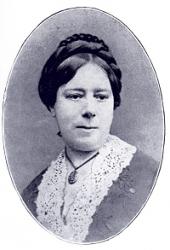
Catherine Winkworth

1827 - 1878 Topics: Proper 15 Year A; Proper 15 Year B Translator (into English) of "Now Thank We All Our God" in Voices United Catherine Winkworth (b. Holborn, London, England, 1827; d. Monnetier, Savoy, France, 1878) is well known for her English translations of German hymns; her translations were polished and yet remained close to the original. Educated initially by her mother, she lived with relatives in Dresden, Germany, in 1845, where she acquired her knowledge of German and interest in German hymnody. After residing near Manchester until 1862, she moved to Clifton, near Bristol. A pioneer in promoting women's rights, Winkworth put much of her energy into the encouragement of higher education for women. She translated a large number of German hymn texts from hymnals owned by a friend, Baron Bunsen. Though often altered, these translations continue to be used in many modern hymnals. Her work was published in two series of Lyra Germanica (1855, 1858) and in The Chorale Book for England (1863), which included the appropriate German tune with each text as provided by Sterndale Bennett and Otto Goldschmidt. Winkworth also translated biographies of German Christians who promoted ministries to the poor and sick and compiled a handbook of biographies of German hymn authors, Christian Singers of Germany (1869). Bert Polman ======================== Winkworth, Catherine, daughter of Henry Winkworth, of Alderley Edge, Cheshire, was born in London, Sep. 13, 1829. Most of her early life was spent in the neighbourhood of Manchester. Subsequently she removed with the family to Clifton, near Bristol. She died suddenly of heart disease, at Monnetier, in Savoy, in July, 1878. Miss Winkworth published:— Translations from the German of the Life of Pastor Fliedner, the Founder of the Sisterhood of Protestant Deaconesses at Kaiserworth, 1861; and of the Life of Amelia Sieveking, 1863. Her sympathy with practical efforts for the benefit of women, and with a pure devotional life, as seen in these translations, received from her the most practical illustration possible in the deep and active interest which she took in educational work in connection with the Clifton Association for the Higher Education of Women, and kindred societies there and elsewhere. Our interest, however, is mainly centred in her hymnological work as embodied in her:— (1) Lyra Germanica, 1st Ser., 1855. (2) Lyra Germanica, 2nd Ser., 1858. (3) The Chorale Book for England (containing translations from the German, together with music), 1863; and (4) her charming biographical work, the Christian Singers of Germany, 1869. In a sympathetic article on Miss Winkworth in the Inquirer of July 20, 1878, Dr. Martineau says:— "The translations contained in these volumes are invariably faithful, and for the most part both terse and delicate; and an admirable art is applied to the management of complex and difficult versification. They have not quite the fire of John Wesley's versions of Moravian hymns, or the wonderful fusion and reproduction of thought which may be found in Coleridge. But if less flowing they are more conscientious than either, and attain a result as poetical as severe exactitude admits, being only a little short of ‘native music'" Dr. Percival, then Principal of Clifton College, also wrote concerning her (in the Bristol Times and Mirror), in July, 1878:— "She was a person of remarkable intellectual and social gifts, and very unusual attainments; but what specially distinguished her was her combination of rare ability and great knowledge with a certain tender and sympathetic refinement which constitutes the special charm of the true womanly character." Dr. Martineau (as above) says her religious life afforded "a happy example of the piety which the Church of England discipline may implant.....The fast hold she retained of her discipleship of Christ was no example of ‘feminine simplicity,' carrying on the childish mind into maturer years, but the clear allegiance of a firm mind, familiar with the pretensions of non-Christian schools, well able to test them, and undiverted by them from her first love." Miss Winkworth, although not the earliest of modern translators from the German into English, is certainly the foremost in rank and popularity. Her translations are the most widely used of any from that language, and have had more to do with the modern revival of the English use of German hymns than the versions of any other writer. -- John Julian, Dictionary of Hymnology (1907) ============================ See also in: Hymn Writers of the Church

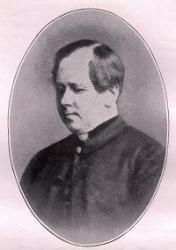
Andrew Reed

1787 - 1862 Topics: Proper 15 Year B Author of "Spirit Divine, Attend Our Prayers" in Voices United Reed, Andrew, D.D., son of Andrew Reed, was born in London on Nov. 27, 1787, and educated for the Congregational Ministry at Hackney College, London. He was first the pastor of the New Road Chapel, St. George's-in-the-East, and then of the Wycliffe Chapel, which was built through his exertions in 1830. His degree was conferred by Yule College, America. He died Feb. 25, 1862. As the founder of "The London Orphan Asylum," "The Asylum for Fatherless Children," “The Asylum for Idiots” "The Infant Orphan Asylum," and "The Hospital for Incurables," Dr. Reed is more fully known, and will be longer remembered than by his literary publications. His Hymn Book was the growth of years. The preparation began in 1817, when he published a Supplement to Watts, in which were a few originals. This was enlarged in 1825; and entirely superseded by his collection The Hymn Book, prepared from Dr. Watts's Psalms & Hymns and Other Authors, with some Originals, in 1842 (Preface). His hymns, mostly of a plain and practical character, numbering 21, were contributed to these various editions, and were republished with those of his wife in the Wycliffe Supplement, 1872. The best known are "Ah Jesus, let me hear Thy voice” and ”Spirit Divine, attend our prayer." All Dr. and Mrs. Reed's hymns are anonymous in The Hymn Book, 1842, but are given with their names in the Wyclife Supplement, 1872. His hymns now in common use include, in addition to those annotated under their respective first lines :— 1. Come, let us strike our harps afresh. Praise. 2. Come, my Redeemer, come. Desiring Christ's Presence. 3. Gentle Saviour, look on me. Christ's protection Desired. 4. Gracious Lord, as Thou hast taught us. Public Worship. 5. Hark, hark, the notes of joy. Missions. 6. Holy Ghost, with light divine (1817). Prayer to the Holy Spirit. Sometimes given as "Holy Ghost, Thou light divine;" and again as "Holy Spirit, Light divine." 7. Listen, sinner, mercy hails you. Invitation. Generally given as "Hear, O Sinner, mercy hails you." 8. Rich are the joys of solitude. Retirement. Some-times given as "How deep and tranquil is the joy." 9. There [comes] is an hour when I must part. Death anticipated. 10. Ye saints your music bring. Praise of the Cross. --John Julian, Dictionary of Hymnology (1907)

William Kethe

? - 1594 Topics: Proper 15 Year A Author (attributed to; English) of "Psalm 100: Vous, qui sur la terre habitez (All People That on Earth do Dwell)" in Voices United William Kethe (b. Scotland [?], d. Dorset England, c. 1594). Although both the time and place of Kethe's birth and death are unknown, scholars think he was a Scotsman. A Protestant, he fled to the continent during Queen Mary's persecution in the late 1550s. He lived in Geneva for some time but traveled to Basel and Strasbourg to maintain contact with other English refugees. Kethe is thought to be one of the scholars who translated and published the English-language Geneva Bible (1560), a version favored over the King James Bible by the Pilgrim fathers. The twenty-five psalm versifications Kethe prepared for the Anglo-Genevan Psalter of 1561 were also adopted into the Scottish Psalter of 1565. His versification of Psalm 100 (All People that on Earth do Dwell) is the only one that found its way into modern psalmody. Bert Polman ======================== Kethe, William, is said by Thomas Warton in his History of English Poetry, and by John Strype in his Annals of the Reformation, to have been a Scotsman. Where he was born, or whether he held any preferment in England in the time of Edward VI., we have been unable to discover. In the Brieff discours off the troubles begonne at Franckford, 1575, he is mentioned as in exile at Frankfurt in 1555, at Geneva in 1557; as being sent on a mission to the exiles in Basel, Strassburg, &c, in 1558; and as returning with their answers to Geneva in 1559. Whether he was one of those left behind in 1559 to "finishe the bible, and the psalmes bothe in meeter and prose," does not appear. The Discours further mentions him as being with the Earl of Warwick and the Queen's forces at Newhaven [Havre] in 1563, and in the north in 1569. John Hutchins in his County history of Dorset, 1774, vol. ii. p. 316, says that he was instituted in 1561 as Rector of Childe Okeford, near Blandford. But as there were two Rectors and only one church, leave of absence might easily be extended. His connection with Okeford seems to have ceased by death or otherwise about 1593. The Rev. Sir Talbot H. B. Baker, Bart., of Ranston, Blandford, who very kindly made researches on the spot, has informed me that the Registers at Childe Okeford begin with 1652-53, that the copies kept in Blandford date only from 1732 (the earlier having probably perished in the great fire there in 1731), that no will can be found in the district Probate Court, and that no monument or tablet is now to be found at Childe Okeford. By a communication to me from the Diocesan Registrar of Bristol, it appears that in a book professing to contain a list of Presentations deposited in the Consistory Court, Kethe is said to have been presented in 1565 by Henry Capel, the Patron of Childe Okeford Inferior. In the 1813 edition of Hutchins, vol. iii. pp. 355-6, William Watkinson is said to have been presented to this moiety by Arthur Capel in 1593. Twenty-five Psalm versions by Kethe are included in the Anglo-Genevan Psalter of 1561, viz. Ps. 27, 36, 47, 54, 58, 62, 70, 85, 88, 90, 91, 94, 100, 101, 104, 107, 111, 112, 113, 122, 125, 126, 134, 138, 142,—the whole of which were adopted in the Scottish Psalter of 1564-65. Only nine, viz. Ps. 104, 107, 111, 112, 113, 122, 125, 126, 134, were included in the English Psalter of 1562; Ps. 100 being however added in 1565. Being mostly in peculiar metres, only one, Ps. 100, was transferred to the Scottish Psalter of 1650. The version of Ps. 104, "My soul, praise the Lord," is found, in a greatly altered form, in some modern hymnals. Warton calls him ”a Scotch divine, no unready rhymer," says he had seen a moralisation of some of Ovid by him, and also mentions verses by him prefixed to a pamphlet by Christopher Goodman, printed at Geneva in 1558; a version of Ps. 93 added to Knox's Appellation to the Scottish Bishops, also printed at Geneva in 1558; and an anti-papal ballad, "Tye the mare Tom-boy." A sermon he preached before the Sessions at Blandford on Jan. 17, 1571, was printed by John Daye in 1571 (preface dated Childe Okeford, Jan. 29,157?), and dedicated to Ambrose Earl of Warwick. [Rev James Mearns, M.A]. -- John Julian, Dictionary of Hymnology (1907) ==================== Kethe, William, p. 624, i., line 30. The version which Warton describes as of Psalm 93 is really of Psalm 94, and is that noted under Scottish Hymnody, p. 1022, ii., as the version of Psalms 94 by W. Kethe. --John Julian, Dictionary of Hymnology, Appendix, Part II (1907)

Francis Pott

1832 - 1909 Person Name: Francis Pott, 1832-1909 Topics: Proper 15 Year B Author of "Angel-voices ever singing" in Common Praise Francis Pott studied at Brasenose College, Oxford, where he graduated B.A. in 1854, and M.A. in 1857. He was ordained Deacon in 1856, and Priest in 1857. He was Curate of Bishopsworth, Bristol, 1856; of Ardingley, Sussex, 1858; was appointed to Ticehurst in 1861; and is now incumbent of Northill, Bedfordshire. Mr. Pott has made many acceptable translations, and has edited "Hymns Fitted to the Order of Common Prayer, etc.;" a compilation of real merit. --Annotations of the Hymnal, Charles Hutchins, M.A., 1872 ============ Pott, Francis, M.A., was born Dec. 29, 1832, and educated at Brasenose, College, Oxford, B.A. 1854; M.A. 1857. Taking Holy Orders in 1856 he was curate of Bishopsworth, Gloucestershire, 1856-8; Ardingly, Berks, 1858-61; Ticehurst, Sussex, 1861-66; and Rector of Norhill, Ely, 1866. His Hymns fitted to the Order of Common Prayer, and Administration of the Sacraments, and other Rites and Ceremonies of the Church, According to the Use of the Church of England, To which are added Hymns for Certain Local Festivals, was published in 1861, and reprinted from time to time with a few additions. Mr. Pott contributed translations from the Latin and Syriac, and original hymns, including “Angel voices ever singing" (p. 68, ii.), and "Lift up your heads, eternal gates" (Ascension). These original hymns, together with his translations, have been received with much favour and are widely used. In several.…works, several translations from the Latin, and other hymnological work, are attributed to Archdeacon Alfred Pott. We are authorized to state that this ascription of authorship is an error. --John Julian, Dictionary of Hymnology (1907)

John Warrington Hatton

1710 - 1793 Person Name: John Hatton, d. 1793 Topics: Proper 15 Year C Composer (attributed to) of "DUKE STREET" in Common Praise John Warrington Hatton (b. Warrington, England, c. 1710; d, St. Helen's, Lancaster, England, 1793) was christened in Warrington, Lancashire, England. He supposedly lived on Duke Street in Lancashire, from where his famous tune name comes. Very little is known about Hatton, but he was most likely a Presbyterian, and the story goes that he was killed in a stagecoach accident. Bert Polman

H. W. Baker

1821 - 1877 Person Name: Henry Williams Baker Topics: Proper 15 Year A Paraphraser of "The King of Love" in Voices United Baker, Sir Henry Williams, Bart., eldest son of Admiral Sir Henry Loraine Baker, born in London, May 27, 1821, and educated at Trinity College, Cambridge, where he graduated, B.A. 1844, M.A. 1847. Taking Holy Orders in 1844, he became, in 1851, Vicar of Monkland, Herefordshire. This benefice he held to his death, on Monday, Feb. 12, 1877. He succeeded to the Baronetcy in 1851. Sir Henry's name is intimately associated with hymnody. One of his earliest compositions was the very beautiful hymn, "Oh! what if we are Christ's," which he contributed to Murray's Hymnal for the Use of the English Church, 1852. His hymns, including metrical litanies and translations, number in the revised edition of Hymns Ancient & Modern, 33 in all. These were contributed at various times to Murray's Hymnal, Hymns Ancient & Modern and the London Mission Hymn Book, 1876-7. The last contains his three latest hymns. These are not included in Hymns Ancient & Modern. Of his hymns four only are in the highest strains of jubilation, another four are bright and cheerful, and the remainder are very tender, but exceedingly plaintive, sometimes even to sadness. Even those which at first seem bright and cheerful have an undertone of plaintiveness, and leave a dreamy sadness upon the spirit of the singer. Poetical figures, far-fetched illustrations, and difficult compound words, he entirely eschewed. In his simplicity of language, smoothness of rhythm, and earnestness of utterance, he reminds one forcibly of the saintly Lyte. In common with Lyte also, if a subject presented itself to his mind with striking contrasts of lights and shadows, he almost invariably sought shelter in the shadows. The last audible words which lingered on his dying lips were the third stanza of his exquisite rendering of the 23rd Psalm, "The King of Love, my Shepherd is:"— Perverse and foolish, oft I strayed, But yet in love He sought me, And on His Shoulder gently laid, And home, rejoicing, brought me." This tender sadness, brightened by a soft calm peace, was an epitome of his poetical life. Sir Henry's labours as the Editor of Hymns Ancient & Modern were very arduous. The trial copy was distributed amongst a few friends in 1859; first ed. published 1861, and the Appendix, in 1868; the trial copy of the revised ed. was issued in 1874, and the publication followed in 1875. In addition he edited Hymns for the London Mission, 1874, and Hymns for Mission Services, n.d., c. 1876-7. He also published Daily Prayers for those who work hard; a Daily Text Book, &c. In Hymns Ancient & Modern there are also four tunes (33, 211, 254, 472) the melodies of which are by Sir Henry, and the harmonies by Dr. Monk. He died Feb. 12, 1877. --John Julian, Dictionary of Hymnology (1907)

Reginald Heber

1783 - 1826 Topics: Proper 15 Year B Author of "Bread of the World (Tu es notre pain véritable)" in Voices United Reginald Heber was born in 1783 into a wealthy, educated family. He was a bright youth, translating a Latin classic into English verse by the time he was seven, entering Oxford at 17, and winning two awards for his poetry during his time there. After his graduation he became rector of his father's church in the village of Hodnet near Shrewsbury in the west of England where he remained for 16 years. He was appointed Bishop of Calcutta in 1823 and worked tirelessly for three years until the weather and travel took its toll on his health and he died of a stroke. Most of his 57 hymns, which include "Holy, Holy, Holy," are still in use today. -- Greg Scheer, 1995 ==================== Heber, Reginald, D.D. Born at Malpas, April 21, 1783, educated at Brasenose College, Oxford; Vicar of Hodnet, 1807; Bishop of Calcutta, 1823; died at Trichinopoly, India, April 3, 1826. The gift of versification shewed itself in Heber's childhood; and his Newdigate prize poem Palestine, which was read to Scott at breakfast in his rooms at Brazenose, Oxford, and owed one of its most striking passages to Scott's suggestion, is almost the only prize poem that has won a permanent place in poetical literature. His sixteen years at Hodnet, where he held a halfway position between a parson and a squire, were marked not only by his devoted care of his people, as a parish priest, but by literary work. He was the friend of Milman, Gifford, Southey, and others, in the world of letters, endeared to them by his candour, gentleness, "salient playfulness," as well as learning and culture. He was on the original staff of The Quarterly Review; Bampton Lecturer (1815); and Preacher at Lincoln's Inn (1822). His edition of Jeremy Taylor is still the classic edition. During this portion of his life he had often had a lurking fondness for India, had traced on the map Indian journeys, and had been tempted to wish himself Bishop of Calcutta. When he was forty years old the literary life was closed by his call to the Episcopate. No memory of Indian annals is holier than that of the three years of ceaseless travel, splendid administration, and saintly enthusiasm, of his tenure of the see of Calcutta. He ordained the first Christian native—Christian David. His first visitation ranged through Bengal, Bombay, and Ceylon; and at Delhi and Lucknow he was prostrated with fever. His second visitation took him through the scenes of Schwartz's labours in Madras Presidency to Trichinopoly, where on April 3,1826, he confirmed forty-two persons, and he was deeply moved by the impression of the struggling mission, so much so that “he showed no appearance of bodily exhaus¬tion." On his return from the service ”He retired into his own room, and according to his invariable custom, wrote on the back of the address on Confirmation 'Trichinopoly, April 3, 1826.' This was his last act, for immediately on taking off his clothes, he went into a large cold bath, where he had bathed the two preceding mornings, but which was now the destined agent of his removal to Paradise. Half an hour after, his servant, alarmed at his long absence, entered the room and found him a lifeless corpse." Life, &c, 1830, vol. ii. p. 437. Heber's hymns were all written during the Hodnet period. Even the great missionary hymn, "From Greenland's icy mountains," notwithstanding the Indian allusions ("India's coral strand," "Ceylon's isle"), was written before he received the offer of Calcutta. The touching funeral hymn, "Thou art gone to the grave," was written on the loss of his first babe, which was a deep grief to him. Some of the hymns were published (1811-16) in the Christian Observer, the rest were not published till after his death. They formed part of a ms. collection made for Hodnet (but not published), which contained, besides a few hymns from older and special sources, contributions by Milman. The first idea of the collection appears in a letter in 1809 asking for a copy of the Olney Hymns, which he "admired very much." The plan was to compose hymns connected with the Epistles and Gospels, to be sung after the Nicene Creed. He was the first to publish sermons on the Sunday services (1822), and a writer in The Guardian has pointed out that these efforts of Heber were the germs of the now familiar practice, developed through the Christian Year (perhaps following Ken's Hymns on the Festivals), and by Augustus Hare, of welding together sermon, hymnal, and liturgy. Heber tried to obtain from Archbishop Manners Sutton and the Bishop of London (1820) authorization of his ms. collection of hymns by the Church, enlarging on the "powerful engine" which hymns were among Dissenters, and the irregular use of them in the church, which it was impossible to suppress, and better to regulate. The authorization was not granted. The lyric spirit of Scott and Byron passed into our hymns in Heber's verse; imparting a fuller rhythm to the older measures, as illustrated by "Oh, Saviour, is Thy promise fled," or the martial hymn, "The Son of God goes forth to war;" pressing into sacred service the freer rhythms of contemporary poetry (e.g. "Brightest and best of the sons of the morning"; "God that madest earth and heaven"); and aiming at consistent grace of literary expression.. Their beauties and faults spring from this modern spirit. They have not the scriptural strength of our best early hymns, nor the dogmatic force of the best Latin ones. They are too flowing and florid, and the conditions of hymn composition are not sufficiently understood. But as pure and graceful devotional poetry, always true and reverent, they are an unfailing pleasure. The finest of them is that majestic anthem, founded on the rhythm of the English Bible, "Holy, Holy, Holy, Lord God Almighty." The greatest evidence of Heber's popularity as a hymnwriter, and his refined taste as a compiler, is found in the fact that the total contents of his ms. collection which were given in his posthumous Hymns written and adapted to the Weekly Church Service of the Year. London, J. Murray, 1827; which included 57 hymns by Heber, 12 by Milman, and 29 by other writers, are in common in Great Britain and America at the present time. [Rev. H. Leigh Bennett, M.A.] Of Bishop Heber's hymns, about one half are annotated under their respective first lines. Those given below were published in Heber's posthumous Hymns, &c, 1827. Some of them are in extensive use in Great Britain and America; but as they possess no special histories they are grouped together as from the Hymns, &c, 1827:— 1. Beneath our feet, and o'er our head. Burial. 2. Creator of the rolling flood. St. Peter's Day, or, Gospel for 6th Sunday after Trinity. 3. Lo, the lilies of the field. Teachings of Nature: or, Gospel for 15th Sunday after Trinity. 4. 0 God, by Whom the seed is given. Sexagesima. 6. 0 God, my sins are manifold. Forgiveness, or, Gospel for 22nd S. after Trinity. 6. 0 hand of bounty, largely spread. Water into Wine, or, Gospel for 2nd S. after Epiphany. 7. 0 King of earth, and air, and sea. Feeding the Multitude; or, Gospel for 4th S. in Lent. 8. 0 more than merciful, Whose bounty gave. Good Friday. 9. 0 most merciful! 0 most bountiful. Introit Holy Communion. 10. 0 Thou, Whom neither time nor space. God unsearchable, or, Gospel for 5th Sunday in Lent. 11. 0 weep not o'er thy children's tomb. Innocents Day. 12. Room for the proud! Ye sons of clay. Dives and Lazarus, or, Gospel for 1st Sunday after Trinity. 13. Sit thou on my right hand, my Son, saith the Lord. Ascension. 14. Spirit of truth, on this thy day. Whit-Sunday. 15. The feeble pulse, the gasping breath. Burial, or, Gospel for 1st S. after Trinity. 16. The God of glory walks His round. Septuagesima, or, the Labourers in the Marketplace. 17. The sound of war in earth and air. Wrestling against Principalities and Powers, or, Epistle for 2lst Sunday after Trinity. 18. The world is grown old, her pleasures are past. Advent; or, Epistle for 4th Sunday in Advent. 19. There was joy in heaven. The Lost Sheep; or, Gospel for 3rd S. after Trinity. 20. Though sorrows rise and dangers roll. St. James's Day. 21. To conquer and to save, the Son of God. Christ the Conqueror. 22. Virgin-born, we bow before Thee. The Virgin Mary. Blessed amongst women, or, Gospel for 3rd S. in Lent. 23. Wake not, 0 mother, sounds of lamentation. Raising the Widow's Son, or, Gospel for 16th S. after Trinity. 24. When on her Maker's bosom. Holy Matrimony, or, Gospel for 2nd S. after Epiphany. 25. When through the torn sail the wild tempest is streaming. Stilling the Sea, or, Gospel for 4th Sunday after Epiphany. 26. Who yonder on the desert heath. The Good Samaritan, or, Gospel for 13th Sunday after Trinity. This list is a good index of the subjects treated of in those of Heber's hymns which are given under their first lines, and shows that he used the Gospels far more than the Epistles in his work. --John Julian, Dictionary of Hymnology (1907)

William Walsham How

1823 - 1897 Person Name: Willaim Walsham How Topics: Proper 15 Year B Author of "O Christ, the Word Incarnate" in Voices United William W. How (b. Shrewsbury, Shropshire, England, 1823; d. Leenane, County Mayo, Ireland, 1897) studied at Wadham College, Oxford, and Durham University and was ordained in the Church of England in 1847. He served various congregations and became Suffragan Bishop in east London in 1879 and Bishop of Wakefield in 1888. Called both the "poor man's bishop" and "the children's bishop," How was known for his work among the destitute in the London slums and among the factory workers in west Yorkshire. He wrote a number of theological works about controversies surrounding the Oxford Movement and attempted to reconcile biblical creation with the theory of evolution. He was joint editor of Psalms and Hymns (1854) and Church Hymns (1871). While rector in Whittington, How wrote some sixty hymns, including many for chil­dren. His collected Poems and Hymns were published in 1886. Bert Polman =============== How, William Walsham, D.D., son of William Wybergh How, Solicitor, Shrewsbury, was born Dec. 13, 1823, at Shrewsbury, and educated at Shrewsbury School and Wadham College, Oxford (B.A. 1845). Taking Holy Orders in 1846, he became successively Curate of St. George's, Kidderminster, 1846; and of Holy Cross, Shrewsbury, 1848. In 1851 he was preferred to the Rectory of Whittington, Diocese of St. Asaph, becoming Rural Dean in 1853, and Hon. Canon of the Cathedral in 1860. In 1879 he was appointed Rector of St. Andrew's Undershaft, London, and was consecrated Suffragan Bishop for East London, under the title of the Bishop of Bedford, and in 1888 Bishop of Wakefield. Bishop How is the author of the Society for Promoting Christian Knowledge Commentary on the Four Gospels; Plain Words , Four Series; Plain Words for Children; Pastor in Parochia; Lectures on Pastoral Work; Three All Saints Summers, and Other Poems , and numerous Sermons , &c. In 1854 was published Psalms and Hymns, Compiled by the Rev. Thomas Baker Morrell, M.A., . . . and the Rev. William Walsham How, M.A. This was republished in an enlarged form in 1864, and to it was added a Supplement in 1867. To this collection Bishop How contributed several hymns, and also to the S. P. C. K. Church Hymns , of which he was joint editor, in 1871. The Bishop's hymns in common use amount in all to nearly sixty. Combining pure rhythm with great directness and simplicity, Bishop How's compositions arrest attention more through a comprehensive grasp of the subject and the unexpected light thrown upon and warmth infused into facia and details usually shunned by the poet, than through glowing imagery and impassioned rhetoric. He has painted lovely images woven with tender thoughts, but these are few, and found in his least appreciated work. Those compositions which have laid the firmest hold upon the Church, are simple, unadorned, but enthusiastically practical hymns, the most popular of which, "O Jesu, Thou art standing"; "For all the Saints who from their labours rest," and "We give Thee but Thine own," have attained to a foremost rank. His adaptations from other writers as in the case from Bishop Ken, "Behold, the Master passeth by," are good, and his Children's hymns are useful and popular. Without any claims to rank as a poet, in the sense in which Cowper and Montgomery were poets, he has sung us songs which will probably outlive all his other literary works. The more important of Bishop How's hymns, including those already named, and "Lord, Thy children guide and keep"; "O Word of God Incarnate"; "This day at Thy creating word"; "Who is this so weak and helpless"; and others which have some special history or feature of interest, are annotated under their respective first lines. The following are also in common use:— i. From Psalms & Hymns, 1854. 1. Before Thine awful presence, Lord. Confirmation. 2. Jesus, Name of wondrous love [priceless worth]. Circumcision. The Name Jesus . 3. Lord Jesus, when we stand afar. Passiontide. 4. O blessing rich, for sons of men. Members of Christ. 5. 0 Lord of Hosts, the earth is Thine. In time of War. 6. O Lord, Who in Thy wondrous love. Advent. ii. From Psalms & Hymns, enlarged, 1864. 7. Lord, this day Thy children meet. Sunday School Anniversary. iii. From Supplement to the Psalms & Hymns, 1867. 8. Hope of hopes and joy of joys. Resurrection. 9. 0 daughters blest of Galilee. For Associations of Women. 10. O happy feet that tread. Public Worship. 11. With trembling awe the chosen three. Transfiguration. iv. From Parish Magazine, 1871, and Church Hymns, 1871. 12. O Jesu, crucified for man. Friday. 13. Yesterday, with worship blest. Monday. v. From the S. P. C. K. Church Hymns. 1871. 14. Bowed low in supplication. For the Parish. 15. Great Gabriel sped on wings of light. Annunciation, of the Blessed Virgin Mary. 16. O blest was he, whose earlier skill. St. Luke. 17. O God, enshrined in dazzling light. Omnipresence. Divine Worship . 18. O heavenly Fount of Light and Love. Witsuntide. 19. O Lord, it is a blessed thing. Weekdays. 20. 0 One with God the Father. Epiphany. 21. O Thou through suffering perfect made. Hospitals. 22. Rejoice, ye sons of men. Purification of the B. V. M. 23. Summer suns are glowing. Summer. 24. The year is swiftly waning. Autumn. 25. Thou art the Christ, O Lord. St. Peter. 26. To Thee our God we fly. National Hymn. 27. Upon the holy Mount they stood. Transfiguration and Church Guilds. 28. We praise Thy grace, 0 Saviour. St. Mark. vi. From the S. P. C. K. Children's Hymns, 1872. 29. Behold a little child. Jesus the Child's Example. 30. Come, praise your Lord and Saviour. Children's Praises. 31. It is a thing most wonderful. Sunday School Anniversary. 32. On wings of living light. Easter. Bishop How's hymns and sacred and secular pieces were collected and published as Poems and Hymns, 1886. The Hymns, 54 in all, are also published separately. He d. Aug. 10, 1897. --John Julian, Dictionary of Hymnology (1907) =================== How, W. W., p. 540, i. He died Aug. 10, 1897. His Memoir, by F. D. How, was published in 1898. --John Julian, Dictionary of Hymnology, New Supplement (1907)

Pages


Export as CSV
It looks like you are using an ad-blocker. Ad revenue helps keep us running. Please consider white-listing Hymnary.org or getting Hymnary Pro to eliminate ads entirely and help support Hymnary.org.