You help make Hymnary.org possible. More than 10 million people from 200+ countries found hymns, liturgical resources and encouragement on Hymnary.org in 2025, including you. Every visit affirms the global impact of this ministry.

If Hymnary has been meaningful to you this year, would you take a moment today to help sustain it? A gift of any size—paired with a note of encouragement if you wish—directly supports the server costs, research work and curation that keep this resource freely available to the world.

Give securely online today, or mail a check to:
Hymnary.org
Calvin University
3201 Burton Street SE
Grand Rapids, MI 49546

Thank you for your partnership, and may the hope of Advent fill your heart.

Person Results

Topics:the+judgment
In:person

Planning worship? Check out our sister site, ZeteoSearch.org, for 20+ additional resources related to your search.
Showing 51 - 60 of 413Results Per Page: 102050

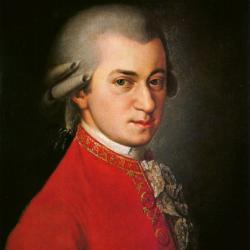
Wolfgang Amadeus Mozart

1756 - 1791 Person Name: Mozart Topics: Royalty of Christ Judgment the Prerogative of Composer of "ELLESDIE" in The Psalter Wolfgang Amadeus Mozart Austria 1756-1791. Born at Salzburg, Austria, the son of Leopold Mozart, a minor composer and violinist, and youngest of seven children, he showed amazing ability on violin and keyboard from earliest childhood, even starting to compose music at age four when his father would play a piece and Mozart would play it exactly as did his father. At five, he composed some of his own music, which he played to his father, who wrote it down. When Mozart was eight, he wrote his first symphony, probably transcribed by his father. In his early years his father was his only teacher, teaching his children languages and academic subjects, as well as fundamentals of their strict Catholic faith. Some of his early compositions came as a surprise to his father, who eventually gave up composing himself when he realized how talented his son was. His family made several European journeys and he and his sister, Nanneri, performed as child prodigies, at the court of Prince-elector Maximillian II of Bavaria in Munich, and at the Imperial Courts in Vienna and Prague. A long concert tour followed, for 3.5 years, taking the family to courts in Munich, Mannheim, Paris, London, Dover, The Hague, Amsterdam, Utrecht, Mechelen, and again to Paris, and back home via Zurich, Donaueschingen, and Munich. During these trips Mozart met many musicians, acquainting himself with the works of other composers. He met Johann Christian Bach in London in 1764. Family trips were challenging, and travel conditions were primitive. They had to wait for invitations and reimbursements from nobility, and they endured long, near-fatal illnesses far from home. First Leopold (1764) got sick, then both children (1765). They traveled again to Vienna in 1767 and stayed there over a year. After a year back in Salzburg, Leopold and Wolfgang went to Italy (1769-1771), Leopold wished to display his son’s abilities as a performer and maturing composer. In Bologna, Italy, Wolfgang was accepted as a member of the famous Academia Filamonica. In Rome he heard Gregorio Allegri’s Miserere twice in performance. Back in the Sistine Chapel, Mozart wrote the whole performance out from memory, thus producing the first unauthorized copy of this closely guarded property of the Vatican. In the next few years Mozart wrote several operas performed with success in Italy, but his father’s hopes of securing a professional appointment for his son were not realized. At age 17 he was engaged as a musician at the Salzburg court, but grew restless and traveled in search of a better position. After returning to Salzburg, Mozart was employed as a court musician by the ruler of Salzburg, Prince Archbishop Hieronymus Colloredo. This gave Mozart ample opportunity to develop relationships with other musicians and his admirers, resulting in his development of new symphonies, sonatas, string quartets, masses, serenades, and some minor operas. In 1775 he wrote his only violin concertos, five in all. Again, he was discontent with work in Salzburg and traveled to find more opportunity to write operas. He and his father again visited Munich and Vienna, but neither visit was successful with the exception of his opera ‘La finta giardiniera’ in Munich. In 1777 he resigned his Salzburg position and went to Augsburg, Mannheim, Paris, and Munich again. In Mannheim he met and fell in love with Aloysia Weber, one of four daughters of a musical family. He could find no real employment there and left for Paris in 1778. He might have had a position as organist at Versailles, but he was not interested in that. He fell into debt and started pawning valuables. During these events his mother died. Meanwhile his father was still trying to find him a position in Salzburg. After checking out several other European cities and Munich, he again encountered Aloysia, but she was no longer interested in him, so he returned to Salzburg, having written another symphony, concerto, and piano sonata, and took the new appointment his father had found. However, he was still in discontent. Visiting Vienna in 1781, he was dismissed from his Salzburg position. He wrote another opera, ‘Idomeneo’, in 1781, that was successful in Munich. Two months later he was summoned to Vienna, where his employer, Archbishop Colloredo, wanted him around due to his notoriety. Mozart wished to meet the emperor and perform for him, and finally got that opportunity. It resulted in a part-time position and substantial commissions. Colloredo became a nemesis to Mozart’s career, finally releasing Mozart from his employ with a literal kick in the pants, much against his father’s wishes. However, he was now independent. Mozart then decided to settle in Vienna as a free lance performer and composer. He lived with the Fridolin Weber family, who had moved from Mannheim to Vienna. Fridolin, the father, had died, and they were taking in lodgers to make ends meet. His career there went well, and he performed as a pianist before the Emperor, establishing himself as the finest keyboard player in Vienna. He wrote another opera in 1782, again achieving success. Mozart had now become a prolific and influential composer of the Classical period and was known throughout Europe. Aloysia was now married to actor, Joseph Lange, and Mozart’s interest shifted to her sister, Constanze. In 1782 he married Constanze Weber Mozart Nissen. The marriage started out with a brief separation, and there was a problem getting Mozart’s father’s permission, which finally came. They had six children, but only two survived infancy: Carl and Franz. He lived in Vienna and achieved some notoriety, composing many of his best-known symphonies, concertos, and operas. In 1782-83 he became intimately acquainted with Johann Sebastian Bach and George Friederic Handel, as his friend, Gottfried van Swieten, owned many manuscripts of the Baroque masters, which Mozart studied intently. He altered his style of composition as a result. That year Mozart and his wife visited his father and sister, and he composed a liturgical piece, a Mass, with a singing part for his wife. He also met Joseph Hadyn in Vienna in 1784 and they became friends. They even played together in a string quartet from time to time. Mozart wrote six quartets dedicated to Hadyn. In 1785 Hadyn told Leopold Mozart, “Your son is the greatest composer known to me by person and repute, he has taste, and what is more, the greatest skill in composition”. Over the next several years Mozart booked several piano concertos in various places as a sole performer to delighted audiences, making substantial remuneration for his work. He and his wife then adopted a more luxurious lifestyle. They moved to an expensive apartment and he bought a fine fortepiano and billiard table. They sent their son, Karl, to an expensive boarding school and also kept servants. In 1784 Mozart became a Freemason and even composed Masonic music. Over the next several years he did little operatic writing and focused on his career as a piano soloist and writer of concertos. He again began operatic collaboration in 1785, creating ‘The marriage of Figaro’, then ‘Don Giovanni’ in 1787. That year his father died. Also that year he obtained a steady post under Emperor Joseph II as his chamber composer. This was part-time employment that was important when hard times arrived. However, Joseph aimed at keeping Mozart from leaving Vienna for better work. The Austrio-Turkish War made life difficult for musicians, and his aristocracy support had declined. He moved to save on expenses, but that did not help much, and he was reduced to borrowing funds from his friends, and pleading for loans. During this period he produced his last three symphonies. In 1789 he then set up on a journey to Leipzig, Dresden, and Berlin hoping to improve his fortunes. In 1790 he was highly productive, producing concertos, an opera, ‘The magic flute’, a series of string quintets, a motet, and an (unfinished) Requiem. Finances began to improve and he begin paying back his debts. Public reaction to his works also brought him great satisfaction. In 1791, while in Prague for the premiere of his opera, ‘La clemenza di Tito’, he fell ill. He continued professional functions for a short time, but had to go home and be nursed by his wife over the next couple of months. He died at Vienna, Austria, at the age of 35, a small thin man with undistinguishing characteristics. He was buried in a modest grave, having had a small funeral. Beethoven composed his early works in the shadow of Mozart, and Joseph Hadyn wrote “posterity will not see such a talent (as Mozart) again in 100 years”. 600+ works. Side note: Mozart enjoyed billiards, dancing, and had a pet canary, a starling, a dog, and a horse for recreational riding. He liked off-color humor. He wore elegant clothing when performing and had a modest tenor voice. John Perry

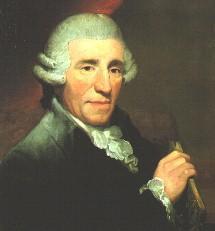
Joseph Haydn

1732 - 1809 Person Name: Josef Haydn Topics: Judgment Day; Royalty of Christ Judgment the Prerogative of Composer of "AUSTRIAN HYMN" in The Psalter Franz Joseph Haydn (b. Rohrau, Austria, 1732; d. Vienna, Austria, 1809) Haydn's life was relatively uneventful, but his artistic legacy was truly astounding. He began his musical career as a choirboy in St. Stephen's Cathedral, Vienna, spent some years in that city making a precarious living as a music teacher and composer, and then served as music director for the Esterhazy family from 1761 to 1790. Haydn became a most productive and widely respected composer of symphonies, chamber music, and piano sonatas. In his retirement years he took two extended tours to England, which resulted in his "London" symphonies and (because of G. F. Handel's influence) in oratorios. Haydn's church music includes six great Masses and a few original hymn tunes. Hymnal editors have also arranged hymn tunes from various themes in Haydn's music. Bert Polman

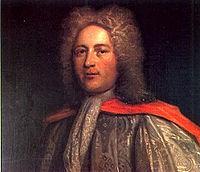
William Croft

1678 - 1727 Topics: Judgment Composer of "ST. ANNE" in Psalms for All Seasons William Croft, Mus. Doc. was born in the year 1677 and received his musical education in the Chapel Royal, under Dr. Blow. In 1700 he was admitted a Gentleman Extraordinary of the Chapel Boyd; and in 1707, upon the decease of Jeremiah Clarke, he was appointed joint organist with his mentor, Dr. Blow. In 1709 he was elected organist of Westminster Abbey. This amiable man and excellent musician died in 1727, in the fiftieth year of his age. A very large number of Dr. Croft's compositions remain still in manuscript. Cathedral chants of the XVI, XVII & XVIII centuries, ed. by Edward F. Rimbault, London: D. Almaine & Co., 1844

William B. Bradbury

1816 - 1868 Person Name: William Batchelder Bradbury Topics: Christ's Return and Judgment Composer of "SOLID ROCK" in Glory to God William Batchelder Bradbury USA 1816-1868. Born at York, ME, he was raised on his father's farm, with rainy days spent in a shoe-shop, the custom in those days. He loved music and spent spare hours practicing any music he could find. In 1830 the family moved to Boston, where he first saw and heard an organ and piano, and other instruments. He became an organist at 15. He attended Dr. Lowell Mason's singing classes, and later sang in the Bowdoin Street church choir. Dr. Mason became a good friend. He made $100/yr playing the organ, and was still in Dr. Mason's choir. Dr. Mason gave him a chance to teach singing in Machias, ME, which he accepted. He returned to Boston the following year to marry Adra Esther Fessenden in 1838, then relocated to Saint John, New Brunswick. Where his efforts were not much appreciated, so he returned to Boston. He was offered charge of music and organ at the First Baptist Church of Brooklyn. That led to similar work at the Baptist Tabernacle, New York City, where he also started a singing class. That started singing schools in various parts of the city, and eventually resulted in music festivals, held at the Broadway Tabernacle, a prominent city event. He conducted a 1000 children choir there, which resulted in music being taught as regular study in public schools of the city. He began writing music and publishing it. In 1847 he went with his wife to Europe to study with some of the music masters in London and also Germany. He attended Mendelssohn funeral while there. He went to Switzerland before returning to the states, and upon returning, commenced teaching, conducting conventions, composing, and editing music books. In 1851, with his brother, Edward, he began manufacturring Bradbury pianos, which became popular. Also, he had a small office in one of his warehouses in New York and often went there to spend time in private devotions. As a professor, he edited 59 books of sacred and secular music, much of which he wrote. He attended the Presbyterian church in Bloomfield, NJ, for many years later in life. He contracted tuberculosis the last two years of his life. John Perry

Samuel Sebastian Wesley

1810 - 1876 Topics: Christ's Return and Judgment Composer of "AURELIA" in Glory to God Samuel Sebastian Wesley (b. London, England, 1810; d. Gloucester, England, 1876) was an English organist and composer. The grandson of Charles Wesley, he was born in London, and sang in the choir of the Chapel Royal as a boy. He learned composition and organ from his father, Samuel, completed a doctorate in music at Oxford, and composed for piano, organ, and choir. He was organist at Hereford Cathedral (1832-1835), Exeter Cathedral (1835-1842), Leeds Parish Church (1842­-1849), Winchester Cathedral (1849-1865), and Gloucester Cathedral (1865-1876). Wesley strove to improve the standards of church music and the status of church musicians; his observations and plans for reform were published as A Few Words on Cathedral Music and the Music System of the Church (1849). He was the musical editor of Charles Kemble's A Selection of Psalms and Hymns (1864) and of the Wellburn Appendix of Original Hymns and Tunes (1875) but is best known as the compiler of The European Psalmist (1872), in which some 130 of the 733 hymn tunes were written by him. Bert Polman

Rowland Hugh Prichard

1811 - 1887 Topics: Christ's Return and Judgment Composer of "HYFRYDOL" in Glory to God Rowland H. Prichard (sometimes spelled Pritchard) (b. Graienyn, near Bala, Merionetshire, Wales, 1811; d. Holywell, Flintshire, Wales, 1887) was a textile worker and an amateur musician. He had a good singing voice and was appointed precentor in Graienyn. Many of his tunes were published in Welsh periodicals. In 1880 Prichard became a loom tender's assistant at the Welsh Flannel Manufacturing Company in Holywell. Bert Polman

Henry Thomas Smart

1813 - 1879 Person Name: Henry Smart Topics: Christ Second Coming and Judgment of Composer of "LANCASHIRE" in Trinity Hymnal Henry Smart (b. Marylebone, London, England, 1813; d. Hampstead, London, 1879), a capable composer of church music who wrote some very fine hymn tunes (REGENT SQUARE, 354, is the best-known). Smart gave up a career in the legal profession for one in music. Although largely self taught, he became proficient in organ playing and composition, and he was a music teacher and critic. Organist in a number of London churches, including St. Luke's, Old Street (1844-1864), and St. Pancras (1864-1869), Smart was famous for his extemporiza­tions and for his accompaniment of congregational singing. He became completely blind at the age of fifty-two, but his remarkable memory enabled him to continue playing the organ. Fascinated by organs as a youth, Smart designed organs for impor­tant places such as St. Andrew Hall in Glasgow and the Town Hall in Leeds. He composed an opera, oratorios, part-songs, some instrumental music, and many hymn tunes, as well as a large number of works for organ and choir. He edited the Choralebook (1858), the English Presbyterian Psalms and Hymns for Divine Worship (1867), and the Scottish Presbyterian Hymnal (1875). Some of his hymn tunes were first published in Hymns Ancient and Modern (1861). Bert Polman

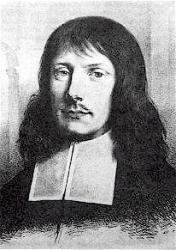
Joachim Neander

1650 - 1680 Topics: Christ Second Coming and Judgment of Composer of "NEANDER" in Trinity Hymnal Neander, Joachim, was born at Bremen, in 1650, as the eldest child of the marriage of Johann Joachim Neander and Catharina Knipping, which took place on Sept. 18, 1649, the father being then master of the Third Form in the Paedagogium at Bremen. The family name was originally Neumann (Newman) or Niemann, but the grandfather of the poet had assumed the Greek form of the name, i.e. Neander. After passing through the Paedagogium he entered himself as a student at the Gymnasium illustre (Academic Gymnasium) of Bremen in Oct. 1666. German student life in the 17th century was anything but refined, and Neander seems to have been as riotous and as fond of questionable pleasures as most of his fellows. In July 1670, Theodore Under-Eyck came to Bremen as pastor of St. Martin's Church, with the reputation of a Pietist and holder of conventicles. Not long after Neander, with two like-minded comrades, went to service there one Sunday, in order to criticise and find matter of amusement. But the earnest words of Under-Eyck touched his heart; and this, with his subsequent conversations with Under-Eyck, proved the turning-point of his spiritual life. In the spring of 1671 he became tutor to five young men, mostly, if not all, sons of wealthy merchants at Frankfurt-am-Main, and accompanied them to the University of Heidelberg, where they seem to have remained till the autumn of 1673, and where Neander learned to know and love the beauties of Nature. The winter of 1673-74 he spent at Frankfurt with the friends of his pupils, and here he became acquainted with P. J. Spener (q.v.) and J. J. Schütz (q.v.) In the spring of 1674 he was appointed Rector of the Latin school at Düsseldorf (see further below). Finally, in 1679, he was invited to Bremen as unordained assistant to Under-Eyck at St. Martin's Church, and began his duties about the middle of July. The post was not inviting, and was regarded merely as a stepping stone to further preferment, the remuneration being a free house and 40 thalers a year, and the Sunday duty being a service with sermon at the extraordinary hour of 5 a.m. Had he lived, Under-Eyck would doubtless have done his best to get him appointed to St. Stephen's Church, the pastorate of which became vacant in Sept., 1680. But meantime Neander himself fell into a decline, and died at Bremen May 31, 1680 (Joachim Neander, sein Leben und seine Lieder. With a Portrait. By J. F. Iken, Bremen, 1880; Allgemeine Deutsche Biographie, xxiii. 327, &c.) Neander was the first important hymn-writer of the German Reformed Church since the times of Blaurer and Zwick. His hymns appear to have been written mostly at Düsseldorf, after his lips had been sealed to any but official work. The true history of his unfortunate conflict has now been established from the original documents, and may be summarized thus. The school at Düsseldorf was entirely under the control of the minister and elders of the Reformed Church there. The minister from about July, 1673, to about May, 1677, was Sylvester Lürsen (a native of Bremen, and only a few years older than Neander), a man of ability and earnestness, but jealous, and, in later times at least, quarrelsome. With him Neander at first worked harmoniously, frequently preaching in the church, assisting in the visitation of the sick, &c. But he soon introduced practices which inevitably brought on a conflict. He began to hold prayer meetings of his own, without informing or consulting minister or elders; he began to absent himself from Holy Communion, on the ground that he could not conscientiously communicate along with the unconverted, and also persuaded others to follow this example; and became less regular in his attendance at the ordinary services of the Church. Besides these causes of offence he drew out a new timetable for the school, made alterations on the school buildings, held examinations and appointed holidays without consulting any one. The result of all this was a Visitation of the school on Nov. 29, 1676, and then his suspension from school and pulpit on Feb. 3, 1677. On Feb. 17 he signed a full and definite declaration by which "without mental reservations" he bound himself not to repeat any of the acts complained of; and thereupon was permitted to resume his duties as rector but not as assistant minister. The suspension thus lasted only 14 days, and his salary was never actually stopped. The statements that he was banished from Düsseldorf, and that he lived for months in a cave in the Neanderthal near Mettmann are therefore without foundation. Still his having had to sign such a document was a humiliation which he must have felt keenly, and when, after Lürsen's departure, the second master of the Latin school was appointed permanent assistant pastor, this feeling would be renewed. Neander thus thrown back on himself, found consolation in communion with God and Nature, and in the composition of his hymns. Many were without doubt inspired by the scenery of the Neanderthal (a lovely valley with high rocky sides, between which flows the little river Düssel); and the tradition is probable enough that some of them were composed in a cave there. A number were circulated among his friends at Düsseldorf in MS., but they were first collected and published after his removal to Bremen, and appeared as:— A und Ώ, Joachimi Neandri Glaub-und Liebesübung: — auffgemuntert durch ein fällige Bundes Lieder und Danck-Psalmen, Bremen, Hermann Brauer, 1680; 2nd ed. Bremen, 1683 ; 3rd ed. Bremen, 1687; 4th ed. Frankfurt, 1689. These editions contain 57 hymns. In the 5th ed., Frankfurt and Leipzig, 1691, edited by G. C. Strattner, eight hymns were added as being also by Neander. [The whole of these eds. are in the Royal Library, Berlin. The so-called 3rd. ed. at Wesel, 1686, also found in Berlin, was evidently pirated.] Other editions rapidly followed till we find the complete set (i.e. 57 or 58) formally incorporated as part of a hymnbook, e.g. in the Marburg Reformed Gesang-Buch, 1722, where the first part consists of Lobwasser's Psalter, the second of Neander's Bundeslieder, and the third of other hymns. Neander's Bundeslieder also form a division of the Lemgo Reformed Gesang-Buch, 1722; and of a favourite book used in the meetings conducted by G. Tersteegen, which in the 5th ed., Solingen, 1760, has the title Gott-geheiligtes Harfen-Spiel der Kinder Zion; bestehend in Joachimi Neandri sämtlichen Bundes-Liedern, &c. In this way, especially in the district near Düsseldorf and on the Ruhr, Neander's name was honoured and beloved long after it had passed out of memory at Bremen. Many of Neander's hymns were speedily received into the Lutheran hymnbooks, and are still in universal use. The finest are the jubilant hymns of Praise and Thanksgiving, such as his "Lobe den Herren”, and those setting forth the Majesty of God in His works of beauty and wonder in Nature, such as his "Himmel, Erde", and "Unbegreiflich Gut"; while some of his hymns of Penitence, such as his "Sieh hier bin ich, Ehrenkönig" (q.v.), are also very beautiful. Many are of a decidedly subjective cast, but for this the circumstances of their origin, and the fact that the author did not expect them to be used in public worship, will sufficiently account. Here and there there are doubtless harshnesses, and occasionally imagery which is rather jarring; and naturally enough the characteristic expressions and points of view of German 17th cent. Pietism and of the "Covenant Theology" are easily enough detected. But the glow and sweetness of his better hymns, their firm faith, originality, Scripturalness, variety and mastery of rhythmical forms, and genuine lyric character fully entitled them to the high place they hold. Of the melodies in the original edition of 1680 there are 19 by Neander himself, the best known being those to Nos. viii. and xi. below. The hymns by Neander which have passed into English, and have not already been referred to, are:— Hymns in English common use: i. Meine Hoffnung stehet feste. Thanksgiving. Founded on 1 Tim. vi. 17. 1680 as above, p. 115, in 5 stanzas of 7 lines, entitled "Grace after meat." In the Unverfälschter Liedersegen, 1851, No. 712. Translated as:— All my hope is grounded surely. A full and good translation by Miss Winkworth, as No. 8 in her Chorale Book for England, 1863. Another translation is: "All my Hope is fix'd and grounded." By J. C. Jacobi, 1720, p. 17, repeated in his ed., 1732, p. 64, altered and beginning, "All my Hope is firmly grounded." ii. Unbegreiflich Gut, wahrer Gott alleine. Summer. According to tradition this was written in the summer of 1677, in a cave in the Neanderthal near Düsseldorf, while Neander was in enforced absence from his school duties (Koch, vi. 20). It is founded on Ps. civ. 24. 1680, p. 165, in 12 stanzas of 6 lines, and entitled, "The Joys of Summer and Autumn in Field and Forest." The following note shows that the "Feeling for Nature" is not entirely modern. “It is also a travelling hymn in summer or autumn for those who, on their way to Frankfurt on the Main, go up and down the river Rhine, where between Cologne and Mainz, mountains, cliffs, brooks and rocks are to be beheld with particular wonder; also in the district of Berg in the rocky region [the ‘Gestein' now called the Neanderthal], not far from Düsseldorf." The hymn is in Knapp's Evangelischer Lieder-Schatz 1850, No. 2163 (1865, No. 2231), omitting st. x. Translated as:-— 0 Thou true God alone. A very good translation, omitting st. x., by Miss Winkworth, in her Christian Singers, 1869, p. 286. Her translation of st. i., iii.-v. altered in metre, and beginning "Thou true God alone," are No. 53 in M. W. Stryker's Christian Chorals, 1885. Hymns not in English common use:—— iii. Auf, auf, mein Geist, erhebe dich zum Himmel. Holy Communion. Founded on Ps. xxiii. 6. 1860, as above, p. 27, in 5 stanzas, entitled, "The soul strengthened and refreshed. After the reception of the Holy Communion." In Porst's Gesang-Buch, ed. 1855, No. 218. In the Moravian London Gesang-Buch, 1753, No. 697, it begins, "Den Himmels-Vorschmack hab' ich auf der Erde," and in the Brüder Gesang-Buch, 1778, No. 1178, it was further recast (by C. Gregor?) and altered to "hab'ich schon hinieden." Translated as "Heav'n's foretaste I may here already have." By F W. Foster & J. Miller, as No. 596, in the Moravian Hymn Book, 1789. In the 1801 ed. (1849, No. 1003) it begins, “Since Jesus dy'd, my guilty soul to save." iv. Der Tag ist hin, mein Jesu, bei mir bleibe. Evening. Founded on St. Luke xxiv. 29. 1680, p. 15, in 6 stanzas entitled, "The Christian returning thanks at eventide." In the Unverfälschter Liedersegen, 1851, No. 512. The translations are: (1) "The Day is gone, come Jesu my Protector." In the Supplement to German Psalmody, ed. 1765, p. 72. (2) "The day is past, Thou Saviour dear, still dwell my breast within." By H. J. Buckoll, 1842, p. 82. (3) "The day is gone, abide with me tonight." By E. Massie, 1867, p. 192. (4) "The day is gone, abide with me, 0 Jesus." By R. Massie, in the Day of Rest, 1877. v. Grosser Prophete, mein Herze begehret. Love to Christ. Founded on 1 Cor. xvi. 22. 1680, p. 191, in 4 stanzas. Translated as “Heavenly Prophet, my Heart is desiring." By J. C. Jacobi, 1720, p. 40. vi. Jehovah ist mein Licht und Gnadensonne. God's Perfections. Founded on 1 John i. 7. 1680, p. 19 in 4 stanzas, entitled, "Walking in the Light." Translated as, "Jehovah is my light, salvation showing." By Dr. H. Mills, 1845 (1856, p. 6). vii. 0 allerhöchster Menschenhüter. Morning. A hymn of praise to our Almighty Preserver. 1680, p. 11, in 6 stanzas, founded on Ps. lix. 16; and entitled, "The Christian singing at Morning." Translated as, "O Thou Most Highest! Guardian of mankind." By Miss Winkworth, 1858, p. 72. viii. Unser Herrscher, unser König. Thanksgiving. Founded on Acts viii. 2. 1680, p. 147, in 6 stanzas, entitled, "The glorious Jehovah." In the Unverfälschter Liedersegen 1851, No. 344. The well-known melody (in the Society for Promoting Christian Knowledge Church Hymns called Munich) is also by Neander, and appeared along with the hymn. Translated as, "Sovereign Ruler, King victorious," in the British Herald, Dec, 1865, p. 185, and Reid's Praise Book, 1872. ix. Wie fleucht dahin der Menschenzeit. For the Dying. A powerful hymn on the vanity of the earthly, founded on Ps. xc. 12. 1680, p. 174, in 7 stanzas, entitled, "He that counts his days." In the Unverfälschter Liedersegen, 1851, No. 845. The translations are: (1) "This life is like a flying dream" (beginning with st. ii. "Das Leben ist gleich wie ein Traum"). By Mrs. Findlater, in Hymns from the Land of Luther, 1858, p. 24 (1884, p. 146). (2) "Though hastening onward to the grave." By E. Massie, 1867, p. 36. x. Wo soil ich hin? wer helfet mir? Lent. Founded on Romans vii. 24. 1680, p. 51, in 5 st. entitled “The distressed one longing for Redemption." In the Unverfälschter Liedersegen, 1851, No. 393. The translations are: (1) "For help, O whither shall I flee." By Dr. H. Mills, 1845 (1856, p. 146). (2) "How shall I get there? who will aid?" By Miss Warner, 1858, p. 52. xi. Wunderbarer König. Thanksgiving. Founded on Ps. cl. 6. 1680, p. 159, in 4 stanzas, entitled, "Inciting oneself to the Praise of God." In the Unverfälschter Liedersegen, 1851, No. 787. The melody, a very fine one (called by Mr. Mercer Groningen), is also by Neander, and appeared along with the hymn. The translations are: (1) "Wonderful Creator." By J. C. Jacobi, 1722, p. 88. (2) "Wonderful and blessed." By J. D. Burns in his Memoir and Remains, 1869, p. 230. (3) "Wondrous King Almighty." By N. L. Frothingham, 1870, p. 266. [Rev. James Mearns, M.A.] --John Julian, Dictionary of Hymnology (1907)

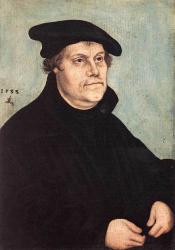
Martin Luther

1483 - 1546 Person Name: Martin Luther, 1483-1548 Topics: Christ Second Coming and Judgment of Composer of "LUTHER'S HYMN" in Trinity Hymnal Luther, Martin, born at Eisleben, Nov. 10, 1483; entered the University of Erfurt, 1501 (B.A. 1502, M.A.. 1503); became an Augustinian monk, 1505; ordained priest, 1507; appointed Professor at the University of Wittenberg, 1508, and in 1512 D.D.; published his 95 Theses, 1517; and burnt the Papal Bull which had condemned them, 1520; attended the Diet of Worms, 1521; translated the Bible into German, 1521-34; and died at Eisleben, Feb. 18, 1546. The details of his life and of his work as a reformer are accessible to English readers in a great variety of forms. Luther had a huge influence on German hymnody. i. Hymn Books. 1. Ellich cristlich lider Lobgesang un Psalm. Wittenberg, 1524. [Hamburg Library.] This contains 8 German hymns, of which 4 are by Luther. 2. Eyn Enchiridion oder Handbuchlein. Erfurt, 1524 [Goslar Library], with 25 German hymns, of which 18 are by Luther. 3. Geystliche Gesangk Buchleyn. Wittenberg, 1524 [Munich Library], with 32 German hymns, of which 24 are by Luther. 4. Geistliche Lieder auffs new gebessert. Wittenberg. J. Klug, 1529. No copy of this book is now known, but there was one in 1788 in the possession of G. E. Waldau, pastor at Nürnberg, and from his description it is evident that the first part of the Rostock Gesang-Buch, 1531, is a reprint of it. The Rostock Gesang-Buch, 1531, was reprinted by C. M. Wiechmann-Kadow at Schwerin in 1858. The 1529 evidently contained 50 German hymns, of which 29 (including the Litany) were by Luther. 5. Geistliche Lieder auffs new gebessert. Erfurt. A. Rauscher, 1531 [Helmstädt, now Wolfenbüttel Library], a reprint of No. 4. 6. Geistliche Lieder. Wittenberg. J. Klug, 1535 [Munich Library. Titlepage lost], with 52 German hymns, of which 29 are by Luther. 7. Geistliche Lieder auffs new gebessert. Leipzig. V. Schumann, 1539 [Wernigerode Library], with 68 German hymns, of which 29 are by Luther. 8. Geistliche Lieder. Wittenberg. J. Klug, 1543 [Hamburg Library], with 61 German hymns, of which 35 are by Luther. 9. Geystliche Lieder. Leipzig. V. Babst, 1545 [Gottingen Library]. This contains Luther's finally revised text, but adds no new hymns by himself. In pt. i. are 61 German hymns, in pt. ii. 40, of which 35 in all are by Luther. For these books Luther wrote three prefaces, first published respectively in Nos. 3, 4, 9. A fourth is found in his Christliche Geseng, Lateinisch und Deudsch, zum Begrebnis, Wittenberg, J. Klug, 1542. These four prefaces are reprinted in Wackernagel’s Bibliographie, 1855, pp. 543-583, and in the various editions of Luther's Hymns. Among modern editions of Luther's Geistliche Lieder may be mentioned the following:— Carl von Winterfeld, 1840; Dr. C. E. P. Wackernagel, 1848; Q. C. H. Stip, 1854; Wilhelm Schircks, 1854; Dr. Danneil, 1883; Dr. Karl Gerok, 1883; Dr. A. F. W. Fischer, 1883; A. Frommel, 1883; Karl Goedeke, 1883, &c. In The Hymns of Martin Luther. Set to their original melodies. With an English version. New York, 1883, ed. by Dr. Leonard Woolsey Bacon and Nathan H. Allen, there are the four prefaces, and English versions of all Luther's hymns, principally taken more or less altered, from the versions by A. T. Russell, R. Massie and Miss Winkworth [repub. in London, 1884]. Complete translations of Luther's hymns have been published by Dr. John Anderson, 1846 (2nd ed. 1847), Dr. John Hunt, 1853, Richard Massie, 1854, and Dr. G. Macdonald in the Sunday Magazine, 1867, and his Exotics, 1876. The other versions are given in detail in the notes on the individual hymns. ii. Classified List of Luther's Hymns. Of Luther's hymns no classification can be quite perfect, e.g. No. 3 (see below) takes hardly anything from the Latin, and No. 18 hardly anything from the Psalm. No. 29 is partly based on earlier hymns (see p. 225, i.). No. 30 is partly based on St. Mark i. 9-11, and xvi., 15, 16 (see p. 226, ii.). No. 35 is partly based on St. Luke ii. 10-16. The following arrangement, however, will answer all practical purposes. A. Translations from the Latin. i. From Latin Hymns: 1. Christum wir sollen loben schon. A solis ortus cardine 2. Der du bist drei in Einigkeit. O Lux beata Trinitas. 3. Jesus Christus unser Heiland, Der von. Jesus Christus nostra salus 4. Komm Gott Schopfer, heiliger Geist. Veni Creator Spiritus, Mentes. 5. Nun komm der Beidenheiland. Veni Redemptor gentium 6. Was flirchst du Feind Herodes sehr. A solis ortus cardine ii. From Latin Antiphons, &c.: 7. Herr Gott dich loben wir. Te Deum laudamus. 8. Verleih uns Frieden gnädiglich. Dapacem, Domine 9. Wir glauben all an einen Gott. iii. Partly from the Latin, the translated stanzas being adopted from Pre-Reformation Versions: 10. Komm, heiliger Geist, Herre Gott. 11. Mitten wir im Leben sind. Media vita in morte sumus. B. Hymns revised and enlarged from Pre-Reformation popular hymns. 12. Gelobet seist du Jesus Christ. 13. Gott der Vater wohn uns bei. 14. Gott sei gelobet und gebenedeiet. 15. Nun bitten wir den heiligen Geist. C. Psalm versions. 16. Ach Gott vom Himmel, sieh darein. 17. Aus tiefer Noth schrei ich zu dir. 18. Ein' feste Burg ist unser Gott. 19. Es spricht der Unweisen Mund wohl. 20. Es wollt uns Gott genädig sein. 21. War Gott nicht mit uns diese Zeit. 22. Wohl dem, der in Gotten Furcht steht. D. Paraphrases of other portions of Holy Scripture. 23. Diess sind die heilgen zehn Gebot. 24. Jesaia dem Propheten das geschah. 25. Mensch willt du leben seliglich. 26. Mit Fried und Freud ich fahr dahin. 27. Sie ist mir lieb die werthe Magd. 28. Vater unser im Himmelreich. E. Hymns mainly Original. 29. Christ lag in Todesbanden. 30. Christ unser Herr zum Jordan kam. 31. Ein neues Lied wir heben an. 32. Erhalt uns Herr bei deinem Wort. 33. Jesus Christus unser Heiland, Der den, 34. Nun freut euch lieben Christengemein. 35. Vom Himmel hoch da komm ich her. 36. Vom Himmel kam der Engel Schaar. In addition to these — 37. Fur alien Freuden auf Erden. 38. Kyrie eleison. In the Blätter fur Hymnologie, 1883, Dr. Daniel arranges Luther's hymns according to what he thinks their adaptation to modern German common use as follows:— i. Hymns which ought to be included in every good Evangelical hymn-book: Nos. 7-18, 20, 22, 28, 29, 30, 32, 34, 35, 36, 38. ii. Hymns the reception of which into a hymn-book might be contested: Nos. 2, 3, 4, 19, 21, 22, 23, 24, 25, 33. iii. Hymns not suited for a hymn-book: Nos. 1, 5, 6, 27, 31, 37. [Rev. James Mearns, M.A.] --John Julian, Dictionary of Hymnology (1907)

Joseph Barnby

1838 - 1896 Topics: Christian Life and Hope The Consummation: Judgment; Christian Life and Hope The Consummation: Judgment Composer of "BARNBY (Passion) (Supplication)" in Evangelical Lutheran hymnal Joseph Barnby (b. York, England, 1838; d. London, England, 1896) An accomplished and popular choral director in England, Barnby showed his musical genius early: he was an organist and choirmaster at the age of twelve. He became organist at St. Andrews, Wells Street, London, where he developed an outstanding choral program (at times nicknamed "the Sunday Opera"). Barnby introduced annual performances of J. S. Bach's St. John Passion in St. Anne's, Soho, and directed the first performance in an English church of the St. Matthew Passion. He was also active in regional music festivals, conducted the Royal Choral Society, and composed and edited music (mainly for Novello and Company). In 1892 he was knighted by Queen Victoria. His compositions include many anthems and service music for the Anglican liturgy, as well as 246 hymn tunes (published posthumously in 1897). He edited four hymnals, including The Hymnary (1872) and The Congregational Sunday School Hymnal (1891), and coedited The Cathedral Psalter (1873). Bert Polman

Pages


Export as CSV
It looks like you are using an ad-blocker. Ad revenue helps keep us running. Please consider white-listing Hymnary.org or getting Hymnary Pro to eliminate ads entirely and help support Hymnary.org.