You help make Hymnary.org possible. More than 10 million people from 200+ countries found hymns, liturgical resources and encouragement on Hymnary.org in 2025, including you. Every visit affirms the global impact of this ministry.

If Hymnary has been meaningful to you this year, would you take a moment today to help sustain it? A gift of any size—paired with a note of encouragement if you wish—directly supports the server costs, research work and curation that keep this resource freely available to the world.

Give securely online today, or mail a check to:
Hymnary.org
Calvin University
3201 Burton Street SE
Grand Rapids, MI 49546

Thank you for your partnership, and may the hope of Advent fill your heart.

Person Results

Topics:transfiguration
In:people

Planning worship? Check out our sister site, ZeteoSearch.org, for 20+ additional resources related to your search.
Showing 51 - 60 of 400Results Per Page: 102050

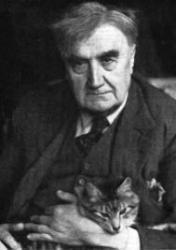
Ralph Vaughan Williams

1872 - 1958 Topics: Christian Year Transfiguration Harmonizer of "KINGSFOLD" in Glory to God Through his composing, conducting, collecting, editing, and teaching, Ralph Vaughan Williams (b. Down Ampney, Gloucestershire, England, October 12, 1872; d. Westminster, London, England, August 26, 1958) became the chief figure in the realm of English music and church music in the first half of the twentieth century. His education included instruction at the Royal College of Music in London and Trinity College, Cambridge, as well as additional studies in Berlin and Paris. During World War I he served in the army medical corps in France. Vaughan Williams taught music at the Royal College of Music (1920-1940), conducted the Bach Choir in London (1920-1927), and directed the Leith Hill Music Festival in Dorking (1905-1953). A major influence in his life was the English folk song. A knowledgeable collector of folk songs, he was also a member of the Folksong Society and a supporter of the English Folk Dance Society. Vaughan Williams wrote various articles and books, including National Music (1935), and composed numerous arrange­ments of folk songs; many of his compositions show the impact of folk rhythms and melodic modes. His original compositions cover nearly all musical genres, from orchestral symphonies and concertos to choral works, from songs to operas, and from chamber music to music for films. Vaughan Williams's church music includes anthems; choral-orchestral works, such as Magnificat (1932), Dona Nobis Pacem (1936), and Hodie (1953); and hymn tune settings for organ. But most important to the history of hymnody, he was music editor of the most influential British hymnal at the beginning of the twentieth century, The English Hymnal (1906), and coeditor (with Martin Shaw) of Songs of Praise (1925, 1931) and the Oxford Book of Carols (1928). Bert Polman

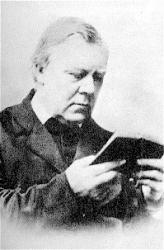
Edward Caswall

1814 - 1878 Person Name: E. Caswall (1814-1878) Topics: Lent 4, The King and the Kingdom Transfiguration Translator of "O Jesus, king most wonderful" in Hymns for Today's Church (2nd ed.) Edward Caswall was born in 1814, at Yately, in Hampshire, where his father was a clergyman. In 1832, he went to Brasenose College, Oxford, and in 1836, took a second-class in classics. His humorous work, "The Art of Pluck," was published in 1835; it is still selling at Oxford, having passed through many editions. In 1838, he was ordained Deacon, and in 1839, Priest. He became perpetural Curate of Stratford-sub-Castle in 1840. In 1841, he resigned his incumbency and visited Ireland. In 1847, he joined the Church of Rome. In 1850, he was admitted into the Congregation of the Oratory at Birmingham, where he has since remained. He has published several works in prose and poetry. --Annotations of the Hymnal, Charles Hutchins, M.A. 1872 ===================== Caswall, Edward, M.A., son of the Rev. R. C. Caswall, sometime Vicar of Yately, Hampshire, born at Yately, July 15, 1814, and educated at Brasenose College, Oxford, graduating in honours in 1836. Taking Holy Orders in 1838, he became in 1840 Incumbent of Stratford-sub-Castle, near Salisbury, and resigned the same in 1847. In 1850 (Mrs. Caswall having died in 1849) he was received into the Roman Catholic communion, and joined Dr. Newman at the Oratory, Edgbaston. His life thenceforth, although void of stirring incidents, was marked by earnest devotion to his clerical duties and a loving interest in the poor, the sick, and in little children. His original poems and hymns were mostly written at the Oratory. He died at Edgbaston, Jan. 2, 1878, and was buried on Jan. 7 at Redwall, near Bromsgrove, by his leader and friend Cardinal Newman. Caswall's translations of Latin hymns from the Roman Breviary and other sources have a wider circulation in modern hymnals than those of any other translator, Dr. Neale alone excepted. This is owing to his general faithfulness to the originals, and the purity of his rhythm, the latter feature specially adapting his hymns to music, and for congregational purposes. His original compositions, although marked by considerable poetical ability, are not extensive in their use, their doctrinal teaching being against their general adoption outside the Roman communion. His hymns appeared in:— (1) Lyra Catholica, which contained 197 translations from the Roman Breviary, Missal, and other sources. First ed. London, James Burns, 1849. This was reprinted in New York in 1851, with several hymns from other sources added thereto. This edition is quoted in the indices to some American hymn-books as Lyra Cath., as in Beecher's Plymouth Collection, 1855, and others. (2) Masque of Mary, and Other Poems, having in addition to the opening poem and a few miscellaneous pieces, 53 translations, and 51 hymns. 1st ed. Lon., Burns and Lambert, 1858. (3) A May Pageant and Other Poems, including 10 original hymns. Lon., Burns and Lambert, 1865. (4) Hymns and Poems, being the three preceding volumes embodied in one, with many of the hymns rewritten or revised, together with elaborate indices. 1st ed. Lon., Burns, Oates & Co., 1873. Of his original hymns about 20 are given in the Roman Catholic Crown of Jesus Hymn Book, N.D; there are also several in the Hymns for the Year, N.D., and other Roman Catholic collections. --John Julian, Dictionary of Hymnology (1907) ====================== Caswall, E. , p. 214, ii. Additional original hymns by Caswall are in the Arundel Hymns, 1902, and other collections. The following are from the Masque of Mary, &c, 1858:— 1. Christian soul, dost thou desire. After Holy Communion. 2. Come, let me for a moment cast. Holy Communion. 3. O Jesu Christ [Lord], remember. Holy Communion. 4. Oft, my soul, thyself remind. Man's Chief End. 5. Sleep, Holy Babe. Christmas. Appeared in the Rambler, June 1850, p. 528. Sometimes given as "Sleep, Jesus, sleep." 6. The glory of summer. Autumn. 7. This is the image of the queen. B. V. M. His "See! amid the winter's snow,” p. 1037, i., was published in Easy Hymn Tunes, 1851, p. 36. In addition the following, mainly altered texts or centos of his translations are also in common use:— 1. A regal throne, for Christ's dear sake. From "Riches and regal throne," p. 870, ii. 2. Come, Holy Ghost, Thy grace inspire. From "Spirit of grace and union," p. 945, i. 3. Hail! ocean star, p. 99, ii,, as 1873. In the Birmingham Oratory Hymn Book, 1850, p. 158. 4. Lovely flow'rs of martyrs, hail. This is the 1849 text. His 1873 text is "Flowers of martyrdom," p. 947, i. 5. None of all the noble cities. From "Bethlehem! of noblest cities," p. 946, ii. 6. O Jesu, Saviour of the World. From “Jesu, Redeemer of the world," p. 228, ii. 7. 0 Lady, high in glory raised. From "O Lady, high in glory, Whose," p. 945, i. The Parochial Hymn Book, 1880, has also the following original hymns by Caswall. As their use is confined to this collection, we give the numbers only:— IS os. 1, 2, 3, 159 (Poems, 1873, p. 453), 209 (1873, p. 288), 299, 324 (1873, p. 323), 357, 402, 554, 555, 558, 569 (1873, p. 334). These are from his Masque of Mary 1858. Nos. 156, 207 (1873, p. 296), 208 (1873, p. 297), 518. These are from his May Pageant, 1865. As several of these hymns do not begin with the original first lines, the original texts are indicated as found in his Poems, 1873. [Rev. James Mearns, M.A.] --John Julian, Dictionary of Hymnology, New Supplement (1907)

Gordon Slater

1896 - 1996 Person Name: G. A. Slater (1896-1979) Topics: Lent 4, The King and the Kingdom Transfiguration Composer of "ST. BOTOLPH" in Hymns for Today's Church (2nd ed.)

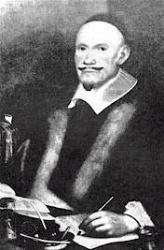
Johann Crüger

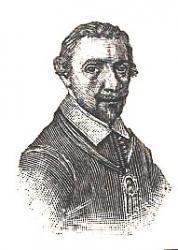
1598 - 1662 Topics: Transfiguration; Christ Transfiguration on; Transfiguration of Christ Composer of "LOB SEI DEM ALLMÄCHTIGEN GOTT" in The Hymnal and Order of Service Johann Crüger (b. Grossbriesen, near Guben, Prussia, Germany, 1598; d. Berlin, Germany, 1662) Crüger attended the Jesuit College at Olmutz and the Poets' School in Regensburg, and later studied theology at the University of Wittenberg. He moved to Berlin in 1615, where he published music for the rest of his life. In 1622 he became the Lutheran cantor at the St. Nicholas Church and a teacher for the Gray Cloister. He wrote music instruction manuals, the best known of which is Synopsis musica (1630), and tirelessly promoted congregational singing. With his tunes he often included elaborate accom­paniment for various instruments. Crüger's hymn collection, Neues vollkomliches Gesangbuch (1640), was one of the first hymnals to include figured bass accompaniment (musical shorthand) with the chorale melody rather than full harmonization written out. It included eighteen of Crüger's tunes. His next publication, Praxis Pietatis Melica (1644), is considered one of the most important collections of German hymnody in the seventeenth century. It was reprinted forty-four times in the following hundred years. Another of his publications, Geistliche Kirchen Melodien (1649), is a collection arranged for four voices, two descanting instruments, and keyboard and bass accompaniment. Crüger also published a complete psalter, Psalmodia sacra (1657), which included the Lobwasser translation set to all the Genevan tunes. Bert Polman =============================== Crüger, Johann, was born April 9, 1598, at Gross-Breese, near Guben, Brandenburg. After passing through the schools at Guben, Sorau and Breslau, the Jesuit College at Olmütz, and the Poets' school at Regensburg, he made a tour in Austria, and, in 1615, settled at Berlin. There, save for a short residence at the University of Wittenberg, in 1620, he employed himself as a private tutor till 1622. In 1622 he was appointed Cantor of St. Nicholas's Church at Berlin, and also one of the masters of the Greyfriars Gymnasium. He died at Berlin Feb. 23, 1662. Crüger wrote no hymns, although in some American hymnals he appears as "Johann Krüger, 1610,” as the author of the supposed original of C. Wesley's "Hearts of stone relent, relent" (q.v.). He was one of the most distinguished musicians of his time. Of his hymn tunes, which are generally noble and simple in style, some 20 are still in use, the best known probably being that to "Nun danket alle Gott" (q.v.), which is set to No. 379 in Hymns Ancient & Modern, ed. 1875. His claim to notice in this work is as editor and contributor to several of the most important German hymnological works of the 16th century, and these are most conveniently treated of under his name. (The principal authorities on his works are Dr. J. F. Bachmann's Zur Geschichte der Berliner Gesangbücher 1857; his Vortrag on P. Gerhard, 1863; and his edition of Gerhardt's Geistliche Lieder, 1866. Besides these there are the notices in Bode, and in R. Eitner's Monatshefte für Musik-Geschichte, 1873 and 1880). These works are:— 1. Newes vollkömmliches Gesangbuch, Augspur-gischer Confession, &c, Berlin, 1640 [Library of St. Nicholas's Church, Berlin], with 248 hymns, very few being published for the first time. 2. Praxis pietatis melica. Das ist: Ubung der Gottseligkeit in Christlichen und trostreichen Gesängen. The history of this, the most important work of the century, is still obscure. The 1st edition has been variously dated 1640 and 1644, while Crüger, in the preface to No. 3, says that the 3rd edition appeared in 1648. A considerable correspondence with German collectors and librarians has failed to bring to light any of the editions which Koch, iv. 102, 103, quotes as 1644, 1647, 1649, 1650, 1651, 1652, 1653. The imperfect edition noted below as probably that of 1648 is the earliest Berlin edition we have been able to find. The imperfect edition, probably ix. of 1659, formerly in the hands of Dr. Schneider of Schleswig [see Mützell, 1858, No. 264] was inaccessible. The earliest perfect Berlin edition we have found is 1653. The edition printed at Frankfurt in 1656 by Caspar Röteln was probably a reprint of a Berlin edition, c. 1656. The editions printed at Frankfurt-am-Main by B. C. Wust (of which the 1666 is in the preface described as the 3rd) are in considerable measure independent works. In the forty-five Berlin and over a dozen Frankfurt editions of this work many of the hymns of P. Gerhardt, J. Franck, P. J. Spener, and others, appear for the first time, and therein also appear many of the best melodies of the period. 3. Geistliche Kirchen-Melodien, &c, Leipzig, 1649 [Library of St. Katherine's Church, Brandenburg]. This contains the first stanzas only of 161 hymns, with music in four vocal and two instrumental parts. It is the earliest source of the first stanzas of various hymns by Gerhardt, Franck, &c. 4. D. M. Luther's und anderer vornehmen geisU reichen und gelehrten Manner Geistliche Lieder und Psalmen, &c, Berlin, 1653 [Hamburg Town Library], with 375 hymns. This was edited by C. Runge, the publisher, and to it Crüger contributed some 37 melodies. It was prepared at the request of Luise Henriette (q.v.), as a book for the joint use of the Lutherans and the Re¬formed, and is the earliest source of the hymns ascribed to her, and of the complete versions of many hymns by Gerhardt and Franck. 5. Psalmodia Sacra, &c, Berlin, 1658 [Royal Library, Berlin]. The first section of this work is in an ed. of A. Lobwasser's German Psalter; the second, with a similar title to No. 4, and the date 1657, is practically a recast of No. 4,146 of those in 1653 being omitted, and the rest of the 319 hymns principally taken from the Praxis of 1656 and the hymn-books of the Bohemian Brethren. New eds. appeared in 1676, 1700, 1704, 1711, and 1736. [Rev. James Mearns, M.A.] -- Excerpt from John Julian, Dictionary of Hymnology (1907) ======================= Crüger, Johann, p. 271, ii. Dr. J. Zahn, now of Neuendettelsau, in Bavaria, has recently acquired a copy of the 5th ed., Berlin, 1653, of the Praxis. --John Julian, Dictionary of Hymnology, Appendix, Part II (1907)

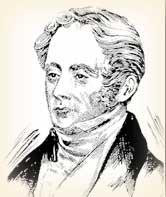
Robert Grant

1779 - 1838 Topics: Church Year Transfiguration Author of "O Worship the King" in Psalms for All Seasons Robert Grant (b. Bengal, India, 1779; d. Dalpoorie, India, 1838) was influenced in writing this text by William Kethe’s paraphrase of Psalm 104 in the Anglo-Genevan Psalter (1561). Grant’s text was first published in Edward Bickersteth’s Christian Psalmody (1833) with several unauthorized alterations. In 1835 his original six-stanza text was published in Henry Elliott’s Psalm and Hymns (The original stanza 3 was omitted in Lift Up Your Hearts). Of Scottish ancestry, Grant was born in India, where his father was a director of the East India Company. He attended Magdalen College, Cambridge, and was called to the bar in 1807. He had a distinguished public career a Governor of Bombay and as a member of the British Parliament, where he sponsored a bill to remove civil restrictions on Jews. Grant was knighted in 1834. His hymn texts were published in the Christian Observer (1806-1815), in Elliot’s Psalms and Hymns (1835), and posthumously by his brother as Sacred Poems (1839). Bert Polman ======================== Grant, Sir Robert, second son of Mr. Charles Grant, sometime Member of Parliament for Inverness, and a Director of the East India Company, was born in 1785, and educated at Cambridge, where he graduated in 1806. Called to the English Bar in 1807, he became Member of Parliament for Inverness in 1826; a Privy Councillor in 1831; and Governor of Bombay, 1834. He died at Dapoorie, in Western India, July 9, 1838. As a hymnwriter of great merit he is well and favourably known. His hymns, "O worship the King"; "Saviour, when in dust to Thee"; and "When gathering clouds around I view," are widely used in all English-speaking countries. Some of those which are less known are marked by the same graceful versification and deep and tender feeling. The best of his hymns were contributed to the Christian Observer, 1806-1815, under the signature of "E—y, D. R."; and to Elliott's Psalms & Hymns, Brighton, 1835. In the Psalms & Hymns those which were taken from the Christian Observer were rewritten by the author. The year following his death his brother, Lord Glenelg, gathered 12 of his hymns and poems together, and published them as:— Sacred Poems. By the late Eight Hon. Sir Robert Grant. London, Saunders & Otley, Conduit Street, 1839. It was reprinted in 1844 and in 1868. This volume is accompanied by a short "Notice," dated "London, Juno 18, 1839." ===================== Grant, Sir R., p. 450, i. Other hymns are:— 1. From Olivet's sequester'd scats. Palm Sunday. 2. How deep the joy, Almighty Lord. Ps. lxxxiv. 3. Wherefore do the nations wage. Ps. ii. These are all from his posthumous sacred Poems, 1839. --John Julian, Dictionary of Hymnology, Appendix, Part II (1907)

Frances Ridley Havergal

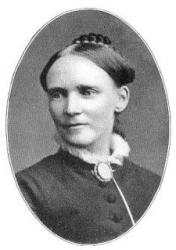
1836 - 1879 Topics: Transfiguration Author of "O Saviour, Precious Saviour" in The Hymnal and Order of Service Havergal, Frances Ridley, daughter of the Rev. W. H. Havergal, was born at Astley, Worcestershire, Dec. 14, 1836. Five years later her father removed to the Rectory of St. Nicholas, Worcester. In August, 1850, she entered Mrs. Teed's school, whose influence over her was most beneficial. In the following year she says, "I committed my soul to the Saviour, and earth and heaven seemed brighter from that moment." A short sojourn in Germany followed, and on her return she was confirmed in Worcester Cathedral, July 17, 1853. In 1860 she left Worcester on her father resigning the Rectory of St. Nicholas, and resided at different periods in Leamington, and at Caswall Bay, Swansea, broken by visits to Switzerland, Scotland, and North Wales. She died at Caswell Bay, Swansea, June 3, 1879. Miss Havergal's scholastic acquirements were extensive, embracing several modern languages, together with Greek and Hebrew. She does not occupy, and did not claim for herself, a prominent place as a poet, but by her distinct individuality she carved out a niche which she alone could fill. Simply and sweetly she sang the love of God, and His way of salvation. To this end, and for this object, her whole life and all her powers were consecrated. She lives and speaks in every line of her poetry. Her poems are permeated with the fragrance of her passionate love of Jesus. Her religious views and theological bias are distinctly set forth in her poems, and may be described as mildly Calvinistic, without the severe dogmatic tenet of reprobation. The burden of her writings is a free and full salvation, through the Redeemer's merits, for every sinner who will receive it, and her life was devoted to the proclamation of this truth by personal labours, literary efforts, and earnest interest in Foreign Missions. [Rev. James Davidson, B.A.] Miss Havergal's hymns were frequently printed by J. & R. Parlane as leaflets, and by Caswell & Co. as ornamental cards. They were gathered together from time to time and published in her works as follows:— (1) Ministry of Song, 1869; (2) Twelve Sacred Songs for Little Singers, 1870; (3) Under the Surface, 1874; (4) Loyal Responses, 1878; (5) Life Mosaic, 1879; (6) Life Chords, 1880; (7) Life Echoes, 1883. About 15 of the more important of Miss Havergal's hymns, including "Golden harps are sounding," "I gave my life for thee," "Jesus, Master, Whose I am," "Lord, speak to me," "O Master, at Thy feet," "Take my life and let it be," "Tell it out among the heathen," &c, are annotated under their respective first lines. The rest, which are in common use, number nearly 50. These we give, together with dates and places of composition, from the Havergal mss. [manuscript], and the works in which they were published. Those, and they are many, which were printed in Parlane's Series of Leaflets are distinguished as (P., 1872, &c), and those in Caswell’s series (C., 1873, &c). 1. A happy New Year! Even such may it be. New Year. From Under the Surface, 1874. 2. Certainly I will be with thee. Birthday. Sept. 1871, at Perry Barr. (P. 1871.) Published in Under the Surface, 1874, and Life Mosaic, 1879. 3. Church of God, beloved and chosen. Sanctified in Christ Jesus, 1873. (P. 1873.) Published in Under the Surface, 1874, and Life Mosaic, 1879. 4. God Almighty, King of nations. Sovereignty of God. 1872. Published in Under the Surface, 1874, and Life Mosaic, 1879. 5. God doth not bid thee wait. God faithful to His promises. Oct. 22, 1868, at Oakhampton. (P. 1869.) Published in Ministry of Song, 1869, and Life Mosaic, 1879. 6. God of heaven, hear our singing. A Child's hymn for Missions. Oct. 22, 1869, at Leamington. Published in her Twelve Sacred Songs for Little Singers, 1870, and her Life Chords, 1880. 7. God will take care of you, All through the day. The Good Shepherd. In Mrs. Brock's Children's Hymn Book, 1881. 8. God's reiterated all. New Year. 1873, at Winterdyne. (C. 1873.) Published in Loyal Responses, 1878, and Life Mosaic, 1879. 9. Have you not a word for Jesus? Boldness for the Truth. Nov. 1871, at Perry Barr. (P. 1872.) Published in Under the Surface, 1874, and Life Mosaic, 1879. 10. He hath spoken in the darkness. Voice of God in sorrow. June 10,1869, at Neuhausen. (P. 1870.) Published in Under the Surface, 1874, and in Life Mosaic, 1879. 11. Hear the Father's ancient promise. Promise of the Holy Spirit. Aug. 1870. Published in Under the Surface, 1874, and Life Mosaic, 1879. 12. Holy and Infinite! Viewless, Eternal. Infinity of God. 1872. Published in Under the Surf ace, 1874, and L. Mosaic, 1879. 13. Holy brethren, called and chosen. Election a motive for Earnestness. 1872. Published in Snepp's Songs of Grace & Glory, 1876. 14. I am trusting Thee, Lord Jesus. Faith. Sept. 1874, at Ormont Dessona. (P. 1874.) Published in Loyal Responses, 1878, and Life Chords, 1880. Miss Havergal’s tune, Urbane (Snepp's Songs of Grace & Glory, 1048), was composed for this hymn. The hymn was the author's "own favourite," and was found in her pocket Bible after her death. 15. I bring my sins to Thee. Besting all on Jesus. June, 1870. (P. 1870.) Printed in the Sunday Magazine, 1870, and Home Words, 1872. Published in Under the Surface, 1874, and Life Chords, 1880. 16. I could not do without Thee. Jesus All in All. May 7, 1873. (P. 1873.) Printed in Home Words, 1873, and published in Under the Surface, 1874, and Life Mosaic, 1879. 17. In full and glad surrender. Confirmation. Miss Havergal's sister says this hymn was “The epitome of her [Miss F. R. H.'s] life and the focus of its sunshine." It is a beautiful hymn of personal consecration to God at all times. 18. In the evening there is weeping. Sorrow followed by Joy. June 19, 1869, at the Hotel Jungfraublick, Interlaken. "It rained all day, except a very bright interval before dinner. Curious long soft white clouds went slowly creeping along the Scheinige Platte; I wrote “Evening Tears and Morning Songs” (Marg. reading of Ps. xxx. 5.)" (P. 1870.) Published in Under the Surface, 1874. 19. Increase our faith, beloved Lord. Increase of Faith desired. In Loyal Responses, 1878, in 11 stanzas of 4 lines, on St. Luke xvii. 5. It is usually given in an abridged form. 20. Is it for me, dear Saviour? Heaven anticipated. Nov. 1871, at Perry Barr. (P. 1872.) Published in Under the Surface, 1874, and Life Mosaic, 1879. 21. Israel of God, awaken. Christ our Righteousness. May, 1871, at Perry Barr. (P. 1872.) Published in Under the Surface, 1874, and Life Mosaic, 1879. 22. Jehovah's covenant shall endure. The Divine Covenant, 1872. Published in Snepp's Songs of Grace & Glory, 1876. 23 Jesus, blessed Saviour. New Year, Nov. 25, 1872, at Leamington. (P. 1873.) Printed in the Dayspring Magazine, Jan. 1873, and published in Life Chords, 1880. 24. Jesus only! In the shadow. Jesus All in All. Dec. 4, 1870, at Pyrmont Villa. (P. & C. 1871.) Published in Under the Surface, 1874, and in Life Mosaic, 1879. 25. Joined to Christ by [in] mystic union. The Church the Body of Christ. May, 1871, at Perry Barr. (P. 1872.) Published in Under the Surface, 1874, Life Mosaic, 1879. 26. Just when Thou wilt, 0 Master, call. Resignation. In Loyal Responses, 1878, in 5 stanzas of 4 lines, and Whiting's Hymns for the Church Catholic, 1882. 27. King Eternal and Immortal. God Eternal. Written at Perry Villa, Perry Barr, Feb. 11, 1871, and Published in Snepp's Songs of Grace & Glory, 1876; Under the Surface, 1874 ; and Life Mosaic, 1879. 28. Light after darkness, Gain after loss. Peace in Jesus, and the Divine Reward. In Sankey's Sacred Songs and Solos, from her Life Mosaic, 1879. 29. Like a river glorious, Is God's perfect Peace. Peace. In her Loyal Responses, 1878, in 3 st. of 8 1., with the chorus, "Stayed upon Jehovah." In several collections. 30. Master, speak! Thy servant heareth. Fellowship with and Assistance from Christ desired. Sunday evening, May 19, 1867, at Weston-super-Mare. Published in Ministry of Song, 1869, and L. Mosaic, 1879. It is very popular. 31. New mercies, new blessings, new light on thy way. New Life in Christ. 1874, at Winterdyne. (C. 1874.) Published in Under His Shadow, 1879, Life Chords, 1880. 32. Not your own, but His ye are. Missions. Jan. 21, 1867. (C. 1867.) Published in Ministry of Song, 1869; Life Mosaic, 1879; and the Hymnal for Church Missions, 1884. 33. Now let us sing the angels' song. Christmas. In her Life Mosaic, 1879; and W. B. Stevenson's School Hymnal, 1880. 34. Now the daylight goes away. Evening. Oct. 17, 1869, at Leamington. Published in Songs for Little Singers, 1870, and Life Chords, 1880. It originally read, " Now the light has gone away." 35. Now the sowing and the weeping. Sorrow followed by Joy. Jan. 4, 1870, at Leamington. Printed in Sunday at Home, 1870 ; and published in Under the Surface, 1874, and L. Mosaic, 1879. 36. 0 Glorious God and King. Praise to the Father, Feb. 1872. Published in Under the Surface, 1874, and Life Mosaic, 1879. 37. 0 Saviour, precious [holy] Saviour. Christ worshipped by the Church. Nov. 1870, at Leamington. (P. 1870.) Published in Under the Surface, 1874, and Life Mosaic, 1879. 38. O thou chosen Church of Jesus. Election. April 6, 1871. Published in Under the Surface, 1874, and L. Mosaic, 1879. 39. O what everlasting blessings God outpoureth on His own. Salvation everlasting. Aug. 12, 1871, at Perry Barr. (P. 1871.) Published in Under the Surface, 1874, and L. Mosaic, 1879. 40. Our Father, our Father, Who dwellest in light. The blessing of the Father desired. May 14, 1872. Published in Under the Surface, 1874, and Life Mosaic, 1879. Miss Havergal's tune, Tertius, was composed for this hymn. 41. Our Saviour and our King. Presentation of the Church to the Father. (Heb. ii. 13.) May, 1871, at Perry Barr. (P. 1871.) Published in Under the Surface, 1874, and L. Mosaic, 1879. 42. Precious, precious blood of Jesus. The precious Blood. Sept. 1874, at Ormont Dessons. (C.) Published in Loyal Responses, 1878, and Life Chords, 1880. 43. Sing, O heavens, the Lord hath done it. Redemption. In her Life Mosaic, 1879, and the Universal Hymn Book, 1885. 44. Sit down beneath His shadow. Holy Communion. Nov. 27, 1870, at Leamington. (P. 1870.) Published in Under the Surface, 1874, and Life Mosaic, 1879. 45. Sovereign Lord and gracious Master. Grace consummated in Glory. Oct. 22, 1871. (P. 1872.) Published in Under the Surface, 1874, and Life Mosaic, 1879. 46. Standing at the portal of the opening year. New Year. Jan. 4, 1873. Published in Under the Surface, 1874, and Life Chords, 1880. 47. To Thee, 0 Comforter divine. Praise to the Holy Spirit. Aug. 11, 1872, at Perry Barr. Published in Under the Surface 1874, and Life Mosaic, 1879. Miss Havergal's tune, Tryphosa, was written for this hymn. 48. True-hearted, whole-hearted, faithful and loyal. Faithfulness to the Saviour. In her Loyal Responses, 1878, and the Universal Hymn Book, 1885. 49. What know we, Holy God, of Thee? God's Spirituality, 1872. Published in Under the Surface, 1874, and Life Mosaic, 1879. 50. Who is on the Lord's side? Home Missions. Oct. 13, 1877. Published in Loyal Responses, 1878, andLife Chords, 1880. 51. With quivering heart and trembling will. Resignation. July, 10, 1866, at Luccombe Rectory. (P. 1866.) Published in Ministry of Song, 1869, and Life Mosaic, 1879. 52. Will ye not come to Him for life? The Gospel Invitation. 1873. Published in Snepp's Songs of Grace and Glory, 1876. 53. Worthy of all adoration. Praise to Jesus as the Lamb upon the throne. Feb. 26 1867, at Oakhampton. Published in Ministry of Song, 1869, and Life Mosaic, 1874. It is pt. iii. of the "Threefold Praise," and was suggested by the "Worthy is the Lamb," the "Hallelujah" and "Amen" choruses in Handel's Messiah. 54. Ye who hear the blessed call. The Invitation of the Spirit and the Bride. March, 1869, at Leamington. (P. 1869.) Published in Ministry of Song, 1869, and Life Mosaic, 1879. Suggested by, and written for, the Young Men's Christian Association. 55. Yes, He knows the way is dreary. Encouragement. 1867. Published in Ministry of Song, 1869. Most of these hymns are given in Snepp's Songs of Grace and Glory, 1872]and 1876, his Appendix, 1874, and the Musical edition, 1880, and many of them are also in several other hymnbooks, including Hymns Ancient & Modern, Thring, Church Hymns, Hymnal Companion, &c, and some of the leading American collections. --John Julian, Dictionary of Hymnology (1907) ============================== Havergal, Frances Ridley, p. 496, i. Miss Havergal's Poetical Works were published in 2 vols. in 1884 (Lond., J. Nisbet); and the hymns therein are accompanied by notes. From these volumes, and the Havergal manuscript, we gather the following facts concerning additional hymns in common use: 1. In God's great field of labour. Work for Christ. Written Feb. 27, 1867, and published in her Ministry of Song, I860, and later works. In Snepp's Songs of Grace and Glory, 1872, it begins with stanza ii., "Sing to the little children." “The poem expresses her own life-ministry of song, and relates true incidents" in that life. [Hav. mss.] 2. Only a mortal's power. Consecration of Self to Christ. Published in her Loyal Responses, 1878, in 7 stanzas of 4 lines, and headed "Only.” In Common Praise, 1879, stanzas ii.-vi., are given for Confirmation as, "Only one heart to give." 3. Through the yesterday of ages. Jesus always the same. Written at Leamington, Nov. 1876, and published in her Loyal Responses, 1878. 4. What hast Thou done for me, 0 Thou my mighty Friend. Good Friday. Written at Leamington, Jan. 1877, and pub. in Loyal Responses, 1878. 5. Yes, He knows the way is dreary, p. 498, i. 55. This hymn was written at Shareshill Parsonage, Nov. 17, 1865, and first printed as one of Parlane's leaflets; then in Lyra Britannica, 1867; and later, in several of her books. It was "suggested by a letter from her niece, A. M. S., at school, and written to console her when weary, lonely, and the only absentee at the rejoicings for her brother J. H. S.'s coming of age." [Hav. mss.] --John Julian, Dictionary of Hymnology, Appendix, Part II (1907) =================== Havergal, Frances R., pp. 426, ii., 1569, ii. During the past fifteen years Miss Havergal's hymns have been in great request by compilers of hymnals for Missions and Conventions. In addition to the large number already annotated in this Dictionary, the following are also in common use:— 1. Begin at once! in the pleasant days. [Temperance.] From her Poetical Works, vol. i., p. 303, into The Sunday School Hymnary, 1905. In her Poetical Works. It is given as a "Band of Hope Song," and dated "May, 1876." 2. God in heaven, hear our singing. An altered form of her "God of heaven, hear our singing," p. 497, i. 6. 3. Holy Father, Thou hast spoken. [Holy Spirit desired.] Written May 5, 1876. P. Works, 1874, ii., p. 261. 4. I love. I love my Master. [Jesus the object of love.] Written at Fins, Hants., July 16, 1876. In her Loyal Responses, 1878, and her Poetical Works, 18S4, ii., p. 274. 5. I love to feel that I am taught. [Love of Divine Teaching.] Written at Morecambe Bay, Aug., 1867, for her Ministry of Song, 1869. Included in her Poetical Works, 1884, i., p. 36. 6. Jesus, Thy life is mine. [Union with Christ.] Written June 2, 1876. Poetical Works, 1884, ii., p. 268. 7. Looking unto Jesus, Never need we yield. [Jesus, All in All.] Dated 1876. P. Works, 1884, ii., p. 253. 8. Master, how shall I bless Thy Name! [Holy Service.] Written at Whitby, Sept. 27, 1875. A long hymn of 17 stanzas of 6 lines. P. Works, 1884, ii., p. 280. 9. Resting on the faithfulness. [Union with Christ.] A metrical epitome of a dozen or more of the attributes of Our Lord and His manifestation of loving kindness towards men, in which the word "Resting" is used eighteen times. Written June 11, 1876. Poetical Works, 1884, ii., p. 260. 10. Singing for Jesus, our Saviour and King. [Praise of Jesus.] Written at Winterdyne, June 12. 1872; published in her Under the Surface, 1874, p. 94, and her P. Works, 1884, ii., p. 70. 11. Unfurl the Christian Standard with firm and fearless hand. [Courage for the Christian Warfare. This begins with st. iv. of her hymn, "Unfurl the Christian Standard, lift it manfully on high," written at Perry Barr, Sep. 23, 1872 ; published in her Under the Surface, 1874; and her Poetical Works, 1884, ii. 12. Unto him that hath Thou givest. [Growth in Grace.] Written at Leasowes, April 12, 1876. P. Works, 1884, ii. 259. Of these hymns Nos. 3, 4, 6, 7, 8, 9, and 12 were published in the first instance in J. Mountain's Hymns of Consecration and Faith, 1876. At the present time (1907) the number of Miss Havergal's hymns in common use reaches nearly one hundred. --John Julian, Dictionary of Hymnology, New Supplement (1907)

Erik Routley

1917 - 1982 Person Name: Erik Routley, 1917-1982 Topics: Transfiguration; Christian year--Transfiguration Arranger of "DEO GRACIAS (AGINCOURT SONG)" in Moravian Book of Worship

Theodore Beck

1929 - 2003 Person Name: Theodore A. Beck, b. 1929 Topics: Transfiguration Composer of "SEWARD" in Hymnal Supplement 98 Theodore Beck taught music theory, composition and organ at Concordia University in Seward. He composed many pieces for organ and church choirs. He died on September 19, 2003 in College Station, Texas. NN, Hymnary editor. Source: September 22, 2003 edition of the Lincoln Journal Star

Johann Schop

1590 - 1667 Person Name: Johann P. Schop, ca. 1590-1664 Topics: The Liturgical Year The Transfiguration of the Lord (August 6) Composer of "WERDE MUNTER" in Journeysongs (3rd ed.) Johann Schop Germany 1590-1667. Born at lower Saxony, Germany, he became a Lutheran composer and violinist, much admired for his virtuoso and technical ability. In 1614 Duke Friedrich Ulrich made him a probationary musician in the Hofkapelle at Wolfenbuttel. He performed playing various instruments, but excelled as a violinist. He was engaged permanently in 1615, but the same year he responded to a summons to join the flourishing musical establishment of King Christian IV of Denmark in Copenhagen. There he met English viol player, William Brade, who had earlier been in service to Hamburg, Germany (and may have taught Schop there). Schops compositions for the violin set impressive demands for that area at that time. He also played other instruments, including the violi, lute, cornet, trombon, trumpet, zinke, and violin (virtuoso). In 1619 Schop and Brade left Copenhagen to escape the plague. He then went to Iburg, where he worked at the courtof the Osnabruck bishop, Philipp Sigismund. Schop had such a reputation that he soon acquired a post as Kapellmeister at an establishment in Hamburg and was the first member of the council music. In 1621 he was its director and the leading municipal violinist in that city, which offered him a substantial income for his participation in the church music program. He also was organist at the Jacobikirche. In 1634 he again traveled to Copenhagen with Heinrich Schutz and Heinrich Albert for the wedding of Crown Prince Christian. He won a violin contest there. Few German violinists were of his caliber musically. He returned to Hamburg, and the Danish king tried several times to woo him back to Denmark, but he stayed in Hamburg, becoming a director of music. He published books of violin music in 4 to 6 parts. He wrote two books of well-loved dance pieces and sacred concertos. He co-founded a school of song writing there in Hamburg with Thomas Selle. Many of his tunes were writtten for fellow townsmen and friend Johann Rist. Some of his music was performed at the Peace of Westphalia celebrations. Some of his tunes were used by chants in a cantata. Schop was married (wife’s name not found) and they had two sons, Johann II, and Albert, who also became musicians. He died in Hamburg. John Perry

Christopher Dearnley

1930 - 2000 Topics: Transfiguration Composer of "TRANSFIGURATION" in New Church Praise

Pages


Export as CSV
It looks like you are using an ad-blocker. Ad revenue helps keep us running. Please consider white-listing Hymnary.org or getting Hymnary Pro to eliminate ads entirely and help support Hymnary.org.