You help make Hymnary.org possible. More than 10 million people from 200+ countries found hymns, liturgical resources and encouragement on Hymnary.org in 2025, including you. Every visit affirms the global impact of this ministry.

If Hymnary has been meaningful to you this year, would you take a moment today to help sustain it? A gift of any size—paired with a note of encouragement if you wish—directly supports the server costs, research work and curation that keep this resource freely available to the world.

Give securely online today, or mail a check to:
Hymnary.org
Calvin University
3201 Burton Street SE
Grand Rapids, MI 49546

Thank you for your partnership, and may the hope of Advent fill your heart.

Person Results

Topics:trinity+2
In:people

Planning worship? Check out our sister site, ZeteoSearch.org, for 20+ additional resources related to your search.
Showing 51 - 60 of 234Results Per Page: 102050

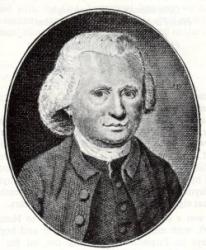
Thomas Olivers

1725 - 1799 Person Name: Thomas Olivers, 1725-1799 Topics: Faith, Trust and Commitment; Grace and Providence; Joy, Praise and Thanksgiving; The Pilgrim Community; Year A Easter 2; Year A Proper 17; Year A Proper 8; Year A Trinity Sunday; Year B Christ the King; Year B Lent 2; Year B Proper 1; Year B Second Sunday Before Advent; Year C Epiphany 4; Year C Proper 8; Years A, B, and C Ascension Day Author of "The God of Abraham praise" in Complete Anglican Hymns Old and New Thomas Olivers was born in Tregonan, Montgomeryshire, in 1725. His youth was one of profligacy, but under the ministry of Whitefield, he was led to a change of life. He was for a time apprenticed to a shoemaker, and followed his trade in several places. In 1763, John Wesley engaged him as an assistant; and for twenty-five years he performed the duties of an itinerant ministry. During the latter portion of his life he was dependent on a pension granted him by the Wesleyan Conference. He died in 1799. --Annotations of the Hymnal, Charles Hutchins, M.A., 1872. ================== Olivers, Thomas, was born at Tregynon, near Newtown, Montgomeryshire, in 1725. His father's death, when the son was only four years of age, followed by that of the mother shortly afterwards, caused him to be passed on to the care of one relative after another, by whom he was brought up in a somewhat careless manner, and with little education. He was apprenticed to a shoemaker. His youth was one of great ungodliness, through which at the age of 18 he was compelled to leave his native place. He journeyed to Shrewsbury, Wrexham, and Bristol, miserably poor and very wretched. At Bristol he heard G. Whitefield preach from the text "Is not this a brand plucked out of the fire?" That sermon turned the whole current of his life, and he became a decided Christian. His intention at the first was to join the followers of Whitefield, but being discouraged from doing so by one of Whitefield's preachers, he subsequently joined the Methodist Society at Bradford-on-Avon. At that town, where he purposed carrying on his business of shoemaking, he met John Wesley, who, recognising in him both ability and zeal, engaged him as one of his preachers. Olivers joined Wesley at once, and proceeded as an evangelist to Cornwall. This was on Oct. 1, 1753. He continued his work till his death, which took place suddenly in London, in March 1799. He was buried in Wesley's tomb in the City Road Chapel burying ground, London. Olivers was for some time co-editor with J. Wesley of the Arminian Magazine, but his lack of education unfitted him for the work. As the author of the tune Helmsley, and of the hymn “The God of Abraham praise," he is widely known. He also wrote “Come Immortal King of glory;" and "O Thou God of my salvation," whilst residing at Chester; and an Elegy on the death of John Wesley. His hymns and the Elegy were reprinted (with a Memoir by the Rev. J. Kirk) by D. Sedgwick, in 1868. --John Julian, Dictionary of Hymnology (1907)

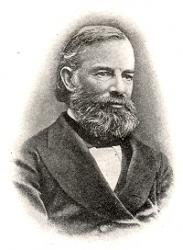
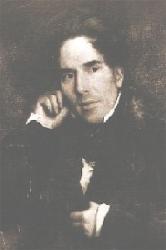
Samuel Longfellow

1819 - 1892 Person Name: Samuel Longfellow, 1819-1892 Topics: Beginning of Service; Pentecost 2 (Year B); Beginning of Service; Education; The Holy Trinity Author of "Holy Spirit, Truth Divine" in Lutheran Book of Worship Longfellow, Samuel, B. A., brother of the Poet, was born at Portland, Maine, June 18, 1819, and educated at Harvard, where he graduated in Arts in 1839, and in Theology in 1846. On receiving ordination as an Unitarian Minister, he became Pastor at Fall River, Massachusetts, 1848; at Brooklyn, 1853; and at Germantown, Pennsylvania, 1860. In 1846 he edited, with the Rev. S. Johnson (q. v.), A Book of Hymns for Public and Private Devotion. This collection was enlarged and revised in 1848. In 1859 his Vespers was published, and in 1864 the Unitarian Hymns of the Spirit , under the joint editorship of the Rev. S. Johnson and himself. His Life of his brother, the Poet Longfellow, was published in 1886. To the works named he contributed the following hymns:— i. To A Book of Hymns , revised ed., 1848. 1. Beneath the shadow of the Cross. Love. 2. 0 God, thy children gathered here. Ordination. ii. To the Vespers 1859. 3. Again as evening's shadow falls. Evening. 4. Now on land and sea descending. Evening. iii. To the Hymns of the Spirit, 1864. 5. A voice by Jordan's shore. Advent. 6. Father, give Thy benediction. Ordination. 7. Go forth to life, 0 child of earth. Life's Mission. 8. God of ages and of nations. Holy Scriptures. 9. Holy Spirit, Truth divine. The Holy Spirit desired. 10. I look to Thee in every need. Trust in God. 11. In the beginning was the Word. The Word. 12. Love for all, and can it be? Lent. The Prodigal Son. 13. 0 God, in Whom we live and move. God's Law and Love. 14. 0 God, Thou Giver of all good. Prayer for Food. 15. O still in accents sweet and strong. Missions. 16. 0 Thou, Whose liberal sun and rain. Anniversary of Church dedication. 17. One holy Church of God appears. The Church Universal. 18. Out of the dark, the circling sphere. The Outlook. 19. Peace, peace on earth! the heart of man for ever. Peace on Earth. 20. The loving Friend to all who bowed. Jesus of Nazareth. 21. ’Tis winter now, the fallen snow. Winter. Of these, hymn No. 2 was written for the Ordination of E. E. Hale (q. v.), at Worcester, 1846. Several are included in Martineau's Hymns, 1873. Died Oct. 3, 1892. [Rev. F. M. Bird, M.A.] --John Julian, Dictionary of Hymnology (1907), p. 685 =============== Longfellow, S., p. 685, i. Since Mr. Longfellow's death on Oct. 3, 1892, his hymns have been collected by his niece, Miss Alice Longfellow, as Hymns and Verses(Houghton, Mifflin & Co., 1904.) From this work we find many of the hymns signed Anon, in the Index to Longfellow and Johnson's Hymns of the Spirit, 1864, were his; several of these, including E. Osier's "O God unseen, yet ever near," were popular English hymns which he rewrote from his own theological standpoint. These re¬written hymns are very widely used by Unitarians and others. During the last ten years the following additional hymns by S. Long¬fellow have come into common use:— 1. Eternal One, Thou living God. Faith in God. 2. God of the earth, the sky, the sea. God in Nature. 3. God's trumpet wakes the slumbering world. Call to duty. 4. Light of ages and of nations. God in and through all time. 5. Lo, the earth is risen again. Spring. (1876.) 6. Now while we sing our closing psalm. Close of Worship. 7. O Life that maketh all things new. Unity. (1874.) 8. O Thou in Whom we live and move. The Divine Law. 9. The summer days are come again. Summer. From his hymn,"The sweet[bright] June days are come again." 10. Thou Lord of lite, our saving health. In Sickness. (1886.) Of these hymns Nos. 2, 3 appeared in the Hymns of the Spirit, 1864, and all with the dates appended in Hymns and Verses, 1904. --John Julian, Dictionary of Hymnology, New Supplement (1907) ================== http://en.wikipedia.org/wiki/Samuel_Longfellow

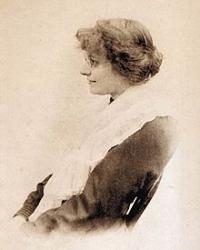
Eleanor Farjeon

1881 - 1965 Topics: The Church at Worship Opening and Morning Hymns; liturgical Opening Hymns; Bible; Creation; God Creator; Gratitude; Jesus Christ Praise; Jesus Christ Resurrection; Morning; Morning Prayer; Music and Singing; Nature; Opening Hymns; Praise; Renewal; Service Music Gathering, Call to Worship, Greeting; Word of God; Worship; Youth; Easter 2 Year A; Trinity Sunday Year A; Baptism of Jesus Year C; Proper 22 Year C; All Saints Year C; New Year Year ABC Author of "Morning Has Broken" in Voices United Eleanor Farjeon, (born Feb. 13, 1881, London--died June 5, 1965, Hampstead, London), English writer for children whose magical but unsentimental tales, which often mock the behaviour of adults, earned her a revered place in many British nurseries. The daughter of a British novelist and granddaughter of a U.S. actor, Eleanor Farjeon grew up in the bohemian literary and dramatic circles of London. Attending opera and theatre at 4 and writing on her father’s typewriter at 7, Farjeon came to public attention at 16 as the librettist of an opera, with music by her brother Harry, which was produced by the Royal Academy of Music. Her success with Nursery Rhymes of London Town (1916), simple tunes originally for adults but adapted and sung in junior schools throughout England, spurred her writing. In addition to such favourites as Martin Pippin in the Apple Orchard (1921) and The Little Bookroom (1955), which won the Carnegie Medal and the first Hans Christian Anderson Award, Farjeon’s prolific writings include children’s educational books, among them Kings and Queens (1932; with Herbert Farjeon); adult books; and memoirs, notably A Nursery in the Nineties (1935; rev. ed. 1960). --www.britannica.com/EBchecked/topic/201881/Eleanor-Farjeon

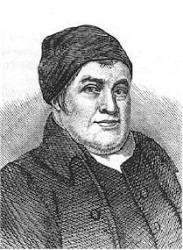
John Fawcett

1740 - 1817 Topics: The Church at Worship Closing and Evening Hymns; liturgical Closing Songs; Closing Hymns; Evening; Good News, Gospel; Love; Recessionals; Service Music Sending Forth/Commissioning; Traveller; Trinity; Wilderness/Desert; Epiphany 9 Year A; Christmas 1 Year B; Advent 2 Year C Author of "God, Dismiss Us with Your Blessing" in Voices United An orphan at the age of twelve, John Fawcett (b. Lidget Green, Yorkshire, England, 1740; d. Hebden Bridge, Yorkshire, 1817) became apprenticed to a tailor and was largely self-educated. He was converted by the preaching of George Whitefield at the age of sixteen and began preaching soon thereafter. In 1765 Fawcett was called to a small, poor, Baptist country church in Wainsgate, Yorkshire. Seven years later he received a call from the large and influential Carter's Lane Church in London, England. Fawcett accepted the call and preached his farewell sermon. The day of departure came, and his family's belongings were loaded on carts, but the distraught congregation begged him to stay. In Singers and Songs of the Church (1869), Josiah Miller tells the story associated with this text: This favorite hymn is said to have been written in 1772, to commemorate the determination of its author to remain with his attached people at Wainsgate. The farewell sermon was preached, the wagons were loaded, when love and tears prevailed, and Dr. Fawcett sacrificed the attraction of a London pulpit to the affection of his poor but devoted flock. Fawcett continued to serve in Wainsgate and in the nearby village of Hebden Bridge for the remainder of his active ministry. Bert Polman =============== Fawcett, John, D.D., was born Jan. 6, 1739 or 1740, at Lidget Green, near Bradford, Yorks. Converted at the age of sixteen under the ministry of G. Whitefield, he at first joined the Methodists, but three years later united with the Baptist Church at Bradford. Having begun to preach he was, in 1765, ordained Baptist minister at Wainsgate, near Hebden Bridge, Yorks. In 1772 he was invited to London, to succeed the celebrated Dr. J. Gill, as pastor of Carter's Lane; the invitation had been formally accepted, the farewell sermon at Wainsgate had been preached and the wagons loaded with his goods for removal, when the love and tears of his attached people prevailed and he decided to remain. In 1777 a new chapel was built for him at Hebden Bridge, and about the same time he opened a school at Brearley Hall, his place of residence. In 1793 he was invited to become President of the Baptist Academy at Bristol, but declined. In 1811 he received from America the degree of D.D., and died in 1817, at the age of 78. Dr. Fawcett was the author of a number of prose works on Practical Religion, several of which attained a large circulation. His poetical publications are:— (1) Poetic Essays, 1767; (2) The Christian's Humble Plea, a Poem, in answer to Dr. Priestley against the Divinity of our Lord Jesus Christ, 1772; (3) Three hymns, in the Gospel Magazine, 1777; (4) The Death of Eumenio, a Divine Poem, 1779; (5) Another poem, suggested by the decease of a friend, The Reign of Death, 1780; and (6) Hymns adapted to the circumstances of Public Worship and Private Devotion, Leeds, G. Wright & Son. 1782. They are 166 in number, and were mostly composed to be sung after sermons by the author. Whilst not attaining a high degree of excellence as poetry, they are "eminently spiritual and practical," and a number of them are found in all the Baptist and Congregational hymn-books that have appeared during the last 100 years. The best known of these are, “Infinite excellence is Thine;" "How precious is the Book divine;" "Thus far my God hath led me on;" "Religion is the chief concern;" "Blest be the tie that binds;" “I my Ebenezer raise;" and "Praise to Thee, Thou great Creator." These hymns, together with others by Fawcett, are annotated under their respective first lines. [Rev. W. R. Stevenson, M.A.] In addition the following hymns, also by Fawcett, but of less importance, are in common use: 1. Behold the sin-atoning Lamb. Passiontide. No. 60 of his Hymns, 1782, in 7 stanzas of 4 lines. In several hymnals in Great Britain and America. 2. I my Ebenezer raise. Birthday. No. 102 of his Hymns, in 10 stanzas of 4 lines. Usually given in an abbreviated form. 3. Infinite excellence is Thine. Jesus the Desire of Nations. No. 42 of his Hymns, in 12 stanzas of 4 lines. In several hymn-books in Great Britain and America in an abridged form. 4. Jesus, the heavenly Lover, gave. Redemption in Christ. No. 10 of his Hymns, &c., 1782, in 7 stanzas of 4 lines, and headed, "The marriage between Christ and the Soul." In Snepp's Songs of Grace & Glory, 1872, it reads, “Jesus, the heavenly Bridegroom, gave," and stanza v. is omitted. 5. Lord, hast Thou made me know Thy ways? Perseverance. No. 122 of his Hymns, &c., 1782, in 8 stanza of 4 lines. In the Baptist Hymnal, 1879, No. 451, stanzas iv.-vii. are omitted. 6. 0 God, my Helper, ever near. New Year. No. 108 of his Hymns, &c., 1782, in 6 stanzas of 4 lines. The New Congregational Hymn Book, 1859-69 omits st. vi. 7. 0, my soul, what means this sadness? Sorrow turned to Joy. No. 111 of his Hymns, &c., 1782, in 5 stanzas of 6 lines, and based upon the words, "Why art Thou cast down, O my soul?" &c. It is in common use in America, and usually with the omission of stanza ii. as in Dr. Hatfield's Church Hymn Book, 1872. 8. Sinners, the voice of God regard. Invitation to Repentance. No. 63 of his Hymns, &c., 1782, in 7 stanzas of 4 lines on Isaiah lv. 7, "Let the wicked forsake his way," &c. It is in common use in America, but usually in an abbreviated form. 9. Thy presence, gracious God, afford. Before Sermon. No 165 in his Hymns, &c., in 4 stanzas of 4 lines, and a chorus of two lines. In Dr. Hatfield's Church Hymnbook, 1872, No. 126, the chorus is omitted. Fawcett has another hymn on the same subject (No. 79) and beginning, "Thy blessing, gracious God, afford," but this is not in common use. 10. Thy way, 0 God, is in the sea. Imperfect Knowledge of God. No. 66 in his Hymns, &c., 1782, in 7 stanzas of 4 lines on 1 Corinthians xiii. 9, "We know in part," &c. It is in several American collections, usually abbreviated, and sometimes as, "Thy way, O Lord, is in the sea." In this form it is in The Sabbath Hymn Book, 1858, &c. 11. With humble heart and tongue. Prayer for Guidance in Youth. No. 86 in his Hymns, &c., 1782, in 7 stanzas of 4 lines on Psalms cxix. 9. "Wherewith shall a young man cleanse his way." It is No. 954 in the Baptist Psalms and Hymns, 1858-80. About 20 of Fawcett's hymns are thus still in common use. Two hymns which have been ascribed to him from time to time, but concerning which there are some doubts, are fully annotated under their respective first lines. These are," Humble souls that seek salvation," and "Lord, dismiss us with Thy blessing." -- John Julian, Dictionary of Hymnology (1907)

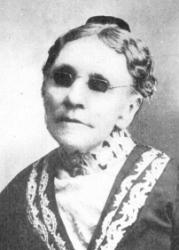
Fanny Crosby

1820 - 1915 Person Name: Frances Jane van Alstyne (Fanny J. Crosby), 1820-1915 Topics: Joy, Praise and Thanksgiving; Opening Hymn; Redemption and Salvation; Year A Lent 2; Year B Lent 4; Year B Trinity Sunday Author of "To God be the glory!" in Complete Anglican Hymns Old and New Pseudonymns: A.V., Mrs. A. E. Andrews, Mrs. E. A. Andrews, Mrs. E. L. Andrews, James L. Black, Henrietta E. Blair, Charles Bruce, Robert Bruce, Leah Carlton, Eleanor Craddock, Lyman G. Cuyler, D.H.W., Ella Dare, Ellen Dare, Mrs. Ellen Douglass, Lizzie Edwards. Miss Grace Elliot, Grace J. Frances, Victoria Frances, Jennie Garnett, Frank Gould, H. D. K., Frances Hope, Annie L. James, Martha J. Lankton [Langton], Grace Lindsey, Maud Marion, Sallie Martin, Wilson Meade, Alice Monteith, Martha C. Oliver, Mrs. N. D. Plume, Kate Smiley, Sallie Smith, J. L. Sterling, John Sterling, Julia Sterling, Anna C. Storey, Victoria Stuart, Ida Scott Taylor, Mary R. Tilden, Mrs. J. B. Thresher, Hope Tryaway, Grace Tureman, Carrie M. Wilson, W.H.D. Frances Jane Crosby, the daughter of John and Mercy Crosby, was born in Southeast, Putnam County, N. Y., March 24, 1820. She became blind at the age of six weeks from maltreatment of her eyes during a spell of sickness. When she was eight years old she moved with her parents to Ridgefield, Conn., the family remaining there four years. At the age of fifteen she entered the New York Institution for the Blind, where she received a good education. She became a teacher in the institution in 1847, and continued her work until March 1, 1858. She taught English grammar, rhetoric and American history. This was the great developing period in her life. During the vacations of 1852 and 1853, spent at North Reading, Mass., she wrote the words to many songs for Dr. Geo. F. Root, then the teacher of music at the blind institution. Among them were, "Hazel Dell,", "The Honeysuckle Glen," "Rosalie, the Prairie Flower," "Music in the Air," "Proud World, Good-bye, I'm Going Home," "All Together", "Never Forget the Dear Ones," and others. Subsequently she wrote the words for the cantatas of The Flower Queen and The Pilgrim Fathers, all of which were very popular in their day, though it was not generally known at the time that she was the author. While teaching at the institution she met Presidents Van Buren and Tyler, Hon. Henry Clay, Governor Wm. H. Seward, General Winfield Scott, and other distinguished characters of American history. Concerning Mr. Clay, she gives the following: "When Mr. Clay came to the institution during his last visit to New York, I was selected to welcome him with a poem. Six months before he had lost a son at the battle of Monterey, and I had sent him some verses. In my address I carefully avoided any allusion to them, in order not to wound him. When I had finished he drew my arm in his, and, addressing the audience, said through his tears: 'This is not the first poem for which I am indebted to this lady. Six months ago she sent me some lines on the death of my dear son.' Both of us were overcome for a few moments. Soon, by a splendid effort, Mr. Clay recovered himself, but I could not control my tears." In connection with her meeting these notable men, we might add that Miss Fanny Crosby had the honor of being the first woman whose voice was heard publicly in the Senate Chamber at Washington. She read a poem there on one occasion. In addition to the thousands of hymns that she has written (about eight thousand poems in all), many of which have not been set to music, she has published four volumes of verses. The first was issued in 1844 and was entitled The Blind Girl, and Other Poems, a second volume, Monterey, and Other Poems, followed in 1849, and the third, A Wreath of Columbia's Flowers, in 1858. The fourth, Bells at Evening and Other Verses, with a biographical sketch by Rev. Robert Lowry, and a fine half-tone portrait, in 1897, the sales of which have reached a fourth edition. The book is published by The Biglow & Main Co., New York. Though these show the poetical bent of her mind, they have little to do with her world-wide fame. It is as a writer of Sunday-school songs and gospel hymns that she is known wherever the English language is spoken, and, in fact, wherever any other language is heard. Fanny was married March 5, 1858, to Alex. Van Alstyne, who was also a scholar in the same institution in which she was educated. She began to write Sunday-school hymns for Wm. B. Bradbury in 1864. Her first hymn, "We are going, we are going To a home beyond the skies", was written at the Ponton Hotel on Franklin Street, New York City, on February 5th of that year. This hymn was sung at Mr. Bradbury's funeral in January, 1868. Since 1864 she supported herself by writing hymns. She resided in New York City nearly all her life, where, she says, she is "a member of the Old John Street M. E. Church in good standing." She spent regular hours on certain days at the office of The Biglow & Main Co., the firm for which she did most of her writing, and for whom she has composed over four thousand hymns. Her hymns have been in great demand and have been used by many of our most popular composers, among whom may be mentioned Wm. B. Bradbury, Geo. F. Root, W. H. Doane, Rev. Robert Lowry, Ira D. Sankey, J. R. Sweney, W. J. Kirkpatrick, H. P. Main, H. P. Danks, Philip Phillips, B. G. Unseld, and others. She could compose at any time and did not need to wait for any special inspiration, and her best hymns have come on the spur of the moment. She always composed with an open book in her hand, generally a copy of Golden Hymns, held closely over her eyes, bottom side up. She learned to play on the guitar and piano while at the institution, and has a clear soprano voice. She also received a technical training in music, and for this reason she could, and did, compose airs for some of her hymns. One of these is, "Jesus, dear, I come to Thee, Thou hast said I may," both words and music of which are wonderfully sweet. "Safe in the arms of Jesus", probably one of her best known hymns, was her own favorite. Fanny loved her work, and was happy in it. She was always ready either to sympathize or join in a mirthful conversation, as the case may be. The secret of this contentment dates from her first composition at the age of eight years. "It has been the motto of my life," she says. It is: "O what a happy soul am I! Although I cannot see, I am resolved that in this world Contented I will be;" This has continued to be her philosophy. She says that had it not been for her affliction she might not have so good an education, nor so great an influence, and certainly not so fine a memory. She knows a great many portions of the Bible by heart, and had committed to memory the first four books of the Old Testament, and also the four Gospels before she was ten years of age. Her scope of subjects is wide, embracing everything from a contemplation of heaven, as in "The Bright Forever" and "The Blessed Homeland", to an appeal to the work of this world, as in "To the Work" and "Rescue the Perishing." The most of Fanny's published hymns have appeared under the name of Fanny J. Crosby or Mrs. Yan Alstyne, but quite a large number have appeared under the nom de plumes of Grace J. Frances, Mrs. C. M. Wilson, Lizzie Edwards, Ella Dale, Henrietta E. Blair, Rose Atherton, Maud Marion, Leah Carlton, nearly two hundred different names. -Biographies of Gospel Song and Hymn Writers (excerpts) ======================= Van Alstyne, Frances Jane, née Crosby, a member of the Methodist Episcopal Church, was born at South East, Putnam County, New York, March 24, 1823. When six weeks old she lost her sight. About 1835 she entered the New York City Institution for the Blind. On completing her training she became a teacher therein from 1847 to 1858. In 1858 she was married to Alexander Van Alstyne, a musician, who was also blind. Her first poem was published in 1831; and her first volumes of verse as A Blind Girl, and Other Poems, 1844; Monteresy, and Other Poems, 1849; and A Wreath of Columbia's Flowers, 1858. Her first hymn was "We are going, we are going" (Death and Burial), which was written for Mr. Bradbury and published in the Golden Censer, 1864. From 1853 to 1858 she wrote 20 songs, which were set to music by G. F. Root. Her songs and hymns number some 2,000 or more, and have been published mainly in several of the popular American Sunday school collections, and often under a nom de plume. About 60 have come into common use in Great Britain. The majority of these are taken from the following American collections:— i. From The Shining Star, 1864. 1. Softly on the breath of evening. Evening. ii. From Fresh Laurels, 1867. 2. Beautiful Mansions, home of the blest. Heaven. 3. Jesus the Water of Life has given. The Water of Life. 4. Light and Comfort of my soul. In Affliction. 5. There's a cry from Macedonia. Missions. 6. We are marching on with shield and banner bright. Sunday School Anniversary. iii. From Musical Leaves, 1868. 7. 0 what are you going to do, brother? Youth for God. iv. From Sabbath Carols, 1868. 8. Dark is the night, and cold the wind is blowing. Affliction anticipated. 9. Lord, at Thy mercy seat, Humbly I fall. Lent. v. From Silver Spray, 1868. 10. If I come to Jesus, He will make me glad. Peace in Jesus. 11. 'Twill not be long—our journey here. Heaven anticipated. vi. From Notes of Joy, 1869. 12. Little beams of rosy light. The Divine Father. 13. Press on! press on! a glorious throng. Pressing towards the Prize. vii. From Bright Jewels, 1869. 14. Christ the Lord is risen today, He is risen indeed. Easter. 15. Holy, holy, holy is the Lord! Sing 0 ye people, &c. Holiness of God. 16. Jesus, keep me near the Cross. Near the Cross of Christ. 17. Saviour, bless a little child. A Child's Prayer. Written Feb. 6, 1869. viii. From Songs of Devotion, 1870. 18. Pass me not, 0 gentle Saviour. Lent. Written in 1868. 19. Rescue the perishing, care for the dying. Home Missions. ix. From Pure Gold, 1871. 20. Great is Jehovah. King of kings. Greatness of God. 21. I would be Thy little lamb. The Good Shepherd. 22. Lead me to Jesus, lead me to Jesus. Desiring Jesus. 23. To the work, to the work, we are servants of God. Home Missions. 24. Why labour for treasures that rust and decay? The Fadeless Crown. x. From the Royal Diadem, 1873. 25. I am Jesus' little friend. For Infant Schools. 26. Jesus I love Thee. Loving Jesus. 27. Mourner, wheresoe'er thou art. To the Sorrowing and Penitent. Written Oct. 3, 1871. 28. Never be faint or weary. Joy in Jesus. 29. Only a step to Jesus. Invitation. xi. From Winnowed Hymns, 1873-4. 30. Loving Saviour, hear my cry. Lent. xii. From Echoes of Zion, 1874. 31. Say, where is thy refuge, my brother? Home Missions. xiii. From Songs of Grace and Glory, 1874. 32. Thou my everlasting Portion. Christ the Portion of His People. xiv. From Brightest and Best, 1875. 33. All the way my Saviour leads me. Jesus the Guide. 34. I am Thine, O Lord: I have heard Thy voice. Holiness desired. 35. O come to the Saviour, believe in His name. Invitation. Written, Sep. 7, 1874. 36. O how sweet when we mingle. Communion of Saints. Written in 1866. 37. O my Saviour, hear me. Prayer to Jesus for blessing and love. 38. Only Jesus feels and knows. Jesus the Divine Friend. 39. Revive Thy work, O Lord. Home Missions. 40. Saviour, more than life to me. Jesus All and in All. 41. To God be the glory, great things He hath done. Praise for Redemption. xv. From Calvary Songs, 1875. 42. Come, O come with thy broken heart. Invitation. xvi. From Gospel Music, 1876. 43. Here from the world we turn. Divine Worship. 44. When Jesus comes to reward His servants. Watching, xvii. From Welcome Tidings, 1877. 45. O hear my cry, be gracious now to me. For Pardon and Peace. xviii. From The Fountain of Song, 1877. 46. Lord, my trust I repose on Thee. Trusting in Jesus. xix. From Good as Gold, 1880. 47. In Thy cleft, O Rock of Ages. Safety in Jesus. 48. Sound the alarm ! let the watchman cry. Home Missions. 49. Tenderly He leads us. Christ the Leader. 50. 'Tis the blessed hour of prayer. The Hour of Prayer. In addition to these hymns, all of which are in common use in Great Britain (mainly through I. D. Sankey's Sacred Songs and Solos, the Methodist Sunday School Hymn Book, the Silver Street Sunday Scholars Companion, and other collections for Sunday schools), there are also "A blessing for you, will you take it?" (Pardon through Jesus); "My song shall be of Jesus" (Praise of Jesus); “Now, just a word for Jesus"(Home Missions); "Onward, upward, Christian soldier" (Pressing Heavenward); 44 Sinner, how thy heart is troubled" (Invitation); "'Tis a goodly, pleasant land" (Heaven anticipated); and "When the dewy light was fading" (Death anticipated). All of these are in I. D. Sankey's Sacred Songs & Solos. Mrs. Van Alstyne's most popular composition is "Safe in the arms of Jesus" (Safety in Jesus). This was written in 1868, at the request of Mr. W. H. Doane, to his well-known melody with which it is inseparably associated, and published in Bright Jewels, 1869. Mrs. Van Alstyne's hymns have sometimes been published anonymously; but the greater part are signed by a bewildering number of initials. The combined sales of the volumes of songs and hymns named above have amounted in English-speaking countries to millions of copies. Notwithstanding the immense circulation thus given to Mrs. Van Alstyne's hymns, they are, with few exceptions, very weak and poor, their simplicity and earnestness being their redeeming features. Their popularity is largely due to the melodies to which they are wedded. Since the above was in type we have found that the following are also in common use in Great Britain:— 51. Suppose the little cowslip. Value of Little Things. 52. Sweet hour of prayer. The Hour of Prayer. These are in Bradbury's Golden Chain, 1861. 53. Never lose the golden rule. Love to our Neighbours. In Bradbury's Golden Censer, 1864. 54. I will not be afraid at night. Trust in God. In Bradbury's Fresh Laurels, 1867. 55. Praise Him, praise Him, Jesus our, &c. Praise of Jesus. In Biglow & Main's Bright Jewels, 1869. 56. More like Jesus would I be. More like Jesus. In Perkins & Taylor's Songs of Salvation, 1870. 57. Behold me standing at the door. Christ at the Door. In Biglow & Main's Christian Songs, 1872. 58. If I come to Jesus. Jesus the Children's Guide. 59. Jesus, Lord, I come to Thee. Trust in Jesus. 60. Let me learn of Jesus. Jesus the Children's Friend. 61. Singing for Jesus, O singing for Jesus. Singing for Jesus. 62. There is a Name divinely sweet Holy Name of Jesus. Of these hymns Nos. 58-62 we have not been able to trace. --Excerpts from John Julian, Dictionary of Hymnology (1907 ================ Van Alstyne, Frances J., p. 1203, ii. From the American collections of recent date we find that Mrs. Van Alstyne is still actively engaged in hymn-writing. In the Funk and Wagnalls Company Gloria Deo, 1903, there are about 30 of her hymns, most of which are new. They are all signed, and some are dated, but we have not space to quote the first lines and subjects, as this hymnal is not an official collection of any denomination. Another name, "Mrs. S. K. Bourne" is credited in the same hymnal with about 40 new hymns. If this signature is not another pen-name of Mrs. Van Alstyne's (and these pen-names and initials of hers are very numerous), we can only say that she has a very successful understudy in "Mrs. S. K. Bourne." --John Julian, Dictionary of Hymnology, New Supplement (1907)

Richard Proulx

1937 - 2010 Topics: The Christian Year Holy Week; Adoration and Praise; Angels; Choruses and Refrains; Christian Year Passion/Palm Sunday; Commitment; Confirmation; Discipleship and Service; Jesus Christ Cross; Jesus Christ Guide and Leader; Jesus Christ High Priest; Jesus Christ Kingship, Conqueror; Jesus Christ Lamb of God; Jesus Christ name; Jesus Christ Reign; Jesus Christ Saviour; Kingdom of God; Music and Singing; New Creation; Opening Hymns; Peace (World); Processionals (Opening of Worship); Proclamation; Recessionals; Testimony; Unity; Victory; Vocation; Warfare (Spiritual); Worship; Zeal; Lent 2 Year A; Palm/Passion Sunday Year A; Lent 4 Year B; Trinity Sunday Year B; Proper 19 Year B; Easter 4 Year C Composer (descant) of "CRUCIFER" in Voices United Richard Proulx (b. St. Paul, MN, April 3, 1937; d. Chicago, IL, February 18, 2010). A composer, conductor, and teacher, Proulx was director of music at the Holy Name Cathedral in Chicago, Illinois (1980-1997); before that he was organist and choirmaster at St. Thomas' Episcopal Church in Seattle, Washington. He contributed his expertise to the Roman Catholic Worship III (1986), The Episcopal Hymnal 1982, The United Methodist Hymnal (1989), and the ecumenical A New Hymnal for Colleges and Schools (1992). He was educated at the University of Minnesota, MacPhail College of Music in Minneapolis, Minnesota, St. John's Abbey in Collegeville, Minnesota, and the Royal School of Church Music in England. He composed more than 250 works. Bert Polman

William Gardiner

1770 - 1853 Topics: Jesus Christ Praise and Thanksgiving; Adoration and Praise; Adoration and Praise; Closing Hymns; God Kingdom, Majesty, Realm; Gratitude; Jesus Christ Adoration and Praise; Jesus Christ Lamb of God; Jesus Christ Master; Jesus Christ name; Jesus Christ Praise; Jesus Christ Reign; Jesus Christ Saviour; Reverence/Wonder Before God; Salvation; Service; Service Music Sending Forth/Commissioning; Testimony; Epiphany 2 Year A; Easter 4 Year A; Trinity Sunday Year A; Proper 6 Year A; Proper 9 Year A; All Saints Year A; Epiphany 3 Year B; Proper 20 Year B; Proper 24 Year B; Easter 4 Year C; Proper 13 Year C; Proper 20 Year C; Proper 22 Year C; Reign of Christ Year C; Tuesday in Holy Week Year ABC Composer of "LYONS" in Voices United William Gardiner (b. Leicester, England, 1770; d. Leicester, 1853) The son of an English hosiery manufacturer, Gardiner took up his father's trade in addition to writing about music, composing, and editing. Having met Joseph Haydn and Ludwig van Beethoven on his business travels, Gardiner then proceeded to help popularize their compositions, especially Beethoven's, in England. He recorded his memories of various musicians in Music and Friends (3 volumes, 1838-1853). In the first two volumes of Sacred Melodies (1812, 1815), Gardiner turned melodies from composers such as Haydn, Mozart, and Beethoven into hymn tunes in an attempt to rejuvenate the singing of psalms. His work became an important model for American editors like Lowell Mason (see Mason's Boston Handel and Haydn Collection, 1822), and later hymnbook editors often turned to Gardiner as a source of tunes derived from classical music. Bert Polman

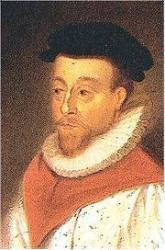
Orlando Gibbons

1583 - 1625 Person Name: Orlando Gibbons, 1583-1625 Topics: Beginning of Service; Pentecost 2 (Year B); Beginning of Service; Education; The Holy Trinity Composer of "SONG 13" in Lutheran Book of Worship Orlando Gibbons (baptised 25 December 1583 – 5 June 1625) was an English composer, virginalist and organist of the late Tudor and early Jacobean periods. He was a leading composer in the England of his day. Gibbons was born in Cambridge and christened at Oxford the same year – thus appearing in Oxford church records. Between 1596 and 1598 he sang in the Choir of King's College, Cambridge, where his brother Edward Gibbons (1568–1650), eldest of the four sons of William Gibbons, was master of the choristers. The second brother Ellis Gibbons (1573–1603) was also a promising composer, but died young. Orlando entered the university in 1598 and achieved the degree of Bachelor of Music in 1606. James I appointed him a Gentleman of the Chapel Royal, where he served as an organist from at least 1615 until his death. In 1623 he became senior organist at the Chapel Royal, with Thomas Tomkins as junior organist. He also held positions as keyboard player in the privy chamber of the court of Prince Charles (later King Charles I), and organist at Westminster Abbey. He died at age 41 in Canterbury of apoplexy, and a monument to him was built in Canterbury Cathedral. A suspicion immediately arose that Gibbons had died of the plague, which was rife in England that year. Two physicians who had been present at his death were ordered to make a report, and performed an autopsy, the account of which survives in The National Archives: We whose names are here underwritten: having been called to give our counsels to Mr. Orlando Gibbons; in the time of his late and sudden sickness, which we found in the beginning lethargical, or a profound sleep; out of which, we could never recover him, neither by inward nor outward medicines, & then instantly he fell in most strong, & sharp convulsions; which did wring his mouth up to his ears, & his eyes were distorted, as though they would have been thrust out of his head & then suddenly he lost both speech, sight and hearing, & so grew apoplectical & lost the whole motion of every part of his body, & so died. Then here upon (his death being so sudden) rumours were cast out that he did die of the plague, whereupon we . . . caused his body to be searched by certain women that were sworn to deliver the truth, who did affirm that they never saw a fairer corpse. Yet notwithstanding we to give full satisfaction to all did cause the skull to be opened in our presence & we carefully viewed the body, which we found also to be very clean without any show or spot of any contagious matter. In the brain we found the whole & sole cause of his sickness namely a great admirable blackness & syderation in the outside of the brain. Within the brain (being opened) there did issue out abundance of water intermixed with blood & this we affirm to be the only cause of his sudden death. His death was a shock to peers and the suddenness of his passing drew comment more for the haste of his burial – and of its location at Canterbury rather than the body being returned to London. His wife, Elizabeth, died a little over a year later, aged in her mid-30s, leaving Orlando's eldest brother, Edward, to care for the children left orphans by this event. Of these children only the eldest son, Christopher Gibbons, went on to become a musician. One of the most versatile English composers of his time, Gibbons wrote a quantity of keyboard works, around thirty fantasias for viols, a number of madrigals (the best-known being "The Silver Swan"), and many popular verse anthems. His choral music is distinguished by his complete mastery of counterpoint, combined with his wonderful gift for melody. Perhaps his most well known verse anthem is This is the record of John, which sets an Advent text for solo countertenor or tenor, alternating with full chorus. The soloist is required to demonstrate considerable technical facility at points, and the work at once expresses the rhetorical force of the text, whilst never being demonstrative or bombastic. He also produced two major settings of Evensong, the Short Service and the Second Service. The former includes a beautifully expressive Nunc dimittis, while the latter is an extended composition, combining verse and full sections. Gibbons's full anthems include the expressive O Lord, in thy wrath, and the Ascension Day anthem O clap your hands together for eight voices. He contributed six pieces to the first printed collection of keyboard music in England, Parthenia (to which he was by far the youngest of the three contributors), published in about 1611. Gibbons's surviving keyboard output comprises some 45 pieces. The polyphonic fantasia and dance forms are the best represented genres. Gibbons's writing exhibits full mastery of three- and four-part counterpoint. Most of the fantasias are complex, multisectional pieces, treating multiple subjects imitatively. Gibbons's approach to melody in both fantasias and dances features a capability for almost limitless development of simple musical ideas, on display in works such as Pavane in D minor and Lord Salisbury's Pavan and Galliard. In the 20th century, the Canadian pianist Glenn Gould championed Gibbons's music, and named him as his favorite composer. Gould wrote of Gibbons's hymns and anthems: "ever since my teen-age years this music ... has moved me more deeply than any other sound experience I can think of." In one interview, Gould compared Gibbons to Beethoven and Webern: ...despite the requisite quota of scales and shakes in such half-hearted virtuoso vehicles as the Salisbury Galliard, one is never quite able to counter the impression of music of supreme beauty that lacks its ideal means of reproduction. Like Beethoven in his last quartets, or Webern at almost any time, Gibbons is an artist of such intractable commitment that, in the keyboard field, at least, his works work better in one's memory, or on paper, than they ever can through the intercession of a sounding-board. To this day, Gibbons's obit service is commemorated every year in King's College Chapel, Cambridge. --wikipedia.org

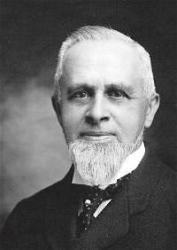
W. Howard Doane

1832 - 1915 Person Name: William Howard Doane, 1832-1916 Topics: Joy, Praise and Thanksgiving; Opening Hymn; Redemption and Salvation; Year A Lent 2; Year B Lent 4; Year B Trinity Sunday Composer of "TO GOD BE THE GLORY" in Complete Anglican Hymns Old and New An industrialist and philanthropist, William H. Doane (b. Preston, CT, 1832; d. South Orange, NJ, 1915), was also a staunch supporter of evangelistic campaigns and a prolific writer of hymn tunes. He was head of a large woodworking machinery plant in Cincinnati and a civic leader in that city. He showed his devotion to the church by supporting the work of the evangelistic team of Dwight L. Moody and Ira D. Sankey and by endowing Moody Bible Institute in Chicago and Denison University in Granville, Ohio. An amateur composer, Doane wrote over twenty-two hundred hymn and gospel song tunes, and he edited over forty songbooks. Bert Polman ============ Doane, William Howard, p. 304, he was born Feb. 3, 1832. His first Sunday School hymn-book was Sabbath Gems published in 1861. He has composed about 1000 tunes, songs, anthems, &c. He has written but few hymns. Of these "No one knows but Jesus," "Precious Saviour, dearest Friend," and "Saviour, like a bird to Thee," are noted in Burrage's Baptist Hymn Writers. 1888, p. 557. --John Julian, Dictionary of Hymnology, Appendix, Part II (1907) =================== Doane, W. H. (William Howard), born in Preston, Connecticut, 1831, and educated for the musical profession by eminent American and German masters. He has had for years the superintendence of a large Baptist Sunday School in Cincinnati, Ohio, where he resides. Although not a hymnwriter, the wonderful success which has attended his musical setting of numerous American hymns, and the number of his musical editions of hymnbooks for Sunday Schools and evangelistic purposes, bring him within the sphere of hymnological literature. Amongst his collections we have:— (1) Silver Spray, 1868; (2) Pure Gold, 1877; (3) Royal Diadem, 1873; (4) Welcome Tidings, 1877; (5) Brightest and Best, 1875; (6) Fountain of Song; (7) Songs of Devotion, 1870; (8) Temple Anthems, &c. His most popular melodies include "Near the Cross," "Safe in the Arms of Jesus," "Pass me Not," "More Love to Thee," "Rescue the Perishing," "Tell me the Old, Old Story," &c. - John Julian, Dictionary of Hymnology (1907)

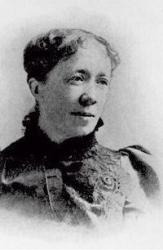
Mary A. Lathbury

1841 - 1913 Topics: Advent 2 Collect; Lent 4 Gospel; Trinity 7 Gospel; Sunday Next Before Advent Gospel; Eucharist; Holy Communion; Holy Scriptures; Lord's Supper; Mass; Truth Author (st. 1-2) of "Break thou the Bread of Life, Dear Lord, to me" in Magnify the Lord Lathbury, Mary Ann, was born in Manchester, Ontario County, New York, Aug. 10, 1841. Miss Lathbury writes somewhat extensively for the American religious periodical press, and is well and favourably known (see the Century Magazine, Jan., 1885, p. 342). Of her hymns which have come into common use we have:— 1. Break Thou the bread of life. Communion with God. A "Study Song" for the Chautauqua Literary and Scientific Circle, written in the summer of 1880. It is in Horder's (Eng.) Congregational Hymns, 1884. 2. Day is dying in the west. Evening. "Written at the request of the Rev. John H. Vincent, D.D., in the summer of 1880. It was a "Vesper Song," and has been frequently used in the responsive services of the Chautauqua Literary and Scientific Circle." It is in the Laudes Domini, N. Y., 1884. For these details we are indebted to S. W. Duffield's English Hymns, &c, N. Y., 1886. --John Julian, Dictionary of Hymnology (1907) ================== Lathbury, Mary A., p. 640, i. Another hymn by this writer is, "Lift up, lift up thy voice with singing." [Praise to Christ), in Sankey's Sacred Songs & Solos, 1878. --John Julian, Dictionary of Hymnology, Appendix, Part II (1907)

Pages


Export as CSV
It looks like you are using an ad-blocker. Ad revenue helps keep us running. Please consider white-listing Hymnary.org or getting Hymnary Pro to eliminate ads entirely and help support Hymnary.org.