You help make Hymnary.org possible. More than 10 million people from 200+ countries found hymns, liturgical resources and encouragement on Hymnary.org in 2025, including you. Every visit affirms the global impact of this ministry.

If Hymnary has been meaningful to you this year, would you take a moment today to help sustain it? A gift of any size—paired with a note of encouragement if you wish—directly supports the server costs, research work and curation that keep this resource freely available to the world.

Give securely online today, or mail a check to:
Hymnary.org
Calvin University
3201 Burton Street SE
Grand Rapids, MI 49546

Thank you for your partnership, and may the hope of Advent fill your heart.

Person Results

Topics:trinity+6
In:people

Planning worship? Check out our sister site, ZeteoSearch.org, for 20+ additional resources related to your search.
Showing 51 - 60 of 157Results Per Page: 102050

Johann Jakob Schütz

1640 - 1690 Person Name: Johann Jacob Schütz Topics: Trinity 6 Old Testament Author of "Give praise and glory unto God" in Magnify the Lord Schütz, Johann Jakob, was born Sept. 7, 1640, at Frankfurt am Main. After studying at Tübingen (where he became a licentiate in civil and canon law), he began to practise as an advocate in Frankfurt, and in later years with the title of Rath. He seems to have been a man of considerable legal learning as well as of deep piety. He was an intimate friend of P. J. Spener; and it was, in great measure, at his suggestion, that Spener began his famous Collegia Pietatis. After Spener left Frankfurt, in 1686, Schütz came under the influence of J. W. Petersen; and carrying out Petersen's prin¬ciples to their logical conclusion, he became a Separatist, and ceased to attend the Lutheran services or to communicate. He died at Frankfurt, May 22, 1690 (Koch, iv. 220; Blätter fur Hymnologie, Feb. 1883). Schütz is known as an author by two tractates; one being his Christliche Lebensregeln, Frankfurt, 1677; the other, that which contains his hymns, Christliches Gedenckbüchlein, zu Beforderung eines anfangenden neuen Lebens, &c, Frankfurt am Main, 1675 [Library of the Predigerministerium at Frankfurt]. This work includes 5 hymns, in a separate section, which is headed, “Hierauf folgen etliche Gesänge." These hymns are:— i. Die Wollust dieser Welt. ii. Was inich auf dieser Welt betrübt. iii. So komm, geliebte Todes-Stund. iv. Scheuet ihr, ihr matten Glieder. v. Sei Lob und Ehr dem höchsten Gut. Of these No. v. is undoubtedly by Schütz, and the other four exhibit much the same style of thought as, and frequent parallels to, the prose portions of the work. None of these have been traced earlier than 1675; and until this has been done, it is pretty safe to ascribe them all to Schütz. Three of these hymns have passed into English, viz.:— i. Sei Lob und Ehr dem höchsten Gut. Praise and Thanksgiving. First published in 1675, as above, No. v. It is founded on Deut. xxxii. 3; entitled, "Hymn of Thanksgiving ;" and is in 9 stanzas of 6 lines, and the refrain, "Gebt unserm Gott die Ehre”. Koch, iv. 220, speaks of this hymn as "outweighing many hundred others; and a classical hymn, which, from its first appearance, attracted unusual attention." And Lauxmann, in Koch, viii. 334-339, relates how delighted J. J. Moser was, when, on entering church the first Sunday after his captivity at Hohentwiel, he heard this hymn, and how heartily he joined in it; how it comforted the dying G. C. Rieger, of Stuttgart, on Tuesday, in Easter Week, 1743, and many other incidents. Translations in common use:— 1. All Glory to the Sov'reign Good. This is a full and good translation by J. OJacobi, in his Psalter Germanica, 2nd ed., 1732, p. 151, where it is entitled, "The Malabarian Hymn." 2. All glory be to God most high. A good translation by A. T. Russell, of st. i., iv., viii., for the Dalston Hospital Hymn Book, 1848, No. 59. 3. All praise and thanks to God most high. This is a good tr., omitting st. ix., by Miss Winkworth, in her Lyra Germanica, 2nd Ser., 1858, p. 146. 4. Sing praise to God Who reigns above. A good tr., omitting st. ix., contributed by Miss Cox to Lyra Eucharistica, 1864, p. 33, and included in her Hymns from the German, 1864, p. 235. 5. To God a joyful anthem raise. A good tr. of st. i., ii., iv., v., viii., by J. M. Sloan, as No. 314, in J. H. Wilson's Service of Praise, 1865. The following are also translated into English:— ii. So komm, geliebte Todes-Stund. For the Dying. First published in 1675, as above, No. iii., in 11 st. of 8 1., entitled, "The thoughts on Death of a Royal Princess, after the usual interpretation of Job xix. 25." This Princess was Sophie Elisabethe. daughter of Duke Philipp Ludwig, of Holstein-Sonderburg (b. at Homburg vor der Hohe, May 4, 1653; married, in 1676. to Duke Moritz, of Sachse-Zeitz; d. at Schleusingen, Aug. 19, 1684), who had been a regular attender at Spener's conferences at Frankfurt, and thus associated with Schütz. This hymn has often been ascribed to her; and she had already chosen Job xix. 25, as the text of her funeral sermon. But it is more probable that both hymns were written by Schütz for her use, or in her honour. The trs. are :—(1) "Come, happy hour of death, and close." By Dr. G. Walker, 1860, p. 56. (2) "O come, delightful hour of death." By Dr. G. Walker, 1860, p. 106. iii. Was mich auf dieser Welt betriibt. Earthly Vanities. This hymn, on Renunciation of the World, first appeared in 1675, as above, No. ii., in 4 st. of 10 1., and entitled "From the World to God." It has sometimes been erroneously ascribed to Michael Franck. It is tr. as "The woes that weigh my body down." By Miss Manington, 1863, p. 32. [Rev. James Mearns, M.A.] --Excerpts from John Julian, Dictionary of Hymnology (1907)

Winfred Douglas

1867 - 1944 Topics: Trinity 6 Old Testament Translator of "Give praise and glory unto God" in Magnify the Lord Charles Winfred Douglas (b. Oswego, NY, 1867; d. Santa Rosa, CA, 1944), an influential leader in Episcopalian liturgical and musical life. Educated at Syracuse University and St. Andrews Divinity School, Syracuse, New York, he moved to Colorado for his health. There he studied at St. Matthew's Hall, Denver, and founded the Mission of the Transfiguration in Evergreen (1897). Ordained a priest in the Episcopal Church in 1899, he also studied in France, Germany and England, where he spent time with the Benedictines of Solesmes on the Island of Wight from 1903 to 1906. For much of his life, Douglas served as director of music at the Community of St. Mary in Peekskill, New York, and had associations with cathedrals in Denver, Colorado, and Fond du Lac, Wisconsin. He promoted chanting and plainsong in the Episcopal Church through workshops and publications such as The American Psalter (1929), the Plainsong Psalter (1932), and the Monastic Diurnal (1932). His writings include program notes for the Denver Symphony Orchestra, various hymn preludes; organ, as well as the book, Church Music in History and Practice (1937). He was editor of both the Hymnal 1916 and its significant successor, Hymnal 1940, of the Episcopal Church. Douglas's other achievements include a thorough knowledge of the life and culture of Hopi and Navajo natives, among whom he lived for a number of years. Bert Polman

John Marriott

1780 - 1825 Person Name: John Marriott, 1780-1825 Topics: Evangelism; Grace and Providence; Gradual Hymn; The Holy Trinity; Year A Second Sunday Before Lent; Year B Baptism of Christ; Year C Easter 6 Author of "Thou, whose almighty word" in Complete Anglican Hymns Old and New Marriott, John, M.A, son of E. Marriott, D.D., Rector of Cottesbach, near Lutterworth, was born at Cottesbach, in 1780, and educated at Rugby, and Christ Church, Oxford. He was the second of two who obtained honours in the schools in 1802, the first year in which there was a public examination for honours at Oxford. He was also Student of Christ Church, and for about two years a private tutor in the family of the Duke of Buccleuch. The Duke presented him to the Rectory of Church Lawford, Warwickshire. This he retained to his death, although his wife's health compelled him to reside in Devonshire, where he was successively curate of St. Lawrence and other parishes in Exeter, and of Broadclyst, near Exeter, where he died March 31, 1825. His published works include a volume of Sermons which he issued in 1818, and a posthumous volume of Sermons, published by his sons in 1838. His hymns were never published by himself, nor in book form by any one. A few appeared in print during his lifetime, but without his permission. These include:— 1. A saint? 0 would that I could claim. Holiness desired. "Written off almost at the moment, on hearing the name applied in a scornful way at a party, about 1813." It was printed in The Friendly Visitor, 1834. 2. Thou, Whose Almighty word. Missions. Written, his son says, "about 1813." It was printed in The Friendly Visitor, July, 1825, in 4 st. of 11., with the Title "Missionary Hymn," and without signature. This text differs only in two or three words from the original as supplied by the author's son to Dr. Rogers and published by him in his Lyra Brittanica, 1867, p. 395. Two texts are known which are received as original, the first the undoubted text in Lyra Brittanica, and the second that given by Lord Selborne from the Collection of Dr. Baffles, Congregational Minister of Liverpool. 3. When Christ our human form did bear. Christ's love of Children. “Written in 1816 for the Parochial Schools, Upottery, Devon." -- John Julian, Dictionary of Hymnology (1907) ================= Marriott, J. , p. 715, i., No. 1, is in the Fuller-Maitland Hymns for Private Devotion, 1827. --John Julian, Dictionary of Hymnology, Appendix, Part II (1907)

Bartholomäus Gesius

1555 - 1613 Person Name: B. Gesius, c. 1555-1613 Topics: Trinity 6 Composer of "HERRNHUT" in Evangelical Lutheran Hymnary Bartholomaeus Gesius; b. 1555, Muencheberg, near Frankfort; d. 1613 or 14, Wittenberg Evangelical Lutheran Hymnal, 1908

W. McComb

1793 - 1873 Person Name: W. McComb, 1793-1873 Topics: Trinity 6 Author of "Chief of Sinners Though I Be" in Evangelical Lutheran Hymnary McComb, William, author of "Chief of sinners though I be" (Christ All and All), was born in Coleraine, County Londonderry, Ireland, in 1793, and was for several years a bookseller in Belfast. He published The Dirge of O'Neill, 1816; The School of the Sabbath, 1822; and The Voice of a Year, 1848. These together with smaller pieces were collected and pub. as The Poetical Works of William M'Comb, 1864. --John Julian, Dictionary of Hymnology, Appendix, Part II (1907)

George Keith

1638 - 1716 Person Name: "K" Topics: The Church in the World Commitment: Trust; Adversity, Affliction & Tribulation; Assurance; Bible; Church Anniversaries; Church Education; Comfort/Consolation; Commitment; Courage; Eternal Life; Faith; God Faithfulness; God Presence; God Protection; God Strength and Refuge; Good News, Gospel; Grace; Grief; Guidance; Hope; Jesus Christ Strength and Refuge; Mercy; Perseverance; Pilgrimage and Conflict; Promise(s); Saints; Security; Steadfastness; Strength; Struggle and Conflict; Suffering; Trials; Trust; Victory; Wholeness; Word of God; Epiphany 7 Year A; Epiphany 9 Year A; Easter 5 Year A; Trinity Sunday Year A; Proper 4 Year A; Proper 12 Year A; Proper 14 Year A; Proper 22 Year A; Proper 6 Year B; Baptism of Jesus Year C; Epiphany 4 Year C; Epiphany 5 Year C; Epiphany 8 Year C; Lent 2 Year C; Lent 4 Year C; Proper 14 Year C; Proper 17 Year C; Proper 18 Year C; Proper 26 Year C; All Saints Year C Author of "How Firm a Foundation" in Voices United George Keith, according to D. Sedgwick, was the author of "How firm a foundation, ye saints of the Lord." Little is known about Keith, save that he was a publisher, a son-in-law of Dr. Gill, and the composer of several hymns. --Annotations of the Hymnal, Charles Hutchins, M.A. 1872.

Ignaz Franz

1719 - 1790 Topics: Angels; Communion of Saints; God Authority; God Holiness; God Name; God Reign; Heaven(s)/Paradise; Jesus Christ name; Judgment; Kingdom of God; Morning Prayer; Mystery; Opening Hymns; Prophets; Reverence/Wonder Before God; Service Music Gathering, Call to Worship, Greeting; Service Music Doxologies; Trinity; Worship; Epiphany 2 Year A; Epiphany Last/Transfig. Year A; Trinity Sunday Year A; Trinity Sunday Year B; Epiphany 5 Year C; Easter 6 Year C; Trinity Sunday Year C; Proper 15 Year C; All Saints Year C Author (German) of "Song of Praise to the Holy Trinity (Grand Dieu, Nous Te Bénissons) (Holy God, We Praise Your Name)" in Voices United Ignaz Franz Poland 1719-1790. Born at Protzau, Silesia, he studied in Glaz andf Breslau. In 1742 he became a Roman Catholic priest. He served as chaplain at Gross-Glogau and vicar of Glogau in Silesia. In 1753 he was appointed archpriest at Schlawa, and assessor to the apostolic vicar's office in Breslau in 1766. He also functioned as the Assessor for Theological Affairs at the Apostolic Vicariate. He wrote hymn lyrics and compiled religious music. His works include “Katholisches Gesangbuch” (1744). He died at Breslau. John Perry

Arthur Sullivan

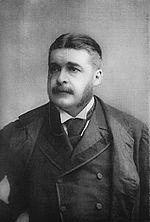
1842 - 1900 Person Name: Arthur S. Sullivan Topics: Acrostic Psalms; Alleluias; Church Year All Saints' Day; Church Year Easter; Church Year Trinity Sunday; Disciples / Calling; Elements of Worship Gathering; Elements of Worship Lord's Supper; Elements of Worship Praise and Adoration; Endurance; God Daily Experience of; God Desire for; God Light from; God as Creator; God as King; God's Sovereignty; God's Sustaining Power; God's Triumph; God's Wonders; God's Word; God's Deeds; God's Faithfulness; God's Forgiveness; God's Generosity; God's Gifts; God's Glory; God's Greatness; God's Kingdom; God's Love; God's Name; God's Nearness; God's Presence; God's Providence; God's Way; Hymns of Praise; Jesus Christ Mind of; Life Stages Generations; Lord's Prayer 1st petition (hallowed be your name); Lord's Prayer 4th petition (give us today our daily bread); Occasional Services Christian Marriage; Occasional Services New Year; Occasional Services Thanksgving Day / Harvest Festival; People of God / Church Witnessing; Prayer; Rejoicing; Witness; Worship; Year A, Ordinary Time after Pentecost, July 31-August 6; Year A, Ordinary Time after Pentecost, July 3-9; Year A, Ordinary Time after Pentecost, September 18-24; Year B, Ordinary Time after Pentecost, July 24-30; Year C, Ordinary Time after Pentecost, November 6-12 Adapter of "NOEL (GERARD)" in Psalms for All Seasons Arthur Seymour Sullivan (b Lambeth, London. England. 1842; d. Westminster, London, 1900) was born of an Italian mother and an Irish father who was an army band­master and a professor of music. Sullivan entered the Chapel Royal as a chorister in 1854. He was elected as the first Mendelssohn scholar in 1856, when he began his studies at the Royal Academy of Music in London. He also studied at the Leipzig Conservatory (1858-1861) and in 1866 was appointed professor of composition at the Royal Academy of Music. Early in his career Sullivan composed oratorios and music for some Shakespeare plays. However, he is best known for writing the music for lyrics by William S. Gilbert, which produced popular operettas such as H.M.S. Pinafore (1878), The Pirates of Penzance (1879), The Mikado (1884), and Yeomen of the Guard (1888). These operettas satirized the court and everyday life in Victorian times. Although he com­posed some anthems, in the area of church music Sullivan is best remembered for his hymn tunes, written between 1867 and 1874 and published in The Hymnary (1872) and Church Hymns (1874), both of which he edited. He contributed hymns to A Hymnal Chiefly from The Book of Praise (1867) and to the Presbyterian collection Psalms and Hymns for Divine Worship (1867). A complete collection of his hymns and arrangements was published posthumously as Hymn Tunes by Arthur Sullivan (1902). Sullivan steadfastly refused to grant permission to those who wished to make hymn tunes from the popular melodies in his operettas. Bert Polman

James R. Murray

1841 - 1905 Topics: God Creation and Providence; Blessings; Communion with Christ and God; Creation; God Creator; God Kingdom, Majesty, Realm; God Power/Might; God Presence; God Works; Gratitude; Heaven(s)/Paradise; Life; Brevity of Life; Nature; Petition; Praise; Service Music Gathering, Call to Worship, Greeting; Water; Word of God; Christmas Eve Year A; Lent 2 Year A; Pentecost Year A; Trinity Sunday Year A; Easter 6 Year B; Proper 7 Year B; Proper 24 Year B; Trinity Sunday Year C; Proper 18 Year C; New Year Year ABC Harmonizer of "LACQUIPARLE" in Voices United L.P.M. (1905, April 12). Obituary. New Church Messenger, p.209. Murray.--At Cincinnati, March 10, 1905, James Ramsey Murray. Funeral services in the Church of the New Jersualem, March 13th. James R. Murray was widely known in the musical world as the author of many songs and song books, and in the New Church in Chicago and Cincinnati as an affectionate, intelligent, and loyal New Churchman. He was born in Andover (Ballard Vale), Mass., March 17, 1841. In early life he developed musical talent, and composed many minor pieces for local and special occasions. Later at North Reading, Mass., he attended Dr. George F. Root's School of Music, and was associated with William Bradbury and Dr. Lowell Mason. He enlisted in the Fourteenth Regiment of infantry, commonly known as the Essex County Regiment, and afterwards was changed to the First Regiment, Massachusetts Heavy Artillery, which was engaged in most of the battles fought by the Second Army Corps up to the surrender of General Lee. "Daisy Deane," the first and most popular of his early song successes, was composed in 1863 in Virginia while in camp, words by his cousin, Thomas F. Winthrop. This song is known all over the world, and the Salvation Army is using an arrangement of it for one of their war cry songs. In 1868 Mr. Murray married Isabella Maria Taylor of Andover; and they removed to Chicago. Here three children were born to them, two passing early to their heavenly home, the youngest, Winthrop Root Murray, is still living. It was during these first years in Chicago that Mr. and Mrs. Murray became interested in the New Church, while he was engaged with Root and Cady as editor of the Long Visitor, afterwards merged with the Musical Visitor. After the great fire of 1871 Mr. and Mrs. Murray returned East, where he was engaged in teaching in Lawrence and Andover, and as organist at the Old South Church in Andover. In 1881 they removed to Cincinnati and Mr. Murray became the editor of the Musical Viistor [sic] and head of the publication department of the John Church Company. Among the most popular of his books are "Pure Diamonds," "Royal Gems," "The Prize" and "Murray's Sacred Songs." The following titles will recall some of his best loved sacred songs: "At Last," "Calm on the Listening Ear of Night," "I Shall Be Satisfied," "There Shall No Evil Befall Thee," "Thine, O Lord, Is the Greatness," "The Way Was Mine," "How Beautiful Upon the Mountains," "Angels from the Realms of Glory." His last great labor in the publishing department of the John Church Company was the seeing through the press five volumes of Wagner's music dramas, with full score and original German text, and an English translation. The immense and careful labor involved in the preparation of these volumes, with a really smooth and excellent English translation, had perhaps, as it was done under pressure, something to do with Mr. Murray's breakdown. Although for some reason Mr. Murray's name does not appear on the title page of these volumes, his friends knew of the place the work held in his affections and ambition. Mr. Murray was a member of the Church Council of the Cincinnati Society for the last four years and took a deep interest in the building of the New Church, and in the inauguration of services, with all the changes looking to the improvement of the musical part of the service. The vested choir, organized by Mr. and Mrs. Lawson, which Mr. Murray as councilman had urged from the beginning, in their entrance to the church each Sunday singing the processional hymn participated in the funeral service, with a congregation of brethren and friends, all moved by deep love and profound respect for the consistent life and faith of a worthy Churchman and beloved friend. --DNAH Archives =================================== For a discussion of Murray and the tune MUELLER, see: Stulken, M.K. (1981). Hymnal companion to the Lutheran Book of Worship. Philadelphia : Fortress Press, p.170. =================================== Also available in the DNAH Archives: 1. An excerpt from Christie, George A. (1927). New Free Church. In Music in Andover. Papers read at "Fagot Party" of the Andover Natural History Society. 2. Unsourced essay about Murray written soon after his death, likely from Andover, Mass., perhaps authored by Charlotte Helen Abbott.

Richard Massie

1800 - 1887 Topics: Trinity 6 Epistle Translator of "Christ Jesus lay in death's strong bands" in Magnify the Lord Massie, Richard, eldest son of the Rev. R. Massie, of Goddington, Cheshire, and Rector of Eccleston, was born at Chester, June 18, 1800, and resides at Pulford Hall, Coddington. Mr. Massie published a translation of Martin Luther’s Spiritual Songs, London, 1854. His Lyra Domestica, 1st series, London, 1860, contains translations of the 1st Series of Spitta's Psalter und Harfe. In 1864 he published vol. ii., containing translations of Spitta's 2nd Series, together with an Appendix of translations of German hymns by various authors. He also contributed many translations of German hymns to Mercer's Church Psalter & Hymn Book; to Reid's British Herald; to the Day of Rest, &c. He died Mar. 11,1887. -- John Julian, Dictionary of Hymnology (1907)

Pages


Export as CSV
It looks like you are using an ad-blocker. Ad revenue helps keep us running. Please consider white-listing Hymnary.org or getting Hymnary Pro to eliminate ads entirely and help support Hymnary.org.