You help make Hymnary.org possible. More than 10 million people from 200+ countries found hymns, liturgical resources and encouragement on Hymnary.org in 2025, including you. Every visit affirms the global impact of this ministry.

If Hymnary has been meaningful to you this year, would you take a moment today to help sustain it? A gift of any size—paired with a note of encouragement if you wish—directly supports the server costs, research work and curation that keep this resource freely available to the world.

Give securely online today, or mail a check to:
Hymnary.org
Calvin University
3201 Burton Street SE
Grand Rapids, MI 49546

Thank you for your partnership, and may the hope of Advent fill your heart.

Person Results

Topics:trinity+9
In:person

Planning worship? Check out our sister site, ZeteoSearch.org, for 20+ additional resources related to your search.
Showing 51 - 60 of 134Results Per Page: 102050

Johann Mentzer

1658 - 1734 Person Name: J. Mentzer, 1658-1734 Topics: Trinity 9 Author of "O that I Had a Thousand Voices" in Evangelical Lutheran Hymnary Mentzer, Johann, was born July 27, 1658, at Jahmen, near Rothenburg, in Silesia, and became a student of theology at Wittenberg, In 1691 he was appointed pastor at Merzdorf; in 1693 at Hauswalde, near Bischofswerda; and in 1696 at Kemnitz, near Bernstadt, Saxony. He died at Kemnitz, Feb. 24, 1734 (G. F. Otto's Lexicon . . . Oberlausizischer Schriftsteller, ii., 581; ms. from Pastor Richter of Kemnitz, &c). He was a great friend of J. C. Schwedler, of Henrietta Catherine von Gersdorf, and of N. L. von Zinzendorf, all hymnwriters, and all his near neighbours. He was himself greatly tried in the furnace of affliction. He wrote a large number of hymns, over 30 of which appeared in the various hymnbooks of his time. Many of them, especially those of Praise and Thanksgiving, and those of Cross and Consolation, are of high merit, though sometimes exaggerated and not very refined in their imagery, and are full of ardent love to Christ, Scriptural, poetical, and also popular in style. The only one in English common use is:— 0 dass ich tausend Zungen hatte. Praise and Thanksgiving. His best hymn. First published as No. 496, in Freylinghausen's Gesang-Buch, 1704, in 15 st. of 6 1., and repeated in many later collections as the Unverfälschter Liedersegen, 1851, No. 719. Lauxmann, in Koch viii. 350, says this hymn was written in 1704 after his house was burned down. In reply to enquiries addressed to Kemnitz, pastor Richter informs me that the parsonage house there was built in the years 1696 and 1697, and has never been burned down. In 1697 a farmhouse near was destroyed by lightning, and possibly Mentzer may have been living there at the time; or at any rate this may have suggested the hymn and the story. Lauxmann speaks of the hymn as having been a great favourite of Caroline Perthes of Hamburg, and of J. C. Schlipalius of Dresden, and relates various incidents regarding its blessed and comforting effects. The translations in common use are:— 1. Oh that I had a thousand voices! A mouth. A full translation by Dr. H. Mills, in his Horae Germanica, 1845 (1856, p. 189); repeated, abridged, in the American Lutheran General Synod's Collection, 1850-52, the Ohio Lutheran Hymnal, 1880, &c. 2. Oh be unceasing praise ascending. A good translation of st. i., vii., viii., by A. T. Russell, as No. 203, in his Psalms & Hymns, 1851. 3. Oh would I had a thousand tongues. A good translation, omitting stanzas ix., x., xiii., by Miss Winkworth, in her Lyra Germanica, 1st Ser., 1855, p. 170; and repeated, abridged, in the Methodist New Congregational Hymn Book, 1863. 4. 0 would, my God, that I could praise Thee. A good translation, in the original metre, by Miss Winkworth, in her Chorale Book for England, 1863, No. 5, being of stanzas i., iii.—v, xiv., xv. This was repeated in the Evangelical Hymnal, N. Y., 1830. A filtered form, beginning with st. iii., "0 all ye powers that God implanted” is in Dr. Knight's Collection, Dundee, 1871 and 1874. 5. I praise Thee, 0 my God and Father. By Miss Winkworth, in her Chorale Book for England, 1863, No. 6. This is of st. vi.-viii., xi., xii., and fol¬lows the text of Bunsen's Versuch, 1833, No. 846, this stanza beginning there, "Lob sei dir, treuer Gott und Vater." Her translation is repeated in Dr. Thomas's Augustine Hymn Book, 1866. Other translations are:— (1) "0 that a thousand tongues were granted," by N. L. Frothingham, 1810, p. 155. (2) "0 that a thousand tongues were mine, And each," by Dr. Alexander Mair in the Family Treasury, 1872, p. 462. Other hymns by Mentzer, translated into English but not in common use are:— ii. Du gehest in den Garten beten. Passiontide. First published in the Löbau Gesang-Buch, 1725, as No. 370, in 12 stanzas of 6 lines, marked as by Mentzer and entitled "The true school of prayer of Jesus, praying on the Mount of Olives, Matt. xxvi. 36-46." In the Berlin Geistliche Lieder, ed. 1863, No. 223, beginning "Du gehst zum Garten urn zu beten," and wrongly ascribed to B. Schmolck. Translated as "Into the garden shade to pray," by J. Kelly, in the Family Treasury, 1868, p. 691. iii. Wer das Kleinod will erlangen. Christian Warfare. A call to spiritual energy, founded on 1 Cor. ix. 24, 25. Included as No. 783 in the Neuvermehrtes Geistreiches Gesang-Buch Berlin, 1711, in 6 stanzas of 8 lines; and previously in Schlechtiger's Gesang-Buch, Berlin, 1704. In the Berlin Geistliche Lieder, ed. 1863, No. 679. Translated as "Who would make the prize his own." By Miss Winkworth, 1858, p. 167. [Rev. James Mearns, M.A.] -- John Julian, Dictionary of Hymnology (1907)

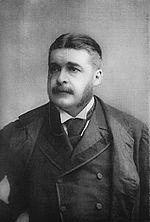
Arthur Sullivan

1842 - 1900 Person Name: Arthur S. Sullivan Topics: Acrostic Psalms; Alleluias; Church Year All Saints' Day; Church Year Easter; Church Year Trinity Sunday; Disciples / Calling; Elements of Worship Gathering; Elements of Worship Lord's Supper; Elements of Worship Praise and Adoration; Endurance; God Daily Experience of; God Desire for; God Light from; God as Creator; God as King; God's Sovereignty; God's Sustaining Power; God's Triumph; God's Wonders; God's Word; God's Deeds; God's Faithfulness; God's Forgiveness; God's Generosity; God's Gifts; God's Glory; God's Greatness; God's Kingdom; God's Love; God's Name; God's Nearness; God's Presence; God's Providence; God's Way; Hymns of Praise; Jesus Christ Mind of; Life Stages Generations; Lord's Prayer 1st petition (hallowed be your name); Lord's Prayer 4th petition (give us today our daily bread); Occasional Services Christian Marriage; Occasional Services New Year; Occasional Services Thanksgving Day / Harvest Festival; People of God / Church Witnessing; Prayer; Rejoicing; Witness; Worship; Year A, Ordinary Time after Pentecost, July 31-August 6; Year A, Ordinary Time after Pentecost, July 3-9; Year A, Ordinary Time after Pentecost, September 18-24; Year B, Ordinary Time after Pentecost, July 24-30; Year C, Ordinary Time after Pentecost, November 6-12 Adapter of "NOEL (GERARD)" in Psalms for All Seasons Arthur Seymour Sullivan (b Lambeth, London. England. 1842; d. Westminster, London, 1900) was born of an Italian mother and an Irish father who was an army band­master and a professor of music. Sullivan entered the Chapel Royal as a chorister in 1854. He was elected as the first Mendelssohn scholar in 1856, when he began his studies at the Royal Academy of Music in London. He also studied at the Leipzig Conservatory (1858-1861) and in 1866 was appointed professor of composition at the Royal Academy of Music. Early in his career Sullivan composed oratorios and music for some Shakespeare plays. However, he is best known for writing the music for lyrics by William S. Gilbert, which produced popular operettas such as H.M.S. Pinafore (1878), The Pirates of Penzance (1879), The Mikado (1884), and Yeomen of the Guard (1888). These operettas satirized the court and everyday life in Victorian times. Although he com­posed some anthems, in the area of church music Sullivan is best remembered for his hymn tunes, written between 1867 and 1874 and published in The Hymnary (1872) and Church Hymns (1874), both of which he edited. He contributed hymns to A Hymnal Chiefly from The Book of Praise (1867) and to the Presbyterian collection Psalms and Hymns for Divine Worship (1867). A complete collection of his hymns and arrangements was published posthumously as Hymn Tunes by Arthur Sullivan (1902). Sullivan steadfastly refused to grant permission to those who wished to make hymn tunes from the popular melodies in his operettas. Bert Polman

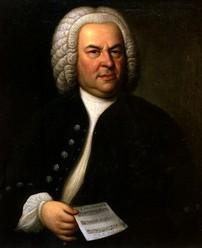
Johann Sebastian Bach

1685 - 1750 Person Name: J. S. Bach (1685-1750) Topics: God's Church Conflict and Endurance; Lent 2, The King and the Kingdom Conflict; Trinity Sunday The Trinity; Pentecost 3 The Church's Confidence in Christ; Pentecost 9 The Whole Armour of God; Pentecost 12 The Witnessing Community; Pentecost 13 The Suffering Community; Pentecost 20 Endurance Arranger of "EIN' FESTE BURG" in Hymns for Today's Church (2nd ed.) Johann Sebastian Bach was born at Eisenach into a musical family and in a town steeped in Reformation history, he received early musical training from his father and older brother, and elementary education in the classical school Luther had earlier attended. Throughout his life he made extraordinary efforts to learn from other musicians. At 15 he walked to Lüneburg to work as a chorister and study at the convent school of St. Michael. From there he walked 30 miles to Hamburg to hear Johann Reinken, and 60 miles to Celle to become familiar with French composition and performance traditions. Once he obtained a month's leave from his job to hear Buxtehude, but stayed nearly four months. He arranged compositions from Vivaldi and other Italian masters. His own compositions spanned almost every musical form then known (Opera was the notable exception). In his own time, Bach was highly regarded as organist and teacher, his compositions being circulated as models of contrapuntal technique. Four of his children achieved careers as composers; Haydn, Mozart, Beethoven, Mendelssohn, Schumann, Brahms, and Chopin are only a few of the best known of the musicians that confessed a major debt to Bach's work in their own musical development. Mendelssohn began re-introducing Bach's music into the concert repertoire, where it has come to attract admiration and even veneration for its own sake. After 20 years of successful work in several posts, Bach became cantor of the Thomas-schule in Leipzig, and remained there for the remaining 27 years of his life, concentrating on church music for the Lutheran service: over 200 cantatas, four passion settings, a Mass, and hundreds of chorale settings, harmonizations, preludes, and arrangements. He edited the tunes for Schemelli's Musicalisches Gesangbuch, contributing 16 original tunes. His choral harmonizations remain a staple for studies of composition and harmony. Additional melodies from his works have been adapted as hymn tunes. --John Julian, Dictionary of Hymnology (1907)

Johann Martin Spiess

1691 - 1772 Topics: Trinity 9 Collect Composer of "SWABIA" in Magnify the Lord

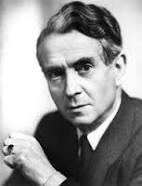
Herbert Howells

1892 - 1983 Topics: Trinity 9 Old Testament Composer of "MICHAEL" in Magnify the Lord UK

Henry Baker

1835 - 1910 Topics: God The Triune God; Birth; Empowerment; God Image (Mother); Holy Spirit; Last Supper; Brevity of Life; Morning; Nurture; Patience; Trinity; Trinity Sunday Year A; Baptism of Jesus Year B; Proper 9 Year C Composer of "HESPERUS (QUEBEC)" in Voices United Henry Baker, Mus. Bac., son of the Rev. James Baker, Chancellor of the diocese of Durham; born at Nuneham, Oxfordshire; educated at Winchester School; graduated Bachelor in Music at the University of Oxford in 1867. He also worked as a civil engineer. Scottish Church Music, its composers and sources by James Love; William Blackwwod and Sons, Edinburgh and London, 1891

Henri A. C. Malan

Person Name: H. A. C. Malan Topics: Trinity 9 Collect Composer of "HENDON" in Magnify the Lord See Malan, César, 1787-1864

Mary Louise Bringle

b. 1953 Person Name: Mary Louis Bringle, b. 1953 Topics: Acrostic Psalms; Alleluias; Church Year All Saints' Day; Church Year Easter; Church Year Trinity Sunday; Disciples / Calling; Elements of Worship Gathering; Elements of Worship Lord's Supper; Elements of Worship Praise and Adoration; Endurance; God Daily Experience of; God Desire for; God Light from; God as Creator; God as King; God's Sovereignty; God's Sustaining Power; God's Triumph; God's Wonders; God's Word; God's Deeds; God's Faithfulness; God's Forgiveness; God's Generosity; God's Gifts; God's Glory; God's Greatness; God's Kingdom; God's Love; God's Name; God's Nearness; God's Presence; God's Providence; God's Way; Hymns of Praise; Jesus Christ Mind of; Life Stages Generations; Lord's Prayer 1st petition (hallowed be your name); Lord's Prayer 4th petition (give us today our daily bread); Occasional Services Christian Marriage; Occasional Services New Year; Occasional Services Thanksgving Day / Harvest Festival; People of God / Church Witnessing; Prayer; Rejoicing; Witness; Worship; Year A, Ordinary Time after Pentecost, July 31-August 6; Year A, Ordinary Time after Pentecost, July 3-9; Year A, Ordinary Time after Pentecost, September 18-24; Year B, Ordinary Time after Pentecost, July 24-30; Year C, Ordinary Time after Pentecost, November 6-12; Texts in Languages Other than English Spanish Translator (st. 2) of "Te exaltaré, me Dios, mi Rey (I will exalt my God, my King)" in Psalms for All Seasons

William B. Bradbury

1816 - 1868 Topics: Assurance; Biblical Names and Places Israel; Biblical Names and Places Jacob; Church Year Good Friday; Church Year Passion/Palm Sunday; Cry to God; Despair; Doubt; Elements of Worship Lord's Supper; God Trust in; God's Nearness; God's Presence; Jesus Christ Cross and Crucifiction; Lament General; Lament Individual; Life Stages Death; Loneliness; Longing for God; Mission; Mocking; Pain; People of God / Church Suffering; Prayer Answer to; Prayer; Questioning; Sorrow; Suffering; Victory; Vows; Year A, B, C, Holy Week, Good Friday; Year B, Easter, 5th Sunday; Year B, Lent, 2nd Sunday; Year B, Ordinary Time after Pentecost, October 9-15; Year C, Ordinary Time after Pentecost, June 19-25 (if after Trinity Sunday) Composer of "HARVEY'S CHANT" in Psalms for All Seasons William Batchelder Bradbury USA 1816-1868. Born at York, ME, he was raised on his father's farm, with rainy days spent in a shoe-shop, the custom in those days. He loved music and spent spare hours practicing any music he could find. In 1830 the family moved to Boston, where he first saw and heard an organ and piano, and other instruments. He became an organist at 15. He attended Dr. Lowell Mason's singing classes, and later sang in the Bowdoin Street church choir. Dr. Mason became a good friend. He made $100/yr playing the organ, and was still in Dr. Mason's choir. Dr. Mason gave him a chance to teach singing in Machias, ME, which he accepted. He returned to Boston the following year to marry Adra Esther Fessenden in 1838, then relocated to Saint John, New Brunswick. Where his efforts were not much appreciated, so he returned to Boston. He was offered charge of music and organ at the First Baptist Church of Brooklyn. That led to similar work at the Baptist Tabernacle, New York City, where he also started a singing class. That started singing schools in various parts of the city, and eventually resulted in music festivals, held at the Broadway Tabernacle, a prominent city event. He conducted a 1000 children choir there, which resulted in music being taught as regular study in public schools of the city. He began writing music and publishing it. In 1847 he went with his wife to Europe to study with some of the music masters in London and also Germany. He attended Mendelssohn funeral while there. He went to Switzerland before returning to the states, and upon returning, commenced teaching, conducting conventions, composing, and editing music books. In 1851, with his brother, Edward, he began manufacturring Bradbury pianos, which became popular. Also, he had a small office in one of his warehouses in New York and often went there to spend time in private devotions. As a professor, he edited 59 books of sacred and secular music, much of which he wrote. He attended the Presbyterian church in Bloomfield, NJ, for many years later in life. He contracted tuberculosis the last two years of his life. John Perry

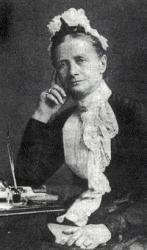
Cecil Frances Alexander

1818 - 1895 Person Name: Cecil F. Alexander (1818-1895) Topics: Easter The Resurrection of Christ; Epiphany 1, Revelation The Baptism of Jesus; God Holy Trinity; Pentecost 6 Made New in Christ; Pentecost 9 The Whole Armour of God; The Election of God's People Abraham; Trinity Sunday The Trinity Alterer of "I bind myself to God today" in Hymns for Today's Church (2nd ed.) As a small girl, Cecil Frances Humphries (b. Redcross, County Wicklow, Ireland, 1818; Londonderry, Ireland, 1895) wrote poetry in her school's journal. In 1850 she married Rev. William Alexander, who later became the Anglican primate (chief bishop) of Ireland. She showed her concern for disadvantaged people by traveling many miles each day to visit the sick and the poor, providing food, warm clothes, and medical supplies. She and her sister also founded a school for the deaf. Alexander was strongly influenced by the Oxford Movement and by John Keble's Christian Year. Her first book of poetry, Verses for Seasons, was a "Christian Year" for children. She wrote hymns based on the Apostles' Creed, baptism, the Lord's Supper, the Ten Commandments, and prayer, writing in simple language for children. Her more than four hundred hymn texts were published in Verses from the Holy Scripture (1846), Hymns for Little Children (1848), and Hymns Descriptive and Devotional ( 1858). Bert Polman ================== Alexander, Cecil Frances, née Humphreys, second daughter of the late Major John Humphreys, Miltown House, co. Tyrone, Ireland, b. 1823, and married in 1850 to the Rt. Rev. W. Alexander, D.D., Bishop of Derry and Raphoe. Mrs. Alexander's hymns and poems number nearly 400. They are mostly for children, and were published in her Verses for Holy Seasons, with Preface by Dr. Hook, 1846; Poems on Subjects in the Old Testament, pt. i. 1854, pt. ii. 1857; Narrative Hymns for Village Schools, 1853; Hymns for Little Children, 1848; Hymns Descriptive and Devotional, 1858; The Legend of the Golden Prayers 1859; Moral Songs, N.B.; The Lord of the Forest and his Vassals, an Allegory, &c.; or contributed to the Lyra Anglicana, the S.P.C.K. Psalms and Hymns, Hymns Ancient & Modern, and other collections. Some of the narrative hymns are rather heavy, and not a few of the descriptive are dull, but a large number remain which have won their way to the hearts of the young, and found a home there. Such hymns as "In Nazareth in olden time," "All things bright and beautiful," "Once in Royal David's city," "There is a green hill far away," "Jesus calls us o'er the tumult," "The roseate hues of early dawn," and others that might be named, are deservedly popular and are in most extensive use. Mrs. Alexander has also written hymns of a more elaborate character; but it is as a writer for children that she has excelled. - John Julian, Dictionary of Hymnology (1907) =============== Alexander, Cecil F., née Humphreys, p. 38, ii. Additional hymns to those already noted in this Dictionary are in common use:— 1. Christ has ascended up again. (1853.) Ascension. 2. His are the thousand sparkling rills. (1875.) Seven Words on the Cross (Fifth Word). 3. How good is the Almighty God. (1S48.) God, the Father. 4. In [a] the rich man's garden. (1853.) Easter Eve. 5. It was early in the morning. (1853.) Easter Day. 6. So be it, Lord; the prayers are prayed. (1848.) Trust in God. 7. Saw you never in the twilight? (1853.) Epiphany. 8. Still bright and blue doth Jordan flow. (1853.) Baptism of Our Lord. 9. The angels stand around Thy throne. (1848.) Submission to the Will of God. 10. The saints of God are holy men. (1848.) Communion of Saints. 11. There is one Way and only one. (1875.) SS. Philip and James. 12. Up in heaven, up in heaven. (1848.) Ascension. 13. We are little Christian children. (1848.) Holy Trinity. 14. We were washed in holy water. (1848.) Holy Baptism. 15. When of old the Jewish mothers. (1853.) Christ's Invitation to Children. 16. Within the Churchyard side by side. (1848.) Burial. Of the above hymns those dated 1848 are from Mrs. Alexander's Hymns for Little Children; those dated 1853, from Narrative Hymns, and those dated 1875 from the 1875 edition of Hymns Ancient & Modern. Several new hymns by Mrs. Alexander are included in the 1891 Draft Appendix to the Irish Church Hymnal. --John Julian, Dictionary of Hymnology, Appendix, Part II (1907) ============= Alexander, Cecil F. , p. 38, ii. Mrs. Alexander died at Londonderry, Oct. 12, 1895. A number of her later hymns are in her Poems, 1896, which were edited by Archbishop Alexander. --John Julian, Dictionary of Hymnology, New Supplement (1907) See also in:Hymn Writers of the Church

Pages


Export as CSV
It looks like you are using an ad-blocker. Ad revenue helps keep us running. Please consider white-listing Hymnary.org or getting Hymnary Pro to eliminate ads entirely and help support Hymnary.org.