You help make Hymnary.org possible. More than 10 million people from 200+ countries found hymns, liturgical resources and encouragement on Hymnary.org in 2025, including you. Every visit affirms the global impact of this ministry.

If Hymnary has been meaningful to you this year, would you take a moment today to help sustain it? A gift of any size—paired with a note of encouragement if you wish—directly supports the server costs, research work and curation that keep this resource freely available to the world.

Give securely online today, or mail a check to:
Hymnary.org
Calvin University
3201 Burton Street SE
Grand Rapids, MI 49546

Thank you for your partnership, and may the hope of Advent fill your heart.

Person Results

Tune Identifier:"^innsbruck_isaac$"
In:person

Planning worship? Check out our sister site, ZeteoSearch.org, for 20+ additional resources related to your search.
Showing 51 - 60 of 101Results Per Page: 102050

Paul C. Hume

Alterer of "[O Food of men wayfaring]" in Hymnal of Christian Unity

Anna Hoppe

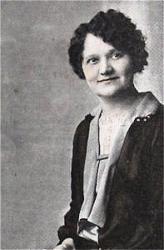
1889 - 1941 Person Name: Anna Hoppe, 1889-1941 Translator of "O World, See Here Suspended" in Ambassador Hymnal Anna Hoppe was born on May 7, 1889 in Milwaukee, Wisconsin. She left school after the eighth grade and worked as a stenographer. She began writing patriotic verses when she was very young and by the age of 25 she was writing spiritual poetry. After some of her poems appeared in the Northwestern Lutheran, a periodical of the Wisconsin Evangelical Lutheran Synod, they came to the attention of Dr. Adolf Hult of Augustana Seminary, Rock Island, Illinois. He influenced her to write her Songs for the Church Year (1928). Several hymnals include her work, which was usually set to traditional chorale melodies, although she also made a number of translations. She died on August 2, 1941 in Milwaukee, Wisconsin. NN, from Cyber Hymnal

Jean Sophia Pigott

1845 - 1882 Author of "Lord Jesus, Thou dost keep Thy child" in The Song Companion to the Scriptures Jean Sophia Pigott United Kingdom 1845-1882. Born at Leixlip, Ireland, she was a poet and hymn lyricist. She wrote “A royal service and other poems” (1877). She was a sister to William Frederick Pigott ,a missionary to China, He was murdered in the 1901 Boxer Rebellion, along with 76 other missionaries working with missionary, Hudson Taylor, but in other parts of China.. Taylor was overcome with grief to hear of the massacre, and took much comfort in Pigott’s hymn. She died at Leixlip, Ireland. John Perry

Anna Nitschmann

1715 - 1760 Person Name: Anna Nitschmann, 1715-1760 Author (stanza 3) of "Jesus, Thyself to Us Reveal" in Hymnal and Liturgies of the Moravian Church Nitschmann, Anna, daughter of David Nitschmann, cartwright, at Kunewald, near Fulnek, Moravia, was born at Kunewald, Nov. 24, 1715. Her cousin, David Nitschmann (the first Bishop, 1735, of the renewed Brethren's Unity) while on a visit to Kunewald in the beginning of 1725, persuaded her father to remove to Herrnhut, where the family arrived on Feb. 25, 1725. On March 17, 1730, Anna was appointed Unity-Elder, with the care of the unmarried sisters; on May 4, 1730, joined with Anna Dober in founding the Jungfrauenbund (see p. 304, ii.); and in 1733 entered the unmarried sisters' house at Herrnhut. In 1735 she became companion to Zinzendorf s daughter, the Countess Benigna, and accompanied her, in 1737, to England. During the summer of 1740 she went with her own father to America, arriving in Pennsylvania Dec. 5, 1740. After the arrival of Zinzendorf and the Countess Benigna, in 1741, Anna joined with them in work among the Indians. She returned to Germany in 1743. After the death of his first wife on June 19, 1756, Zinzendorf married Anna at Berthelsdorf on June 27, 1757. When on May 5, 1760, Zinzendorf felt his fatal illness, she also succumbed, and after his death, on May 9, gradually sank and died, May 21, 1760, at Herrnhut (Allgemeine Deutsche Biographie xxiii. 709; MS. from Diaconus J. T. Muller, Herrnhut, &c). Her hymns were written 1735-1748; the earlier in Herrnhut, some in Pennsylvania, others from 1743 to 1748. They appeared in the various Appendices to the Herrnhut Gesang-Buch of 1735. Only two have passed into use outside of the English Moravian Hymn Book. These are:— i. Ich bin das arme Würmlein dein. Humility. First published as No. 1592 in Appendix x. circa l741 to the Herrnhut Gesang-Buch, 1735, in 12 stanzas of 4 lines. When repeated in the Brüder Gesang-Buch, 1778, No. 851, st. i., 11. 1, 2; iv., 11. 1, 2; ii.; iii.; xii. were selected with alterations, and a stanza by C. Gregor (which begins “Mein Heiland! dass ich ohne dich") was prefixed. The translation in common use is:— My Saviour, that I without Thee. Translated in full by F. W. Foster, from the text of 1778, and given as No. 450 in the Moravian Hymn Book , 1189 (1886, No. 580). Included, omitting st. v., in J. A. Latrobe's Collection, 1841. ii. Mein König, deine Liebe. Christian Work. Appeared as No. 1233 in Appendix vii. circa 1737 to the Herrnhut Gesang-Buch, 1735, in 14 st. of 6 1. In the Brüder Gesang-Buch,1778, No. 1355, reduced to 6 stanzas (st. v. in 1778 is by N. L. Zinzendorf). Another translation is: "Thou our exalted first-born Brother." This is a tr. of st. xiv. in the Moravian Hymn Book, pt. ii., 1746, p. 798. In 1754, pt. ii., p. 365, altered to "0 Thou our first-born Brother " (1849, No. 852, st. ii.). [Rev. James Mearns, M.A.] --John Julian, Dictionary of Hymnology (1907)

John Swertner

1746 - 1813 Person Name: John Swertner, 1746-1813 Translator (stanza 2) of "Jesus, Thyself to Us Reveal" in Hymnal and Liturgies of the Moravian Church Swertner, John, b. Sept. 12, 1746, at Haarlem, in Holland, Moravian minister at various places in England and Ireland; d. at Bristol, March 11, 1813. --John Julian, Dictionary of Hymnology, New Supplement (1907)

Johann Hess

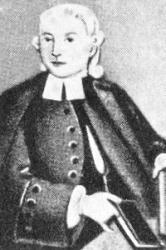
1490 - 1547 Person Name: Johann Hesse Author of "O world, I must now leave thee" in Evangelical Lutheran hymnal Hesse, Johann, D.D., son. of Johann von Hesse, a merchant of Nürnberg, was born at Nürnberg, Sept. 21 or 23, 1490. He attended the Universities of Leipzig (1506), Wittenberg, where he graduated M.A., 1511, and heard lectures froin Luther and Johann v. Staupitz; Bologna and Ferrara (D.D. at Ferrara, 1519). During his residence in Italy he gained an insight into the corruptions of the Church in that country, and on his return home in 1520 he sided more and more with the party of Reform. He had been appointed Canon of Neisse in Silesia in 1515, and was in 1520 ordained priest at Breslau. He acted for some time as a Provost of the Church of St. Mary and St. George, at Oels, and was then summoned to Breslau, in 1521, to preach as a Canon of the Cathedral. He did not at first declare himself openly for the Reformation; but on a visit to Nurnberg in the spring of 1523, preached a sermon in St. Sebald's Church, in which he proclaimed himself on the side of the Reformers. On this he was invited by 'the magistrates of Breslau to become Evangelical pastor of St. Mary Magdalene's Church there; and in spite of the opposition of the Pope and of King Sigismund of Poland, he was formally installed, Oct. 21, 1523, as the first Evangelical pastor elected by the people in Silesia. He died at Breslau, Jan. 6, 1547. (Koch, i. 360-367; Allgemeine Deutsche Biographie, xii. 283-284, &c.) Two hymns have been ascribed to Hesse, one of which has passed into English, viz.:— O Welt, ich muss dich lassen. For the Dying. Wackernagel, iii. p. 952, gives this in 10 stanzas of 6 lines from a broadsheet printed at Nürnberg, c. 1555, and from a Nürnberg Gesangbuch of 1569. It is also in the Unverfälschter Liedersegen, 1851, No. 839. Lauxmann, in Koch, viii. 589, says that according to tradition it was written as a dying song for criminals on their way to execution, in whose welfare Hesse had begun to interest himself as early as 1526. In Jeremias Weber's Gesangbuch, Leipzig, 1638, p. 110, it is entitled, "A funeral hymn for a person who on account of his misdeeds is lawfully and justly brought from life to death, whose departure is publicly shown that every¬one may take it to heart." Its popularity was greatly aided by the beautiful melody to which it is set. This is given in its original form by Miss Winkworth, and in Hymns Ancient & Modern (No. 86) is called Innspruck. It appears in G. Forster's Ausszug guter alter und newer Teutscher liedlein, Nürnberg, 1539, in a four-part setting by Heinrich Isaak (b. c. 1440, Capellmeister to the Emperor Maximilian I.) to the words of the travelling artisan's song " Innsbruck, ich muss dich lassen." This hymn is translated as:— 0 world, I now must leave thee, a good translation of stanzas i., iv.-viii., by Miss Winkworth, as No. 189 in her Chorale Book for England, 1863, repeated, omitting st. vi., in the Ohio Luth. Hymnal, 1880. Another translation is:—"0 world, I leave thee; far I go," by Dr. G. Walker, 1860, p. 161. Another form of the hymn is that with the same first line given in Heinrich Knaust's GassenJuiwer, Renter und Berpliedlin christlich, moraliter unnd sittlich verendert, Frankfurt-ani-Main, 1571, where it is in 3 stanzas, signed "D. H. K." (i.e. Dr. Heinrich Knaust), and entitled, "Issbruck ich muss dich lassen christianly and morally altered." Thence in Wackernagel, iv. p. 781. The only translation of this form is, "O world, I must forsake thee," by Miss Winkworth, 1869, p. 91. [Rev. James Mearns, M.A.] -- John Julian, Dictionary of Hymnology

J. Troutbeck

1832 - 1899 Person Name: John Troutbeck Author (vs. 2, 3) of "See, world, thy Life suspended" in Hymnal for Colleges and Schools Troutbeck, John, D.D., son. of George Troutbeck, of Dacre, Cumberland, b. Nov. 12, 1832, and educated at Rugby and Univ. College, Oxford, B.A. 1856, M.A. 1858, and D.D. by Abp. of Cant. 1883. Ordained in 1855. He held several appointments, the most important being Chaplain and Priest in Ordinary to the Queen, Minor Canon of Westminster, 1869, and Sec. to the N. Test. Revision Company, 1870-1881. He died Oct. 11, 1899. He made a few translations from the German, but is best known through his Manchester Psalter and Chant Book, 1867, and his Catholic Paragraph Psalter, 1894. He also compiled the Westminster Abbey Hymn Book, 1883. --John Julian, Dictionary of Hymnology, New Supplement (1907)

P. C. Hume

Translator of "O Food of Men Wayfaring" in Hymnal of Christian Unity

Philipp Friedrich Hiller

1699 - 1769 Person Name: Ph. Fr. Hiller Author of "Viel besser nie geboren" in Die Glaubensharfe (With Melodies) Hiller, Philipp Friedrich, son of Johann Jakob Hiller, pastor at Mühlhausen on the the Enz, Württemberg, was born at Mühlhausen, Jan. 6, 1699. He was educated at the clergy training schools at Denkendorf (under J. A. Bengel) and Maulbronn, and the University of Tübingen (M.A. 1720). His first clerical appointment was as assistant at Brettach, near Neckarsulm, 1724-27. He afterwards held similar posts at Hessigheim and elsewhere, and was also, from 1729-31, a private tutor at Nürnberg. He was then, on St. Bartholomew's Day, 1732, instituted as pastor of Neckargröningen, on the Neckar, near Marbach. In 1736 he became pastor of his native place, and in 1748 pastor at Steinheim, near Heidenheim. In his third year of residence at Steinheim he lost his voice, and had to employ an assistant to preach. He died at Steinheim, April 24, 1769. (Koch, v. 107-126; Allgemeine Deutsche Biographie, xii. 425-426, &c.) Of Hiller’s hymns the best appeared in:— (1) Arndt's Paradiss-Gartlein…..in teutsche Lieder, Nürnberg, N.D. [the copy in Berlin has a frontispiece dated 1730]. This was written during the time he was tutor at Nürnberg. P. Gerhardt had founded the fine hymn "O Jesu Christ, mein schönstes Licht," (q.v.) on one of the prayers in the volume of devotions which Johann Arndt had published, 1612, under the title of Paradies-Gärtlein; and Gerhardt's example led Hiller to think of turning the whole of these prayers into hymns. The book is in four parts, and contains 301 hymns, 297 being founded on Arndt and four original. (2) Geistliches Liederkästlein, Stuttgart, 1762, and a second series, Stuttgart, 1767. Each series contains 366 short hymns, one for each day of the year. A complete reprint of these and the other hymns of Hiller (1075 in all) wased. by C. C. E. Ehmann in 1844 (2nd ed. 1858). Hiller is the most productive and most important of the earlier hymnwriters of Württemberg; and is the poetical exponent of the practical theology of his friend J. A. Bengel. The hymns of his Paradiss-Gärtlein, while clear and Scriptural, are decidedly spun out (see No. xii. below). His Liederkästlein, contains the hymns of his riper years, and reveals a depth of spiritual wisdom, an almost proverbial conciseness, an adaptation to console and direct in the most diverse events of life, and the most varied experiences of the soul, a suitability as a manual for daily devotion, and a simple popularity of style that speedily endeared it to the pious in Southern Germany. It has passed through many editions in Germany, while colonists (especially from Württemberg) have carried it from thence wherever they went. It is said, e.g., that when a German colony in the Caucasus was attacked by a hostile Circassian tribe some fifty years ago the parents cut up their copies of the Liederkästlein and divided the leaves among their children as they were being torn from them into slavery. The use of Hiller's hymns in Germany has principally been in the hymnbooks of Württemberg, and, through J. J. Bambach's Haus Gesang-Buch, 1735, in Hannover. The following have passed into English:— I. Hymns in English common use: i. Herr über Leben und der Tod. Cross and Consolation. 1730, pt. iii. p. 332, founded on Arndt's Prayer, 26 (28) of Class iii. The part translated is stanzas viii.-xiv., "Herr, meine Burg, Herr Zebaoth," which is founded on the fourth part of the third section of Arndt's Prayer. The text is in Ehmann's Hiller, Nos. 885, 886. Translated as:— 0 God of Hosts! 0 mighty Lord, a translation of stanzas viii., xiii., xiv., signed "F. C. C.," as No. 162 in Dr. Pagenstecher's Collection, 1864. ii. Mein Gott in deine Hände. For the Dying. Liederkästlein, pt. ii., 1767, for August 3, in 9 stanzas of 4 lines, founded on Ps. xxxi. 6. In Ehmann, No. 986, and in Knapp's Evangelischer Lieder-Schatz, 1837 and 1865. Translated as:— My God, to Thee I now commend, a good translation of stanzas i., iii., iv., vi., viii., ix., by Miss Winkworth, in her Lyra Germanica, 1st Ser., 1855, p. 245. In her 2nd ed., 1856, she substituted a translation of st. vii. for that of stanza vi. The text of 1856 is in her Chorale Book for England, 1863, No. 194, and in the Ohio Evangelical Lutheran Hymnal, 1880; and the text of 1855 in the Pennsylvania Lutheran Church Book, 1868. Another translation is: "My God, within Thy hand," by Miss Warner, 1858, p. 480. iii. Mein Hers, du mustt im Himmel sein. Eternal Life. Liederkästlein, p. ii., 1767, for Jan. 26, in 4 stanzas of 7 lines, founded on St. Matt. vi. 21. In Ehmann, No. 639, and Knapp's Evangelischer Lieder-Schatz, 1837. Translated as :— Aspire, my heart, on high to live, in full, by Dr. H. Mills, in his Horae Germanicae, 1845 (1856, p. 86), repeated, omitting stanzas iv., as No. 220 in the American Lutheran General Synod's Collection, 1850-52. iv. Wir warten dein, o Gottes Sehn. Second Advent. Liederkästlein, pt. ii., 1767, for Jan. 24, in 4 stanzas of 8 lines, founded on 1 Thess. i. 9, 10. In Ehmann, No. 1041, and the Württemberg Gesang-Buch, 1842, No. 640. Translated as:-— We wait for Thee, all glorious One, a good and full translation by J. D. Burns, in the Family Treasury, 1859, pt. ii. p. 111, and his Remains, 1869, p. 264. Included in the Christian Hymn Book, Cincinnati, 1865, and in H. L. Hastings's Songs of Pilgrimage, 1886. Another translation is: "We wait for Thee, O Son of God," in the British Herald, April, 1866, p. 252, and Reid's Praise Book, 1872. This follows the altered form in C. B. Garve's Christliche Gesänge, 1825. II. Hymns not in English common use: v. Abgrund wesentlicher Liebe. Love of God. 1730, pt. ii. p. 25, founded on Prayer 4 in Class II. of Arndt, which is "Thanksgiving for the Love of God, and prayer for it." Translated as, "Thou fathomless Abyss of Love," by Miss Winkworth, 1869, p. 281. vi. Angenehmes Krankenbette. For the Sick. Liederkästlein, 1762, p. 338, for Dec. 3, in 3 stanzas, founded on St. Luke v. 18. Translated as, "Bed of Sickness! thou art sweet," by Miss Winkworth, 1869, p. 283. vii. Betet an, verlorne Sünder. Lent. Liederkästlein, 1762, p. 43, for Feb. 18, in 3 stanzas, founded on St. Matt, xviii. 14. Translated as, "Sinners, pray! for mercy pleading," by Dr. H. Mills, 1856, p. 50. viii. Das Lamm, am Kreuzesstamme. For the Dying. Liederkästlein, pt. ii., 1767, for Feb. 12, in 8 stanzas, founded on Acts vii. 59. In the Württemberg Gesang-Buch, 1842, No. 609, altered to “Der Hirt, am Kreuz gestorben." This form is translated as, "The Shepherd by His passion," by J. D. Burns, in the Family Treasury, 1859, pt. ii. p. 61, and his Remains, 1869, p. 266. ix. Die Liebe darf wohl weinen. Burial of the Dead. Liederkästlein, 1762, p. 286, for Oct. 12, in 7 stanzas, founded on l Thess. iv. 13. Translated as, "Love over the departed," by J. D. Burns in his Remains, 1869, p. 253. x. Die Welt kommt einst zusammen. Second Advent. Liederkästlein, pt. ii., 1767, for Jan. 2, in 5 stanzas, founded on 2 Cor. v. 10. Translated as, "The world shall yet be cited," by J. D. Burns in the Family Treasury, 1859, pt. ii. P. 111, and his Remains, 1869, p. 263. xi. Herr, meine Leibeshütte. For the Dying. Liederkästlein, pt. ii., 1767, for Feb. 18, in 8 stanzas, founded on 2 Peter, i. 14. The translations are: (l) "Lord, my house of clay," by Miss Warner, 1858, p. 605. (2) "My fleshly house is sinking now," by Dr. G. Walker, 1860, p. 102. xii. Mein Jesus sitzt zur rechten Hand. Ascensiontide. 1730, pt iii. p. 408, as stanzas 118-125 of the hymn on Arndt's prayer 27 (29) in Class III. This prayer is a long paraphrase of the Apostles' Creed. Translated as, "Our Jesus now at God's right hand," by Dr. H. Mills, 1845 (1856, p. 330). xiii. Singet Gott, denn Gott ist liebe. The Love of God. Liederkästlein, 1762, p. 51, for Feb. 20, in 3 stanzas, founded on 1 John iv. 16. The translations are: (1) "God is love—-then sing His praises," by Dr. H. Mills, 1845 (1856, p. 16). (2) "God is love, sing loud before Him," by J. D. Burns in his Remains, 1869, p. 231. xiv. Singt doch unserm König. Ascensiontide. Liederkästlein, 1762, p. 328, for Nov. 23, in 3 stanzas, founded on Ps. xcvi. 10. Translated as, “Laud your King and Saviour," by J. Sheppard in bis Foreign Sacred Lyre. 1857, p. 94. xv. Untheilbare Dreifaltigkeit. Trinity Sunday. 1730, pt. ii. p. 226, founded on Arndt’s prayer 25 in Class II., entitled “Thanksgiving for the revelation of the Holy Trinity." The translation is from the recast of st. vi.-xii. made by J. S. Diterich for the Berlin Gesang-Buch, 1765, No. 51, and beginning "Lob, Ehre, Preis und Dank sel dir." Translated as, "Love, honour, thanks, to Thee we raise," by Dr. H. Mills, 1845 (1856, p. 110). xvi. Was freut mich noch wenn du's nicht bist. Joy in God. Liederkästlein, 1762, for June 20, in 2 stanzas, founded on Ps. xliii. 4. Translated as, "What earthly joy can fill my heart," by R. Massie in the British Herald, Nov. 1865, p. 175. xvii. Wer ausharrt bis ans Ende. Cross and Consolation. Liederkästlein, pt. ii., 1767, for May 19, in 4 stanzas, founded on St. Matt. xxiv. 13. Translated as,"He who to death maintaineth," by J. D. Burns in his Remains, 1869, p. 261. xviii. Wer kann dein Thun begreifen. God's Power. Liederkästlein, 1762, p. 18, for Jan. 18, in 3 stanzas, founded on Is. xlv. 7. Translated as, "Who, Lord, Thy deeds can measure," by Dr. H. Mills, 1845 (1856, p. 15). [Rev. James Mearns, M.A.] --John Julian, Dictionary of Hymnology (1907) =============================== Hiller, Philipp F., p. 524, ii. His hymn "Gottes Sohn, in Fleisch gekleidet" (Christmas), from his Liederkastlein, 1762, is translation by Dr. Loy, in the Ohio Lutheran Hymnal, 1880, as "God in human flesh appearing." --John Julian, Dictionary of Hymnology, Appendix, Part II (1907)

Frances Ridley Havergal

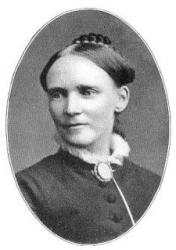
1836 - 1879 Person Name: Frances R. Havergal Author of "To Thee, O Comforter divine" in Book of Worship with Hymns and Tunes Havergal, Frances Ridley, daughter of the Rev. W. H. Havergal, was born at Astley, Worcestershire, Dec. 14, 1836. Five years later her father removed to the Rectory of St. Nicholas, Worcester. In August, 1850, she entered Mrs. Teed's school, whose influence over her was most beneficial. In the following year she says, "I committed my soul to the Saviour, and earth and heaven seemed brighter from that moment." A short sojourn in Germany followed, and on her return she was confirmed in Worcester Cathedral, July 17, 1853. In 1860 she left Worcester on her father resigning the Rectory of St. Nicholas, and resided at different periods in Leamington, and at Caswall Bay, Swansea, broken by visits to Switzerland, Scotland, and North Wales. She died at Caswell Bay, Swansea, June 3, 1879. Miss Havergal's scholastic acquirements were extensive, embracing several modern languages, together with Greek and Hebrew. She does not occupy, and did not claim for herself, a prominent place as a poet, but by her distinct individuality she carved out a niche which she alone could fill. Simply and sweetly she sang the love of God, and His way of salvation. To this end, and for this object, her whole life and all her powers were consecrated. She lives and speaks in every line of her poetry. Her poems are permeated with the fragrance of her passionate love of Jesus. Her religious views and theological bias are distinctly set forth in her poems, and may be described as mildly Calvinistic, without the severe dogmatic tenet of reprobation. The burden of her writings is a free and full salvation, through the Redeemer's merits, for every sinner who will receive it, and her life was devoted to the proclamation of this truth by personal labours, literary efforts, and earnest interest in Foreign Missions. [Rev. James Davidson, B.A.] Miss Havergal's hymns were frequently printed by J. & R. Parlane as leaflets, and by Caswell & Co. as ornamental cards. They were gathered together from time to time and published in her works as follows:— (1) Ministry of Song, 1869; (2) Twelve Sacred Songs for Little Singers, 1870; (3) Under the Surface, 1874; (4) Loyal Responses, 1878; (5) Life Mosaic, 1879; (6) Life Chords, 1880; (7) Life Echoes, 1883. About 15 of the more important of Miss Havergal's hymns, including "Golden harps are sounding," "I gave my life for thee," "Jesus, Master, Whose I am," "Lord, speak to me," "O Master, at Thy feet," "Take my life and let it be," "Tell it out among the heathen," &c, are annotated under their respective first lines. The rest, which are in common use, number nearly 50. These we give, together with dates and places of composition, from the Havergal mss. [manuscript], and the works in which they were published. Those, and they are many, which were printed in Parlane's Series of Leaflets are distinguished as (P., 1872, &c), and those in Caswell’s series (C., 1873, &c). 1. A happy New Year! Even such may it be. New Year. From Under the Surface, 1874. 2. Certainly I will be with thee. Birthday. Sept. 1871, at Perry Barr. (P. 1871.) Published in Under the Surface, 1874, and Life Mosaic, 1879. 3. Church of God, beloved and chosen. Sanctified in Christ Jesus, 1873. (P. 1873.) Published in Under the Surface, 1874, and Life Mosaic, 1879. 4. God Almighty, King of nations. Sovereignty of God. 1872. Published in Under the Surface, 1874, and Life Mosaic, 1879. 5. God doth not bid thee wait. God faithful to His promises. Oct. 22, 1868, at Oakhampton. (P. 1869.) Published in Ministry of Song, 1869, and Life Mosaic, 1879. 6. God of heaven, hear our singing. A Child's hymn for Missions. Oct. 22, 1869, at Leamington. Published in her Twelve Sacred Songs for Little Singers, 1870, and her Life Chords, 1880. 7. God will take care of you, All through the day. The Good Shepherd. In Mrs. Brock's Children's Hymn Book, 1881. 8. God's reiterated all. New Year. 1873, at Winterdyne. (C. 1873.) Published in Loyal Responses, 1878, and Life Mosaic, 1879. 9. Have you not a word for Jesus? Boldness for the Truth. Nov. 1871, at Perry Barr. (P. 1872.) Published in Under the Surface, 1874, and Life Mosaic, 1879. 10. He hath spoken in the darkness. Voice of God in sorrow. June 10,1869, at Neuhausen. (P. 1870.) Published in Under the Surface, 1874, and in Life Mosaic, 1879. 11. Hear the Father's ancient promise. Promise of the Holy Spirit. Aug. 1870. Published in Under the Surface, 1874, and Life Mosaic, 1879. 12. Holy and Infinite! Viewless, Eternal. Infinity of God. 1872. Published in Under the Surf ace, 1874, and L. Mosaic, 1879. 13. Holy brethren, called and chosen. Election a motive for Earnestness. 1872. Published in Snepp's Songs of Grace & Glory, 1876. 14. I am trusting Thee, Lord Jesus. Faith. Sept. 1874, at Ormont Dessona. (P. 1874.) Published in Loyal Responses, 1878, and Life Chords, 1880. Miss Havergal’s tune, Urbane (Snepp's Songs of Grace & Glory, 1048), was composed for this hymn. The hymn was the author's "own favourite," and was found in her pocket Bible after her death. 15. I bring my sins to Thee. Besting all on Jesus. June, 1870. (P. 1870.) Printed in the Sunday Magazine, 1870, and Home Words, 1872. Published in Under the Surface, 1874, and Life Chords, 1880. 16. I could not do without Thee. Jesus All in All. May 7, 1873. (P. 1873.) Printed in Home Words, 1873, and published in Under the Surface, 1874, and Life Mosaic, 1879. 17. In full and glad surrender. Confirmation. Miss Havergal's sister says this hymn was “The epitome of her [Miss F. R. H.'s] life and the focus of its sunshine." It is a beautiful hymn of personal consecration to God at all times. 18. In the evening there is weeping. Sorrow followed by Joy. June 19, 1869, at the Hotel Jungfraublick, Interlaken. "It rained all day, except a very bright interval before dinner. Curious long soft white clouds went slowly creeping along the Scheinige Platte; I wrote “Evening Tears and Morning Songs” (Marg. reading of Ps. xxx. 5.)" (P. 1870.) Published in Under the Surface, 1874. 19. Increase our faith, beloved Lord. Increase of Faith desired. In Loyal Responses, 1878, in 11 stanzas of 4 lines, on St. Luke xvii. 5. It is usually given in an abridged form. 20. Is it for me, dear Saviour? Heaven anticipated. Nov. 1871, at Perry Barr. (P. 1872.) Published in Under the Surface, 1874, and Life Mosaic, 1879. 21. Israel of God, awaken. Christ our Righteousness. May, 1871, at Perry Barr. (P. 1872.) Published in Under the Surface, 1874, and Life Mosaic, 1879. 22. Jehovah's covenant shall endure. The Divine Covenant, 1872. Published in Snepp's Songs of Grace & Glory, 1876. 23 Jesus, blessed Saviour. New Year, Nov. 25, 1872, at Leamington. (P. 1873.) Printed in the Dayspring Magazine, Jan. 1873, and published in Life Chords, 1880. 24. Jesus only! In the shadow. Jesus All in All. Dec. 4, 1870, at Pyrmont Villa. (P. & C. 1871.) Published in Under the Surface, 1874, and in Life Mosaic, 1879. 25. Joined to Christ by [in] mystic union. The Church the Body of Christ. May, 1871, at Perry Barr. (P. 1872.) Published in Under the Surface, 1874, Life Mosaic, 1879. 26. Just when Thou wilt, 0 Master, call. Resignation. In Loyal Responses, 1878, in 5 stanzas of 4 lines, and Whiting's Hymns for the Church Catholic, 1882. 27. King Eternal and Immortal. God Eternal. Written at Perry Villa, Perry Barr, Feb. 11, 1871, and Published in Snepp's Songs of Grace & Glory, 1876; Under the Surface, 1874 ; and Life Mosaic, 1879. 28. Light after darkness, Gain after loss. Peace in Jesus, and the Divine Reward. In Sankey's Sacred Songs and Solos, from her Life Mosaic, 1879. 29. Like a river glorious, Is God's perfect Peace. Peace. In her Loyal Responses, 1878, in 3 st. of 8 1., with the chorus, "Stayed upon Jehovah." In several collections. 30. Master, speak! Thy servant heareth. Fellowship with and Assistance from Christ desired. Sunday evening, May 19, 1867, at Weston-super-Mare. Published in Ministry of Song, 1869, and L. Mosaic, 1879. It is very popular. 31. New mercies, new blessings, new light on thy way. New Life in Christ. 1874, at Winterdyne. (C. 1874.) Published in Under His Shadow, 1879, Life Chords, 1880. 32. Not your own, but His ye are. Missions. Jan. 21, 1867. (C. 1867.) Published in Ministry of Song, 1869; Life Mosaic, 1879; and the Hymnal for Church Missions, 1884. 33. Now let us sing the angels' song. Christmas. In her Life Mosaic, 1879; and W. B. Stevenson's School Hymnal, 1880. 34. Now the daylight goes away. Evening. Oct. 17, 1869, at Leamington. Published in Songs for Little Singers, 1870, and Life Chords, 1880. It originally read, " Now the light has gone away." 35. Now the sowing and the weeping. Sorrow followed by Joy. Jan. 4, 1870, at Leamington. Printed in Sunday at Home, 1870 ; and published in Under the Surface, 1874, and L. Mosaic, 1879. 36. 0 Glorious God and King. Praise to the Father, Feb. 1872. Published in Under the Surface, 1874, and Life Mosaic, 1879. 37. 0 Saviour, precious [holy] Saviour. Christ worshipped by the Church. Nov. 1870, at Leamington. (P. 1870.) Published in Under the Surface, 1874, and Life Mosaic, 1879. 38. O thou chosen Church of Jesus. Election. April 6, 1871. Published in Under the Surface, 1874, and L. Mosaic, 1879. 39. O what everlasting blessings God outpoureth on His own. Salvation everlasting. Aug. 12, 1871, at Perry Barr. (P. 1871.) Published in Under the Surface, 1874, and L. Mosaic, 1879. 40. Our Father, our Father, Who dwellest in light. The blessing of the Father desired. May 14, 1872. Published in Under the Surface, 1874, and Life Mosaic, 1879. Miss Havergal's tune, Tertius, was composed for this hymn. 41. Our Saviour and our King. Presentation of the Church to the Father. (Heb. ii. 13.) May, 1871, at Perry Barr. (P. 1871.) Published in Under the Surface, 1874, and L. Mosaic, 1879. 42. Precious, precious blood of Jesus. The precious Blood. Sept. 1874, at Ormont Dessons. (C.) Published in Loyal Responses, 1878, and Life Chords, 1880. 43. Sing, O heavens, the Lord hath done it. Redemption. In her Life Mosaic, 1879, and the Universal Hymn Book, 1885. 44. Sit down beneath His shadow. Holy Communion. Nov. 27, 1870, at Leamington. (P. 1870.) Published in Under the Surface, 1874, and Life Mosaic, 1879. 45. Sovereign Lord and gracious Master. Grace consummated in Glory. Oct. 22, 1871. (P. 1872.) Published in Under the Surface, 1874, and Life Mosaic, 1879. 46. Standing at the portal of the opening year. New Year. Jan. 4, 1873. Published in Under the Surface, 1874, and Life Chords, 1880. 47. To Thee, 0 Comforter divine. Praise to the Holy Spirit. Aug. 11, 1872, at Perry Barr. Published in Under the Surface 1874, and Life Mosaic, 1879. Miss Havergal's tune, Tryphosa, was written for this hymn. 48. True-hearted, whole-hearted, faithful and loyal. Faithfulness to the Saviour. In her Loyal Responses, 1878, and the Universal Hymn Book, 1885. 49. What know we, Holy God, of Thee? God's Spirituality, 1872. Published in Under the Surface, 1874, and Life Mosaic, 1879. 50. Who is on the Lord's side? Home Missions. Oct. 13, 1877. Published in Loyal Responses, 1878, andLife Chords, 1880. 51. With quivering heart and trembling will. Resignation. July, 10, 1866, at Luccombe Rectory. (P. 1866.) Published in Ministry of Song, 1869, and Life Mosaic, 1879. 52. Will ye not come to Him for life? The Gospel Invitation. 1873. Published in Snepp's Songs of Grace and Glory, 1876. 53. Worthy of all adoration. Praise to Jesus as the Lamb upon the throne. Feb. 26 1867, at Oakhampton. Published in Ministry of Song, 1869, and Life Mosaic, 1874. It is pt. iii. of the "Threefold Praise," and was suggested by the "Worthy is the Lamb," the "Hallelujah" and "Amen" choruses in Handel's Messiah. 54. Ye who hear the blessed call. The Invitation of the Spirit and the Bride. March, 1869, at Leamington. (P. 1869.) Published in Ministry of Song, 1869, and Life Mosaic, 1879. Suggested by, and written for, the Young Men's Christian Association. 55. Yes, He knows the way is dreary. Encouragement. 1867. Published in Ministry of Song, 1869. Most of these hymns are given in Snepp's Songs of Grace and Glory, 1872]and 1876, his Appendix, 1874, and the Musical edition, 1880, and many of them are also in several other hymnbooks, including Hymns Ancient & Modern, Thring, Church Hymns, Hymnal Companion, &c, and some of the leading American collections. --John Julian, Dictionary of Hymnology (1907) ============================== Havergal, Frances Ridley, p. 496, i. Miss Havergal's Poetical Works were published in 2 vols. in 1884 (Lond., J. Nisbet); and the hymns therein are accompanied by notes. From these volumes, and the Havergal manuscript, we gather the following facts concerning additional hymns in common use: 1. In God's great field of labour. Work for Christ. Written Feb. 27, 1867, and published in her Ministry of Song, I860, and later works. In Snepp's Songs of Grace and Glory, 1872, it begins with stanza ii., "Sing to the little children." “The poem expresses her own life-ministry of song, and relates true incidents" in that life. [Hav. mss.] 2. Only a mortal's power. Consecration of Self to Christ. Published in her Loyal Responses, 1878, in 7 stanzas of 4 lines, and headed "Only.” In Common Praise, 1879, stanzas ii.-vi., are given for Confirmation as, "Only one heart to give." 3. Through the yesterday of ages. Jesus always the same. Written at Leamington, Nov. 1876, and published in her Loyal Responses, 1878. 4. What hast Thou done for me, 0 Thou my mighty Friend. Good Friday. Written at Leamington, Jan. 1877, and pub. in Loyal Responses, 1878. 5. Yes, He knows the way is dreary, p. 498, i. 55. This hymn was written at Shareshill Parsonage, Nov. 17, 1865, and first printed as one of Parlane's leaflets; then in Lyra Britannica, 1867; and later, in several of her books. It was "suggested by a letter from her niece, A. M. S., at school, and written to console her when weary, lonely, and the only absentee at the rejoicings for her brother J. H. S.'s coming of age." [Hav. mss.] --John Julian, Dictionary of Hymnology, Appendix, Part II (1907) =================== Havergal, Frances R., pp. 426, ii., 1569, ii. During the past fifteen years Miss Havergal's hymns have been in great request by compilers of hymnals for Missions and Conventions. In addition to the large number already annotated in this Dictionary, the following are also in common use:— 1. Begin at once! in the pleasant days. [Temperance.] From her Poetical Works, vol. i., p. 303, into The Sunday School Hymnary, 1905. In her Poetical Works. It is given as a "Band of Hope Song," and dated "May, 1876." 2. God in heaven, hear our singing. An altered form of her "God of heaven, hear our singing," p. 497, i. 6. 3. Holy Father, Thou hast spoken. [Holy Spirit desired.] Written May 5, 1876. P. Works, 1874, ii., p. 261. 4. I love. I love my Master. [Jesus the object of love.] Written at Fins, Hants., July 16, 1876. In her Loyal Responses, 1878, and her Poetical Works, 18S4, ii., p. 274. 5. I love to feel that I am taught. [Love of Divine Teaching.] Written at Morecambe Bay, Aug., 1867, for her Ministry of Song, 1869. Included in her Poetical Works, 1884, i., p. 36. 6. Jesus, Thy life is mine. [Union with Christ.] Written June 2, 1876. Poetical Works, 1884, ii., p. 268. 7. Looking unto Jesus, Never need we yield. [Jesus, All in All.] Dated 1876. P. Works, 1884, ii., p. 253. 8. Master, how shall I bless Thy Name! [Holy Service.] Written at Whitby, Sept. 27, 1875. A long hymn of 17 stanzas of 6 lines. P. Works, 1884, ii., p. 280. 9. Resting on the faithfulness. [Union with Christ.] A metrical epitome of a dozen or more of the attributes of Our Lord and His manifestation of loving kindness towards men, in which the word "Resting" is used eighteen times. Written June 11, 1876. Poetical Works, 1884, ii., p. 260. 10. Singing for Jesus, our Saviour and King. [Praise of Jesus.] Written at Winterdyne, June 12. 1872; published in her Under the Surface, 1874, p. 94, and her P. Works, 1884, ii., p. 70. 11. Unfurl the Christian Standard with firm and fearless hand. [Courage for the Christian Warfare. This begins with st. iv. of her hymn, "Unfurl the Christian Standard, lift it manfully on high," written at Perry Barr, Sep. 23, 1872 ; published in her Under the Surface, 1874; and her Poetical Works, 1884, ii. 12. Unto him that hath Thou givest. [Growth in Grace.] Written at Leasowes, April 12, 1876. P. Works, 1884, ii. 259. Of these hymns Nos. 3, 4, 6, 7, 8, 9, and 12 were published in the first instance in J. Mountain's Hymns of Consecration and Faith, 1876. At the present time (1907) the number of Miss Havergal's hymns in common use reaches nearly one hundred. --John Julian, Dictionary of Hymnology, New Supplement (1907)

Pages


Export as CSV
It looks like you are using an ad-blocker. Ad revenue helps keep us running. Please consider white-listing Hymnary.org or getting Hymnary Pro to eliminate ads entirely and help support Hymnary.org.