You help make Hymnary.org possible. More than 10 million people from 200+ countries found hymns, liturgical resources and encouragement on Hymnary.org in 2025, including you. Every visit affirms the global impact of this ministry.

If Hymnary has been meaningful to you this year, would you take a moment today to help sustain it? A gift of any size—paired with a note of encouragement if you wish—directly supports the server costs, research work and curation that keep this resource freely available to the world.

Give securely online today, or mail a check to:
Hymnary.org
Calvin University
3201 Burton Street SE
Grand Rapids, MI 49546

Thank you for your partnership, and may the hope of Advent fill your heart.

Person Results

Tune Identifier:"^seymour_weber$"
In:person

Planning worship? Check out our sister site, ZeteoSearch.org, for 20+ additional resources related to your search.
Showing 51 - 60 of 94Results Per Page: 102050

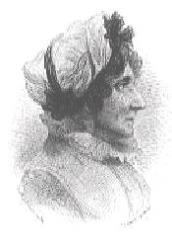
Mrs. Barbauld

1743 - 1825 Person Name: Mrs. Anna L. Barbauld, 1743-1825 Author of "Come, Says Jesus' sacred voice" in Hymnal and Liturgies of the Moravian Church Barbauld, Anna Laetitia, née Aikin, daughter of the Rev. John Ailrin, D.D., a dissenting minister, was b. at Kibworth-Harcourt, Leicestershire, June 20, 1743. In 1753 Dr. Aikin became classical tutor at a dissenting academy at Warrington. During her residence there she contributed five hymns to Dr. W. Enfield's Hymns for Public Worship, &c, Warrington, 1772. In the following year these were included in her Poems, Lond., J. Johnson, 1773. In May, 1774, Miss Aikin was married to the Rev. Rochemont Barbauld, a descendant of a French Protestant family, and a dissenting minister. For some years Mr. Barbauld conducted, in addition to his pastoral work, a boarding school at Palgrave, Suffolk. From this he retired in 1785. In 1786 he undertook the charge of a small congregation at Hampstead, and from thence he passed to the dissenting chapel (formerly Dr. Price's) at Newington Green, in 1802. He d. Nov. 11, 1808. Mrs. Barbauld continued to reside in the neighbourhood until her death, March 9, 1825. In the latter part of the same year her niece published The Works of Anna Laetitia Barbauld, with Memoir, by Lucy Aikin, 2 vols., Lond., Longman, 1825. As a writer of hymns Mrs. Barbauld was eminently successful. Their use, however, with the exception of five contributed to Dr. W. Enfield's collection, is almost exclusively confined to the Unitarian hymnals of Great Britain and America. Including these hymnals, the whole of her hymns are still in common use. These hymns appeared thus:— i. In Dr. W. Enfield's Hymns, &c., 1772. 1. Again the Lord of life and light. Easter. 2. Awake, my soul, lift up thine eyes. Conflict. 3. Behold, where breathing love divine. Christian Charity. 4. Jehovah reigns, let every nation hear. God's Dominion. A part of this was given in Collyer's Sel., 1812, No. 586, as:— 5. This earthly globe, the creature of a day. 6. Praise to God, Immortal praise. Harvest. ii. Poems, 1773 (Preface dated Dec. 1, 1772). The whole of the above, and also:— 7. God of my life and author of my days. To God the Father. This is an “Address to the Deity," in 80 1. It is given in Martineau's Collection, 1840 and 1873. From it the following centos were given in Collyer's Selection> 1812:— 8. God, our kind Master, merciful as just. 9. If friendless in the vale of tears I stray. iii. Poems revised 1792. 10. Come, said [says] Jesus' sacred voice. Invitation. 11. How blest the sacred tie that binds. Christian Fellowship. 12. Lo where a crowd of pilgrims toil. Pilgrimage of Life. From this is taken:— 13. Our country is Immanuel's ground [land]. iv. Leisure Hour Improved (Ironbridge), 1809. 14. Sweet is the scene when virtue dies. Death. v. Supplement to the Unitarian Coll. of Kippis, Bees, and others, 1807. 15. When as returns the solemn day. Sunday. 16. Sleep, sleep to day, tormenting cares. Sunday. 17. How may earth and heaven unite. Worship. vi. Works, with Memoir, 1825. In vol. i. most of the above are reprinted, and the following are added :— 18. Joy to the followers of the Lord. Joy. (c. 1820.) 19. Pure spirit, O where art thou now. Bereavement. This is dated 1808. 20. Salt of the earth, ye virtuous few. Salt of the Earth. 21. When life as opening buds is sweet. Death. This is dated " November, 1814." The more important of these hymns are annotated in this Dictionary under their first lines. Mrs. Barbauld's Hymns in Prose for Children, originally published in 1781, were long popular and have been translated into French, Italian, Spanish, and other languages. -- John Julian, Dictionary of Hymnology (1907) =================== Barbauld, Anna L., p. 113, ii. No. 18 on p. 114, i.,should be dated circa 1820. Another hymn in common use from Mrs. Barbauld's Works, &c, 1825, is, "O Father! though the anxious fear" (E. Taylor, p. 1117, in error). --John Julian, Dictionary of Hymnology, Appendix, Part II (1907) See also in: Hymn Writers of the Church

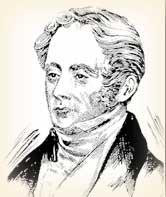
Horatius Bonar

1808 - 1889 Person Name: Rev. Horatius Bonar Author of "Holy Father, hear my cry" in The Haverford School Hymnal Horatius Bonar was born at Edinburgh, in 1808. His education was obtained at the High School, and the University of his native city. He was ordained to the ministry, in 1837, and since then has been pastor at Kelso. In 1843, he joined the Free Church of Scotland. His reputation as a religious writer was first gained on the publication of the "Kelso Tracts," of which he was the author. He has also written many other prose works, some of which have had a very large circulation. Nor is he less favorably known as a religious poet and hymn-writer. The three series of "Hymns of Faith and Hope," have passed through several editions. --Annotations of the Hymnal, Charles Hutchins, M.A. 1872 ================================ Bonar, Horatius, D.D. Dr. Bonar's family has had representatives among the clergy of the Church of Scotland during two centuries and more. His father, James Bonar, second Solicitor of Excise in Edinburgh, was a man of intellectual power, varied learning, and deop piety. Horatius Bonar was born in Edinburgh, Dec. 19th, 1808; and educated at the High School and the University of Edinburgh. After completing his studies, he was "licensed" to preach, and became assistant to the Rev. John Lewis, minister of St. James's, Leith. He was ordained minister of the North Parish, Kelso, on the 30th November, 1837, but left the Established Church at the "Disruption," in May, 1848, remaining in Kelso as a minister of the Free Church of Scotland. The University of Aberdeen conferred on him the doctorate of divinity in 1853. In 1866 he was translated to the Chalmers Memorial Church, the Grange, Edinburgh; and in 1883 he was chosen Moderator of the General Assembly of of the Free Church of Scotland. Dr. Bonar's hymns and poems were, he tells us, composed amid a great variety of circumstances; in many cases he cannot himself recall these circumstances; they also appeared in several publications, but nearly all have boen published or republished in the following:— (i) Songs for the Wilderness, 1843-4. (2) The Bible Hymn Book, 1845. (3) Hymns, Original and Selected, 1846. (4) Hymns of Faith and Hope, First Series, 1857; Second Series, 1861; Third Series, 1866. (5) The Song of the New Creation, 1872. (6) My Old Letters, a long poem, 1877. (7) Hymns of the Nativity, 1879. (8) Communion Hymns, 1881. In addition to numerous prose works, he has also edited The New Jerusalem; a Hymn of the Olden Time, 1852, &c. Dr. Bonar's poems—-including many beautiful lyrics, several psalm versions, and translations from the Greek and Latin, a large number of hymns, and a long meditative poem—-are very numerous, too numerous, perhaps, for their permanent fame as a whole. Dr. Bonar's scholarship is thorough and extensive; and his poems display the grace of style and wealth of allusion which are the fruit of ripe culture. Affected very slightly by current literary moods, still less by the influence of other religious poetry, they reveal extreme susceptibility to the emotional power which the phases of natural and of spiritual life exercise; the phases of natural life being recognised chiefly as conveying and fashioning spiritual life, used chiefly for depicting spiritual life, and handled for this purpose with greater delicacy of touch than in the Olney Hymns, and with less conscious purpose than in the Christian Year. As a result of this susceptibility, and from habitual contemplation of the Second Advent as the era of this world's true bliss, his hymns and poems are distinguished by a tone of pensive reflection, which some might call pessimism. But they are more than the record of emotion; another element is supplied by his intellectual and personal grasp of Divine truth, these truths particularly:—The gift of a Substitute, our Blessed Saviour; Divine grace, righteous, yet free and universal in offer; the duty of immediate reliance upon the privilege of immediate assurance through that grace; communion with God, especially in the Lord's Supper, respecting which he insists on the privilege of cherishing the highest conceptions which Scripture warrants; and finally, the Second Advent of our Lord: by his vigorous celebration of these and other truths as the source and strength of spiritual life, his hymns are protected from the blight of unhealthy, sentimental introspection. To sum up: Dr. Bonar's hymns satisfy the fastidious by their instinctive good taste; they mirror the life of Christ in the soul, partially, perhaps, but with vivid accuracy; they win the heart by their tone of tender sympathy; they sing the truth of God in ringing notes; and although, when taken as a whole, they are not perfect ; although, in reading them, we meet with feeble stanzas, halting rhythm, defective rhyme, meaningless Iteration; yet a singularly large number have been stamped with approval, both in literary circles and by the Church. In Great Britain and America nearly 100 of Dr. Bonar's hymns are in common use. They are found in almost all modern hymnals from four in Hymns Ancient & Modern to more than twenty in the American Songs for the Sanctuary, N. Y., 1865-72. The most widely known are, "A few more years shall roll;" "Come, Lord, and tarry not;" "Here, O my Lord, I see Thee face to face;" "I heard the Voice of Jesus say;" "The Church has waited long;" and "Thy way, not mine, O Lord." In addition to these and others which are annotated under their respective first lines, the following are also in common use:— From Songs for the Wilderness, No. 1, 1843. 1. For Thee we long and pray. Sunday Morning. 2. Holy Father, hear my cry. A Child's Prayer. 3. I thought upon my sins and I was sad. Christ our Peace. 4. Peace to the world, our Lord is come. A Millennial Song. 5. Spirit of everlasting grace. The Vision of Dry Bones. ii. From Songs for the Wilderness, No. 2,1844. 6. Ho, ye thirsty, parched and fainting. Invitation. 7. 0 'tis not what we fancied it. The world renounced. 8. Sing them, my children, sing them still. Children exhorted to Praise. 9. Time's sun is fast setting. Advent. 10. Weep, pilgrim, weep, yet 'tis not for the sorrow. Faith. 11. Yes, for me, for me He careth. Christ the Elder Brother . iii. From The Bible Hymn Book, 1845. 12. Jesus, my sorrow lies too deep. Jesus, the Great High Priest. 13. There is a Morning Star, my soul. The Morning Star. 14. This is not my place of resting. Pressing towards heaven. iv. From Hymns, Original and Selected, 1845. 15. Let there be light, Jehovah said. Creation. v. From Hymns of Faith and Hope, 1st series, 1857. 16. Be brave, my brother. The Fight of Faith. 17. Blessed be God, our God. Good Friday. 18. Everlasting praises. Doxology. 19. Go up, go up, my heart. Heavenly aspirations desired. 20. I close my heavy eye. Evening. Sometimes given as "We close our heavy eyes." 21. I see the crowd in Pilate's hall. Good Friday. 22. Jesus, while this rongh desert soil. Strength by the Way. 23. Jesus, Whom angel-hosts adore. The Word made Flesh. From "The Son of God, in mighty love." 24. Make haste, 0 man, to live. Exhortation to lay hold of Life. 25. No seas again shall sever. Heaven. 26. Oppressed with noonday's scorching heat. Shadow of the Cross. 27. Rest for the toiling hand. Burial. From "Lie down, frail body, here." 28. Shall this life of mine be wasted? Exhortation to Duty. 29. These are the crowns that we shall wear. Heaven. 30. Thy works, not mine, O Christ [Lord]. The Sin-bearer. 31. Where the faded flower shall freshen. Heaven. vi. From Hymns of Faith and Hope. 2nd series, 1861. 32. Be still, my soul, Jehovah loveth Thee. Rest in the Love of God. 33. Christ has done the mighty work. Good Friday. 34. Come, mighty Spirit, penetrate. Whitsuntide. 35. Deep down beneath the unresting surge. Burial at Sea. 36. Fear not the foe, thou flock of God [thou little flock]. Battle-Song of the Church. 37. For lack of love I languish. Lent. 38. From this bleak hill of storms. Eternal Rest desired. 39. He liveth long who liveth well. The True Life. 40. Here shall death's triumph end: the rock-barred door. Easter. From "The tomb is empty: wouldst thou have it full." 41. Jesus, Sun and Shield art Thou. Jesus the First and Last. 42. Jesus, the Christ of God. Praise to Christ. 43. Light of the world, for ever, ever shining. Christ the Light of the World. From "Why walk in darkness? Has the dear light vanished?" 44. Make use of me, my God. Duty desired. 45. Not what I am, 0 Lord, but what Thou art. The Love of God. 46. 0 Light of Light, shine in. Cry of the Weary. 47. 0 love of God, how strong and true. Love of God. 48. 0 love that casts out fear. Love of God. 49. 0 strong to save and bless. Lent. 50. 0 this soul, how dark and blind. Lent. 51. Safe across the waters. Thanksgiving at end of a journey. 52. Silent, like men in solemn haste. Pressing onwards. 53. Speak, lips of mine. Exhortation to Praise. 54. The Bridegroom comes. Advent. vii. From Hymns of Faith and Hope. 3rd series, 1866. 55. Bear Thou my burden, Thou Who bar'st my sin. Lent or Passiontide. 56. Done is the work that saves. Easter. 57. Father, our children keep. Prayer on behalf of Children. 58. Fill Thou my life, 0 Lord my God. Life's Praise. 59. Finish Thy work, the time is short. Earnest labour to the end. 60. From the Cross the blood is falling. Good Friday. 61. He called them, and they left. Obedience. 62. Help me, my [0] God to speak. Truth desired. 63. Holy Father, Mighty God. Holy Trinity. 64. How are my troubles multiplied. Ps. iii. 65. How sweetly doth He show His face Flower Service. 66. Light hath arisen, we walk in its brightness. Sustaining power of Faith. 67. Lo, God, our God has come. Christmas. 68. Lord, give me light to do Thy work. Divine guidance desired. 69. No, not despairingly. Lent. 70. Not to ourselves again. Life in Christ, or, Living unto God. 71. Now in parting, Father, bless us. Post Communion. 72. Sounds the trumpet from afar. Battle-Song of the Church. 73. Thee in the loving bloom of morn. God in all. 74. Through good report and evil, Lord. Faithfulness. 75. To Jehovah, God of might. Praise to the Father. 76. To the name of God on high. Doxology. 77. Upward, where the stars are burning. Heavenward Aspirations. 78. We take the peace which He hath won. The Gift of Peace. 79. When the weary, seeking rest. Intercession for all Conditions of Men. viii. From The Song of the New Creation,1872. 80. For the Bread and for the Wine. Holy Communion. 81. Light of life so softly shining. Light of Life. 82. Yet there is room. The Lamb's bright hall of song. Home Missions. ix. From Hymns of the Nativity, 1879. 83. Great Ruler of the land and sea. Sailors' Liturgy. From Communion Hymns, 1881. 84. Beloved, let us love. Brotherly Love. In several instances these hymns are given in an abbreviated form, and sometimes alterations are also introduced. In this latter respect however Dr. Bonar has suffered less than most modern hymn-writers. [Rev. James Mearns, M.A.] -- John Julian, Dictionary of Hymnology (1907) ==================== Bonar, Horatius, p. 161, i. He died at Edinburgh, July 31, 1889. In 1890 his son published a posthumous volume of his poetical pieces as Until the Day Break and other Hymns and Poems left behind. The following additional hymns are in common use:— 1. Almighty Comforter and Friend. (1866.) Whitsuntide. 2. Father, make use of me. An altered form of No. 44, p. 162, ii. 3. I ask a perfect creed. (1861.) Creed not Opinions. From this is also taken "O True One, give me truth." 4. Long, long deferred, now come at last. Marriage of the Lamb. Part of "Ascend, Beloved, to the joy." (1861.) 5. Nay 'tis not what we fancied it. (1857.) Vanity of the World. 6. No blood, no altar now. (1861.) The Finished Sacrifice. 7. No shadows yonder. (1857.) Heaven Anticipated. 8. Not with the light and vain. (1857.) Godly Companionship. 9. O Love invisible, yet infinite. (1866.) Divine Love. 10. On the great love of God I lean. (1866.) Love of God our Resting-place. 11. On Thee, O Jesus, strongly leaning. (1866.) Fellowship with Christ. 12. Peace upon peace, like wave on wave. (1866.) Divine Peace. 13. Sower divine, sow the good seed in me. (1857.) Heavenly Sowing. 14. Speaketh the sinner's sin within my heart. (1866.) Ps. xxxvi. 15. Still one in life and one in death. (1857.) Communion of Saints. Part of "'Tis thus they press the hand and part." 16. Surely, yon heaven, where angels see God's face. (1857.) Heaven Anticipated. 17. That city with the jewelled crest. (1857.) Heaven. Part of "These are the crowns that we shall wear." Another cento from the same is "Yon city, with the jewelled crest." 18. That clime is not like this dull clime of ours. (1843.) Heaven. 19. The Free One makes you free: He breaks the rod. (1857.) Freedom in Christ. From "Of old they sang the song of liberty." 20. There is a Morning-star, my soul. (1357.) Christ the Morning Star. 21. This is the day of toil. (1866.) Pressing Onwards. 22. Thy thoughts are here, my God. (1866.) Holy Scripture. 23. Till the day dawn. (1857.) Life's Journey. 24. To Him Who spread the skies. (1866.) Creation's Song. 25. Trustingly, trustingly. (1866.) Trust. 26. Unto th' eternal hills. (1866.) Ps. cxxi. The above dates are: 1843, Songs in the Wilderness; 1857, Hymns of Faith and Hope, 1st Series; 1861, same, 2nd Ser. (not 1864); 1866, same, 3rd Ser. (not 1867), The dates 1857, 1864,1867, were given by Dr. Bonar, but the British Museum copies are 1857, 1861, 1866 respectively. --John Julian, Dictionary of Hymnology, Appendix, Part II (1907) ============== Bonar, H., pp. 161, i.; 1554, i. The Rev. H. N. Bonar, Dr. Bonar's son, published in 1904, Hymns by Horatius Bonar, Selected and Arranged by his Son H. N. Bonar, With a brief History of some of the Hymns, &c. (London: H. Frowde). From this work we must correct the date of his Song of the New Creation to 1872. We have also enriched our pages by additional and expanded notes on several of Dr. Bonar's most widely used hymns. In his biographical notes, Mr. Bonar refers to Dr. Bonar's work as editor of the Quarterly Journal of Prophecy, begun in 1848, to which he contributed a hymn for each number. We find that the number of hymns contributed thereto is 101. With Dr. Bonar's poetical productions great difficulty has been encountered by the historian and annotator because of his absolute indifference to dates and details. It was enough for him that he had written, and that the Church of Christ approved and gladly used what, out of the fulness of his heart, he had given her. --Excerpt from John Julian, Dictionary of Hymnology, New Supplement (1907)

Robert Grant

1779 - 1838 Author of "Hear our solemn litany" in The Students' Hymnal Robert Grant (b. Bengal, India, 1779; d. Dalpoorie, India, 1838) was influenced in writing this text by William Kethe’s paraphrase of Psalm 104 in the Anglo-Genevan Psalter (1561). Grant’s text was first published in Edward Bickersteth’s Christian Psalmody (1833) with several unauthorized alterations. In 1835 his original six-stanza text was published in Henry Elliott’s Psalm and Hymns (The original stanza 3 was omitted in Lift Up Your Hearts). Of Scottish ancestry, Grant was born in India, where his father was a director of the East India Company. He attended Magdalen College, Cambridge, and was called to the bar in 1807. He had a distinguished public career a Governor of Bombay and as a member of the British Parliament, where he sponsored a bill to remove civil restrictions on Jews. Grant was knighted in 1834. His hymn texts were published in the Christian Observer (1806-1815), in Elliot’s Psalms and Hymns (1835), and posthumously by his brother as Sacred Poems (1839). Bert Polman ======================== Grant, Sir Robert, second son of Mr. Charles Grant, sometime Member of Parliament for Inverness, and a Director of the East India Company, was born in 1785, and educated at Cambridge, where he graduated in 1806. Called to the English Bar in 1807, he became Member of Parliament for Inverness in 1826; a Privy Councillor in 1831; and Governor of Bombay, 1834. He died at Dapoorie, in Western India, July 9, 1838. As a hymnwriter of great merit he is well and favourably known. His hymns, "O worship the King"; "Saviour, when in dust to Thee"; and "When gathering clouds around I view," are widely used in all English-speaking countries. Some of those which are less known are marked by the same graceful versification and deep and tender feeling. The best of his hymns were contributed to the Christian Observer, 1806-1815, under the signature of "E—y, D. R."; and to Elliott's Psalms & Hymns, Brighton, 1835. In the Psalms & Hymns those which were taken from the Christian Observer were rewritten by the author. The year following his death his brother, Lord Glenelg, gathered 12 of his hymns and poems together, and published them as:— Sacred Poems. By the late Eight Hon. Sir Robert Grant. London, Saunders & Otley, Conduit Street, 1839. It was reprinted in 1844 and in 1868. This volume is accompanied by a short "Notice," dated "London, Juno 18, 1839." ===================== Grant, Sir R., p. 450, i. Other hymns are:— 1. From Olivet's sequester'd scats. Palm Sunday. 2. How deep the joy, Almighty Lord. Ps. lxxxiv. 3. Wherefore do the nations wage. Ps. ii. These are all from his posthumous sacred Poems, 1839. --John Julian, Dictionary of Hymnology, Appendix, Part II (1907)

Frank P. Appleton

1822 - 1903 Author of "Thirsting for a living spring" in Jubilate Deo Appleton, F. P. In the American Unitarian Hymns of the Spirit, 1864, two hymns are attributed to this author: (1) "The past yet lives in all its truth, O God." (Past and Present); (2) "Thirsting for a living spring," (Seeking Good). The latter is also in the Unitarian Book of Hymns, 1846, but anonymous. --John Julian, Dictionary of Hymnology, Appendix, Part II (1907) =================== Appleton, Francis Parker, p. 1551, i., was born in 1822, and died in 1903. --John Julian, Dictionary of Hymnology, New Supplement (1907)

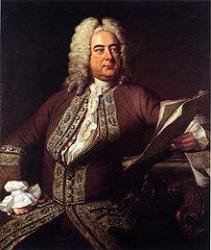
George Frideric Handel

1685 - 1759 Person Name: Handel Composer of "SEYMOUR" in International Praise George Frideric Handel (b. Halle, Germany, 1685; d. London, England, 1759) became a musician and composer despite objections from his father, who wanted him to become a lawyer. Handel studied music with Zachau, organist at the Halle Cathedral, and became an accomplished violinist and keyboard performer. He traveled and studied in Italy for some time and then settled permanently in England in 1713. Although he wrote a large number of instrumental works, he is known mainly for his Italian operas, oratorios (including Messiah, 1741), various anthems for church and royal festivities, and organ concertos, which he interpolated into his oratorio performances. He composed only three hymn tunes, one of which (GOPSAL) still appears in some modern hymnals. A number of hymnal editors, including Lowell Mason, took themes from some of Handel's oratorios and turned them into hymn tunes; ANTIOCH is one example, long associated with “Joy to the World.” Bert Polman

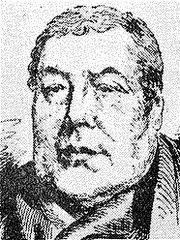
Samuel Webbe

1740 - 1816 Person Name: Webbe Composer of "CHATHAM. SEYMOUR" in Jubilate Deo Samuel Webbe (the elder; b. London, England, 1740; d. London, 1816) Webbe's father died soon after Samuel was born without providing financial security for the family. Thus Webbe received little education and was apprenticed to a cabinet­maker at the age of eleven. However, he was determined to study and taught himself Latin, Greek, Hebrew, French, German, and Italian while working on his apprentice­ship. He also worked as a music copyist and received musical training from Carl Barbant, organist at the Bavarian Embassy. Restricted at this time in England, Roman Catholic worship was freely permitted in the foreign embassies. Because Webbe was Roman Catholic, he became organist at the Portuguese Chapel and later at the Sardinian and Spanish chapels in their respective embassies. He wrote much music for Roman Catholic services and composed hymn tunes, motets, and madrigals. Webbe is considered an outstanding composer of glees and catches, as is evident in his nine published collections of these smaller choral works. He also published A Collection of Sacred Music (c. 1790), A Collection of Masses for Small Choirs (1792), and, with his son Samuel (the younger), Antiphons in Six Books of Anthems (1818). Bert Polman

Lorenzo Lyons

1807 - 1886 Person Name: Laiana (Lorenzo Lyons), 1807-1886 Translator of "NALO PALANEHE E" in Na Himeni Haipule Hawaii Lorenzo Lyons also known as Makua Laiana, missionary to Hawaii. Dianne Shapiro

Edward Caswall

1814 - 1878 Person Name: Edward Caswell Translator of "Lo, upon the altar lies" in Evangelical Lutheran hymnal Edward Caswall was born in 1814, at Yately, in Hampshire, where his father was a clergyman. In 1832, he went to Brasenose College, Oxford, and in 1836, took a second-class in classics. His humorous work, "The Art of Pluck," was published in 1835; it is still selling at Oxford, having passed through many editions. In 1838, he was ordained Deacon, and in 1839, Priest. He became perpetural Curate of Stratford-sub-Castle in 1840. In 1841, he resigned his incumbency and visited Ireland. In 1847, he joined the Church of Rome. In 1850, he was admitted into the Congregation of the Oratory at Birmingham, where he has since remained. He has published several works in prose and poetry. --Annotations of the Hymnal, Charles Hutchins, M.A. 1872 ===================== Caswall, Edward, M.A., son of the Rev. R. C. Caswall, sometime Vicar of Yately, Hampshire, born at Yately, July 15, 1814, and educated at Brasenose College, Oxford, graduating in honours in 1836. Taking Holy Orders in 1838, he became in 1840 Incumbent of Stratford-sub-Castle, near Salisbury, and resigned the same in 1847. In 1850 (Mrs. Caswall having died in 1849) he was received into the Roman Catholic communion, and joined Dr. Newman at the Oratory, Edgbaston. His life thenceforth, although void of stirring incidents, was marked by earnest devotion to his clerical duties and a loving interest in the poor, the sick, and in little children. His original poems and hymns were mostly written at the Oratory. He died at Edgbaston, Jan. 2, 1878, and was buried on Jan. 7 at Redwall, near Bromsgrove, by his leader and friend Cardinal Newman. Caswall's translations of Latin hymns from the Roman Breviary and other sources have a wider circulation in modern hymnals than those of any other translator, Dr. Neale alone excepted. This is owing to his general faithfulness to the originals, and the purity of his rhythm, the latter feature specially adapting his hymns to music, and for congregational purposes. His original compositions, although marked by considerable poetical ability, are not extensive in their use, their doctrinal teaching being against their general adoption outside the Roman communion. His hymns appeared in:— (1) Lyra Catholica, which contained 197 translations from the Roman Breviary, Missal, and other sources. First ed. London, James Burns, 1849. This was reprinted in New York in 1851, with several hymns from other sources added thereto. This edition is quoted in the indices to some American hymn-books as Lyra Cath., as in Beecher's Plymouth Collection, 1855, and others. (2) Masque of Mary, and Other Poems, having in addition to the opening poem and a few miscellaneous pieces, 53 translations, and 51 hymns. 1st ed. Lon., Burns and Lambert, 1858. (3) A May Pageant and Other Poems, including 10 original hymns. Lon., Burns and Lambert, 1865. (4) Hymns and Poems, being the three preceding volumes embodied in one, with many of the hymns rewritten or revised, together with elaborate indices. 1st ed. Lon., Burns, Oates & Co., 1873. Of his original hymns about 20 are given in the Roman Catholic Crown of Jesus Hymn Book, N.D; there are also several in the Hymns for the Year, N.D., and other Roman Catholic collections. --John Julian, Dictionary of Hymnology (1907) ====================== Caswall, E. , p. 214, ii. Additional original hymns by Caswall are in the Arundel Hymns, 1902, and other collections. The following are from the Masque of Mary, &c, 1858:— 1. Christian soul, dost thou desire. After Holy Communion. 2. Come, let me for a moment cast. Holy Communion. 3. O Jesu Christ [Lord], remember. Holy Communion. 4. Oft, my soul, thyself remind. Man's Chief End. 5. Sleep, Holy Babe. Christmas. Appeared in the Rambler, June 1850, p. 528. Sometimes given as "Sleep, Jesus, sleep." 6. The glory of summer. Autumn. 7. This is the image of the queen. B. V. M. His "See! amid the winter's snow,” p. 1037, i., was published in Easy Hymn Tunes, 1851, p. 36. In addition the following, mainly altered texts or centos of his translations are also in common use:— 1. A regal throne, for Christ's dear sake. From "Riches and regal throne," p. 870, ii. 2. Come, Holy Ghost, Thy grace inspire. From "Spirit of grace and union," p. 945, i. 3. Hail! ocean star, p. 99, ii,, as 1873. In the Birmingham Oratory Hymn Book, 1850, p. 158. 4. Lovely flow'rs of martyrs, hail. This is the 1849 text. His 1873 text is "Flowers of martyrdom," p. 947, i. 5. None of all the noble cities. From "Bethlehem! of noblest cities," p. 946, ii. 6. O Jesu, Saviour of the World. From “Jesu, Redeemer of the world," p. 228, ii. 7. 0 Lady, high in glory raised. From "O Lady, high in glory, Whose," p. 945, i. The Parochial Hymn Book, 1880, has also the following original hymns by Caswall. As their use is confined to this collection, we give the numbers only:— IS os. 1, 2, 3, 159 (Poems, 1873, p. 453), 209 (1873, p. 288), 299, 324 (1873, p. 323), 357, 402, 554, 555, 558, 569 (1873, p. 334). These are from his Masque of Mary 1858. Nos. 156, 207 (1873, p. 296), 208 (1873, p. 297), 518. These are from his May Pageant, 1865. As several of these hymns do not begin with the original first lines, the original texts are indicated as found in his Poems, 1873. [Rev. James Mearns, M.A.] --John Julian, Dictionary of Hymnology, New Supplement (1907)

William Walsham How

1823 - 1897 Person Name: William H. How Author of "Lord, This Day Thy Children Meet" in The Cyber Hymnal William W. How (b. Shrewsbury, Shropshire, England, 1823; d. Leenane, County Mayo, Ireland, 1897) studied at Wadham College, Oxford, and Durham University and was ordained in the Church of England in 1847. He served various congregations and became Suffragan Bishop in east London in 1879 and Bishop of Wakefield in 1888. Called both the "poor man's bishop" and "the children's bishop," How was known for his work among the destitute in the London slums and among the factory workers in west Yorkshire. He wrote a number of theological works about controversies surrounding the Oxford Movement and attempted to reconcile biblical creation with the theory of evolution. He was joint editor of Psalms and Hymns (1854) and Church Hymns (1871). While rector in Whittington, How wrote some sixty hymns, including many for chil­dren. His collected Poems and Hymns were published in 1886. Bert Polman =============== How, William Walsham, D.D., son of William Wybergh How, Solicitor, Shrewsbury, was born Dec. 13, 1823, at Shrewsbury, and educated at Shrewsbury School and Wadham College, Oxford (B.A. 1845). Taking Holy Orders in 1846, he became successively Curate of St. George's, Kidderminster, 1846; and of Holy Cross, Shrewsbury, 1848. In 1851 he was preferred to the Rectory of Whittington, Diocese of St. Asaph, becoming Rural Dean in 1853, and Hon. Canon of the Cathedral in 1860. In 1879 he was appointed Rector of St. Andrew's Undershaft, London, and was consecrated Suffragan Bishop for East London, under the title of the Bishop of Bedford, and in 1888 Bishop of Wakefield. Bishop How is the author of the Society for Promoting Christian Knowledge Commentary on the Four Gospels; Plain Words , Four Series; Plain Words for Children; Pastor in Parochia; Lectures on Pastoral Work; Three All Saints Summers, and Other Poems , and numerous Sermons , &c. In 1854 was published Psalms and Hymns, Compiled by the Rev. Thomas Baker Morrell, M.A., . . . and the Rev. William Walsham How, M.A. This was republished in an enlarged form in 1864, and to it was added a Supplement in 1867. To this collection Bishop How contributed several hymns, and also to the S. P. C. K. Church Hymns , of which he was joint editor, in 1871. The Bishop's hymns in common use amount in all to nearly sixty. Combining pure rhythm with great directness and simplicity, Bishop How's compositions arrest attention more through a comprehensive grasp of the subject and the unexpected light thrown upon and warmth infused into facia and details usually shunned by the poet, than through glowing imagery and impassioned rhetoric. He has painted lovely images woven with tender thoughts, but these are few, and found in his least appreciated work. Those compositions which have laid the firmest hold upon the Church, are simple, unadorned, but enthusiastically practical hymns, the most popular of which, "O Jesu, Thou art standing"; "For all the Saints who from their labours rest," and "We give Thee but Thine own," have attained to a foremost rank. His adaptations from other writers as in the case from Bishop Ken, "Behold, the Master passeth by," are good, and his Children's hymns are useful and popular. Without any claims to rank as a poet, in the sense in which Cowper and Montgomery were poets, he has sung us songs which will probably outlive all his other literary works. The more important of Bishop How's hymns, including those already named, and "Lord, Thy children guide and keep"; "O Word of God Incarnate"; "This day at Thy creating word"; "Who is this so weak and helpless"; and others which have some special history or feature of interest, are annotated under their respective first lines. The following are also in common use:— i. From Psalms & Hymns, 1854. 1. Before Thine awful presence, Lord. Confirmation. 2. Jesus, Name of wondrous love [priceless worth]. Circumcision. The Name Jesus . 3. Lord Jesus, when we stand afar. Passiontide. 4. O blessing rich, for sons of men. Members of Christ. 5. 0 Lord of Hosts, the earth is Thine. In time of War. 6. O Lord, Who in Thy wondrous love. Advent. ii. From Psalms & Hymns, enlarged, 1864. 7. Lord, this day Thy children meet. Sunday School Anniversary. iii. From Supplement to the Psalms & Hymns, 1867. 8. Hope of hopes and joy of joys. Resurrection. 9. 0 daughters blest of Galilee. For Associations of Women. 10. O happy feet that tread. Public Worship. 11. With trembling awe the chosen three. Transfiguration. iv. From Parish Magazine, 1871, and Church Hymns, 1871. 12. O Jesu, crucified for man. Friday. 13. Yesterday, with worship blest. Monday. v. From the S. P. C. K. Church Hymns. 1871. 14. Bowed low in supplication. For the Parish. 15. Great Gabriel sped on wings of light. Annunciation, of the Blessed Virgin Mary. 16. O blest was he, whose earlier skill. St. Luke. 17. O God, enshrined in dazzling light. Omnipresence. Divine Worship . 18. O heavenly Fount of Light and Love. Witsuntide. 19. O Lord, it is a blessed thing. Weekdays. 20. 0 One with God the Father. Epiphany. 21. O Thou through suffering perfect made. Hospitals. 22. Rejoice, ye sons of men. Purification of the B. V. M. 23. Summer suns are glowing. Summer. 24. The year is swiftly waning. Autumn. 25. Thou art the Christ, O Lord. St. Peter. 26. To Thee our God we fly. National Hymn. 27. Upon the holy Mount they stood. Transfiguration and Church Guilds. 28. We praise Thy grace, 0 Saviour. St. Mark. vi. From the S. P. C. K. Children's Hymns, 1872. 29. Behold a little child. Jesus the Child's Example. 30. Come, praise your Lord and Saviour. Children's Praises. 31. It is a thing most wonderful. Sunday School Anniversary. 32. On wings of living light. Easter. Bishop How's hymns and sacred and secular pieces were collected and published as Poems and Hymns, 1886. The Hymns, 54 in all, are also published separately. He d. Aug. 10, 1897. --John Julian, Dictionary of Hymnology (1907) =================== How, W. W., p. 540, i. He died Aug. 10, 1897. His Memoir, by F. D. How, was published in 1898. --John Julian, Dictionary of Hymnology, New Supplement (1907)

Samuel Francis Smith

1808 - 1895 Person Name: Samuel F. Smith Author of "Softly fades the twilight ray" in Book of Worship with Hymns and Tunes Smith, Samuel Francis, D.D., was born in Boston, U.S.A., Oct. 21, 1808, and graduated in arts at Harvard, and in theology at Andover. He entered the Baptist ministry in 1832, and became the same year editor of the Baptist Missionary Magazine. He also contributed to the Encyclopaedia Americana. From 1834 to 1842 he was pastor at Waterville, Maine, and Professor of Modern Languages in Waterville College. In 1842 he removed to Newton, Massachusetts, where he remained until 1854, when he became the editor of the publications of the Baptist Missionary Union. With Baron Stow he prepared the Baptist collection known as The Psalmist, published in 1843, to which he contributed several hymns. The Psalmist is the most creditable and influential of the American Baptist collections to the present day. Dr. Smith also published Lyric Gems, 1854, Rock of Ages, 1870, &c. A large number of his hymns are in use in America, and several have passed into some of the English collections. Taking his hymns in common use in alphabetical order, we have the following:— 1. And now the solemn deed is done. Ordination. Given in The Psalmist, 1843, No. 954. In Dr. Hatfield's Church Hymn Book, N. Y., 1872, it is altered to "The solemn service now is done." 2. As flows the rapid river. Life Passing Away. In Christian Psalmody, 1833, No. 33; the Hymns for the Vestry and Fireside, Boston, 1841; and The Psalmist, 1843, No. 1059. Found in a few English hymn-books, and in Lyra Sacra Americana, 1868. 3. Auspicious morning, hail. American National Anniversary. Written for July 4th, 1841, and published in The Psalmist, 1843, No. 1007. 4. Beyond where Cedron's waters flow. Gethsemane. In L. Bacon's Appendix, 1833; the Psalmist, 1843, No. 220, and later collections. 5. Blest is the hour when cares depart. Divine Worship. In The Psalmist, 1843, No. 947, and others. 6. Constrained by love we follow where. Holy Baptism. Appeared in the Baptist edition of the Plymouth Hymn Book, 1857. 7. Down to the sacred wave. Holy Baptism. Contributed to Winchell's Additional Hymns added to his Collection of 1817, in 1832, No. 510; repeated in The Psalmist, 1843, No. 818, and in several collections. Also in Lyra Sacra Americana, 1868. 8. Hail! ye days of solemn meeting. Public Worship. An altered form of No. 26 below, in Spurgeon's Our Own Hymn Book, 1866, as an "American Hymn, 1840." 9. How blest the hour when first we gave. Holy Baptism. Appeared in the Baptist edition of thePlymouth Hymn Book, 1857, No. 1468. 10. How calmly wakes the hallowed morn. Holy Baptism. Given in The Psalmist, 1843, No. 810, in later collections, and in Lyra Sacra Americana, 1868. 11. Jesus, Thou hast freely saved us. Salvation. In Winchell's Additional Hymns, 1832, No. 503, and others. 12. Meekly in Jordan's Holy Stream. Holy Baptism. Contributed to The Psalmist, 1843, No. 808. 13. My country, 'tis of thee. National Hymn. "Written in 1832, and first sung at a children's Fourth of July celebration in Park Street church, Boston." Included in The Psalmist, 1843, No. 1000, and found in a large number of American hymn-books, but not in use in Great Britain. It is one of the most popular of Dr. Smith's compositions. Text, with note in Lyra Sacra Americana, 1868. 14. 0 not my own these verdant hills. Bought with a Price. Appeared in Nason's Congregational Hymn Book, 1857, and given inLaudes Domini, 1884. 15. Onward speed thy conquering flight. Missions. Appeared in The Psalmist, 1843, No. 892, and is found in several modern collections in Great Britain and America. Also in Lyra Sac. Americana, 1868. 16. Planted in Christ, the living Vine. Christian Fellowship; or, For Unity. Given in The Psalmist, 1843, No. 929, inLyra Sacra Americana, 1868, and several hymn-books. Of the hymns contributed by Dr. Smith to The Psalmist this is the best, and one of the most popular. 17. Remember thy Creator. Youthful Piety Enforced. In Christian Psalmody, 1832, No. 32; the Hymns for the Vestry and Fireside, 1841; The Psalmist, 1843, No. 778; Lyra Sac. Americana, 1868, and other collections. 18. Sister, thou wast mild and lovely. Death and Burial. Written on the death of Miss J. M. C. of Mount Vernon School, Boston, July 13,1833, and published in The Psalmist, 1843, No. 1096. 19. Softly fades the twilight ray. Sunday Evening. Written in 1832, and included in The Psalmist, 1843, No. 56. Also in Lyra Sacra Americana, and several hymn-books. 20. Spirit of holiness, descend. Whitsuntide. Appeared in the Hymns for the Vestry and Fireside, 1841, No. 295, and again in The Psalmist, 1843, No. 384. In the Unitarian Hymns for the Church of Christ, Boston, 1853. St. ii., iii., iv. were given as "Spirit of God, Thy churches wait." This form of the text and the original are both in modern hymn-books. 21. Spirit of peace and holiness. Institution of a Minister. Appeared in The Psalmist, 1843, No. 953, and Hatfield's Church Hymn Book, 1872. 22. The morning light is breaking. Missions. Written in 1832, and included in Hastings's Spiritual Songs, 1832-33, No. 253; and The Psalmist, 1843, No. 912. This hymn is very popular and has been translated into several languages. Dr. Smith says of it that “it has been a great favourite at missionary gatherings, and I have myself heard it sung in five or six different languages in Europe and Asia. It is a favourite with the Burmans, Karens, and Telegus in Asia, from whose lips I have heard it repeatedly.” 23. The Prince of Salvation in triumph is riding. Missions. Given in Hastings and Mason's Spiritual Songs, 1832-33, No. 274; The Psalmist, 1843, and later collections. 24. Tis done, the [important] solemn act is done. Ordination. Appeared in The Psalmist 1843, No. 951, and later hymn-books. 25. Today the Saviour calls. Invitation. First sketch by Dr. Smith, the revised text, as in Hastings and Mason's Spiritual Songs, No. 176, and The Psalmist, No. 453, by Dr. T. Hastings (p. 495, i. 19). 26. Welcome, days of solemn meeting. Special Devotional Services. Written in 1834, and given in Dr. Hatfield's Church Hymn Book, 1872. See No. 8. 27. When shall we meet again ? Parting. This is a cento. The first stanza is from Alaric A. Watts's Poetical Sketches, &c, 1822, p. 158 ; and st. ii.-iv. are by Dr. Smith. In this form it was published in L. Bacon's Supplement to Dwight, 1833, No. 489. It is in several American hymn-books; and also the English Baptist Psalms & Hymns, 1858, &c. 28. When the harvest is past and the summer is gone. Close of Worship. Contributed to Hastings and Mason's Spiritual Songs, 1831, No. 244; and repeated in the Fuller and Jeter Supplement to The Psalmist, 1847, No. 22, and later collections. 29. When thy mortal life is fled. The Judgment. Contributed to Winchell's Additional Hymns, 1832, No. 379, and repeated in The Psalmist, 1843, No. 455, and later hymn-books. Also in Lyra Sacra Americana, 1868. 30. While in this sacred rite of Thine. Holy Baptism. Appeared in The Psalmist, 1843, No. 803: Lyra Sacra Americana, 1868, &c. 31. With willing hearts we tread. Holy Baptism. In The Psalmist, 1843, No. 798; and again in the Baptist Praise Book, 1871. 32. Yes, my native land, I love thee. A Missionary's Farewell. Contributed to Winchell's Additional Hymns, 1832, No. 445, and found in later collections. Also in Lyra Sacra Americana, 1868. [Rev. F. M. Bird, M.A.] --John Julian, Dictionary of Hymnology (1907)

Pages


Export as CSV
It looks like you are using an ad-blocker. Ad revenue helps keep us running. Please consider white-listing Hymnary.org or getting Hymnary Pro to eliminate ads entirely and help support Hymnary.org.