You help make Hymnary.org possible. More than 10 million people from 200+ countries found hymns, liturgical resources and encouragement on Hymnary.org in 2025, including you. Every visit affirms the global impact of this ministry.

If Hymnary has been meaningful to you this year, would you take a moment today to help sustain it? A gift of any size—paired with a note of encouragement if you wish—directly supports the server costs, research work and curation that keep this resource freely available to the world.

Give securely online today, or mail a check to:
Hymnary.org
Calvin University
3201 Burton Street SE
Grand Rapids, MI 49546

Thank you for your partnership, and may the hope of Advent fill your heart.

Person Results

Tune Identifier:"^toulon_genevan$"
In:person

Planning worship? Check out our sister site, ZeteoSearch.org, for 20+ additional resources related to your search.
Showing 51 - 60 of 85Results Per Page: 102050

George Lansing Taylor

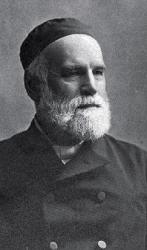
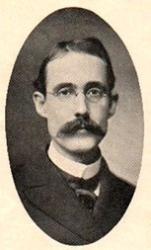
1835 - 1903 Person Name: George L. Taylor Author of "The Sea Is His" in The Cyber Hymnal Taylor, George Lansing, D.D., born at Skaneateles, N.Y., Feb. 13, 1835, graduated at Columbia College, 1861, D.D. from Syracuse, 1876. Entered the Methodist Episcopal Ministry in 1862. His hymn, "Dare to do right! dare to be true" (Christian Courage), appeared anonymously in W. B. Bradbury's Golden Censer, 1864; and Bradbury's Clarion, 1867, as by "Rev. Geo. Lansing Taylor." In the Sunday School Hymnary , 1905 [Rev. James Mearns, M.A.] --John Julian, Dictionary of Hymnology, New Supplement (1907) ============================ Taylor, George Lansing, D.D. (February 13, 1835-- ). Dr. Taylor spent two years at Ohio Wesleyan University before entering Columbia University. While a student at Columbia he was co-editor of the Christian Advocate and Journal and of The American Monthly. He preached for a number of years at various points in New England. --Robert G. McCutchan, DNAH Archives

Elizabeth Lee Smith

1817 - 1898 Translator of "I Greet Thee, Who My Sure Redeemer Art" in The Presbyterian Hymnal Smith, Elizabeth Lee, née Allen, daughter of Dr. W. Allen, President of Dartmouth University, was born in 1817, and married in 1843 to Dr. H. B. Smith, who became Professor in Union Theological Seminary, New York, in 1850, and died in 1877. Mrs. Smith's hymns, including translations of "Je Te salue", “O Jesus Christus", are in Schaff's Christ in Song, 1869 and 1870. [Rev. F. M. Bird, M.A.] --John Julian, Dictionary of Hymnology (1907) According to the Canterbury Dictionary of Hymnology, Elizabeth Lee Smith passed away in 1898. "Elizabeth Lee Smith." The Canterbury Dictionary of Hymnology. Canterbury Press. Web. 19 Apr. 2018. http://www.hymnology.co.uk/e/elizabeth-lee-smith.

Benjamin Francis

1734 - 1799 Person Name: Benjamin Francis, 1734-1799 Author of "Jesús mi Salvador, será posible" in Culto Cristiano Francis, Benjamin , M.A., was born in Wales in 1734. He was baptized at the age of 15, and began to preach at 19. He studied at the Bristol Baptist College, and commenced his ministry at Sodbury. In 1757 he removed to Horsley (afterwards called Shortwood), in Gloucestershire. There he remained, through a happy and very successful ministry of 42 years, until his death in 1799. He was the author of many poetical compositions :— (1) Conflagration, a Poem in Four Parts, (1770); (2) Elegies on the Deaths of the Revs. George Whitefield , Caleb Evans, Robert Day, and Joshua Thomas; (3) The Association, a Poem (1790); (4) a Poetical Address to the Stockbridge Indians (5) two satirical pieces on the Baptismal controversy; The Salopian Zealot; and The Oracle, the former passing through several editions and being reprinted in America. Francis was the author of five hymns in Rippon's Selections, 1787, all of which are still in common use :— 1. Before Thy throne, eternal King . Meetings of Ministers: or Church Conferences. 2. Glory to the eternal King. Majesty of God. In Snepp's Songs of Grace & Glory for Private, Family and Public Worship, 1872. 3. In tweet [loud] exalted strains . Opening of a Place of Worship . This was given in Rippon, No. 338, in 6 st. of 6 1. with the note:—“Sung on opening the Meeting House at Horsley, Gloucestershire, [his Chapel,] September 18, 1774; and also at the opening of the New Meeting House, at Downend, near Bristol, October 4, 1786."This hymn is abbreviated in the Baptist Hymnal, 1879, to 4 stanzas, and begins with st. iii. which is altered to "Come, King of glory, come." No. 1020 in Spurgeon's Our Own Hymnbook is the same arrangement of stanzas altered by Mr. Spurgeon to "Great King of Zion, now." In several American hymnals it reads: "Great King of glory, come." 4. My gracious Redeemer, I love. The love of Christ to Men. In various collections. 5. Praise the Saviour, all ye nations . Offertory. In Snepp's Songs of Grace & Glory, 1872, No. 739, "With my substance I will honour," is a cento from this hymn. 6. Ye objects of sense and enjoyments of time . Death. A long hymn of 16 st. of 4 l. given in the new and improved edition of Rippon, 1837, No. 553, Pt. ii. with the heading, "The dying Christian bidding adieu to the world." This hymn had previously appeared in the Baptist Register, 1795. It was as a writer of Welsh hymns, however, that Francis excelled. In 1774 he published his Alleluia, neu Hymnau perthynol i Addoliad Cyhoeddus (Hymns pertaining to Public Worship) To this he contributed 103 hymns. A second volume appeared in 1786, to which he contributed 91 hymns, being a total of 194 in all [D. Sedgwick’s Manuscript]. Of these many are still in common use in Wales, the most popular being:— 1. Clod i'r bendigedig Oen—-a oddefodd. 2. Deffro 'nghalon, deffro 'nghan—-i ddyrchafu. 3. Gwyn fyd y dyn a gred yn Nuw. 4. Arglwydd grasol, clyw fy nghri—-a'm griddfanau. 5. Wele gadarn sylfaen Sion. [Rev. W. R. Stevenson, M.A.] -- John Julian, Dictionary of Hymnology (1907) See also in: Hymn Writers of the Church

Eliza Scudder

1821 - 1896 Author of "Thou Life within my life, than self more near" in Worship Song Scudder, Eliza , niece of Dr. E. H. Sears, (q.v.), was born in Boston, U.S.A., Nov. 14,1821, and now (1888) lives in Salem, Massachusetts. Formerly an Unitarian, she some time ago joined the Protestant Episcopal Church. Her hymns in common use are:— 1. From past regret and present[faithlessness] feebleness . Repentance. In the Quiet Hours, Boston, 1875. 2. I cannot find Thee! Still on restless pinion . Seeking after God. Appeared in Longfellow and Johnson's Unitarian Hymns of the Spirit, 1864. 3. In Thee my powers and treasures live. Faith. 4. Life of our life, and light of all our seeing! Prayer. In the Boston Quiet Hours, 1875. 5. The day is done; the weary day of thought and toil is past. Evening. In Sermons and Songs of the Christian Life, by E. H. Sears, Boston, 2nd ed.,1878, p. 296, entitled "Vesper Hymn," and dated "October, 1874." This is possibly her finest hymn. 6. Thou grace divine, encircling all . Divine Grace. Appeared in Dr. E. H. Sears's Pictures of the Olden Time, as shown in the Fortunes of a Family of Pilgrims, 1857. It was written in 1852, and included in the Boston Hymns of the Spirit, 1864. It has sometimes been taken as "An Ancient Catholic Hymn" (Universalist's Psalms & Hymns 1865), but in error. 7. Thou long disowned, reviled, oppresst. The Spirit of Truth. In the Boston Hymns of the Spirit, 1864. Of these hymns, Nos. 2, 6, and 7 are in Dr. Martineau's Hymns, 1873. Some of Miss Scudder's poetical pieces appeared in Dr. Sears's Monthly Religious Magazine. Her Hymns and Sonnets, by E. S., were published by Lockwood, Brooks & Co., Boston, 1880. From this her hymn "Thou hast gone up again" (Ascension), is taken. [Rev. F. M. Bird, M.A.] -- John Julian, Dictionary of Hymnology (1907) ==================== Scudder, Eliza, pp. 1035, L, 1589, i. Miss Scudder died in 1896. Her Hymns & Sonnets, with biographical notes, &c, by Horace E. Scudder, was published by Houghton & Mifflin, 1897. In The Pilgrim Hymnal, 1904, the hymn," Thou Life within my life," begins with st. ii. of "From past regret and present [faithlessness] feebleness," p. 1035, i. 1), which was written in Feb. 1871. Another of Miss Scudder's hymns is “ Let whosoever will enquire" (New Heaven), from which "My God, I rather look to Thee," in Horder's Worship Song, 1905, is taken. --John Julian, Dictionary of Hymnology, New Supplement (1907)

Grace Moore

Alterer of "God of the Prophets" in The Covenant Hymnal

Daniel B. Merrick

1926 - 2004 Person Name: Daniel B. Merrick, Jr. Author of "O God of Truth, the Power of Nations Free" in Two More New Hymns for Youth by Youth Merrick Daniel B. (Bloomington, Illinois, April 29, 1926--November 11, 2004). Married Dagmar Gustafson in 1952 while a student at Phillips Theological Seminary (A.B., 1948; B.D., 1954); three children. Served churches in Sandoval, Ill.; Milwaukee, Wisconsin; Panama Canal Zone; Peoria, Illinois; and Havana, Ill. Won his first hymn writing contest in the mid-1950s. The hymn "O God whose Love Compels Us" was a winning entry for a theme hymn for the American Baptist convention in 1967. Edited the Chalice Hymnal for the Christian Church (Disciples of Christ). --DNAH Archives

Lady Lucy Whitmore

1792 - 1840 Person Name: Lucy E. G. Whitmore Author of "Father, again in Jesus' name we meet" in Cân a Mawl Whitmore, Lady Lucy Elizabeth Georgina

Marion Franklin Ham

1867 - 1956 Author of "O Lord of Life" in Representative American Hymns of the Twentieth Century Born: February 18, 1867, Harveysburg, Ohio. Died: July 23, 1956, Arlington, Massachusetts. Buried: Mount Auburn Cemetery, Cambridge, Massachusetts. Ham began his career as a journalist and bank clerk in Chattanooga, Tennessee. Ordained a Unitarian minister in 1898, he pastored in Chattanooga (1898-1904); at the First Church in Dallas, Texas (1904-09); and in Reading (1909-34), Waverly (1934-42), and Gardner, Massachusetts (1943-45). The Meadville Theological School in Chicago, Illinois, awarded him a Doctor of Divinity degree in 1942, the year he retired. Ham’s works include: The Golden Shuttle, 1896 The Kinchin Stories, 1914 Songs of the Spirit, 1932 Songs of Faith and Hope, 1940 O Mother-Heart, 1941 Keeper of the Flame, 1945 Freedom, 1950 Songs at Sunset, 1951 Songs of a Lifetime, 1953 In a Rose Garden, 1954 www.hymntime.com/tch/

J. Grigg

1720 - 1768 Person Name: Joseph Grigg, 1720-1768 Author of "Jesús mi Salvador, será posible" in Culto Cristiano Grigg, Joseph, was born in 1728, according to the D. Sedgwick’s Manuscript," but this date seems to be some six or eight years too late. He was the son of poor parents and was brought up to mechanical pursuits. In 1743 he forsook his trade and became assistant minister to the Rev. Thomas Bures, of the Presbyterian Church, Silver Street, London. On the death of Mr. Bures in 1747, he retired from the ministry, and, marrying a lady of property, look up his residence at St. Albans. He died at Walthamstow, Essex, Oct. 29, 1768. As a hymnwriter Grigg is chiefly known by two of his hymns, "Behold a stranger at the door"; and "Jesus, and can it ever be?" His hymnwriting began, it is said, at ten years of age. His published works of various kinds number over 40. Those in which his hymns are found are:— (1) Miscellanies on Moral and Religious Subjects, &c, London, Elizabeth Harrison, 1756. (2) The Voice of Danger, the Voice of God. A Sermon Preached at St. Albans, and at Box-Lane, Chiefly with a View to the apprehended Invasion. By J. Grigg. London, J. Buckland, 1756. To this is appended his hymn, "Shake, Britain, like an aspen shake." (3) Four Hymns on Divine Subjects wherein the Patience and Love of Our Divine Saviour is displayed, London, 1765. (4) Hymns by the late Rev. Joseph Grigg, Stourbridge, 1806. (5) During 1765 and 1766 he also contributed 12 hymns to The Christians Magazine. In 1861 D. Sedgwick collected his hymns and poems, and published them with a memoir as: Hymns on Divine Subjects, * * * * London, 1861. This volume contains 40 "Hymns," and 17 "Serious Poems." In the “S. MSS." Sedgwick notes that in 1861 he omitted three hymns by Grigg, which were then unknown to him, viz.:—l) On "The National Fast," appended to a sermon preached at Northampton, Feb. 13, 1761, by W. Warburton, and published in London, 1761. (2) "A Harvest Hymn by the late Rev. Joseph Grigg," in 6 stanzas, in the Evangelical Magazine, July, 1822; and (3) On the Parable of Dives and Lazarus, dated "Feb. 15, 1767." -- John Julian, Dictionary of Hymnology (1907)

Jeremy Taylor

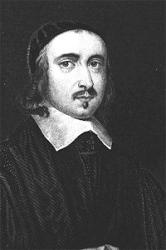
1613 - 1667 Author of "Descend to thy Jerusalem, O Lord!" in The Harvard University Hymn Book Taylor, Jeremy, D.D. This poet of preachers was born of very humble parentage on both sides, at Cambridge, in August, 1613. His father was a barber. He must have had a good school as a boy. He entered Cams College, of his native city, as a "sizar" in 1626. His career at the university was a brilliant one. He was made fellow of All Souls College, Oxford, in 1632; and rector of Uppingham, Rutlandshire, in 1638, as is still proudly remembered there. He was inevitably "sequestered" by Parliament in 1642. Inexorable necessities of circumstance put him in prison. During the opening of the great Protectorate he kept a school in Wales along with William Nicholson, and acted as chaplain to the Earl of Carberry at Golden Grove, Carmarthenshire, one of the pilgrim spots of our country, because of this and of his imperishable book named after it. In 1658 he is found in Ireland. He preached at Lisburn and Portmore. He returned to London early in 1660, and signed the loyalist or royalist Declaration of the Nobility and Gentry, on April 24th, thirty-five days before the "Restoration." He was not overlooked, as so many faithful royalists were. He was consecrated bishop of Down and Connor in January, 1661; made a member of the Irish Privy Council in February; entrusted with the diocese of Dromore in March: and in the same year was chosen Vice-chancellor of the University of Dublin. He died at Lisburn, August 13th, 1667, and was interred in the choir of the cathedral of Dromore. Bishop Taylor's complete works have been repeatedly edited, e.g. by Henry Rogers, Pitman, Bishop Heber, Eden; and manifold Selections and single books, as his Holy Living and Holy Dying. Notwithstanding his rich and im¬perial intellect, and enthralling eloquence, and absolute command of words, Bishop Taylor holds only a very small place in the Antiphon of England. It has been admirably said by Dr. Rowland Williams, "Poetry differs from eloquence, as love differs from friendship" (Stray Thoughts, 1878). His attempts at verse are eloquence, not poetry, and even the eloquence hampered and shallowed. The present writer collected his entire poems and verse-translations in the Miscellanies of the Fuller Worthies' Library (1870). In the "Introduction" the reader will find a critical ac¬count of the various hymns; and also therein an account is furnished of a flagrant misap¬propriation of Bishop Taylor's Hymns by Samuel Speed in his Prison Piety, or Meditations divine and moral. Digested into poetical heads on mixt and various subjects (1677). The following is the original title page of the volume in which all the Festival Hymns, save one, first appeared:—> The Golden Grove, or a Manuall of Daily Prayers and Letanies Fitted to the dayes of the Week. Containing a short Summary of what is to be Believed, Practised, Denied. Also Festival Hymns According to the manner of "The Ancient Church." Composed for the Use of the Devout, especially of Younger Persons; By the Author of "The Great Exemplar." London: Printed by J. F. for R. Rayston, at the Angel in Ivie Lane, 1655. (12 mo.) A 2nd edition appeared in 1657 with the Author's name thusBy Jer. Taylor, D.D., Chaplain in Ordinary to his late Majesty—a courageous announcement in the circumstances. A 3rd edition seems to have disappeared. The 4th ed. appeared in 1659; and from it is derived the second Christmas Hymn, “Awake, my soul," which was not in either the 1st or 2nd ed. Heber, Pitman, and Eden overlooked this hymn. [Rev. A. B. Grosart, D.D., LL.D.] From Bishop Taylor's Golden Grove, 1655, the following hymns are in common use:-- 1. Full of mercy, full of love. Prayer for Charity. From the Golden Grove, p. 116, where it is given in 20 lines, and headed, "A Prayer for Charity." It was given in Bishop Heber's posthumousHymns, &c, 1827, p. 109, and thus came into later hymnbooks. 2. Lord, come away, why dost Thou stay. Advent. 3. Lord, let Thy flames of holy charity. Whitsunday. This begins with line 12 of his hymn in the Golden Grove, "On the Feast of Pentecost, or Whitsunday," p. 157. His Christmas Carol, "Where is this blessed Babe” and his Prayer, "My soul doth pant towards Thee," are also from the Golden Grove. -- John Julian, Dictionary of Hymnology (1907)

Pages


Export as CSV
It looks like you are using an ad-blocker. Ad revenue helps keep us running. Please consider white-listing Hymnary.org or getting Hymnary Pro to eliminate ads entirely and help support Hymnary.org.