You help make Hymnary.org possible. More than 10 million people from 200+ countries found hymns, liturgical resources and encouragement on Hymnary.org in 2025, including you. Every visit affirms the global impact of this ministry.

If Hymnary has been meaningful to you this year, would you take a moment today to help sustain it? A gift of any size—paired with a note of encouragement if you wish—directly supports the server costs, research work and curation that keep this resource freely available to the world.

Give securely online today, or mail a check to:
Hymnary.org
Calvin University
3201 Burton Street SE
Grand Rapids, MI 49546

Thank you for your partnership, and may the hope of Advent fill your heart.

Person Results

Tune Identifier:"^werde_munter_schop$"
In:people

Planning worship? Check out our sister site, ZeteoSearch.org, for 20+ additional resources related to your search.
Showing 51 - 60 of 70Results Per Page: 102050

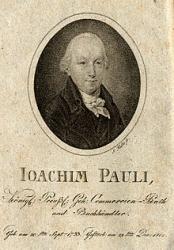
Joachim Pauli

1636 - 1708 Person Name: J. Pauli Author of "Trostlied" in Evangelisches Gesangbuch

Lindolfo Weingärtner

1923 - 2018 Translator of "Abençoa, Pai celeste" in Hinário Luterano

H. Pedersoen

Person Name: H. Pedersøn Translator of "Vær nu glad og vel til Mode" in M. B. Landstads Kirkesalmebog og "Nokre Salmar" ved Professor Dr. E. Blix, samt følgende tillæg

Georg Joachim Zollikofer

1730 - 1788 Person Name: Zollikofer Author of "Der du uns als Vater liebest" in Evangelisches Gesangbuch mit vierstimmigen Melodien

Haqvin Spegel

1645 - 1714 Person Name: H. Spegel Translator of "Helge Ande, hjertats nöje!" in Svenska Psalm-Boken af År 1819 Haquin Spegel (Haqvin) (14 June 1645 – 17 April 1714), born Håkan Spegel in Ronneby in Blekinge (today in Sweden), was a religious author and hymn writer who held several bishop's seats. See also in: Wikipedia

C. G. Koch

Author of "Kommt, ihr tiefbetrübten Herzen" in Gesangbuch der Evangelischen Gemeinschaft

Heinrich Puchta

1808 - 1858 Person Name: Christian Heinrich Rudolf Puchta, 1808-1858 Author of "Herr, die Erde ist gesegnet" in The Day School Hymn Book Puchta, Christian Rudolph Heinrich, son of W. H. Puchta, then residing as Justizrath at Kadolzburg, near Nürnberg, was born at Kadolzburg, Aug. 19, 1808. He matriculated at the University of Erlangen, in 1826, and completed his theological course at Berlin. In 1832 he was appointed Stadtvicar (general assistant preacher) at Munich, where he became acquainted with many men of light and leading; and in 1837 became repetent in theology at Erlangen. In 1839 he was appointed professor of Philosophy and Religion in the newly organised Lyceum at Speyer (Spires), but his nervous system broke down in 1841, and he had to be confined in the lunatic asylum of Winnenthal, Württemberg. After a year he was able to take charge of the parish of Eyb, near Ansbach, and then became, in 1852, second pastor, and in 1856, first pastor of St. James's Church, in Augsburg. He died at Augsburg, Sept. 12, 1858 (Koch, vii. 277; Allgemeine Deutsche Biographie xxvi. 687, &c). Puchta had a genuine poetic faculty, and a mastery of style. His early poems were secular; his later were mostly hymns. His hymns were mainly meant for private use, and appeared principally in his Morgen-und Abend Andachten am Christlichen Hausaltar in Gesängen, Erlangen, 1843 (2nd ed. 1857, 3rd 1868). Besides these, 38—including 11 translations from the Latin—-were given in Knapp's Christoterp, 1837-1852. A few others, with a selection of his poems, edited by Knapp, appeared in his posthumousGedichte, Stuttgart, 1860. Knapp in his Evangelischer Lieder, 1850, included 30 hymns by Puchta, and in his edition of 1865 no less than 42. Puchta was also one of the editors of the Bavarian Gesang-Buch, 1854. Those of his hymns which have passed into English (all from his Hausaltar, 1843) are:— i. Ein neues Jahr ist angefangen. New Year. In 1843, p. 173, as above, in 6 stanzas entitled, "New Year's Morning." In Knapp's Evangelischer Lieder-Schatz, 1850, No. 2104. Translated as, "Another year we now have enter'd," by Miss Burlingham, in the British Herald, January, 1866, p. 200, and Reid's Praise Book, 1872. ii. Herr des Himmels, Gott der Gnade. Sunday. In 1843, p. 3, as above, in 6 st., entitled “Sunday Morning." In Knapp, 1850, No. 1171. Transalted as, "God of grace and Lord of heaven," in L. Rehfuess's Church at Sea, 1868, p. 88. iii. Herr ein ganzer Leidenstag. For the Sick. In 1843, p. 227, as above, in 6 st., entitled, "In sickness. First evening." In Knapp, 1850, No. 2689. Translated as, ”Lord, a whole long day of pain," by Miss Winkworth, 1858, p. 81. Her st. i.-iv. are No. 263 in Bishop Ryle's Collection 1860. [Rev. James Mearns. M.A.] --John Julian, Dictionary of Hymnology (1907)

C. K. Solberg

1872 - 1954 Translator of "Dearest Jesus, Draw Thou Near Me" in Evangelical Lutheran Hymnary Solberg, Cark K. (Rushford, Minnesota, June 2, 1872--June 15, 1954). Lutheran. St. Olaf College, B.A. Graduate of Norwegian Lutheran Seminary. Ordained in 1900. Pastorates at Vermillion and Yankton, South Dakota, 1900-1906; Chicago, Illinois, 1906-1911; Minneapolis, Minn., 1911-1918. Evangelist for the Evangelical Lutheran Church, 1937-1935 [sic]. Author of several books and many hymns in Norwegian and English. --J. Irving Erickson, DNAH Archives

Johann Gottfried Olearius

1635 - 1711 Person Name: Johann Gottfried Olearius Author of "Jesu, laß mich ja nicht fallen" in Sonntagschulbuch Olearius, Johann Gottfried, son of Dr. Gottfried Olearius, pastor of St. Ulrich's Church at Halle, was born at Halle, Sept. 25, 1635. He entered the University of Leipzig in 1653, and graduated M.A. 1656, residing also for short periods at other German Universities. In 1658 he was ordained as assistant to his father at St. Mary's Church in Halle, where he became diaconus in 1662, and in 1685 pastor and also superintendent of the second portion of the dis¬trict of the Saale. He was finally appointed, in 1688, as chief pastor, superintendent, and consistorialrath at Arnstadt, and also professor of Theology in the Gymnasium there. He died at Arnstadt, May 21, 1711, after having been for some years totally blind. (Allgemeine Deutsche Biographie xxiv. p. 280; Bode, p. 124, &c.) Olearius was the author of several devotional works, and composed a number of melodies to his own hymns. His hymns appeared in his (1) Jesus! Poetische Erstlinge an geistlichen Deutschen Liedern und Madrigalen, Halle, 1664 [Berlin], and the second edition enlarged and altered as (2) Geistliche Singe-Lust, Arnstadt, 1697 [Wernigerode] . A number passed into the Arnstadt Gesang-Buch 1705, and a few are still in German common use. Two have passed into English, one ("Es war die ganze Welt") being noted under J. A. Schlegel (q.v.), and the other being:— Komm du werthes Losegeld. Advent. Founded on St. Matt. xxi. 9. First published 1664 as above, p. 1 in 4 stanzas of 6 lines, and entitled, "On Advent." In the Berlin Geistliche Lieder, edition 1863, No. 137. Translated as:— Come, 0 Lord, our sacrifice. By A. T. Russell, omitting st. iii., as No. 10 in the Dalston Hospital Hymn Book, 1848, repeated in Dr. Pagenstecher's Collection, 1864, No. 2. [Rev. James Mearns, M.A.] --John Julian, Dictionary of Hymnology (1907)

James Hughes

1779 - 1844 Person Name: James Hughes, Llundain Author (stanza 2) of "Wele'r hafan, wele'r ardal" in Old and New Welsh and English Hymns James Hughes (Iago Trichrug), Llundain, 1779-1844. Information from Welsh Biography Online from The National Library of Wales, and Swansea University Library Catalog.

Pages


Export as CSV
It looks like you are using an ad-blocker. Ad revenue helps keep us running. Please consider white-listing Hymnary.org or getting Hymnary Pro to eliminate ads entirely and help support Hymnary.org.