You help make Hymnary.org possible. More than 10 million people from 200+ countries found hymns, liturgical resources and encouragement on Hymnary.org in 2025, including you. Every visit affirms the global impact of this ministry.

If Hymnary has been meaningful to you this year, would you take a moment today to help sustain it? A gift of any size—paired with a note of encouragement if you wish—directly supports the server costs, research work and curation that keep this resource freely available to the world.

Give securely online today, or mail a check to:
Hymnary.org
Calvin University
3201 Burton Street SE
Grand Rapids, MI 49546

Thank you for your partnership, and may the hope of Advent fill your heart.

Person Results

Topics:ordinary+time
In:people

Planning worship? Check out our sister site, ZeteoSearch.org, for 20+ additional resources related to your search.
Showing 511 - 520 of 956Results Per Page: 102050

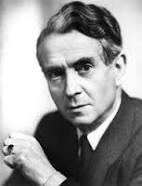
Herbert Howells

1892 - 1983 Person Name: Herbert Howells, 1892-1983 Topics: Year A, Ordinary Time after Pentecost, May 29-June 4 (if after Trinity Sunday) Composer of "MICHAEL" in Psalms for All Seasons UK

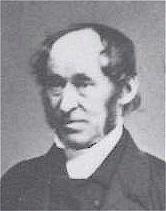
Edward Osler

1798 - 1863 Author of "O God, Unseen Yet Ever Near" Osler, Edward, was born at Falmouth in January, 1798, and was educated for the medical profession, first by Dr. Carvosso, at Falmouth, and then at Guy's Hospital, London. From 1819 to 1836 he was house surgeon at the Swansea Infirmary. He then removed to London, and devoted himself to literary pursuits. For some time he was associated with the Society for Promoting Christian Knowledge, both in London and at Bath. In 1841 he became the Editor of the Royal Cornwall Gazette, and took up his residence at Truro. He retained that appointment till his death, at Truro, March 7, 1863. For the Linnaean Society he wrote Burrowing and Boring Marine Animals. He also published Church and Bible; The Voyage: a Poem written at Sea, and in the West Indies, and Illustrated by papers on Natural History, 1830; The Life of Lord Exmouth, 1837, &c. His hymnological work is mainly connected with the Mitre Hymn Book. During 1835-36 he was associated with Prebendary W. J. Hall, the editor, in producing that collection, which was published in 1836 as Psalms and Hymns adapted to The Services of the Church of England. He resided in Mr. Hall's house during the time. From the "hall manuscript" we gather that he contributed 15 versions of the Psalms (5 being rewritten from others), and 50 hymns (a few rewritten). Most of these hymns and Psalm versions, together with others not in the Mitre Hymn Book, were afterwards given in the monthly numbers of his Church and King, from Nov. 1836 to Aug. 1837. The best known of these hymns are, “O God, unseen, yet ever near," and “Worship, honour, glory, blessing." Several of his hymns in common use are:— 1. Father, Whose love and truth fulfil. Holy Baptism. 2. Glory to God! with joyful adoration. Praise to the Father. 3. Great God, o'er earth and heaven supreme. Men the Stewards of God's Bounties. 4. Great God of hosts, our ears have heard. Ps. xliv. Based on the N. Version. 5. Great God, Whose awful mystery. Holy Trinity. 6. I hold the sacred book of God. Martyrs. 7. Jehovah hath spoken, the nations shall hear. Second Advent. 8. Lord, may the inward grace abound. Holy Baptism. 9. May we Thy precepts, Lord, fulfil. Love. 10. Mighty Saviour, gracious King. Advent. 11. 0 God, the help of all Thy Saints. Ps. x. 12. O Thou, the Lord and Life of those. Christ the Life of Men. 13. O Saviour, Who didst come. Easter. 14. Saviour, Whose love could stoop to death. Easter. 15. See, Lord, before Thy mercy seat. For Schools. 16. Set in a high and favoured place. Advent. 17. Wake frem the dead, new life begin. Lent. 18. With trembling awe we come. Lent. Several of these hymns are not in Osier's Church and King. We have ascribed them and others to him on the authority of the "hall MSS." It must be noted also that the text in the Church and King often differs from that in the Mitre. --John Julian, Dictionary of Hymnology (1907) Though not mentioned by Julian, perhaps his most enduring contribution to hymnody is the third stanza of "Praise the Lord! Ye Heavens, Adore Him", whose first two stanzas are of anonymous authorship. --Leland Bryant Ross (2019)

Roland M. Carter

b. 1942 Person Name: Roland Carter Topics: Ordinary Time Week 23 Author of "Come Here, Jesus, If You Please" in Hymns and Devotions for Daily Worship (African American Edition)

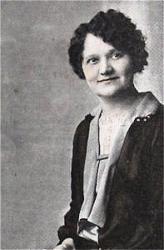
Anna Hoppe

1889 - 1941 Person Name: Anna Hoppe, 1889-1941 Topics: Ordinary Time 23, Year B Author of "O Son of God, In Galilee" in Worship (3rd ed.) Anna Hoppe was born on May 7, 1889 in Milwaukee, Wisconsin. She left school after the eighth grade and worked as a stenographer. She began writing patriotic verses when she was very young and by the age of 25 she was writing spiritual poetry. After some of her poems appeared in the Northwestern Lutheran, a periodical of the Wisconsin Evangelical Lutheran Synod, they came to the attention of Dr. Adolf Hult of Augustana Seminary, Rock Island, Illinois. He influenced her to write her Songs for the Church Year (1928). Several hymnals include her work, which was usually set to traditional chorale melodies, although she also made a number of translations. She died on August 2, 1941 in Milwaukee, Wisconsin. NN, from Cyber Hymnal

Franklin L. Sheppard

1852 - 1930 Person Name: Franklin L. Sheppard, 1852-1930 Topics: Ordinary Time, Eleventh Sunday A; Ordinary Time, Thirteenth Sunday C Adapter of "TERRA BEATA" in Worship (4th ed.) Franklin L. Sheppard (b. Philadelphia, PA, 1852; d. Germantown, PA, 1930) arranged the tune for Babcock's text and published it in the Presbyterian church school hymnal Alleluia (1915), edited by Sheppard (Babcock and Sheppard were friends). After graduating from the University of Pennsylvania, Philadelphia, Sheppard entered the family foundry business in Baltimore, Maryland, in 1875. He was organist at Zion Episcopal Church and later was an elder and music director of the Second Presbyterian Church in Baltimore. President of the Presbyterian Board of Publications, Sheppard also served on the committee that prepared the Presbyterian Hymnal of 1911. In the history of hymnody he is remembered primarily for arranging the tune TERRA BEATA for “This Is My Father's World.” Bert Polman

Jan Roh

1487 - 1547 Person Name: Johann Horn, c. 1495-1547 Topics: 23rd Sunday in Ordinary Time Year B Composer of "GAUDEAUMUS PARITER" in RitualSong Pseudonyms-- Johann Cornu Johann Horn John Horn Roh, Johann, was a native of Domascbitz near Leitmeritz, in Bohemia. Roh was his name in Bohemian, but when he wrote in Latin he styled himself Cornu, and in German Horn. In 1518 he was ordained priest and appointed preacher to the Bohemian Brethren's community at Jungbunzlau, in Bohemia. At the Synod of Brandeis, in Sep. 1529, he was chosen as one of the three Seniors of the Unity. Finally, at the Synod of Brandeis, in April 1532, he was appointed Bishop, and held this post till his death, at Jungbunzlau, Feb. 11, 1547. (Koch, ii. 114; Wackernagel, i. p. 727, &c.) Roh was the editor of the Bohemian Hymn Book of 1541, and is said to have written a number of hymns in the Bohemian language, but the edition of 1561 only gives one with his name. He also edited the second German hymn-book of the Brethren, viz., Ein Gesangbuch der Brüder inn Behemen und Merherrn, Nürnberg, 1544; and seems to have been author or translator of all, or nearly all, of the 32 hymns there added. Another hymn ("O heiliger Vater, glitiger Herr") is also given with his name in the Kirchengeseng, 1566. A considerable number of Ron's hymns passed into the Lutheran hymn-books of the 16th and 17th centuries, and into the Moravian Hymn Books of the 18th cent. Rather curiously in the last Moravian Hymn Books, (the Kleines Gesangbuch, Gnadau, 1870), his name is not found in the list of authors. Those of Roh's hymns which have been translated into English are:— i. Gottes Sohn ist kommen. Christmas. In 1544, as above, and thence in Wackernagel iii. p, 350, in 9 stanzas of 6 lines, The heading "Ave Hierarchia" refers to the melody, for it is not a translation from the Latin. Included in V. Babst's Gesang-Buch, Leipzig, 1553, and recently in the Unverfälschter Liedersegen, 1851, No. 6, Strangely enough this fine hymn was omitted from the Kirchengeseng of 1566 and later editions; and though it was included in the Herrnhut Gesang-Buch, 1735, and the Brüder Gesang-Buch, 1778, it has again been omitted from the Kleines Gesang-Buch, 1870. The translations are:— 1. Lo! from highest heaven. A free translation of stanzas i.-iii., vi., by A. T. Russell, as No. 27 in his Psalms & Hymns, 1851. Included, altered, in Kennedy, 1863. 2. Once He came in blessing. A good translation of stanzas i.-iii., v., ix., by Miss Winkworth, in her Chorale Book for England, 1863, No. 26. Included in J. Robinson's Collection, 1869, and the Pennsylvania Lutheran Church Book, 1868. 3. God's Son once descending. This is No. 249 in pt. i. of the Moravian Hymn Book, 1754. Hymns not in English common use:— ii. Betrachtn wir heut zu dieser Frist. Easter. 1544 as above, and in Wackernagel, iii. p. 359, in 14 stanzas of 3 lines. Translated as:—(1) "The Saviour Jesus, Friend of Man." As No. 332 in pt. i. of the Moravian Hymn Book, 1754. This is from the recast "Der selge Heiland, Jesus Christ" (based on ii.-v.), as No. 1875 in Appendix xii. c. 1745, to the Herrnhut Gesang-Buch 1735. iii. Ein starker Held ist uns kommen. Christmas. 1544 as above, and in Wackernagel, iii. p. 352, in 12 stanzas of 4 lines. Translated as (1) "God took our nature upon Him (stanza iii.), as No. 251 in pt. i. of the Moravian Hymn Book, 1754. iv. Lob Gott getrost mit singen. Christian Church. 1544 as above, and in Wackernagel, iii. p. 360, in 9 stanzas of 8 lines. In the Kirchengeseng, 1566, two st. were inserted between iii. and iv. This form, in 11 stanzas, is No. 563 in the Unverfälschter Liedersegen 1851. In the Brüder Gesang-Buch 1778, No. 1014, is a cento in 3 st. (from st. vi., viii., ix. of the 1544, and iv. of the 1566), beginning "Lass dich durch nichts erschrecken," and this form has been translated as "O be not thou dismayed, Believing little band," as No. 596 in the Moravian Hymn Book, 1886. v. O Mensch, thu heut hören. Passiontide. 1544 as above, and in Wackernagel, iii., p. 355, in 20 stanzas of 4 lines. The English version is "I am thy Lord and God" (st. ii.), as No. 258, in pt. i. of the Moravian Hymn Book, 1754. [Rev. James Mearns, M.A.] --John Julian, Dictionary of Hymnology (1907)

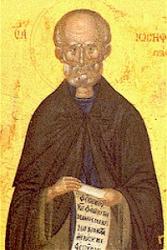
St. Joseph the Hymnographer

810 - 886 Author of "O Happy Band of Pilgrims" Joseph, St., the Hymnographer. A native of Sicily, and of the Sicilian school of poets is called by Dr. Neale (in his Hymns of the Eastern Church), Joseph of the Studium, in error. He left Sicily in 830 for a monastic life at Thessalonica. Thence he went to Constantinople; but left it, during the Iconoclastic persecution, for Rome. He was for many years a slave in Crete, having been captured by pirates. After regaining his liberty, he returned to Constantinople. He established there a monastery, in connection with the Church of St. John Chrysostom, which was filled with inmates by his eloquence. He was banished to the Chersonese for defence of the Icons, but was recalled by the empress Theodora, and made Sceuophylax (keeper of the sacred vessels) in the Great Church of Constantinople, through the favour of the patriarch Ignatius. He stood high also in the favour of Photius, the rival and successor of Ignatius, and accompanied him into banishment. He died at an advanced age in 883. He is commemorated in the Calendars of the Greek Church on April 3rd. He is the most voluminous of the Greek hymnwriters. There are more than two hundred Canons under the acrostic of his name, in the Menaea. Cardinal Pitra says he is reported to have composed a thousand. There is some difficulty in distinguishing his works from those of the brother of Theodore of the Studium, Joseph of Thessalonica. This latter poet, and not the more celebrated Joseph the Hymnographer, was named Joseph of the Studium. [Rev. H. Leigh Bennett, M.A.] -- John Julian, Dictionary of Hymnology (1907) See also in: Wikipedia

S. Dryden Phelps

1816 - 1895 Topics: Benevolence; Christ Advocate; Dedication of Life; Stewardship of Life and Talents; Liturgical Offertory Author of "Something for Jesus" Phelps, Sylvanus Dryden, D.D., was born at Suffield, Connecticut, May 15, 1816, and educated at Brown University, where he graduated in 1844. In 1846 he became pastor of the first Baptist Church, New Haven. Dr. Phelps is the Editor of The Christian Secretary, Hartford. His publications include, Eloquence of Nature, and Other Poems, 1842; Sunlight and Hearthlight, 1856; the Poet's Song, 1867, &c. He is the author of the following hymns:— 1. Christ, Who came my soul to save. Holy Baptism. 2. Did Jesus weep for me? Lent. 3. Saviour, Thy dying love. Passiontide. 4. Sons of day, arise from slumber. Home Missions. 5. This rite our blest Redeemer gave. Holy Baptism. Of these Nos. 1 and 4 appeared in the Baptist ed. of the Plymouth Collection, 1857; Nos. 2 and 5 in the Baptist Devotional Hymn Book, 1864; and No. 3 in Gospel Hymns, 1st series, and Laudes Domini, 1884. [Rev. F. M. Bird, M.A.] -- John Julian, Dictionary of Hymnology (1907) ==================== Phelps, Sylvanus Dryden, p. 893, ii. Additional hymns in common use by Dr. Phelps include (1) "Father, from Thy throne above" (Temperance); (2) "When over our land hung oppression's dark pall" (Temperance), both written in 1841. To J. Aldrich's Sacred Lyre, 1858, he contributed (3) "Sweet is the hour of prayer" (Prayer); (4) "Sweet Sunday-school! I love the place" (Sunday Schools); and (5) "Come friends, and let our hearts awake" (Divine Worship). There are also (6) "Once I heard a sound at my heart's dark door" (Voice of God within), in Pure Gold, with a refrain by Dr. Lowry; (7) "While on life's stormy sea" (Trust in God), written in 1862; and (8) "Come, trembling soul, be not afraid" (Confidence), "written after visiting a sick man, who, feeling his need of Christ, found it difficult to believe." Concerning his popular hymn "Saviour! Thy dying love," Burrage says it was written in 1862, and published in the Watchman and Reflector, and then, with music by Dr. R. Lowry in Pure Gold. It has been translated into Swedish and other languages. Burrage gives a revised version of the text, recently made by the author. (Burrage's Baptist Hymn Writers, 1888, p. 384.) --John Julian, Dictionary of Hymnology, Appendix, Part II (1907)

George Askins

? - 1816 Topics: Worship; liturgical Opening Hymns Author of "Brethren, We Have Met to Worship" George Askins was born in Ireland. He immigrated to the United States as an adult. He was a Methodist and became an itinerant preacher for the Baltimore Conference in 1801. He was appointed to other circuits as well, mostly in Maryland, Virginia, and Kentucky. He died in Frederick, Maryland 28 February 1816. Dianne Shapiro from The Makers of the Sacred Harp by David Warren Steel with Richard H. Hulan, University of Illinois Press, 2010

Edwin Hawkins

1943 - 2018 Topics: Ordinary Time Week 29 Author of "This Day" in Hymns and Devotions for Daily Worship (African American Edition)

Pages


Export as CSV
It looks like you are using an ad-blocker. Ad revenue helps keep us running. Please consider white-listing Hymnary.org or getting Hymnary Pro to eliminate ads entirely and help support Hymnary.org.