You help make Hymnary.org possible. More than 10 million people from 200+ countries found hymns, liturgical resources and encouragement on Hymnary.org in 2025, including you. Every visit affirms the global impact of this ministry.

If Hymnary has been meaningful to you this year, would you take a moment today to help sustain it? A gift of any size—paired with a note of encouragement if you wish—directly supports the server costs, research work and curation that keep this resource freely available to the world.

Give securely online today, or mail a check to:
Hymnary.org
Calvin University
3201 Burton Street SE
Grand Rapids, MI 49546

Thank you for your partnership, and may the hope of Advent fill your heart.

Person Results

Topics:consecration+and+dedication
In:people

Planning worship? Check out our sister site, ZeteoSearch.org, for 20+ additional resources related to your search.
Showing 61 - 70 of 261Results Per Page: 102050

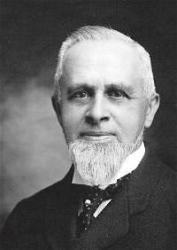
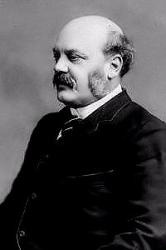
W. Howard Doane

1832 - 1915 Person Name: William H. Doane Topics: Consecration and Dedication Composer of "PRESTON" in The Psalter An industrialist and philanthropist, William H. Doane (b. Preston, CT, 1832; d. South Orange, NJ, 1915), was also a staunch supporter of evangelistic campaigns and a prolific writer of hymn tunes. He was head of a large woodworking machinery plant in Cincinnati and a civic leader in that city. He showed his devotion to the church by supporting the work of the evangelistic team of Dwight L. Moody and Ira D. Sankey and by endowing Moody Bible Institute in Chicago and Denison University in Granville, Ohio. An amateur composer, Doane wrote over twenty-two hundred hymn and gospel song tunes, and he edited over forty songbooks. Bert Polman ============ Doane, William Howard, p. 304, he was born Feb. 3, 1832. His first Sunday School hymn-book was Sabbath Gems published in 1861. He has composed about 1000 tunes, songs, anthems, &c. He has written but few hymns. Of these "No one knows but Jesus," "Precious Saviour, dearest Friend," and "Saviour, like a bird to Thee," are noted in Burrage's Baptist Hymn Writers. 1888, p. 557. --John Julian, Dictionary of Hymnology, Appendix, Part II (1907) =================== Doane, W. H. (William Howard), born in Preston, Connecticut, 1831, and educated for the musical profession by eminent American and German masters. He has had for years the superintendence of a large Baptist Sunday School in Cincinnati, Ohio, where he resides. Although not a hymnwriter, the wonderful success which has attended his musical setting of numerous American hymns, and the number of his musical editions of hymnbooks for Sunday Schools and evangelistic purposes, bring him within the sphere of hymnological literature. Amongst his collections we have:— (1) Silver Spray, 1868; (2) Pure Gold, 1877; (3) Royal Diadem, 1873; (4) Welcome Tidings, 1877; (5) Brightest and Best, 1875; (6) Fountain of Song; (7) Songs of Devotion, 1870; (8) Temple Anthems, &c. His most popular melodies include "Near the Cross," "Safe in the Arms of Jesus," "Pass me Not," "More Love to Thee," "Rescue the Perishing," "Tell me the Old, Old Story," &c. - John Julian, Dictionary of Hymnology (1907)

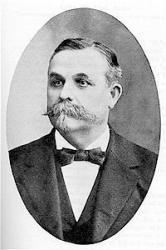
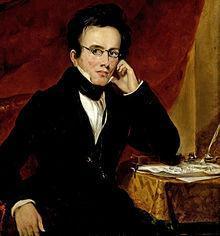
César Malan

1787 - 1864 Person Name: C. H. A. Malan Topics: Consecration and Dedication Composer of "[In Judah God is known and feared]" in Bible Songs Rv Henri Abraham Cesar Malan, 1787-1864. Born in Geneva, Switzerland, into a bourgeois family that moved to Switzerland to escape religious persecution during the French Revolution, he attended the university in Marseilles, France, intending to become a businessman. Although having some grounding in religious faith by his mother, he decided to attend the Academy at Geneva (founded by Calvin) in preparation for ministry. He was ordained in 1810, after being appointed a college master (teaching Latin) in 1809. Malan was in accord with the National Church of Geneva as a Unitarian, but the Reveil Movement caused him to become a dissident (evangelical) instead of a proponent of the Reformed Church (believing works, not faith, was what mattered). In 1811 he married (wife’s name not found). They had at least two children (one son was Solomon, referenced below). From 1813 on Malan slowly became an evangelical, after being given an understanding of true salvation through grace (not works) in 1816 by two German Lutherans from Geneva. He became saved upon this realization and was so changed that he burned his prized collection of classical authors and manuscripts. In 1817 he preached around Geneva, and one sermon in particular, “Man only justified by faith alone” created a firestorm and brought him into conflict with religious authorities of the region. From then on he wished to help reform the national church from within, but the forces of the Venerable Company were too strong for him and excluded him from the pulpits and caused his dismissal from his regentsship at the college in 1818. Others in agreement with Malan were Charles Spurgeon, Robert Wilcox, Robert Haldane, and Henry Drummond. In 1820 he built a chapel in his garden and obtained the license of the State for it as a separatist place of worship. He preached in that chapel 43 years. In 1823 he was formally deprived of his status as a minister of the national Church. Various events caused his congregation to diminish over the next few years, and he began long tours of evangelization subsidized by religious friends in his land, Belgium, France, England and Scotland. He often preached to large congregations. Malan also authorized a hymn book, “Chants de Sion” (1841). A strong Calvinist, Malan lost no opportunity to evangelize. On one occasion an old man he visited pulled Malan’s hymnal out and told him he had prayed to see the author of it before he died. On a visit to England Malan also inspired author, Charlotte Elliott, to write the hymn lyrics for “Just as I am”, when seeking an answer to her conversion she asked and he advised her to come to Christ ‘just as she was’. Malan published a score of books and also produced many religious tracts and pamphlets largely on questions in dispute between the National and evangelical churches of Rome. He also wrote articles in the “Record” and in American reviews. His hymns were set to his own melodies. He was an artist, a mechanic, a carpenter, a metal forger, and a printer. He had his own workshop, forge and printing press. One of his greatest joys was the meeting of the evangelical alliance at Geneva in 1861 which helped change church views. He retired to his home, Vandoeuvres, in the countryside near Geneva in 1857, dying there seven years later.. He was honored by a visit from the Queen of Holland two years before his death. He is mainly remembered as a hymn writer, having written 1000+ hymn lyrics and tunes. One son, Solomon, a gifted linguist and theologian, became Vicar of Broadwindsor. About a dozen of his hymns appeared translated in the publication “Friendly visitor” (1826). He was an author, creator, composer, editor, correspondent, contributor, translator, owner, and performer. John Perry ================= Malan, Henri Abraham César. The family of Malan traces its origin to the valleys of Piedmont. A branch of it settled at Mérindol, in Dauphiné, but was driven from France by the persecutions that followed the Revocation of the Edict of Nantes. Pierre Malan [Cesar's father], after seeing his sister fall a victim to persecution, left Mérindol (1714), and arrived at Geneva (1722). Henri Abraham César Malan was born at Geneva in 1787. After an education at the College, he went to Marseilles, with the intention of learning business: but, soon after, entered the Academy at Geneva, as a preparation for the ministry, to which he was ordained in 1810. He had been appointed one of the masters at the College in the previous year. The National Church of Geneva was at that time almost Unitarian, and Malan's convictions were in accord with it. But the great movement known as the Réveil, of which the first products were the dissident church of Bourg de Four and at a later date that founded by Malan himself, and which finally imbued the whole Swiss Church with its spirit, was silently preparing itself. The germ of the movement may be traced in the Société des Amis (1810), of which Empeytaz and A. Bost were leaders; and in Malan's independent attainment to the doctrines of the Divinity of the Saviour and the free gifts of salvation through Him (1816). But the human agency, which gave it force, and determined its Calvinistic direction, was the visit of Robert Haldane (in the autumn of 1816), to whom not only these pioneers of the movement, but F. Monod, E. Rieu, Guers, Gonthier, Merle d'Aubigné, and others, always pointed as their spiritual father. Empeytaz and others sought to attain enfranchisement by the establishment of the "petite Eglise of Bourg de Four." Malan wished to reform the national Church from within: and a sermon at Geneva, which brought on him the obloquy of the professors and theologians that composed his audience, and which Haldane characterized as a republication of the Gospel, was his first overt act (Jan. 19, 1817). But the opposing forces were far too strong for him. The Venerable Company excluded him from the pulpits, and achieved his dismissal from his regentship at the College (1818). In 1820 he built a chapel (Chapelle du Temoignage) in his garden, and obtained the licence of the State for it, as a separatist place of worship. In 1823 he was formally deprived of his status as a minister of the national Church. The seven years that succeeded were the palmy days of the little chapel. Strangers, especially from England, mingled with the overflowing Swiss congregation. But (in 1830) a secession to Bourg de Four, and then the foundation of the Oratoire and the Société Evangelique, which in 1849 absorbed the congregation of Bourg de Four under the title of the Église Evangélique, thinned more and more the number of his adherents. His burning zeal for the conversion of souls found a larger outlet in long tours of evangelization, subsidized by religious friends, in his own land and Belgium and France, and also in Scotland and England, where he had friends among many religious bodies, and where he preached to large congregations. The distinguishing characteristic of these tours was his dealing with individuals. On the steamboat or the diligence, in the mountain walk, at the hotel, no opportunity was lost. On one occasion an old,man whom he visited drew from under his pillow a copy of his great hymnbook, Chants de Sion, 1841, and told him how he had prayed to see the author of it before he died. It is as the originator of the modern hymn movement in the French Reformed Church that Malan's fame cannot perish. The spirit of his hymns is perpetuated in the analysis of Christian experience, the never-wearied delineation of the hopes and fears, the joys and sorrows of the believer's soul, which are still the staple of French Protestant hymns. To this was added, in Malan himself, a marked didactic tone, necessitated by the great struggle of the Réveil for Evangelical doctrine; and an emphatic Calvinism, expressing itself with all the despondency of Newton and Cowper, but, in contrast with them, in bright assurance, peace and gladness. French criticism has pronounced his hymns unequal, and full of literary defects; but their unaffected freshness and fervent sincerity are universally allowed. In the Chants de Sion, hymns 20, ”Hosanna! Béni soit"; 165, “Mon coeur joyeux, plein d'espérance"; 199, "Du Rocher de Jacob"; 200, "Agneau de Dieu"; 239, "Trois fois Jehovah," are in every Protestant French hymnbook; and several others are very widely used. Besides his hymns Malan produced numberless tracts and pamphlets on the questions in dispute between the National and Evangelical Churches and the Church of Rome, as well as articles in the Record and in American reviews. He was a man of varied acquirements. His hymns were set to his own melodies. He was an artist, a mechanic: his little workshop had its forge, its carpenter's bench, its printing press. To the end of his life his strong Calvinism, and his dread of mere external union in church government, kept him distinct from all movements of church comprehension, though freely joining in communion with all the sections of Evangelical thought in Geneva and Scotland. At one time there seemed a prospect of his even rejoining the national Church, which had driven him from her. One of his greatest joys was the meeting of the Evangelical Alliance at Geneva (1861). He left no sect; one of his latest orders was the demolition of his decayed chapel, in which he had preached for 43 years. He died at Vandoeuvres, near Geneva, in 1864, leaving a numerous family, one of whom, the Rev. S. C. Malan, D.D., sometime Vicar of Broadwindsor, is well known as a linguist and a theologian of the English Church. To English readers Malan is chiefly known as a hymn-writer through translations of his "Non, ce n'est pas mourir" (q.v.): "It is not death to die", &c. About a dozen of his hymns appear in a translated form in the Friendly Visitor for 1826. [Rev. H. Leigh Bennett, M.A.] -- John Julian, Dictionary of Hymnology (1907) ================= http://en.wikipedia.org/wiki/César_Malan

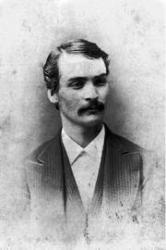
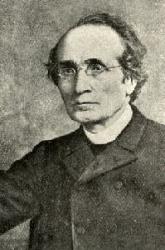
James McGranahan

1840 - 1907 Topics: Consecration and Dedication Composer of "[I'll thee exhalt, my God, O King]" in Bible Songs James McGranahan USA 1840-1907. Born at West Fallowfield, PA, uncle of Hugh McGranahan, and son of a farmer, he farmed during boyhood. Due to his love of music his father let him attend singing school, where he learned to play the bass viol. At age 19 he organized his first singing class and soon became a popular teacher in his area of the state. He became a noted musician and hymns composer. His father was reluctant to let him pursue this career, but he soon made enough money doing it that he was able to hire a replacement farmhand to help his father while he studied music. His father, a wise man, soon realized how his son was being used by God to win souls through his music. He entered the Normal Music School at Genesco, NY, under William B Bradbury in 1861-62. He met Miss Addie Vickery there. They married in 1863, and were very close to each other their whole marriage, but had no children. She was also a musician and hymnwriter in her own right. For a time he held a postmaster’s job in Rome, PA. In 1875 he worked for three years as a teacher and director at Dr. Root’s Normal Music Institute. He because well-known and successful as a result, and his work attracted much attention. He had a rare tenor voice, and was told he should train for the operatic stage. It was a dazzling prospect, but his friend, Philip Bliss, who had given his wondrous voice to the service of song for Christ for more than a decade, urged him to do the same. Preparing to go on a Christmas vacation with his wife, Bliss wrote McGranahan a letter about it, which McGranahan discussed with his friend Major Whittle. Those two met in person for the first time at Ashtubula, OH, both trying to retrieve the bodies of the Bliss’s, who died in a bridge-failed train wreck. Whittle thought upon meeting McGranahan, that here is the man Bliss has chosen to replace him in evangelism. The men returned to Chicago together and prayed about the matter. McGranahan gave up his post office job and the world gained a sweet gospel singer/composer as a result. McGranahan and his wife, and Major Whittle worked together for 11 years evangelizing in the U.S., Great Britain, and Ireland. They made two visits to the United Kingdom, in 1880 and 1883, the latter associated with Dwight Moody and Ira Sankey evangelistic work. McGranahan pioneered use of the male choir in gospel song. While holding meetings in Worcester, MA, he found himself with a choir of only male voices. Resourcefully, he quickly adapted the music to those voices and continued with the meetings. The music was powerful and started what is known as male choir and quartet music. Music he published included: “The choice”, “Harvest of song”, “Gospel Choir”,, “Gospel hymns #3,#4, #5, #6” (with Sankey and Stebbins), “Songs of the gospel”, and “Male chorus book”. The latter three were issued in England. In 1887 McGranahan’s health compelled him to give up active work in evangelism. He then built a beautiful home, Maplehurst, among friends at Kinsman, OH, and settled down to the composition of music, which would become an extension of his evangelistic work. Though his health limited his hours, of productivity, some of his best hymns were written during these days. McGranahan was a most lovable, gentle, modest, unassuming, gentleman, and a refined and cultured Christian. He loved good fellowship, and often treated guests to the most delightful social feast. He died of diabetes at Kinsman, OH, and went home to be with his Savior. John Perry

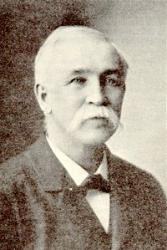
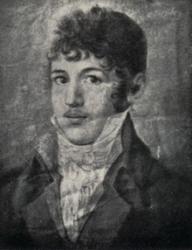
Chas. H. Gabriel

1856 - 1932 Person Name: Charles H. Gabriel Topics: Consecration and Dedication Composer of "ADOWA" in The Psalter Pseudonyms: C. D. Emerson, Charlotte G. Homer, S. B. Jackson, A. W. Lawrence, Jennie Ree ============= For the first seventeen years of his life Charles Hutchinson Gabriel (b. Wilton, IA, 1856; d. Los Angeles, CA, 1932) lived on an Iowa farm, where friends and neighbors often gathered to sing. Gabriel accompanied them on the family reed organ he had taught himself to play. At the age of sixteen he began teaching singing in schools (following in his father's footsteps) and soon was acclaimed as a fine teacher and composer. He moved to California in 1887 and served as Sunday school music director at the Grace Methodist Church in San Francisco. After moving to Chicago in 1892, Gabriel edited numerous collections of anthems, cantatas, and a large number of songbooks for the Homer Rodeheaver, Hope, and E. O. Excell publishing companies. He composed hundreds of tunes and texts, at times using pseudonyms such as Charlotte G. Homer. The total number of his compositions is estimated at about seven thousand. Gabriel's gospel songs became widely circulated through the Billy Sunday­-Homer Rodeheaver urban crusades. Bert Polman

Washington Gladden

1836 - 1918 Topics: Life in Christ Dedication and Consecration Author of "O Master, Let Me Walk with Thee" in The Hymnbook Washington Gladden (1836-1918) was called to the First Congregational Church in Columbus, OH in 1882 and remained there for 32 years. In 1883-84 he was known for his success in fighting the corrupt Tweed Ring, for arbitrating the Telegraphers' Strike and the Hocking Valley Coal Strike. He attacked John D. Rockefeller, Sr. for giving $100,000 of "tainted money" to the Congregational Church's Foreign Missions program. Throughout his ministry he emphasized applying the gospel to life in America. He wrote "O Master, let me walk with thee" in 1879. Mary Louise VanDyke =================== Gladden, Washington, was born at Pottsgrove, Pennsylvania, Feb. 11, 1836; was educated at Williams College: and entered the Congregational Ministry. He was for some time editor of the New York Independent, and of the Sunday Afternoon. In the Sunday Afternoon, his hymn, "O Master, let me walk with Thee" (Walking with God), appeared in 3 stanzas of 8 lines, in March 1879. Of these stanzas i. and iii. are in Laudes Domini, 1884, and others. --John Julian, Dictionary of Hymnology, Appendix, Part II (1907) ================== Gladden, W., p. 1565, ii. Dr. Gladden has been Pastor of the First Congregational Church, Columbus, Ohio, since 1882. His hymn-writing has not been extensive. The most popular of his hymns is "0 Master, let me walk with Thee," noted on p. 1565, ii. It has come into somewhat extensive use during the last ten years. Additional hymns in common use include:— 1. Behold a Sower from afar. [The Kingdom of God.] In the Boston Pilgrim Hymnal, 1904, this is dated 1897. 2. Forgive, 0 Lord, the doubts that break Thy promises to me. [Doubting repented of.] Dated 1879, in The Pilgrim Hymnal, 1904. --John Julian, Dictionary of Hymnology, New Supplement (1907)

Clara H. Scott

1841 - 1897 Topics: Commitment, Dedication, Consecration, Devotion Author of "Open My Eyes, That I May See" in Baptist Hymnal 2008 Clara Harriett Fiske Jones Scott USA 1841-1897. Born at Elk Grove, IL, daughter of a farmer, the family moved to Chicago in 1856. Clara enrolled in the first Chicago Musical Institute, after founders, Chauncy M Cady and William Bradbury, opened it in 1858. Following her graduation from the program, she found employment at the new Lyons Girl’s Seminary (also founded in 1858) in Lyons, IA. While working there, she met Henry Clay Scott, who worked for Scott & Ovington Brothers wholesale crockery company. The two married in 1861 in McGregor, IA. They had two daughters, Medora and Mary. The family moved to Austin, IL, near Chicago in the 1870s. She become a composer, hymnwriter, and publisher. She was the first woman to publish a volume of anthems, ‘The Royal anthem book’ in 1882. Horatio Palmer, a friend, helped her publish her songs. She issued three collections of songs. In 1895 she and her husband, now an invalid, moved to Chicago. In 1897 she was returning to her friend’s house after attending a funeral in DuBuque, IA. She was driving a horse-drawn buggy with two friends, Martha Hay and D D Myers. The buggy’s hold-back strap snapped, spooking the horse, who raced forward, colliding with a coping stone, causing the buggy to roll. Clara and Martha were thrown out and both died instantly. The third lady, D D, was severly injured. Clara’s funeral was well-attended by music writers, teachers, professors, publishers, and friends. Two of her own compositions were sung by a quartet of close friends. She died at Dubuque, IA. John Perry

Theodore E. Perkins

1831 - 1912 Topics: Consecration and Dedication Composer of "NAZARETH" in The Psalter Theodore E. Perkins was born at Poughkeepsie, on the Hudson, N.Y., July 21, 1831. His father was a Baptist clergyman. The family of ten brothers and sisters sang and played various instruments, forming among themselves both choir and orchestra. His musical education began at the early age of three years. During his father's pastorate at Hamilton, N. Y., the choir rehearsals were often held at the parsonage, and the leader used to place the three-year-old on a small stool, on the table around which the choir was assembled, giving him a chance to both see and hear. Later on he played the violincello in church, standing on a stool in order to finger the instrument. The home gatherings — especially on Thanksgiving Day, are the recollections among the happiest of his childhood. His father became pastor of the Berean Baptist Church in New York City, in 1839, giving him the opportunity of studying the pianoforte, of which he became a proficient player. His fine alto voice soon gave him notoriety. At the age of nineteen while filling a position as clerk in New York, all his spare time was given to the study of voice and piano. In 1851 he went to Hamilton, N. Y., taught music in Madison University (now Colgate), and in the Female Seminary. In 1854 he went to Port Jervis, N. Y., where he taught singing school, and April 30, 1855, married Mary Frances Caskey, who was for years his soprano soloist in many musical Festivals and Conventions. Soon after marriage he removed to Salem, N. J., where his lifework as singing school teacher really began, including Bridgeton and prominent towns in southern New Jersey. During the summer of 1856 he and his wife were pupils of the Normal Academy of Music at North Reading, Mass., conducted by Drs. Lowell Mason and Geo. F. Root. During 1856-1858 he was given the position of assistant teacher and manager. His association with these two great men gave an inspiration to all his future work. In 1859 he was co-principal with Wm. B. Bradbury at the Normal Academy of Music, Geneseo, N. Y. He remained at Geneseo until 1863. Professor Perkins also held very successful schools in North Pelham Province of Ontario, Canada, and in 1864-1868 was principal in schools at Tunkhannock and Meadville, Pa. In 1860, The Olive Branch, his first book of church music, was published by F. J. Huntington, New York City, the sales reaching 100,000. Next was Oriental, which sold over 30,000. The Union, Glees and Anthems, and Sabbath Anthems followed ; then The Sacred Lute, which sold over 300,000. His Sunday-school books commenced with The Evergreen, followed by the Shining Star and New Shining Star. Then came Psalm King, which was the last of the books published by Mr. Huntington. Hallowed Songs was published by Philip Phillips; The Sunday School Banner was published by Wm. B. Bradbury. The Royal Standard was published in Toronto, Canada. The Golden Promise, Sabbath Carols, The Mount Zion Collection were published under his own supervision. His Free Sunday School Songs several times numbered over 500,000 a month. Coronation Songs with Rev. Dr. Deems as hymn editor was published by A. S. Barnes Co., who also published Psalms and Hymns and Spiritual Songs, in which Dr. C. S. Robinson was hymn editor, who with Professor Perkins edited Calvary Songs, published by the American S. S. Union. Gospel Tent Songs was evangelical. The Safe-Guard Singer was his temperance book. Mr. Perkins was musical director in the following churches in Brooklyn: The Lafayette Avenue Presbyterian Church, Rev. Dr. Cuyler; Strong Place Baptist Church, Rev. E. E. L. Taylor, D. D.; Madison Avenue Baptist Church, Rev. H. G. Weston, D. D., L. L. D.; Fifth Avenue Presbyterian Church, Rev. Dr. Rice, followed by Dr. John Hall; The Memorial Presbyterian Church, Rev. Dr. C. S. Robinson, who was his close friend; The Church of the Holy Trinity, Rev. Dr. Tyng, Jr. ; Trinity Baptist Church, Rev. Dr. J. B. Simmons, and Washington Square M. E. Church. In Philadelphia: The Fifth Baptist Church, Rev. Dr. Chase; The Eleventh Baptist Church, Rev. Dr. Colman; The Tabernacle M. E. Church, Rev. George Gaul, D. D. He was leader and singer in Evangelistic Services, at the Rink, The Old Madison Square Garden and Cooper Union, all of New York City. The music of the first great meeting of the world's Evangelical Alliance, held for ten days in New York City, was under his direction, as was the first National Sunday School convention, held in Newark, N. J. He was also conductor at the Golden Anniversary of the Female Guardian Society, leading a chorus of forty-two hundred children. In the opening chorus, Great is the Lord, by Dr. Calcott, the word "Great" was given with so much decision and power that the clergymen on the platform sprang to their feet and remained standing until the chorus was finished. He taught voice culture in Princeton and Lafayette Universities, The Union Theological Seminary, New York City; Crozer Seminary, Chester, Pa., and organized the music department of Temple University, Philadelphia, continuing in charge four years. He had charge of the children's choir of Howard Mission, New York City, for twenty-five years, and thinks that some of the happiest and most restful of the working hours were spent in teaching the poor children of the fourth and sixth wards to sing the Gospel. Mr. Sankey said to Mr. Perkins that " Jesus of Nazareth was my banner song for eight years." Jesus is Mine has been sung at the Christian's death-bed, the grave, and once as the convict was going to the scaffold. His Christmas Carol Sweetly Carol had a very large sale in this country, and was republished in England, France, Italy, and Germany. For a period of forty years he has made the study of the voice special work. The most thorough investigations of the voice and its possibilities were made with the assistance of the late John Howard, extending over a period of twenty-five years, during which he has had the care of over two thousand voices. He published a work entitled, Physiological Yoice Culture, edited by his son, the late T. Edward Perkins, M. D., physician and throat specialist of Philadelphia. Mr. Perkins also completed a method of voice culture based on the principles of John Howard's Physiology of Artistic Singing." During these years of work he has found time to edit thirty-four books of church, Sunday-school, day-school, and glee music, the larger portion having been previously mentioned. Also songs and ballads in sheet form, and a cantata entitled, The Excursion, libretto by Fanny Crosby, with whom there has existed an unbroken friendship for over forty years. -Biography of Gospel Song and hymn Writers

A. L. Peace

1844 - 1912 Person Name: Albert L. Peace, 1844-1912 Topics: The Christian Life Dedication and Consecration Composer of "ST. MARGARET" in African Methodist Episcopal Church Hymnal Albert Lister Peace DMus United Kingdom 1844-1912. Born at Huddersfield, Yorkshire, England, son of a warehouseman and woolstapler, he was extremely gifted as a musician, largely self-taught, playing the organ at Holmfirth Parish Church near Huddersfield at age nine. He married Margaret Martin Steel Gilchrist, and they had three children: Lister, Archibald, and Margaret. In 1865 he was appointed organist of Trinity Congregational Church in Glasgow, Scotland. He obtained his doctorate degree from the University of Oxford in 1875. He became organist at Glasgow Cathedral in 1879. In 1897 he succeeded William Best as organist at St George’s Hall, Liverpool. In later years he was in much demand to play the organ in recitals. He did so at Canterbury Cathedral (1886), Victoria Hall, Hanley, Stoke-on-Trent (1888), and Newcastle Cathedral (1891). He composed orchestrations, sonatas, cantatas, and concert and church service anthems. He was an arranger, author, and editor. He died at Blundelsands, Liverpool, England. John Perry

John Goss

1800 - 1880 Topics: The Life in Christ Loyalty and Courage; Christ Captain, Our; Conflict With Sin; Consecration; Courage and Loyalty; Dedication of Life; Evangelistic Services; Loyalty and Courage; Soldiers of Christ; Zeal Composer of "ARMAGEDDON" in The Hymnal John Goss (b. Fareham, Hampshire, England, 1800; d. London, England, 1880). As a boy Goss was a chorister at the Chapel Royal and later sang in the opera chorus of the Covent Garden Theater. He was a professor of music at the Royal Academy of Music (1827-1874) and organist of St. Paul Cathedral, London (1838-1872); in both positions he exerted significant influence on the reform of British cathedral music. Goss published Parochial Psalmody (1826) and Chants, Ancient and Modern (1841); he edited William Mercer's Church Psalter and Hymn Book (1854). With James Turle he published a two-volume collection of anthems and Anglican service music (1854). Bert Polman

Daniel March

1816 - 1909 Person Name: Dr. D. March, 1816- Topics: Consecration Of Self; Call To Service; The Church and the Kingdom of God Social Service; Decision Call to ; Self-Dedication ; Service Of Christ; Master's Call Author of "Hark, the voice of Jesus calling" in Methodist Hymn and Tune Book March, Daniel, D.D., an American Congregational minister, b. July 21, 1816, has published Night Scenes in the Bible, and other works. His hymn "Hark, the voice of Jesus crying [calling]. Who will go," &c. (Missions), is given in the American Methodist Episcopal Hymnal, 1878, in 2 stanzas; in Sankey's Sacred Songs & Solos, 1878, in 6 stanzas; and in the Scottish Hymnal 1884, in 5 stanzas; in each case of 8 lines. It was written in 1863. (See Nutter's Hymn Studies, 1884, p. 236.) --John Julian, Dictionary of Hymnology, Appendix, Part II (1907) =============== March, D., p. 1578, ii. The following details concerning Dr. March's hymn, "Hark ! the voice of Jesus crying," have been furnished us by himself:— "It was written at the impulse of the moment to follow a sermon I was to preach in Clinton St. Church to the Philadelphia Christian Association on the text Is. vi. 8. That was some time in 1868." The original text in full is in The Hymnal, (Presb.), Phila., 1895, No. 361. Dr. March declines to accept the interpolations which have been made in this hymn. We must note also that the incident given in Brownlie's Hymns and Hymnwriters of the Church Hymnary (Scottish), p. 303, relative to this hymn and President Lincoln, is incorrect. It relates to Mrs. E. Gates's " If you cannot on the ocean," p. 1565, i. 5. [Rev. L. F. Benson, D.D.] --John Julian, Dictionary of Hymnology, New Supplement (1907)

Pages


Export as CSV
It looks like you are using an ad-blocker. Ad revenue helps keep us running. Please consider white-listing Hymnary.org or getting Hymnary Pro to eliminate ads entirely and help support Hymnary.org.